Understanding the Arab League: A Regional Organization for Cooperation Among Arabic-speaking Nations

Learn about the Arab League, a regional organization consisting of Arabic-speaking nations. Discover its history, goals, member states, conflicts, and…
Background on the Arab League
The Arab League, officially known as the League of Arab States, is a regional organization founded in 1945. Its primary objective was to unite and promote cooperation among the Arabic-speaking countries in Africa and Asia. With its origins rooted in the desire for independence from colonial powers, this Cairo-based organization has grown significantly over the years, now comprising 22 member states and four observer countries.
A Brief History of the Arab League
The Arab League was established after seven founding members, Egypt, Iraq, Jordan, Lebanon, Saudi Arabia, Syria, and Yemen signed the Alexandria Protocol in Cairo in 1945. The organization’s mission then was to protect the independence, sovereignty, affairs, and interests of its member nations. The League was initially headquartered in Cairo but moved to Tunis, Tunisia, in 1979. It was later moved back to Cairo in 1989 when Egypt was reinstated as a member state after being suspended for signing a peace treaty with Israel.
Founding Members and Objectives
The League’s founding members include Algeria (joined in 1962), Bahrain (1971), Comoros (1973), Djibouti (1977), Egypt, Iraq, Jordan, Kuwait, Lebanon, Libya, Mauritania (1960), Morocco, Oman, Palestine, Qatar, Saudi Arabia, Somalia, Sudan, Syria, Tunisia, United Arab Emirates, and Yemen. The organization is open to any country whose population is predominantly Arabic-speaking and committed to upholding the Arab League Charter.
Current Membership
The Arab League is now made up of 22 member states: Algeria, Bahrain, Comoros, Djibouti, Egypt, Iraq, Jordan, Kuwait, Lebanon, Mauritania, Morocco, Oman, Palestine, Qatar, Saudi Arabia, Somalia, Sudan, Syria, Tunisia, United Arab Emirates, and Yemen. Additionally, four observer countries hold consultative status within the organization: Brazil, Eritrea, India, and Venezuela.
Understanding the Mission and Goals of the Arab League
The primary mission of the Arab League is to promote the economic and political development of its member states through cooperation in various areas such as trade, agriculture, health, education, and defense. The organization also aims to prevent potential conflicts between member nations by facilitating dialogue and providing a platform for peaceful resolution of disputes.
The Role of the Arab League Council: Governance and Structure
The Arab League is governed by the Arab League Council, which consists of representatives from each member state. The council meets twice a year and functions as the highest decision-making body within the organization. Each member state holds one vote in the council, allowing for collective consensus on matters of common interest.
Stay tuned for upcoming sections focusing on the role of the Arab League in conflict resolution, the Arab League Charter, and significant moments throughout its history.
The Mission and Goals of the Arab League
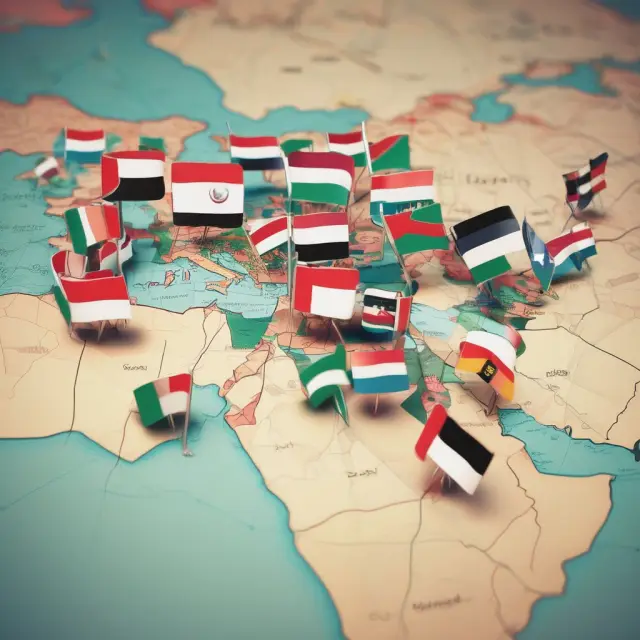
Established on March 22, 1945, the Arab League is a pan-Arab intergovernmental organization founded by seven countries: Egypt, Iraq, Jordan, Lebanon, Saudi Arabia, Syria, and Yemen. The League’s primary mission is to foster cooperation between its member states and promote their political, economic, cultural, social welfare, health, and nationality interests. By strengthening the ties among its members, the Arab League aims to safeguard their independence and sovereignty.
The organization’s founding document, known as the Pact of the League of Arab States, outlines the objectives of the Arab League. It states that the purpose of the League is “to draw closer the relations between member states,” with an ultimate goal of achieving close collaboration among them. The document further explains that the League seeks to serve as a platform for its members to coordinate their political activities and strengthen their relationships, ensuring their independence and sovereignty in both regional and global contexts.
The Arab League’s goals can be traced back to the early 1940s when many Arab countries were still under colonial rule. At that time, one of the primary objectives was to prevent the disintegration of Palestine due to the creation of Israel. The organization also aimed to promote economic growth and trade cooperation among its members.
Today, the League continues to work towards its goals through various programs and initiatives. These include regional cooperation in areas like education, health, and culture; coordinating diplomatic efforts; and advocating for the rights of Palestinian people. Additionally, the Arab League has played a role in conflict resolution between member states, mediating disputes and offering support during crises.
The importance of the Arab League lies in its ability to facilitate cooperation among Arab countries and address common challenges that its members face. By fostering closer ties, the organization helps create a more stable and united Arab world, enabling its members to better navigate an increasingly complex global environment.

Member States and Observer Countries of the Arab League
The Arab League, an organization comprising 22 member states and four observer countries, is primarily focused on promoting political unity, economic cooperation, and social development among its members. The current member nations of the Arab League include Algeria, Bahrain, Comoros, Djibouti, Egypt, Iraq, Jordan, Kuwait, Lebanon, Libya, Mauritania, Morocco, Oman, Palestine, Qatar, Saudi Arabia, Somalia, Sudan, Syria, Tunisia, United Arab Emirates, and Yemen.
The organization’s origins trace back to its founding in 1945 when seven nations came together to form the League, which later grew through expansion over the decades. Four countries hold observer status: Brazil, Eritrea, India, and Venezuela. Member states include a diverse range of nations with varying levels of population, wealth, GDP, and literacy rates but are predominantly Muslim and Arabic-speaking.
The League’s history is marked by its efforts to maintain independence, sovereignty, and common interests among member countries through various agreements like joint defense, economic cooperation, and free trade. The organization plays a significant role in coordinating governmental and cultural programs and facilitating cooperation while limiting conflict between members.
Algeria: Algeria gained its independence from France in 1962. It is the largest country in Africa and has the largest population among Arab League countries. Oil and gas are major resources for this North African nation, which is also known for its diverse culture and natural beauty.
Bahrain: An archipelago of more than 30 islands situated off the coast of Saudi Arabia, Bahrain is a small but strategically important country. It has been a significant trading hub since ancient times and is now a major financial center in the Gulf Cooperation Council (GCC) region.
Comoros: Comprised of four islands located between Madagascar and Mozambique, Comoros gained independence from France in 1975. It is known for its beautiful beaches and natural resources, including vanilla and perfumes, but faces challenges such as political instability and a weak economy.
Djibouti: Djibouti, a small country situated along the Horn of Africa, gained independence from France in 1977. It is strategically located at the crossroads of major trade routes between Europe, Asia, and Africa, making it an important transportation hub.
Egypt: Egypt, one of the founding members of the Arab League in 1945, has a rich history spanning thousands of years. With a population of over 100 million, it is the most populous country in the Arab world and is home to numerous ancient landmarks such as the Pyramids of Giza and the Sphinx.
Iraq: Iraq, an Arab-majority nation, has been marked by conflict and turmoil for decades. It has abundant resources like oil, making it a crucial player in the global energy market. Despite its rich heritage and natural resources, Iraq faces ongoing challenges related to political instability and terrorism.
Jordan: Jordan, another founding member of the Arab League, is a small but strategically important country located in the Middle East. It has been undergoing economic development and modernization efforts while maintaining stability amid regional turmoil.
Kuwait: Kuwait is a small but wealthy Arab country situated on the Arabian Gulf. It is a major oil producer and an influential diplomatic player in the region, with a strong focus on foreign policy and regional security issues.
Lebanon: Lebanon, located along the Mediterranean Sea, is a diverse and complex country with a unique culture that has been shaped by its history as a crossroads of various civilizations. It faces ongoing challenges related to political instability, sectarian tensions, and economic difficulties.
Libya: Libya, once known for its rich oil reserves, has faced prolonged conflict and instability since the 2011 revolution that toppled Muammar Gaddafi. Despite its vast resources, it remains a politically fragile nation with significant challenges related to governance and security.
Mauritania: Mauritania is a large, sparsely populated country located in West Africa. It gained independence from France in 1960 and faces ongoing challenges related to poverty, political instability, and the exploitation of its natural resources.
Morocco: Morocco, an Arab and Berber country, is a constitutional monarchy with a rich history and diverse culture. Its economy has been growing steadily over the past decades, making it an attractive destination for foreign investors.
Oman: Oman, a small but strategically important country in the Gulf region, has a long and rich cultural heritage. It has pursued a policy of modernization while maintaining its traditional values and is known for its scenic landscapes and sustainable tourism initiatives.
Palestine: Palestine, which includes the West Bank and Gaza Strip, has been under Israeli occupation since 1967. The Palestinian people aspire to establish an independent state with East Jerusalem as its capital. They face ongoing challenges related to security, economic development, and political instability.
Qatar: Qatar, a small but wealthy Arab country located on the Arabian Peninsula, has undergone rapid modernization in recent decades. It is known for its extensive natural gas reserves and its role as an influential diplomatic player in the region.
Saudi Arabia: Saudi Arabia, the largest country in the Arab world both by land area and population, is a major oil-producing nation and a leading member of the Organization of the Petroleum Exporting Countries (OPEC). It faces challenges related to political instability, economic diversification, and human rights issues.
Somalia: Somalia, located on the Horn of Africa, has faced decades of conflict, instability, and political turmoil since its independence from Italy in 1960. Despite its rich natural resources, it remains a fragile nation with significant challenges related to governance and security.
Sudan: Sudan is the third-largest country in Africa by area and faces numerous challenges related to economic development, political instability, and social issues. It gained independence from Egypt and the United Kingdom in 1956 after a prolonged struggle for self-determination.
Syria: Syria, an Arab republic situated at the crossroads of Europe, Asia, and Africa, is known for its ancient history and diverse culture. It has been embroiled in a prolonged conflict that started in 2011 and faces ongoing challenges related to political instability, humanitarian crises, and terrorism.
Tunisia: Tunisia, located on the Mediterranean Sea, gained independence from France in 1956 and is considered the birthplace of the Arab Spring uprisings in 2010. It has undergone significant political, economic, and social changes since then, making it an attractive destination for foreign investors.
United Arab Emirates: The United Arab Emirates (UAE), a federation of seven emirates located on the Arabian Peninsula, is known for its modern infrastructure, economic development, and diplomatic influence in the region. It has been a key player in regional security initiatives and humanitarian efforts.
Yemen: Yemen, the poorest country in the Arab world, gained independence from the United Kingdom in 1990 but has faced significant challenges related to political instability, conflict, and poverty. It is currently embroiled in a prolonged civil war that started in 2015.
Brazil: Brazil, the largest country in both South America and the Latin American region, holds observer status in the Arab League since it is home to a significant number of Arabic-speaking residents. It is known for its rich natural resources, economic power, and cultural diversity.
Eritrea: Eritrea gained independence from Ethiopia in 1993 and has been under the rule of an authoritarian government ever since. It faces challenges related to human rights violations, political instability, and a brain drain of its talented youth.
India: India, one of the largest and most populous countries in the world, holds observer status in the Arab League as it is home to a significant number of Arabic-speaking residents. It is a major global power with a diverse culture and rich history.
Venezuela: Venezuela, located in South America, holds observer status in the Arab League due to its historical ties to Arab countries through its large Arab expatriate community. It faces challenges related to political instability, economic turmoil, and social unrest.
The Role of the Arab League in Conflict Resolution
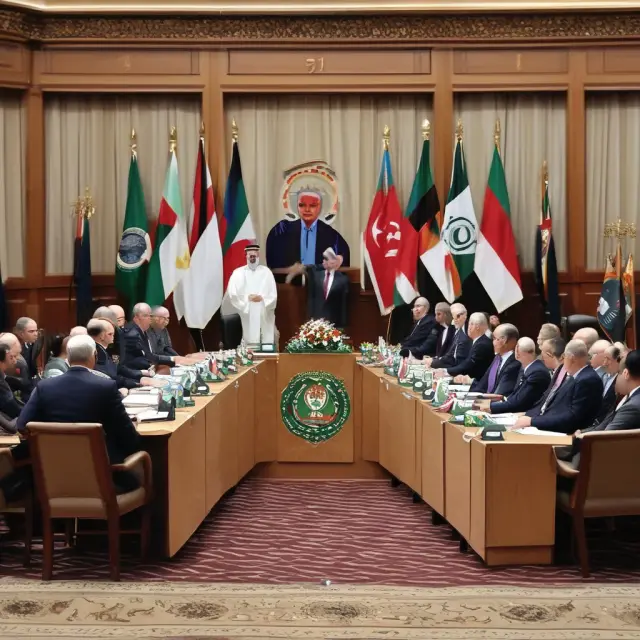
Since its establishment in 1945, the Arab League has played a vital role as a mediator in conflicts between member states. By promoting dialogue and cooperation, the league strives to maintain peace and stability within the Arab world. In this section, we will explore some instances where the Arab League has stepped in to resolve disputes and prevent potential crises.
One of the earliest examples of conflict resolution efforts by the Arab League took place when Egypt was expelled from the organization following its signing of a peace treaty with Israel in 1978. This marked the first time the league had revoked a member’s membership. However, Egypt was reinstated in 1989 after intense diplomatic efforts and public pressure to restore unity among Arab states.
During the 2011 Arab Spring uprisings, the Arab League took decisive action against Libya for its violent suppression of civilian protestors. The organization called for UN intervention, and in response, the United Nations authorized military actions that helped oust Muammar Gaddafi’s regime. Libya’s membership was eventually reinstated after a representative of the National Transitional Council was installed as the interim government.
In 2018 and 2019, the Arab League urged Turkey to withdraw from Syria, citing concerns over regional security and stability. The League’s efforts to mediate conflicts in the region have faced numerous challenges due to political divisions among members, external interference, and internal instability within some countries.
More recently, in April 2021, the Arab League called on Somalia to hold postponed presidential and parliamentary elections, emphasizing the importance of a peaceful democratic transition for the country’s future. The organization has also taken strong positions against Israel’s actions, such as its plans to annex the Jordan Valley in 2019 and its normalization deal with the United Arab Emirates in September 2020.
The Arab League Charter, which outlines the goals of the organization, emphasizes that one of its main objectives is to maintain peace and security within member states (Article 2(b)). In this regard, the league has provided a platform for dialogue between parties involved in conflicts and offered diplomatic support when necessary. However, its effectiveness as a conflict resolution entity has been tested by internal divisions among its members and external influences that have complicated efforts to maintain stability within the Arab world.
The Arab League’s role in conflict resolution is an essential component of its mission to promote cooperation between member states and safeguard their independence and sovereignty. Despite facing numerous challenges, the organization continues to strive for peaceful resolutions, making it a critical player in maintaining regional stability and security within the Arab world.
To learn more about the history, structure, and other aspects of the Arab League, be sure to check out the following sections in our comprehensive article: Background on the Arab League, The Mission and Goals of the Arab League, Member States and Observer Countries of the Arab League, The Arab League Charter, and Key Moments in the History of the Arab League.

The Arab League Charter
The Arab League is an organization founded in 1945 by seven Arabic-speaking nations with the aim of promoting cooperation and solidarity among its members. The cornerstone agreement that binds these countries together is the Arab League Charter. Comprised of 20 articles and three annexes, this document outlines the goals, principles, and structure of the League. Let us explore some essential aspects of the Arab League Charter in detail:
1. The Objectives
The primary objectives of the League are to promote economic, cultural, scientific, and social development among member states, enhance their political unity, defend their sovereignty and territorial integrity, and coordinate their foreign policies. These goals aim to improve overall cooperation between the Arab countries in a variety of fields.
2. Membership and Admission
Any Arab state that accepts the principles set forth in the charter is eligible to become a member of the League upon approval by a two-thirds majority of the Council of the Arab League. Currently, there are 22 member states and four observer countries within the organization.
3. The Secretariat-General
The Secretary-General of the Arab League acts as the executive head of the organization and is responsible for implementing its policies and decisions.
4. The Council of the Arab League
The Council is the supreme policy-making organ of the League, made up of foreign ministers or their representatives from each member state. The Council convenes at least twice a year to discuss and make decisions on matters affecting the organization.
5. Organs and Agencies
The League includes several specialized organs and agencies that deal with specific aspects of its work, such as education, science, culture, health, and information. These bodies work together to promote development in their respective fields across member states.
6. Financing
The Arab League’s budget is funded through contributions from member countries based on a scale determined by the Council.
7. Dispute Settlement
In cases of disputes between member states, the League acts as a mediator to help resolve conflicts peacefully through diplomatic means. The charter provides for binding arbitration and other dispute resolution mechanisms as needed.
By examining the Arab League Charter, we gain valuable insight into the role this organization plays in fostering cooperation among Arabic-speaking nations and promoting their collective interests. The charter’s provisions serve to strengthen the ties between member states and create a platform for collaboration on various issues that affect their future and wellbeing.

Key Moments in the History of the Arab League
Since its establishment in 1945, the Arab League has experienced a rich and complex history. From its founding in Cairo by seven Arab states to its current membership of 22 member nations, the organization has undergone significant changes, conflicts, and accomplishments. This section will delve into some essential moments in the Arab League’s history that have shaped the regional organization.
Foundation and Early Years (1945-1960)
The Arab League was established on March 22, 1945, after seven founding members signed the Alexandria Protocol in Cairo. The primary goal at its inception was to promote independence, sovereignty, affairs, and interests of its member countries. Egypt hosted the first headquarters for the League.
The Arab League’s History: A Roller Coaster Ride
The League’s history is a rollercoaster ride of achievements, conflicts, and changes in leadership. Some of the most significant milestones include:
1952: Gamal Abdel Nasser led Egypt to independence from British rule, and his influence expanded beyond the borders of Egypt. The Arab nationalist ideology he promoted challenged the monarchies within the Arab League, leading to a power struggle with Iraq’s Nuri Pasha.
1961-1967: The League’s headquarters were moved from Cairo to Tunis following the Egyptian-Israeli conflict. Egypt was expelled for signing the 1979 peace treaty with Israel, and its membership was reinstated in 1989.
1973 Arab-Israeli War: The war led by Egypt and Syria against Israel resulted in significant territorial gains, but it also highlighted the League’s limitations as a diplomatic entity.
1979: Egypt’s peace treaty with Israel led to its expulsion from the Arab League. Later that year, Libya was admitted, marking the first new member state since the organization’s founding.
2011: The Arab Spring uprisings brought significant changes to the Arab world and challenged the role of the Arab League. While the organization supported UN action against Gaddafi’s forces in Libya, it failed to resolve conflicts in Syria and Yemen effectively.
The Arab League has played a crucial role in shaping the political landscape of the Middle East and North Africa through its efforts in conflict resolution, economic cooperation, and advocacy for member states. As the organization continues to evolve, understanding its history provides valuable context and insights into its purpose and goals.

The Arab League’s Position on Israel
Since its inception, one of the most contentious issues that have shaped the Arab League has been its stance towards Israel. Founded with the goal of promoting sovereignty, independence, and the interests of its member states, the League’s approach to Israel and the Israeli-Palestinian conflict is crucial for understanding its role in the region.
Originally, one of the primary objectives of the Arab League was preventing the establishment of a Jewish state within the territory of historic Palestine. The Arab nations saw this as a threat to their sovereignty and independence. However, Israel’s declaration of independence on May 14, 1948, marked the beginning of the first Arab-Israeli War, and the League played an instrumental role in orchestrating military action against the newly formed state.
The Arab League’s position towards Israel has been inconsistent over the decades. Although it officially recognizes Palestine as a separate nation, its stance on Israel has fluctuated depending on various factors, including regional politics, external pressures, and the interests of member states.
One significant example of this inconsistency was the Arab League’s economic boycott of Israel, which lasted from 1948 to 1993. This boycott aimed to isolate Israel economically and politically, with the hope that it would put pressure on the Israeli government to withdraw from occupied territories and address Palestinian rights.
In recent years, the Arab League’s stance towards Israel has become more nuanced. While some member states have maintained their opposition to Israel, others have adopted a more conciliatory approach. In 2019, the Arab League condemned Israel’s plans to annex parts of the West Bank and the Jordan Valley, but it did not issue a formal denunciation when the United Arab Emirates normalized diplomatic ties with Israel in September 2020.
The Palestinian issue remains a significant point of contention within the Arab League. Some members believe that the organization should take a more assertive stance and actively push for a two-state solution, while others argue that it is not an effective platform for addressing this complex conflict. Despite these differences, the Arab League continues to recognize Palestine as a full member state and supports its efforts towards self-determination.
It’s important to note that the Arab League’s position on Israel is influenced by various factors beyond its control, such as regional power dynamics, external interventions, and the evolving international political landscape. Understanding the organization’s complex relationship with Israel requires considering these factors in addition to its stated objectives and historical context.
Arab League and Economic Cooperation
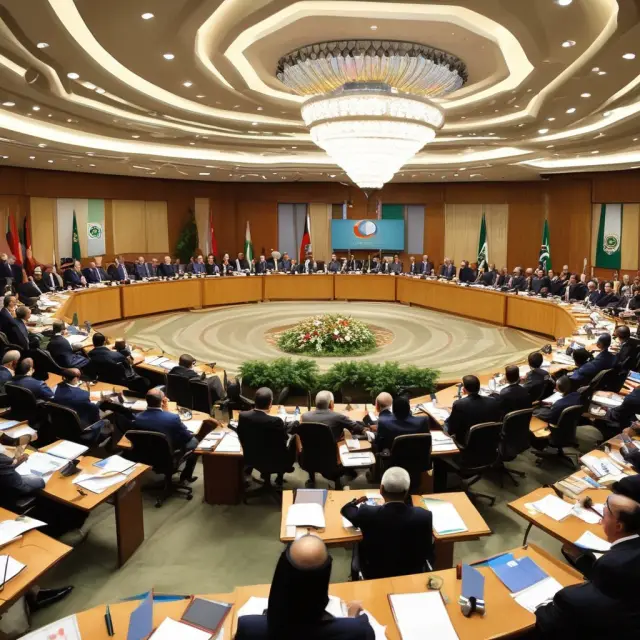
The Arab League is not only known for its role in promoting political stability and cooperation among its members but also for fostering economic development. This section will delve deeper into how the League has contributed to economic growth through various initiatives, agreements, and projects.
A significant focus of the Arab League’s efforts has been on promoting free trade among member states. The organization has encouraged its members to sign bilateral and multilateral Free Trade Agreements (FTAs) to improve economic cooperation and increase interconnectedness between countries. For instance, in 2001, the League established the Greater Arab Free Trade Area (GAFTA), which aims to create a single market for goods among its members, gradually eliminating tariffs and other trade barriers.
Moreover, the League has emphasized the importance of infrastructure development as a means to boost economic growth. The Arab Ministerial Council of Transport, in collaboration with the Economic and Social Commission for Western Asia (ESCWA), created the Program for Upgrading the Infrastructure of the Arab Countries in 2001 to improve transportation networks within member states. This initiative aims to support the development of more efficient transport systems, thereby reducing travel costs and enhancing connectivity between countries.
Additionally, the League has been instrumental in addressing regional economic challenges, such as food security, through various projects. For instance, the Arab Food Security Initiative was launched in 2013 by the League’s Food Security Unit to promote self-sufficiency and reduce dependency on imported food. This initiative is a testament to the League’s role in addressing common challenges faced by its members and fostering economic cooperation.
Furthermore, the Arab League has recognized the importance of private sector involvement in driving economic growth. In 2017, the Businessmen’s Forum was established as part of the League’s efforts to involve the private sector in decision-making processes and promote public-private partnerships. This platform allows business leaders from various member states to discuss opportunities for collaboration and share best practices to foster a more business-friendly environment across the region.
However, despite these initiatives, economic cooperation among Arab League members has not been without challenges. Conflicts, political instability, and external interference have often hindered progress toward greater economic integration. For example, the ongoing conflict in Syria, the crisis in Yemen, and tensions between various member states have created significant barriers to cooperation. In addition, unequal economic development among members has led to imbalances within the organization.
In conclusion, the Arab League’s role in promoting economic growth and cooperation among its members cannot be overlooked. Through initiatives such as free trade agreements, infrastructure development projects, and private sector involvement, the League has attempted to address common challenges faced by its members and create a more interconnected regional economy. Despite facing numerous obstacles, the League remains committed to fostering economic development and improving the lives of its citizens.
Sources: Arab League (www.arableague.org), World Bank, ESCWA, Council on Foreign Relations, United Nations.
The Arab League Council: Governance and Structure
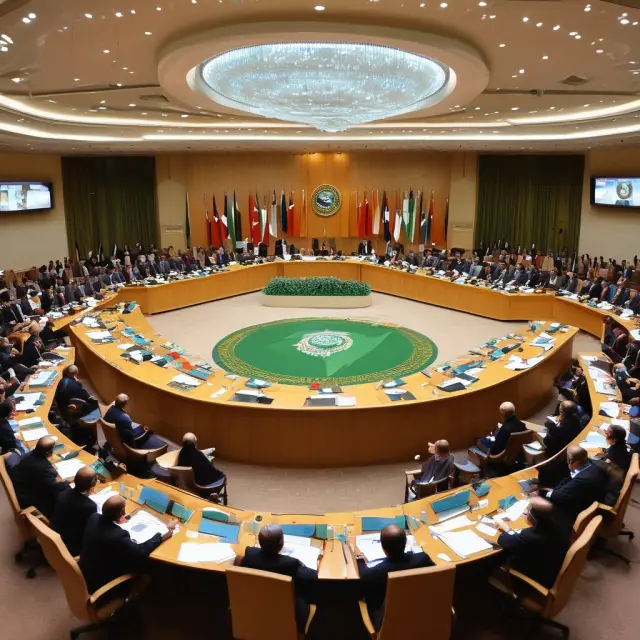
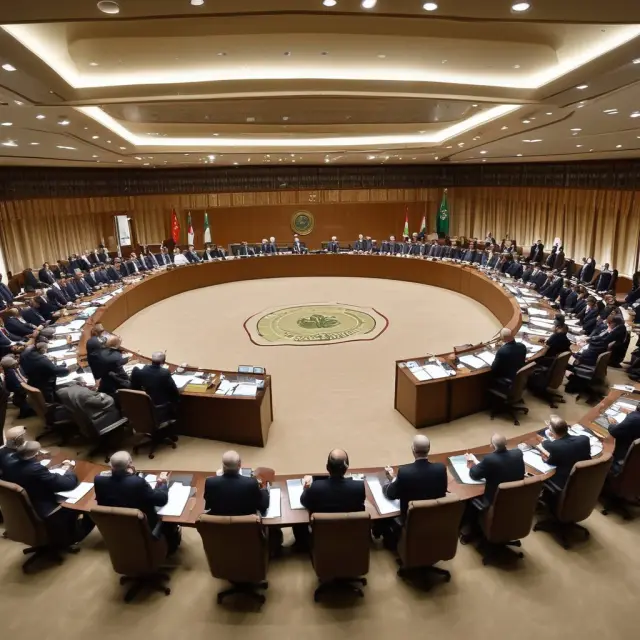
At the core of the Arab League’s decision-making process is the Arab League Council. Comprised of representatives from each member state, it acts as both the executive body and highest authority within the organization. The council meets twice a year in regular sessions, held in March and September, and has the ability to call for special meetings if needed. Each member state holds an equal vote and contributes to the decision-making process.
The Arab League Charter defines the Council’s responsibilities: It can adopt decisions binding on all members, propose recommendations, and submit them to the General Assembly for approval. The Council may also issue statements on behalf of the League concerning any matter within its scope. Additionally, it oversees the implementation of policies established by the league and recommends membership of other Arab states not yet part of the organization.
The league’s Secretariat, which manages day-to-day operations, is directed by the Secretary-General. The General Secretariat is an essential component of the council, serving as the administrative body that implements policies, coordinates activities among member states, and maintains communication channels.
During crises or disputes within the league, the council plays a crucial role in mediating diplomatic solutions. For instance, it helped mediate conflicts between Egypt and Libya, as well as the Israeli-Palestinian conflict. However, its effectiveness can be hindered by the various political divisions and differing interests among member states.
The Arab League’s governing body has undergone significant changes over the years. Its influence waned during the Cold War era when members aligned with different superpowers. It faced challenges following the political shifts within member nations, such as Egypt under Gamal Abdel Nasser and Libya under Muammar Gaddafi. Additionally, external factors like the invasion of Iraq by the United States have created rifts among Arab League members.
Despite its challenges, the council remains a vital part of the organization, striving to promote unity, cooperation, and dialogue among Arabic-speaking nations while addressing their common interests and concerns.
Challenges Faced by the Arab League
Since its establishment in 1945, the Arab League has faced numerous challenges that have hindered its ability to effectively promote cooperation among its member states. Some of these challenges include conflict resolution, external interference, and internal divisions.
Conflict Resolution: One of the most significant challenges for the Arab League has been resolving conflicts between its members. The organization has had limited success in this area due to political dynamics within member states and the involvement of external actors. For instance, during the Arab Spring uprisings in 2011, the League acted decisively by revoking Libya’s membership because of government violence against civilian protestors. However, it did little to assist the Shiite-led Iraqi government when it faced challenges from the Islamic State in 2018 and 2019. Syria’s membership was also under threat due to its government’s violent response to civilians. The Arab League called on Turkey to withdraw from Syria in both 2018 and 2019, but it faced significant challenges in enforcing its decisions due to the involvement of external powers like Russia and Iran.
External Interference: Another challenge for the Arab League is the influence of external actors on its member states. The organization has faced criticism for being unable to address the impact of foreign interference in the affairs of its members, especially in conflicts involving Israel or other regional powers like Iran and Turkey. For example, during the Syrian Civil War, external involvement by major powers made it difficult for the Arab League to broker a peaceful resolution. Similarly, the normalization of diplomatic relations between the United Arab Emirates (UAE) and Israel in 2020 sparked controversy within the league. While some members approved of the move, others strongly opposed it. The Arab League ultimately took a neutral stance on the issue, leading to criticism that it was unable or unwilling to take a firm position on matters affecting its members.
Internal Divisions: The Arab League has also faced internal divisions that have weakened its ability to promote cooperation among its member states. During the Cold War era, some members were aligned with the Soviet Union while others leaned towards Western nations. More recently, monarchies like Saudi Arabia, Jordan, and Morocco have experienced hostilities, disrupting efforts at regional cooperation. The League has also faced challenges from countries undergoing political change, such as Egypt under Gamal Abdel Nasser and Libya under Muammar Gaddafi. Additionally, the attack on Saddam Hussein’s Iraq by the United States in 2003 created significant rifts between members of the Arab League.
Despite these challenges, the Arab League remains a vital platform for dialogue, cooperation, and conflict resolution among its members. The organization has continued to address various issues through its specialized committees and agencies, such as the Arab Maghreb Union, the Arab Fund for Social and Economic Development, and the Arab Organization for Agricultural Production. As it enters its eighth decade, the Arab League will continue to face new challenges but remains an essential voice in promoting stability, cooperation, and development in the Middle East and North Africa region.
In conclusion, the Arab League has faced significant challenges since its establishment, including conflict resolution, external interference, and internal divisions. These issues have hindered its ability to effectively promote cooperation among its member states. However, despite these challenges, the organization remains a vital platform for dialogue, cooperation, and conflict resolution in the Middle East and North Africa region. It continues to address various issues through specialized committees and agencies while maintaining its role as an essential voice in promoting stability and development in the region.

FAQ: Common Questions About the Arab League
The Arab League is a significant regional organization for cooperation among Arabic-speaking nations, primarily based in Africa and Asia. Founded in 1945 with seven original members, it now comprises 22 member states and four observer countries. This FAQ aims to address some of the most common questions regarding the history, goals, structure, and impact of the Arab League.
What is the Arab League?
The Arab League is a union of Arabic-speaking African and Asian countries dedicated to promoting political and economic cooperation, independence, sovereignty, and mutual interests among its members. The organization was established on March 22, 1945, in Cairo, Egypt, by seven founding members: Egypt, Iraq, Jordan, Lebanon, Saudi Arabia, Syria, and Yemen.
What is the Arab League’s mission?
The primary mission of the Arab League is to foster unity and cooperation among its member states through economic, cultural, political, and social programs. Its objectives include promoting Arab identity, enhancing solidarity, and improving living conditions for its citizens.
Which countries belong to the Arab League?
Currently, there are 22 member nations in the Arab League: Algeria, Bahrain, Comoros, Djibouti, Egypt, Iraq, Jordan, Kuwait, Lebanon, Libya, Mauritania, Morocco, Oman, Palestine, Qatar, Saudi Arabia, Somalia, Sudan, Syria, Tunisia, United Arab Emirates, and Yemen. There are also four observer countries: Brazil, Eritrea, India, and Venezuela.
What is the role of the Arab League in conflict resolution?
The Arab League has played a significant role in attempting to mediate conflicts between its members. Its interventions have not always been successful, but it has worked diligently to promote peace and stability within the region. Some instances include its efforts during the Arab Spring uprisings in 2011 and the ongoing Israeli-Palestinian conflict.
What is the Arab League Charter?
The Arab League Charter is the agreement that binds member states and outlines their collective goals. It was established on March 22, 1945, and has been amended several times over the years to reflect evolving regional needs and priorities. The charter consists of 20 articles and three annexes, focusing on various aspects such as membership, governance, conflict resolution, and cooperation in specific areas like health, education, and culture.
What challenges have the Arab League faced?
The Arab League has encountered several significant challenges throughout its history, including conflicting interests among member states, external interference, and internal divisions. The organization’s effectiveness and influence have been hampered by regional conflicts and political instability, making it difficult to achieve its objectives consistently.
 Next entry · No. 204Understanding Arbitrage: Profiting from Market Inefficiencies in Finance and Investment
See also
-
 No. 5,803
08 Oct 2025
19 min
Understanding the World Gold Council: Its Role in Gold Mining, Investment, and Consumption
Business Finance
No. 5,803
08 Oct 2025
19 min
Understanding the World Gold Council: Its Role in Gold Mining, Investment, and Consumption
Business Finance -
 No. 5,797
08 Oct 2025
19 min
Understanding the Role and Impact of the World Bank Group: A Comprehensive Guide for Institutional Investors
Business Finance
No. 5,797
08 Oct 2025
19 min
Understanding the Role and Impact of the World Bank Group: A Comprehensive Guide for Institutional Investors
Business Finance -
 No. 5,757
05 Oct 2025
25 min
Understanding Wisdom of Crowds: The Collective Intelligence of Diverse Groups
Business Strategy
No. 5,757
05 Oct 2025
25 min
Understanding Wisdom of Crowds: The Collective Intelligence of Diverse Groups
Business Strategy -
 No. 5,700
30 Sep 2025
23 min
Understanding the Prestige and Significance of White Shoe Firms in Finance and Investment
Business Finance
No. 5,700
30 Sep 2025
23 min
Understanding the Prestige and Significance of White Shoe Firms in Finance and Investment
Business Finance -
 No. 5,695
30 Sep 2025
21 min
White Collar: Understanding the Higher Echelon of Non-Manual Labor
Business Finance
No. 5,695
30 Sep 2025
21 min
White Collar: Understanding the Higher Echelon of Non-Manual Labor
Business Finance -
 No. 5,462
11 Sep 2025
20 min
Understanding Vehicle Excise Duty: Origins, Changes, and Recent Developments
Taxation
No. 5,462
11 Sep 2025
20 min
Understanding Vehicle Excise Duty: Origins, Changes, and Recent Developments
Taxation