Understanding the Balance of Payments: Components, Calculation, and Significance
Learn about Understanding the Balance of Payments: Components, Calculation, and Significance in this comprehensive guide.
Introduction to the Balance of Payments (BOP)
The Balance of Payments (BOP) is a comprehensive record of all transactions between an economy and the rest of the world over a defined period, typically a quarter or a year. It provides a detailed account of international trade in goods and services, capital movements, and financial transactions. The balance of payments is a crucial tool for understanding a country’s economic interactions with the global community and assessing its overall economic health.
Definition and Function of Balance of Payments (BOP)
Balance of Payments (BOP) records all international transactions between a country’s residents, businesses, government sectors, and foreign entities. The purpose of BOP is twofold: to track the economic performance of a country by measuring its trade in goods, services, income, and capital, as well as to monitor a nation’s net position in various international financial instruments.
Components of Balance of Payments (BOP)
The balance of payments is composed of two main accounts: the current account and the capital account. Each account represents distinct economic transactions and functions.
1. Current Account: The current account tracks a country’s net trade in goods, services, income, and transfers with other nations during a specific period. It includes transactions related to merchandise trade (exports and imports), services (tourism, transportation, and consulting), income (interest and dividends), and transfers (foreign aid or remittances). A surplus indicates that the country exports more than it imports in terms of these categories, while a deficit implies the reverse.
2. Capital Account: The capital account records the net movement of financial assets between a country and foreign entities, such as sales of stocks, bonds, and real estate or changes in loans and investments. These transactions may be driven by investors seeking higher returns, companies looking for international expansion, or governments pursuing diplomatic goals through economic means.
Understanding the Balance of Payments (BOP): The balance of payments is essential for evaluating a country’s overall economic position and identifying its trade relationships with other nations. By tracking the components of the BOP, policymakers, investors, businesses, and researchers can assess various aspects of economic performance, inform international negotiations, and make informed decisions regarding potential investments or financial risks.
Stay tuned for further sections on calculating the balance of payments, historical developments, current account deficits and surpluses, policy implications, and frequently asked questions.
Components of the Balance of Payments
The balance of payments (BOP) is a record of all transactions between an economy and the rest of the world over a specified period. It provides insight into a country’s foreign trade, investments, capital movements, and financial transactions. The BOP consists of two primary accounts: the current account and the capital account. Sometimes, the capital account may also be referred to as the financial account.
Current Account
The current account represents the economic exchanges between a country and its trading partners for goods, services, and income. It includes the following components:
- Net exports (exports – imports) of goods: Refers to the difference in value between a country’s exports and imports of physical goods. A positive net export value indicates that the country is selling more goods abroad than it is importing, while a negative net export value signifies the opposite.
- Net services: This component measures the difference between a country’s earnings from exports of services (like tourism, consulting, and banking) minus its payments for imported services. A positive net service balance indicates that the country earns more in services than it spends abroad, while a negative value suggests the opposite.
- Net income: This component includes all income earned by residents of a country from foreign sources, such as interest, dividends, and profits, minus payments made to foreigners for their services, rents, or royalties. A positive net income balance indicates that the country receives more in foreign income than it pays out, while a negative value implies the opposite.
- Net transfers: This component includes both receipts and payments of funds that do not involve any underlying transaction but result from a transfer of economic benefits between countries. Examples include remittances from foreign workers to their home countries or foreign aid. A positive net transfer balance represents the country receiving more transfers than it makes, while a negative value indicates the opposite.
The current account is crucial because it measures a country’s ability to pay for its imports and service its external debt. In other words, a country with a current account deficit may need to borrow capital from abroad or sell assets to finance its foreign obligations. Conversely, a current account surplus implies that the country generates more income than it spends on foreign products and services.
Capital Account
The capital account records all transactions related to transfers of financial assets between countries. These include:
- Capital transactions: This component covers purchases or sales of shares, stocks, bonds, and other financial instruments between residents and non-residents, as well as loans, deposits, and other changes in ownership.
- Transactions in central bank reserves: Central banks engage in various activities, such as buying and selling foreign currencies to manage their exchange rates or intervening in foreign bond markets. These transactions are recorded under the capital account.
The capital account is significant because it measures a country’s net inflows or outflows of funds due to investment decisions, changes in ownership, or central bank interventions. A positive capital account balance indicates that a country has received more capital than it has sent abroad, while a negative value suggests the opposite. Capital flows are essential for economic growth and development as they can bring new technologies, skills, and financial resources into an economy.
Financial Account
While not a distinct component of the BOP per se, the financial account records all transactions related to a country’s assets and liabilities held abroad by its residents and those held domestically by non-residents. The net position of the financial account is closely related to the capital account but includes items such as foreign securities held by domestic investors and domestic securities held by foreign investors, among others.
Conclusion
In summary, the balance of payments is an essential tool for understanding a country’s economic exchanges with the rest of the world. By analyzing the current account and capital account components, we can assess a nation’s ability to pay for imports and service its external debt, as well as its net inflows or outflows of financial capital. These insights are crucial for policymakers, investors, and analysts seeking to make informed decisions in an increasingly globalized economy.

The Current Account: Net Exports and Imports
Understanding Balance of Payments (BOP) transactions requires a solid grasp of the concept behind the current account, which is an essential component of this vital economic tool. The current account represents the net flow of goods, services, income, and transfers between a nation and other countries during a specified period. This section focuses on explaining the composition of current account transactions in detail.
1. Net Trade in Goods and Services
The most substantial element within the current account is the trade component, which includes both exports and imports of goods and services. Exports refer to goods and services sold to foreign countries, while imports represent purchases of goods and services from abroad. The difference between a country’s total exports and imports yields the net trade balance (also called net trade in goods and services or net exports). A positive value indicates a surplus, meaning the nation exports more than it imports. Conversely, a negative value signifies a deficit, implying that the country imports more than it exports.
2. Income from Abroad: The Capital Account Connection
The current account’s second major component is income from abroad. This category encompasses earnings generated by a nation’s overseas investments and foreign workers residing domestically. For instance, when a firm from Country A earns interest on its bonds issued in Country B, the revenue derived is recorded under income from abroad within the current account of Country A. Conversely, wages paid to foreign employees working for a domestic business are recorded as a debit under the same category. This component’s net value represents the difference between earnings received and payments made.
3. Transfers
The third and final piece of the current account is transfers, which include various kinds of payments made without any expectation or requirement for a return. Some common examples of this category are foreign aid, remittances from immigrants working abroad to their families in their home country, and pension payments to retired citizens living abroad. As with other components, the net value of transfers represents the difference between outgoing and incoming transfers.
The significance of understanding current account transactions lies in their potential impact on a country’s economy and exchange rate. A persistent surplus can lead to an appreciation of a nation’s currency due to increased demand for its goods and services from abroad. On the contrary, a deficit could result in currency depreciation as the country needs to obtain foreign currency to pay for its imports, putting pressure on inflation.
In conclusion, a solid understanding of current account transactions is crucial when studying balance of payments data. The net trade balance, income from abroad, and transfers are the three primary components that make up this essential piece of the international economic puzzle. Understanding these concepts will provide readers with the foundational knowledge to further explore the intricacies of the balance of payments and its implications on national and global economies.

The Capital Account: Transactions in Assets and Liabilities
One crucial element of the balance of payments (BOP) statement is the capital account, which records transactions involving the transfer of non-produced assets between countries. This section will delve deeper into what constitutes capital account transactions and explain their implications on a country’s economy.
Capital account transactions primarily include changes in assets and liabilities resulting from international investment, borrowing, and lending activities. To grasp this concept better, let’s examine some specific types of capital account transactions:
- Capital transfers: These involve transfers between individuals or organizations that do not entail the sale or purchase of goods or services. For example, foreign aid and remittances by migrant workers to their families back home fall under this category.
- Investment income: This includes interest, dividends, royalties, and rents earned on investments in foreign assets. If a British pension fund earns interest on a bond issued by a German company, the income generated would be recorded as a credit in the UK’s capital account.
- Capital gains or losses: These transactions involve the sale or disposal of foreign investment assets such as stocks, bonds, and real estate, resulting in profits (capital gains) or losses. When a French investor sells shares in a U.S. tech company, the realized capital gain (or loss) would be recorded accordingly.
- International borrowing: Capital account transactions also include loans taken out by governments, corporations, or individuals from foreign entities. For instance, when a South Korean corporation borrows funds from a Japanese bank to expand its operations, the loan would be recorded as a credit in the borrower’s capital account.
- Foreign direct investment: This involves acquiring significant ownership (10% or more) of a company or assets in another country. When Toyota Motor Corporation invests in building a new manufacturing plant in the U.S., this transaction would be recorded as a credit in Japan’s capital account and a debit in the U.S.’s capital account.
It is essential to note that capital account transactions do not directly contribute to a nation’s output or income, unlike current account transactions related to goods, services, and income from abroad. However, they significantly impact a country’s net international investment position (NIIP), which reflects the difference between the total value of its assets held abroad and its foreign liabilities.
The interplay between a country’s current account balance and capital account transactions is crucial to understanding the implications of these transactions on the economy. For instance, if a country runs a persistent trade deficit but simultaneously records significant capital inflows due to increased foreign direct investment or borrowing, it might temporarily mask an underlying economic imbalance.
Furthermore, central banks can intervene in currency markets using their foreign exchange reserves as part of capital account transactions. These interventions help maintain the value of a country’s currency and stabilize financial markets. The central bank may sell or buy foreign currency to influence the exchange rate or even impose capital controls to limit the outflow or inflow of capital.
In summary, understanding capital account transactions is vital in analyzing a country’s international economic position and evaluating its macroeconomic policies. As we continue exploring the world of balance of payments, we will further discuss the historical development and significance of this critical economic concept.
Calculating the Balance of Payments: Formula and Methodology
The balance of payments (BOP) formula sums up all transactions between an economy and the rest of the world during a specific period, including imports and exports of goods and services, capital movements, and transfers. The overall goal is to ensure that the total of these transactions is zero. The calculation of the balance of payments consists of three main components: the current account, capital account, and financial account.
1. Current Account:
The current account reflects a nation’s trade in goods and services, as well as income from abroad and transfers between countries. Current account transactions include net exports (exports minus imports) of goods and services, investment income (dividends, interest, and royalties), and transfers such as foreign aid or remittances by migrant workers.
To calculate the current account balance:
Current Account = Exports – Imports + Net Services (e.g., financial services, travel) + Net Income (e.g., interest, dividends) + Net Transfers
A trade deficit in goods and services is typically offset by a surplus in services or income if the current account balance is positive. A country running a trade deficit will need to find other ways to finance the gap through capital inflows.
2. Capital Account:
The capital account records transactions related to financial assets, such as investments, loans, and changes in foreign exchange reserves held by the central bank. These transactions include acquisition or disposal of foreign assets, issuance and redemption of securities, and the transfer of a loan or debt obligations between countries.
To calculate the capital account balance:
Capital Account = Net Capital Transactions + Changes in Foreign Exchange Reserves
If a country experiences an outflow of capital (net selling of foreign assets), it results in a negative capital account balance. Conversely, if there is a net inflow of capital, the capital account will be positive.
3. Financial Account:
The financial account captures transactions involving financial instruments such as stocks, bonds, and loans between countries. It records the acquisition or disposal of foreign equity, debt securities, or direct investment in other countries’ businesses.
To calculate the financial account balance:
Financial Account = Net Equity + Net Debt Securities + Net Financial Derivatives + Other Investments (e.g., trade credits)
The financial account can be thought of as an extension of the capital account, focusing on transactions related to financial instruments and direct investment rather than reserves. Both the current and capital accounts must balance each other out for the overall balance of payments to equal zero:
Balance of Payments = Current Account + Capital Account + Financial Account + Balancing Item (adjustments for any discrepancies) = 0
Historical Development and Significance of Balance of Payments
The Balance of Payments (BOP) is an essential economic metric representing all transactions between a country’s residents, government, and foreign entities over a specified period. This section delves into the historical context, importance, and significance of understanding the BOP in today’s global economy.
A brief history of the Balance of Payments reveals its origins from international trade transactions dating back centuries. Before the 19th century, when economies were less interconnected, balance of payments issues were primarily concerned with trade deficits and surpluses denominated in precious metals like gold. With the advent of the industrial revolution, increased economic integration led to a greater frequency of balance of payment crises, which posed challenges for countries facing persistent trade imbalances.
The Bretton Woods system that emerged after World War II introduced a more structured and formalized international monetary framework, featuring fixed exchange rates and convertibility of currencies into gold. As the world economy evolved in the post-World War II period, balance of payment crises continued to occur. The collapse of the Bretton Woods system following the United States’ abandonment of the gold standard during the Nixon Shock in 1971 marked a turning point for the global economic landscape. Currencies have since floated freely, allowing countries to intervene in foreign exchange markets to manage their currencies’ values and maintain competitiveness in international trade.
The significance of understanding the balance of payments stems from its role as a key indicator of a country’s external financial position. BOP data informs policymakers about a nation’s economic relationships with other countries, allowing them to assess its trade performance, capital flows, and overall position in the international economy. Balance of payments deficits and surpluses can have significant implications for exchange rates, inflation, economic growth, and international cooperation.
In today’s increasingly interconnected global economy, a well-functioning balance of payments system is crucial for maintaining financial stability and fostering international economic cooperation. The International Monetary Fund (IMF) plays an essential role in monitoring, analyzing, and addressing potential balance of payment issues among its member countries. In doing so, it contributes to promoting global economic growth and stability while addressing the challenges posed by imbalances and crises.
Understanding the historical development and significance of the balance of payments is crucial for anyone interested in international economics, trade, or investing. By recognizing the origins, evolution, and importance of this critical economic concept, we gain a deeper appreciation for its role in shaping economic policy, exchange rates, and global economic cooperation.

Current Account Deficits and Surpluses
Understanding the Implications for a Country’s Economy and Exchange Rates
A current account surplus or deficit is an essential aspect of a country’s balance of payments, providing insights into its economic health and external position in the global economy. The current account records all transactions involving goods, services, income, and unrequited transfers between a nation and other countries (International Monetary Fund, 2018). By examining current account deficits or surpluses, we can assess their implications for a country’s economy and exchange rates.
Current Account Deficits: When a country imports more goods and services than it exports, it creates a current account deficit (World Bank, 2021). A deficit indicates that the nation is relying on foreign capital to fund its consumption or investment excesses. The most common reasons for this situation include high domestic consumption levels, low savings rates, or structural trade imbalances. Current account deficits may raise concerns as they can lead to several adverse economic consequences.
Firstly, they require a country to rely on foreign capital inflows to finance their external gap, which can increase the pressure on the domestic currency. To maintain the value of their currency, countries facing significant current account deficits might intervene in the foreign exchange market by selling their own currency and buying foreign currencies. This intervention can help stabilize the exchange rate but reduces international reserves over time (BIS, 2019).
Secondly, large current account deficits may lead to an increased reliance on foreign capital and a potential loss of economic sovereignty. A country’s vulnerability to external shocks can increase when it has a large current account deficit, as any decrease in international funding could create significant problems for the domestic economy.
Lastly, persistent current account deficits may lead to a deterioration in a nation’s net international investment position (IIP), which measures its total assets and liabilities vis-à-vis other countries. A declining IIP suggests that a country is accumulating more debt than it is acquiring foreign assets, making it increasingly reliant on the goodwill of foreign investors for continued access to external financing.
Current Account Surpluses: On the contrary, when a nation exports more goods and services than it imports, it records a current account surplus (World Bank, 2021). A surplus indicates that the country is earning more from its international transactions than it spends abroad. This situation often arises due to a domestic saving surplus or a structural trade advantage. While current account surpluses may not appear problematic at first glance, they can also present challenges for the global economy and the surplus country itself.
The most significant issue associated with large current account surpluses is their potential impact on global imbalances. When countries like China run large current account surpluses while others, such as the United States or Europe, exhibit persistent deficits, imbalanced trade flows can emerge, affecting the international monetary system and financial markets (International Monetary Fund, 2018).
Moreover, countries with persistent current account surpluses may face criticism for manipulating their exchange rates to maintain an undervalued currency, making their exports more competitive on the global market. This practice can exacerbate trade imbalances and potentially harm other countries’ economies by reducing their export competitiveness (BIS, 2019).
In conclusion, current account deficits and surpluses play a crucial role in understanding the economic health of a country and its position in the global economy. Both situations come with their challenges, including implications for exchange rates, international investment positions, and global imbalances. By analyzing these trends, policymakers can implement strategies to address trade imbalances, maintain stable exchange rates, and promote sustainable economic growth.
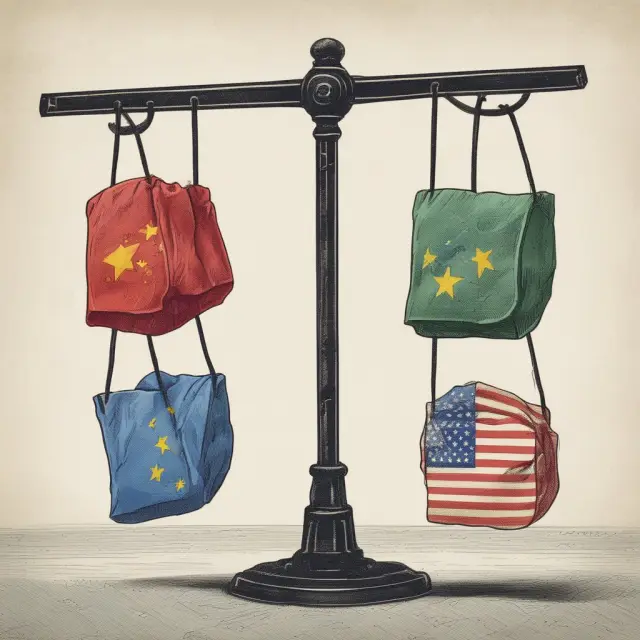
Balance of Payments: Policy Implications and Central Bank Interventions
Policymaking implications of Balance of Payment (BOP) data are far-reaching as they provide insights into a country’s economic health, trade relationships, and external financing requirements. This section sheds light on the policy implications arising from balance of payment imbalances and central bank interventions in foreign exchange markets.
Imbalances between countries’ current accounts are common occurrences, especially when nations pursue various economic policies to boost their exports or attract foreign investments. A country’s policymakers may implement targeted measures to address specific objectives that impact the balance of payments data significantly.
For instance, a nation might adopt policies designed to encourage foreign investment in a particular sector. Alternatively, they could attempt to artificially keep their currency at a low level to stimulate exports and build up their currency reserves. These actions, in turn, are captured in the balance of payment data.
One country with a substantial current account deficit is the United States, which had a balance of $616 billion in 2020. In contrast, China recorded the world’s largest surplus at $274 billion during the same period. These imbalances have significant implications for global trade and financial stability.
Moreover, central banks play an essential role in managing foreign exchange markets by intervening to influence currency values or maintain orderly markets. Central bank interventions can occur when a country experiences sudden capital inflows or outflows that cause excessive volatility in their currency, threatening economic stability. In these cases, central banks may buy or sell their currency to stabilize the exchange rate and prevent sharp fluctuations.
For example, during the European debt crisis, several central banks intervened heavily in foreign exchange markets to prevent the euro from experiencing a significant depreciation against other major currencies. Similarly, during the COVID-19 pandemic, most major central banks responded with expansionary monetary policies aimed at supporting their economies and preventing currency appreciation, especially in emerging markets.
In conclusion, understanding the balance of payments is crucial for policymakers as it offers insights into a country’s economic health, trade relationships, and external financing requirements. The data can help inform decisions on implementing targeted measures to address imbalances between countries or central bank interventions in foreign exchange markets to maintain financial stability.
As economies become increasingly integrated, managing balance of payments effectively becomes even more essential for nations seeking to maintain stable currencies and sustainable economic growth.

The Role of the IMF in Balance of Payments and International Economic Cooperation
The International Monetary Fund (IMF) plays a crucial role in global economic cooperation through its involvement with countries’ balance of payments data. The IMF, an international organization established in 1945 to promote international monetary cooperation and exchange rate stability, has become the primary forum for international consultation and collaboration on financial issues. This section delves into the significance of the IMF within the context of balance of payments statistics and its efforts in addressing various economic challenges.
The International Monetary Fund (IMF) is a key player in maintaining global economic stability through its cooperation with member countries’ balance of payment data. Established in 1945, the organization aims to promote international monetary cooperation and exchange rate stability. In this context, understanding the role of the IMF in relation to balance of payments data provides valuable insights into its overall mission and impact.
One critical function of the IMF is providing loans to countries facing balance of payment deficits or other economic challenges. The organization’s financial assistance, usually in the form of Special Drawing Rights (SDRs), can help countries stabilize their currencies and restore their international liquidity while implementing economic reforms. By doing so, the IMF aims to prevent potential crises from spreading, maintain confidence in the global economy, and safeguard financial stability.
Moreover, the IMF acts as an important forum for international consultation, offering a platform for dialogue between member countries on various macroeconomic issues. The organization’s regular surveillance activities help identify emerging challenges and provide recommendations to address them. Through its policy advice, the IMF assists members in formulating effective economic policies, ensuring they remain sustainable and aligned with their long-term objectives.
Additionally, the IMF plays a vital role in promoting transparency and accuracy in balance of payments data through its special data annexes (SDAs) program. The SDAs assess countries’ statistical capabilities, providing technical assistance to improve reporting on key indicators like current account transactions, capital movements, and international reserves. By fostering better statistics, the IMF enables more informed policymaking, enhancing cooperation among its members and promoting global economic stability.
The organization also participates in coordinated actions aimed at addressing systemic risks within the global financial system. During times of economic uncertainty or crises, the IMF can deploy its resources to help stabilize markets, provide liquidity, and promote a cooperative approach among member countries.
A prominent example of the IMF’s role during an economic crisis is its involvement in the Asian Financial Crisis of 1997-1998. The organization provided financial assistance to affected countries, offering emergency loans to help stabilize their currencies and restore market confidence while promoting necessary structural reforms.
In conclusion, understanding the International Monetary Fund’s role within the context of balance of payments data is crucial for grasping its broader significance in maintaining global economic stability. From providing financial assistance to fostering cooperation and transparency, the IMF plays a vital role in addressing imbalances and challenges within international financial systems.

Balance of Payments FAQ
What is a Balance of Payments (BOP)?
A Balance of Payments (BOP) is a record of all transactions made between an economy, represented by its individuals, companies, and government bodies, and the rest of the world in a specific time frame. It summarizes import and export activities concerning goods, services, capital, and transfer payments.
What are the components of the Balance of Payments?
The BOP consists of two main accounts: the Current Account and the Capital Account. The Current Account includes net trade in goods and services, investment income, and current transfers, while the Capital Account reflects transactions in financial instruments, changes to foreign exchange reserves, and other capital transactions.
What does it mean if a country has a current account deficit?
A current account deficit occurs when a country spends more on imports of goods, services, and income than it earns through exports and net income from abroad during a specific period. In practical terms, this means the country is borrowing from foreign entities to finance its deficit, which must be repaid in the future.
What is the importance of the Balance of Payments?
The balance of payments provides crucial information for governments, financial institutions, and investors about a nation’s international economic position, including its trade relationships, capital flows, and overall economic health. It can help inform monetary and fiscal policies aimed at improving the balance of payments situation or addressing imbalances between countries.
What is meant by ‘net exports’ in Balance of Payments?
Net exports represent a country’s total exports of goods and services minus its imports during a specified time frame. A positive net export figure indicates that a country has sold more to the rest of the world than it has imported, while a negative net export figure suggests the opposite.
Why does the sum of transactions in the Balance of Payments equal zero?
The sum of all transactions recorded in the balance of payments must be zero because every credit appearing in one account (current or capital) has a corresponding debit in the other. This relationship ensures that any given transaction is recorded once as a credit and once as a debit, maintaining the overall balance.
 Next entry · No. 489Understanding Borrowing Bases: A Comprehensive Guide for Institutional Investors
See also
-
 No. 848
19 Jun 2024
18 min
Understanding Current Accounts: Balance, Factors, & Significance
Economics
No. 848
19 Jun 2024
18 min
Understanding Current Accounts: Balance, Factors, & Significance
Economics -
 No. 490
26 Apr 2024
19 min
Understanding the Balance of Trade: Definition, Calculation, Favorable vs. Unfavorable, and Special Considerations
Economics
No. 490
26 Apr 2024
19 min
Understanding the Balance of Trade: Definition, Calculation, Favorable vs. Unfavorable, and Special Considerations
Economics -
 No. 1,267
21 Aug 2024
22 min
Emigration: Understanding the Economic Impact on Sending and Receiving Countries
Economics
No. 1,267
21 Aug 2024
22 min
Emigration: Understanding the Economic Impact on Sending and Receiving Countries
Economics -
 No. 946
06 Jul 2024
20 min
Understanding Deficit Spending Units: An Economic Perspective on Excessive Debt
Economics
No. 946
06 Jul 2024
20 min
Understanding Deficit Spending Units: An Economic Perspective on Excessive Debt
Economics -
 No. 728
28 May 2024
21 min
Understanding Comparative Advantage: A Key Concept in Economics
Economics
No. 728
28 May 2024
21 min
Understanding Comparative Advantage: A Key Concept in Economics
Economics -
 No. 603
04 May 2024
17 min
Understanding Capital Accounts: A Comprehensive Overview
Economics
No. 603
04 May 2024
17 min
Understanding Capital Accounts: A Comprehensive Overview
Economics