Understanding the Bombay Stock Exchange (BSE): India’s Largest Securities Market

Learn the history and significance of the Bombay Stock Exchange (BSE), India's largest securities market. Explore key listings, participants, and its impact…
History of BSE
The Bombay Stock Exchange (BSE), established on July 9, 1875, as the Native Share and Stock Brokers’ Association, is not just India’s first securities market but also Asia’s oldest exchange. This historic exchange, now based in Mumbai, India, started with a group of brokers gathering under a banyan tree on Dalal Street, trading shares and stocks. Over the years, it grew into an efficient platform for raising investment capital for the Indian corporate sector. With more than 6,000 companies listed, BSE is one of the largest exchanges globally, alongside the New York Stock Exchange (NYSE), Nasdaq, London Stock Exchange Group (LSE), Japan Exchange Group (JPX), and Shanghai Stock Exchange.
The significance of Dalal Street as a financial hub in Mumbai cannot be overstated, as it holds great importance for India’s economy, much like Wall Street does for the United States. In the late 1850s, stockbrokers would conduct business under a banyan tree outside the Mumbai town hall before officially selecting Dalal Street in 1874. The name “Dalal” translates to ‘broker’ or ‘intermediary’ in Marathi, reflecting the area’s history and role as a major financial center.
The BSE underwent significant changes in its trading system throughout its history. In 1995, it moved from an open-floor trading system to an electronic one, joining the ranks of international exchanges that had already adopted this technology. This shift provided faster and more efficient trade executions, reducing errors and increasing transparency compared to traditional open-outcry systems. Today, electronic trading systems dominate the financial industry, with more than a dozen in operation across the U.S. alone (NYSE and Nasdaq being the most well-known).
The exchange lists various securities for trading, such as equities, currencies, debt instruments, derivatives, and mutual funds. The BSE’s performance is measured by its benchmark index, the Sensex, a representation of 30 of the largest and most actively traded stocks covering 12 sectors, debuting in 1986. As India’s oldest stock index, it broadly reflects the overall composition of the Indian market.

Location and Importance of Dalal Street
Dalal Street, a bustling area in downtown Mumbai, India, holds significant historical and cultural importance as home to the Bombay Stock Exchange (BSE), the first and largest securities market in India. Established in 1875 as the Native Share and Stock Brokers’ Association, the BSE has played an essential role in shaping India’s financial landscape. The exchange moved its operations to Dalal Street in 1874, a location that would become synonymous with Indian finance.
The origins of trading activities on Dalal Street can be traced back to the 1850s when stockbrokers congregated under a banyan tree in front of Mumbai’s town hall. This humble beginning marked the birth of India’s financial hub, and the area continued to grow as an essential trading center, with Dalal Street eventually becoming the official location for the Native Share and Stock Brokers’ Association.
As a major financial center in India, Mumbai is home to numerous banks, investment firms, and other financial service companies. The importance of Dalal Street extends beyond its local significance. Indian investors and the press alike frequently reference Dalal Street as a symbol of the country’s broader financial industry. The term “Dalal,” which translates to ‘broker’ or ‘intermediary,’ has become synonymous with India’s stock market, reflecting the historical importance of this vibrant area in Mumbai.
Comparatively, Dalal Street holds a similar significance within the Indian context as Wall Street does for the United States. The BSE’s location on Dalal Street represents the heart of India’s financial industry, with its impact resonating throughout the country and beyond.
In conclusion, the Bombay Stock Exchange (BSE) has played a vital role in shaping India’s capital markets by providing an efficient platform for raising investment capital for Indian corporates. The BSE, located on Dalal Street, is Asia’s first stock exchange, offering securities such as equities, currencies, debt instruments, derivatives, and mutual funds. This historical significance of Dalal Street as the birthplace and beating heart of India’s financial industry continues to resonate today.

BSE Listings and Trading Platforms
The Bombay Stock Exchange (BSE) is not only India’s first and largest securities market but also an essential platform for listing a wide range of securities. In 2021, the BSE lists approximately 6,000 companies, providing investors with opportunities to trade in stocks, bonds, currencies, derivatives, and mutual funds.
The Bombay Stock Exchange’s comprehensive offerings extend beyond equities trading, making it a versatile exchange for Indian investors. Stocks listed on the BSE include shares of various industries such as banking, automotive, information technology, healthcare, pharmaceuticals, and energy, to name a few. The exchange provides a diverse range of securities to cater to varying investor preferences and risk profiles.
The BSE also hosts India’s two primary indices: the S&P Bombay Stock Exchange Sensex (Sensex) and the National Stock Exchange Nifty 50. These benchmark indices are crucial tools for measuring the overall performance of Indian stocks, enabling investors to gauge market trends and make informed decisions.
The Sensex is a free-float market-weighted index consisting of 30 well-established and frequently traded companies that broadly represent various sectors within the Indian economy. The Nifty 50, on the other hand, is a float-adjusted, market-capitalization-weighted index featuring 50 stocks from various sectors in India.
In addition to these indices, investors can also trade in bonds, currencies, and derivatives on the BSE. Derivatives are financial contracts that derive their value from an underlying asset or index, providing investors with tools to hedge against potential market risks and speculate on price movements.
Lastly, mutual funds, which pool investors’ money for investment in stocks, bonds, or other assets, are also traded on the BSE. By investing in mutual funds, individual investors can diversify their investments, reduce risk, and benefit from professional management expertise.
In conclusion, the Bombay Stock Exchange is a comprehensive platform catering to various investor needs by offering a diverse range of securities and indices for trading. The exchange’s extensive listings enable investors to build a well-rounded portfolio, navigate market risks, and seize investment opportunities in India’s dynamic financial landscape.
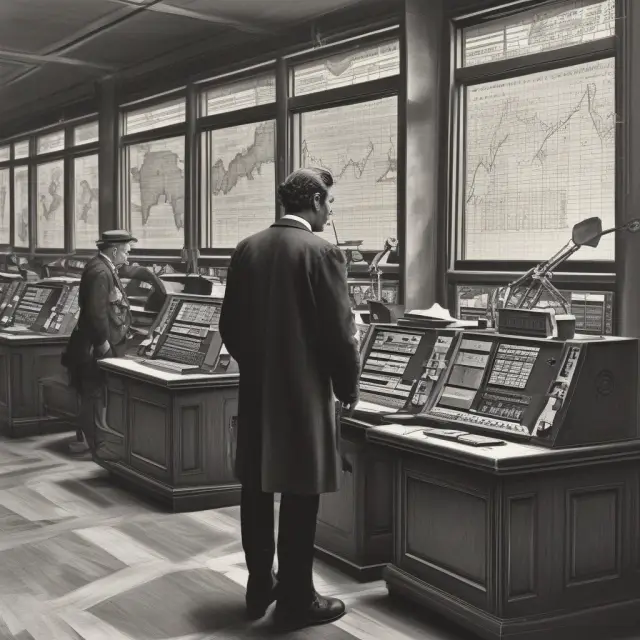
How Electronic Trading Systems Revolutionized the Stock Market
In the world of finance, the shift from traditional open-floor trading systems to electronic trading platforms revolutionized the way securities are bought and sold. This transformation began in the 1990s and was exemplified by the Bombay Stock Exchange’s (BSE) transition to an electronic trading system in 1995. Today, the BSE is one of the world’s leading stock exchanges, alongside giants like the New York Stock Exchange (NYSE), Nasdaq, London Stock Exchange Group, Tokyo Stock Exchange (TSE), and Shanghai Stock Exchange. Let us delve deeper into this pivotal change, the advantages electronic trading systems offer, and their impact on the financial industry.
The 1990s marked a turning point for stock exchanges globally, with electronic trading systems gaining traction over traditional open-floor methods. In India, the BSE made history by becoming Asia’s first exchange to embrace this technological change. The advantages of electronic trading were numerous: fewer errors, faster execution times, and improved efficiency.
Before the advent of electronic trading, stockbrokers would gather on the floor of the exchange, shouting out buy and sell orders and negotiating prices with each other in an open-floor system known as “call auctions.” However, this process was prone to errors and delays. Electronic trading systems replaced this manual approach with automated trade execution based on predetermined algorithms and market data.
Electronic trading systems have become the norm across the globe. In the U.S., there are over a dozen electronic exchanges, such as the NYSE and Nasdaq. Today, these systems dominate the financial industry, offering benefits that go beyond efficiency and speed. They allow for continuous trading and enable access to real-time information, which is crucial in today’s fast-paced world.
Securities listed on electronic exchanges include a diverse range of assets such as stocks, bonds, currencies, derivatives, and mutual funds. The Bombay Stock Exchange, for example, offers all these securities types, providing an extensive platform for investors to diversify their portfolios and manage risk exposure.
Electronic trading has had a profound impact on the financial industry. It not only streamlined the process of buying and selling securities but also paved the way for innovative investment products and services. Today, investors have access to an array of sophisticated tools for managing their investments and mitigating risk, such as algorithmic trading, margin accounts, and automated portfolio rebalancing.
One significant development resulting from electronic trading systems is the introduction of indices like the BSE Sensex in India and the Nasdaq Composite in the U.S. These indices offer valuable benchmarks for measuring overall market performance and serve as important indicators of economic health.
In summary, the shift to electronic trading systems revolutionized the way securities are bought and sold worldwide. This change brought about numerous advantages, including faster trade execution, reduced errors, improved efficiency, and access to real-time information. The Bombay Stock Exchange’s transition to an electronic platform in 1995 was a pivotal moment in India’s financial history, paving the way for the growth of its capital markets and the Indian corporate sector as a whole.

Key Participants on BSE
The Bombay Stock Exchange’s vibrant trading environment is fueled by a multitude of participants, each playing unique roles. Understanding these individuals and organizations is crucial to grasping the intricacies of India’s premier securities market.
Investors – Individuals or institutions that buy and hold stocks, bonds, or other securities with the objective of generating profit. Retail investors, high net worth individuals (HNIs), foreign institutional investors (FIIs), and mutual funds are integral to BSE’s ecosystem.
Traders – Speculators who actively buy and sell financial instruments for quick profits based on market trends and expectations. Day traders, position traders, and scalpers engage in short-term trades to capitalize on small price movements.
Brokers – Intermediaries that execute transactions between buyers and sellers for a commission. Brokers facilitate trading by providing clients with information, advice, and access to the exchange platforms. In India, brokers often operate under the banner of brokerage firms or member firms registered with the Bombay Stock Exchange.
Regulators – Governmental bodies and regulatory authorities that oversee market operations and ensure compliance with securities regulations. The Securities and Exchange Board of India (SEBI) is the primary regulator for the Indian capital markets, responsible for market development, investor protection, and ensuring fair and transparent trading practices.
Government – Central and state governments are significant stakeholders in BSE as they control various policies that impact the stock exchange’s operations. For instance, changes to tax laws or economic indicators can influence investor sentiment, causing fluctuations in the markets.
Corporates – Issuers of stocks and other securities, seeking capital for growth and expansion. Companies list on BSE to access funding from investors, while shareholders benefit by having their shares traded on a public platform.
Media – Financial news outlets, journalists, and analysts play a critical role in shaping public opinion and investor sentiment towards the Bombay Stock Exchange. Accurate and timely reporting of market trends, regulatory changes, and company performance is crucial for investors to make informed decisions.
Collectively, these participants create an intricate web of interactions that shape the Bombay Stock Exchange’s dynamic trading environment. Understanding their roles is essential to navigating India’s capital markets and making informed investment decisions.
This comprehensive understanding of various players in the BSE ecosystem will provide readers with a solid foundation for exploring other aspects of this historic stock exchange. Stay tuned as we delve deeper into how electronic trading systems revolutionized the Bombay Stock Exchange, its impact on India’s economy, and key indices like the Sensex.
BSE’s Role in Developing India’s Capital Markets
The Bombay Stock Exchange (BSE), established in 1875, holds a significant place in the financial sector of India as Asia’s first stock exchange and the largest securities market. Over the years, BSE has played an essential role in shaping and developing India’s capital markets.
Creating a Platform for Capital Raising
One of the most notable contributions of BSE to the Indian economy was its creation of an efficient platform for Indian corporate entities to raise investment capital. This enabled companies to issue shares and securities, attracting investors both domestically and internationally. Before BSE’s establishment, there were limited avenues for raising funds for businesses, and most financing came from family wealth or bank loans.
Developing the Retail Debt Market
BSE also played a vital role in the development of India’s retail debt market. The exchange provided issuers with an effective channel to issue bonds, offering a broader range of investment opportunities for investors. This expansion in the debt market allowed the corporate sector to access funding for growth and infrastructure projects more efficiently, ultimately benefiting both the economy and investors alike.
Nurturing Corporate Sector Growth
BSE’s role in India’s capital markets has been instrumental in growing the corporate sector. By providing a platform where businesses could issue shares and securities, BSE attracted investment from across the globe to fund various ventures. This influx of funds enabled corporations to expand their operations, improve their infrastructure, and create new jobs, leading to overall economic growth.
A Growing Trend
As of 2023, the Bombay Stock Exchange (BSE) includes an equities trading platform for small-and-medium enterprises (SMEs). This initiative aimed at providing smaller companies with access to capital markets and resources to grow. With this expansion, BSE has further strengthened its position as a leading player in India’s financial sector, enabling more businesses to thrive and contribute to the country’s economy.
The Bombay Stock Exchange has been an integral part of India’s financial landscape for over 145 years. Its role in developing the retail debt market, creating a platform for capital raising, and nurturing corporate growth continues to be essential. The BSE’s commitment to innovation and its evolution into electronic trading systems have paved the way for a more efficient and accessible financial sector in India.
In conclusion, understanding the Bombay Stock Exchange (BSE) is crucial for anyone interested in the Indian economy or investment opportunities within it. From its early beginnings as the Native Share and Stock Brokers’ Association to becoming Asia’s first stock exchange and the largest securities market in India, BSE has played a pivotal role in shaping India’s financial sector. Its contributions to developing the retail debt market, creating a platform for raising capital, and growing the Indian corporate sector continue to shape the country’s economy.

Major International Stock Exchanges Comparison
The Bombay Stock Exchange (BSE), established in 1875, is India’s first and largest securities market with over 6,000 listed companies. In this section, we explore how the BSE compares to other significant stock exchanges worldwide: New York Stock Exchange (NYSE), Nasdaq, London Stock Exchange (LSE), Tokyo Stock Exchange (TSE), Shanghai Stock Exchange, and others.
The New York Stock Exchange (NYSE) is renowned for being the largest equities-based exchange globally, with a total market capitalization of listed securities. Originally a private organization, it went public in 2005 after acquiring Archipelago, an electronic trading exchange. The NYSE is best known for its iconic trading floor and bell that rings to signal the start and end of each trading day.
Nasdaq, founded in 1971 by the National Association of Securities Dealers (NASD), initially aimed to provide a rapid, computerized, and transparent system for investors to trade securities. Today, “Nasdaq” is also known as Nasdaq Composite, an index comprising more than 3,000 listed technology companies like Apple, Google, Microsoft, Oracle, Amazon, Intel, and Amgen.
London Stock Exchange (LSE) is the primary stock exchange in the UK and Europe, with a history dating back to several regional exchanges merging in 1973. The LSE was formerly called the Stock Exchange of Great Britain and Ireland. Its top blue chips form the Financial Times Stock Exchange (FTSE) 100 Share Index or “Footsie,” which consists of 100 large companies listed on the exchange.
Tokyo Stock Exchange (TSE), founded in 1878, is Asia’s second-largest stock exchange and home to Japan’s major corporations like Sony, Toyota, and Mitsubishi. TSE comprises three markets: the First Section for large companies, the Second Section for medium and small enterprises (M&A), and the Mothers Market for high-growth firms.
Shanghai Stock Exchange (SHEX) is China’s largest stock exchange with a market capitalization of over $5 trillion. Established in 1891, it was initially known as the Shanghai Stock & Share Transfer Office. The SZSE Composite Index tracks all stocks listed on the exchange, while its more popular counterpart, the Shanghai Composite Index, is a free-float adjusted index that measures large-cap and mid-cap companies’ performance.
The Bombay Stock Exchange (BSE) plays a crucial role in India’s financial sector as Asia’s first stock exchange and home to India’s most actively traded stocks covering 12 sectors. The BSE Sensex is its primary benchmark index, representing the overall performance of the Indian market.
Other international stock exchanges worth mentioning include:
Euronext (Paris, Brussels, Amsterdam, Lisbon) – Europe’s leading exchange operator offering listings and trading services in various markets and assets classes.
Toronto Stock Exchange (TSX) – Canada’s primary stock exchange, with a focus on the natural resource and technology sectors.
Sydney Stock Exchange (ASX) – Australia’s major securities market and home to some of the world’s most prominent companies in mining, agriculture, and banking industries.
Hong Kong Exchanges & Clearing Limited (HKEX) – Asia’s leading international exchange group, with listings from China, Hong Kong, and other markets.
Swiss Exchange (SIX Swiss Exchange) – Switzerland’s principal stock exchange offering various trading services and indices like the Swiss Market Index (SMIM), SMI Mid Price, and SMI Hedging.
Frankfurt Stock Exchange (FWB) – Germany’s primary stock exchange with a focus on European blue chips and international companies.
These major international stock exchanges bring unique offerings to their respective markets while providing various services that cater to both investors and corporations worldwide. In the next section, we delve into the location and significance of Dalal Street as a historical financial center in Mumbai and India’s financial industry.

BSE’s Impact on India’s Economy
The Bombay Stock Exchange (BSE) has played a crucial role in shaping India’s economy by fostering the growth of its corporate sector and attracting domestic and international investors. The exchange, which was founded in 1875 as the Native Share and Stock Brokers’ Association, has undergone significant transformations over time, evolving from a traditional open-floor trading system to an electronic platform that is now home to over 6,000 listed securities.
BSE’s economic impact is most evident in its contributions to developing India’s capital markets, providing an efficient platform for Indian corporations to raise investment capital. The exchange has been instrumental in the creation of a retail debt market and the growth of various industries. With an increasing number of companies listing on BSE, the exchange plays a vital role in encouraging corporate growth and innovation.
Moreover, the BSE’s electronic trading system revolutionized the way securities are traded, providing faster execution times, reduced transaction errors, and overall improved efficiency compared to traditional open-outcry methods. The exchange enables investors to trade across various asset classes, including equities, currencies, debt instruments, derivatives, and mutual funds.
The Bombay Stock Exchange is also significant because of its location on Dalal Street in Mumbai. Dalal Street is a historical financial center that has been home to stockbrokers since the 1850s, with activity centered around a banyan tree outside the town hall. Today, Dalal Street remains an essential symbol of India’s financial industry, housing numerous banks, investment firms, and related financial service companies.
The Bombay Stock Exchange’s role as Asia’s first stock exchange has influenced its economic impact beyond India. The exchange has provided a bridge for foreign investors seeking opportunities in the Indian market while fostering competition and driving innovation among domestic corporations. Additionally, the exchange’s influence extends to other major international exchanges such as the New York Stock Exchange (NYSE), Nasdaq, London Stock Exchange (LSE), Tokyo Stock Exchange (TSE), and Shanghai Stock Exchange.
By providing a transparent and regulated market for trading securities, BSE has played a crucial role in maintaining investor confidence and attracting foreign investment. The exchange’s influence is evident in its benchmark index, the Sensex, which tracks 30 of the largest and most actively traded stocks on the exchange and represents the overall performance of India’s stock market.
In conclusion, the Bombay Stock Exchange (BSE) has significantly impacted India’s economy by fostering the growth of its corporate sector, attracting both domestic and international investors, and providing a transparent and efficient platform for securities trading. Its history, beginning as the Native Share and Stock Brokers’ Association in 1875, and its transformation into a modern, electronic exchange in 1995, have made it an essential part of India’s financial landscape.

Regulation and Compliance on BSE
The Bombay Stock Exchange (BSE), India’s oldest stock exchange, was established in 1875 as the Native Share and Stock Brokers’ Association. Its transformation into a major securities market and regulatory body began with the introduction of the Securities Contracts (Regulation) Act in 1956. This laid the foundation for creating a legal framework governing trading activities on the exchange.
Securities and Exchange Board of India (SEBI)
The Securities and Exchange Board of India (SEBI), the country’s premier securities market regulator, was established in April 1992 under the SEBI Act, 1992. The primary mandate of SEBI is to protect investors, promote fair practices within the financial sector, and ensure the growth of capital markets in India.
SEBI plays a crucial role in overseeing BSE’s activities as the exchange is listed with the regulator. Some of its responsibilities include:
- Regulating the trading activities on the exchange to maintain a fair, transparent, and efficient marketplace.
- Ensuring that companies listed on BSE comply with disclosure requirements to keep investors informed about their financial health and business operations.
- Implementing regulations for investor protection, such as preventing insider trading and fraudulent activities.
- Facilitating the development of capital markets through various initiatives, including setting up of regulatory frameworks, fostering innovation, and creating market infrastructure.
Forward Markets Commission (FMC)
The Forward Markets Commission (FMC) is India’s statutory regulatory body for overseeing the functioning of commodity futures markets in India. In 2015, the Commodity Futures Trading Corporation of India merged with FMC to form a unified regulator called the National Commodity and Derivatives Exchange (NCDEX) Limited.
The BSE-FMC partnership allows for integrated trading on both equity and commodity markets under one roof, providing investors with convenient access to diversified investment opportunities. NCDEX’s multi-commodity derivatives trading platform offers contracts on agri-commodities like rice, wheat, tur, urad, chana, jowar, masur, moong, guar seeds, and futures in precious metals such as gold, silver, and copper.
Other Regulatory Bodies
Apart from SEBI and FMC, other regulatory bodies play essential roles in the functioning of BSE:
- The Reserve Bank of India (RBI) – As the central bank, RBI regulates the monetary policy and oversees banks and financial institutions to ensure the stability of the financial sector.
- Ministry of Corporate Affairs (MCA) – The MCA is responsible for administering company law and regulating corporate entities in India. It ensures that companies comply with corporate governance standards, disclosure requirements, and other regulations.
- Competition Commission of India (CCI) – CCI regulates anti-competitive practices in the Indian market to promote competition and protect consumers from monopolistic tendencies.
- Registrar of Companies (ROC) – The ROC is responsible for registering and maintaining records of companies and their financial statements. It plays a crucial role in ensuring that companies adhere to statutory requirements.
- Stock Exchanges and Securities Board of Malaysia (Bursa Malaysia) – BSE maintains a partnership with Malaysia’s stock exchange, Bursa Malaysia, for cross-listing and trading of select Indian and Malaysian securities. This collaboration enables investors to access investment opportunities in both countries more conveniently.
In conclusion, the Bombay Stock Exchange (BSE) is subject to extensive regulation by various statutory bodies, including the Securities and Exchange Board of India (SEBI), Forward Markets Commission (FMC), and other regulatory authorities. These organizations ensure a fair, transparent, and efficient marketplace for all investors while fostering innovation and growth within India’s capital markets.

Investing on BSE: Risks and Strategies
The Bombay Stock Exchange (BSE), India’s largest securities market, offers a plethora of opportunities for investors to build wealth through equity trading. However, it’s crucial to be aware of the inherent risks involved in investing on the exchange. In this section, we will discuss potential risks and strategies that can help mitigate them.
Risks in Investing on BSE
- Market Risk: Prices of securities are subject to market forces, and investors face the risk of losing capital due to fluctuations in stock prices.
- Liquidity Risk: Market illiquidity may make it challenging to exit a position at the desired price or even close a trade due to an insufficient supply of buyers or sellers.
- Credit Risk: Default risk arises when a counterparty fails to fulfill their obligations, such as making interest payments on debt securities or failing to deliver securities in a stock exchange transaction.
- Operational Risk: This type of risk includes the possibility of errors, fraudulent activities, or system failures that can result in financial losses.
- Legal and Regulatory Risk: Changes in laws and regulations affecting the exchange, its listed companies, or the broader economy can impact portfolio performance.
Strategies for Managing Risks on BSE
- Diversification: Spreading investments across various asset classes, sectors, and stocks can help reduce overall risk exposure.
- Proper Asset Allocation: Determining the right mix of equities, fixed income securities, and other asset classes based on an investor’s investment objective and risk tolerance is crucial for managing market volatility.
- Stop Loss Orders: Setting a predetermined price at which to sell a security can help limit potential losses if the stock experiences a significant downturn.
- Regular Portfolio Monitoring: Keeping track of your portfolio’s performance and adjusting investments as necessary is important for managing risks effectively.
- Staying Informed: Keeping up-to-date with market news, economic indicators, and company financials can help investors make informed decisions to minimize risk exposure.
In conclusion, investing on the Bombay Stock Exchange (BSE) offers exciting opportunities, but it’s essential to be aware of the inherent risks involved. Implementing strategies like diversification, proper asset allocation, stop loss orders, and regular portfolio monitoring can help mitigate these risks and contribute to successful long-term investment outcomes.

FAQs
About BSE
The Bombay Stock Exchange (BSE), established in 1875, is a leading securities market in India and the first stock exchange in Asia. Located on Dalal Street in Mumbai, the BSE lists over 6,000 companies and provides an efficient platform for corporate sector capital raising. The exchange offers various services like risk management, clearing, settlement, and investor education. In 1995, BSE became the first stock exchange to adopt electronic trading systems in India.
What is the significance of Dalal Street?
Dalal Street, in Mumbai, is home to a large number of banks, investment firms, and financial service companies, making it an essential part of India’s financial industry. The importance of Dalal Street is similar to that of Wall Street in the United States. In the 1850s, stockbrokers would transact business under a banyan tree in front of Mumbai town hall before formally selecting the location in 1874 as the Native Share and Stock Brokers’ Association (NSBA) site.
Which securities are listed on BSE?
The Bombay Stock Exchange lists various securities, including stocks, bonds, currencies, derivatives, mutual funds, and equities trading platforms for SMEs.
What is the Sensex, and how is it calculated?
The Sensex (BSE 30) is an essential benchmark index of 30 large and actively traded stocks that broadly represents India’s overall market performance. The BSE Sensex debuted in 1986 and was the country’s first stock index. It measures the Bombay Stock Exchange’s overall performance and has a significant influence on investor sentiment.
Major international stock exchanges:
Apart from the Bombay Stock Exchange, other major international stock exchanges include the New York Stock Exchange (NYSE), Nasdaq, London Stock Exchange Group (LSE), Tokyo Stock Exchange (TSE), and Shanghai Stock Exchange. These exchanges enable investors to trade securities on fast, computerized, and transparent systems.
– The New York Stock Exchange (NYSE) is the largest equities-based exchange worldwide with over $37 trillion in market capitalization. It was formerly a private organization until it became public in 2005.
– Nasdaq, established in 1971, is a global electronic marketplace for trading securities. Its benchmark index includes more than 3,000 technology companies like Apple, Google, Microsoft, Oracle, Amazon, Intel, and Amgen.
– London Stock Exchange (LSE), the primary U.K. stock exchange and largest in Europe, was created after several regional exchanges merged in 1973. The Financial Times Stock Exchange 100 Share Index or “Footsie” includes the top hundred blue-chip companies on LSE.
– Tokyo Stock Exchange (TSE), established in 1878, is one of the oldest stock exchanges in the world. It offers a broad range of financial instruments and has strong ties to international markets through its partnership with the New York Stock Exchange Euronext.
– The Shanghai Stock Exchange was established in 1990 and is China’s primary stock exchange, offering trading in equities, funds, fixed income securities, and derivatives.
Understanding these major stock exchanges provides context for BSE’s significance as the first and largest securities market in India.
 Next entry · No. 463Understanding Bond Covenants: Protecting Investor Interests with Affirmative and Negative Clauses
See also
-
 No. 3,470
31 Mar 2025
21 min
Understanding the Legacy of Nifty Fifty: Insights on Large-Cap Investing from History’s Most Favored Stocks
Finance History
No. 3,470
31 Mar 2025
21 min
Understanding the Legacy of Nifty Fifty: Insights on Large-Cap Investing from History’s Most Favored Stocks
Finance History -
 No. 5,838
11 Oct 2025
21 min
Understanding Y Stock: American Depositary Receipts (ADRs) and their Role in Foreign Investments
Finance Policy
No. 5,838
11 Oct 2025
21 min
Understanding Y Stock: American Depositary Receipts (ADRs) and their Role in Foreign Investments
Finance Policy -
 No. 5,835
11 Oct 2025
18 min
Understanding Xetra: Germany’s Dominant Electronic Trading Platform
Business Finance
No. 5,835
11 Oct 2025
18 min
Understanding Xetra: Germany’s Dominant Electronic Trading Platform
Business Finance -
 No. 5,690
29 Sep 2025
21 min
Whisper Stocks: Understanding Rumors of Takeovers and Their Impact on Share Prices
Finance Policy
No. 5,690
29 Sep 2025
21 min
Whisper Stocks: Understanding Rumors of Takeovers and Their Impact on Share Prices
Finance Policy -
 No. 5,685
29 Sep 2025
19 min
A Comprehensive Guide to The Wharton School of Business: Finance, Reputation, and Opportunities
Education
No. 5,685
29 Sep 2025
19 min
A Comprehensive Guide to The Wharton School of Business: Finance, Reputation, and Opportunities
Education -
 No. 5,663
27 Sep 2025
15 min
Understanding the Weekly Mortgage Applications Survey: A Leading Indicator for Real Estate Financing Trends
Real Estate
No. 5,663
27 Sep 2025
15 min
Understanding the Weekly Mortgage Applications Survey: A Leading Indicator for Real Estate Financing Trends
Real Estate