Bollinger Bands: Understanding and Utilizing This Technical Analysis Tool in Finance

Bollinger Bands: Unlock the power of this technical analysis tool in finance with our comprehensive guide - learn how to calculate, interpret, and optimize…
Introduction to Bollinger Bands®
Bollinger Bands, introduced by technical trader John Bollinger in the late 1980s, are a valuable and widely used tool among traders and investors for evaluating market volatility and identifying potential trading opportunities. These bands consist of three components: a simple moving average (SMA) and two standard deviations plotted as upper and lower bands around it. Bollinger Bands aim to provide traders with an enhanced perspective on price movements by measuring the degree of price dispersion from a security’s middle band or moving average.
Originated from John Bollinger’s desire for a more effective tool to measure volatility, Bollinger Bands have since grown in popularity due to their versatility and ease of use. Their primary purpose is to help traders identify when a financial instrument is overbought or oversold by monitoring the relationship between the price and its moving average.
To better understand the concept and implementation of Bollinger Bands, let’s delve deeper into calculating them and interpreting their significance for traders.
Calculating Bollinger Bands
The first step in calculating Bollinger Bands involves determining the simple moving average (SMA) for a security typically using a 20-day SMA. By averaging the closing prices over the first 20 days, we get our initial data point for the moving average. Each subsequent day will involve dropping the earliest price and adding the new one while calculating the new average.
The next step involves determining the standard deviation for the security’s price data set. Standard deviation is a statistical measure that quantifies volatility by assessing how far each price point is from the mean (in this case, the moving average). It can be calculated as the square root of variance, which is the average of the squared differences between the moving average and each individual data point’s value.
After obtaining the standard deviation value, multiply it by two and add or subtract that amount to each price point on either side of the moving average. The resulting upper and lower bands are then plotted as the final step in calculating Bollinger Bands.
Now that we’ve learned how to calculate Bollinger Bands let’s explore what they can reveal about market conditions and potential trading opportunities. Stay tuned for the next section: Interpreting Bollinger Bands.
(To be continued…)
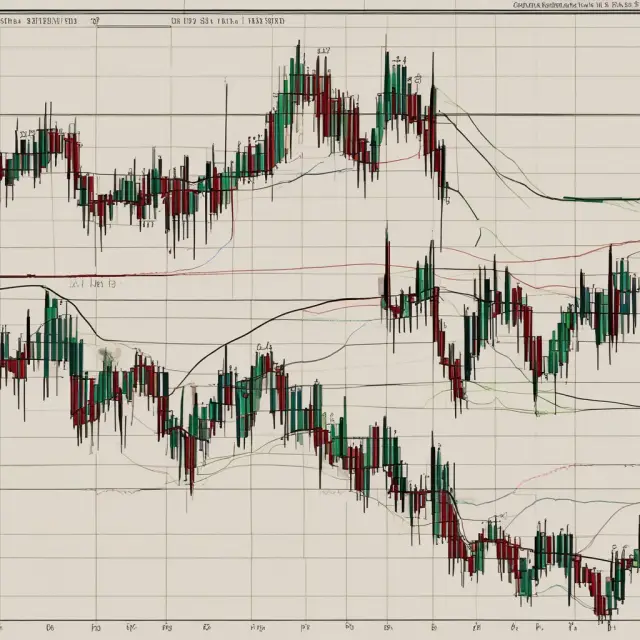
Calculating Bollinger Bands®
Bollinger Bands, a technical analysis tool developed by John Bollinger, is an effective means to measure volatility and identify potential buy/sell opportunities within financial markets. The calculation of these bands involves three elements: Simple Moving Average (SMA), Standard Deviation, and the Bollinger Band formula itself.
To begin calculating the Bollinger Bands, the first step is determining the SMA, typically a 20-day period. This moving average represents an average of the closing prices for each day within that time frame. The SMA is calculated by adding the closing price of each day to the previous total and dividing by the number of days in the period (for example, 20).
Next, calculate the standard deviation, a measure of volatility or dispersion from an average. The standard deviation is computed as follows: take the square root of the variance, which itself is the average of squared differences between each data point and the mean. In the case of Bollinger Bands, the standard deviation is calculated over a specific period, typically 20 days.
Now, we can calculate the upper and lower bands using the SMA and calculated standard deviation. The upper band is calculated as two standard deviations (2σ) above the SMA, while the lower band is calculated as two standard deviations below the SMA. This results in three lines: the middle line representing the SMA, and the upper and lower bands representing upper and lower boundaries of volatility for the given time frame.
The Bollinger Band formula can be represented by the equations:
BOLU = MA(TP,n) + m * σ[TP,n]
BOLD = MA(TP,n) – m * σ[TP,n]
where:
– BOLU is the Upper Bollinger Band
– BOLD is the Lower Bollinger Band
– MA(TP,n) is the moving average based on typical price (TP) for a specific number of days (n)
– m represents the number of standard deviations (typically 2)
– σ[TP,n] is the standard deviation over the last n periods of TP.
These calculations can be made using spreadsheets like Microsoft Excel, financial software, or programming languages such as R or Python. The bands are then plotted on a chart with the underlying asset’s price for easy visual analysis.
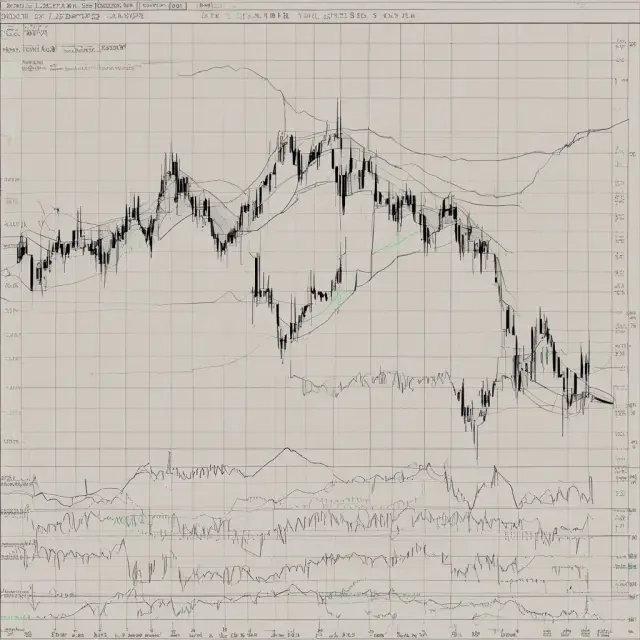
Interpreting Bollinger Bands®
Bollinger Bands® offer valuable insights for investors and traders by identifying potential trading opportunities through market volatility. By understanding how to interpret these bands, you can make informed decisions about your investment strategy.
First, it is essential to recognize that the upper and lower Bollinger Bands do not signify a definitive buy or sell signal; rather, they indicate whether the asset is becoming overbought or oversold, offering context for making trading decisions. When the price continually touches the upper band, it could potentially suggest an overbought situation, while prices touching the lower band might indicate an oversold condition.
The “squeeze” in Bollinger Bands is a significant concept to understand. It occurs when the bands converge or narrow around the moving average, indicating low volatility and potentially signaling increased market volatility and potential trading opportunities (Bollinger, 2021). The squeeze can be especially relevant during sideways markets where no clear trend is present.
A breakout above or below the Bollinger Bands does not provide a guaranteed direction for future price movement but is still noteworthy as these events represent significant shifts in market conditions that may warrant further investigation (Investopedia, 2021). For instance, a break above the upper band can indicate potential resistance levels for an uptrend or a bearish continuation if the asset fails to sustain the price increase. Conversely, a break below the lower band can signal support levels in a downtrend or bullish reversal possibilities if the price rebounds back up.
To make the most of Bollinger Bands®, consider combining them with other technical indicators that complement their functionality and offer more direct market signals. John Bollinger suggests using these bands with two or three non-correlated indicators like moving average divergence/convergence (MACD), on-balance volume, and the relative strength index (RSI) for a well-rounded analysis of various aspects of your investments (Bollinger, 2021).
It is also important to remember that Bollinger Bands® are not foolproof and should be used as one component of your overall investment strategy. While they provide valuable insights into market volatility and potential trading opportunities, it is crucial to consider other factors such as fundamental analysis, economic conditions, and macroeconomic events when making investment decisions.
In conclusion, Bollinger Bands® can serve as an essential tool for investors and traders seeking to gain a better understanding of market volatility, identify trends, and evaluate potential trading opportunities. By interpreting the information provided by the bands and combining them with other technical indicators, you can make more informed investment decisions that maximize your returns while minimizing risks.
Squeeze Concept in Bollinger Bands®
Bollinger Bands®, an essential tool for technical analysis, offer traders insights into market volatility through a set of three lines – a simple moving average (SMA) and two standard deviations. Developed by John Bollinger as a means to identify potential oversold or overbought conditions, the bands’ most significant concept is the squeeze.
When Bollinger Bands® “squeeze,” they come close together, narrowing around the moving average line. This convergence signals low volatility, potentially foreshadowing an increase in price movement in either direction. Conversely, when the bands widen, they indicate a decrease in volatility or market stability.
Understanding this squeeze concept can offer traders valuable insights for entering and exiting trades based on anticipated shifts in market behavior. However, it’s crucial to recognize that the squeeze itself does not serve as a definitive trading signal; rather, it sets the stage for potential opportunities.
A squeeze may last anywhere from minutes to hours or even days, depending on the specific security and market conditions. When prices move toward the middle band during a squeeze, they can often represent excellent buying or selling points for traders seeking to enter positions. However, it’s important to note that breakouts following a squeeze do not necessarily imply immediate price direction or magnitude.
For instance, an upside breakout from a squeeze may result in a significant trend reversal, while a downside breakout could merely be a brief correction before resuming the existing trend. Incorporating multiple time frames and other indicators can help traders better anticipate potential price movements following a squeeze.
An essential element of successful Bollinger Band® trading is recognizing that market conditions are not always constant. As market volatility fluctuates, so too may the bands’ widths and the frequency of squeezes. Traders must adapt their strategies accordingly to maximize gains while minimizing risk.
In summary, the squeeze concept in Bollinger Bands® is a valuable tool for identifying periods of low price volatility that could potentially lead to heightened market activity. By understanding this central principle and staying informed about market trends and conditions, traders can utilize Bollinger Bands® to their advantage and potentially generate successful trading opportunities.
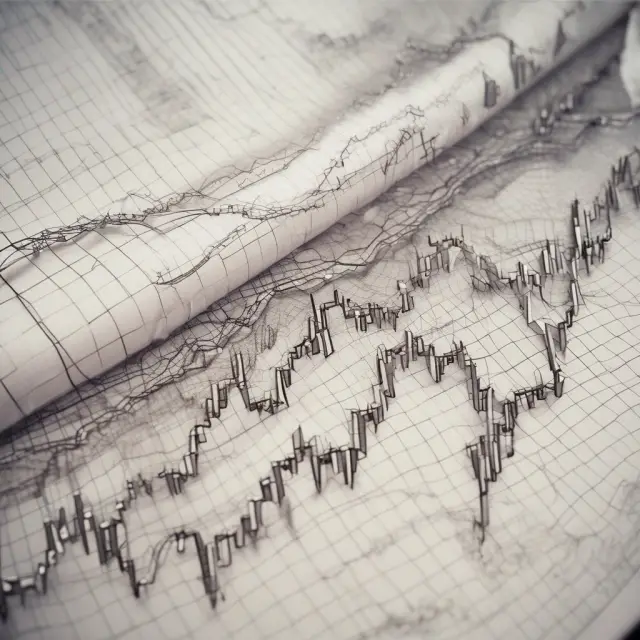
Breakouts in Bollinger Bands®
Bollinger Bands® are widely recognized for their ability to identify potential buying or selling opportunities through the detection of overbought or oversold conditions. However, one of the most significant events that can occur within these bands is a breakout. A breakout refers to when the security price breaches either the upper or lower band, indicating a possible trend change.
Approximately 90% of price action occurs between the two Bollinger Bands®. Breakouts represent the remaining 10%. As such, they are considered significant events that may provide valuable information to traders about market conditions and potential trading opportunities. However, it is essential to understand the limitations of using breakouts as a standalone trading signal.
When a price breaks out above the upper band, this phenomenon is referred to as an ‘upper breakout.’ Conversely, if the price breaches the lower band, it is called a ‘lower breakout’ (see Figure 1). While both types of breakouts can be valuable signals, they do not necessarily indicate the direction or extent of future price movement.
Figure 1: An example of an upper and lower breakout in Bollinger Bands®
Traders often mistake breakouts as a clear-cut buy or sell signal. However, they should be viewed as a potential indication of market volatility rather than definitive trading instructions. Breakouts can provide important insights into the underlying trend dynamics and help investors make informed decisions about their investment strategies (Bollinger, 2014).
It is essential to note that Bollinger Bands® do not predict when the breakout will occur or which direction the price may move after it. Instead, traders should use this information in conjunction with other technical analysis tools and fundamental market data to make more informed decisions.
While breakouts can be valuable, they are not infallible indicators. False breakouts, where the price temporarily breaches a band but subsequently returns within the boundaries, can occur. Traders must be cautious when interpreting these signals and should consider confirming them with other technical indicators or fundamental analysis methods before making any investment decisions (Bollinger, 2014).
In conclusion, Bollinger Bands® breakouts are essential events that traders should be aware of in their investment strategies. They represent potential opportunities for market entries and exits based on overbought or oversold conditions. However, it is crucial to understand the limitations of using them as standalone trading signals and to confirm these indications with other technical analysis tools and fundamental data before making any investment decisions.
References:
Bollinger, J. (2014). Bollinger bands: A simple and effective method for identifying trends and volatility. John Wiley & Sons.

Limitations and Combinations with Other Indicators
Although Bollinger Bands® are a powerful technical analysis tool, they should not be used as a standalone system for making investment decisions. The bands do not provide direct insights into market trends or predict price movements. Instead, they act as an aid to identify potential trading opportunities based on volatility and price behavior relative to the average trend. To maximize the effectiveness of Bollinger Bands®, traders often employ multiple indicators that complement one another in terms of their data types and time frames.
One such complementary indicator is the Moving Average Convergence Divergence (MACD). MACD uses moving averages with different lengths to generate buy and sell signals based on their convergence or divergence. By combining Bollinger Bands® with MACD, traders can gain a deeper understanding of trends and potential reversals in a given security.
Another useful indicator for Bollinger Band® users is the Relative Strength Index (RSI). The RSI measures the magnitude and duration of price movements by comparing the ratio of gains to losses within a specific time frame. It generates buy and sell signals based on overbought and oversold conditions, which can be further validated by observing the relationship between RSI levels and Bollinger Band® breakouts.
Combining Bollinger Bands® with other indicators such as On Balance Volume (OBV) or Stochastic Oscillator can also provide valuable insights into market sentiment and momentum, respectively. By examining these indicators alongside Bollinger Bands®, traders gain a more comprehensive perspective of price movements and potential trading opportunities.
Despite their strengths, Bollinger Bands® have limitations as a standalone system. These limitations include the fact that they do not provide direct insights into market trends or predict future price movements. The bands are also based on historical data, which may not accurately represent current market conditions. Furthermore, traders must adjust the parameters of SMA and standard deviation to suit their specific trading strategies and time frames.
To counteract these limitations, traders combine Bollinger Bands® with other indicators that provide more direct market signals and insights based on different types of data, such as momentum or volume. By doing so, traders increase the chances of making informed investment decisions while minimizing risk.
Examples of Bollinger Bands® in Action
Bollinger Bands® are a versatile and popular technical analysis tool used by investors and traders to assess volatility, identify potential trading opportunities, and monitor price movements. The three bands—middle (simple moving average), upper, and lower—form a dynamic framework that evolves with market trends. Let us explore real-world examples of how Bollinger Bands® are employed in various financial markets.
Example 1: Apple Inc. (AAPL)
Apple’s stock price saw significant volatility between January and April 2021, as shown in Figure 1. During this period, the standard deviation-based upper and lower bands expanded, indicating heightened volatility. Prices reached new highs and lows during this time frame, but Bollinger Bands® offered valuable insights for traders looking to capitalize on trends. When the price touched or breached one of the bands, it could indicate potential trading opportunities based on the direction and the duration of the trend.
Figure 1: Apple (AAPL) Bollinger Bands® in Action
Example 2: Crude Oil Prices
The volatility of crude oil prices is a well-known phenomenon, but Bollinger Bands® can provide valuable insights even in such complex markets. In Figure 2, we see the West Texas Intermediate (WTI) oil price oscillating between the upper and lower bands throughout 2021, indicating periods of heightened volatility. A prolonged period of compression (squeeze) between the bands can suggest an impending breakout, which may provide traders with crucial information about potential price movements.
Figure 2: West Texas Intermediate Oil Prices and Bollinger Bands®
Example 3: Gold Prices
Another asset class where Bollinger Bands® can be exceptionally helpful is precious metals, such as gold. As shown in Figure 3, Bollinger Bands® can help traders understand the direction of price movements and potential breakouts. In this example, prices touched the lower band in early 2019 before bouncing back up to the middle band and then pushing through the upper band during a bullish phase.
Figure 3: Gold Prices with Bollinger Bands®
In summary, Bollinger Bands® offer valuable insights into price movements and volatility for various financial instruments. By studying real-world examples, traders and investors can develop a deeper understanding of how to use these bands in their investment strategies and maximize profit opportunities.

Advantages and Disadvantages of Using Bollinger Bands®
Bollinger Bands, a popular technical analysis tool, provides investors with valuable insights into market volatility by generating oversold or overbought signals. Developed by John Bollinger, these bands consist of three lines: a simple moving average (SMA) and two standard deviations, which function as upper and lower bands. While using Bollinger Bands has its benefits, it’s essential to understand their limitations.
Advantages:
- Identifying Market Conditions: The primary advantage of using Bollinger Bands is the ability to assess market conditions. When prices move closer to the upper band, investors may assume the market is overbought, while approaching the lower band indicates potential oversold situations.
- Adaptability: Bollinger Bands can be customized with various moving averages and standard deviation levels. This flexibility allows traders to adjust the bands according to their preferences and trading strategies.
- Volatility Indicator: The width of the Bollinger Bands helps investors gauge market volatility. Wider bands suggest increased price swings, while narrower ones indicate lower volatility.
- Squeeze Indications: The “squeeze,” a central concept in Bollinger Bands, occurs when the bands converge and are at their narrowest. This situation can indicate a potential increase in market volatility or price movement.
- Trend Following: Bollinger Bands can help traders follow trends by acting as dynamic support and resistance levels. Prices may rebound from the lower band during downturns, while resistance might be encountered at the upper band during uptrends.
Disadvantages:
- Limited Signals: While Bollinger Bands can generate oversold or overbought signals, they do not offer information on the direction or extent of future price movements.
- Delayed Information: As Bollinger Bands are based on historical price data, they may not provide real-time insights into market conditions.
- Overreliance: Some traders may rely too heavily on Bollinger Bands for decision making and neglect other technical or fundamental analysis tools.
- Arbitrary Parameters: The default settings of 20 days for the SMA and 2 standard deviations may not suit every trader’s needs, as adjustments might be required depending on market conditions.
- Lack of Confirmation: Traders should combine Bollinger Bands with other indicators for confirmation to increase accuracy and reduce potential false signals.
To make the most of Bollinger Bands, investors must balance their advantages and disadvantages and consider incorporating them alongside other technical or fundamental analysis techniques. By doing so, they can enhance their understanding of market conditions and capitalize on both short-term and long-term price movements.

Bollinger Band Width Indicator
The BandWidth indicator is an essential tool complementary to Bollinger Bands®, which offers valuable insights into price volatility by revealing the width of the bands relative to their middle band or moving average (MA). Developed by John Bollinger himself, the BandWidth indicator adds another dimension to the standard Bollinger Bands® analysis.
The BandWidth indicator’s formula is relatively straightforward, involving the difference between the upper and lower bands:
BandWidth = Upper Band – Lower Band
To calculate this difference in bandwidth, simply subtract the lower Bollinger Band from the upper one at each data point. This will result in a new time series that displays the changes in volatility as they occur within your chosen time frame.
A narrower BandWidth signifies a decrease in price volatility, whereas a wider bandwidth indicates an increase in market volatility. Understanding these dynamics can help traders gauge potential entry and exit points, especially when coupled with the Bollinger Bands® squeeze concept.
The squeeze is a critical condition where Bollinger Bands® contract, indicating a period of low price volatility or consolidation. Traders closely monitor squeezes for the opportunity to enter the market in anticipation of increased volatility and potential trends that may follow. The BandWidth indicator adds another layer of insight by confirming the squeeze conditions while also providing clues about the potential magnitude of upcoming price swings.
For instance, a narrow BandWidth during a squeeze could indicate a minor trend reversal or sideways movement, whereas a wider bandwidth may suggest more substantial price shifts and trends. This additional context can prove invaluable to traders seeking to make informed decisions based on price volatility conditions.
In summary, the Bollinger Band Width indicator serves as an essential companion to the standard Bollinger Bands® analysis by offering a deeper understanding of market volatility through its insights into bandwidth changes. By recognizing narrow and wide bandwidths within squeezes, traders can capitalize on potential trading opportunities with greater confidence in their analytical approach.

FAQ: Bollinger Bands® Basics and Best Practices
What exactly are Bollinger Bands®, and how do they function as a technical analysis tool in finance?
Bollinger Bands® represent a versatile and widely-used technical analysis indicator. They consist of three lines: a middle band, or simple moving average (SMA), and an upper and lower band, which are typically plotted two standard deviations from the SMA. Developed by John Bollinger in 1986, these bands aim to provide traders with valuable insights on market volatility and potential oversold or overbought conditions.
How is the Bollinger Band® formula calculated? To compute Bollinger Bands® for a given security, begin by determining its simple moving average (SMA), often using a 20-day period. Next, calculate the standard deviation of the security price, which measures how far prices deviate from the average value. Multiply this value by two and add/subtract it to each point along the SMA to obtain the upper and lower bands.
What information do Bollinger Bands® convey? Bollinger Bands® are commonly used to identify when an asset is overbought or oversold, as they become narrower during periods of low volatility and wider during high volatility. The ‘squeeze,’ a central concept in these bands, refers to the contraction of the bands around the moving average, signaling a possible increase in market volatility and potential trading opportunities.
What is a Bollinger Band® breakout? A breakout occurs when prices breach one of the upper or lower bands, but it does not serve as an automatic trading signal; rather, it indicates significant price action that could lead to increased volatility and future price movements in either direction.
Are there any limitations to using Bollinger Bands®? Though powerful, Bollinger Bands® should be combined with other non-correlated technical indicators for a well-rounded analysis. As they rely on a moving average, older data may impact newer information, and traders should adjust their SMA and standard deviation settings accordingly.
How can I best use Bollinger Bands®? Aim to apply Bollinger Bands® across various time frames, as different markets may require distinct configurations. For example, shorter-term bands work well in fast-moving assets such as forex trading, while longer-term bands may be preferred for slower-moving securities like bonds or stocks. Additionally, remember that no single indicator can guarantee profitable trades and that Bollinger Bands® should always be used in conjunction with other analysis methods.
 Next entry · No. 462Understanding the Bombay Stock Exchange (BSE): India’s Largest Securities Market
See also
-
 No. 3,035
23 Feb 2025
21 min
Understanding Moving Average Convergence/Divergence (MACD) in Finance and Investment
Financial Tools
No. 3,035
23 Feb 2025
21 min
Understanding Moving Average Convergence/Divergence (MACD) in Finance and Investment
Financial Tools -
 No. 1,297
26 Aug 2024
19 min
Understanding Envelopes in Technical Analysis: Identifying Trading Opportunities with Moving Average Envelopes
Financial Tools
No. 1,297
26 Aug 2024
19 min
Understanding Envelopes in Technical Analysis: Identifying Trading Opportunities with Moving Average Envelopes
Financial Tools -
 No. 1,104
28 Jul 2024
17 min
Understanding Doji: A Technical Analysis Tool for Identifying Price Reversals
Financial Tools
No. 1,104
28 Jul 2024
17 min
Understanding Doji: A Technical Analysis Tool for Identifying Price Reversals
Financial Tools -
 No. 213
07 Apr 2024
20 min
Understanding the Aroon Oscillator: A Robust Trend-Following Indicator
Financial Tools
No. 213
07 Apr 2024
20 min
Understanding the Aroon Oscillator: A Robust Trend-Following Indicator
Financial Tools -
 No. 212
07 Apr 2024
20 min
Understanding the Aroon Indicator: Identifying Trend Changes in Finance and Investment
Financial Tools
No. 212
07 Apr 2024
20 min
Understanding the Aroon Indicator: Identifying Trend Changes in Finance and Investment
Financial Tools -
 No. 3,807
28 Apr 2025
19 min
Understanding the Oscillator of Moving Average (OsMA): A Comprehensive Guide for Institutional Investors
Financial Data Analysis
No. 3,807
28 Apr 2025
19 min
Understanding the Oscillator of Moving Average (OsMA): A Comprehensive Guide for Institutional Investors
Financial Data Analysis