Understanding Donchian Channels: Identifying Trends and Extremes in Finance

Explore the world of Donchian Channels - learn how they help identify trends & extremes in finance with our comprehensive guide.
Introduction to Donchian Channels
Donchian Channels represent an essential tool for traders and investors in the financial markets, allowing them to identify trends and extremes with remarkable effectiveness. Developed by Richard Donchian, a renowned career futures trader, these channels aim to highlight price movements and volatility by measuring highs and lows over predetermined periods. By understanding this indicator’s origins and significance, we can grasp its importance in navigating the complex world of finance.
Richard Donchian, also known as “The Father of Trend Following,” created the Donchian Channels technique in the mid-20th century to identify bullish and bearish extremes that favor reversals as well as higher and lower breakouts and trends. The indicator comprises three lines: upper, middle, and lower bands (UC, MC, LC), each derived from moving average calculations.
The upper band represents the highest price achieved over a specific time frame or period (N), while the lower band signifies the lowest price within the same time frame. The area between these two lines defines the Donchian Channel. Let us delve into the intricacies of calculating and interpreting this versatile technical indicator.
Calculation Methods for Donchian Channels
The calculation process for Donchian Channels is straightforward yet powerful. To calculate the upper and lower bands, we need to determine the highest high and lowest low within a chosen time frame (N). These values can be calculated using daily, weekly, or monthly data, depending on the trader’s investment horizon and risk tolerance.
For instance, if you choose a 20-day period for your Donchian Channel, calculate the highest high and lowest low over those 20 days. Plot the highest high as the upper band and the lowest low as the lower band. The middle band is simply the average of these two values.
Interpreting Donchian Channels: Identifying Market Conditions
Understanding how to read Donchian Channels can provide valuable insights into market conditions, helping traders make informed decisions based on emerging trends and potential reversals. By observing the position of price relative to the upper and lower bands, we can discern bullish or bearish tendencies.
When price action is confined within the bands, a sideways trend may be in progress, while breakouts beyond the bands suggest potential trends or reversals. Bullish signals occur when price breaks above the upper band, indicating an uptrend, while bearish signals emerge when price falls below the lower band, suggesting a downtrend.
The middle band or median line often represents a critical pivot point, acting as a reference for potential support or resistance levels during trending periods. Traders may also use Donchian Channels to gauge volatility and risk exposure by monitoring how far price deviates from the median line.
In conclusion, Donchian Channels offer a robust and versatile tool for traders and investors seeking to identify trends, extremes, and potential reversals in various financial markets. With its rich history and proven effectiveness, this indicator has stood the test of time and continues to be an essential component of any well-rounded technical analysis approach.
In the following sections, we will explore the intricacies of calculating Donchian Channels, delve into their components (upper channel, lower channel, and middle channel), and discuss how to interpret their signals for informed trading decisions. We will also compare them with other popular technical indicators like Bollinger Bands and discuss real-world applications and case studies for further context. Stay tuned!

Technical Indicator Basics: Donchian Channels Explained
Donchian channels, developed by Richard Donchian in the mid-20th century, are a technical indicator designed to identify trends and price extremes within a security’s price data. These channels consist of three lines – an upper channel (UC), middle channel (MC), and lower channel (LC) – calculated using the highest high and lowest low values over a specified number of periods (N).
The UC, which represents the bullish side, is determined by finding the highest price within the given N-period range. The LC, representing the bearish side, is identified as the lowest price within that same period range. The middle channel (MC) serves as a median line, calculating the average of both UC and LC.
Donchian channels function by providing traders with essential information about the security’s price history and current market conditions. By highlighting extreme values and trends over time, these channels can signal potential entry or exit points for various trading strategies, as well as provide insights into emerging bullish and bearish patterns.
To calculate Donchian channels, follow these steps:
- Choose a specific number of periods (N) based on your preferred timeframe – minutes, hours, days, weeks, or months.
- Determine the highest high and lowest low within the chosen N-period range for both the upper and lower channel lines.
- Plot the UC as the highest high value, and LC as the lowest low value on a chart.
- Calculate the middle channel by finding the average of UC and LC values.
The resulting Donchian Channel plot displays three lines – the upper channel (UC), lower channel (LC), and middle channel (MC). This visual representation of price movements over time allows traders to assess bullishness or bearishness within the chosen timeframe, with the top line identifying the extent of bullish energy, the center line representing the median or mean reversion price, and the bottom line reflecting the extent of bearish energy.
Understanding Donchian Channels provides valuable insights for traders looking to identify trends and price extremes in their securities. By analyzing these channels’ components and recognizing bullish and bearish signals, you can make informed decisions about market conditions and develop effective trading strategies tailored to your investment objectives.
In the next section, we will dive deeper into calculating Donchian Channels using various timeframes and methods.
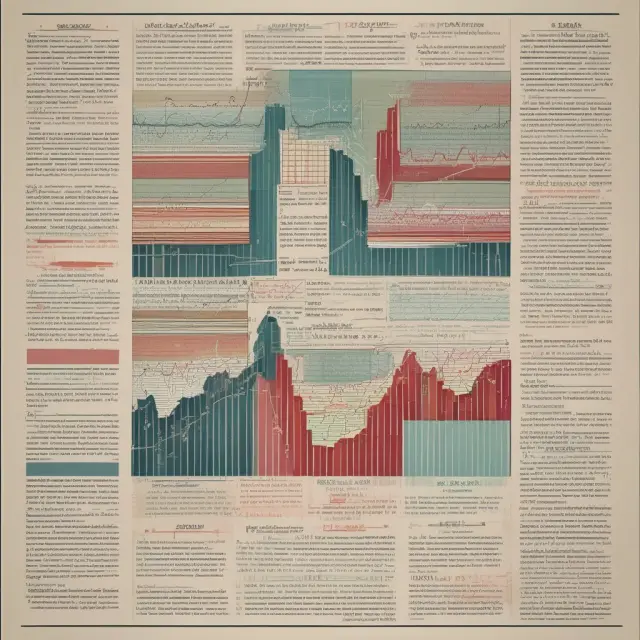
Calculating Donchian Channels: Methods and Timeframes
Understanding how to calculate Donchian channels is essential for traders looking to identify trends and price extremes using this powerful technical indicator. Developed by Richard Donchian in the mid-20th century, Donchian channels consist of an upper channel (UC), a middle channel (MC), and a lower channel (LC) based on moving averages of highs and lows over a selected period.
To calculate Donchian channels, traders need to determine the highest high and lowest low over a specified number of time intervals (N) for a given security. This can range from minutes or hours for intraday trading, to days, weeks, or months for swing trading and long-term investment strategies.
Let’s take a closer look at how to calculate Donchian channels using various methods and timeframes:
Day Trading with Donchian Channels
For day traders working on minute or hourly charts, calculating Donchian channels is relatively straightforward. Set the number of periods (N) for your desired channel width, such as 20 minutes or 60 minutes. Then, compare the highest high and lowest low over the selected period and plot the UC, MC, and LC accordingly.
Swing Trading with Donchian Channels
Swing traders employing daily or weekly charts can also benefit from using Donchian channels to identify trends and potential entry/exit points. By setting a larger number of periods (N), such as 10 days or 20 weeks, traders can evaluate longer-term price action and gauge the overall strength of a trend.
Long-Term Investment with Donchian Channels
For long-term investors focusing on monthly or yearly charts, Donchian channels can help assess broader market trends and potential opportunities for capital appreciation. Setting an even larger number of periods (N) will result in wider bands that encompass significant price movements over longer time horizons.
Regardless of the chosen method or timeframe, calculating Donchian channels involves the following steps:
- Determine the desired period (N).
- Calculate the highest high and lowest low for each time interval within the specified period.
- Plot the UC as the highest high, LC as the lowest low, and MC as the average of the UC and LC.
By using Donchian channels in various trading strategies and timeframes, traders and investors can gain valuable insights into market trends and potential price extremes that may inform their decision-making process. Stay tuned for further discussion on interpreting Donchian Channels and comparing them to other popular technical indicators like Bollinger Bands.

Components of Donchian Charts: Understanding UC, LC, and MC
Donchian Channels, created by Richard Donchian in the mid-20th century, are a technical indicator consisting of upper (UC), lower (LC), and middle (MC) lines. These components help traders recognize trends, extremes, and potential price movements in financial markets.
The Upper Channel Line (UC) signifies the highest price achieved within a defined time frame or period (N). It represents the upper boundary of the trending range and serves as an essential reference point for bullish traders seeking breakouts and reversals.
The Middle Channel Line (MC), also known as the median line, is the average between the highest high and lowest low within the specified N-period window. This middle band acts as a pivot point or center of gravity for the price movement within the given time frame, offering neutral insights for traders looking to identify mean reversion or trend continuation.
The Lower Channel Line (LC) denotes the lowest price recorded during the selected timeframe or period (N). It functions as the lower boundary of the range and is a crucial reference point for bearish traders seeking breakdowns and reversals.
Donchian Channels serve as a visual representation of the market’s trend and help traders make informed decisions by providing insights into price movements over different time horizons. The indicator can be applied using various timeframes, including day trading, swing trading, and long-term investment strategies.
Calculation of Donchian Channel lines is relatively straightforward and involves determining the highest high and lowest low within a predefined N-period window. The upper line represents the highest high achieved during that period, while the lower line represents the lowest low. The middle channel line (MC) is calculated by taking the average of both the upper high and lower low over the chosen time frame.
Understanding these components provides valuable insights into market behavior and offers traders a powerful tool for identifying trends, potential breakouts, and reversals in financial markets. By incorporating Donchian Channels into your trading strategy, you can improve your ability to make informed decisions and navigate market volatility with greater confidence.
Interpreting Donchian Channels: Key Signals to Watch For
Donchian channels are a powerful technical tool designed by Richard Donchian to identify bullish and bearish extremes, trends, and reversals in financial markets. By calculating the highest high (UC) and lowest low (LC) over a specific time period (N), these channels provide valuable insights into price movements that can inform trading decisions.
Bullish Signals
When prices touch or move above the upper channel line (UC), it can signify a bullish trend. This means that the security is testing its resistance level, indicating potential for a continued upward movement. Bullish signals typically occur during an uptrend when prices are consistently rising over time. In this scenario, the middle band functions as support while the upper band acts as resistance.
Bearish Signals
Conversely, when prices fall below or touch the lower channel line (LC), it indicates a bearish trend, meaning that the security is testing its support level. This can suggest a potential downtrend with continued price declines. Bearish signals occur in securities experiencing downward price movements over an extended period. In this situation, the middle band acts as resistance while the lower band functions as support.
Trend Reversals
Donchian channels can also be used to identify trend reversals. If prices break above the upper channel line (UC) during a downtrend and then fall below it, the channel’s bullish potential may be lost. This is considered a bearish signal that could indicate a reversal in the underlying trend. Conversely, if prices break below the lower channel line (LC) during an uptrend and then rise above it, this represents a bullish signal, suggesting a potential reversal of the prevailing trend.
Trading Strategies
Using Donchian channels effectively can help traders implement successful strategies based on their findings. One common approach involves entering trades when prices touch or move outside the upper or lower channel lines as it signifies strong momentum in that direction. Additionally, many traders use Donchian channels to set stop-loss orders, determining where to place stops based on the channel’s middle band. This can help protect against significant losses during adverse market conditions while allowing for potential profit capture when prices revert back to the mean.
Limitations and Criticisms
It is essential to note that Donchian channels are not infallible indicators, and like all technical tools, they come with limitations. For example, the indicator’s performance can be impacted by arbitrary N period values or changes in market conditions, which could result in false signals. As such, it’s crucial for traders to use them in conjunction with other tools and to exercise discretion when making decisions based on Donchian channel data.
In conclusion, understanding the key signals and interpretations of Donchian channels can provide valuable insights into market trends and potential reversals. By identifying bullish and bearish extremes, traders can make informed decisions and potentially capitalize on opportunities within their portfolios.
Comparing Donchian Channels and Bollinger Bands: Key Differences
Donchian channels and Bollinger Bands are two popular technical indicators used to help traders identify trends, market reversals, and volatility levels. While they have similarities, their methodologies differ significantly. Let’s explore the primary differences between these powerful tools in the realm of financial markets.
Donchian Channels: The Basics
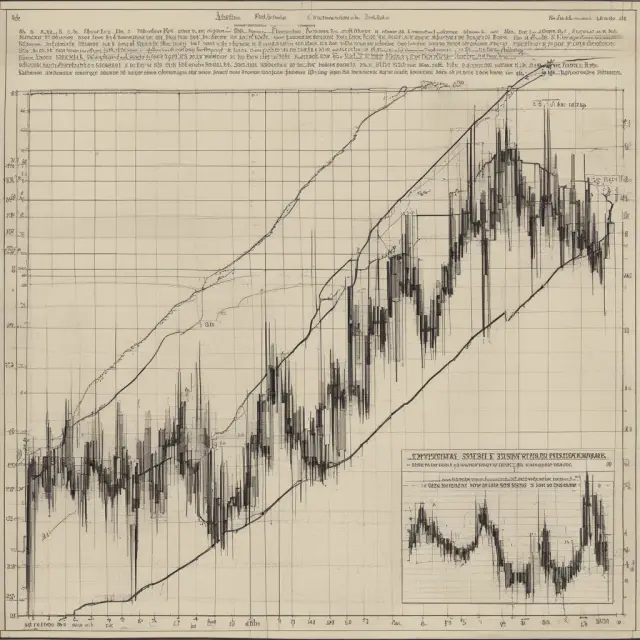
Donchian channels are a set of three lines derived from moving average calculations that represent upper and lower bands around a median or midrange band (Figure 1). These lines consist of an upper channel (UC), middle channel, and a lower channel (LC). UC represents the highest price of a security over a specified time frame (N), while LC signifies the lowest price achieved. The area between the upper and lower bands signifies the Donchian Channel.
Bollinger Bands: An Overview
Bollinger Bands, on the other hand, consist of three lines: a moving average (middle band) and two standard deviations plotted above and below it, forming an envelope around the price action (Figure 2). These bands indicate volatility levels based on historical price movements.
Calculation Differences
The primary difference between Donchian Channels and Bollinger Bands lies in their calculation methods. While Donchian Channels focus on identifying extreme prices, Bollinger Bands use a moving average with standard deviations to measure volatility (Figure 3).
Donchian Channels: Identifying Extremes
The upper and lower bands of the Donchian Channel represent extreme price levels based on historical price movements. These levels provide vital information for traders looking for breakouts, breakdowns, or emerging trends. In contrast, Bollinger Bands use a moving average with standard deviations to display volatility around the middle band (Figure 3).
Visual Appearance
The visual representation of the two indicators also differs significantly. Donchian Channels provide a clear separation between bullish and bearish market conditions, while Bollinger Bands offer a more nuanced view that includes volatility levels and historical price movements (Figure 4).
Comparing Uses and Applications
Both Donchian Channels and Bollinger Bands are used for various purposes, including identifying trends, confirming price action, and forecasting potential market reversals. However, their unique characteristics make them better suited for specific trading styles or market conditions. For example, traders using shorter time frames might prefer Donchian Channels due to their focus on extreme price movements, while longer-term investors may lean towards Bollinger Bands’ ability to measure volatility around a moving average (Figure 5).
Understanding the Pros and Cons of Each Indicator
To help traders make informed decisions about which indicator suits their trading style or strategy best, it is essential to weigh their respective pros and cons. Donchian Channels provide clear-cut signals for bullish and bearish conditions but may generate false signals if market movements are not consistent with historical price movements. Bollinger Bands offer a more precise measure of volatility and are less susceptible to false signals but might be overly complex for some traders.
Choosing the Right Tool: A Case Study
Consider two hypothetical traders, Tom and Jerry. Tom is an experienced day trader who focuses on short-term price movements and looks for quick profits. He decides to use Donchian Channels due to their focus on extreme price levels and their ability to provide clear signals for trend reversals. Jerry, however, is a long-term investor interested in capital appreciation over several years. He opts for Bollinger Bands as they offer a more nuanced view of volatility and help him manage risk through stop loss orders based on historical price movements.
In conclusion, Donchian Channels and Bollinger Bands serve distinct yet complementary roles in the realm of financial markets. Understanding their differences, strengths, and limitations is essential for traders and investors looking to make informed decisions based on market conditions and their personal trading style. By employing both indicators effectively, one can enhance their ability to identify trends, anticipate price movements, and make more informed investment decisions.

Applying Donchian Channels in Trading: Strategies for Effective Use
Donchian channels offer valuable insights for traders looking to identify trends, reversals, and potential breakouts in financial markets. By understanding how to effectively use this technical indicator, investors can make well-informed decisions regarding entry, exit, and stop loss points.
Firstly, traders may use Donchian channels as an entry signal when the price breaches either the upper or lower channel line. This breakout indicates a strong trending market that is likely to continue in its direction. For instance, if the price breaks above the upper channel line, it suggests an uptrend and could serve as a potential buy opportunity for traders. Conversely, a price break below the lower channel line might indicate a downtrend and signify a sell opportunity.
Additionally, traders can also employ Donchian channels as a trailing stop loss mechanism by adjusting the length of their stop losses based on the width of the channel. In an uptrend, a trader might set a stop loss below the lower channel line to protect profits. On the other hand, during a downtrend, a stop loss above the upper channel line could help secure losses.
Furthermore, Donchian channels can be utilized in conjunction with other technical indicators or trading strategies for added confirmation. For example, traders may use Donchian channels alongside moving averages, momentum oscillators like Relative Strength Index (RSI), or trend lines to validate entry and exit signals.
It is crucial to note that while Donchian channels can provide valuable insights, they should not be used in isolation. Traders must consider other factors such as economic news releases, fundamental analysis, and market conditions when making trading decisions. Additionally, it is essential to remember that no indicator is infallible, and there is always a risk of false signals or missed opportunities.
In conclusion, Donchian channels serve as a versatile technical tool for identifying trends, reversals, and potential breakouts in financial markets. By understanding the calculations involved, interpreting the various components, and applying effective trading strategies, investors can potentially capitalize on market movements and optimize their portfolios.

Limitations and Criticisms of Donchian Channels: Understanding their Limitations
While Donchian Channels offer valuable insights into trend identification and reversals, they do come with certain limitations and criticisms. One primary concern is the potential for generating false signals due to an arbitrary or commonly used time period (N) value. These false signals can negatively impact trading and investment performance if not carefully considered.
Donchian Channels focus on identifying the highest highs and lowest lows over a predefined N-period, which assumes that these extreme values carry significant meaning for future price movements. However, markets are dynamic and influenced by various factors such as economic news, geopolitical events, and investor sentiment. As market conditions change, the significance of an arbitrary N-period may become outdated or less relevant to current trends.
Additionally, Donchian Channels do not account for the volatility of the underlying asset or security. This lack of consideration for volatility can lead to false signals when large price movements occur, as the upper and lower bands may widen significantly, making it difficult to distinguish between genuine trend reversals and normal market fluctuations.
Another limitation is that Donchian Channels do not provide an entry or exit strategy on their own. Traders must rely on additional analysis or indicators in combination with Donchian Channels to make informed decisions. This dependence on multiple tools can increase the complexity of the trading process and potentially introduce further uncertainty.
Lastly, Donchian Channels may not be suitable for all investors or trading styles. For example, short-term traders and day traders might find that the indicator’s long timeframes do not provide sufficient information to make timely decisions. Alternatively, trend following strategies based on longer-term Donchian Channels can be effective but require a significant amount of patience and discipline to wait for signals.
Despite these limitations, Donchian Channels remain a valuable tool for identifying trends, reversals, and extremes in financial markets. By understanding their strengths and weaknesses, investors and traders can make more informed decisions and adapt their strategies accordingly.

Donchian Channels in Context: Real-World Applications and Case Studies
Richard Donchian’s revolutionary indicator offers valuable insights to traders and investors by providing a visual representation of price trends, extremes, and potential turning points. This section explores real-world examples and case studies that illustrate the power and versatility of Donchian Channels.
One noteworthy instance of Donchian Channels’ effectiveness was during the 2015 Chinese Stock Market Crash. As illustrated in Figure A, the indicator predicted a significant downturn as prices approached their highest high within the given period (UC), signaling an impending bearish trend. Conversely, after the crash, the indicator provided a clear buying opportunity when the lower channel (LC) was breached, indicating a bullish reversal.
Figure A: Donchian Channels and the 2015 Chinese Stock Market Crash
Another example can be found in the cryptocurrency market, where Bitcoin’s price behavior is known for its extreme volatility. As shown in Figure B, the upper channel (UC) highlighted Bitcoin’s bullish run during its massive 2017 surge, while the lower channel (LC) served as a protective stop-loss level for those looking to exit their positions amidst the volatile market conditions.
Figure B: Donchian Channels and Bitcoin’s Bull Run in 2017
Moreover, successful traders like Mark Minervini have publicly acknowledged the value of Donchian Channels as a cornerstone of their trading strategies. Minervini’s approach involves waiting for a stock to touch its lower channel (LC) before entering a long position, maximizing potential profits while minimizing risk.
To further validate Donchian Channels’ usefulness, consider their comparison with Bollinger Bands, another popular technical indicator. While both indicators share some similarities in presenting trends and extremes, the main difference lies in their calculation methods: Donchian Channels rely on historical highs and lows over a specific period, while Bollinger Bands calculate moving averages plus/minus standard deviations of price for that period. This contrast can lead to varying results depending on market conditions, making it essential for traders and investors to consider both indicators when assessing potential trading opportunities.
Figure C: Donchian Channels (green lines) vs Bollinger Bands (red lines) – Comparison between the two indicators on Apple Inc. Stock
In conclusion, Donchian Channels serve as a powerful and versatile tool for traders and investors to identify trends, reversals, and potential entry/exit points based on historical price data. Real-world examples and case studies, like those presented above, offer valuable insights into the effectiveness of this technical indicator and its ability to provide actionable information in various market conditions. Whether used alone or in conjunction with other indicators, Donchian Channels continue to demonstrate their relevance in today’s ever-evolving financial markets.
In the next section, we will discuss the limitations and criticisms of Donchian Channels, providing a more comprehensive understanding of this essential technical indicator.

FAQs about Donchian Channels: Answering Common Questions
Donchian Channels, a technical analysis tool created by Richard Donchian in the mid-20th century, are designed to help traders identify trends, extremes, and significant price movements in financial markets. This FAQ section addresses common questions about how Donchian Channels function, their calculation methods, applications, and differences compared to other popular indicators like Bollinger Bands.
What is the purpose of Donchian Channels?
Donchian Channels are used to identify bullish and bearish extremes that favor reversals as well as higher and lower breakouts, breakdowns, and emerging trends. The channels are created by calculating the highest high (upper channel) and lowest low (lower channel) over a specified period, with the middle band computing the average of the upper and lower bands.
How do I calculate Donchian Channels?
To calculate Donchian Channels, you’ll first need to select a timeframe (minutes, hours, days, weeks, or months) for your analysis. Next, determine the highest high and lowest low within that timeframe. The upper channel represents the highest high, while the lower channel marks the lowest low over that period. The middle band is calculated as the average of these two values.
What does each line in Donchian Channels represent?
The upper band marks the highest price achieved for a security within a chosen time frame. The lower band identifies the lowest price within the same period. The middle channel represents the median or mean reversion price, which is the average of the highest and lowest values over the specified timeframe.
How do Donchian Channels differ from other technical indicators like Bollinger Bands?
Donchian Channels calculate the upper and lower bands based on the highest high and lowest low within a specific period, while Bollinger Bands rely on moving averages and standard deviations of price movements. The primary difference is that Donchian Channels focus more heavily on extreme values compared to Bollinger Bands, which take into account both mean reversion and volatility.
What are the potential limitations of using Donchian Channels?
Donchian Channels may not always provide accurate signals due to their reliance on arbitrary timeframes that might not reflect current market conditions. This can result in false signals, which can negatively impact trading and investment performance. It is essential for traders to carefully consider the specific timeframe and market environment when using Donchian Channels for analysis.
By understanding the key concepts behind Donchian Channels and answering some of the most frequently asked questions about their use, you’ll be well-equipped to make informed decisions in your trading or investment strategy.
 Next entry · No. 1,111Dormant Accounts: The Rules by State, the Federal Pieces, and How to Get the Money Back
See also
-
 No. 1,128
01 Aug 2024
19 min
Understanding Downtrends in Finance: Characteristics, Identification, and Impact
Business Finance
No. 1,128
01 Aug 2024
19 min
Understanding Downtrends in Finance: Characteristics, Identification, and Impact
Business Finance -
 No. 1,118
30 Jul 2024
20 min
Understanding Double Bottom Patterns: Identifying Major Turning Points in Finance and Investments
Finance Policy
No. 1,118
30 Jul 2024
20 min
Understanding Double Bottom Patterns: Identifying Major Turning Points in Finance and Investments
Finance Policy -
 No. 5,329
30 Aug 2025
21 min
Understanding Up/Down Gap Side-by-Side White Lines in Finance: A Comprehensive Guide
Business Finance
No. 5,329
30 Aug 2025
21 min
Understanding Up/Down Gap Side-by-Side White Lines in Finance: A Comprehensive Guide
Business Finance -
 No. 3,676
17 Apr 2025
19 min
Understanding On-Balance Volume (OBV): A Comprehensive Guide for Institutional Investors
Financial Data Analysis
No. 3,676
17 Apr 2025
19 min
Understanding On-Balance Volume (OBV): A Comprehensive Guide for Institutional Investors
Financial Data Analysis -
 No. 2,478
09 Jan 2025
20 min
Understanding the Intraday Momentum Index (IMI): A Technical Indicator for Short-Term Traders
Business Finance
No. 2,478
09 Jan 2025
20 min
Understanding the Intraday Momentum Index (IMI): A Technical Indicator for Short-Term Traders
Business Finance -
 No. 2,112
10 Dec 2024
21 min
Understanding the High-Low Index: A Powerful Tool for Confirming Market Trends
Business Finance
No. 2,112
10 Dec 2024
21 min
Understanding the High-Low Index: A Powerful Tool for Confirming Market Trends
Business Finance