Understanding Ascending Channels: Identifying Uptrends in Technical Analysis

Learn everything you need to know about ascending channels in technical analysis. Understand formation, characteristics, trading strategies, and differences…
What is an Ascending Channel?
An ascending channel, also known as a bullish trend channel, represents the price movement of a financial instrument in an uptrend. This technical analysis pattern is formed by two parallel lines: one trendline connecting swing lows and another line tracing out swing highs. These channels illustrate support and resistance levels that investors can use to make informed decisions regarding entry, exit, or risk management.
Ascending channels are particularly valuable for traders looking to capitalize on the momentum of an existing uptrend. By using this price pattern, they can identify potential trading opportunities within the context of a larger trend. The upper channel line acts as resistance while the lower channel line functions as support, providing a clear visual representation of the current trend and its boundaries.
Formed by drawing two lines with a positive slope, ascending channels are an essential tool for investors seeking to better understand the direction of price movements in their investment portfolio. The pattern’s unique characteristics, including higher highs and higher lows, offer insight into market trends while providing crucial information for setting stop-loss orders and profit targets.
When trading within an ascending channel, it is essential to recognize the importance of these support and resistance levels. A long position can be initiated when a security’s price approaches the lower trend line, with exit strategies put in place once the price nears the upper channel line. By setting a stop-loss order slightly below the lower trend line, traders minimize potential losses and safeguard their investments.
A breakout from an ascending channel occurs when the price breaks through the upper trendline. This event can signal the continuation of the uptrend and provide an opportunity for traders to capitalize on further gains. To confirm a breakout, it’s important to consider additional technical indicators, such as volume or moving averages, which can help validate the strength of the price movement.
Conversely, a breakdown from the ascending channel can indicate a potential trend reversal when the price breaks below the lower trendline. Traders should be cautious and look for other signs of weakness within the pattern before entering a short position. Failure to reach the upper trend line frequently or negative divergence between popular indicators like the RSI are common indicators of an impending downtrend.
It is important to note that ascending channels are not mutually exclusive with other technical analysis tools and strategies. They can be used in conjunction with various charting patterns, indicators, and trading methods. By combining these different approaches, traders can develop a more comprehensive understanding of market conditions and make well-informed decisions based on their investment objectives.
Forming an Ascending Channel: Drawing Trend Lines
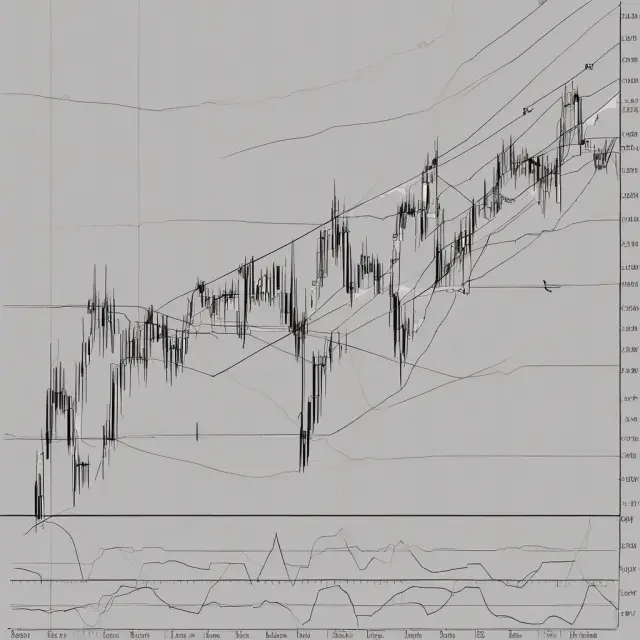
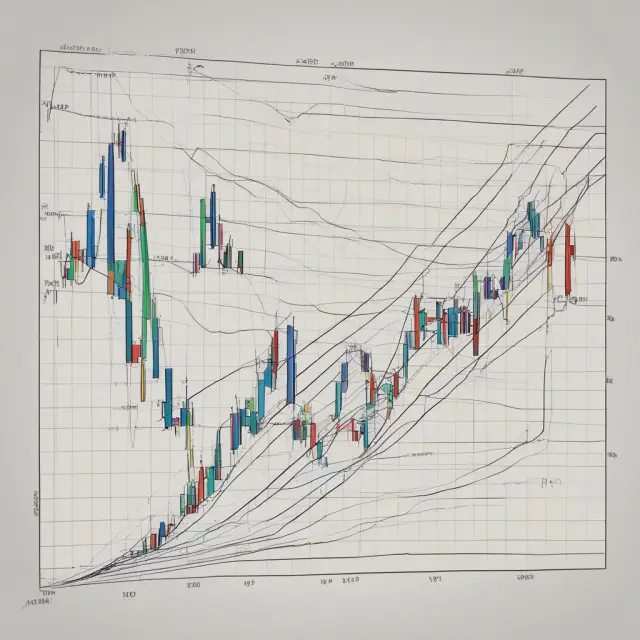
An ascending channel, a popular trend indicator in technical analysis, is created by drawing two parallel lines; one connecting swing lows and another joining swing highs. This bullish pattern displays higher highs and higher lows as price oscillates between the upper and lower trend lines (Figure 1). In this section, we will discuss how to construct ascending channels and highlight their key characteristics.
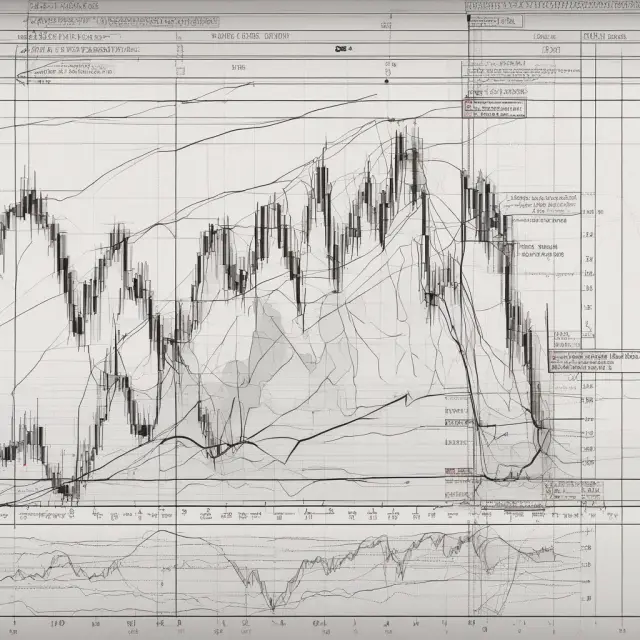
To begin, let’s explore the process of drawing trend lines in an ascending channel. First, identify swing highs and lows by looking for the highest and lowest price points within a specific time frame. Next, draw a lower trend line connecting these swing lows and an upper trend line that touches each swing high (Figure 2).
The lower trend line acts as a support level while the upper trend line functions as resistance. The distance between these two lines creates a channel through which price oscillates. It is essential to ensure the ascending channel’s width is sufficient for setting stop-loss orders and profit targets, maintaining an adequate risk/reward ratio.
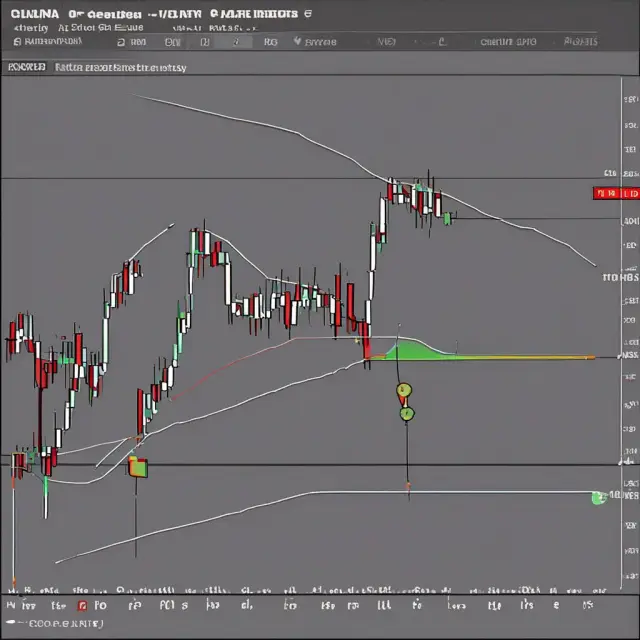
When trading within an ascending channel, traders may consider entering a long position when the price touches the lower trend line and exiting their trade near the upper trend line (Figure 3). A stop-loss order should be placed below the lower trend line to protect against potential losses. In contrast, profit targets can be set at or just above the upper trend line.
The ascending channel pattern is crucial for technical analysts looking to confirm trends and anticipate breakouts and breakdowns. In the next section, we’ll discuss key characteristics of ascending channels and how they can be used to inform trading decisions.

Characteristics of an Ascending Channel
An ascending channel, a popular price action pattern in technical analysis, is characterized by a series of higher highs and higher lows forming upward-sloping trendlines. These lines represent the support and resistance levels in this pattern. The process of constructing an ascending channel involves drawing lower trend lines that connect the swing lows and upper trend lines that join the swing highs (see Figure 1).
Figure 1: Ascending Channel with Support and Resistance Levels
The primary role of an ascending channel is to provide insight into an uptrend within a security’s price action. In the context of this pattern, support levels are established at lower trend lines, while resistance levels are determined by upper trend lines. The channel’s parallel structure highlights these key areas and allows traders to make informed decisions regarding entry, exit, stop-loss placement, and profit target setting.
Traders may employ various strategies when navigating the ascending channel, including swing trading between support and resistance levels or positioning themselves in the direction of a breakout or breakdown. In order to ensure effective risk management, it is essential that there is enough price action distance between the pattern’s parallel lines to establish an appropriate risk/reward ratio.
For instance, consider a trader who opens a long position when a stock’s price reaches the lower trend line of an ascending channel and sets a stop-loss order slightly below this level to mitigate potential losses if the security’s price reverses suddenly. This strategy could lead to a profitable outcome if the price action continues to climb toward the upper trend line, thereby providing an opportunity for a favorable risk/reward ratio.
While an ascending channel is generally indicative of a strong uptrend, there are instances where weakness within the pattern may emerge. Breakouts and breakdowns are two such scenarios that can signal potential trend changes or continuations, respectively. In the following sections, we will discuss how to identify and react to these price movements effectively.
Ascending Channel: Support and Resistance
Traders may use an ascending channel in several ways when considering entry, exit, stop-loss placement, and profit target setting. One common strategy involves entering a long position when the stock’s price reaches the lower trend line of the ascending channel and exiting once it nears the upper channel line. A stop-loss order can be placed below the lower trend line to protect against potential losses. It is essential to ensure that there is enough distance between the parallel lines to create an attractive risk/reward ratio for the trade.
For example, if a trader sets a $5 stop-loss order, the minimum width of the ascending channel should be at least $10 to offer a 1:2 risk/reward ratio. This strategy allows traders to capitalize on the price action between support and resistance levels while managing risk effectively.
Ascending Channel Breakouts and Breakdowns
Breakouts represent significant price movements beyond an ascending channel’s upper trend line, indicating a potential continuation of the uptrend or a new trend emerging. In order to validate a breakout, technical analysts may employ additional indicators such as moving averages, volume analysis, and confirming signals from other chart patterns.
Breakdowns refer to instances where price falls below an ascending channel’s lower trend line, potentially indicating a reversal or continuation of a downtrend. These situations should be treated with caution, as they may result in losses if not managed properly. In the following sections, we will discuss how to identify breakouts and breakdowns within an ascending channel and outline potential strategies for responding accordingly.
In conclusion, understanding the key features and characteristics of an ascending channel is essential for traders looking to capitalize on price action patterns in technical analysis. By recognizing the significance of support and resistance levels, employing strategic entry, exit, stop-loss placement, and profit target setting, and reacting effectively to breakouts and breakdowns, traders can optimally manage risk and maximize gains within this trend-defining pattern.
Trading Within an Ascending Channel
An ascending channel, which is formed by connecting a series of swing highs and swing lows with trend lines, indicates a clear uptrend in financial securities. Traders can utilize this pattern to implement effective trading strategies that include setting stop-loss orders and profit targets. In an ascending channel, the lower trend line acts as support, while the upper trend line represents resistance.
When identifying potential trade opportunities, traders may consider entering a long position when the security’s price reaches the lower channel line. This is the point where buyers have shown previous buying interest, and it offers a level of psychological support for the stock. Conversely, traders can exit their positions when the price nears the upper trend line. A stop-loss order should be placed below the lower trend line to minimize potential losses in case the security reverses.
To optimize risk/reward ratios while trading within an ascending channel, ensure there is sufficient distance between the parallel lines. For instance, if a trader sets a $5 stop loss, aim for an ascending channel with a minimum width of $10. This ensures an acceptable 1:2 risk-to-reward ratio.
A breakout above an ascending channel may signal a continuation of the uptrend. Traders can confirm the strength of this breakout by evaluating volume increases and assessing for overhead resistance on higher timeframe charts. On the contrary, when price breaks down below the lower trend line of an ascending channel, it may indicate a potential reversal or trend change. Traders should examine weakness in the pattern by considering factors such as decreased buying interest and negative divergence between popular indicators like the RSI. In conclusion, technical analysis offers valuable insights into trading within ascending channels through the use of support and resistance levels, stop-loss orders, profit targets, and breakout/breakdown strategies. These approaches enable traders to capitalize on uptrends while effectively managing risk.
Support and Resistance Levels: Swing Trading
An ascending channel’s unique aspect lies in its ability to highlight support and resistance levels, which are critical components of swing trading strategies. Swing traders aim to profit from the price swings within a trend instead of attempting to predict its direction. In the context of an ascending channel, these levels are identified as:
1. Lower Trendline – Support Level: The lower trend line acts as a support level since it represents the lowest point in the pattern before a new uptrend begins. Traders can open long positions when a security’s price nears this level and place stop-loss orders just beneath it to safeguard their trades.
2. Upper Trendline – Resistance Level: The upper trend line acts as a resistance level because it marks the highest point in the pattern until the price breaks out above it, triggering further upward movement. Traders may consider taking profits when a security reaches this level or wait for a breakout to confirm an uptrend continuation before entering new positions.
Effective use of support and resistance levels within an ascending channel enables traders to:
– Set profit targets based on the pattern’s upper trendline
– Establish stop-loss orders near the lower trendline
– Enter long positions when the price tests the support level
– Exit or hedge short positions when the price approaches the resistance level
Traders employing swing trading strategies within an ascending channel should:
– Verify that enough distance exists between the parallel lines to ensure favorable risk/reward ratios. For instance, a stop-loss order of $5 should be accompanied by an upper trendline with a width of at least $10.
– Use confirmation signals and other indicators to validate breakout or breakdowns before entering new positions.
In conclusion, understanding support and resistance levels within ascending channels is essential for swing traders as they provide crucial guidance throughout the trading process—from entry and exit points to profit targets and stop-loss orders.
Ascending Channel Breakouts: Confirmation and Timing
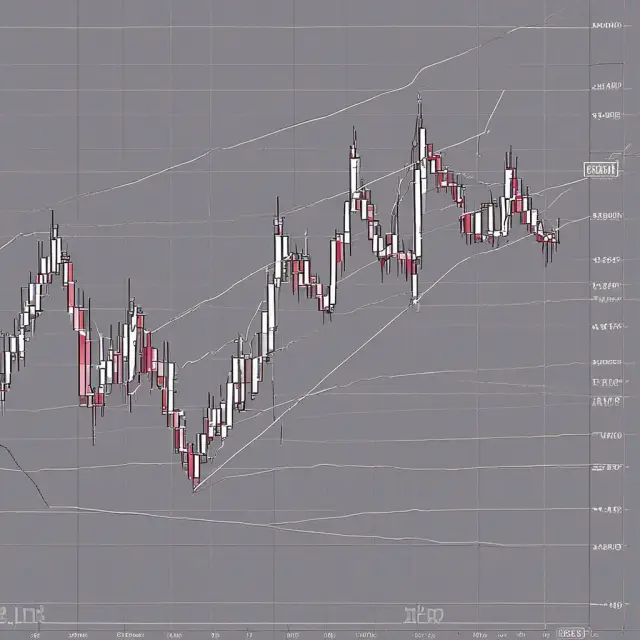
An ascending channel breakout represents a significant price move beyond the upper trend line, indicating continued upward momentum or a potential new trend. Traders may employ various techniques to confirm this event and determine optimal entry points for potential trades.
Confirmation of a Breakout
To validate an ascending channel breakout, traders can consider several factors:
- Volume analysis: A notable increase in trading volume during the breakout indicates strong investor interest and heightened market sentiment, providing evidence that the price movement is not a mere technicality or short-lived phenomenon.
- Overhead resistance: The presence of overhead resistance levels on higher time frame charts can act as confirmation for an ascending channel breakout. These levels represent key price areas where sellers have previously intervened to halt advances, but if breached, they can signal that the price trend may continue to move higher.
- Support from other technical indicators: The confluence of multiple technical indicators, such as moving averages or momentum oscillators, may further strengthen the case for a breakout and suggest a potential continuation in the prevailing trend.
Optimal Entry Points
Once a validated ascending channel breakout is identified, traders must determine their entry points to maximize potential profits. The following techniques can be employed:
- Setting profit targets: Traders may use the upper trend line or overhead resistance levels as profit targets for their long positions, aiming to sell when the price reaches these levels or nearby resistance zones.
- Risk management: Placing stop-loss orders below the breakout point and below the most recent swing low can help protect against potential losses if a reversal occurs. This technique minimizes risk while preserving the opportunity for potential profits during an ascending channel breakout.
- Timing entry points: Patient traders may wait for the price to retest the breakout point before entering their positions, taking advantage of any pullbacks that might occur as the market consolidates or corrects. This strategy allows traders to benefit from lower entry prices while maintaining exposure to the underlying trend.
Ascending Channel Breakdowns: Identifying Weaknesses
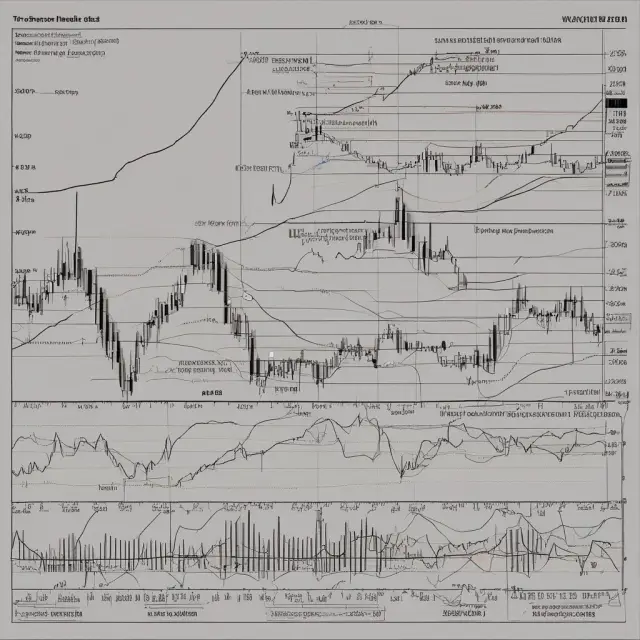
Identifying weakness within an ascending channel can be crucial to a trader’s success. A breakdown in the pattern suggests that the price trend may reverse or experience a significant correction. Let’s discuss some common methods for identifying weakness within an ascending channel:
Price Failing to Reach Upper Trend Line
When a stock fails to reach or consistently hovers below the upper trend line of an ascending channel, it may indicate a potential breakdown. This situation can signal that the uptrend is losing momentum and could reverse in the near future (Figure 1). A trader might consider taking profits on any open positions or taking a short position if this weakness is confirmed by other technical indicators.
Negative Divergence
Another method to identify weakness within an ascending channel is negative divergence between price and a trend-following indicator, such as the Relative Strength Index (RSI), Moving Average Convergence Divergence (MACD), or Stochastic Oscillator. When a security’s price makes higher highs within the channel but its momentum indicator fails to follow suit, this negative divergence may indicate that the uptrend is weakening and could potentially reverse (Figure 2). This scenario warrants further investigation before taking any definitive action.
Volume Analysis
Increased volume on declining days or a sudden spike in selling pressure can be additional signs of weakness within an ascending channel. A high volume of sellers may cause the price to break below the lower trend line, signaling a potential trend reversal (Figure 3). In contrast, decreasing volume as price rises can be a bullish sign that the uptrend remains intact.
Breakouts:
When an ascending channel experiences a significant breakout above its upper trend line, it may be accompanied by increased volume and other confirming technical indicators (Figure 4). Such a breakout could signal continuation of the existing uptrend or the start of a new bullish phase. However, if this breakout is not confirmed by other indicators, it may lead to false signals and potential losses for traders who enter positions without proper confirmation.
By carefully examining these signs, traders can use weakness within an ascending channel as opportunities to adjust their positions or enter new trades based on their investment objectives and risk tolerance. Remember that no single indicator can guarantee profitable trading decisions; it’s essential to consider multiple factors when analyzing the market conditions.
Comparing Ascending Channels and Envelope Channels
Understanding technical analysis tools is crucial for investors and traders to make informed decisions in the ever-changing financial markets. Two popular price action chart patterns, ascending channels and envelope channels, offer valuable insights into trend identification, breakouts, and support/resistance levels. Both channel types provide unique characteristics and applications that cater to various investment styles and strategies.
Ascending Channels: An Ascending Channel is a technical analysis tool that helps illustrate an uptrend in a security’s price action. The pattern consists of two positive-sloping trend lines, drawn above and below the price series, which act as resistance and support levels, respectively. By identifying the higher highs and higher lows, the ascending channel indicates that prices are consistently moving upward.
On the other hand, Envelope Channels encompass both ascending and descending channels to analyze price movements over a longer time frame. While they share some similarities with ascending channels, there are significant differences in their formation and usage.
Formation: Ascending channels form by connecting swing lows (support) and highs (resistance) through trend lines. In contrast, envelope channels incorporate moving averages or price ranges to establish upper and lower boundaries. Bollinger Bands, a popular example of an envelope channel, consists of three lines: the middle band representing the 20-day simple moving average, and the upper and lower bands representing standard deviations from that moving average.
Application: Ascending channels can be employed for swing trading and entering positions based on price action within the pattern. Traders can use this tool to set stop loss orders below the lower trend line and profit targets above the upper channel line, maximizing risk/reward potential. Breakouts from ascending channels signal continuation in the existing uptrend, offering entry points for traders who missed earlier opportunities.
Envelope channels like Bollinger Bands are used to measure volatility by expanding or contracting the bands depending on market conditions. Traders can use these channels to identify potential breakouts and divergences, providing an edge in anticipating price movements and market trends.
In conclusion, understanding both ascending and envelope channels is essential for technical analysis as they offer distinct advantages and applications in identifying trends, support/resistance levels, and breakout opportunities. By integrating these tools into their investment strategies, traders can make more informed decisions and adapt to changing market conditions.
Popular Channel Indicators: Bollinger Bands vs. Donchian Channels
Two popular technical indicators widely used in conjunction with ascending and descending channel patterns are Bollinger Bands and Donchian Channels. While both indicators create channels to represent support and resistance levels, they differ significantly in their calculation methods and usage.
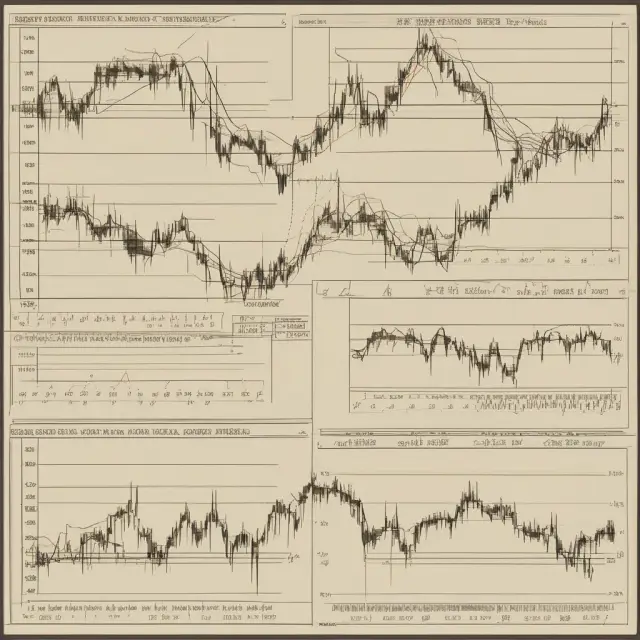
Bollinger Bands: Bollinger Bands consist of three lines – a moving average line, an upper band, and a lower band. The indicator calculates the bands by setting the middle band as a moving average of the security’s price (typically 20-day or 50-day simple moving averages) and then calculating the upper and lower bands based on standard deviations from the moving average line. Traders can use Bollinger Bands to identify potential buy and sell signals, confirm trend direction, and measure volatility.
Donchian Channels: Donchian Channels are formed by taking the highest high and lowest low over a specific period. For example, if we look at the monthly time frame, the Donchian channel’s upper line is the highest recorded high for a given security within that time frame, while the lower line represents the lowest recorded low during that same period. The distance between the two lines determines the volatility of the security and provides traders with potential areas to enter or exit trades based on support and resistance levels.
Ascending Channels vs. Envelope Channels: While ascending channels provide an excellent visual representation of a trend, envelope indicators such as Bollinger Bands and Donchian Channels offer additional insights. Ascending channels can show the clear trend direction but may miss underlying price fluctuations, whereas envelope indicators can capture these intricacies while still providing support and resistance levels. Utilizing both ascending channels and envelope indicators can result in a more comprehensive understanding of market trends and potential trading opportunities.
Traders often use a combination of indicators to confirm their analysis, making both ascending channels and envelope channels valuable tools for identifying trend direction and price movements. By comparing the strengths and differences between these various technical analysis patterns, traders can make informed decisions based on their risk tolerance and investment strategy.

FAQs: Answers to Commonly Asked Questions About Ascending Channels
Question 1: What is an ascending channel, and how does it form?
Answer: An ascending channel is a technical analysis tool that helps depict an uptrend by defining upper and lower trend lines based on swing highs and lows. This pattern assumes higher highs and higher lows. To draw the ascending channel, you connect the lowest swing lows with the lower trend line and the highest swing highs with the upper channel line.
Question 2: How are ascending channels used for trading?
Answer: Ascending channels allow traders to identify support and resistance levels that can be utilized to set stop-loss orders, profit targets, or even initiate trades. Traders can enter a long position when the price approaches the lower trend line or buy when the price breaks out above the upper channel line. Conversely, they may consider selling short when the price falls below the lower trend line or sell when there’s a breakdown from an ascending channel.
Question 3: How can support and resistance levels be used within an ascending channel?
Answer: Support and resistance levels within an ascending channel act as barriers to price movement, and traders use these areas to set orders. For instance, they may enter a long position when the price reaches the lower trend line as their entry point or exit when it approaches the upper trend line. A stop-loss order is typically placed below the lower trend line to minimize losses if the security reverses unexpectedly.
Question 4: What occurs when there’s a breakout from an ascending channel?
Answer: Breakouts represent continuation of the existing price trend or potentially the beginning of a new one. When an ascending channel breaks out above its upper line, this could signal a strong upward move, and traders might consider entering long positions to capitalize on the potential continuation. Conversely, breakouts below the lower channel line may indicate downward price movement, prompting traders to sell or enter short positions.
Question 5: What are warning signs of a weakness in an ascending channel?
Answer: A few signals can suggest that an ascending channel might be showing weakness. For instance, if the price fails to reach the upper trend line consistently, this could indicate a potential breakdown or reversal. Negative divergence between popular indicators such as RSI and price is another warning sign. This occurs when the stock’s price makes higher highs within an ascending channel but the RSI shows lower highs, indicating waning upward momentum.
Question 6: What are envelope channels, and how do they differ from ascending channels?
Answer: Envelope channels and ascending channels both belong to the same category of technical analysis tools, but they serve different purposes. Ascending channels focus on charting an uptrend in a security’s price within a short timeframe following a reversal or confirmation of a trend, while envelope channels are used for analyzing long-term trends. The latter are formed using moving averages and can include both descending and ascending channel patterns.
Question 7: Which indicators are commonly used for envelope channels?
Answer: Bollinger Bands and Donchian Channels are two popular indicators within the envelope channels category. While there are differences between these indicators in terms of moving averages, intervals, and usage, they both help traders identify trends, consolidation periods, and potential breakouts or breakdowns.
 Next entry · No. 221Understanding Ascending Triangles: A Technical Analysis Chart Pattern for Institutional Investors
See also
-
 No. 4,412
16 Jun 2025
21 min
Understanding Resistance Levels in Technical Analysis: Identifying, Trading and Breaking Through
Markets
No. 4,412
16 Jun 2025
21 min
Understanding Resistance Levels in Technical Analysis: Identifying, Trading and Breaking Through
Markets -
 No. 2,202
18 Dec 2024
18 min
Understanding Horizontal Channels: Identification, Trading Rules, and Examples
Markets
No. 2,202
18 Dec 2024
18 min
Understanding Horizontal Channels: Identification, Trading Rules, and Examples
Markets -
 No. 546
29 Apr 2024
23 min
Bull Traps: Understanding This Deceptive Market Reversal Pattern
Markets
No. 546
29 Apr 2024
23 min
Bull Traps: Understanding This Deceptive Market Reversal Pattern
Markets -
No. 221
07 Apr 2024
20 min
Understanding Ascending Triangles: A Technical Analysis Chart Pattern for Institutional Investors
Markets
-
 No. 3,846
01 May 2025
21 min
Understanding Overbought Conditions: A Comprehensive Guide for Institutional Investors
Business Finance
No. 3,846
01 May 2025
21 min
Understanding Overbought Conditions: A Comprehensive Guide for Institutional Investors
Business Finance -
 No. 3,232
11 Mar 2025
19 min
Understanding Momentum Investing: Chasing Performance with Technical Analysis
Investments
No. 3,232
11 Mar 2025
19 min
Understanding Momentum Investing: Chasing Performance with Technical Analysis
Investments