Understanding Ascending Triangles: A Technical Analysis Chart Pattern for Institutional Investors

Understanding Ascending Triangles: Learn about this bullish chart pattern used by institutional investors in technical analysis.
Introduction to Ascending Triangles
An ascending triangle is an intriguing chart pattern in technical analysis that has captured the attention of institutional investors worldwide due to its bullish implications and potential for substantial returns. This pattern emerges when price action creates a symmetrical figure with a horizontal line along the highs and a rising trendline tracing the lows. The ascending triangle is considered a continuation pattern, meaning it typically signals that the existing trend will continue in the same direction after the breakout.
This section focuses on understanding the significance of ascending triangles, the importance of trendlines, and what occurs during the breakout of this powerful chart pattern.
Ascending Triangle’s Basics
The formation of an ascending triangle involves several key elements. First, at least two swing highs and lows are required to establish the horizontal resistance and support levels, respectively. These trendlines converge as they approach a vertex or apex point. While there is no definitive size for an ascending triangle, this pattern typically develops over a few weeks to months.
The significance of these trendlines lies in their importance during the breakout phase. The resistance line, which forms the top of the triangle, often becomes a psychological barrier for buyers and sellers. Meanwhile, the support line at the bottom acts as a level of support, where buyers tend to enter the market once price reaches that area.
Understanding Ascending Triangle’s Significance
Ascending triangles are considered bullish patterns because they occur during uptrends or consolidations within an ongoing uptrend. These patterns provide valuable insight into the market dynamics, as buyers repeatedly attempt to push the price above resistance, while sellers counteract these efforts at support. The price oscillates between these levels until eventually breaching through the resistance, leading to a continuation of the existing upward trend.
The volume during this pattern plays a crucial role in validating the breakout’s strength. If the ascending triangle forms on high volume, the resulting breakout is more likely to have longevity. On the other hand, if the pattern develops with minimal volume, it may lack the conviction required for a sustained move in the direction of the breakout.
In conclusion, understanding the intricacies of ascending triangles is essential for institutional investors looking to capitalize on this powerful chart pattern. By recognizing its significance and interpreting the underlying trends, investors can make informed decisions regarding entry, exit, stop loss placement, and profit target setting.
Stay tuned for subsequent sections discussing components, trading strategies, limitations, real-world examples, and differences between ascending and descending triangles.
Forming an Ascending Triangle
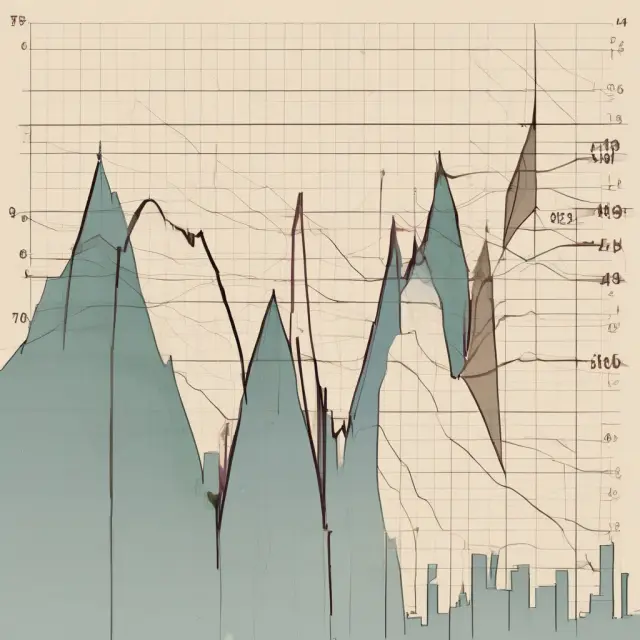
An ascending triangle is a popular continuation chart pattern formed in technical analysis, characterized by at least two swing highs and lows, with converging trendlines. The formation of an ascending triangle can provide traders with potential entry points and profit targets for trades.
The first requirement to create an ascending triangle involves identifying the presence of at least two distinct swing highs and lows. Swing highs represent the highest points in a price trend within a given time frame, while swing lows represent the lowest points. These highs and lows form the basis for drawing the key trendlines that define the ascending triangle pattern.
The next step is to connect the swing highs with a horizontal trendline, while connecting the swing lows with an upward-sloping trendline. The result is a triangle shape that exhibits compressing price movements as both the resistance and support levels converge. This triangle represents a consolidation phase where price action can potentially build up momentum for the next trend move in the direction of the prevailing trend before the breakout occurs.
The significance of an ascending triangle lies in its potential bullish implications. Once the price breaks out above the resistance line, a long position is taken. Conversely, if the price breaches below the support level, a short or sell position is initiated. A stop loss is typically placed just outside the opposite side from the breakout to minimize potential losses.
It’s essential to note that an ascending triangle does not guarantee a profitable trade; it merely provides traders with a potential entry point and profit target based on historical price movements. As with any chart pattern, false breakouts can occur where the price breaks out of the triangle only to retrace back into it without generating significant momentum in the intended direction.
The height of an ascending triangle can serve as a guiding factor for estimating potential profit targets and stop loss placements. By measuring the difference between the highest swing high and lowest swing low, traders can calculate the target price level by adding that value to or subtracting it from the breakout point, depending on whether a long or short position is taken.
In conclusion, understanding the requirements for forming an ascending triangle and the potential implications of its breakout can provide valuable insights for institutional investors seeking to capitalize on continuation patterns in technical analysis. Properly identifying and utilizing this chart pattern can help inform entry points, profit targets, stop loss placements, and overall investment strategies.

Interpreting the Ascending Triangle
An ascending triangle is an essential chart pattern for institutional investors and traders in the financial markets who use technical analysis to identify potential opportunities. An ascending triangle is a continuation pattern that can signal a bullish trend, offering insight into price movements and market direction. This section discusses how to interpret ascending triangles and the significance of volume and trend direction in this pattern.
An ascending triangle forms as a result of price action, creating two converging lines: a horizontal resistance level and an upward-sloping support line. The resistance level represents the point where sellers resist further downward price movement, whereas the support line is where buyers are willing to buy at lower prices. As the price moves between these two levels, the triangle pattern becomes more coiled, increasing the potential for a strong breakout in either direction.
The ascending triangle pattern can be seen as a bullish continuation signal when it forms during an uptrend or during a consolidation phase within a longer-term trend. The significance of this bullish signal is that once the price breaks above the resistance level, it is likely to continue moving upwards due to increased buying pressure. Conversely, if the triangle pattern forms in a downtrend, a break below the support line would be considered bearish, signaling further downward movement.
Volume plays an essential role in confirming the validity and strength of the breakout in an ascending triangle pattern. The volume levels during the formation of the pattern can give insight into market sentiment and help determine whether the breakout is genuine or a false move. A strong breakout with increasing volume supports the bullish trend and makes it more likely that the price will continue moving upwards, whereas a weak breakout with decreasing volume may indicate a potential reversal or continuation of the previous trend direction.
In conclusion, understanding ascending triangles is crucial for institutional investors and traders looking to profit from market trends in financial markets. By interpreting this technical chart pattern and analyzing volume levels during its formation, investors can gain valuable insights into price movements and market sentiment, helping them make informed decisions based on the prevailing trend direction.

Components of an Ascending Triangle
An ascending triangle is formed when swing highs and lows create horizontal trendlines that are accompanied by converging upward-sloping trendlines. The resistance level is denoted by the upper horizontal trendline, while support lies beneath at the lower horizontal line. Both the resistance and support levels play crucial roles in the ascending triangle pattern.
The resistance level signifies a price cap that often halts uptrends or consolidates prices within an existing uptrend. The support level, on the other hand, acts as a floor where bullish momentum tends to gain traction after temporary declines. As a result, the ascending triangle pattern provides insight into potential buying and selling opportunities based on how these trendlines are breached.
When price reaches the resistance level, sellers may enter the market due to profit-taking or increased risk aversion, leading to a consolidation of prices within an established uptrend. This creates a symmetrical triangle, with converging trendlines that eventually meet at a vertex. As the triangle narrows, buyers and sellers engage in increasingly aggressive price battles, creating tension.
During this process, volume can provide valuable information about the strength of the pattern. A strong uptrend preceding the triangle formation implies a higher likelihood of a bullish breakout. Conversely, low trading volumes during the triangle formation suggest a weakened trend that could result in a potential false breakout or reversal.
Once price breaks out above the resistance level, it signals a continuation of the prevailing uptrend. In contrast, a bearish break below the support line indicates a possible end to the uptrend and a shift towards a downtrend. As with all technical patterns, false breakouts are a risk when trading ascending triangles, making it essential to verify the validity of the breakout before entering a position.
The height of an ascending triangle can also serve as a potential profit target. The difference between the resistance and support levels represents the maximum price swing during the formation of the pattern. By adding this value to the price at which the resistance line is breached, traders can establish a potential profit objective for their long position.
Overall, understanding the significance of the resistance and support levels in an ascending triangle helps traders evaluate potential entries, exits, and profit targets when considering a trade based on this technical pattern.

Trading Strategies for Ascending Triangles
Ascending triangles can present unique opportunities for institutional investors when used as part of an informed trading strategy. By understanding how to enter, exit, and set stop losses for trades based on this chart pattern, investors can make the most out of their positions.
Entry Strategies
The formation of ascending triangles requires two swing highs and lows that define the resistance and support levels within the triangle. To enter a long trade with an ascending triangle, the price should break above the resistance level, or trendline, on increased volume. Conversely, for a short or sell entry, traders look for a break below the support level or lower trendline.
Exit Strategies
Profit targets can be calculated by taking the height of the ascending triangle and adding that value to the breakout price for long trades, or subtracting it from the breakout price for short positions. A profit target represents an estimated potential profit but doesn’t guarantee a fixed gain due to market volatility and the possibility of false breakouts.
Stop Loss Strategies
A stop loss is implemented as a risk management tool to minimize losses. For long trades, a stop loss order is placed below the lower trendline or support level, while for short positions, it’s positioned above the upper trendline or resistance level. This ensures that investors exit their positions if the price moves against them, preventing further potential losses.
Real-world Examples
Ascending triangles can be identified in various markets and timeframes. In the S&P 500 ETF (SPY), an ascending triangle formed during a downtrend in early 2019. After forming the resistance and support trendlines, price continued to decline following a breakout below the lower trendline. In another example, the Apple Inc. (AAPL) stock chart displayed an ascending triangle pattern during late 2018. The price broke above the resistance level, indicating a potential long entry for investors. After setting a stop loss just below the lower trendline and a profit target using the height of the triangle, the stock continued to rise in the following weeks.
Conclusion:
Ascending triangles offer institutional traders valuable insights into market trends and potential entry, exit, and stop-loss strategies. By understanding the components and limitations of this chart pattern, investors can make informed decisions that could enhance their investment portfolios’ performance.
FAQs about Ascending Triangles:
Question 1: What happens after the price breaks out from an ascending triangle?
Answer: The price may continue to move in the same direction as the prevailing trend or reverse direction and re-enter the triangle, creating a false breakout.
Question 2: How long does it take for an ascending triangle to form?
Answer: An ascending triangle can take various lengths of time to develop depending on market conditions and volatility levels.
Question 3: What is the significance of volume in ascending triangles?
Answer: Volume indicates buying or selling pressure and helps confirm a breakout by increasing when price moves out of the pattern.

Limitations and Psychology of the Ascending Triangle
While ascending triangles are powerful technical analysis tools for traders and institutional investors alike, they do come with some limitations. The primary concern is the potential for false breakouts or “whipsaws,” where the price fails to sustain the trend after breaking out of the triangle. A second limitation is the psychological aspect that influences the price action within an ascending triangle.
False Breakouts and Whipsaws:
Ascending triangles can experience false breakouts when the price breaks through a resistance or support level but does not sustain the trend, ultimately leading to a reversal in price direction. False breakouts may occur for various reasons, such as heavy volume during the breakout which could signal institutional buying/selling or macroeconomic news affecting the market.
To mitigate false breakouts and whipsaws, it’s essential to consider several factors:
- Volume – Monitor the volume of trade at the time of the breakout. Heavier volume may suggest a stronger trend continuation.
- Confluence with other indicators or chart patterns – Combining multiple analysis tools can help validate price movements and improve trading decisions.
- Price action around resistance and support levels – Paying close attention to how price behaves near resistance and support levels will provide clues as to potential trend continuation or reversal.
Psychology of the Ascending Triangle:
An ascending triangle represents a psychological battle between buyers and sellers, as seen through the horizontal resistance level (resistance) and the upward-sloping lower trendline (support). Buyers are repeatedly pushing the price higher toward resistance, while sellers try to prevent further price increases by selling at that level. This tug-of-war can create a psychological tension, leading to indecisiveness in the market.
As the triangle narrows, this tension builds until one side gains control. A strong breakout above resistance signals buyers’ dominance and higher prices, while a breakdown below support suggests sellers are taking charge and lower prices. Understanding this psychological aspect of ascending triangles can help traders anticipate price movements and capitalize on trends in the financial markets.

Differences Between Ascending and Descending Triangles
Ascending triangles and descending triangles are two prominent chart patterns in technical analysis, characterized by their unique trendlines. Both ascending and descending triangles can offer insightful information for institutional investors regarding potential market trends and entry/exit opportunities. However, these two triangle types exhibit distinct differences in terms of their trendlines and breakout directions.
An ascending triangle pattern forms when the price bounces between a horizontal resistance level and an upward-sloping support line. The support line is created by connecting the lowest lows during the formation of the triangle, while the resistance level represents the highest highs. This bullish continuation pattern implies a strong uptrend as long as the price stays within the triangle.
On the other hand, a descending triangle is formed when price fluctuates between a horizontal support line and a downward-sloping resistance level. The resistance line results from connecting the highest highs during the formation, while the support line stems from linking the lowest lows. This bearish continuation pattern indicates a strong downtrend as long as the price remains within the triangle.
The primary difference between these two triangle patterns is their trendlines’ directions. In an ascending triangle, the lower boundary acts as support, while in a descending triangle, the upper boundary functions as resistance. Breakouts from either of these triangles occur when price breaks beyond their respective trendlines.
Upon entering a trade based on the breakout direction, investors can set stop losses and profit targets. For an ascending triangle’s bullish breakout, a stop loss order could be placed just below the lower boundary, while a profit target might be calculated by adding the triangle’s height to the breakout point. Conversely, for a bearish breakout in a descending triangle, a stop loss would go above the upper boundary, and a profit target is determined by subtracting the triangle’s height from the breakout point.
When considering ascending and descending triangles, institutional investors should be aware of their limitations and the potential for false breakouts. These chart patterns can provide valuable insights into market trends; however, it is essential to verify any signals with additional indicators or analysis techniques to minimize risk.
Understanding the nuances between ascending and descending triangles and mastering their trade strategies enables institutional investors to make more informed decisions when entering and exiting positions in their investment portfolios.

Trading Tools for Ascending Triangles
An ascending triangle is a continuation chart pattern that appears when price moves within two converging trendlines—a horizontal resistance line and an ascending support line. Trading tools are essential for institutional investors to effectively analyze this pattern. In this section, we will discuss various tools utilized for evaluating ascending triangles.
Charting Platforms
Modern charting platforms enable traders to easily plot trendlines, analyze volume, and identify potential breakouts within an ascending triangle. For instance, popular platforms like TradingView or MetaTrader offer advanced drawing tools to create custom indicators, overlay multiple timeframes, and set alerts for key price levels.
Volume Analysis
As ascending triangles can exhibit decreased volume during the consolidation phase, it’s crucial to assess volume trends when evaluating this pattern. Institutional investors should use a combination of historical and real-time volume data to determine if the breakout is genuine or a false move. A significant increase in trading volume usually confirms the strength of the breakout and sets the stage for a more extended trend movement.
Moving Averages (MA)
Moving averages are crucial technical indicators that help define trends and provide entry and exit points for institutional investors. In an ascending triangle setup, a short-term moving average like a 50 or 20-day MA can be used to identify potential reversals in the trend. For instance, when the short-term moving average crosses above the long-term one, it may indicate a bullish continuation signal and a possible breakout from the ascending triangle pattern.
Relative Strength Index (RSI)
The RSI oscillator is another essential tool to determine overbought or oversold conditions within an ascending triangle. By analyzing the divergence between price action and the RSI, investors can identify potential trend reversals or continuations. For instance, if the RSI is making lower highs while price continues to make higher highs during the triangle formation, it may suggest that the pattern is likely to breakout to the upside, confirming an uptrend.
Fibonacci Retracements
Fibonacci retracements are also crucial technical tools for determining potential profit targets and entry points within ascending triangles. By analyzing the Fibonacci levels against the height of the triangle, investors can estimate where price may potentially retrace or reverse to, allowing them to position their trades accordingly.
In conclusion, institutional investors require a range of trading tools when analyzing and trading with ascending triangles. These include charting platforms, volume analysis, moving averages, RSI oscillators, and Fibonacci retracements. By combining these tools effectively, investors can increase the chances of identifying potential entry points, profit targets, and stop loss levels within ascending triangle formations.

Real-world Examples of Ascending Triangle Patterns
An ascending triangle is an intriguing chart pattern observed in various financial markets, and its significance to institutional investors cannot be overlooked. This continuation pattern displays a bullish sentiment, as price typically breaks out to the upside following its formation, aligning with the trend before it. In this section, we will explore real-world examples of ascending triangle patterns that have significantly influenced the investment landscape.
Example 1: Apple Inc. (AAPL)
Apple’s stock price exhibited a textbook ascending triangle pattern in early 2021. As seen in Figure 1, two distinct swing highs and lows were clearly identifiable along with a horizontal resistance line and an upward-sloping support line, creating a symmetric triangle structure. After a prolonged consolidation phase, the price broke through the resistance level at $139.86, indicating the commencement of a new uptrend.
Example 2: Tesla Inc. (TSLA)
Another impressive ascending triangle example can be observed in Tesla’s stock price around late 2020, as depicted in Figure 2. During this period, Tesla’s share price oscillated between the horizontal resistance line and the upward-sloping support line. Once the resistance level at $475 was breached, a significant rally ensued, with the price surging past $500 within a few trading sessions.
Example 3: Amazon.com, Inc. (AMZN)
Investors keen on Amazon’s stock price may have noticed an ascending triangle pattern during mid-2021 as shown in Figure 3. The horizontal resistance level at $3,650 was repeatedly tested by the price but failed to break, and a series of lower highs and higher lows resulted in a clear triangle formation. The upward breakout above this resistance level propelled the stock price upwards towards $4,200.
These real-world examples demonstrate that ascending triangles can provide valuable insights into price movements for institutional investors. By recognizing these chart patterns and understanding their implications, investors may gain a competitive edge in the ever-volatile financial markets.

Conclusion: The Role of Ascending Triangles in Investment Strategies
An ascending triangle is an essential technical analysis chart pattern for institutional investors seeking to make informed trading decisions. By understanding the components and interpretation of this bullish continuation pattern, you can effectively integrate it into your investment strategies.
Ascending triangles offer a clear entry point, profit target, and stop loss level by forming along at least two swing highs and two swing lows. The horizontal trendline touching the highs and the ascending trendline along the lows converge to create this pattern (Figure 1). This formation suggests that price will typically break out in the direction of the prevailing trend before the triangle’s formation, offering potential long or short opportunities.
When an ascending triangle breaks out, traders look for increased volume to validate the move and confirm the new trend continuation. It is essential to note that a weak breakout with low volume may be a false signal. In such cases, the price might retrace back into the pattern without gaining momentum in the breakout direction (Figure 2).
Ascending triangles are considered reliable when they occur within an uptrend or downtrend due to their potential to generate stronger price movements upon breaking out (Figure 3). However, as with any chart pattern, false breakouts can happen. Therefore, it’s crucial to assess the market conditions and volume to avoid entering a trade on a false signal.
Institutional investors often use tools such as trendlines, moving averages, and oscillators to identify and analyze ascending triangles. They also consider support and resistance levels, along with risk management strategies like stop losses and profit targets.
In conclusion, ascending triangles can serve as valuable additions to investment strategies by offering insight into potential price direction, trend continuation, and profitable trading opportunities. By understanding the basics of this chart pattern and employing a thorough analysis approach, institutional investors can make informed decisions for their portfolios.

FAQs about Ascending Triangles
What is an ascending triangle?
An ascending triangle is a chart formation that represents the interaction between supply and demand in financial markets. It can be identified by a horizontal resistance level and a rising support trendline, indicating the presence of buyers and sellers at specific price levels. This pattern is often considered a bullish continuation indicator since it suggests further upward price movement following the breakout above the resistance level.
How do you identify an ascending triangle?
To identify an ascelling triangle on a chart, look for two swing highs and two swing lows with a horizontal resistance line and a rising support trendline. The resistance level should be horizontal and represent a significant price level where sellers have previously shown strength. Meanwhile, the rising support trendline demonstrates the buying pressure from buyers, pushing the price higher even as sellers attempt to push it down.
What is the significance of an ascending triangle breakout?
An ascending triangle breakout occurs when the price surges above the horizontal resistance line that had previously contained it. This event indicates a shift in market sentiment and increasing buying demand, often resulting in significant price gains as buyers push the price higher. Traders typically enter long positions at or near the breakout point to capitalize on the anticipated upward momentum.
How do you calculate profit targets for an ascending triangle?
Profit targets for an ascending triangle are determined by measuring the height of the triangle, which is calculated as the difference between the high and low points within the formation. The target price can be calculated by adding this value to the breakout point, providing a rough estimate of where the price may potentially move following the breakout.
How can you manage risk with ascending triangles?
Risk management is essential when trading any financial instrument or chart pattern, including ascending triangles. A common approach includes setting stop losses just below the breakout point for long positions to minimize potential losses if the price reverses back into the triangle or falls below it. This helps ensure that profits are maximized while limiting potential downside risk.
Are there any limitations of trading based on ascending triangles?
Ascending triangles can be useful indicators of potential trend continuation, but they do not guarantee a successful trade every time. False breakouts or failures to reach the profit targets are possible, highlighting the importance of proper risk management and following other technical analysis tools and market indicators for confirmation before entering any positions.
How does an ascending triangle differ from a descending triangle?
Ascending triangles and descending triangles are similar continuation patterns; however, they have opposite trendlines. In an ascending triangle, the support line is rising and the resistance line is horizontal, while in a descending triangle, the resistance line is falling and the support line is horizontal. The difference lies in the trend direction and the potential price movement following the breakout.
Can you provide examples of successful trades using ascending triangles?
Yes, several well-known and profitable trades have been executed based on ascending triangle patterns in various financial markets throughout history. For instance, the 1995 Microsoft (MSFT) breakout above a multi-year ascending triangle led to significant price appreciation for those who entered long positions at or near the breakout point. Another example involves the Apple (AAPL) stock during its 2011-2012 bull market, where several ascending triangles served as potential entry points for traders seeking gains in this tech giant’s shares.
 Next entry · No. 222Asset Swapped Convertible Option Transactions (ASCOT): Understanding This Complex Investment Strategy
See also
-
 No. 3,941
09 May 2025
17 min
Understanding Pennants: A Technical Analysis Continuation Pattern
Financial Education
No. 3,941
09 May 2025
17 min
Understanding Pennants: A Technical Analysis Continuation Pattern
Financial Education -
 No. 515
27 Apr 2024
19 min
Understanding Breakouts: A Key Concept for Institutional Investors in Finance and Investment
Investments
No. 515
27 Apr 2024
19 min
Understanding Breakouts: A Key Concept for Institutional Investors in Finance and Investment
Investments -
 No. 294
09 Apr 2024
19 min
Understanding Average Daily Trading Volume (ADTV): Importance, Calculation, and Interpretation for Institutional Investors
Financial Tools
No. 294
09 Apr 2024
19 min
Understanding Average Daily Trading Volume (ADTV): Importance, Calculation, and Interpretation for Institutional Investors
Financial Tools -
 No. 210
07 Apr 2024
20 min
Understanding the Arms Index (TRIN): An Essential Technical Analysis Tool for Institutional Investors
Financial Tools
No. 210
07 Apr 2024
20 min
Understanding the Arms Index (TRIN): An Essential Technical Analysis Tool for Institutional Investors
Financial Tools -
 No. 48
28 Mar 2024
19 min
Understanding the Accumulation/Distribution Indicator (A/D) for Institutional Investors
Financial Tools
No. 48
28 Mar 2024
19 min
Understanding the Accumulation/Distribution Indicator (A/D) for Institutional Investors
Financial Tools -
 No. 4,434
18 Jun 2025
18 min
Retracements vs. Reversals: Understanding Short-Term Price Movements in the Stock Market
Markets
No. 4,434
18 Jun 2025
18 min
Retracements vs. Reversals: Understanding Short-Term Price Movements in the Stock Market
Markets