Understanding Horizontal Channels: Identification, Trading Rules, and Examples
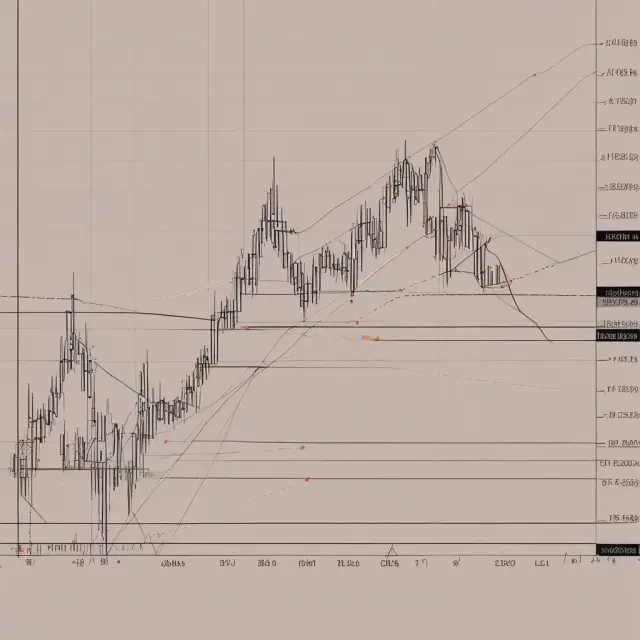
Understand horiz. channels in stock, forex, & crypto markets w/ this comprehensive guide: ID, rules, examples, pros, cons, FAQs.
What are Horizontal Channels?
Horizontal channels refer to essential trendlines drawn on charts that outline a trading range or sideways trend where buying and selling pressure is equal. These channels connect variable pivot highs and lows, showcasing the price contained between resistance and support lines. They offer traders valuable insights into potential entry and exit points for trades while controlling risk.
Horizontally oriented channels appear as rectangular patterns with at least four contact points. Each channel consists of two lows to create supports and two highs for resistances, emphasizing that price movement is sideways within the range.
Horizontal channels form during periods of price consolidation when the prevailing direction is unclear or equal buying and selling forces dominate. These channels are a popular chart pattern that can be identified on any timeframe.
Traders use horizontal channels to enter long or short positions by following specific rules:
- Sell an existing long position or take a short position when the price hits the top of the channel.
- Do nothing if you have no open trades or hold onto existing positions when the price is in the middle of the channel.
- Cover an existing short position or take a long position when the price reaches the bottom of the channel.
Example: Elevate Credit, Inc. (ELVT) displayed a horizontal channel from October 2018 to March 2019, with numerous opportunities for both buying and selling based on the identified support and resistance levels. Short sellers entered positions at the upper resistance line three times while long buyers had the chance to buy near the lower support level (refer to image above).
In summary, horizontal channels are a crucial chart pattern that enables traders to identify entry and exit points for trades, control risk, and navigate sideways markets. Understanding this technical analysis tool is an essential skill for both novice and experienced traders alike.

How Do Horizontal Channels Form?
Horizontal channels form when buying and selling pressure is equal, resulting in a period of price consolidation. The prevailing direction of price action is sideways due to an equilibrium between bullish and bearish forces. This type of channel is often referred to as a rectangle pattern because it resembles a rectangle on the chart. It consists of at least four contact points: two highs and two lows.
The formation of horizontal channels can be attributed to several factors. For example, traders may take profits after a strong move up or down, creating selling or buying pressure that balances out each other. Alternatively, the presence of large institutional investors holding their positions in the market can also contribute to the consolidation. Regardless of the underlying cause, a horizontal channel offers insight into the market’s balance and can be used as a powerful tool for making informed trading decisions.
Identifying Horizontal Channels: Techniques and Tools
Horizontal channels can be identified manually by examining charts and looking for rectangular patterns formed by connecting highs and lows. Alternatively, traders may use specialized software or services to detect channel patterns automatically. Some popular stock screeners, such as Finviz.com, allow users to filter stocks based on various chart pattern criteria, including horizontal channels. Subscription-based services can also provide a daily list of potential channel opportunities for traders to capitalize on.
Trading Horizontal Channels: Rules and Example Trades
When trading in a horizontal channel, it’s essential to understand the key rules for entering and exiting trades. The price hitting the upper resistance line is a technical sell signal, while touching the lower support line is a buy signal. Traders can also set stop-loss orders just above the upper resistance line for short positions or beneath the lower support line for long positions, with profits being taken at the opposite side of the channel.
Example Trade: Elevate Credit, Inc. (ELVT)
The price action of Elevate Credit, Inc.’s stock from October 30, 2018, to an undetermined future date illustrates a clear horizontal channel formation. During this period, traders had several opportunities to sell short at the resistance line and buy long at the support line, making it a valuable trading opportunity. The channel’s boundaries provided precise points for entering and exiting trades while also offering the chance to manage risk effectively.

Identifying Horizontal Channels: Techniques and Tools
Horizontal channels can easily be identified using various methods. Here are three common techniques for locating these patterns on your charts, each with its advantages and limitations.
Manual Inspection: One of the most straightforward ways to discover horizontal channels is through visual inspection. Look at historical price data in a charting application or financial platform. Identify areas where the price has bounced off the same support and resistance levels several times. A minimum of four contact points (two highs and two lows) indicates a possible horizontal channel. This manual process takes time but is valuable for understanding the underlying price action and gaining confidence in your analysis.
Stock Screeners: Utilizing stock screeners can be an efficient method to uncover horizontal channels. Services like Finviz.com offer powerful charting tools that allow users to customize their searches to display stocks with specific patterns, such as horizontal channels. This approach is more time-saving than manual inspection but may require a subscription or fee.
Subscriptions: For traders and investors looking for continuous updates on potential horizontal channel opportunities, subscribing to a dedicated service can provide real-time insights. These services analyze financial markets and automatically identify chart patterns, including horizontal channels. The benefit is the convenience of having new signals delivered directly to your inbox, but it comes with a recurring cost.
Once you’ve identified potential horizontal channels, use these guidelines for entering long or short positions:
- When the price hits the top of the channel (resistance), consider selling existing long positions or opening a new short position.
- In the middle of the channel, do nothing if you have no trades open or hold onto your current positions.
- When the price reaches the bottom of the channel (support), think about buying the stock or starting a new long position.
Let’s examine an example from Elevate Credit, Inc.’s (ELVT) chart to see how horizontal channels can be utilized for profitable trades. Since gapping lower on Oct. 30, 2018, ELVT shares have traded within a well-defined channel. Traders could have shorted the stock at the resistance line three times (red arrows) and bought it at support levels three times (green arrows). Stop-loss orders would sit just above the upper resistance line for short positions and beneath the lower support line for long positions, while profits would be taken at the opposite side of the channel. By employing this strategy, traders could potentially capitalize on multiple buying and selling opportunities within a single horizontal channel.
Trading a Horizontal Channel: Rules and Example Trades
Once you’ve identified a horizontal channel on a stock, it is crucial to know how to take advantage of the price range’s potential trading opportunities. In a sideways trend, buying and selling pressure remains relatively balanced, enabling precise entry and exit points for traders. This section will outline the rules for entering long or short positions based on horizontal channels and provide real-life examples.
Entering Long Positions
When the price reaches the lower support line of a horizontal channel, it represents a potential buy signal. The rationale behind this strategy is that the demand has outpaced supply at those levels. In this context, traders can consider entering long positions or adding to existing holdings when the price touches the channel’s lower boundary.
For instance, let us examine Elevate Credit, Inc. (ELVT) in Figure 1. After a significant drop on October 30, 2018, ELVT shares started trading within a horizontal channel. The first buy signal occurred when price dipped below the support line and rebounded with an increase in volume, as indicated by the green arrow. Traders entering at this point could set stop-loss orders above the resistance line while taking profits at the opposite end of the channel.
Figure 1: Elevate Credit, Inc. (ELVT) – Long Entry
Entering Short Positions
The upper resistance line in a horizontal channel can act as a potential sell signal. This point reflects that the supply has overtaken demand at those levels. As a result, traders might consider selling short or initiating new short positions when price touches this line.
Continuing with our ELVT example, Figure 2 displays a situation where price reached and tested the channel’s upper resistance line (red arrow). Traders taking advantage of this opportunity could sell short and place stop-loss orders just below the support line while targeting profits at the lower end of the horizontal channel.
Figure 2: Elevate Credit, Inc. (ELVT) – Short Entry
It’s essential to note that entering a position based on a horizontal channel isn’t a definitive assurance of profitability. As with any investment strategy, traders must consider factors like market conditions, economic news, and technical indicators before making decisions. In the case of ELVT, this example illustrates how a horizontal channel can provide clear buy and sell points for traders within a sideways trend.

Understanding Horizontal Channel Breakouts
A horizontal channel breakout refers to a sudden shift in price outside of the existing channel. This price action indicates that buying or selling pressure has significantly changed, and new trends may emerge. Breakouts can be bullish (price breaks above resistance) or bearish (price breaks below support). It is crucial for traders to recognize the significance of a horizontal channel breakout and react accordingly.
A horizontal channel breakout can result from either internal factors, such as news or company earnings, or external factors like economic events and market sentiment. Breakouts may also occur due to changes in investor psychology, where market participants collectively shift their perception of a stock’s value.
Horizontal Channel Breakout Identification
The first step to trading horizontal channel breakouts is recognizing when prices breach the resistance or support line. A bullish breakout occurs when the price action rises above the upper resistance line, while a bearish breakout happens when it falls below the lower support level.
Traders should monitor their charts closely for these developments and be prepared to react quickly. The sudden price movement may result in increased volatility and quick profit-taking or loss-cutting actions.
Reaction to a Horizontal Channel Breakout
Once a horizontal channel breakout occurs, traders must decide how to proceed. This decision depends on the trader’s risk tolerance and investment objectives. Some traders may choose to exit their positions entirely if they believe the price action is an anomaly or part of a larger trend reversal. Others may hold onto their investments, expecting the new trend to continue.
Additionally, some traders may enter new long or short positions based on their assessment of the breakout’s significance. For example, in a bullish breakout, traders might buy stocks at the market price or place a limit order slightly above the resistance line if they believe the upward momentum will continue. Conversely, during a bearish breakout, they may sell short or enter short positions if they anticipate a downtrend.
Conclusion
Horizontal channels offer valuable insights into price trends and provide precise points for entering and exiting trades. Understanding the significance of horizontal channel breakouts is essential for maximizing profits and minimizing losses. By recognizing when prices breach resistance or support levels, traders can capitalize on new trends and adjust their investment strategies accordingly. Remember to consider various factors when making decisions regarding a breakout, such as market conditions, news, and investor sentiment.

Horizontal Channels vs. Ascending and Descending Channels: Comparison
When analyzing trendlines in financial markets, it’s essential to recognize that not all channels exhibit the same angle or characteristics. Among horizontal, ascending, and descending channels, each type carries unique properties and implications. In this section, we’ll examine and compare these various channel patterns.
A Horizontal Channel: Identified by its rectangular shape, a horizontal channel represents equal buying and selling pressure, with the prevailing price direction remaining sideways. It signifies consolidation periods and forms when support (pivot lows) and resistance levels (pivot highs) are established. A horizontal channel provides an opportunity for traders to enter and exit positions at specific price points with enhanced risk control.
An Ascending Channel: This channel pattern is also known as an uptrend or a bullish trend. It typically exhibits an upward slope, reflecting increasing buying pressure over time. As prices progressively make higher highs and higher lows, the upper resistance line of an ascending channel represents the next potential resistance level, while the lower support line offers price floors. Ascending channels may provide an opportunity to enter long positions and exit at optimal times as the trend evolves.
A Descending Channel: This type of channel pattern is also known as a downtrend or a bearish trend. It displays a downward slope and represents the escalating selling pressure within the market. As prices continuously form lower highs and lower lows, the upper resistance line signifies potential resistance levels, while the lower support line acts as a support level. Traders can utilize descending channels to enter short positions or exit existing ones when price action reaches anticipated turning points in the bearish trend.
When considering which channel type to use for your analysis, it’s essential to consider the overall market conditions and individual stock behavior. Each channel pattern offers different opportunities and risks. A horizontal channel indicates a sideways trend with potential trading opportunities based on support and resistance levels. Ascending channels represent a bullish trend where traders can capitalize on continuous price increases. Conversely, descending channels reflect a bearish trend, enabling traders to benefit from falling prices.
In conclusion, understanding the differences between horizontal, ascending, and descending channels is crucial for investors and traders seeking to make informed decisions in the financial markets. By recognizing the various characteristics of these channel patterns, you can employ effective strategies for entering and exiting trades while managing risks.

Advantages and Disadvantages of Trading Horizontal Channels
Horizontal channels are among the most popular chart patterns used in technical analysis due to their simplicity and effectiveness. These channels help define periods of price consolidation, offering traders a systematic approach for entering and exiting trades, managing risk, and profiting from sideways trends. Horizontal channels provide several advantages, but they also have inherent limitations that every trader should be aware of.
Advantages:
- Precise entry and exit points: Horizontal channels offer traders the ability to enter positions at precise levels where buying or selling pressure is most significant. By entering trades near pivot highs or lows, traders can maximize their potential gains and minimize risk.
- Objective analysis: The formation of horizontal channels relies on the market’s price action, rather than subjective opinions or biases. This objective approach provides a clear visual representation of the trading range, making it easier for traders to identify trends and support/resistance levels.
- Controlling risk: Horizontal channels enable traders to establish stop-loss orders at key levels, providing an added layer of risk management. Stop-losses can be placed above resistance for short positions or beneath support for long positions, ensuring a limited downside or upside exposure to the market.
- Multiple time frames: The analysis of horizontal channels is not limited to any specific time frame. Traders can use multiple time frames concurrently to identify potential entry and exit opportunities, as well as to confirm the validity of existing trends.
Disadvantages:
- Lack of trend direction: Horizontal channels represent periods of consolidation where price is moving sideways rather than trending up or down. This ambiguity can make it challenging for traders who prefer to trade in a strong uptrend or downtrend, as they may miss opportunities due to the absence of clear trend signals.
- Breakouts and false signals: As with any chart pattern, there’s always a risk that a price breakout from a horizontal channel may result in false signals. A trader could enter a position based on a false signal, only to experience significant losses once the price reverts back to the trading range.
- Limited profit potential: Horizontal channels offer more modest profit opportunities compared to other chart patterns, such as triangles or wedges. Traders may find that their gains are limited due to the narrow price range of a horizontal channel.
- Potential for whipsaws: In volatile markets, horizontal channels can create whipsaws – rapid price swings that occur when buying and selling pressure fluctuates rapidly within the trading range. These whipsaws can be challenging to manage, especially for novice traders who lack experience in recognizing and handling them effectively.
Understanding the advantages and disadvantages of trading horizontal channels is essential for any trader interested in maximizing profits, minimizing risks, and developing a well-rounded technical analysis skillset. By mastering this chart pattern, traders can make informed decisions, adapt their strategies to ever-changing market conditions, and enhance their overall performance.

Using Multiple Time Frames for Horizontal Channel Analysis
Understanding horizontal channels and their role in identifying buying and selling opportunities is crucial when trading financial markets, but expanding your analysis to multiple time frames can offer valuable insights. Analyzing a horizontal channel across different time horizons provides traders with a more comprehensive perspective on the trend’s direction and potential breakout points. Let’s dive into how multiple time frame analysis adds depth to identifying and trading horizontal channels.
Multiple Time Frame Analysis: What, Why, and How
Multiple time frame analysis is a technique that involves observing price action across several chart durations simultaneously. This approach helps traders better understand the relationship between short-term and long-term trends and reveals potential entry or exit opportunities that could have been otherwise missed on a single time frame. In the context of horizontal channels, multiple time frames allow traders to confirm channel patterns and anticipate breakouts more effectively.
Visualizing Horizontal Channels Across Multiple Time Frames
When analyzing horizontal channels in multiple time frames, ensure your chart layout includes the primary chart (usually the daily or weekly) along with several secondary charts displaying shorter time frames like the hourly and minute chart. The goal is to understand whether price action remains within the boundaries of a horizontal channel across all time frames.
Identifying Consolidation Patterns
By observing multiple time frames, you can recognize consolidation patterns that may not be apparent on one specific chart. In some cases, a sideways trend can appear as a horizontal channel in the primary chart but mask underlying bullish or bearish tendencies on shorter-term charts. Understanding these subtle shifts allows traders to make more informed decisions about entering and exiting trades within the consolidation period.
Trade Management and Confirming Breakouts
Multiple time frame analysis aids trade management by providing real-time information on a horizontal channel’s progression, enabling traders to adjust positions accordingly. Additionally, analyzing multiple time frames offers valuable confirmation when a breakout or breakdown occurs in the primary chart. If the price moves beyond the upper resistance line (or lower support line) on both the primary and secondary charts, this strengthens the bullish/bearish case and increases confidence in your trade decision.
Example: Multiple Time Frame Analysis for Trading a Horizontal Channel
To illustrate how multiple time frame analysis enhances horizontal channel trading, consider the example of Apple Inc. (AAPL) stock from July 2019 to January 2020. The daily chart shows an apparent sideways trend in which AAPL formed a horizontal channel between $202 and $235. However, observing this pattern on shorter time frames like the hourly or minute charts reveals a more nuanced view of price action.
During this period, several bullish divergences (mismatches between trend lines and oscillators) emerged on lower time frames, hinting at potential upward momentum. Traders who utilized multiple time frame analysis could have entered long positions when the hourly chart’s upper resistance line was breached while still observing the price within the daily chart’s horizontal channel. This approach allowed for capitalizing on the bullish trend without abandoning the sideways consolidation pattern.
Conclusion
By incorporating multiple time frame analysis into your trading strategy, you can gain a more comprehensive understanding of horizontal channels and their significance in financial markets. Observing price action across various chart durations allows traders to:
- Recognize consolidation patterns that may not be apparent on a single time frame.
- Make more informed decisions regarding trade entry and exit points within a sideways trend.
- Confirm breakouts and adjust positions accordingly, leading to potentially profitable trades.
With this powerful tool in your trading arsenal, you’ll have the ability to navigate financial markets with increased confidence and precision.

Horizontal Channels in Various Markets: Stocks, Forex, and Cryptocurrencies
A horizontal channel is an essential chart pattern that appears in various markets, including stocks, forex, and cryptocurrencies. Identifying horizontal channels can be beneficial for traders across different financial instruments as they provide a clear understanding of the price’s trading range and potential entry and exit points. In this section, we will discuss examples and applications of horizontal channels in stocks, forex, and cryptocurrencies.
Stocks: Horizontal Channels in Stocks
Horizontal channels are commonly used in the stock market to identify potential trades based on price support and resistance levels. For instance, Apple Inc. (AAPL) displayed a clear horizontal channel structure from February to June 2021. During this period, buying and selling forces were balanced, with no prevailing direction for the stock price. Traders could use this information to enter long or short positions by waiting for the price to touch either the resistance or support level (see Figure 1).
Figure 1: Apple Inc. (AAPL) Horizontal Channel
Source: TradingView
Forex: Horizontal Channels in Forex
In forex trading, horizontal channels can provide a useful framework for understanding currency price movements within a range. For example, the EUR/USD pair experienced a sideways trend between March and July 2019 (as illustrated in Figure 2). During this period, traders could potentially enter long or short positions by monitoring the upper resistance and lower support levels of the horizontal channel.
Figure 2: EUR/USD Horizontal Channel
Source: TradingView
Cryptocurrencies: Horizontal Channels in Crypto
Cryptocurrencies are no exception when it comes to horizontal channels. For example, Bitcoin (BTC) formed a clear sideways trend between April and June 2019, as shown in Figure 3. During this time, the price range was contained between $6,000 and $13,500, allowing traders to enter long or short positions based on the support and resistance levels of the horizontal channel.
Figure 3: Bitcoin (BTC) Horizontal Channel
Source: TradingView
In conclusion, horizontal channels provide a valuable perspective for analyzing price action across various markets, including stocks, forex, and cryptocurrencies. This chart pattern highlights periods where buying and selling forces are equal, making it an essential tool for traders looking to enter or exit positions within well-defined ranges. By understanding the concept of horizontal channels and their applications, traders can enhance their trading strategies and potentially increase profitability.

Frequently Asked Questions about Horizontal Channels
Q: What are horizontal channels used for in technical analysis?
A: Horizontal channels, also known as trading ranges or sideways trends, provide a visual representation of price action within a defined range. They help traders identify buying and selling opportunities by offering clear points to enter or exit trades.
Q: How can I spot a horizontal channel on a chart?
There are various methods for locating horizontal channels, including:
- Manually inspecting charts for the rectangle pattern formed by at least four touchpoints.
- Using stock screeners, such as Finviz.com.
- Subscribing to services that automatically recognize channel patterns.
Q: How do I use a horizontal channel to enter or exit trades?
When price hits the upper resistance line of a horizontal channel, consider selling an existing long position or opening a short position. Conversely, when price reaches the lower support line, consider buying an existing short position or initiating a long one.
Q: What’s the difference between horizontal and ascending/descending channels?
Ascending channels (trending upwards) and descending channels (trending downwards) have different angles compared to horizontal channels, which are flat or near-flat. Each channel type displays distinct price action and offers unique trading opportunities based on its angle.
Q: What are the advantages of using a horizontal channel for trading?
- Precision: Horizontal channels offer specific buy and sell points to control entry and exit levels.
- Objective analysis: Technical indicators such as Moving Averages (MA), Relative Strength Index (RSI) or Bollinger bands can be used in conjunction with horizontal channels for confirmation and risk management purposes.
- Flexibility: Horizontal channels are applicable to various time frames, markets, and price ranges.
Q: What’s the disadvantage of trading within a horizontal channel?
The major drawback is missing the breakout or breakdown in the channel, which can result in missed profit opportunities or potential losses. It is essential to use proper risk management techniques and exit strategies when trading within a horizontal channel.
Q: How do I determine the optimal stop-loss levels for horizontal channels?
Stop-loss orders should be placed just above the upper resistance line (for short positions) or below the lower support line (for long positions). This strategy allows traders to manage their risk while still maintaining exposure to potential price movements within the channel.
 Next entry · No. 2,203Understanding Horizontal Equity: Principle of Fair Taxation
See also
-
 No. 4,412
16 Jun 2025
21 min
Understanding Resistance Levels in Technical Analysis: Identifying, Trading and Breaking Through
Markets
No. 4,412
16 Jun 2025
21 min
Understanding Resistance Levels in Technical Analysis: Identifying, Trading and Breaking Through
Markets -
 No. 4,151
26 May 2025
19 min
Understanding Pullbacks: Identifying and Trading Temporary Market Reversals
Markets
No. 4,151
26 May 2025
19 min
Understanding Pullbacks: Identifying and Trading Temporary Market Reversals
Markets -
 No. 4,968
01 Aug 2025
20 min
Understanding Tick Size in Finance: Incremental Changes for Stocks, Futures and Forex
Financial Data Analysis
No. 4,968
01 Aug 2025
20 min
Understanding Tick Size in Finance: Incremental Changes for Stocks, Futures and Forex
Financial Data Analysis -
 No. 4,565
29 Jun 2025
21 min
Scalping: A High-Risk Trading Strategy for Profiting from Minor Price Changes
Finance Policy
No. 4,565
29 Jun 2025
21 min
Scalping: A High-Risk Trading Strategy for Profiting from Minor Price Changes
Finance Policy -
 No. 220
07 Apr 2024
18 min
Understanding Ascending Channels: Identifying Uptrends in Technical Analysis
Markets
No. 220
07 Apr 2024
18 min
Understanding Ascending Channels: Identifying Uptrends in Technical Analysis
Markets -
 No. 5,631
25 Sep 2025
19 min
Maximizing Your Trading Potential with Effective Watchlists
Investments
No. 5,631
25 Sep 2025
19 min
Maximizing Your Trading Potential with Effective Watchlists
Investments