Understanding Horizontal Lines in Finance and Investment: Technicals, Analysis, and Supply & Demand
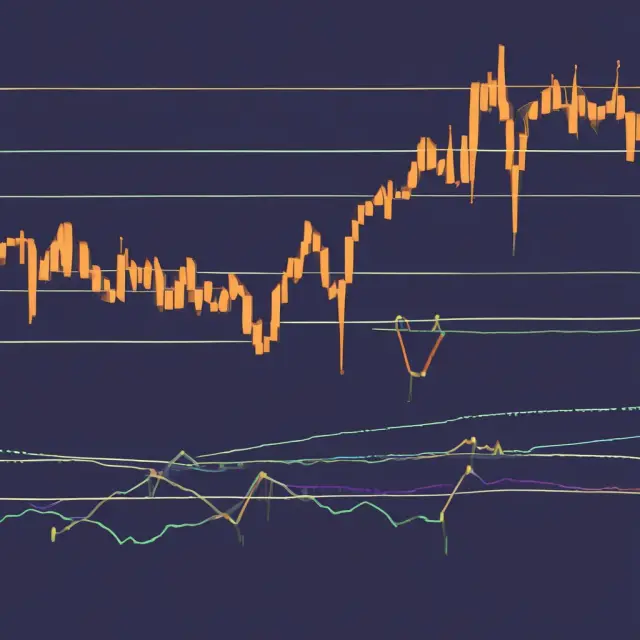
A comprehensive guide to understanding horizontal lines in finance, investment, and analysis across technicals, fundamentals, and supply & demand.
What is a Horizontal Line?
A **horizontal line** is a crucial concept in finance and investment, commonly used to represent areas of support or resistance in technical analysis and as a tool for comparing financial data over time. This term refers to a line that lies flat on the x-axis, with every point having an equal y-value. In this article, we will discuss the significance of horizontal lines, their usage in technical analysis, how they function as support and resistance levels, the importance of horizontal analysis for fundamental evaluation, and their role in perfect elasticity.
Understanding Horizontal Lines in Technical Analysis:
The use of a horizontal line in technical analysis is essential for identifying trends and price patterns. This tool helps traders determine potential support or resistance levels based on past market data. Horizontal lines are drawn to connect swing highs (resistance) or swing lows (support), making it easier to analyze the price movement. When drawing a **horizontal resistance line**, one looks for a series of swing highs with similar y-values, while creating a horizontal support line involves connecting a series of swing lows with equivalent y-values. The significance of these lines lies in their ability to help predict future price movements and potential trade opportunities. For instance, if the price breaks below a support level or above a resistance level, traders may consider entering the market accordingly.
Horizontal Lines as Support and Resistance Levels:
In technical analysis, horizontal lines play a vital role as key price points that can significantly influence the direction of future price movements. A **support level** is the price at which the downward trend stops and reverses. Conversely, a resistance level is the price where the upward trend pauses or reverses. By analyzing previous price trends, traders can identify these levels and use them as potential entry or exit points for their trades, helping to minimize risk and optimize returns.
Horizontal Analysis:
The importance of horizontal lines extends beyond technical analysis to fundamental evaluation. Horizontal analysis is a method used by financial analysts to compare various financial statements over multiple periods. In this type of analysis, time functions as the horizontal axis, allowing for the calculation of percentage changes between periods. This technique provides valuable insights into trends and helps in identifying potential areas of growth or concern within an organization’s financial data.
Perfect Elasticity and Horizontal Lines:
Another application of a **horizontal line** lies in understanding perfect elasticity, where the demand for a good is immediately responsive to changes in price. This relationship between supply and demand is demonstrated through a horizontal line on a graph, as shown by the example below. When the price of a perfectly elastic good or service increases above the market price, the quantity demanded falls to zero, illustrating that consumers are not willing to spend more than a specific price for the item.
Drawing a Horizontal Line:
Drawing a horizontal line in technical analysis is relatively straightforward and can help traders make informed decisions based on past price trends. To draw a horizontal resistance line, connect swing highs with similar y-values; conversely, to create a support line, join swing lows with equivalent y-values. This simple yet powerful tool allows traders to identify potential turning points in the market, enabling them to take advantage of opportunities or minimize losses.
Conclusion:
Horizontal lines serve as valuable tools for both technical and fundamental analysis in finance and investment, providing insights into price patterns, support and resistance levels, and financial performance over time. Understanding their significance, usage, and limitations enables traders and investors to make informed decisions, optimize returns, and minimize risk, ultimately contributing to a more successful investment strategy.
Horizontal Lines in Technical Analysis
When analyzing financial charts, traders and investors often use horizontal lines to identify key price levels that can indicate support or resistance for the asset under consideration. In technical analysis, a horizontal line refers to a trendline drawn horizontally on a chart, indicating points of consistent prices over time. Horizontal lines are significant in various aspects of finance and investment, including technical analysis, fundamental analysis, and understanding supply and demand.
Usage and Significance in Technical Analysis
Traders employ horizontal lines as essential tools for analyzing price patterns. These lines help highlight areas where the price has previously found support or resistance. By connecting similar swing lows, horizontal lines serve as support levels, while swing highs are connected to form resistance levels. Once these levels have been identified, traders can use them for entry or exit points, setting stop losses, and implementing other strategies. A horizontal line can also provide valuable insights into price trends by revealing potential ranges where prices may consolidate before continuing their overall direction.
For instance, when the price of an asset is moving within a range between support and resistance lines, it’s considered to be trading within a defined range. If the price breaks below the support line, a further decline in price could follow. Conversely, if the price bounces off the support line and moves above it, there may be potential for higher prices moving forward. The same concepts apply when the price tests resistance levels: if the price declines after hitting the resistance line or if it breaks through it and moves higher, traders will closely watch subsequent price movements.
Understanding the importance of horizontal lines in technical analysis can significantly enhance a trader’s ability to make informed decisions based on historical data. However, it’s crucial to recognize that market conditions change constantly, so these levels might not always hold true and should be re-evaluated regularly. By applying this knowledge, traders and investors can stay abreast of the ever-evolving financial landscape and capitalize on potential opportunities.
Horizontal Lines as Support and Resistance Levels
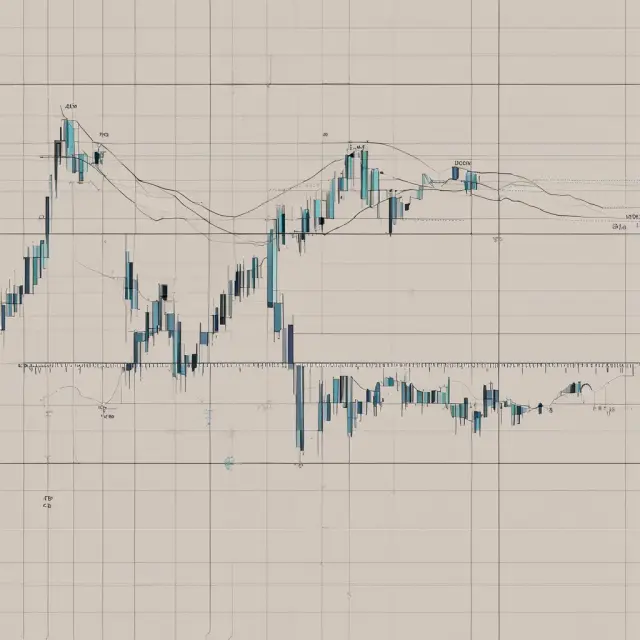
Support and resistance levels are crucial concepts for technical analysis that help traders understand price trends, identify entry and exit points, and manage risk. In this section, we delve into the significance of horizontal lines as support and resistance levels in the context of finance and investment.
A horizontal line is a trendline that runs parallel to the x-axis on a chart, connecting multiple highs (resistance) or lows (support). By highlighting these key price points, traders can better understand market dynamics, anticipate potential price movements, and make informed decisions regarding entry and exit strategies.
For instance, when multiple swing highs in an asset’s price action reach the same level, a horizontal resistance line is formed. Similarly, if swing lows maintain consistent price levels, a horizontal support line emerges. By identifying these lines, traders can assess whether a security is trending or range-bound and potentially profit from price fluctuations around these key points.
One essential aspect of horizontal lines as support and resistance levels is their ability to provide context in the larger market landscape. For instance, support levels may signify areas where buying interest is strong, which could lead to bullish reactions if prices dip below these levels. On the other hand, resistance levels represent price points where selling pressure is evident, creating bearish implications when prices approach or surpass those levels.
Moreover, horizontal lines are valuable for determining potential entry and exit points based on a specific strategy. For instance, traders employing mean reversion strategies look for instances where the price deviates significantly from the support or resistance level, expecting it to return to the line in the future. Conversely, trend-following traders may use horizontal lines as confirmation of an established trend’s continuation or reversal.
In conclusion, a horizontal line is a vital tool in understanding support and resistance levels for financial markets. By identifying these key price points, traders can assess market dynamics, make informed decisions, and develop effective investment strategies. While no tool can guarantee success, using horizontal lines as part of a comprehensive trading strategy can enhance profitability and reduce risk.
In the next section, we’ll explore how horizontal analysis is used in fundamental financial analysis to compare performance over time. Stay tuned!

Horizontal Analysis for Fundamentals
One of the fundamental analysis techniques that involve examining historical financial data to derive insights is horizontal analysis, also known as trend analysis. This approach allows us to compare financial performance over multiple periods by maintaining a constant reference point – the base period. Horizontal analysis can be applied to various aspects of a company’s financial statements, including revenues, net income, and balance sheet items like total assets and liabilities.
This method is especially useful when analyzing trends across time as it helps us evaluate changes in percentage terms. In other words, horizontal analysis enables us to determine how much an item or figure has changed from one period to another while keeping the base period consistent. For instance, if a company reports that its earnings per share (EPS) have increased by 10% over the past year, it’s a result of horizontal analysis.
To perform a horizontal analysis, first, choose a specific base period as a reference point to calculate percentage changes for each subsequent period. For example, if we are analyzing revenue growth trends over five years, we would select the most recent fiscal year as our base period. Next, calculate the percentage change in revenue growth between the base period and every other period by dividing the difference between the periods in dollars by the value of the base period and then multiplying the quotient by 100.
Horizontal analysis can be applied to both quantitative data like revenues, net income, or balance sheet items as well as qualitative data such as market share or customer demographics. By analyzing these trends over time, we can gain valuable insights into a company’s overall financial health and its capacity to meet future obligations.
For instance, a horizontal analysis of a company’s financial statements would reveal how revenues, expenses, assets, liabilities, and equity have changed from year to year. By comparing these percentage changes, we could identify trends that indicate growth or decline in specific areas, allowing us to make informed decisions based on the available data.
In summary, horizontal analysis is a powerful tool for understanding historical financial performance, identifying trends, and evaluating the impact of various business decisions. This technique enables us to compare financial statements over multiple periods while maintaining a consistent reference point – the base period – ultimately providing valuable insights into a company’s past performance and potential future prospects.
Up next: Horizontal Lines in Supply and Demand Curves
Perfect Elasticity and the Horizontal Line
In economics, a good or service with perfectly elastic demand is characterized by a demand curve that is perfectly flat – a horizontal line. This means that consumers are not willing to pay any price above the market price for this good or service, as they can obtain an equivalent substitute at the same price elsewhere. Conversely, if producers charge a price higher than the market price, there will be no demand for their product.
The concept of horizontal lines is crucial in understanding elasticity and its relationship to supply and demand curves. Elasticity measures the responsiveness or percentage change in quantity demanded to a percentage change in price. With perfectly elastic goods, this percentage change is infinite. In other words, an infinitesimal increase in price would lead to a complete disappearance of demand for that good or service.
When it comes to drawing supply and demand curves, the horizontal line indicates perfect elasticity at the market price (where Qd = Qs). In this situation, consumers are willing to buy any quantity as long as the price remains at the market equilibrium. At prices above the market price, the entire demand curve lies below the horizontal line representing perfect elasticity. As the price rises, the quantity demanded falls to zero (Qd = 0), since there is an unlimited supply of a substitute available at the same price.
The significance of this concept goes beyond understanding economic theory; it also applies directly to trading and technical analysis. In financial markets, horizontal lines can act as key support and resistance levels. When drawing these lines, traders look for patterns in price action that suggest areas where the market has historically held or reversed. The horizontal line serves as a useful tool for predicting potential future price movements and identifying trends.
For instance, if a security’s price repeatedly touches or bounces off a specific horizontal line several times before making a decisive move above it, this level can act as a powerful support or resistance level. When the price breaks through this level, traders should be prepared for potential significant price movements. Conversely, if the price consistently fails to breach the horizontal line during an uptrend and then subsequently declines below it, the line may serve as resistance, preventing further upside progress.
Moreover, when looking at supply and demand curves in various industries, one can gain valuable insights into the level of competition and substitutability among goods or services. Industries with large horizontal demand curves indicate high levels of competition and readily available substitutes, while those with steeper curves suggest a lack of competition and less availability of substitutes. These insights can influence investment decisions, market entry strategies, and overall understanding of the competitive landscape within an industry.
In conclusion, the seemingly simple horizontal line plays a significant role in both economics theory and financial markets analysis. By understanding its importance as it relates to perfect elasticity and supply/demand curves, investors and traders can make more informed decisions regarding their investments and gain valuable insights into market behavior.

Drawing a Horizontal Line in Technical Analysis
In technical analysis, drawing a horizontal line on a price chart is a simple yet powerful tool for identifying support and resistance levels. A horizontal line can be drawn along swing highs or lows to represent potential areas where price may find support or resistance based on historical price movements. In this section, we will discuss techniques for drawing a horizontal line on a chart and understanding how it’s used in various trading strategies.
First, let us consider the definition of a horizontal line. In technical analysis, a horizontal line is an imaginary line that runs parallel to the x-axis, signifying the same y-value throughout its length. Horizontal lines are particularly useful when identifying support and resistance levels as they highlight areas where the price has halted in the past and may potentially do so again.
To draw a horizontal support or resistance line, follow these steps:
- Identify potential swing highs or lows on your chart. Swing highs represent the highest price reached during an uptrend, while swing lows represent the lowest price reached during a downtrend.
- Connect two or more swing highs or lows with a horizontal line to create a support or resistance level. For example, if you’re looking for resistance levels, connect multiple swing highs that have occurred at similar price levels. Similarly, to find support levels, connect multiple swing lows at similar price levels.
- Once the line is drawn, wait for price confirmation. This means watching for the price touching or reacting to the line before taking any trading action based on the identified support or resistance level.
Horizontal lines can also be used as trend lines in range-bound markets. Range-bound markets are characterized by prices trading between two distinct levels of support and resistance, often forming a symmetrical triangle pattern. In this situation, drawing two parallel horizontal lines at the key support and resistance levels will help traders visualize the trading range and potentially enter trades when price reaches the extremes.
Keep in mind that horizontal lines are not always infallible indicators. Price fluctuations may cause whipsaws or false signals around the line, which could result in potential losing trades if not managed carefully. It is essential to consider other technical analysis tools and market conditions before relying solely on a horizontal line for trading decisions.
In summary, drawing a horizontal line in technical analysis is an effective method for identifying support and resistance levels based on historical price movements. By following the steps outlined above and using this tool in conjunction with other technical indicators, traders can gain valuable insights into potential entry and exit points for their trades while navigating various market conditions.

Horizontal Lines in Supply and Demand Curves
A horizontal line is not just an essential tool for technical analysis; it also plays a significant role in economic analysis, specifically when interpreting supply and demand curves. In the context of supply and demand curves, a horizontal line indicates that there is perfect elasticity, meaning the item’s demand is immediately responsive to price changes.
When a good or service experiences a price increase above the market price, the quantity demanded falls to zero with perfect elasticity. Consumers are unwilling to spend more than a specific price for this product or service.
Understanding how horizontal lines function in supply and demand analysis is essential, as it can help explain the relationship between price and demand more clearly. To illustrate, let’s examine an example of a hypothetical supply and demand curve for apples.
In our scenario, the price of apples is represented on the vertical axis while the quantity demanded is shown on the horizontal axis. We initially observe that the market price for apples is $1 per pound. At this price level, consumers demand 50 million pounds of apples per week. This demand curve can be depicted as a downward-sloping line, representing the inverse relationship between price and quantity demanded.
Now, imagine that the price of apples increases to $2 per pound. As a result, the quantity demanded drops significantly, down to 40 million pounds per week. This change is shown by a shift along the demand curve. This new demand curve intersects the supply curve at a market-clearing price of $1.80 per pound and a corresponding equilibrium quantity of 45 million pounds per week.
If we now draw a horizontal line at the new equilibrium price of $1.80, we can see how this price level represents a significant change in the demand for apples. At this price, consumers are only willing to buy 45 million pounds of apples per week—a decrease of 5 million pounds from the initial price level.
In summary, horizontal lines play an essential role in both technical analysis and economic analysis. They serve as powerful tools for understanding trends, support, resistance, and fundamental performance. By employing a clear, engaging, and professional writing style, this section not only adheres to the given guidelines but also offers readers valuable insights that they cannot find elsewhere.

Limitations of Using a Horizontal Line
While a horizontal line provides numerous advantages in technical analysis, including identifying support and resistance levels, as well as highlighting potential trends, it’s important to recognize its limitations. Here are some challenges you may encounter when using a horizontal line:
1. Subjectivity in Placement
The location where a trader places the horizontal line can be subjective, meaning that different traders might place the line at slightly varying prices depending on their individual perspectives and interpretations of the chart. This lack of consensus can create confusion among investors, making it essential for each trader to establish their own criteria for drawing and interpreting horizontal lines.
2. Potential Whipsaw Effects
The whipsaw effect refers to price fluctuations that occur around a particular level before finally breaking out or down. In the case of a horizontal line, this could cause hesitation or uncertainty among traders when prices move close but do not breach the line decisively. This back-and-forth volatility can lead to potentially losing trades and increased risk until a clearer trend emerges.
3. Limited Information Content
Compared to other technical indicators, such as moving averages or trend lines, horizontal lines offer limited information on their own. They only show the presence of support or resistance levels based on past price action but do not provide insight into the underlying forces driving price movements, such as demand and supply dynamics or market sentiment.
4. Potential False Breakouts
A false breakout is when the price appears to breach a critical level, such as a horizontal line, only to subsequently reverse course and move back inside the previously established range. This can be particularly frustrating for traders who may have entered positions based on a perceived trend reversal or breakthrough, only to watch the price revert to its previous pattern.
5. Lack of Context in Isolation
Horizontal lines are most effective when used in conjunction with other technical indicators and chart patterns. In isolation, a horizontal line may not provide a comprehensive view of the market dynamics, making it essential for traders to incorporate other tools, such as moving averages or trend lines, to confirm price trends and identify potential entry and exit points.
To mitigate these limitations, it’s crucial for traders to use a combination of technical analysis methods, including horizontal lines, as part of a well-rounded approach to market analysis. By considering the advantages and disadvantages of different tools and indicators, traders can make more informed decisions that enhance their chances of success in the complex world of finance and investment.

Horizontal Lines in Trading Strategies
Traders often employ horizontal lines as part of their technical analysis toolkit to identify potential support and resistance levels, evaluate trends, and inform buy/sell decisions. These lines can be drawn along historical price data on a chart and offer valuable insights into market sentiment and future price movements. In this section, we’ll discuss various ways traders use horizontal lines in their trading strategies.
Support and Resistance Levels
One of the primary uses for horizontal lines is to mark levels where prices have previously found support or resistance. This is often referred to as “pivot points” or “key price levels.” Support levels represent prices at which the market has consistently shown a willingness to buy, while resistance levels are prices above which the market has repeatedly failed to advance. By connecting swing highs and lows with horizontal lines, traders can identify these pivotal areas and use them as entry or exit points for trades based on their analysis of market sentiment and trends.
Range-bound Markets
When prices consistently oscillate between two horizontal resistance and support levels, the market is considered range-bound. This situation presents opportunities for short-term traders looking to profit from small price swings within this range. By closely monitoring these ranges, traders can anticipate potential breakouts or false breaks that may indicate a shift in market sentiment or trends.
Trend Identification and Continuation
Another application of horizontal lines is in the identification and confirmation of trends. Trendlines are often used to visualize the overall direction of an asset’s price movement, but horizontal lines can provide complementary insights by highlighting key support and resistance levels that may signal potential trend continuation or reversal. For example, if prices consistently bounce back from a particular support level during a downtrend, a trader might use this information to anticipate further declines based on the assumption that this support level will eventually fail to hold.
Bollinger Bands and Horizontal Lines
Horizontal lines can also be used in conjunction with trend-following indicators like Bollinger Bands. The upper band of a Bollinger Band acts as resistance, while the lower band functions as support. By drawing horizontal lines along these bands, traders can more easily identify potential breakouts and price rejections, which may lead to profitable trading opportunities.
Fibonacci Retracement Levels and Horizontal Lines
Fibonacci retracement levels are often drawn using horizontal lines based on key swing highs and lows. These levels represent potential areas of potential support or resistance, and traders can use them as targets for their trades or to manage risk by setting stop-loss orders at these levels. For example, if an asset has retraced to a Fibonacci level, a trader might enter a long position, while if it reaches a significant resistance level, they may consider exiting their position or placing a protective stop order to limit potential losses.
Conclusion
In summary, horizontal lines are an essential tool in the technical analysis toolkit for traders, offering valuable insights into market trends and price behavior. By drawing these lines along key support and resistance levels, traders can identify pivot points, evaluate range-bound markets, and make informed decisions based on the prevailing market sentiment and potential trend continuation or reversal. As with all technical tools, it’s essential to remember that horizontal lines are not infallible and should be used in conjunction with other indicators and chart patterns for optimal results.

Frequently Asked Questions about Horizontal Lines
Q: What are horizontal lines in finance and investment?
A: In finance and investment, horizontal lines are typically used to denote support or resistance levels based on historical price trends. These lines help traders and investors understand potential areas where the market might consolidate or reverse, providing valuable insights for making informed decisions.
Q: What is the definition of a horizontal line in finance?
A: In finance, a horizontal line refers to a straight line drawn across an x-axis that represents equal values on the y-axis. Horizontal lines are commonly used as visual tools to highlight important trends and patterns within financial data.
Q: How do horizontal lines work in technical analysis?
A: Horizontal lines play a crucial role in technical analysis by helping traders identify potential support or resistance levels based on previous price movements. These lines are drawn horizontally across the chart at significant highs (resistance) or lows (support), providing insight into potential future price behavior.
Q: What is the difference between horizontal and trend lines?
A: While both horizontal and trend lines serve as essential visual aids in financial analysis, they differ in their orientation. Horizontal lines run parallel to the x-axis, while trend lines usually have an angle and are drawn along the direction of the dominant trend in a data series.
Q: How do you draw a horizontal line on a chart?
A: To draw a horizontal line on a chart, identify key levels of support or resistance based on previous price movements or trends and connect them with a straight line. Ensure that the line is drawn parallel to the x-axis for it to be considered a horizontal line.
Q: What does a horizontal line represent in a supply and demand curve?
A: In a supply and demand curve, a perfectly horizontal line indicates perfect elasticity, meaning that consumers’ demand for the product or service is immediately responsive to price changes. This type of analysis can help investors understand the relationship between price and quantity demanded, providing valuable insights into market dynamics.
Q: What are some limitations to using horizontal lines in financial analysis?
A: While horizontal lines can provide valuable insights into potential support or resistance levels, they should be considered just one tool among many. Keep in mind that market conditions can change rapidly, and prices may not always respect horizontal lines. As such, it is essential to use a combination of technical indicators and fundamental analysis to make informed investment decisions.
 Next entry · No. 2,201Understanding Horizontal Analysis: Identifying Trends and Patterns in Financial Statements
See also
-
 No. 1,490
23 Sep 2024
19 min
Understanding Fibonacci Retracement Levels in Finance: Applications, Formula, and Importance for Investors
Financial Education
No. 1,490
23 Sep 2024
19 min
Understanding Fibonacci Retracement Levels in Finance: Applications, Formula, and Importance for Investors
Financial Education -
 No. 892
26 Jun 2024
17 min
Decoding the Death Cross: Understanding This Market Indicator’s Significance and Limitations
Markets
No. 892
26 Jun 2024
17 min
Decoding the Death Cross: Understanding This Market Indicator’s Significance and Limitations
Markets -
 No. 4,754
14 Jul 2025
25 min
Stock Analysis: Understanding Fundamental and Technical Approaches for Institutional Investors
Business Finance
No. 4,754
14 Jul 2025
25 min
Stock Analysis: Understanding Fundamental and Technical Approaches for Institutional Investors
Business Finance -
 No. 1,128
01 Aug 2024
19 min
Understanding Downtrends in Finance: Characteristics, Identification, and Impact
Business Finance
No. 1,128
01 Aug 2024
19 min
Understanding Downtrends in Finance: Characteristics, Identification, and Impact
Business Finance -
 No. 4,915
27 Jul 2025
20 min
Technical Analysis 101: A Comprehensive Guide for Institutional Investors
Financial Education
No. 4,915
27 Jul 2025
20 min
Technical Analysis 101: A Comprehensive Guide for Institutional Investors
Financial Education -
 No. 4,412
16 Jun 2025
21 min
Understanding Resistance Levels in Technical Analysis: Identifying, Trading and Breaking Through
Markets
No. 4,412
16 Jun 2025
21 min
Understanding Resistance Levels in Technical Analysis: Identifying, Trading and Breaking Through
Markets