Understanding the Four Asian Tigers: A Closer Look at Hong Kong, Singapore, South Korea, and Taiwan

Understanding the remarkable growth stories of Hong Kong, Singapore, South Korea, and Taiwan as high-performing Asian economies known as the Four Asian Tigers.
Introduction to the Four Asian Tigers
The term ‘Four Asian Tigers’ refers to the high-growth economies of Hong Kong, Singapore, South Korea, and Taiwan, which have undergone remarkable economic transformations since the 1960s. These four nations have consistently achieved impressive growth rates through exports and rapid industrialization, cementing their place among the world’s wealthiest economies.
Hong Kong, Singapore, South Korea, and Taiwan share common traits that contributed to their success stories. A strong focus on exports, an educated populace, and high savings rates have been crucial factors for these Asian Tigers. Today, Hong Kong and Singapore are renowned financial hubs, while South Korea and Taiwan serve as vital manufacturing centers for global automobiles and electronics, information technology components, and more.
South Korea: Rising from Poverty to Prosperity
Forty years ago, South Korea’s per capita gross domestic product (GDP) was comparable to some of the poorest countries in Asia and Africa. However, since then, this economy has experienced significant growth, fueled by government-directed policies and import restrictions that encouraged domestic industries. As of December 2020, South Korea’s GDP amounted to $1.59 trillion, its per capita GDP was $30,640, and its population stood at 51.8 million, with a growth rate of -1.9%.
Taiwan: Thriving Amidst Geopolitical Challenges
Despite the political tensions between Taiwan and China, this nation has continued to prosper since the 1960s. Its reliable export record, despite the pressures from China, has earned it a place among the strongest economies in Asia. As of December 2020, Taiwan’s GDP was $660 billion, its per capita GDP was $28,180, and its population comprised 23.6 million people with a growth rate of 2.5%.
Hong Kong: A Special Economic Region Within China
Hong Kong is considered a special administrative region (SAR) in China, which grants it freedom to manage its activities except for defense until the year 2047. The region boasts an exceptionally high ranking on scales measuring economic freedom, with a GDP of approximately $340 billion as of December 2020, a per capita GDP of $45,180, a growth rate of 2.9%, and a population of 7.6 million.
Singapore: Transparency and Commercial Security
Despite having only 5.8 million citizens, Singapore’s economic prowess is significant. With a GDP of $340 billion, a per capita GDP of $58,480, and a growth rate of -6% as of December 2020, the country has an international reputation for transparency due to its notoriously transparent regulatory environment and well-secured property rights, providing valuable commercial security to its private sector.
Comparing the Four Asian Tigers with Other Emerging Economies: Malaysia, Thailand, Indonesia, and the Philippines, collectively known as the Tiger Cub Economies, have experienced growth at a slower pace than the Four Asian Tigers since the 1950s. However, they have still managed to grow steadily.

Common Characteristics Among the Four Asian Tigers
The Four Asian Tigers – Hong Kong, Singapore, South Korea, and Taiwan – are high-growth economies that have experienced remarkable economic development since the 1960s. These countries are not only renowned for their focus on exports but also share significant commonalities in terms of an educated populace and high savings rates.
The Four Asian Tigers’ economies were initially characterized by a sharp emphasis on export-oriented industries, enabling these nations to develop into manufacturing hubs for automobile and electronic components as well as information technology. Their commitment to exports was underpinned by their strategic geographical locations, which granted them access to major international markets.
An educated populace is another essential characteristic of the Four Asian Tigers. All four countries have invested heavily in education over the past decades. Their governments recognized the importance of a skilled workforce for attracting foreign investment and facilitating industrial expansion. As a result, their educational systems are world-class, with high literacy rates and a strong focus on science, technology, engineering, and mathematics (STEM) education.
High savings rates have also played a vital role in the success of the Four Asian Tigers. The citizens of these countries have demonstrated an impressive ability to save a significant portion of their income. These savings have served as a crucial source of capital for investment in industrial projects, infrastructure development, and technology innovation.
Moreover, all Four Asian Tigers have been resilient enough to weather various crises throughout the years. They have adapted to local crises like the Asian financial crisis in 1997 and global shocks such as the credit crunch of 2008 by implementing reforms that fostered economic stability. The International Monetary Fund categorizes the Four Asian Tigers among the world’s most advanced economies, with GDPs ranging from $340 billion to $1.59 trillion and population sizes between 5.8 million and 51.8 million.
South Korea provides a prime example of the transformative power of government-directed policies and export-oriented industries in driving economic growth. In the late 1960s, South Korea was considered one of the poorest nations. However, a system of close government control over credit allocation and import restrictions enabled the country to rapidly industrialize, focusing on manufacturing electronics, cars, and steel.
Taiwan’s unique situation as a nation with contentious relationships with China has not deterred its economic growth. Despite being excluded from major international organizations such as the United Nations, Taiwan has emerged as a reliable exporter, generating a GDP of $660 billion as of Dec. 2020.
Hong Kong’s position as a Special Administrative Region within China grants it exceptional freedoms until 2047. Hong Kong’s economy ranks exceptionally high on scales measuring economic freedom, with a total GDP of approximately $340 billion as of Dec. 2020. The region boasts a notoriously transparent regulatory environment and well-secured property rights, which provide valuable commercial security to its private sector.
Singapore’s small population of 5.8 million citizens belies the significance of its economy. With a GDP of $340 billion as of Dec. 2020, Singapore is one of the least corrupt nations in the world and has a notoriously transparent regulatory environment, ensuring a stable business climate for both local and foreign enterprises.
The “Tiger Cub Economies,” which include Malaysia, Thailand, the Philippines, and Indonesia, have grown more slowly than the Four Asian Tigers since the 1950s but have nonetheless experienced steady growth. Despite their slower progress, these countries share similarities with the Four Asian Tigers, particularly in their focus on exports and education, making them worthy of study and comparison.

South Korea: Rapid Growth and Industrialization
The South Korean economy is one of the most remarkable success stories of our time. In the span of just a few decades, this once poor country has transformed itself into a global economic powerhouse with a thriving manufacturing sector and an influential financial industry. South Korea’s rapid growth can be attributed to several factors, most notably its government-directed policies and a strong focus on export-oriented industries.
When the Korean War ended in 1953, South Korea faced significant challenges as it struggled with poverty, political instability, and an underdeveloped industrial sector. However, the country’s leaders understood that rapid industrialization was necessary to secure its future. As a result, they implemented several ambitious policies designed to stimulate economic growth, such as import substitution industrialization (ISI) and export-oriented industrialization (EOI).
The ISI policy aimed to reduce dependence on foreign imports by promoting the production of domestic goods, primarily through protective tariffs. This approach led to a surge in local industries that could produce textiles, electronics, and other essential consumer goods domestically. However, it also meant that South Korea was shutting itself off from the global market.
In the early 1960s, the country shifted its focus towards EOI, which aimed to promote exports as a primary driver of economic growth. The government invested heavily in infrastructure projects and provided generous subsidies for export-oriented industries. This shift proved successful: South Korea’s exports grew rapidly, and the country was soon able to compete with other global manufacturers.
The role of the state in directing the economy has been a subject of much debate. Critics argue that these policies amounted to an overly interventionist approach, creating significant risks for future economic stability. However, supporters point out that without such aggressive government involvement, it is doubtful that South Korea would have achieved its current level of prosperity in the timeframe it did.
Fast forward to 2021, and South Korea boasts a robust economy with a Gross Domestic Product (GDP) of $1.59 trillion and a per capita GDP of $30,640. Its growth rate currently stands at -1.9%, but the country’s resilience to economic downturns is evident from its past performance: in 1997, it weathered the Asian Financial Crisis with minimal damage and continued to grow at a steady pace.
South Korea’s impressive economic transformation can also be attributed to its highly educated populace and their strong work ethic. South Koreans take pride in their education system, which prioritizes mathematics, science, and engineering. This focus on human capital development is a crucial factor in South Korea’s ability to compete globally and maintain high levels of productivity.
Moreover, the country’s culture values discipline, hard work, and perseverance. This mindset is reflected in its labor force, which has one of the longest average weekly working hours among developed nations. These factors contribute to South Korea’s competitiveness and make it a formidable player on the world stage.
In conclusion, South Korea’s rapid growth and industrialization are a testament to the power of focused government policies and a dedicated workforce. By embracing EOI and investing in its people, this small Asian nation has become a global economic powerhouse that continues to shape the global economy.
Upcoming Sections
– Taiwan: Overcoming Political Tensions for Economic Growth
– Hong Kong: A Special Administrative Region Within China
– Comparing the Four Asian Tigers with Other Emerging Economies
– The Role of Exports in the Success of the Four Asian Tigers
– Global Challenges and Response from the Four Asian Tigers
– FAQs
The sections above are not meant to be exact, but rather a framework for further exploration and expansion upon the topic. To ensure coherence and clarity within this article, it is essential to maintain a consistent writing style and tone throughout all the sections.

Taiwan: Overcoming Political Tensions for Economic Growth
While maintaining a contentious relationship with its powerful neighbor China has been one of Taiwan’s most significant challenges, it has not hindered the country from achieving remarkable economic growth and development. Taiwan’s journey to success began in the 1960s when it was considered a poor, developing economy. However, a system of close government intervention combined with import restrictions played a significant role in boosting its industrial sector, especially in electronics manufacturing.
By the late 1970s and early 1980s, Taiwan’s economic growth had gained momentum, and it started to attract global attention. Its per capita Gross Domestic Product (GDP) grew from a comparable level with the poorest countries in Asia and Africa to approximately $28,180 as of December 2020. With a population of around 23.6 million people, Taiwan’s economy had a total GDP of $660 billion and a growth rate of 2.5% as of the same year.
Taiwan’s political situation posed unique challenges for its economic development. Due to pressure from China, it has not been part of international organizations such as the United Nations. However, Taiwan managed to become a reliable exporter by focusing on manufacturing industries and exporting high-tech products, which included computer chips and semiconductors.
The significance of exports in Taiwan’s economic growth is evident when considering that approximately 60% of its total exports consist of electronics components. This focus on exports has not only contributed to Taiwan’s economic development but also placed it among the strongest economies in Asia alongside Hong Kong, Singapore, and South Korea, which are collectively referred to as the Four Asian Tigers.
In conclusion, Taiwan’s resilience in overcoming political tensions with China and focusing on exports and industrialization has resulted in its successful economic growth and development. This journey has positioned Taiwan as one of the most influential economies in Asia and a significant player in the global electronics industry.

Hong Kong: A Special Administrative Region Within China
Hong Kong, a unique administrative region within China, has consistently been recognized as a global financial hub and one of the most open economies in the world. The city-state, which maintains separate governing and economic systems from mainland China until 2047, is home to various multinational corporations, banks, and international organizations.
Hong Kong’s status as a special administrative region (SAR) came about following its handover from British rule to the People’s Republic of China in 1997. The Joint Declaration signed by China and the United Kingdom outlined that Hong Kong would retain its previous capitalist system, legal framework, and autonomy for a minimum of 50 years.
One significant facet of this unique relationship is the principle of “One Country, Two Systems,” which enables Hong Kong to maintain separate economic, administrative, and judiciary systems from mainland China. This arrangement has given rise to an exceptional business environment that supports global commerce and attracts foreign investment, making Hong Kong a vital link in Asia’s trading network.
As of Dec. 2020, Hong Kong had a Gross Domestic Product (GDP) of around $340 billion and a per capita income of approximately $45,180, which ranks it among the world’s most prosperous economies. Its economic growth rate was a robust 2.9%, and its population stood at just under 7.6 million.
The Hong Kong Stock Exchange is one of the largest stock exchanges in Asia, providing a platform for numerous listed companies from various industries, including finance, real estate, and manufacturing. Additionally, Hong Kong’s geographical location makes it an essential logistics hub in the region, facilitating global trade through its port and airport.
Despite these remarkable achievements, Hong Kong still faces several challenges, such as increasing competition from regional financial centers and rising property prices, which could potentially impact its long-term competitiveness. However, with its strong business environment, skilled workforce, and strategic location, Hong Kong remains an essential player in the global economy.

Singapore: Transparency and Commercial Security
The city-state of Singapore is renowned for its transparency, low corruption, and strategic advantage in providing commercial security to its private sector. This reputation has played a pivotal role in establishing Singapore as a global financial hub and a crucial player in the international economy.
Singapore’s Business-Friendly Environment
One of the most significant factors contributing to Singapore’s economic success is its business-friendly environment. The World Bank ranked it as the easiest place to do business in 2019, making it an attractive location for multinational corporations and startups alike.
Transparency and Low Corruption
Singapore’s commitment to transparency and low corruption has been recognized by institutions such as Transparency International (TI). In their 2020 Corruption Perceptions Index, Singapore ranked first place globally, with a score of 86 out of 100. TI defines the index based on experts’ and businesspeople’s perceptions of public sector corruption in a country.
Commercial Security
Singapore offers commercial security to businesses through its robust legal framework. The World Bank’s Doing Business Report highlights this aspect, as Singapore has held the top position for the ease of enforcing contracts for 14 consecutive years (as of 2020). In addition, Singapore is known for its efficient and impartial judiciary system, which provides businesses with a stable and predictable environment.
Role in Global Trade
The Port of Singapore plays a crucial role in the global economy as the world’s busiest container port by total shipping tonnage in 2019, handling more than 37.2 million TEUs (twenty-foot equivalent units) that year. This strategic location and connectivity to major shipping lanes have contributed to Singapore’s success as a global trade hub.
Economic Prosperity
The economic prosperity of this city-state is evident from its Gross Domestic Product (GDP), which reached $340 billion in 2020, according to the World Bank. Its high GDP per capita ($58,480) and a growth rate of -6% in 2020 further highlight Singapore’s economic success story.
Conclusion:
Singapore is an outstanding example of how a small but strategically important country can thrive by focusing on transparency, low corruption, and commercial security. Its reputation as a global financial hub and crucial player in the international economy has been earned through consistent efforts to create a business-friendly environment that attracts multinational corporations and startups alike.

Comparing the Four Asian Tigers with Other Emerging Economies
The Four Asian Tigers-Hong Kong, Singapore, South Korea, and Taiwan-are undeniably successful economic entities, having shown remarkable growth since the 1960s. However, they are not the only emerging economies that have witnessed progress in the past few decades. Malaysia, Thailand, the Philippines, and Indonesia, referred to as “Tiger Cub Economies,” have also experienced steady growth but at a slower pace than their Four Asian Tiger counterparts.
To understand the unique features that distinguish the Four Asian Tigers from other emerging economies, let us delve deeper into their shared characteristics and the factors contributing to their economic achievements.
First, all five economies-the Four Asian Tigers and the Tiger Cubs-have maintained a strong focus on exports as a means of fueling their growth. This commitment to exports is a strategic move that allows these countries to build strong trade relationships with established markets in Europe, North America, and other parts of Asia.
Second, an educated populace has played a crucial role in the success of all five economies. Governments have prioritized education as a key driver for economic development, with many investing heavily in schools, universities, and vocational training programs to ensure that their workforce remains competitive on the global stage.
Third, high savings rates are another commonality shared by the Four Asian Tigers and the Tiger Cubs. This financial discipline translates into a steady supply of capital for investment in industries that will drive growth and create jobs.
Despite these similarities, significant differences can be observed between the Four Asian Tigers and the Tiger Cubs. For instance, South Korea’s rapid industrialization is a result of government intervention through directed credit, import restrictions, and other economic policies aimed at fostering self-reliance and reducing reliance on foreign markets. In contrast, Malaysia, Thailand, the Philippines, and Indonesia have relied more heavily on foreign investment to fuel their growth.
Another notable difference is the level of political stability within each country. Singapore, Hong Kong, and South Korea have consistently maintained strong, stable governments that provide a predictable business environment. However, political instability has often hindered economic progress in Malaysia, Thailand, the Philippines, and Indonesia.
A look at the economic data illustrates this disparity between the Four Asian Tigers and the Tiger Cubs. South Korea boasts a GDP of $1.59 trillion as of Dec. 2020, while Malaysia’s GDP is $337 billion. Taiwan has a GDP of $660 billion, whereas Thailand’s stands at $542 billion. The Four Asian Tigers have a higher average per capita GDP than the Tiger Cubs, with South Korea having a GDP per capita of $30,640 and Taiwan at $28,180. Malaysia has a significantly lower per capita GDP of $9,570, while Thailand’s is $5,960.
Although the Four Asian Tigers have outpaced the Tiger Cubs in terms of economic growth, this does not diminish the significance of their accomplishments. The Tiger Cub Economies are crucial players on the global stage and will continue to be influential in shaping the future of Asia’s economic landscape.
In conclusion, understanding the unique characteristics and achievements of both the Four Asian Tigers and the Tiger Cub Economies is essential for anyone interested in the dynamic and constantly evolving world of emerging economies. By examining their similarities and differences, we can gain insights into what drives growth and progress in these countries and use that knowledge to inform investment strategies and foster trade relationships.
FAQs
- What is the difference between the Four Asian Tigers and the Tiger Cub Economies? The main difference lies in their pace of economic development, with the Four Asian Tigers having achieved more rapid growth since the 1960s than the Tiger Cubs. However, all five economies have a strong focus on exports and maintaining a highly educated population.
- How have government policies contributed to the success of the Four Asian Tigers? Government intervention in the form of directed credit, import restrictions, and other economic policies has played a significant role in South Korea’s rapid industrialization and self-reliance.
- Why is education so important for economic development? An educated workforce is essential for attracting foreign investment and creating an economy that can compete on the global stage. Governments invest heavily in education to ensure their countries have a skilled and knowledgeable labor force.
- Which emerging economies are considered Tiger Cub Economies? Malaysia, Thailand, the Philippines, and Indonesia are referred to as Tiger Cub Economies because they have experienced steady growth but not as quickly as the Four Asian Tigers since the 1950s.
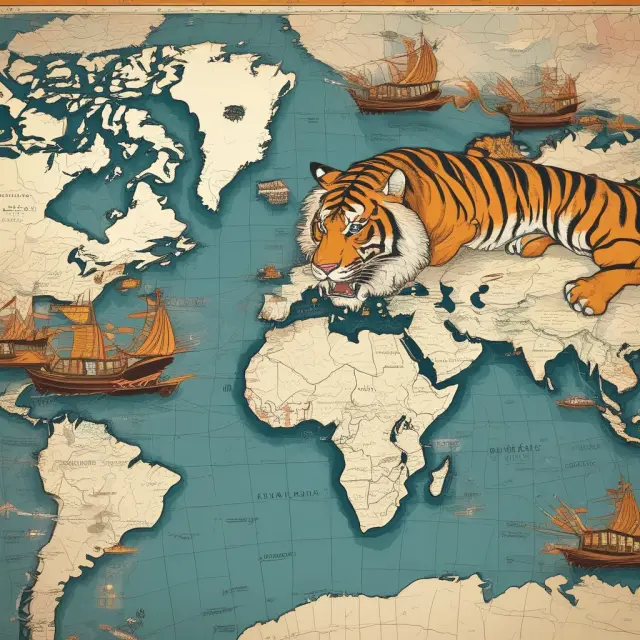
The Role of Exports in the Success of the Four Asian Tigers
The Four Asian Tigers – Hong Kong, Singapore, South Korea, and Taiwan – have risen to prominence as global economic powers through their focus on exports. With high savings rates and a well-educated populace, these economies have effectively positioned themselves at the forefront of international trade and industrialization.
In the early stages of their development, the Four Asian Tigers adopted export-oriented policies to rebuild from the devastation of World War II and to diversify their economies beyond agriculture. South Korea, for example, established its “miracle on the Han River” by focusing on exports in industries such as automobiles and electronics. Meanwhile, Taiwan leveraged its unique geographical position to capitalize on trade with China and other markets, becoming a leading global manufacturer of information technology.
Export-oriented policies have continued to play a critical role in the growth of these economies. South Korea’s export sector accounts for approximately 50% of its GDP, while Taiwan’s exports make up around 60%. Hong Kong and Singapore, as financial hubs, serve as gateways for international commerce, with trade accounting for more than three-quarters of their respective economies.
Apart from boosting economic growth, export-oriented policies also offer several advantages:
- Diversification of Economy: By relying on exports to drive growth, countries can reduce their dependence on a single industry or sector and mitigate the risks associated with economic downturns.
- Access to New Markets: Exports provide access to new markets and customers, allowing economies to expand their reach beyond their domestic borders. This is especially beneficial for smaller, less developed economies looking to establish themselves in the global marketplace.
- Economic Competitiveness: The drive to export goods and services can push countries to become more efficient and competitive in their industries, as they seek to undercut foreign competitors and attract international buyers.
The Four Asian Tigers have demonstrated their resilience and adaptability in the face of various challenges. For instance, South Korea weathered the Asian financial crisis in 1997 by implementing reforms aimed at improving its banking sector and fostering competition among its industries. Taiwan has managed to maintain a strong economy despite ongoing tensions with China, thanks to its focus on innovation and high-tech manufacturing. Hong Kong and Singapore have continued to thrive as global financial centers, providing stable economic conditions for businesses and investors alike.
In conclusion, the export-oriented policies pursued by the Four Asian Tigers have been a significant factor in their remarkable growth and development since the 1960s. By focusing on exports, these economies have diversified their industries, accessed new markets, and fostered economic competitiveness – ultimately propelling them to the ranks of the world’s wealthiest nations.

Global Challenges and Response from the Four Asian Tigers
The Four Asian Tigers – Hong Kong, Singapore, South Korea, and Taiwan – have demonstrated remarkable resilience in weathering various crises that have impacted their economies since the late 20th century. This section explores how these countries dealt with local crises like the Asian Financial Crisis (AFC) of 1997 and the global economic shocks, such as the credit crunch of 2008.
The Asian Financial Crisis, triggered by the devaluation of the Thai baht in July 1997, spread rapidly throughout the region’s economies and created a domino effect on currencies and stock markets in other countries like Malaysia, Indonesia, South Korea, and Thailand. The crisis was also known as the ‘Asian contagion’ as it infected not only Asian economies but also had ripple effects worldwide.
Among the Four Asian Tigers, South Korea was the most affected by the AFC due to its significant exposure to international financial markets. The country experienced a sharp contraction in output growth and a sharp rise in unemployment, leading to social unrest and political upheaval. However, the South Korean government implemented drastic reforms and adopted a package of policies aimed at restoring economic stability. These measures included increasing interest rates, floating exchange rates, and devaluing the won, which helped stabilize the country’s economy in the long run.
Another global economic shock that significantly affected the Four Asian Tigers was the credit crunch of 2008. The financial crisis originated from the United States when housing prices began to fall due to a subprime mortgage bubble. This led to a sharp decline in international trade and a contraction in global demand, ultimately impacting the manufacturing sectors of Hong Kong, Singapore, South Korea, and Taiwan.
Hong Kong, as a financial hub, was hit hardest by the global credit crunch since it had considerable exposure to international financial markets. To mitigate the impact of the crisis, the Hong Kong government implemented various measures aimed at stabilizing the financial sector, including providing liquidity support to banks and increasing their capital requirements. These actions helped preserve Hong Kong’s financial system, enabling it to maintain its position as a global financial center.
Singapore, South Korea, and Taiwan also responded to the credit crunch by implementing policies aimed at maintaining economic stability. The Singaporean government adopted expansionary fiscal and monetary measures, which included increasing public spending and providing liquidity support to banks. These actions helped Singapore weather the crisis more effectively than many other countries.
South Korea took a different approach by focusing on structural reforms rather than relying solely on fiscal stimulus measures. The country implemented reforms aimed at improving its corporate sector’s efficiency and competitiveness, which ultimately helped it recover from the crisis more quickly and emerge stronger than before. Taiwan also responded to the credit crunch with expansionary fiscal policies, but it continued to prioritize export-oriented industries as a means of maintaining economic growth.
In conclusion, the Four Asian Tigers have demonstrated remarkable resilience in weathering significant global economic shocks by implementing targeted measures aimed at stabilizing their financial sectors, fostering structural reforms, and maintaining a focus on exports. This adaptability has helped these countries not only recover from crises but also emerge stronger in the long run.

FAQs
What exactly are the Four Asian Tigers? The Four Asian Tigers refer to the high-growth economies of Hong Kong, Singapore, South Korea, and Taiwan that have consistently achieved remarkable economic growth since the 1960s. These countries, also known as the Asian Dragons, have become global powerhouses, with Hong Kong and Singapore emerging as significant financial centers, while South Korea and Taiwan lead in manufacturing automobiles, electronic components, and information technology.
What is unique about the economies of the Four Asian Tigers? All four economies share common characteristics, including a strong focus on exports, an educated populace, and high savings rates.
How have the Four Asian Tigers managed to weather economic crises? The Four Asian Tigers have proven resilient through various local crises and global shocks. For instance, they weathered the Asian Financial Crisis in 1997 and the credit crunch of 2008 effectively due to their robust economies and strategic financial management.
Which countries are considered Tiger Cub Economies? Malaysia, Thailand, the Philippines, and Indonesia are sometimes referred to as the “Tiger Cub Economies” because they have experienced steady growth since the 1950s, even though at a slower pace compared to the Four Asian Tigers.
What is South Korea’s economic background? In the 1960s, South Korea had a per capita gross domestic product (GDP) comparable to those of poorer countries in Asia and Africa. However, since then, it has undergone substantial growth, thanks to government-directed policies that focused on export-oriented industries and import restrictions. As of Dec. 2020, South Korea had a GDP of $1.59 trillion and a per capita GDP of $30,640.
What sets Taiwan apart from other countries? Despite political tensions with China, Taiwan has thrived since the 1960s. Its economy is not part of the United Nations, but it remains a reliable exporter, as evidenced by its GDP of $660 billion and per capita GDP of $28,180 in Dec. 2020.
What sets Hong Kong apart? As a special administrative region (SAR) within China, Hong Kong has the freedom to manage its activities except for defense until 2047. Its economy is exceptionally free, with a GDP of approximately $340 billion as of Dec. 2020, a per capita GDP of $45,180, and a growth rate of 2.9%, making it an attractive financial hub.
What makes Singapore unique? Despite having just 5.8 million citizens, Singapore has a GDP of $340 billion and a per capita GDP of $58,480 as of Dec. 2020, and a growth rate of -6%. Its reputation for transparency and commercial security provides significant value to its private sector.
In conclusion, the Four Asian Tigers – Hong Kong, South Korea, Singapore, and Taiwan – have shown remarkable economic growth since the 1960s by focusing on exports and rapid industrialization. Their common characteristics include an educated populace, high savings rates, and a strong commitment to manufacturing and technology industries. Despite facing various crises, these countries have proven resilient due to their robust economies and strategic financial management.
 Next entry · No. 1,656The 4% Rule for Retirement: Understanding Its History, Advantages, Disadvantages, and Alternatives
See also
-
 No. 2,923
14 Feb 2025
24 min
Understanding Liquidity Risk: An Essential Concept for Financial Institutions and Companies
Finance Policy
No. 2,923
14 Feb 2025
24 min
Understanding Liquidity Risk: An Essential Concept for Financial Institutions and Companies
Finance Policy -
 No. 2,124
12 Dec 2024
17 min
High-Yield Bonds vs Investment-Grade Bonds: Understanding the Differences in Yield and Risk
Finance Policy
No. 2,124
12 Dec 2024
17 min
High-Yield Bonds vs Investment-Grade Bonds: Understanding the Differences in Yield and Risk
Finance Policy -
 No. 1,762
03 Nov 2024
22 min
General Accounts in Insurance: An Overview of Their Structure, Operations, and Investment Strategies
Finance Policy
No. 1,762
03 Nov 2024
22 min
General Accounts in Insurance: An Overview of Their Structure, Operations, and Investment Strategies
Finance Policy -
 No. 2,393
02 Jan 2025
18 min
Understanding the Concept of Inflation-Adjusted Return in Finance and Investment
Business Finance
No. 2,393
02 Jan 2025
18 min
Understanding the Concept of Inflation-Adjusted Return in Finance and Investment
Business Finance -
 No. 2,289
25 Dec 2024
20 min
Exploring the Inter-American Development Bank: Role, Significance, and Current Focus
Business Finance
No. 2,289
25 Dec 2024
20 min
Exploring the Inter-American Development Bank: Role, Significance, and Current Focus
Business Finance -
 No. 2,132
12 Dec 2024
18 min
Understanding Histograms: A Comprehensive Guide for Finance and Investment Professionals
Finance History
No. 2,132
12 Dec 2024
18 min
Understanding Histograms: A Comprehensive Guide for Finance and Investment Professionals
Finance History