Understanding the Ideal Economy: What is a Goldilocks Economy and How it Impacts Investing

Understanding the essence of a Goldilocks economy: definition, characteristics, policy tools, impact on investing, & real-life examples
Introduction to Goldilocks Economy
The term “Goldilocks economy” refers to a state of economic conditions whereby the economy is not expanding or contracting excessively, maintaining a balance between growth, employment, and inflation. Named after the children’s story ‘Goldilocks and the Three Bears,’ this concept describes an ideal situation for investors, as it leads to steady economic growth and positive earnings, preventing recessions while avoiding inflationary pressures.
First coined by economist David Shulman in 1992, a Goldilocks economy is characterized by several key features:
- Full employment: A low unemployment rate ensures that there are enough job opportunities for the labor force and maintains stable economic growth.
- Asset price inflation: An increase in asset prices such as stocks, bonds, real estate, etc., indicates a Goldilows economy.
- Low market interest rates: Lower interest rates encourage lending and borrowing, fueling economic expansion.
- Steady GDP growth or economic expansion: This is the most widely accepted indicator of a Goldilocks economy, which signifies an economy not in recession nor growing too fast to trigger inflation.
Maintaining a Goldilocks Economy
Governments and central banks employ various tools to create and manage a Goldilocks economy. Fiscal policy, such as spending on infrastructure projects or tax cuts, helps spur economic growth and maintain employment levels. However, these measures may not provide long-term solutions and are often temporary. Central banks, like the U.S. Federal Reserve, use monetary policy tools to regulate the money supply and keep inflation in check. By adjusting interest rates, the Fed influences borrowing and lending, impacting economic growth and inflation.
External factors such as global economy conditions also play a role in the formation of a Goldilocks economy. The coordinated actions of foreign governments and central banks can significantly influence economic stability. However, creating and maintaining a Goldilocks economy is challenging due to the inherent business cycle of expansion and contraction.
Impact on Investing
A Goldilocks economy provides ideal conditions for investing, with steady economic growth and positive earnings allowing companies to generate returns for shareholders through both share price appreciation and dividends. Fixed-income investments such as bonds also hold their value in a low inflation environment.
However, this temporary state is not permanent, and the end of a Goldilocks economy can be signaled by rising interest rates or inflationary pressures that negatively impact asset prices and economic growth. Understanding the characteristics, tools used to create a Goldilocks economy, and its impact on investing can help investors make informed decisions during various stages of the economic cycle.

Characteristics of a Goldilocks Economy
A Goldilocks economy, named after the fairy tale of Goldilocks and the Three Bears, signifies an ideal economic climate where economic expansion is neither too hot nor too cold but just right. This term gained popularity in 1992 when economist David Shulman wrote about it in his article “The Goldilocks Economy: Keeping the Bears at Bay.” In this perfect state of affairs, economic conditions offer full employment, a stable Gross Domestic Product (GDP), and low inflation. Let’s dive deeper into each characteristic that defines an ideal economy.
Low Unemployment: The unemployment rate is a vital measure to understand the health of a country’s labor market. When people lose their jobs, they lack the ability to purchase goods and services, leading to slower economic growth. Conversely, when businesses cannot find skilled labor to meet production demands, growth can stagnate. The ideal unemployment level is often cited as between 4% and 5%, depending on the country. A low unemployment rate means that there are ample job opportunities, resulting in a well-employed population. This situation leads to increased consumer spending and business investment, contributing to economic expansion.
Asset Price Inflation: Asset price inflation refers to the increase in value of financial assets like stocks, bonds, real estate, and other securities. A Goldilocks economy experiences moderate asset price inflation as businesses grow and thrive. This growth, coupled with consumer confidence and steady GDP growth, leads to increased demand for these assets. While some may consider this situation a ‘bubble,’ the growth is sustainable and not driven by excessive speculation or risk-taking behavior.
Low Inflation: Inflation is the rate at which the general price level of goods and services is rising, often measured by the Consumer Price Index (CPI) or the Producer Price Index (PPI). A Goldilocks economy features low inflation, meaning that the value of money remains stable. Central banks play a role in managing inflation through monetary policy tools like interest rates and open market operations. In a Goldilocks economy, prices remain steady, ensuring purchasing power parity for consumers and allowing investors to make long-term plans with confidence.
Stable Gross Domestic Product (GDP) Growth: Gross Domestic Product (GDP) measures the total value of goods and services produced within a country during a specified period. A stable GDP growth rate is essential for a Goldilocks economy, as it indicates a healthy economic climate with steady expansion. An ideal scenario is where the economy avoids both recessionary periods—when the economy contracts for two consecutive quarters—and overheating conditions when inflation begins to rise significantly.
Maintaining a Goldilocks Economy: Fiscal and monetary policy tools are essential in managing an economy and keeping it in a Goldilocks state. Governments can implement fiscal policies, such as infrastructure spending or tax cuts, to stimulate growth and keep the economy steady. Central banks like the Federal Reserve use monetary policy, including interest rates and open market operations, to maintain price stability and ensure that inflation remains at desired levels. By coordinating their efforts, policymakers can create a favorable economic climate that supports continued expansion and full employment while avoiding both recession and overheating.
The Importance of a Goldilocks Economy for Investing: A Goldilocks economy is an attractive environment for investors as it provides the perfect balance between growth and stability. In this climate, companies generate positive earnings growth, which translates to share price appreciation and potential dividends. Fixed income investments, like bonds, also benefit from stable inflation rates, ensuring their value remains intact. It’s important to note that a Goldilocks economy is temporary in nature, but its presence offers significant opportunities for investors who can capitalize on the favorable market conditions.
In summary, a Goldilocks economy is an ideal state of economic growth where GDP expansion is not too hot nor too cold but just right. This climate features low unemployment, stable inflation, and steady GDP growth, making it an attractive environment for investors seeking opportunities to grow their wealth. By understanding the characteristics that define a Goldilocks economy and the factors necessary to maintain it, investors can make informed decisions to maximize returns while minimizing risks.

Maintaining a Goldilocks Economy through Fiscal Policy
The ideal balance between economic stability, full employment, and growth can be achieved with the right mix of fiscal policies. Fiscal spending and taxes can help create and manage an economy in a desirable Goldilocks state.
Fiscal Spending: The Role of Congress
Congress plays an essential role in maintaining a Goldilocks economy through fiscal spending. Infrastructure projects, such as the creation of roads and bridges or writing government contracts with private companies, can help boost the economy by increasing investment and job opportunities. This spending can lead to a multiplier effect that stimulates economic activity and growth.
Fiscal Spending: The Role of Taxes
Tax policy is another tool used to manage an economy. Lower taxes on businesses encourage business investment, while consumer tax cuts promote consumer spending—both crucial factors for maintaining the Goldilocks state. However, fiscal spending and tax cuts can have mixed results. They may provide a temporary boost but are not a long-term solution to sustaining optimal economic conditions.
A Transitional Economy: Boom and Bust Cycles
The business cycle, characterized by expansion and contraction, is an inherent part of capitalist economies. A Goldilocks economy is a transient state—a temporary respite from the cyclical nature of the economy. Central banks and governments must continually work to create and manage this ideal balance between economic growth, employment, and inflation.
The Importance of Central Banks: Monetary Policy
Central banks have the power to bring on or maintain a Goldilocks economy through monetary policy. By controlling interest rates, central banks can influence the lending environment and ultimately affect consumer and business behavior. Lower interest rates encourage borrowing, which in turn drives investment and spending, while higher interest rates help cool down an overheating economy and prevent inflationary pressures.
A Goldilocks Economy: A Temporary State
As economies go through various stages of growth and contraction, a Goldilocks economy may exist during the recovery and growth phases. However, it should be considered a temporary state due to the inherent business cycles that characterize capitalist economies.
The Impact on Investing
The Goldilocks economy is ideal for investing as companies grow and generate positive earnings growth. Stocks appreciate in value, providing returns to investors through price appreciation and, in some cases, dividends. In a stable economic environment with low inflation, fixed-income investments such as bonds hold their value.
Historical Examples of Goldilocks Economies
The U.S. economy during the middle to late 1990s is considered an excellent example of a Goldilocks economy. With growth averaging around 4%, employment between 3% and 4%, and low inflation, market participants saw this period as a golden time for investors.
In conclusion, understanding how fiscal policy, monetary policy, and external factors influence the formation and maintenance of a Goldilocks economy is crucial in today’s complex economic landscape. By following the interplay between these elements, we can better anticipate market trends and make informed investment decisions in this ever-evolving financial world.

Monetary Policy and the Role of Central Banks
Goldilocks economies are a balancing act between growth, employment, and inflation. Central banks like the Federal Reserve (The Fed) play a crucial role in creating and maintaining this economic state through monetary policy. Monetary policy refers to actions taken by central banks, like The Fed, to influence the economy’s overall level of activity and inflation.
A Goldilocks economy thrives when inflation is kept under control while maintaining stable GDP growth. Central banks achieve these conditions by utilizing various tools within their monetary policies.
One such tool is interest rates. When setting interest rates, central banks like The Fed can make borrowing cheaper to encourage economic activity and stimulate growth. Conversely, they can also increase interest rates to reduce borrowing and slow down an overheating economy with inflation concerns.
Another essential monetary policy tool in maintaining a Goldilocks economy is open market operations. This refers to the buying and selling of government securities by central banks. By purchasing securities, the Fed injects money into the economy, lowering interest rates and promoting growth. When it sells securities, it removes funds from circulation, raising interest rates and helping to cool down an overheating economy.
Central banks also set inflation targets and adjust their monetary policy accordingly to achieve these goals. The U.S. Federal Reserve aims for an annual inflation rate of 2% based on its mandate from Congress. If inflation rises above or falls below this level, the Fed can change interest rates to bring it back in line with the target.
In a Goldilocks economy, stable GDP growth and low unemployment coexist with low inflation. Central banks like The Fed play a pivotal role in maintaining this delicate balance through their monetary policy actions. By setting interest rates, conducting open market operations, and following inflation targets, central banks can create an environment conducive to investment and economic prosperity.
However, it is important to remember that Goldilocks economies are transitional states as part of the business cycle. Central banks must continually monitor the economy and make adjustments accordingly. If the economy overheats or inflation rises too quickly, central banks may need to raise interest rates to prevent a loss of purchasing power for consumers and businesses. Conversely, if the economy begins to slow down, they may lower interest rates to stimulate borrowing and investment.
In conclusion, maintaining a Goldilocks economy is an ongoing challenge. Central banks like The Fed utilize monetary policy tools such as setting interest rates, conducting open market operations, and following inflation targets to create and manage this ideal economic state. By doing so, they encourage investment, support growth, and ultimately contribute to economic prosperity.

Impact of Global Economy on Goldilocks State
The role external factors play in creating and maintaining a Goldilocks economy is significant. A country’s economic health is interconnected with other economies both domestically and abroad, with global trends, and the actions of foreign governments and central banks. These connections impact economic growth, inflation, and employment levels within a country.
Firstly, international trade between countries drives economic growth through increasing demand for goods and services. When a country’s trading partners are experiencing strong growth, the demand for its exports grows, leading to higher revenue and economic expansion. Conversely, an economic downturn in a significant trading partner can lead to decreased demand, lowering export revenues and potentially triggering a recession within the home country.
Another external factor is global interest rates set by foreign central banks. Central banks such as the European Central Bank (ECB), the Bank of Japan, or the People’s Bank of China influence global markets through their monetary policies. By adjusting interest rates and influencing the supply and demand for foreign currency, they impact capital flows between countries. Lower interest rates in a foreign economy can lead to increased investment from foreign investors seeking higher yields, boosting the domestic economy. On the other hand, rising interest rates abroad can lead investors to withdraw funds from a home country, potentially causing a contraction in the local economy and increasing borrowing costs for businesses, slowing down their expansion plans.
External inflationary pressures also impact the Goldilocks state of an economy. Inflation in countries producing essential raw materials or goods such as oil, food, or metals can significantly influence an importing country’s inflation rate, which may hinder the central bank from keeping its own inflation within desired levels. For instance, rapid inflation in countries like Russia or China affecting commodity prices could impact a Goldilocks economy negatively by increasing costs for businesses and consumers, potentially triggering inflationary pressures.
The response of foreign governments to economic conditions can also influence the formation and maintenance of a Goldiloks economy. Aggressive fiscal spending in countries with strong economies can result in increased demand for goods and services, boosting exports and growth in other countries. Additionally, coordinated monetary policies among central banks can help stabilize global financial markets during times of economic uncertainty, promoting steady growth across multiple countries.
In conclusion, external factors play a significant role in creating and maintaining a Goldilocks economy by impacting economic growth, inflation, and employment levels within a country. Central banks, trading partners, foreign governments, and the global economy as a whole are crucial components in achieving this ideal economic state.

The Goldilocks Economy and Investing
A Goldilocks economy is not just desirable for economic stability but also a boon for investors. In this ideal state, companies experience steady growth, leading to positive earnings, and stocks often perform well. The term ‘Goldilocks’ refers to the children’s story where the protagonist finds that one of three bowls of porridge is “just right” – neither too hot nor too cold. Similarly, a Goldilocks economy offers the perfect environment for investment, striking a balance between economic growth and price stability.
In a thriving Goldilocks economy, stock prices appreciate, and bond investments maintain their value due to low inflation. Companies with steady earnings can generate substantial profits as they expand, making investments in their stocks potentially profitable. As the economy grows, businesses increase investment and output, translating into higher wages for employees, which in turn leads to increased consumer spending. This virtuous cycle fuels economic growth further, benefiting both companies and investors.
Moreover, a Goldilocks economy also appeals to fixed-income investors, as low inflation holds the value of their investments steady. Bonds offer stable returns during this phase, as the risk of inflation eroding purchasing power is minimal. For retirees or those seeking predictable income, a Goldilocks economy can provide a sense of security and peace of mind.
However, it’s important to remember that a Goldilocks economy is transient, often characterized by economic expansion and contraction, or the so-called boom and bust cycle. The ideal conditions do not last forever, making investing during this phase essential but strategic. While a company may thrive under a Goldilocks economy, it’s crucial for investors to remain vigilant and consider their exit strategy once conditions start changing.
For instance, if economic growth becomes too robust and inflation starts to rise rapidly, the Fed may increase interest rates to cool down the economy and maintain price stability. Raising interest rates, however, can negatively impact stocks and bonds as it makes borrowing more expensive, which in turn can lead to a decline in asset prices or even a market correction.
To capitalize on the opportunities presented by a Goldilocks economy, investors should consider various investment vehicles, including:
– Large-cap stocks: These companies typically exhibit stable earnings growth and are less sensitive to economic conditions, making them attractive investments during this phase.
– Real estate: A steady economy provides a favorable environment for real estate investments as property values often appreciate, especially in areas with high demand and limited supply.
– Diversified portfolios: Spreading investments across various asset classes and sectors can help mitigate risks associated with market volatility and economic uncertainty.
– Timely rebalancing: Regularly adjusting the portfolio’s asset allocation to maintain a balance between stocks, bonds, and other assets helps investors optimize returns during different phases of the business cycle.
A Goldilocks economy may not last indefinitely, but it offers an excellent opportunity for investors to grow their wealth while minimizing risks. By understanding the characteristics of this economic state and employing a well-diversified investment strategy, investors can make the most of this fleeting yet valuable market condition.

Real World Examples of Goldilocks Economy
The term “Goldilocks economy” gained widespread recognition in the 1990s when economist David Shulman described it as an economy characterized by full employment, stable economic growth, and low inflation—not too hot or cold but just right. Let us delve deeper into this concept by exploring real-world examples of Goldilocks economies and their impact on investing.
One such instance dates back to the middle to late 1990s in the United States. During this period, the economy experienced robust growth without excessive inflation or high unemployment rates—a perfect example of a Goldilocks state. This economic climate contributed significantly to impressive stock market performance, as businesses thrived amidst favorable conditions.
Fast forward to 2004-2005, when the U.S. economy recovered from the dot-com bubble burst. During this time, economic expansion was sustained through a steady GDP growth rate of around 4%, while unemployment hovered between 3% and 4%. Inflation was also minimal during this period, making it an excellent environment for investing. The Dow Jones Industrial Average reached multi-year highs, highlighting the positive impact of a Goldilocks economy on the stock market.
More recently, in 2017, economists and investors alike hailed the U.S. economy as being in a Goldilocks state once again. With a growth rate close to 4%, employment levels continuing their downward trend, and low inflation, this period proved fruitful for investors seeking stable returns from both stocks and bonds.
However, it is essential to note that a Goldilocks economy is a transient state in the business cycle. While these conditions are optimal for investment growth, they do not last forever. In fact, during periods of economic expansion when inflation begins to rise or GDP growth surges, central banks like the Federal Reserve often increase interest rates to maintain balance and prevent an overheating economy.
The end result is a return to the normal economic cycle, with its accompanying challenges and opportunities for investors. Nonetheless, understanding the Goldilocks economy and recognizing its impact on various asset classes can provide valuable insights for those looking to optimize their investment portfolios.
Challenges in Creating and Maintaining a Goldilocks Economy
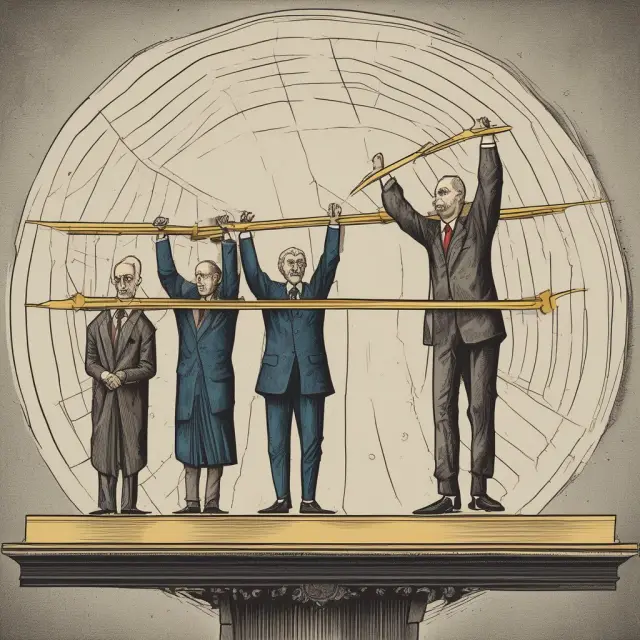
Achieving and sustaining an ideal economic state is a delicate balancing act for governments and central banks around the world. Despite the numerous benefits associated with a Goldilocks economy, there are several challenges to creating and maintaining this economic climate. These include managing fiscal policy, implementing effective monetary policy, dealing with external factors, and navigating the inherent volatility of the global economy.
One significant challenge is using fiscal policy effectively to create and maintain a Goldilocks economy. While spending on infrastructure projects and tax cuts can help boost growth, they come with risks and limitations. For instance, large deficits resulting from excessive borrowing or stimulus measures could lead to inflationary pressures down the line. Moreover, the effects of fiscal policy actions are not always predictable or long-lasting, which makes it difficult for governments to ensure a stable economic environment over an extended period.
Central banks have a crucial role in managing monetary policy to create and maintain a Goldilocks economy. However, they face challenges in deciding when to raise or lower interest rates to address inflationary pressures without jeopardizing growth or creating instability in the financial markets. Central banks must also consider external factors that can impact their efforts, such as geopolitical risks, trade disputes, and currency fluctuations. Balancing these concerns is no easy feat, and central banks need to make informed decisions based on a combination of economic data, market conditions, and global developments.
Another challenge for creating and maintaining a Goldilocks economy comes from the inherent volatility of the global economy. Capitalist economies naturally experience expansion and contraction through the business cycle, which can impact efforts to achieve an optimal economic state. As previously mentioned, interest rate hikes by central banks to prevent inflationary pressures can also lead to an economic slowdown or even a recession. Furthermore, external factors such as global political instability or natural disasters can create shocks that disrupt the economy and make it difficult for governments and central banks to manage economic conditions effectively.
In summary, creating and maintaining a Goldilocks economy is no simple task for governments and central banks. Balancing growth, employment, inflation, fiscal policy, monetary policy, and external factors requires careful planning, expertise, and adaptability. Despite these challenges, understanding the dynamics of a Goldilocks economy can help investors make informed decisions about their portfolios and navigate market conditions more effectively.
FAQs and Common Misconceptions about a Goldilocks Economy
Q: Can any country have a permanent Goldilocks economy?
A: No, a Goldilocks economy is a transitional state in the business cycle and cannot be maintained permanently without careful management of fiscal and monetary policies.
Q: What happens when a Goldilocks economy turns to an inflationary economy?
A: When a Goldilocks economy starts to become inflationary, central banks will typically raise interest rates to curb inflationary pressures. This action may slow the economy or even trigger a recession.
Q: Is it possible for a Goldilocks economy to exist in a high unemployment environment?
A: No, a Goldilocks economy is characterized by full employment, which implies low unemployment levels. If an economy has high unemployment, it is not considered to be in a Goldilocks state.
Q: Are all economic recoveries Goldilocks economies?
A: Not necessarily. While some recoveries may exhibit Goldilocks-like conditions, others might face significant challenges such as high inflation or large fiscal deficits, which could hinder the creation of a stable economic environment.

The End of a Goldilocks Economy: Inflation
Although the presence of a Goldilocks economy offers a favorable environment for investments, it is essential to understand that this ideal state is temporary. Ultimately, a Goldilocks economy will transition into another phase in its business cycle. This transformation often occurs when economic growth becomes too robust, leading to inflationary pressures. Inflation, the sustained increase in the general price level of goods and services, poses a significant challenge for investors and economists alike.
In this section, we will explore the factors that cause an economy’s shift from a Goldilocks state to one with rising inflation. Understanding this progression is crucial for investors as it can significantly impact their investment strategies and portfolio allocation.
Factors contributing to Inflation
- Excessive Government Spending: Governments often resort to increasing fiscal spending during recessions or periods of low economic growth. This approach can lead to a surge in demand for goods and services, driving up prices if the supply does not grow commensurately with demand.
- Supply-side Shocks: Sudden disruptions to the global supply chain, such as natural disasters, geopolitical events, or labor disputes, can cause prices to rise due to reduced production and availability of goods and services.
- Expectations: Inflation expectations play a pivotal role in shaping inflation dynamics. If investors expect prices to rise, they may increase their prices in anticipation, leading to a self-fulfilling prophecy. This phenomenon is often referred to as the “wage-price spiral.”
- Central Banks and Monetary Policy: Central banks are tasked with managing inflation through monetary policy tools such as interest rates. However, if central banks delay raising interest rates or fail to anticipate inflationary pressures, they may exacerbate inflation by fueling excessive borrowing and spending.
Impact of Inflation on Investments
- Stocks: Rising inflation can negatively impact stocks, particularly those of companies with high levels of debt and low pricing power. Inflation erodes the value of future earnings as investors require higher returns to compensate for inflation risks.
- Bonds: While stocks may suffer during periods of high inflation, bonds provide some insulation due to their fixed income nature. However, when inflation rises significantly, bond investors demand higher yields to maintain purchasing power, resulting in lower bond prices and higher yields.
- Real Estate: The real estate sector can benefit from moderate inflation since property values tend to rise with inflation. However, during periods of high inflation, borrowing costs increase, which may limit the profitability of real estate investments.
- Commodities: Commodities such as precious metals and energy often perform well in an inflationary environment due to their intrinsic value as hedges against inflation.
As investors, it is essential to stay informed about economic conditions, including the presence or absence of a Goldilocks economy. Understanding the factors that can lead to a shift from a Goldilocks state to one with rising inflation is crucial for implementing effective investment strategies that mitigate risks and maximize returns.

FAQs and Common Misconceptions about a Goldilocks Economy
Goldilocks economies, as the name suggests, are a desired yet elusive state for any economic system. The term, which derives from a popular children’s tale, refers to an ideal situation where the economy is not experiencing significant expansion or contraction. In this article, we’ll address some common misconceptions and frequently asked questions surrounding the Goldilocks economy.
What exactly is a Goldilocks Economy?
A Goldilocks economy is a state where the economic growth rate is neither too low, which can lead to recession, nor too high, which can cause inflation. The term signifies a balance between full employment, stable prices, and steady GDP growth.
Can any country have a permanent Goldilocks Economy?
No, a Goldilocks economy is a temporary state, as economies naturally go through cycles of expansion and contraction. Central banks and fiscal policy tools can help manage the economic conditions to maintain a favorable environment.
What are the three key factors that define an ideal economy (Goldilocks Economy)?
- Full employment: An economy with low unemployment (U3 rate) and a strong labor force
- Stability in asset prices: Gradual increase in stocks, real estate, bonds, and other assets without causing hyperinflation
- Moderate inflation: A stable purchasing power of the currency with controlled price increases
What role does inflation play in a Goldilocks Economy?
Inflation is an essential factor to consider when aiming for a Goldilocks economy. Low inflation ensures stable economic growth and steady asset prices while preventing a recession. However, if inflation becomes too high, it can lead to an overheating economy and disrupt the balance.
What factors contribute to creating and maintaining a Goldilocks Economy?
- Fiscal policy: Government spending on infrastructure projects and tax cuts to encourage economic growth
- Monetary policy: Central banks regulating the money supply, interest rates, and controlling inflation
- Global economy: External factors like foreign economies’ stability, central bank policies, and international trade influence the domestic economy’s state
Does a Goldilocks Economy benefit investors?
Yes, an ideal economic state is conducive to positive earnings growth for companies and favorable investment conditions for investors. Asset prices increase, and stocks perform well during a Goldilocks economy. However, it’s essential to remember that this state is temporary and eventually gives way to the business cycle.
 Next entry · No. 1,854The Gold Standard: A Monetary Regime Backed by Gold
See also
-
 No. 1,541
30 Sep 2024
20 min
Understanding Fiscal Policy: Government Spending and Tax Policies for Economic Stability
Finance Policy
No. 1,541
30 Sep 2024
20 min
Understanding Fiscal Policy: Government Spending and Tax Policies for Economic Stability
Finance Policy -
 No. 5,382
04 Sep 2025
25 min
Understanding V-Shaped Recovery: History, Characteristics, and Importance
Business Finance
No. 5,382
04 Sep 2025
25 min
Understanding V-Shaped Recovery: History, Characteristics, and Importance
Business Finance -
 No. 5,121
13 Aug 2025
26 min
Understanding a U-Shaped Economic Recovery: From Decline to Growth
Economics
No. 5,121
13 Aug 2025
26 min
Understanding a U-Shaped Economic Recovery: From Decline to Growth
Economics -
 No. 5,078
10 Aug 2025
21 min
Trickle-Down Economics: Understanding the Theory and Its Controversies
Economics
No. 5,078
10 Aug 2025
21 min
Trickle-Down Economics: Understanding the Theory and Its Controversies
Economics -
 No. 4,749
14 Jul 2025
21 min
Understanding Sticky Wage Theory: Implications for Employment and Macroeconomics
Economics
No. 4,749
14 Jul 2025
21 min
Understanding Sticky Wage Theory: Implications for Employment and Macroeconomics
Economics -
 No. 4,733
12 Jul 2025
21 min
Understanding Stagnation: Causes, Effects and Overcoming Economic Sluggishness
Economics
No. 4,733
12 Jul 2025
21 min
Understanding Stagnation: Causes, Effects and Overcoming Economic Sluggishness
Economics