Understanding the Immutable Ledger: A Comprehensive Guide to Blockchains

Understanding the fundamentals of blockchains, their role in maintaining immutable records, and exploring real-world applications - from Bitcoin to supply…
Introduction to Blockchains and Their Role as a Distributed Database
Blockchain technology represents a significant innovation in digital data storage and management. Unlike traditional databases, which store information centrally and rely on intermediaries for record-keeping and validation, blockchains offer decentralized alternatives that eliminate the need for trusting third parties. These distributed databases have revolutionized various industries by providing secure, immutable, and transparent records of transactions and data.
At its core, a blockchain is a continuously growing list of records or ‘blocks’ that are linked using cryptography. Each block contains multiple transactions and is added to the existing chain through a process called mining. The decentralized nature of blockchains ensures that they cannot be altered once recorded, making them an ideal solution for maintaining secure and unalterable data.
The significance of blockchain technology can be traced back to 1991 when Stuart Haber and W. Scott Stornetta first proposed the concept of creating a system where document timestamps could not be tampered with. However, it wasn’t until the launch of Bitcoin in 2009 that blockchain had its first real-world application as a decentralized digital currency. Today, the technology has evolved far beyond cryptocurrencies, offering potential use cases in various sectors such as finance, healthcare, supply chain management, and more.
Understanding the role of blockchains as distributed databases is crucial to appreciating their impact on industries and society at large. This section will explore the basics of blockchain technology, its unique features, and the ways it has transformed the landscape for secure data storage and record-keeping. We’ll discuss how transactions are processed and validated within a blockchain network, as well as the importance of decentralization, consensus mechanisms, and cryptography in ensuring data integrity and security.
Key Concepts: Transactions and Decentralization
Blockchains function by recording transactions between parties without relying on intermediaries. In this section, we’ll dive deeper into understanding how transactions are processed within a blockchain network, the significance of decentralization, and consensus mechanisms that help maintain data security and trust among participants.
Section to be written:
The History and Evolution of Blockchains and Their Use Cases
As blockchain technology continues to mature, it’s important to understand its origins, evolution, and the various applications beyond cryptocurrencies that have emerged in recent years. In this section, we’ll trace the history of blockchain, examine its evolution from a decentralized digital currency concept to an innovative solution for a wide range of industries, and discuss some real-world use cases showcasing the versatility of this game-changing technology.
Stay tuned for the next section where we’ll delve deeper into the history and evolution of blockchains, exploring their origins, evolution, and the various applications beyond cryptocurrencies that have emerged in recent years. We’ll trace the history of blockchain, examine its evolution from a decentralized digital currency concept to an innovative solution for a wide range of industries, and discuss some real-world use cases showcasing the versatility of this game-changing technology.

Key Concepts: Transactions and Decentralization
In the realm of blockchains, two essential concepts stand out – transactions and decentralization. These ideas form the backbone of this innovative technology, ensuring security, transparency, and immutability for digital information.
Transactions refer to the exchange of data or value between parties in a secure and irreversible manner on a blockchain. When new data comes into the network, it is bundled together with other transactions and added to a new block, which is then linked to the previous block in the chain. This creates an unbroken sequence of data that cannot be altered without consensus from the majority of the decentralized network.
Decentralization is another core concept in understanding how a blockchain operates. Instead of relying on a central authority or third party for validating transactions and maintaining data integrity, blockchains distribute the control among its users through consensus mechanisms like proof of work (PoW) or proof of stake (PoS). This decentralized system allows all network participants to have equal access, transparency, and security while eliminating the risk associated with a single point of failure.
The result is an immutable record that cannot be tampered with or deleted without consensus from the majority of the network. Decentralization not only enhances security but also ensures trust and transparency in data exchanges, especially when used in the context of cryptocurrencies such as Bitcoin. With no need for a central authority to validate transactions, users maintain control over their assets while transactions are publicly visible to everyone on the network. This is crucial as it allows for greater accountability and auditing capabilities, which is important for industries like finance and supply chain management.
One of the most common applications of blockchains is in maintaining a decentralized digital currency’s transaction history. For Bitcoin, the world’s first decentralized cryptocurrency, each block contains an average of 1MB worth of transactions. The blockchain ensures that all valid transactions are included within these blocks and maintains a verifiable record of them for all to see, while excluding invalid or double-spent transactions.
When it comes to Bitcoin’s decentralized network, no single node can alter the transaction history without consensus from the majority of the network. This is because each block contains its own hash and a reference to the previous block’s hash, creating an unbroken chain of data. The process ensures that any attempt to tamper with or alter a transaction would result in a new hash for that block, which would not match the one already present on the majority of the network. This consensus mechanism is critical for maintaining trust and security within the network, as it eliminates the need for intermediaries like banks or financial institutions.
In summary, understanding the concepts of transactions and decentralization is crucial to grasping how a blockchain functions, its benefits, and its potential applications across various industries. Transactions represent the exchange of value or data between parties on a blockchain, while decentralization ensures that all network participants have equal access, transparency, and security without relying on a central authority. Together, these concepts lay the foundation for the trustless, secure, and immutable nature of blockchain technology.
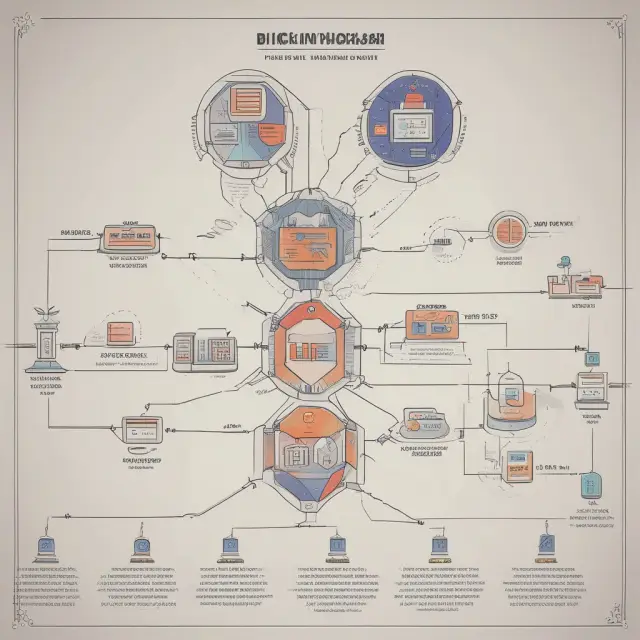
The History and Evolution of Blockchains and Their Use Cases
Blockchains have captured the world’s attention since their introduction with Bitcoin in 2009. But what exactly is a blockchain, and how did it evolve to become a transformative technology beyond digital currencies? A blockchain is a decentralized, distributed database that records transactions across multiple computers. It was first conceptualized by Stuart Haber and W. Scott Stornetta in 1991 as a method for maintaining an unalterable record of digital documents. The fundamental innovation of blockchains lies in their unique data structure and consensus mechanisms.
Blockchain’s Origin: From Hashcash to Bitcoin
Hashcash, a distributed system proposed by Adam Back in 1997, provided the initial inspiration for the creation of blockchains. Hashcash aimed to combat spam emails by making it economically unfeasible for an attacker to flood email servers with fake requests. In the process, it introduced the concept of proof-of-work (PoW), which later became a crucial aspect of securing blockchain networks.
The next significant step in the evolution of blockchains came with Bitcoin, a digital currency created by the pseudonymous Satoshi Nakamoto in 2009. Satoshi combined the ideas from Hashcash and other distributed systems like Tim May’s Cypherpunk manifesto to create a decentralized payment system that relied on PoW for consensus validation. Bitcoin introduced the world to blockchain technology as we know it today, with its innovative use of blocks linked together in a chain through cryptography.
Beyond Cryptocurrencies: Blockchains in Various Industries
Blockchains have since expanded their applications beyond cryptocurrencies to revolutionize various industries. Some of the most prominent use cases include:
1. Supply Chain Management: IBM’s Food Trust blockchain is an excellent example of how blockchain technology can be used to create transparency and traceability in supply chains. By recording transactions involving the origin, transit, and destination of goods, blockchains help ensure food safety and reduce counterfeit products.
2. Voting Systems: Blockchains offer a secure way for conducting fair elections by providing an immutable record of votes while preserving voter anonymity. The potential for blockchain-based voting systems includes reducing fraud, increasing transparency, and improving the overall efficiency of the electoral process.
3. Identity Verification: Blockchains can be used to create decentralized identity verification systems that empower individuals to control their personal data while ensuring privacy and security.
4. Decentralized Finance (DeFi): DeFi applications built on blockchain networks provide a wide range of financial services, including lending, borrowing, trading, and insurance, without the need for intermediaries.
5. Real Estate Transactions: Blockchain technology offers a more efficient and secure solution for recording real estate transactions by eliminating middlemen and providing an immutable record of property ownership.
In conclusion, blockchains have come a long way since their inception as a cryptocurrency system. Their unique data structure and consensus mechanisms have proven to be transformative across industries, offering numerous benefits such as transparency, security, and decentralization. As the technology continues to evolve, we can expect further innovations that will only strengthen its impact on various sectors.

How Does a Blockchain Work? The Process Behind Storing Data on a Blockchain
A blockchain is an intriguing digital innovation that functions as a decentralized database for storing and distributing information. It is best known for its role in cryptocurrencies like Bitcoin but can also serve various applications beyond monetary transactions. In essence, a blockchain is a chain of interconnected blocks containing data, each with its unique characteristics. Let’s delve into the process behind how data is stored on a blockchain and how this distributed database system ensures immutability.
First, it’s essential to understand that new data added to a blockchain does not merely overwrite or delete existing information. Instead, it creates a new block containing the updated data, which is then linked to the previous block through cryptography. This relationship between blocks forms an unalterable chain of records.
A block in a blockchain holds a finite capacity for data storage. Once a block reaches its maximum capacity, another empty block is formed to accommodate the incoming information. When a new block is filled with transactions or other data, it undergoes validation through a consensus mechanism such as proof-of-work (PoW) or proof-of-stake (PoS). The consensus mechanism ensures that all nodes on the network agree on the validity of the data contained within the new block before it’s added to the chain.
Once the block is validated, it becomes a permanent part of the blockchain. This process of creating and adding a new block is called mining, which requires significant computational resources to solve complex mathematical problems. The miner who successfully solves the problem earns newly minted cryptocurrency units as a reward for their effort.
The combination of decentralization, consensus mechanisms, and cryptography makes a blockchain an immutable database system. Once data is entered into a blockchain, it cannot be altered or deleted without altering every subsequent block in the chain, which would require a significant amount of computational power to manipulate. This feature ensures the integrity and security of the information stored on the blockchain.
Moreover, since each node in the decentralized network maintains an identical copy of the entire blockchain, it’s virtually impossible for a single entity to gain control over or manipulate the data. The distributed nature of the system prevents any form of censorship and guarantees transparency and accessibility to all participants.
The immutability offered by blockchains has far-reaching implications in various industries beyond cryptocurrencies. It can be employed for storing legal contracts, property records, academic credentials, and more, ensuring that the information remains tamper-evident and unchangeable over time. Overall, a blockchain is a powerful tool that provides an immutable and decentralized method for storing and distributing data across a network of nodes, revolutionizing industries and transforming how we manage and secure valuable information.

Security and Immutability: Protecting Information on a Blockchain
Blockchains are known for their high level of security and immutability, which enables them to maintain trust and integrity in the distributed database without the need for a central authority. This section will delve into the security mechanisms that underpin blockchains, such as cryptography and consensus algorithms, ensuring data is kept secure and irreversible.
Cryptography plays an essential role in securing data within a blockchain by employing advanced encryption techniques to protect information from unauthorized access or tampering. When a new transaction occurs, the data is encrypted using public-key cryptography before being broadcasted across the network for validation. Once validated and confirmed, this transaction is added to a block, which is then secured with a unique digital signature, known as a hash. A hash is a mathematical function that converts data into a fixed-length string of characters, making it virtually impossible to reverse engineer or alter the original information.
Consensus mechanisms are another critical aspect of ensuring security and immutability within blockchains. They allow network participants to collectively agree on the validity of new transactions by achieving a consensus, which prevents double spending and ensures that only valid transactions get added to the blockchain. Examples of consensus algorithms include Proof-of-Work (PoW) and Proof-of-Stake (PoS), both of which require significant computational resources or stake in the network to successfully validate new blocks.
Decentralization is another fundamental aspect of blockchains that contributes to their security and immutability. By distributing data across a decentralized network, no single point of failure exists, making it much harder for hackers to compromise the entire system. Instead, any attempt at tampering or unauthorized access will be quickly detected by the network and rejected, ensuring that data remains secure and reliable.
The use of blockchains in cryptocurrencies like Bitcoin serves as a prime example of their security and immutability properties. Transactions made on the Bitcoin network are irreversible once they’re confirmed, making it an attractive option for secure, peer-to-peer transactions. Furthermore, the decentralized nature of Bitcoin ensures that no single entity can manipulate or control the network, adding another layer of security to the system.
However, blockchains have not been limited to just cryptocurrencies. They have also found applications in various industries such as supply chain management, voting systems, and identity verification, among others. In these cases, the immutable nature of blockchain technology helps ensure accuracy, transparency, and security for crucial data that needs to remain unaltered.
Despite its advantages, there are still challenges that come with implementing blockchains at scale. One such challenge is their energy consumption. The Proof-of-Work consensus algorithm used in Bitcoin requires massive computational power, which can lead to high energy usage. However, alternative consensus algorithms like Proof-of-Stake and Delegated Proof-of-Stake are being explored as potential solutions that offer lower energy requirements while maintaining security and immutability.
As blockchains continue to evolve, they’re poised to revolutionize the way we store, share, and manage data in various industries. Their unique combination of decentralization, security, and immutability provides a strong foundation for building trust in an increasingly digital world.
Blockchains in Action: Use Cases Beyond Cryptocurrencies
One of the most significant advancements of blockchain technology lies beyond its role as the backbone for cryptocurrencies like Bitcoin and Ethereum. While these digital currencies have captured public attention, various industries have begun exploring blockchain’s potential to revolutionize their operations through increased transparency, security, and efficiency. In this section, we will delve into three primary use cases of blockchain beyond cryptocurrency: supply chain management, voting systems, and identity verification.
Supply Chain Management
The complexities involved in managing global supply chains have long presented challenges for businesses and consumers alike. Blockchains offer a potential solution by providing an immutable record of each transaction along the supply chain. This feature ensures transparency, allowing participants to track products from their origins to their final destinations while maintaining data privacy. With blockchain’s decentralized nature, all parties involved can access real-time information, reducing the need for intermediaries and minimizing the risk of fraud or errors.
One notable example is Walmart’s implementation of blockchain technology in its leafy greens traceability program. By digitally recording the source, transportation, handling, and storage details for every item in their inventory, Walmart can quickly identify the origin of any product with a potential contamination issue. This not only helps prevent foodborne illnesses but also improves overall supply chain efficiency and customer trust.
Voting Systems
One area where blockchain’s immutable and transparent nature could have a significant impact is in voting systems. A decentralized blockchain platform can offer voters and election administrators the assurance that their votes are counted accurately and securely. By creating an encrypted digital ledger, every vote can be recorded and traced without exposing any private voter information. This would eliminate the potential for voter fraud and increase confidence in the democratic process.
Identity Verification
Another promising use case for blockchain is identity verification. Traditional methods of proving one’s identity often rely on centralized systems, which can be prone to hacking and data breaches. Blockchain offers a more secure alternative through decentralized digital identities that are tamper-proof and owned by the individuals themselves. With encryption protecting sensitive information, users can control who has access to their data while maintaining privacy.
A consortium of major identity companies, including Microsoft, IBM, and Accenture, is already exploring blockchain technology to create a decentralized digital ID platform called the Decentralized Identity Foundation (DIF). This collaborative initiative aims to develop an open standard for secure, interoperable digital identities that individuals can carry with them across various applications and services.
By understanding these use cases beyond cryptocurrency, we gain a more comprehensive perspective of blockchain’s potential impact on society and businesses alike. As technology continues to evolve, it is essential to recognize the versatility of this innovative distributed database system and embrace its transformative possibilities.

Blockchain vs. Traditional Banking: A Comparison of Centralized versus Decentralized Systems
As Bitcoin’s success story unfolds, it is crucial to understand the fundamental differences between blockchains and traditional banking systems. Both serve as essential structures for managing financial transactions, but their approaches couldn’t be more different. In this section, we’ll delve into the intricacies of control, security, and transparency in both decentralized and centralized systems.
Control: Centralization vs. Decentralization
In a traditional banking setup, a financial institution holds the reins when it comes to managing transactions, issuing currency, and maintaining records. The institution acts as a trusted third party, ensuring the integrity of all financial dealings while charging fees for their services. Contrastingly, decentralized blockchain systems operate through a network of nodes distributed across the globe. No single entity holds power over the system; instead, transactions are validated and recorded by consensus among the participating nodes.
Security: The Role of Trust and Consensus Mechanisms
Traditional banking systems rely on physical security measures to protect customers’ funds. Banks employ sophisticated safes, surveillance cameras, and biometric authentication for accessing accounts. In contrast, blockchains maintain security through cryptographic algorithms, consensus mechanisms (such as Proof of Work or Proof of Stake), and the decentralized nature of their network. With blockchain, there’s no need to trust a third party; instead, participants rely on mathematical equations and the collective agreement of the network to ensure transaction validity.
Transparency vs. Opaque Transactions
Banking transactions often involve intermediaries that may or may not be trustworthy, leading to concerns about confidentiality and privacy. In contrast, blockchains provide an unprecedented level of transparency by recording every transaction on a public ledger accessible to anyone with an internet connection. Although individual transactions can be encrypted, the overall record remains open for verification, ensuring that all participants have access to accurate information.
Scalability and Efficiency: The Future of Blockchain vs. Traditional Banking
Both systems possess advantages and disadvantages when it comes to scalability and efficiency. Traditional banking processes can become unwieldy as transactions increase in number. In contrast, blockchains face challenges with their current limitations on transaction throughput. However, ongoing advancements in technology continue to address these issues, suggesting that a future where blockchain surpasses traditional banking in terms of scalability and efficiency is not far-fetched.
In conclusion, the comparison between blockchain and traditional banking systems reveals profound differences in control, security, and transparency. While banks serve as trusted intermediaries managing financial transactions, blockchains introduce a decentralized alternative where trust is derived from mathematical algorithms and collective consensus. As we move forward, it’s evident that both systems have their merits, and the future likely involves a symbiotic relationship between them, allowing each to complement the other’s strengths while minimizing weaknesses.

The Future of Blockchain Technology: Opportunities and Challenges
Blockchain technology has already revolutionized the financial sector with cryptocurrencies like Bitcoin and Ethereum, but its potential applications go far beyond digital currencies. As this technology continues to evolve, it presents numerous opportunities and challenges that can shape industries and transform our daily lives. In this section, we will delve deeper into the future of blockchain technology, discussing its promising prospects as well as the hurdles it may face.
Opportunities:
1. Enhanced Security and Privacy: As more data is being collected and shared online, there is a growing need for secure and private data storage solutions. Blockchain’s decentralized nature and cryptographic security make it an attractive alternative to traditional databases. With the integration of zero-knowledge proofs, blockchains could provide privacy while maintaining transparency – an important balance in the digital age.
2. Decentralized Finance (DeFi): DeFi is a burgeoning sector that aims to replicate and surpass conventional financial services using decentralized technologies like smart contracts and automated market makers built on blockchains. This shift can lead to more accessible, inclusive, and transparent financial services for the masses.
3. Supply Chain Transparency and Traceability: Blockchain technology’s potential in supply chain management is immense. By creating an immutable record of transactions along the supply chain, businesses can ensure transparency, reduce counterfeit products, improve logistics, and enhance customer trust.
4. Interoperability and Cross-Chain Solutions: As various blockchain platforms emerge, there is a need for seamless communication between them. Cross-chain solutions like bridges and interoperable protocols are crucial to enabling the transfer of assets and data between different blockchains, opening up new possibilities for collaboration and innovation.
5. Scalability and Performance: Scaling blockchain technology remains one of its greatest challenges. Solutions like sharding, off-chain transactions, and sidechains are being explored to address scalability issues and increase the throughput of blockchain networks while maintaining their security and decentralization.
Challenges:
1. Regulation and Compliance: As blockchain technology gains traction across industries, regulators must navigate how best to apply existing regulations and create new ones that balance innovation and consumer protection. Collaboration between governments, industry experts, and the blockchain community is essential for ensuring a secure and regulatory-compliant future.
2. User Experience: Blockchain technology can be complex, with steep learning curves and cumbersome user interfaces. Improvements in usability, accessibility, and design will be crucial to attracting a broader audience and fostering widespread adoption.
3. Energy Consumption: Proof-of-Work consensus algorithms used by some blockchains require vast amounts of energy, contributing significantly to their carbon footprint. Research and development into more energy-efficient alternatives like Proof-of-Stake or Proof-of-Authority can help mitigate this issue while maintaining the security and decentralization of blockchain networks.
4. Governance: Blockchains require effective governance mechanisms to ensure fairness, transparency, and alignment with their stated goals. Consensus mechanisms like proof-of-stake or delegated proof-of-stake can help address this challenge, but ongoing research and innovation are required to create truly decentralized and democratic governance structures.
5. Interoperability and Fragmentation: With the emergence of various blockchain platforms, it is essential to ensure interoperability and avoid fragmentation. Collaborative efforts like the Polkadot ecosystem and Cosmos Hub aim to provide cross-chain communication, enabling a more connected and unified blockchain landscape.
In conclusion, the future of blockchain technology is exciting, filled with opportunities and challenges that can shape industries and transform our daily lives. As this technology continues to evolve, it is essential to address both its potential benefits and hindrances to ensure a secure, inclusive, and innovative future for all.

Blockchains and Sustainability: A Green Future?
Blockchain technology has garnered significant attention over the past decade for its role as a secure, decentralized database that enables trust and transparency without the need for intermediaries. However, it is essential to recognize that blockchain’s environmental impact is an increasingly critical concern, particularly as cryptocurrencies like Bitcoin continue to grow in popularity. In this section, we will discuss how blockchains can evolve to be more sustainable and explore potential applications in reducing carbon footprints across various industries.
Understanding the Environmental Impact of Blockchains
Blockchain’s distributed nature requires extensive computational power to validate transactions and add new blocks to the chain. This process, known as mining, typically relies on proof-of-work (PoW) consensus algorithms, which incentivize network participants to compete in solving complex mathematical puzzles. Mining rewards are claimed by the first miner to find a solution, while also validating transactions and creating new blocks. This process is energy-intensive, with Bitcoin alone consuming approximately 127.36 terawatt-hours (TWh) of electricity annually – more than some countries’ total annual consumption.
The environmental cost of mining has raised concerns over the sustainability of blockchain technology and its potential contribution to global warming. Additionally, cryptocurrencies like Bitcoin lack transparency in their energy sources, making it challenging to ensure that renewable energy is being utilized effectively.
Reducing Blockchains’ Carbon Footprint: Innovations and Alternatives
To address these concerns, various initiatives and alternatives are being explored to make blockchain technology more sustainable. Here, we discuss a few promising approaches.
1. Proof of Stake (PoS) Consensus Algorithms
Proof-of-stake (PoS) consensus algorithms offer an alternative to the energy-intensive proof-of-work method, significantly reducing the environmental impact of blockchain networks. Instead of requiring miners to compete in solving complex mathematical puzzles, PoS relies on validators who hold and “stake” a certain amount of cryptocurrency as collateral for their participation. Validators are chosen based on the stake’s size and their reputation within the network, reducing the need for vast computational power.
Some notable blockchain platforms like Ethereum have begun transitioning from PoW to PoS consensus algorithms, which is expected to result in a significant reduction of energy consumption. Furthermore, many new projects are being developed based on PoS from their inception, aiming to create more sustainable and efficient blockchains.
2. Carbon Offsetting and Renewable Energy Incorporation
Carbon offsetting initiatives and renewable energy integration are essential steps toward making blockchain technology greener. By partnering with renewable energy providers or implementing carbon offset projects, blockchains can mitigate their environmental impact while promoting the use of clean energy sources. For instance, some mining operations have started to invest in wind, solar, or hydroelectric power, aiming to reduce their reliance on fossil fuels and ultimately make the process more sustainable.
3. Blockchain for Environmental Applications
Beyond its use in cryptocurrencies, blockchain technology holds immense potential for various environmental applications. For example, blockchain can be used to create carbon credits trading platforms, allowing companies and individuals to buy and sell emissions allowances more transparently and efficiently. This approach could help incentivize emissions reductions while supporting the development of renewable energy projects.
Additionally, blockchain can be applied to various sectors like agriculture, supply chain, and waste management to enhance transparency, traceability, and sustainability. For instance, farmers can use blockchain technology to provide consumers with detailed information about their produce’s origin and production methods, enabling more informed purchasing decisions that prioritize sustainable farming practices.
Conclusion: A Green Future for Blockchains
The environmental impact of blockchain technology, particularly cryptocurrencies, has become a significant concern in recent years. However, innovations like proof-of-stake consensus algorithms, renewable energy integration, and carbon offsetting initiatives are paving the way towards more sustainable blockchains. As the technology continues to evolve, it is essential to stay informed about the latest advancements and considerations that can minimize its environmental footprint while maximizing its potential benefits for various industries and applications. By embracing these eco-conscious practices, we can ensure a greener future for blockchain technology as a whole.

FAQs on Blockchains: Commonly Asked Questions and Misconceptions Debunked
Blockchains have gained significant attention since their inception due to their unique role as decentralized databases that maintain immutable records. In this section, we aim to address some frequently asked questions about blockchains and clarify common misconceptions surrounding their security, scalability, and energy consumption.
Question 1: What is the difference between a traditional database and a blockchain?
Answer: A traditional database structures its data in tables, whereas a blockchain collects information into blocks that are linked together using cryptography. The main difference lies in the way new information is added to the system. In a traditional database, updates are made directly to existing records, while on a blockchain, new transactions or data entries create fresh blocks and are added to the chain of previously recorded data. This makes the information stored on a blockchain irreversible, creating an immutable record.
Question 2: Is blockchain technology secure?
Answer: Absolutely. Blockchains use consensus mechanisms like proof-of-work (PoW) or proof-of-stake (PoS), which require a majority of the network’s computing power to validate new entries. Additionally, each block contains its own hash, and altering any information within it would result in an entirely different hash, making tampering evident. The distributed nature of blockchains ensures that no single entity can control or manipulate the data stored within them without being detected.
Question 3: What is the scalability issue with blockchain technology?
Answer: Blockchains face some limitations when it comes to processing high volumes of transactions due to their decentralized nature and the consensus mechanisms that secure them. For instance, Bitcoin’s current throughput is around 7 transactions per second, while Visa handles approximately 24,000 transactions per second. Several approaches are being explored to improve blockchain scalability, such as off-chain solutions, layer 2 scaling technologies, and sidechains.
Question 4: Does blockchain technology consume a significant amount of energy?
Answer: Yes, some cryptocurrency networks like Bitcoin and Ethereum do consume substantial amounts of electricity due to their proof-of-work consensus mechanisms. However, it’s important to note that the energy usage is not solely for maintaining the blockchain itself but also for securing the network through mining. Efforts are being made to explore more sustainable and energy-efficient consensus mechanisms like proof-of-stake (PoS) and proof-of-authority (PoA), which can potentially reduce the environmental impact of blockchains. Additionally, many organizations and companies are transitioning to renewable energy sources for their mining operations.
 Next entry · No. 443Blockchain-as-a-Service (BaaS): The Game Changer in Blockchain Adoption for Businesses
See also
-
 No. 3,803
28 Apr 2025
18 min
Understanding Orphan Blocks in Blockchain: Definition, Differences from Stale Blocks, and Impact on Bitcoin Mining
Crypto
No. 3,803
28 Apr 2025
18 min
Understanding Orphan Blocks in Blockchain: Definition, Differences from Stale Blocks, and Impact on Bitcoin Mining
Crypto -
 No. 3,677
18 Apr 2025
21 min
Understanding On-Chain Governance in Cryptocurrency: Decentralized or Centralized?
Crypto
No. 3,677
18 Apr 2025
21 min
Understanding On-Chain Governance in Cryptocurrency: Decentralized or Centralized?
Crypto -
 No. 1,345
02 Sep 2024
22 min
Understanding Ethereum Classic: A Decentralized Blockchain Platform for Smart Contracts
Crypto
No. 1,345
02 Sep 2024
22 min
Understanding Ethereum Classic: A Decentralized Blockchain Platform for Smart Contracts
Crypto -
 No. 916
30 Jun 2024
19 min
Decentralized Applications (dApps): The Future of Decentralized Finance, Gaming, and More
Crypto
No. 916
30 Jun 2024
19 min
Decentralized Applications (dApps): The Future of Decentralized Finance, Gaming, and More
Crypto -
 No. 428
23 Apr 2024
24 min
Bitcoin Cash (BCH): A Faster Alternative to Bitcoin – A Comprehensive Overview
Crypto
No. 428
23 Apr 2024
24 min
Bitcoin Cash (BCH): A Faster Alternative to Bitcoin – A Comprehensive Overview
Crypto -
 No. 1,073
24 Jul 2024
23 min
Understanding Distributed Ledger Technology (DLT): A Comprehensive Guide for Institutional Investors
Fintech
No. 1,073
24 Jul 2024
23 min
Understanding Distributed Ledger Technology (DLT): A Comprehensive Guide for Institutional Investors
Fintech