Understanding the Inverted Yield Curve: An Unusual Indicator of Economic Downturns

Explore the meaning behind an inverted yield curve, its historical significance as a recession indicator, and how to interpret this unusual economic signal.
Introduction to the Yield Curve
A yield curve is a graphical representation of yields on similar bonds across various maturities. It offers valuable insights into investors’ risk preferences and their expectations for interest rates. In this section, we will explore the concept of an inverted yield curve, which occurs when short-term debt instruments have higher yields than long-term bonds with the same credit risk profile. This unusual phenomenon has historically been a reliable indicator of a recession.
Understanding Yield Curves and Inversions
The term structure of interest rates is often referred to as the yield curve. It graphically illustrates yields on similar bonds across different maturities, with the most commonly watched being U.S. Treasury debt. Analyzing this curve can provide insights into the economy’s future direction.
When long-term interest rates fall below short-term rates, an inverted yield curve is born. This situation suggests that investors are moving their funds from short-term bonds to longer-term ones, indicating a pessimistic outlook on economic prospects for the near term. Inversions have proven to be reliable recession indicators throughout history, as bond prices reflect investor expectations of declining long-term yields during economic downturns.
Yield Curve Interpretation and Spreads
To interpret yield curves more effectively, market participants often focus on spreads between two maturities. Scholars have historically examined the 10-year U.S. Treasury bond spread to the three-month Treasury bill. On the other hand, market participants generally prefer the spread between the 10-year and two-year bonds due to its significance in recent decades.
Recently, Federal Reserve Chair Jerome Powell has expressed a preference for focusing on the difference between the current three-month Treasury bill rate and the market pricing of derivatives predicting the same rate 18 months later as an indicator of recession risk.
Historical Inverted Yield Curves and Recessions
Since providing a false positive in the mid-1960s, the 10-year to two-year Treasury spread has been a generally reliable indicator of recessions. However, it’s essential to recognize that an inverted yield curve does not cause economic downturns but rather serves as a predictor of impending recession risks.
In 2006, the spread inverted for much of the year, with long-term Treasury bonds outperforming stocks during 2007. The Great Recession began in December 2007, and on August 28, 2019, the 10-year/two-year spread briefly went negative. Although a recession followed in February and March of 2020 due to the COVID-19 pandemic, bond prices could not have contained any embedded information about that event six months earlier.
Implications for Today’s Inverted Yield Curve
At the end of 2022, against a backdrop of surging inflation, the yield curve inverted again, with the 10-year U.S. Treasury rate being 0.77 percentage points below the two-year yield – an unusually large negative gap and the widest since late 1981. This state of the yield curve suggests that investors anticipate economic hardship and potential Fed interest rate cuts to counteract these challenges.
However, not all analysts agree on this interpretation. Some argue that the negative yield gap might instead indicate investor confidence in stabilized inflation and a return to normalcy. Ultimately, it is crucial for investors to stay informed about economic indicators and their potential implications as they navigate the complex world of yield curves.
In summary, an inverted yield curve is a valuable tool for assessing economic conditions and anticipating recessions. By understanding the relationship between this yield curve inversion and its historical significance, market participants can make more informed investment decisions and adjust their strategies accordingly.

What is an Inverted Yield Curve?
An inverted yield curve refers to a situation where long-term interest rates are lower than short-term interest rates on bonds of similar creditworthiness. In other words, the yields decrease as the maturity dates become longer. This phenomenon is unusual because typically, longer-term bonds offer higher yields due to increased risk for investors holding them.
An inverted yield curve has gained significant attention due to its historical relationship with recessions. While an inversion itself does not cause a recession, it indicates that bond investors expect long-term yields to decline, which is typically seen during economic downturns.
Understanding this concept requires examining the yield spread between different maturities. Yield curves are often simplified by observing various spreads, such as the 10-year U.S. Treasury bond versus three-month Treasury bill or the 10-year and two-year bonds. These spreads can provide valuable insights into the yield curve’s shape.
The yield curve’s interpretation is crucial for investors, economists, and market participants to understand potential economic conditions. In the next sections, we will explore historical examples of inverted yield curves and their implications for recessions and current market conditions.
Section Title: Interpreting Yield Curves: Spreads and Recession Indicators (to be written)
Section Title: The Relationship Between Inverted Yield Curves and Recessions (to be written)
Section Title: Interpreting Current Market Conditions: 10-Year vs. Two-Year Spread (to be written)
Section Title: The Role of the Federal Reserve in the Yield Curve (to be written)
Section Title: False Positives and Limitations: Inverted Yield Curves Not Always Predictive (to be written)
Section Title: Conclusion: Navigating the Complex World of Yield Curves (to be written)
By providing background on how the yield curve is interpreted through various spreads and its historical significance as a recession indicator, this section sets the foundation for further exploration of the topic.

Interpreting Yield Curves: Spreads and Recession Indicators
An inverted yield curve is an intriguing economic phenomenon that occurs when long-term interest rates are lower than short-term rates. To better understand the implications of this situation, it’s essential to interpret yield curves using various spreads, which serve as reliable indicators for economic downturns.
The most commonly used spreads in analyzing yield curve data include those between the 10-year and three-month Treasury bonds, as well as the 10-year and two-year bonds. While some academic studies favor the former, market participants typically focus on the latter for its simplicity and reliability as a recession indicator.
The spread between the 10-year U.S. Treasury bond and the three-month Treasury bill has been historically significant in predicting recessions since providing a false positive in the mid-1960s (as mentioned earlier). However, some economists argue that focusing on shorter-term maturities offers more insights regarding the likelihood of an economic contraction.
Jerome Powell, Federal Reserve Chair, also prefers to gauge recession risk by observing the difference between the current three-month Treasury bill rate and the market pricing of derivatives predicting the same rate 18 months later (Narayanan and Rudebusch, 2005).
Historical Examples of Inverted Yield Curves
The 10-year to two-year spread has been a generally reliable recession indicator since its false positive in the mid-1960s. However, it hasn’t stopped some senior U.S. economic officials from downplaying its predictive powers over the years.
For instance, there was an inverted yield curve in 1998 following the Russian debt default. Quick interest rate cuts by the Federal Reserve helped prevent a U.S. recession. However, this situation presents an exception, as an inverted yield curve doesn’t directly cause a recession but rather reflects bond investors’ expectations of declining longer-term yields that are typically associated with economic downturns.
In 2006, the spread inverted for much of the year, with long-term Treasury bonds outperforming stocks during 2007 prior to the Great Recession. In August 2019, the yield curve briefly went inverted, and the U.S. economy suffered a two-month recession in February and March 2020 due to the COVID-19 pandemic – which couldn’t have been factored into bond prices six months earlier.
The Current Market Conditions: What does Today’s Inverted Yield Curve Signal?
As of December 2, 2022, the yield curve has inverted again with the 10-year U.S. Treasury rate 0.77 percentage points below the two-year yield – the widest negative gap since late 1981 when the economy entered a deep recession.
The state of the yield curve suggests that investors believe we are entering hard times, expecting the Fed to respond by slashing borrowing costs to stimulate economic activity. However, some economists argue that this negative gap might instead indicate that investors are confident that soaring inflation has been brought under control and that normality will be restored.
It’s essential to note that recessions are relatively rare events. Nevertheless, yield curves offer valuable insights into potential economic trends by reflecting the collective wisdom of bond market participants. As Federal Reserve researcher, David Reifschneider, states, “It’s hard to predict recessions. We haven’t had many, and we don’t fully understand the causes of the ones we’ve had. Nevertheless, we persist in trying.”
In conclusion, understanding yield curves and their relationship with economic downturns is crucial for investors and market participants alike. By interpreting spreads between various maturities, we can gain valuable insights into the economic landscape and make informed decisions based on this information. However, it’s important to remember that while yield curves have historically proven to be reliable recession indicators, they don’t guarantee a future downturn. Instead, they provide an essential perspective into market expectations and overall economic trends.

The Relationship Between Inverted Yield Curves and Recessions
An inverted yield curve is considered an unusual economic phenomenon that occurs when long-term interest rates are lower than short-term interest rates. This condition suggests a pessimistic outlook on the economy, as investors shift their funds from short-term to long-term investments due to expectations of a decline in longer-term yields. The yield curve, which represents yields on similar bonds across various maturities, is a critical tool for market participants and economists alike. An inverted yield curve has shown an impressive historical correlation with economic recessions, making it an essential aspect of understanding financial markets dynamics.
Historical Analysis
The relationship between inverted yield curves and recessions can be traced back to the 1950s. The yield spread between the 10-year U.S. Treasury bond and three-month Treasury bill has proven a reliable indicator of an incoming economic downturn, although not without exceptions (see Table 1). Market participants, on the other hand, have commonly focused on the spread between the 10-year and two-year bonds, as it tends to be more responsive to changes in interest rates.
Table 1: Historical Inversions and Recessions
| Year(s) of Yield Curve Inversion | Year(s) of Economic Downturn |
|——————————-|——————————|
| 1952-1953, 1954-1955 | 1953-1954 |
| 1965-1967 | 1967-1968 |
| 1989-1990 | 1990-1991 |
| 2000 | 2001 |
| 2005-2006 | 2007-2009 |
| 2018, 2019 | 2020 |
| 2022 | *TBD* |
The relationship between an inverted yield curve and recessions is not absolute; it does not cause economic downturns but rather reflects the expectations of bond investors. The historical data suggests that a yield curve inversion can be seen as an early warning sign of a recession, which provides valuable information for investors and policymakers alike.
However, it’s essential to recognize that not all inversions lead to economic downturns. Some inversions, like the one in 1965-1967, did not result in an immediate recession. Others, such as the 2006 inversion, were preceded by economic weakness but did not directly cause a recession. It is crucial to remember that yield curve inversions are only part of the larger economic picture and should be considered alongside other macroeconomic indicators when assessing the likelihood of an upcoming recession.
Implications for Investors
Understanding the relationship between inverted yield curves and recessions can provide valuable insights for investors looking to protect their portfolios from potential downturns or even profit from them. For example, when yields are inverted, it might be advantageous to consider adjusting asset allocations to favor defensive stocks and bonds that perform well during economic downturns. Additionally, it may be prudent to consider alternative investment strategies such as option writing or investing in recession-resistant industries.
In conclusion, the relationship between inverted yield curves and recessions is an essential aspect of understanding financial markets dynamics. By analyzing historical data and considering the implications for investors, one can gain valuable insights into the role of the yield curve in predicting economic downturns and position their portfolios accordingly. As always, it’s important to remember that past performance is not a guarantee of future results, and there are always other factors influencing financial markets. Therefore, a well-diversified investment strategy remains crucial for investors seeking long-term growth and stability.
Interpreting Current Market Conditions: 10-Year vs. Two-Year Spread
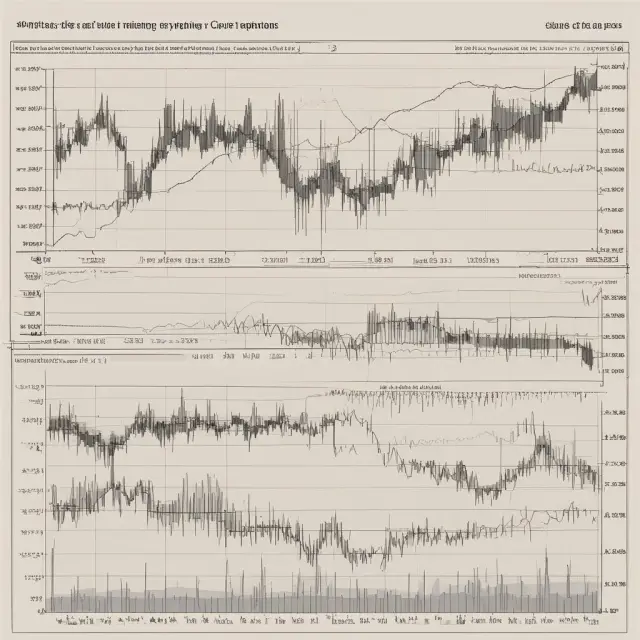
An inverted yield curve is an essential economic indicator that has historically been associated with recessions. The yield curve represents the yields of similar bonds across various maturities, providing insight into the market’s expectations regarding interest rates and the economy. An unusual occurrence, an inverted yield curve takes place when long-term interest rates are lower than short-term rates. Market participants and economists commonly use spreads between two maturities as a simplified method of analyzing yield curves. Two popular spreads include the 10-year U.S. Treasury bond versus the three-month Treasury bill and the 10-year and two-year bonds.
The 10-Year vs. Three-Month Spread: Historically, academic studies have examined the relationship between an inverted yield curve and recessions using the spread between the 10-year U.S. Treasury bond and the three-month Treasury bill. However, market participants tend to focus more on the yield spread between the 10-year and two-year bonds due to its relative consistency as a recession indicator.
The 10-Year vs. Two-Year Spread: This spread has proven reliable since providing a false positive in the mid-1960s, despite some skepticism from economic officials throughout history. For example, during the Russian debt default in 1998, an inverted yield curve did not result in a U.S. recession due to quick interest rate cuts by the Federal Reserve. However, in 2006, the spread inverted for much of the year, and long-term Treasury bonds outperformed stocks during 2007. The Great Recession began in December 2007, when the 10-year/two-year spread was negative.
Current Market Conditions: At the end of 2022, amid soaring inflation, an inverted yield curve reemerged. As of December 2, 2022, the Treasury yields were as follows: Three-month Treasury yield – 4.22%, Two-year Treasury yield – 4.28%, 10-year Treasury yield – 3.51%, and 30-year Treasury yield – 3.56%. The 10-year U.S. Treasury rate was 0.77 percentage points below the two-year yield, marking an unusually large negative gap and the widest since late 1981.
Interpreting this yield curve inversion is essential for investors and market observers seeking insights into potential economic downturns. Some see it as a sign of impending recession, while others argue it suggests investor confidence that inflation has been brought under control and normalcy will resume. Understanding the nuances of interpreting yield curves and various spreads is crucial to making informed investment decisions and staying ahead of market trends.
FAQ: Commonly Asked Questions About Inverted Yield Curves
What is a yield curve? A yield curve is a line graphically representing yields (interest rates) on bonds of the same credit quality but differing maturities.
What can an inverted yield curve tell an investor? Historically, prolonged inversions of the yield curve have preceded recessions. An inverted yield curve reflects investors’ expectations for a decline in longer-term interest rates due to deteriorating economic performance.
Why is the 10-year to two-year spread essential? Many investors use this spread as a simple, reliable leading indicator of an impending recession. Federal Reserve officials also find it useful when examining the likelihood of an economic downturn.
What other spreads are commonly used for yield curve analysis? Apart from the 10-year/two-year spread, some investors look at the spread between the 10-year and three-month Treasury bonds as a recession indicator. However, this spread is less reliable than the 10-year/two-year spread due to its inconsistency in predicting recessions.
Does an inverted yield curve always signal a forthcoming recession? No, while an inverted yield curve has historically been a leading indicator of a recession, it does not always guarantee one. False positives do occur, as demonstrated by the Russian debt default in 1998 and the Great Recession in 2007.
In conclusion, understanding the intricacies of interpreting yield curves and various spreads is crucial for investors seeking insights into potential economic downturns. Staying informed about market conditions and trends will help you make well-informed investment decisions and stay ahead of the curve.

The Role of the Federal Reserve in the Yield Curve
Understanding the relationship between the Federal Reserve (Fed), interest rates, and the yield curve is crucial for investors seeking to navigate market conditions and decipher economic signals. The Fed plays a significant role in shaping the term structure of interest rates through its monetary policy decisions.
The yield curve reflects yields on similar bonds across various maturities. When the Federal Reserve adjusts short-term interest rates, it inevitably affects longer-term interest rates and the shape of the yield curve. An inverted yield curve, which occurs when long-term interest rates drop below short-term rates, is an unusual occurrence that typically signals a pessimistic outlook on the economic prospects for the near future.
However, it’s important to note that the relationship between the Fed, interest rates, and the yield curve isn’t always straightforward. The Fed uses its monetary policy tools, such as setting the federal funds rate, to influence short-term interest rates. These actions can indirectly affect long-term interest rates through expectations and market sentiment.
Federal Reserve Chair Jerome Powell has highlighted the importance of focusing on yield curve spreads to gauge recession risks instead of solely relying on the shape of the curve itself. He prefers analyzing the difference between current short-term Treasury bill rates and derivatives predicting the same rate 18 months later.
Historically, academic studies have examined the relationship between an inverted yield curve and recessions by looking at the spread between the 10-year U.S. Treasury bond and the three-month Treasury bill. However, market participants have more often focused on the yield spread between the 10-year and two-year bonds.
In 2006, the 10-year/two-year spread inverted for much of the year. Despite this, long-term Treasury bonds outperformed stocks during 2007, and the Great Recession did not begin until December 2007. The Fed’s response to the inversion played a role in preventing a more significant economic downturn at that time.
In August 2019, the 10-year/two-year spread briefly went negative, which some economists viewed as an indicator of a potential recession. However, the U.S. economy only experienced a two-month recession in February and March 2020 due to the COVID-19 pandemic. The bond market couldn’t have accounted for this unforeseen event six months prior to its occurrence.
With an inverted yield curve at the end of 2022, some investors are left wondering about the potential implications for the U.S. economy. As of December 2, 2022, Treasury yields were as follows: Three-month Treasury yield: 4.22% Two-year Treasury yield: 4.28% 10-year Treasury yield: 3.51% 30-year Treasury yield: 3.56%. The large negative gap between the 10-year U.S. Treasury rate and the two-year yield (0.77 percentage points) is the widest since late 1981 when the economy was in a deep recession.
Investors and economists are debating whether today’s inverted yield curve signals an impending recession or simply reflects investors’ confidence that inflation has been brought under control and normalcy will return. Ultimately, only time will reveal the true implications of this unusual market condition.
In conclusion, the Federal Reserve plays a vital role in shaping the term structure of interest rates through its monetary policy decisions. The relationship between the yield curve, Fed, and interest rates is complex, with inverted yields often signaling economic downturns but not always causing them. By understanding this dynamic, investors can better navigate the financial markets and make informed investment decisions.
False Positives and Limitations: Inverted Yield Curves Not Always Predictive
An inverted yield curve, a phenomenon where long-term interest rates are lower than short-term rates, is an intriguing yet complex economic indicator. It has gained significant attention for its association with recessions. However, it’s essential to understand that this relationship isn’t absolute, as false positives and limitations exist.
An inverted yield curve indicates that bond investors are moving funds from short-term securities into longer-term ones due to pessimistic expectations about the economic outlook. Since the 1960s, an inverted yield curve has been a relatively reliable indicator of a recession. Yet, as history shows us, it is not infallible.
Firstly, it’s essential to recognize that there have been instances where an inverted yield curve did not lead to a recession. A significant example occurred during the 1998 Russian debt default when the 10-year Treasury yield briefly dropped below the two-year yield. Despite this inversion, quick interest rate cuts by the Federal Reserve helped prevent a US recession.
Another example is the 2006 period when the 10-year/two-year spread was inverted for almost the entire year. Long-term Treasury bonds went on to outperform stocks during 2007, and the Great Recession didn’t begin until December 2007.
Moreover, some experts argue that investors’ expectations about future economic conditions are already priced into bond yields when the yield curve inverts. This might suggest that an inverted yield curve could signal a change in market sentiment rather than an imminent recession.
Understanding this ambiguity is crucial as it highlights the limitations of using an inverted yield curve as the sole indicator for predicting a recession. While it may provide valuable insight, it should be viewed in conjunction with other economic data and indicators to form a more comprehensive view of the economy’s health.
The 10-year/2-year spread is often used by market participants due to its historical reliability as a leading indicator for recessions since the mid-1960s, providing a false positive only in that period. However, it is essential to note that other spreads, such as the 3-month Treasury bill versus the 10-year yield, may also be considered when interpreting the yield curve’s implications for economic conditions and potential recessions.
The Federal Reserve Chair, Jerome Powell, has emphasized the importance of focusing on the difference between the current three-month Treasury bill rate and the market pricing of derivatives predicting the same rate 18 months later. This approach can offer valuable insights into the economic outlook and potential recession risks.
In conclusion, while an inverted yield curve has proven to be a reliable indicator of a recession, it is important to remember that false positives and limitations exist. These instances highlight the importance of considering an inverted yield curve as part of a broader economic analysis rather than relying on it alone for predicting recessions.
Understanding these nuances will help you navigate the complex world of yield curves with a more informed perspective. By combining various indicators and data points, you can form a more comprehensive view of the economy’s health and potential risks.

Recent Inversions and Economic Conditions
Since 1950, every yield curve inversion has been a harbinger for an economic downturn. However, it is essential to recognize that the inversion itself does not cause the recession. Instead, it serves as a warning sign of deteriorating economic conditions that could potentially lead to rate cuts from the Federal Reserve. In this section, we will examine some recent instances of yield curve inversions and discuss their implications for both the economy and financial markets.
In August 2019, the spread between the 10-year and two-year Treasury yields briefly went negative. At the time, market participants were concerned about the U.S. economy’s vulnerability to an impending global economic slowdown. This brief inversion did not result in a recession as the U.S. economy experienced only a two-month contraction due to the COVID-19 pandemic in February and March 2020.
Following the outbreak of the pandemic, the Federal Reserve responded by cutting interest rates to near zero and embarked on an aggressive bond-buying campaign to stabilize financial markets. The resulting surge in liquidity helped prevent a severe contraction in economic activity. However, the yield curve remained flat until December 2022, when it inverted once again due to surging inflation and rising market expectations of rate hikes.
As of December 2022, the three-month Treasury yield was 4.22%, while the two-year yield stood at 4.28%. The 10-year Treasury yield was a full percentage point lower at 3.51%. This unusually large negative gap between long and short-term yields raises concerns about the economic outlook, particularly regarding the potential for higher inflation and interest rates.
Moreover, some observers argue that the inverted yield curve could be signaling a period of lower interest rates and improved market conditions following the Fed’s efforts to bring down inflation. Alternatively, others believe that the negative gap might indicate investors are becoming increasingly confident that the current bout of high inflation is transitory and that long-term yields will decline as the economy stabilizes.
Regardless of the interpretation, it is clear that an inverted yield curve warrants close attention from both investors and policymakers. It serves as a crucial signal that economic conditions are deteriorating, potentially leading to changes in monetary policy and broader market movements. In the following sections, we will explore how different spreads can be used to interpret the yield curve and evaluate the potential implications for various asset classes.

FAQ: Commonly Asked Questions About Inverted Yield Curves
An inverted yield curve is a significant event in the financial world that occurs when long-term interest rates are lower than short-term rates. This situation challenges traditional investment wisdom, as it implies that investors prefer to lock in their money for longer periods at lower yields rather than shorter ones. Here, we address some frequently asked questions regarding this economic phenomenon and its implications.
What is the historical significance of an inverted yield curve?
Historically, an inverted yield curve has been a reliable indicator of an impending recession. It occurs when investors lose faith in the economy’s future prospects and shift their funds from short-term to long-term investments, pushing down long-term yields. However, it is essential to note that the inverse relationship between short- and long-term rates does not always lead to a recession.
What spreads are commonly used to interpret yield curves?
Analysts often employ various spreads to extract meaningful insights from yield curve data. Some of the most popular ones include the 10-year/3-month, 10-year/2-year, and 5-year/2-year spreads. Each spread offers a unique perspective on the shape and behavior of the yield curve.
How does an inverted yield curve influence the Federal Reserve?
The Fed closely monitors the yield curve to gauge economic conditions and adjust its monetary policy accordingly. An inverted yield curve can prompt the central bank to cut interest rates to stimulate growth and prevent a possible recession. Conversely, if the Fed perceives that an inversion is a false positive or temporary phenomenon, it might choose to maintain its current monetary stance.
How often does an inverted yield curve occur?
An inverted yield curve is not a frequent occurrence, making it a subject of considerable interest among economists and investors. However, the rarity of this situation adds uncertainty regarding its predictive power and the underlying economic conditions that cause it.
What other factors can influence the shape of the yield curve besides interest rates?
Several factors beyond interest rate differentials can shape the yield curve, such as changes in investor risk appetite, inflation expectations, and liquidity conditions. Analyzing the yield curve’s components is crucial for understanding its implications and potential economic signals.
What is a normal or “positive” yield curve?
A normal or positive yield curve depicts an upward slope, where long-term interest rates are higher than short-term ones. This situation generally reflects investor optimism about future economic growth and their willingness to accept lower current returns for potentially higher future yields.
Can the Federal Reserve control the shape of the yield curve?
The Fed can influence the shape of the yield curve through its monetary policy actions, such as setting interest rates and conducting open market operations. However, it is essential to recognize that the yield curve’s ultimate shape depends on a complex interplay of economic factors that extend beyond the central bank’s control.
What does an inverted yield curve mean for investors?
An inverted yield curve can offer valuable insights for investors by revealing shifts in market expectations and providing early warnings about potential economic downturns. However, it is crucial to remember that historical precedents are not always reliable indicators of future outcomes and that other factors besides the shape of the yield curve should be considered when making investment decisions.
By addressing these frequently asked questions, we hope to shed light on the complex world of yield curves and equip readers with a solid foundation for understanding this vital economic indicator.

Conclusion: Navigating the Complex World of Yield Curves
As we have explored throughout this article, the yield curve is a crucial concept in finance and economics that can offer valuable insights into the health and direction of the economy. The inverted yield curve – where long-term interest rates are less than short-term rates – has proven to be a reliable indicator of recessions but comes with limitations and false positives.
An inverted yield curve, such as the one that occurred at the end of 2022 when the 10-year U.S. Treasury rate was below the two-year yield, may suggest that investors are becoming more pessimistic about economic prospects for the near future. However, it’s important to note that an inverted yield curve doesn’t cause a recession, but rather reflects investors’ expectations that longer-term yields will decline as typically happens during economic downturns.
To effectively interpret yield curves, market participants and economists often use various spreads, such as the 10-year to two-year Treasury spread or the three-month bill to 10-year U.S. Treasury spread. These spreads provide a simplified way of analyzing the yield curve, but there is no clear agreement on which one serves as the most reliable recession indicator.
It’s also important to remember that historical examples like the inversions in 1998 and 2006 did not result in immediate recessions. In fact, the stock market outperformed long-term Treasury bonds following the 2006 yield curve inversion. This highlights the complexity of interpreting yield curves and the need for a nuanced understanding of their implications.
Furthermore, the Federal Reserve’s role in interest rate setting plays an essential part in shaping the yield curve and affecting recession risks. Chair Jerome Powell, for instance, prefers to gauge recession risk by focusing on the difference between the current three-month Treasury bill rate and the market pricing of derivatives predicting the same rate 18 months later.
In conclusion, understanding the concept of yield curves and interpreting their inversions requires a thorough examination of various spreads, historical trends, and economic factors. As investors and market participants navigate this complex world, staying informed about these indicators can provide valuable insights into the economy and help guide investment decisions.
 Next entry · No. 2,493Understanding the Investment Advisers Act of 1940: Fiduciary Duty, Registration, and Key Criteria
See also
-
 No. 2,924
14 Feb 2025
22 min
Understanding Liquidity Traps: An Economic Conundrum
Business Finance
No. 2,924
14 Feb 2025
22 min
Understanding Liquidity Traps: An Economic Conundrum
Business Finance -
 No. 2,433
05 Jan 2025
19 min
Understanding the Interbank Rate: The Key to Short-Term Interest Rates and Currency Exchange
Business Finance
No. 2,433
05 Jan 2025
19 min
Understanding the Interbank Rate: The Key to Short-Term Interest Rates and Currency Exchange
Business Finance -
 No. 1,562
04 Oct 2024
18 min
Understanding the Flat Yield Curve: A Significant Indicator for Institutional Investors
Business Finance
No. 1,562
04 Oct 2024
18 min
Understanding the Flat Yield Curve: A Significant Indicator for Institutional Investors
Business Finance -
 No. 2,044
05 Dec 2024
19 min
Understanding Inflation Hawks: Monetary Policy and Economic Perspectives
Finance Policy
No. 2,044
05 Dec 2024
19 min
Understanding Inflation Hawks: Monetary Policy and Economic Perspectives
Finance Policy -
 No. 5,860
13 Oct 2025
22 min
Yield-Based Options: Understanding the Unique Investment Instrument for Profiting and Hedging in a Rising Interest Rate Environment
Business Finance
No. 5,860
13 Oct 2025
22 min
Yield-Based Options: Understanding the Unique Investment Instrument for Profiting and Hedging in a Rising Interest Rate Environment
Business Finance -
 No. 5,642
26 Sep 2025
20 min
Understanding the Weak Dollar: Consequences, Monetary Policy, and Trade
Business Finance
No. 5,642
26 Sep 2025
20 min
Understanding the Weak Dollar: Consequences, Monetary Policy, and Trade
Business Finance