Understanding the Kijun Line (Base Line) – A Key Component of the Ichimoku Indicator

The Kijun line, or Kijun-sen (base line), is the Ichimoku Cloud line equal to the midpoint of the highest high and lowest low over the last 26 periods. It moves more slowly than the 9-period conversion line, and price crossing above it is read as bullish, below it as bearish.
Introduction to the Kijun Line
The Kijun Line, also known as the Base Line or Kijun-sen, is an essential component of the renowned Ichimoku Cloud indicator, which is widely used by traders for defining support and resistance levels, measuring momentum, and generating buy and sell signals. Introduced in the 1930s by Japanese journalist Goichi Hosoda, the Ichimoku Cloud indicator gained significant traction due to its comprehensive approach, including various lines that work together to provide insightful information about market trends. Among these components, the Kijun Line holds a unique role as the midpoint of price action over a specific period.
Definition and Significance
To begin with, it’s crucial to understand what the Kijun Line is and how it contributes to the overall functionality of the Ichimoku Cloud indicator. The line represents the middle point between the highest and lowest prices in a 26-period window. Its significance lies in its ability to show recent price momentum and the potential for trend reversals when it interacts with other components of the Ichimoku indicator, such as the Tenkan Line.
Calculation of the Kijun Line
Calculating the Kijun Line involves determining the highest and lowest prices within a 26-period window, then finding the midpoint by averaging these values. The formula for calculating the Kijun Line is:
Kijun line (Base Line) = [ (maximum price over last 26 periods) + (minimum price over last 26 periods) ] / 2
Here’s how it works in practice: find the highest high within a 26-period window and the lowest low, then add them together and divide by two. Update this calculation after each period ends to keep the Kijun Line current.
Interpretation of the Kijun Line
The interpretation of the Kijun Line is multifaceted, as it plays a role in generating trading signals when it interacts with other components of the Ichimoku Cloud indicator, such as the Tenkan Line, and providing insights about price momentum. When the price is above the Kijun Line, recent price momentum is generally upwards; conversely, when the price is below the line, recent momentum has been downwards.
Additionally, the Kijun Line is often used in conjunction with the Tenkan Line (the 9-period Conversion Line) to generate buy and sell signals. When the Tenkan Line crosses above the Kijun Line, it can be interpreted as a potential buy signal; conversely, when it crosses below the line, it may indicate a sell opportunity.
It’s essential to note that these trading signals should be evaluated within the context of the other components of the Ichimoku indicator and overall market conditions, rather than being taken in isolation. For instance, a trader might only consider buy signals if the price is also above the “cloud,” or Leading Span A.
Comparing the Kijun Line to Other Moving Averages
It’s important to distinguish the Kijun Line from other moving averages (MAs), which are calculated differently. While a moving average sums up closing prices over a set number of periods and divides by that same number, the Kijun Line is calculated as the midpoint between the highest high and lowest low within a specific period. Due to these differences in calculation methods, a 26-period Kijun Line and a 26-period MA will often produce different values.
Limitations of Using the Kijun Line
Though the Kijun Line can provide valuable insights into market trends and price momentum, it’s important to be aware of its limitations. In the absence of a clear trend or when prices are moving in a choppy fashion, the Kijun Line might not provide accurate signals or trend direction. Moreover, since the line is reactionary—it shows what price has done in the past rather than predicting future price action—it lacks inherent predictive qualities.
Advanced Uses of the Kijun Line
Despite its limitations, the Kijun Line can be an effective tool when used alongside other technical indicators and price action analysis techniques to enhance trend identification. For example, a trader might use the line as part of a multi-faceted approach that includes moving averages, Fibonacci retracement levels, or candlestick patterns to improve the overall accuracy and reliability of their trading signals.
In Conclusion
The Kijun Line is a vital component of the Ichimoku Cloud indicator, which offers traders valuable insights into market trends, momentum, and potential buy and sell opportunities. Its unique calculation method and role in generating trading signals make it an indispensable part of this comprehensive technical analysis tool. By understanding the intricacies of the Kijun Line and its relationship to other Ichimoku Cloud components, you’ll be better equipped to navigate the complexities of financial markets with confidence.

Calculating the Kijun Line
The Kijun Line, also known as the Base Line or Kijun-sen, is a pivotal component of the widely adopted Ichimoku Cloud indicator. This line, which functions as the midpoint between the highest and lowest prices over the last 26 periods, plays an essential role in generating trade signals in conjunction with the Tenkan Line (Conversion Line).
To calculate the Kijun Line
- Find the highest price within the previous 26 periods.
- Determine the lowest price during the same time frame.
- Add both values and divide the sum by two to obtain the Kijun Line value for that period.
- Update this calculation following each new period’s conclusion.
The formula for calculating the Kijun Line (Base Line) is:
Kijun line = [(highest price over 26 periods)+(lowest price over 26 periods)] / 2
The Kijun Line signifies significant changes in price momentum. When the price is above this line, it suggests upward momentum; conversely, when below the line, downward momentum prevails. In the context of the Ichimoku Cloud indicator, the Kijun Line and Tenkan Line (a 9-period moving average) work together to generate buy and sell signals.
When the Tenkan Line crosses above the Kijun Line, it signifies a potential buy signal, as the short-term momentum indicates an upward shift. Conversely, when the Tenkan Line crosses below the Kijun Line, a sell signal may arise as short-term momentum shifts to the downside. The significance of these signals can be further enhanced by considering the relationship between the price and other components of the Ichimoku Cloud indicator, such as Leading Span A and B (Senkou Span A and Senkou Span B), as well as overall market conditions.
The Kijun Line plays a crucial role in identifying trends and analyzing momentum within the context of the Ichimoku Cloud indicator. By understanding how this line functions, traders can make more informed decisions when implementing technical strategies and navigating financial markets.
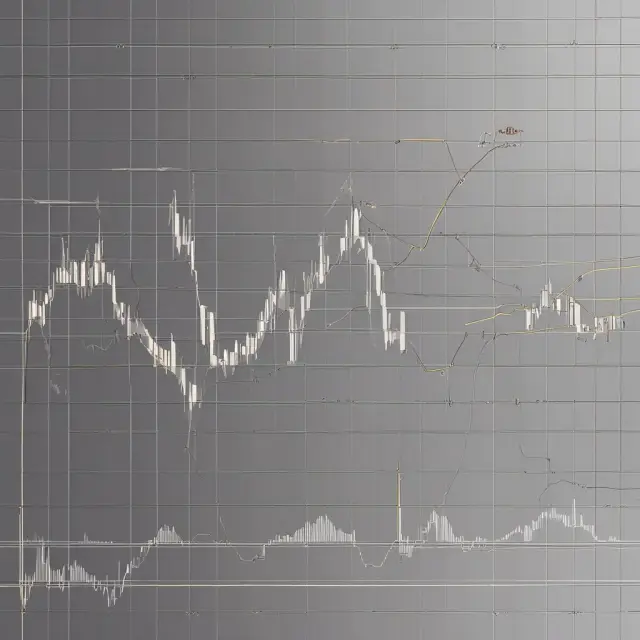
Interpretation of the Kijun Line
The Kijun Line, also known as Base Line or Kijun-sen, plays a crucial role in determining potential trade signals when used in conjunction with the Tenkan Line (Conversion Line), another component of the Ichimoku Cloud indicator. These signals are further strengthened by analyzing the relationship between the Kijun Line and the price trend, as well as comparing it to other moving averages.
Trade Signals through Crossing with the Tenkan Line
When the Kijun Line is crossed by the Tenkan Line, a significant shift in the short-term momentum can be identified. This crossing generates buy or sell signals depending on which line crosses above the other. When the Tenkan Line crosses above the Kijun Line, it implies an upward price momentum and may be considered as a potential buy signal. Conversely, a downward price momentum is indicated when the Tenkan Line crosses below the Kijun Line, generating a potential sell signal (Figure 1).
Momentum Analysis
The Kijun Line also provides insights into the price momentum by comparing it to the current price level. When the price is above the Kijun Line, recent price momentum is upwards. In contrast, when the price is below the Kijun Line, downward momentum is evident (Figure 2). By analyzing this relationship, traders can better understand the overall trend direction and potential buy or sell opportunities.
Distinction from Other Moving Averages
Unlike other moving averages, such as a simple moving average (SMA) or exponential moving average (EMA), the Kijun Line is a mid-point line based on both the highest and lowest prices over the last 26 periods. It is calculated by finding the maximum and minimum price in the previous 26 periods and averaging their values. The primary difference between this method and that of moving averages is that the Kijun Line does not simply average the closing prices (Figure 3).
Limitations:
It is important to note that the Kijun Line has its limitations, especially when applied in markets with weak or choppy price trends. In such cases, the lines may frequently cross one another, making it difficult for traders to make reliable decisions based on these signals alone. Additionally, the lack of a predictive component inherent in the indicator’s calculation is crucial to consider before relying solely on its signals (Figure 4).
Advanced Uses
For experienced traders, combining the Kijun Line with other technical indicators and price action analysis can lead to enhanced trend identification and more accurate trade decisions. For instance, using multiple timeframes in conjunction with the Ichimoku Cloud indicator provides a more complete understanding of the underlying trends and potential trading opportunities. Furthermore, the interplay between the Kijun Line and Tenkan Line signals can be combined with Fibonacci retracement levels or other technical indicators to create stronger buy and sell strategies.
Conclusion:
Understanding the Kijun Line’s role within the context of the Ichimoku Cloud indicator is crucial for both new and experienced traders looking to identify potential buy and sell opportunities in financial markets. By recognizing how this line interacts with the Tenkan Line, analyzing momentum through comparison to the current price level, and acknowledging its limitations, traders can effectively utilize the Kijun Line as part of a well-rounded trading strategy.

Comparison to a Moving Average
The Kijun Line (Base Line) is an essential component of the Ichimoku Cloud indicator, which also includes other lines like Tenkan-sen (Conversion Line), Senkou Span A, Senkou Span B, and Chikou Span. While all these components provide valuable insights into market trends, it is worth exploring how the Kijun Line differs from a simple moving average (SMA).
Calculation of the Kijun Line involves determining the midpoint between the highest and lowest price over the previous 26 periods. The calculation method is fundamentally distinct from a moving average. A moving average, as its name suggests, calculates the sum of closing prices within a predefined number of periods and then divides that by the period count to generate an average price level (TradingView).
The Kijun Line’s primary role in the Ichimoku Cloud indicator is to provide support and resistance levels, measure momentum, and generate trade signals alongside other components like Tenkan-sen. It acts as a base or anchor that sets the foundation for these other indicators to function effectively. As a result, understanding its relationship with moving averages can help traders better appreciate the Kijun Line’s unique role within the Ichimoku Cloud framework.
When assessing trends using the Kijun Line and comparing it to a simple moving average, one must remember their respective approaches: The Kijun Line indicates past price behavior through its position relative to recent highs and lows, while a moving average represents an average of historical prices.
It is essential to acknowledge that neither the Kijun Line nor a moving average can predict market trends but can only provide context for ongoing trends or potential changes. Traders should use these indicators as tools to confirm market trends and assess entry and exit points, rather than relying on them as definitive signals.
In summary, the Kijun Line is a unique component of the Ichimoku Cloud indicator that sets the foundation for generating trade signals alongside other components like Tenkan-sen. While it shares similarities with moving averages in terms of trend analysis, its calculation method and approach to price representation are fundamentally different. Both indicators should be used together with caution and proper context to maximize their potential benefits.

Limitations of Using the Kijun Line
While the Kijun Line provides valuable insights into recent price momentum and generates trade signals when crossed with the Tenkan Line, it does come with some limitations. One significant constraint lies in its ability to assess trend direction accurately when the price lacks a clear trend. In such situations, both the Kijun Line and the Tenkan Line may be found near or intersecting with the price rather than providing reliable signals or indicating a consistent trend direction.
Moreover, it’s essential to note that the Kijun Line is not a predictive indicator. It only represents the midpoint of the high and low prices over a specific period. Therefore, relying on the Kijun Line alone for trend analysis may leave traders exposed to potential losses if the price moves contrary to their expectations. To overcome these limitations, it’s crucial to consider using the Kijun Line in conjunction with other technical indicators and price action analysis techniques for a more comprehensive understanding of market conditions.
For instance, combining the Kijun Line with trend lines or support/resistance levels can help improve trend identification and provide stronger confirmation signals when the price interacts with these key levels. By using multiple sources of information, traders can enhance their overall analysis and reduce potential errors that may come from relying too heavily on any single indicator.
When assessing a financial instrument’s chart, it’s essential to consider the broader context and market conditions as well. The Kijun Line should not be the sole determinant of entry or exit points in a trade. Instead, it should be integrated with other tools and methods to increase confidence in potential trades and minimize risks. By combining technical indicators with fundamental analysis and market sentiment, traders can develop a more robust trading strategy that accounts for various market conditions and minimizes reliance on any single indicator’s limitations.

Advanced Uses of the Kijun Line
The Kijun Line is a versatile component of the Ichimoku Cloud indicator system. Its significance extends beyond generating buy and sell signals through crossovers with the Tenkan Line. In this section, we will explore how traders can further utilize the Kijun Line to enhance trend identification and make informed trading decisions.
Combining the Kijun Line with other Technical Indicators and Price Action Analysis
To gain a more comprehensive understanding of the market conditions, some traders combine the Kijun Line with various technical indicators such as Bollinger Bands, MACD (Moving Average Convergence Divergence), or RSI (Relative Strength Index). By analyzing the relationship between these indicators and the Kijun Line, traders can increase the accuracy of their buy and sell signals.
For instance, a trader might consider entering a long position once the price breaks through the resistance level of the Bollinger Bands while the Tenkan Line is also above the Kijun Line. Conversely, they may enter a short position when the price breaks below both the support level of the Bollinger Bands and the Kijun Line, with the Tenkan Line below it.
Price action analysis can also be employed to supplement the information provided by the Kijun Line. For example, a trader might look for confirmations of trend reversals through the appearance of specific price patterns such as hammer or inverted hammer candlesticks when the price is testing the Kijun Line.
Enhancing Trend Identification with Multiple Timeframes
Another advanced use of the Kijun Line involves analyzing it across multiple timeframes to better identify and confirm trends. For instance, a trader might first analyze the daily chart to determine if the price is consistently trading above or below the Kijun Line. If an uptrend is observed in the daily timeframe, the trader may then switch to the hourly chart to assess potential buying opportunities by looking for bullish divergence between the price and the RSI indicator while the Tenkan Line remains above the Kijun Line.
Additionally, traders might consider using different period lengths for their Kijun Lines on various timeframes to better align with their trading strategy or the underlying asset’s characteristics. For example, a stock trader might use a shorter 12-period Kijun Line instead of the standard 26-period line in their intraday charts.
In conclusion, the Kijun Line is more than just an indicator that generates buy and sell signals through its interaction with the Tenkan Line. Its advanced uses include combining it with other technical indicators and price action analysis to enhance trend identification and make informed trading decisions across multiple timeframes. By expanding your knowledge of this component of the Ichimoku Cloud indicator system, you will be better equipped to navigate financial markets with confidence.

Kijun Line vs. Tenkan Line: Understanding the Relationship
The Kijun Line (Base Line) and Tenkan Line (Conversion Line) are two essential components of the Ichimoku Cloud indicator. Both lines serve unique purposes in defining trends, generating trade signals and analyzing momentum. Despite their importance, it is crucial to understand how they relate and differ from each other.
The Kijun Line is calculated as the midpoint between the highest high and lowest low over the previous 26 periods. This line represents the ‘baseline’ that separates the upper and lower trends in the market (hence its name, Kijun meaning “equilibrium” or “base”). On the other hand, the Tenkan Line is a nine-period moving average, which means it adjusts more quickly to price movements than the Kijun Line.
When the Tenkan Line crosses above the Kijun Line, it signals that recent short-term momentum has shifted upwards, potentially generating a buy signal. Conversely, when the Tenkan Line crosses below the Kijun Line, it shows momentum has turned downward and could indicate a sell signal. Traders typically consider these crossover points in conjunction with other elements of the Ichimoku Cloud indicator to make informed decisions. For instance, they might only enter trades when the price is above the cloud or leading span A.
The relationship between the Kijun Line and Tenkan Line goes beyond just generating trade signals. The distance between these lines can also indicate momentum strengths: a large gap may suggest strong upward momentum, while a small gap implies weaker momentum. Furthermore, the direction of the gap could provide insights into potential trend reversals.
The importance of understanding their relationship lies in how they work together to provide valuable information for traders. The Kijun Line is more stable and slow-moving compared to the Tenkan Line, offering a broader context for analyzing trends. In contrast, the Tenkan Line reacts quickly to price movements and can help identify potential trend changes or reversals. By examining both lines together, traders can make more informed decisions when navigating volatile markets.
It’s essential to remember that these indicators should not be relied upon as the sole decision-making tool in trading. Traders must always consider other factors such as market news, fundamental analysis, and additional technical indicators for a well-rounded approach. Additionally, understanding the limitations of each indicator is vital, including recognizing their potential false signals during choppy markets or weak trends.

Real-world Trading Example of Kijun Line Signals
The power of understanding Kijun Line signals lies in their ability to generate potential buy and sell opportunities within the broader context of an existing trend. Let’s explore how this works by examining a practical example using the price chart for Apple Inc. (AAPL) stock.
First, note that both the Tenkan Line and Kijun Line are included within the Ichimoku Cloud indicator plotted on our AAPL chart. The Tenkan Line, marked in blue, acts as a quicker-moving trend line based on the 9-period average, while the Kijun Line, displayed in red, represents the midpoint price over the last 26 periods.
As seen from the chart, there have been several occasions where these two lines have crossed each other, providing clear buy and sell signals for potential traders. Let us focus on some significant instances below:
1. Buy Signal – November 2020:
The Tenkan Line crossed above the Kijun Line around mid-November 2020, marking a strong buy signal due to a bullish crossover. This event coincided with a noticeable uptick in AAPL’s price, indicating the positive momentum following this crossover was worth acting upon for long-term investors or short-term traders looking to capitalize on this trend reversal.
2. Sell Signal – March 2021:
Conversely, a sell signal emerged in late March 2021 when the Tenkan Line crossed below the Kijun Line. This bearish crossover indicated that the recent momentum had shifted to a downward trend, potentially prompting traders and investors to sell their positions or short AAPL stock.
It is important to remember that these signals should be used within the context of the broader market conditions and other indicators. In our example above, both signals occurred during significant price movements, making them more reliable trade opportunities. However, if the Tenkan Line and Kijun Line were crossing back and forth frequently without any clear trend, their crossovers might not produce profitable results.
In conclusion, understanding the relationship between the Kijun Line and Tenkan Line and being able to identify buy and sell signals based on these trends can provide valuable insights for both short-term and long-term investors. By remaining informed of the market’s momentum shifts and staying attentive to these crossovers, traders can potentially maximize their returns in various trading scenarios.

History and Development: Originator Goichi Hosoda and the Ichimoku Cloud Indicator
The Kijun Line is a significant component of the renowned Ichimoku Cloud indicator, developed by Goichi Hosoda in 1968. This technical analysis tool is designed to provide traders with insights into support and resistance levels, momentum, and trend direction through its five main lines: Tenkan-sen (Conversion Line), Kijun-sen (Base Line), Senkou Span A, Senkou Span B, and Chikou Span. Among these components, the Kijun Line is particularly important as it forms the foundation for generating trade signals in conjunction with the Tenkan Line.
Goichi Hosoda’s primary objective in creating the Ichimoku Cloud indicator was to design a comprehensive “one look equilibrium chart.” This innovative approach aimed to offer traders an unparalleled understanding of market trends without the need for extensive interpretation or multiple indicators.
The Kijun Line, being one of the primary elements of this powerful tool, serves as the midpoint price for the last 26 periods (calculated as the average of the highest and lowest prices over that time frame). This line’s significance lies in its ability to reveal recent momentum direction. When the price is above the Kijun Line, it signifies an upward trend. Conversely, a price below the Kijun Line indicates downward momentum.
In terms of generating trade signals, the most prominent use of the Kijun Line is when it interacts with the Tenkan Line (nine-period moving average). This pairing forms the basis for identifying bullish and bearish trends. For example, a bullish signal occurs when the Tenkan Line crosses above the Kijun Line, while a bearish signal is triggered by the reverse crossover. These signals can be further refined using the other elements of the Ichimoku Cloud indicator, as well as price action analysis.
The enduring significance of the Kijun Line and the Ichimoku Cloud indicator in modern financial markets stems from their ability to offer traders valuable insights into price momentum, trend direction, and potential buy and sell signals within a single chart. Goichi Hosoda’s innovative creation has stood the test of time and remains an essential resource for technical traders around the world.

Frequently Asked Questions about Kijun Line (Base Line)
The Kijun Line, or Base Line, is one component of the popular Ichimoku Cloud indicator used to analyze financial markets. This section aims to answer common queries and deepen readers’ understanding of this essential technical tool.
**What Is the Kijun Line (Base Line)?** The Kijun Line is a crucial part of the Ichimoku Cloud, functioning as the mid-point between the highest and lowest prices over 26 periods. It provides insight into price momentum and serves as a foundation for generating trade signals when it interacts with other lines in the indicator.
**How Does the Kijun Line Generate Trade Signals?** The Kijun Line interacts with the Tenkan Line, another Ichimoku Cloud component, to create buy and sell signals when they cross. The Tenkan Line is a faster-moving indicator based on the 9-period midpoint price, which can be thought of as the short-term momentum trend. A bullish signal is generated when the Tenkan Line crosses above the Kijun Line, while a bearish signal emerges when it crosses below.
**How to Calculate the Kijun Line?** The formula for calculating the Kijun Line involves finding the highest price over 26 periods and then the lowest price over those same 26 periods. Combine these values, then divide by two to obtain the Kijun Line value. Keep in mind that this calculation should be updated after each period ends.
**What Does the Kijun Line Signal About Market Conditions?** When the price is above the Kijun Line, it indicates an upward price momentum and potentially a bullish trend. On the contrary, if the price is below the Kijun Line, downward momentum and potential bearishness could be present.
**What Is the Difference Between the Kijun Line and a Simple Moving Average?** While the Kijun Line is a moving mid-point calculated as the average of highs and lows over a specific number of periods, a simple moving average (SMA) calculates the arithmetic mean of closing prices for a defined time frame. Consequently, these two indicators will not produce identical values and offer distinct perspectives to traders.
**What Are the Limitations of Using the Kijun Line?** The Kijun Line has its drawbacks: it reacts to past price movements rather than predicting future trends, is less effective when there’s no clear trend direction, and can be less accurate compared to other Ichimoku Cloud components, such as Leading Span A or B.
**Can the Kijun Line Be Used in Combination with Other Indicators?** Absolutely! The Kijun Line can be employed alongside other technical indicators and price action analysis for a more comprehensive trading approach. For instance, combining it with moving averages or momentum oscillators can potentially strengthen your understanding of market trends and generate reliable trade signals.
 Next entry · No. 2,709Understanding the Kijun-Sen (Base Line) Indicator in Technical Analysis
See also
-
No. 2,709
28 Jan 2025
17 min
Understanding the Kijun-Sen (Base Line) Indicator in Technical Analysis
Financial Education
-
 No. 3,896
05 May 2025
21 min
Understanding the Parabolic SAR Indicator: Identifying Trends and Reversals in Finance
Financial Tools
No. 3,896
05 May 2025
21 min
Understanding the Parabolic SAR Indicator: Identifying Trends and Reversals in Finance
Financial Tools -
 No. 2,723
29 Jan 2025
20 min
Understanding and Using the Know Sure Thing (KST) Indicator for Momentum Trading
Financial Tools
No. 2,723
29 Jan 2025
20 min
Understanding and Using the Know Sure Thing (KST) Indicator for Momentum Trading
Financial Tools -
 No. 1,297
26 Aug 2024
19 min
Understanding Envelopes in Technical Analysis: Identifying Trading Opportunities with Moving Average Envelopes
Financial Tools
No. 1,297
26 Aug 2024
19 min
Understanding Envelopes in Technical Analysis: Identifying Trading Opportunities with Moving Average Envelopes
Financial Tools -
 No. 2,978
19 Feb 2025
20 min
Understanding and Trading the Long-Legged Doji in Finance and Investment
Financial Education
No. 2,978
19 Feb 2025
20 min
Understanding and Trading the Long-Legged Doji in Finance and Investment
Financial Education -
 No. 2,899
12 Feb 2025
19 min
Understanding Linearly Weighted Moving Average (LWMA): Definition, Calculation, and Significance
Financial Data Analysis
No. 2,899
12 Feb 2025
19 min
Understanding Linearly Weighted Moving Average (LWMA): Definition, Calculation, and Significance
Financial Data Analysis