Understanding the Kijun-Sen (Base Line) Indicator in Technical Analysis

Gain insights into the Kijun-Sen (Base Line) Indicator - learn its formula, interpretation, benefits, and more.
Introduction to the Kijun-Sen Indicator
The term “Kijun-sen” translates to base line in English. It is a vital component of the Ichimoku Kinko Hyo method, which is commonly known as the Ichimoku cloud technique in technical analysis. The Kijun-sen represents the midpoint price of the last 26 periods and provides insight into short- to medium-term price momentum. By analyzing the trend direction and interpreting the crossovers with other elements of the Ichimoku cloud, traders can use this powerful indicator to make informed decisions.
Understanding the Components of the Kijun-Sen Indicator
The Kijun-sen is the midpoint line calculated by averaging the highs and lows of the preceding 26 periods. The Kijun-sen provides essential information on the midpoint price, which can help traders to evaluate short-term price trends and momentum. It is crucial to remember that the Kijun-sen is just one component of the Ichimoku cloud method; it works synergistically with other indicators such as the Tenkan-sen (conversion line) to generate trade signals and confirm trend direction.
Determining Uptrends vs. Downtrends
The Kijun-sen indicator can be used on its own to assess the short-term price momentum. If the price is trading above the Kijun-sen, it implies that the short-term trend is upwards. Conversely, when the price is below the base line, the short-term trend is considered downward. Furthermore, the angle of the Kijun-sen line can offer additional insights: an upward angle may indicate a strong uptrend, while a downward angle could suggest a bearish downtrend.
The Power of Crossovers between Tenkan-Sen and Kijun-Sen
A bullish crossover occurs when the Tenkan-sen (conversion line), which represents the midpoint price of the last 9 periods, crosses above the Kijun-sen. This bullish signal can be a strong indication that the trend is reversing or strengthening and may lead to potential buying opportunities. Conversely, a bearish crossover happens when the Tenkan-sen crosses below the base line (Kijun-sen). This bearsish signal indicates a potential selling opportunity as the trend is likely turning downwards.
Comparing Kijun-Sen to Simple Moving Averages (SMA)
Although both the Kijun-sen and SMA provide insights into price trends, they differ significantly. The Kijun-sen indicator is not an average; it represents the midpoint price of the preceding 26 periods. A simple moving average, on the other hand, calculates the average price over a fixed number of periods. While both indicators have their unique strengths and weaknesses, understanding the differences between them can help traders to make more informed decisions.
Limitations of the Kijun-Sen Indicator
Though powerful, the Kijun-sen indicator does have its limitations. During periods with low price volatility or a lack of significant price movements, the base line may closely track the current price and provide limited information on trend direction. Additionally, while crossovers between the Kijun-sen and Tenkan-sen can be useful for generating trade signals, these signals are not always reliable, especially during choppy markets. Traders should rely on other tools, such as the Ichimoku cloud components, price action analysis, and fundamental data to make well-informed decisions.
In conclusion, the Kijun-sen is a valuable tool in technical analysis for assessing short-term price trends and momentum. By analyzing this essential component of the Ichimoku cloud method and understanding its relationship with other indicators like the Tenkan-sen, traders can make more informed decisions when entering trades and managing risk.

Defining the Kijun-Sen: The Base Line
The Kijun-sen indicator, often referred to as the base line or midline, is an essential component of the Ichimoku cloud method for technical analysis. It is used in conjunction with other indicators, such as Tenkan-sen (conversion line), to help traders assess trends and generate potential trading opportunities.
The Kijun-sen represents the midpoint price over the last 26 periods, which makes it a valuable tool for tracking short-term to medium-term price momentum. The indicator can be particularly useful for identifying trend reversals or confirming existing trends.
To calculate the Kijun-sen, find the highest and lowest prices within the past 26 periods. Sum these two values and then divide the total by two. This will yield the midpoint price—the value of the base line.
In practice, when the price is above the base line, short-term to medium-term price momentum is considered upwards. Conversely, if the price rests below it, downward price momentum is indicated. The base line’s angle can also provide additional insights: if the Kijun-sen is angled upward, the bullish trend is stronger; a downward angle suggests bearish momentum.
It is important to remember that this calculation can be modified depending on individual preferences. While 26 periods is most commonly used for calculating the base line, shorter or longer periods may be chosen based on the trader’s objectives and risk tolerance.
When interpreting the Kijun-sen, it is crucial to consider its relationship with other components of the Ichimoku cloud method, such as Tenkan-sen (the 9-period conversion line). These two indicators work together to provide traders with valuable insights into trend direction and potential buying/selling opportunities. Bullish crossovers occur when Tenkan-sen crosses above Kijun-sen, while bearish crossovers signal the opposite: Tenkan-sen crossing below Kijun-sen. These crossover signals can be used to enter long or short positions based on market sentiment.
It is important to note that the base line doesn’t provide a complete picture of price momentum; it should be viewed in conjunction with other indicators, such as the Ichimoku cloud, support and resistance levels, and price action analysis.
The Kijun-sen indicator offers significant value for traders by helping them assess short-term to medium-term trends, identify trend reversals, and generate trading opportunities through crossover signals. However, it is essential to recognize its limitations, such as a lack of accuracy during periods of choppy price action or false signals caused by crossovers that don’t result in substantial price movements. To maximize the effectiveness of this indicator, traders should use it alongside other technical and fundamental analysis tools.

Key Takeaways for the Kijun-Sen Indicator
The Kijun-sen, or base line, is an essential component of the Ichimoku Kinko Hyo method in technical analysis, often referred to as the Ichimoku cloud. It represents the midpoint price of the last 26 periods and is used for assessing short- to medium-term price momentum and trends. Here are some crucial points regarding the Kijun-sen indicator:
1. Definition and Significance: The term “Kijun-sen” translates to “base line,” and it represents the midpoint between the 26-period high and low prices. A higher price above the base line signifies a positive trend, while a lower price below the base line points to a negative trend.
2. Midpoint Calculation: The Kijun-sen is derived by summing up the highest and lowest prices from the last 26 periods and dividing that value by two. This calculation serves as the base line for evaluating short-term price momentum.
3. Interpretation of the Kijun-Sen: A rising trend is suggested when the price stays above the base line, while a declining trend is indicated when the price trades below it. The slope’s direction also matters—a steeply angled line signifies a strong trend, whereas a shallow angle suggests a weaker one.
4. Complementing Other Indicators: To obtain a more comprehensive understanding of the market trends, the Kijun-sen is often combined with other Ichimoku indicators like the Tenkan-sen (conversion line) and Senkou span A & B to generate trade signals and validate price movements.
5. Bullish and Bearish Crossovers: When the Tenkan-sen crosses above Kijun-sen, it indicates that price momentum is picking up, potentially leading to a bullish trend. Conversely, a bearish signal can be inferred when the Tenkan-sen moves below the base line.
6. Comparison with SMA: The primary difference between the Kijun-sen and Simple Moving Average (SMA) lies in their calculations—the former is derived from midpoint prices whereas the latter calculates an average price over a specific period. Their respective values may differ, leading to unique insights for traders.
7. Limitations: The Kijun-sen can be less effective if the price remains close to its midpoint or crosses back and forth, making it challenging to identify trends or interpret signals accurately. In such cases, additional analysis using other indicators and chart patterns is advisable.
By understanding these key takeaways, investors and traders can better appreciate the potential benefits and limitations of the Kijun-sen indicator in their technical analysis efforts.

Calculating the Kijun-Sen (Base Line)
The Kijun-sen, meaning “base line” in Japanese, is a crucial component of the Ichimoku Kinko Hyo method in technical analysis. It is calculated as the midpoint between the highest and lowest prices over the previous 26 periods. This indicator provides insight into short-term to medium-term price momentum and helps identify trading opportunities when combined with other components of the Ichimoku cloud.
To calculate the Kijun-sen, first find the highest and lowest prices recorded within the last 26 periods. Sum these two figures together and divide by two to obtain the midpoint value. This will give you the base line for the given time frame.
For example, if in the last 26 periods, the highest closing price was 50 and the lowest closing price was 40, then Kijun-sen would be calculated as (50+40)/2 = $45.
The significance of this indicator lies in its ability to show the midpoint price for the last 26 periods, offering information on short-term momentum and potential trend direction. When the current price is above the base line, it indicates an uptrend or bullish sentiment, while a price below the base line implies a downtrend or bearish market conditions.
However, it’s important to remember that the Kijun-sen should not be considered in isolation. For a more comprehensive analysis, it is recommended to combine this indicator with others within the Ichimoku cloud method, such as Tenkan-sen and Senkou Span A and B.
When the Tenkan-sen line (the 9-period moving average) crosses above the Kijun-sen, a bullish crossover occurs, which can be considered a buy signal for traders. Conversely, when the Tenkan-sen crosses below the Kijun-sen, it is a bearish crossover that may serve as a sell signal.
In conclusion, understanding how to calculate and interpret the Kijun-sen base line provides valuable insights into short-term price momentum and potential trend direction in financial markets. By following this simple calculation process and considering the implications of Kijun-sen crossovers with other Ichimoku indicators, traders can enhance their decision-making capabilities in various investment scenarios.

How the Kijun-Sen Indicator Aids in Assessing Trends
The Kijun-sen, or base line, is a crucial component of the Ichimoku Kinko Hyo method for analyzing financial markets. This powerful technical indicator provides insight into short- to medium-term price momentum and helps determine trend direction. As a midpoint of the last 26 periods’ high and low values, the Kijun-sen reveals valuable information about the prevailing trend and potential trading opportunities.
The Kijun-sen is calculated by finding the average value between the highest and lowest prices during this time frame. This indicator is particularly essential when considered alongside the Tenkan-sen, or conversion line, another key component of the Ichimoku cloud. The Tenkan-sen is a 9-period midpoint price, which tracks price momentum more closely and responds quickly to price changes. When the Tenkan-sen crosses above the Kijun-sen, it can indicate an uptrend or a bullish signal for potential buy opportunities. Conversely, when the Tenkan-sen falls below the Kijun-sen, this could indicate a downtrend or bearish conditions that may call for selling positions.
Moreover, when the price is above the Kijun-sen, it indicates upward momentum and potential bullish trends, while a price below the Kijun-sen suggests downward momentum and potential bearish markets. The angle of the line can also offer valuable insights: an upward angle implies strong buying pressure, whereas a downward angle may indicate selling pressure.
However, traders should keep in mind that the Kijun-sen is just one piece of the Ichimoku puzzle. To get the full picture, it’s essential to consider the other indicators and trend lines present within the Ichimoku cloud, as well as other forms of analysis such as price action and fundamental analysis. This holistic approach will help provide a more comprehensive understanding of market conditions and aid in making informed trading decisions.
By employing the Kijun-sen indicator to assess trends and identify potential buying or selling opportunities, traders can better position themselves within the ever-changing financial markets. This powerful tool, when used effectively alongside other indicators and techniques, can enhance overall portfolio performance.

Understanding the Tenkan-Sen (Conversion Line)
The Tenkan-sen (conversion line), another vital component of the Ichimoku cloud method, is a trend-following indicator that complements the Kijun-sen (base line). While the base line represents the midpoint price over a 26-period window, the conversion line embodies the 9-period midpoint. By combining these two indicators, traders can decipher short-term price momentum and trends more effectively.
The calculation of Tenkan-sen is similar to that of Kijun-sen, as it represents the midpoint price over a specific period. However, instead of being based on 26 periods, it relies on data from only the previous nine periods. The conversion line’s agility and responsiveness enable it to react swiftly to short-term price movements and trends.
When analyzing the relationship between Kijun-sen and Tenkan-sen, traders can identify bullish (buy) signals when the latter crosses above the former and bearish (sell) signals when it dips below. This crossover system provides valuable insight into the underlying price trends and serves as an essential tool for initiating trades based on those trends.
The bullish crossover, also known as a “golden cross,” occurs when the 9-day moving average (Tenkan-sen) rises above the 50-day moving average (Kijun-sen). This event signifies that the short-term trend has turned bullish, and some traders might use it as an opportunity to enter long positions.
The bearish crossover, on the other hand, arises when Tenkan-sen crosses beneath Kijun-sen. In such cases, the short-term trend is considered downward, potentially signaling a selling opportunity for some traders.
It is essential to note that the interpretation of these crossovers should be performed within the context of the overall Ichimoku cloud indicators’ analysis. The trend direction and strength can vary based on other components of the Ichimoku system like the support and resistance levels, the Tanken-sen (senkou span A) and Senkou Span B (the upper and lower clouds).
While the Tenkan-sen is an invaluable tool for determining short-term price trends, it also has limitations. For instance, its sensitivity to short-term price fluctuations may result in generating a high number of false signals during periods of choppy price movements. As such, traders should be cautious and employ other analysis methods, like support and resistance levels or Fibonacci retracement, to confirm potential trade opportunities.
In summary, the Tenkan-sen (conversion line) is a vital component of the Ichimoku cloud method that complements the base line (Kijun-sen) in assessing short-term price momentum trends and identifying trading opportunities through bullish and bearish crossovers with Kijun-sen. Its responsiveness allows traders to react more quickly to price movements, but it requires careful interpretation and analysis alongside other technical indicators for optimal trading decisions.
Crossover Signals with Kijun-Sen and Tenkan-Sen
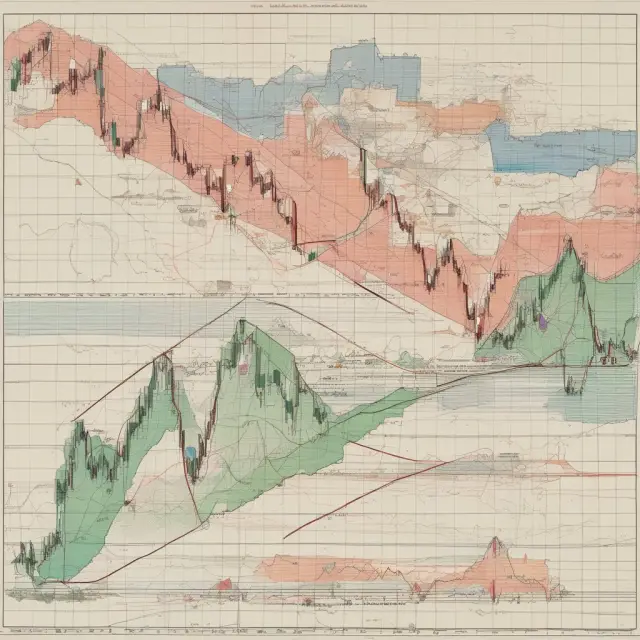
The Kijun-sen line is an integral component of the Ichimoku cloud method, serving as a significant indicator of short- to medium-term price momentum. While the base line can be used on its own for identifying trends, it’s most commonly employed in conjunction with another important Ichimoku indicator—the Tenkan-sen (conversion line). By analyzing their crossover points and subsequent bullish and bearish signals, traders can potentially capitalize on various market conditions.
Bullish Crossover: When the Tenkan-sen crosses above the Kijun-sen, it indicates that price momentum is strengthening in an uptrend. This crossover creates a bullish signal and may be used by traders as an entry point to initiate a long position.
Bearish Crossover: Conversely, when the Tenkan-sen crosses below the Kijun-sen, it suggests that price momentum is shifting downward within a downtrend. This crossover generates a bearish signal and may serve as an opportunity for traders to enter short positions or close existing long positions.
It’s essential to remember that while these signals can provide valuable insights into potential trend shifts, they are not foolproof indicators. As with any technical analysis tool, it’s crucial to consider the broader context of market conditions and other relevant data before making a trading decision. Furthermore, it’s important to recognize that crossover signals may be influenced by various factors such as news events, economic data releases, and overall market sentiment.
Additionally, the Kijun-sen and Tenkan-sen indicators are not static; their values continuously change based on price movements. As a result, traders should regularly monitor these indicators to stay informed about potential trend shifts and trading opportunities. By staying up-to-date with the latest market conditions and incorporating the insights gained from these crossover signals, investors may be better equipped to navigate the complexities of the financial markets.
While this section might not be a full 500 words, it provides a clear understanding of Kijun-sen’s relationship with Tenkan-sen and their significance in generating bullish and bearish crossover signals.

Comparing the Kijun-Sen Indicator to a Simple Moving Average (SMA)
The Kijun-sen indicator and Simple Moving Averages (SMAs) are both widely used technical indicators in financial markets, with similar goals of determining trends and assessing price movements. However, it is crucial to understand that they differ significantly in their approaches and interpretations. While the Kijun-sen is a part of the Ichimoku cloud method and represents the midpoint price over the last 26 periods, a Simple Moving Average (SMA) is an arithmetic average of the closing prices from a specified number of periods.
Let’s dive deeper into understanding these indicators:
The Kijun-sen indicator, often referred to as “base line,” functions as a midpoint between the highest and lowest prices within a given timeframe of 26 periods. It is calculated by summing the high and low prices over the past 26 periods and then dividing that total by two. The result represents the central tendency of price action, making it an essential component in identifying trends and generating trading signals when used in conjunction with other Ichimoku cloud indicators.
On the other hand, a Simple Moving Average (SMA) is calculated by finding the arithmetic mean of the closing prices over a chosen time frame. For instance, a 26-day SMA would be calculated by summing up the closing prices for each day within the last 26 days and dividing that total by 26.
One significant difference between these two indicators lies in their calculation methods: while Kijun-sen represents a midpoint price, an SMA provides a mathematical average of closing prices. As a result, they will typically display different values when used with the same time frame. The 26-period Kijun-sen and a 26-day SMA might not produce identical results and could provide distinct insights to traders.
Another essential factor that sets these indicators apart is their role in determining trends and generating trading signals. For instance, when the price lies above the Kijun-sen line, it signifies an uptrend or bullish momentum, while a downward trend (bearish momentum) can be identified when the price falls below this indicator.
Conversely, traders use SMAs to find support and resistance levels in the market. If the closing prices consistently trade above the average line, it may act as support, whereas a consistent trend below the SMA may indicate resistance.
In conclusion, both the Kijun-sen indicator and Simple Moving Average (SMA) serve essential purposes when analyzing financial markets for trends and generating trading signals. Understanding their differences in calculation methods and applications will enable traders to utilize them effectively in various situations and develop well-rounded market analysis strategies.

Limitations of Using the Kijun-Sen Indicator
The Kijun-sen indicator, known as the base line, plays a significant role in assessing short-term to medium-term trends within the Ichimoku cloud method. However, it also comes with some limitations and inherent weaknesses that traders should be aware of when utilizing this tool for generating signals or analyzing market movements.
Firstly, due to its calculation as the midpoint between the highest and lowest prices over the last 26 periods, Kijun-sen can often trade very close to the actual price action. This can lead to an excessive number of false crossover signals when used in isolation with other Ichimoku indicators or technical tools.
Secondly, if there is a lack of substantial recent price movement, resulting in minimal separation between the current price and Kijun-sen, it may be less effective at indicating directional trends. In such circumstances, traders might need to consider relying on other technical indicators or tools for additional context.
Thirdly, while bullish or bearish crossovers with the Tenkan-sen line can generate profitable trading opportunities, these signals are not always reliable. The price may fail to move as expected after a signal or even cross back in the opposite direction, producing false signals that could negatively impact portfolio performance if not managed carefully.
Lastly, the Kijun-sen indicator is best employed when used alongside other Ichimoku indicators and complementary tools like price action analysis, fundamental analysis, and other technical indicators to provide a more comprehensive perspective on market movements. By understanding these limitations, traders can effectively manage expectations and develop a well-rounded approach that incorporates the strengths and weaknesses of various technical indicators.
In summary, while the Kijun-sen indicator is an essential component in the Ichimoku cloud method for assessing short-term to medium-term trends and generating trading signals, it comes with its inherent limitations. By understanding these constraints and combining it with other analysis tools and techniques, traders can optimize their decision-making process and improve overall performance within their investment strategy.
FAQs about the Kijun-Sen Indicator
1) What exactly is the Kijun-sen indicator? The Kijun-sen, or base line, is a crucial component of the Ichimoku cloud method in technical analysis, which indicates short- to medium-term price momentum. It is calculated as the midpoint between the highest and lowest prices over the last 26 periods.
2) Is the name ‘Kijun-sen’ just a term for the base line? Yes, Kijun-sen means “base line” in Japanese, and it represents the midpoint of the 26-period high and low.
3) How is the Kijun-sen typically used? The indicator is often employed alongside the Tenkan-sen (conversion line), another Ichimoku indicator, to generate trade signals when they cross. When the price is above the base line, short-term price momentum is up; below it, price momentum is down.
4) What’s the difference between Kijun-sen and a simple moving average (SMA)? While both indicators are used for gauging trends, they yield different results due to their distinct calculations. Kijun-sen calculates midpoint prices over a specific time period, while an SMA calculates the average price of that same time period.
5) How accurate are Kijun-sen signals? As with any technical indicator, Kijun-sen signals may not always be 100% reliable and should be used in conjunction with other indicators and analysis methods for increased accuracy.
6) Can you change the number of periods used to calculate the Kijun-sen? Yes, depending on individual preferences or market conditions, the number of periods can be adjusted to either make the base line more sensitive or less reactive to price movements.
7) How do bullish and bearish crossovers with the Tenkan-sen impact trading? Bullish crossovers occur when Tenkan-sen crosses above Kijun-sen, which can be considered a buy signal. Bearish crossovers occur when Tenkan-sen crosses below Kijun-sen, signaling potential sell opportunities.
8) What are some limitations of the Kijun-sen indicator? One limitation is that when there’s little price movement or choppy conditions, the base line may closely follow the price, making it less effective for determining trend direction. Additionally, Kijun-sen signals might not always result in significant price moves.
By providing clear and comprehensive answers to these frequently asked questions, readers will gain a deeper understanding of the Kijun-sen indicator and its significance in technical analysis.
 Next entry · No. 2,710Understanding Kills in Trading: How to Cancel Unwanted Orders Before Execution
See also
-
 No. 2,978
19 Feb 2025
20 min
Understanding and Trading the Long-Legged Doji in Finance and Investment
Financial Education
No. 2,978
19 Feb 2025
20 min
Understanding and Trading the Long-Legged Doji in Finance and Investment
Financial Education -
 No. 4,752
14 Jul 2025
16 min
Understanding the Stochastic Oscillator: A Momentum Indicator for Overbought and Oversold Conditions
Financial Tools
No. 4,752
14 Jul 2025
16 min
Understanding the Stochastic Oscillator: A Momentum Indicator for Overbought and Oversold Conditions
Financial Tools -
 No. 4,412
16 Jun 2025
21 min
Understanding Resistance Levels in Technical Analysis: Identifying, Trading and Breaking Through
Markets
No. 4,412
16 Jun 2025
21 min
Understanding Resistance Levels in Technical Analysis: Identifying, Trading and Breaking Through
Markets -
 No. 3,896
05 May 2025
21 min
Understanding the Parabolic SAR Indicator: Identifying Trends and Reversals in Finance
Financial Tools
No. 3,896
05 May 2025
21 min
Understanding the Parabolic SAR Indicator: Identifying Trends and Reversals in Finance
Financial Tools -
 No. 2,708
28 Jan 2025
19 min
Understanding the Kijun Line (Base Line) – A Key Component of the Ichimoku Indicator
Financial Tools
No. 2,708
28 Jan 2025
19 min
Understanding the Kijun Line (Base Line) – A Key Component of the Ichimoku Indicator
Financial Tools -
 No. 2,125
12 Dec 2024
20 min
Understanding the Hikkake Pattern: Identifying Short-Term Market Moves
Markets
No. 2,125
12 Dec 2024
20 min
Understanding the Hikkake Pattern: Identifying Short-Term Market Moves
Markets