Understanding the Lorenz Curve: A Visual Representation of Income and Wealth Inequality

Understand income/wealth inequality through the graphical representation of the Lorenz Curve. Learn components, creation & interpretations.
Introduction to the Lorenz Curve
The Lorenz curve is a vital and visually compelling tool for understanding income and wealth inequality. Developed in 1905 by American economist Max Lorenz, this graphical representation plots percentiles against cumulative amounts, giving insight into income or wealth distribution within a population. With its unique shape and clear visualization of inequality levels, the Lorenz curve has become an essential component of economic analysis.
In practice, constructing a Lorenz curve involves representing either income or wealth distribution using data from sources like tax returns, then fitting a continuous function to fill in any gaps. The resulting graph typically starts with the actual measurement of the distribution and displays how it deviates from perfect equality represented by a straight diagonal line. The farther the Lorenz curve is from the line of equality, the more pronounced the inequality.
Components of the Lorenz Curve
Income or wealth distributions are often presented through data like tax returns or net worth surveys. Understanding several key elements is crucial when analyzing a Lorenz curve:
- Percentiles: The horizontal axis on a Lorenz curve usually denotes percentiles, such as the 25th, 50th (median), and 75th percentiles, representing wealth or income percentages compared to others in the population.
- Cumulative percentages: The vertical axis represents cumulative amounts of wealth or income among those whose income or net worth ranks below the given percentile.
- Line of equality: A straight diagonal line with a slope of 1 denotes perfect equality, where everyone has the same amount of income or wealth, and no inequality exists.
- Gini coefficient: This measure of inequality is calculated from the area between the Lorenz curve and the line of equality. It ranges from 0 to 1 (or 0% to 100%) and quantifies the extent of inequality in a population.
Advantages and Disadvantages of the Lorenz Curve
The Lorenz curve offers several advantages, such as providing more detailed information about income or wealth distribution compared to summary statistics like the Gini coefficient. It can also help governments make informed decisions regarding public policy by demonstrating the impact on inequality over time. However, it does have some disadvantages, including sensitivity to data quality and potential inaccuracies when estimating values outside of observed data. By understanding these components and considerations, readers can better grasp the significance and limitations of the Lorenz curve as a powerful tool for analyzing income and wealth inequality.
Components of the Lorenz Curve
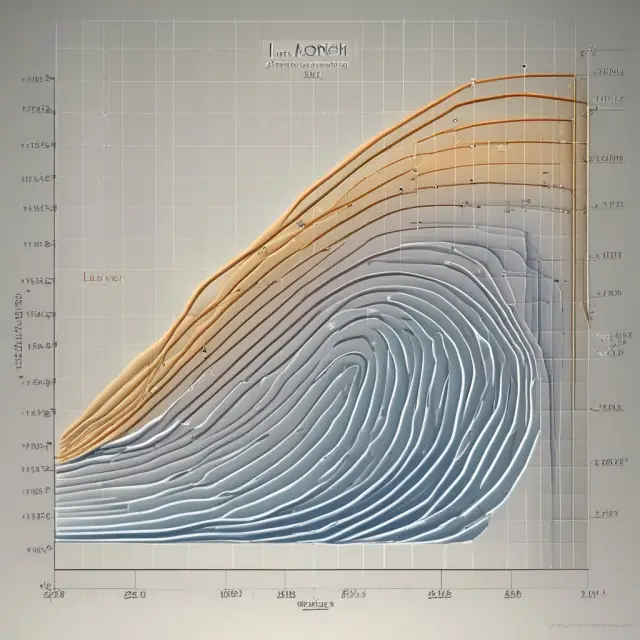
A Lorenz curve is a powerful visual tool used to depict income or wealth distribution within a population. Developed by economist Max Lorenz in 1905, this graphical representation plots percentiles on the horizontal axis against cumulative percentages of total income or wealth on the vertical axis. Understanding the components of a Lorenz curve is essential for interpreting and analyzing the data it conveys.
Three primary components make up a Lorenz curve:
- Percentiles – The position of each percentile, denoted as x-axis values, represents the ranking of income or wealth within the population being studied. For instance, the 50th percentile (or median) signifies that half of the population possesses less income or wealth than that value, while the other half holds more.
- Cumulative Percentages – The vertical axis displays cumulative percentages, which represent the percentage of income or wealth held by individuals below a specific percentile. As we move from left to right on the curve, these cumulative percentages increase steadily.
- Line of Equality – The line of equality, also known as the line of perfect equality, is an ideal baseline represented by a diagonal line with a 45-degree angle. This line illustrates a perfectly equal distribution where every individual has identical income or wealth. By comparing the Lorenz curve to this line, we can observe and measure income or wealth inequality levels.
Additionally, the Gini coefficient, another widely used statistical measure of inequality, is derived from the Lorenz curve. It expresses the extent of income or wealth disparity within a population as a ratio between 0 and 1 (or 0% to 100%). The closer the Lorenz curve is to the line of equality, the smaller the Gini coefficient, indicating lower inequality levels. Conversely, a larger gap between the Lorenz curve and the line of equality signifies higher inequality levels with a larger Gini coefficient.
In analyzing income or wealth distribution through a Lorenz curve, we can gain valuable insights into economic disparities within a population. This information is crucial for governments, researchers, and policy-makers in understanding and addressing issues related to inequality, poverty, and taxation.
Creating a Lorenz Curve
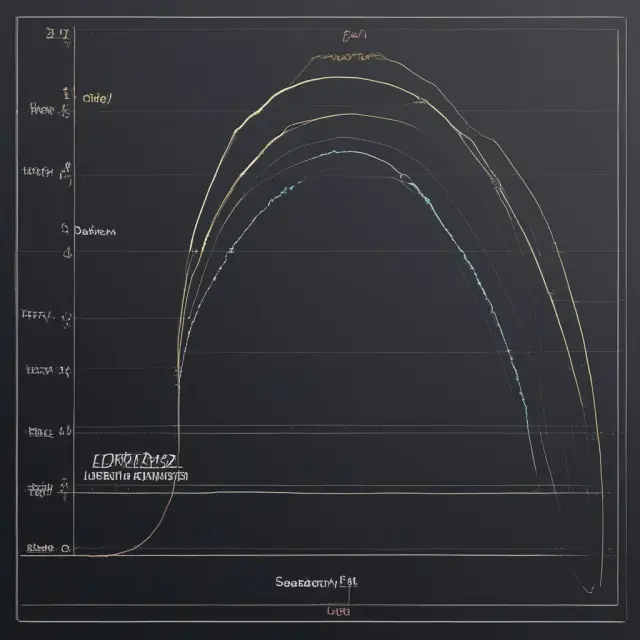
A Lorenz curve is a graphical representation of income or wealth distribution within a population. To create a Lorenz curve, first, we must understand its components and how to interpret them.
First, let’s discuss percentiles and cumulative percentages. Percentiles denote the position of a value in a dataset when arranged in ascending order. For example, the 50th percentile is the middle value for a given dataset. Cumulative percentages represent the percentage of occurrences or amounts below a particular percentile. In our context, this translates to the cumulative proportion of wealth or income owned by the population up to that percentile.
Now, let’s look at the line of equality and the Lorenz curve itself. The line of equality is an imaginary straight diagonal line representing perfect equality in a given dataset – where every individual possesses an equal amount. The Lorenz curve, on the other hand, plots the actual distribution of income or wealth across the population. It starts with the lowest percentile and progressively moves up to 100%, illustrating how much cumulative income or wealth is owned by each successive group.
To construct a Lorenz curve:
- Sort the dataset in ascending order.
- Determine the percentage of the population below each percentile.
- Plot these percentages against the accumulated amount (or proportion) of wealth or income for each group on the vertical axis.
- Connect the dots to form a curve, often with an exponential rise.
When interpreting the Lorenz curve, note that it lies below the line of equality, indicating unequal distribution. The further the curve is from the line, the greater the disparity in wealth or income. This information can provide valuable insights for governments, researchers, and policy-makers to better understand income inequality within their populations.
However, creating a Lorenz curve comes with challenges: it depends on data quality, sample size, and mathematical assumptions. These factors may introduce error and affect the accuracy of the resulting curve. Nonetheless, despite its limitations, the Lorenz curve remains an essential tool for measuring and visualizing inequality in various contexts.

Advantages of the Lorenz Curve
The Lorenz curve offers a detailed visualization of income or wealth distribution within a population compared to summary statistics like the Gini coefficient. By plotting percentiles of a population against cumulative income or wealth, we can observe the disparity between the observed distribution and perfect equality more accurately. The Lorenz curve provides valuable information for policy-makers, economists, and researchers when interpreting income or wealth inequality.
A Lorenz curve offers distinct advantages over summary statistics like the Gini coefficient:
1. Provides detailed visualization: Unlike the Gini coefficient that is a single number representing overall inequality, the Lorenz curve offers a graphical representation of distribution across percentiles. This allows for a more nuanced interpretation of income or wealth distribution and can reveal trends not immediately apparent from summary statistics alone.
2. Facilitates comparison between populations: Comparing Lorenz curves across different populations can provide valuable insights into differences in income or wealth distribution. For example, comparing the Lorenz curve for different countries or states can help policymakers understand the extent of inequality and identify potential areas for improvement.
3. Reveals underlying trends: The Lorenz curve reveals trends that might be hidden by summary statistics. For instance, it can show whether inequality is increasing or decreasing over time or how income or wealth distribution changes across different demographic groups.
4. Helps in policy making: The detailed information provided by the Lorenz curve assists policymakers in designing tax brackets and implementing policies based on accurate data. It also enables them to assess the effectiveness of existing policies and make adjustments as necessary.
5. Maintains anonymity: Unlike some other methods for measuring inequality, such as income tax data or survey responses, Lorenz curves do not reveal individual income or wealth information. This ensures that an individual’s financial situation remains private while still allowing for robust analysis of overall income or wealth distribution within a population.
In conclusion, the Lorenz curve is an essential tool for understanding income and wealth inequality, offering valuable insights into distribution trends and patterns that cannot be gleaned from summary statistics alone. Its advantages include its ability to reveal underlying trends, facilitate comparison between populations, help in policy making, and maintain anonymity while still providing detailed information on income or wealth distribution.

Disadvantages of the Lorenz Curve
While the Lorenz curve is an effective tool for visually understanding income or wealth distribution, it does come with its inherent disadvantages. The primary concerns are data sensitivity, sample size, and mathematical assumptions.
Data Sensitivity
The Lorenz curve requires a large and complete dataset to accurately represent income or wealth distribution within a population. Since the data for calculating Lorenz curves often includes sensitive financial information, the potential for errors and inaccuracies can be significant. The accuracy of the Lorenz curve depends on the quality of the underlying data, which may not always be easily accessible or available. Furthermore, there is no guarantee that the values along a Lorenz curve (other than those actually observed in the data) truly represent the true distribution of income or wealth.
Sample Size
The Lorenz curve relies on a representative sample to accurately depict the overall distribution of income or wealth within a population. However, collecting data from a large enough and diverse enough sample can be challenging, especially when dealing with populations with significant income disparities or limited financial transparency. As a result, the Lorenz curve may not accurately capture the extent of inequality for specific subgroups within a larger population.
Mathematical Assumptions
Calculating a Lorenz curve involves making several mathematical assumptions, including fitting a continuous function to incomplete data and interpolating missing values based on the shape of the curve. This process can introduce error and uncertainty into the final result. The assumptions made during this process may vary depending on the specific application or research question, potentially leading to different interpretations of the Lorenz curve.
In conclusion, while the Lorenz curve offers valuable insights into income and wealth distribution, it is essential to be aware of its limitations. These include data sensitivity, sample size, and mathematical assumptions that can impact the accuracy of the results. As a result, it is crucial to approach Lorenz curves with caution and consider the potential sources of error and uncertainty when interpreting and analyzing the findings.

Lorenz Curve vs. Gini Coefficient
The Lorenz curve is a graphical representation of income or wealth distribution, which plots percentiles against cumulative amounts. The most popular measure of inequality based on the Lorenz curve is the Gini coefficient (GC). While both tools are related, it’s essential to understand their differences and how they complement each other in analyzing income distribution.
The Gini coefficient is a ratio that measures the extent of statistical disparity or deviation from perfect equality between values. In this context, it indicates the degree of inequality within a population’s distribution of income or wealth. The GC ranges from 0 (perfect equality) to 1 (maximum possible inequality), making it an intuitive and widely-used measure for comparing countries and policy outcomes.
However, the Gini coefficient alone doesn’t reveal the entire shape of the income or wealth distribution. That’s where the Lorenz curve comes in. By representing the cumulative proportion of the population against the cumulative proportion of income they receive, the Lorenz curve visualizes the entire distribution and complements the GC as a more comprehensive tool for inequality analysis.
The Gini coefficient can be calculated directly from the area between the line of equality (perfectly equal distribution) and the Lorenz curve. The closer the Lorenz curve is to the line of equality, the lower the income or wealth disparity and, consequently, the smaller the Gini coefficient. In contrast, a large deviation between the curves indicates a high level of inequality.
Furthermore, the Lorenz curve provides more context about where the inequality occurs in a population. For instance, if the bulk of the population has a low share of income or wealth, but a tiny percentage holds an outsized portion, the inequality might not be accurately represented by a single Gini coefficient number.
Both tools can be used together to obtain a more complete understanding of inequality within a given population. For instance, the World Bank publishes annual reports on global income inequality using both the Lorenz curve and the Gini coefficient. By presenting data in multiple formats, researchers, policymakers, and the public can grasp the nuances of income distribution better, making informed decisions for redistribution and policy changes.

Measuring Inequality Using Lorenz Curves
The Lorenz curve is a graphical representation of income or wealth distribution, providing valuable insights into inequality levels within a population. It plots the cumulative percentage of income or wealth against the corresponding percentage of the population (percentiles). By comparing this curve to the line of perfect equality, analysts can identify disparities in income and wealth distribution. In this section, we will discuss various applications for governments, researchers, and policy-makers when measuring inequality using Lorenz curves.
Understanding the Applicability of Lorenz Curves
Lorenz curves are essential to policymakers and researchers seeking a more detailed understanding of income and wealth distribution within a population. While summary statistics like the Gini coefficient offer an overall perspective on inequality, Lorenz curves provide a visual representation that can be easily interpreted. The curve’s shape indicates the degree of inequality at various percentiles, making it possible to analyze specific segments of the population. For instance, a policy-maker might use Lorenz curves to understand income distribution trends across regions or demographic groups.
Comparing Countries and Time Periods
Governments, researchers, and international organizations can compare Lorenz curves from different countries or time periods. By doing so, they can identify shifts in wealth and income distribution between nations or assess progress towards greater equality over time. For instance, the United Nations Development Programme (UNDP) uses the Human Development Report to compare the wealth distribution of countries using their respective Lorenz curves.
Analyzing Policy Effectiveness
Lorenz curves enable policy-makers to evaluate the impact of specific policies on income and wealth inequality within their jurisdictions. By comparing Lorenz curves before and after a policy implementation, they can determine whether the intervention reduced inequality or worsened it. For example, in 2016, Chile implemented tax reforms aimed at reducing inequality. The subsequent change in the country’s Lorenz curve was monitored to evaluate the impact of these reforms on income distribution.
Assessing Tax Brackets and Redistribution Policies
Lorenz curves can help policy-makers make informed decisions regarding tax brackets and redistribution policies. For instance, they may use a Lorenz curve to determine the optimal income threshold for implementing a progressive tax system or to evaluate the impact of different levels of redistributive policies on overall inequality. By observing changes in the shape of the Lorenz curve after policy implementation, they can assess whether their efforts are effectively targeting the most significant disparities within their population.
Enhancing Anonymity and Maintaining Data Security
Lorenz curves protect individual data privacy as they do not disclose specific income or wealth figures for individuals but rather offer a collective representation of the income distribution within a given society. This feature makes Lorenz curves an attractive choice when dealing with sensitive financial information.
Comparing Lorenz Curves to Other Measures of Inequality
Lorenz curves have several advantages over other measures of inequality like the Gini coefficient, Theil index, or Atkinson index. While these summary statistics provide valuable insights into inequality levels, they cannot provide the same level of detail as Lorenz curves do in terms of understanding distribution across percentiles and identifying specific points where the greatest disparities exist. However, it’s important to note that Lorenz curves may be sensitive to data quality and sample size, which could potentially introduce errors or uncertainties when making conclusions based on these visualizations.
In conclusion, Lorenz curves offer a valuable tool for governments, researchers, and policy-makers seeking to gain a comprehensive understanding of income and wealth distribution within their population. By visually representing the degree of inequality across percentiles, they enable more informed decision-making regarding taxation, redistributive policies, and public interventions aimed at reducing disparities in income and wealth distribution.

Understanding the Shape of a Lorenz Curve
A Lorenz curve, created by economist Max Lorenz in 1905, is a graphical representation of income or wealth distribution within a population. It plots percentiles against cumulative amounts, with a focus on the shape and slope to evaluate inequality levels. In this section, we will delve deeper into the significance of these characteristics when interpreting Lorenz curves.
Percentiles and Cumulative Percentages
To begin, let’s clarify key components within a Lorenz curve: percentiles and cumulative percentages. The x-axis typically represents percentiles, indicating where each group falls in relation to other individuals. For instance, the bottom 25% denotes the lowest quartile or 1st quartile of population. Cumulative percentages, on the y-axis, represent the percentage of the total income or wealth accumulated by the groups up to and including the given percentile. In other words, the cumulative percentage for a particular percentile indicates the proportion of income or wealth held by that group and the groups below it.
Line of Equality and Gini Coefficient
A straight diagonal line with a slope of 1 is referred to as the line of equality. This line illustrates perfect equality, where each person has an identical share of income or wealth. The Lorenz curve lies beneath this line, demonstrating the actual distribution of wealth or income in the population. The gap between the line of equality and the Lorenz curve represents the Gini coefficient, a single-figure summary of overall inequality. A larger gap implies higher inequality levels.
Slope and Concavity: Interpreting Inequality Levels
The shape and slope of a Lorenz curve play crucial roles in understanding income or wealth distribution and inequality within a population. Slope describes the rate at which cumulative percentages increase as we move from left to right along the curve. A steep initial slope signifies that larger portions of income or wealth are concentrated among the top percentiles. Conversely, a gentle slope indicates more equitable distribution.
Concavity, on the other hand, illustrates the curvature of the Lorenz curve. Income or wealth distribution with a concave shape (i.e., curving upward) reveals greater inequality, as wealth becomes increasingly concentrated towards the top percentiles. A convex shape (curving downward), on the other hand, indicates more equal distribution, where wealth is spread out more evenly across various percentiles.
In conclusion, Lorenz curves provide valuable insights into income or wealth distribution and overall inequality levels within a population. The slope and concavity of the curve offer critical information to help stakeholders make informed decisions based on their understanding of the economic landscape.
Historical Significance of the Lorenz Curve
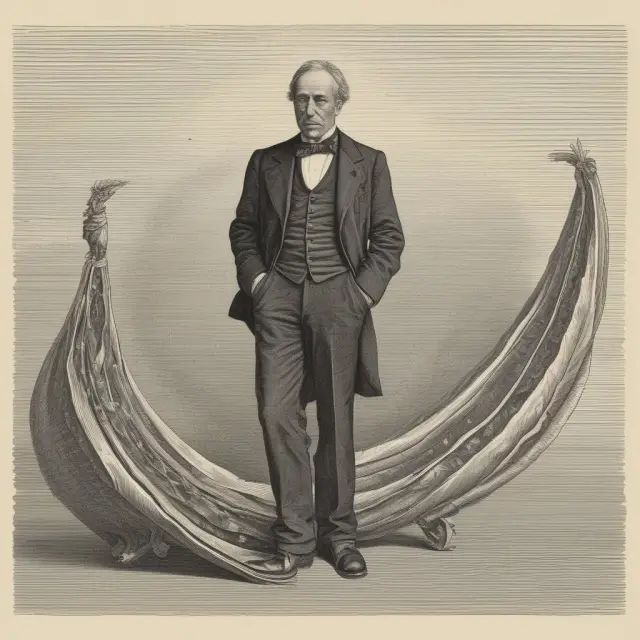
The Lorenz curve, introduced by Max Lorenz in 1905, is a powerful tool for understanding income and wealth distribution. Its historical significance lies in its role as a visual representation of inequality levels. Since its introduction, it has shaped economic policy and thought by providing deeper insights into the nature of income and wealth disparities within populations.
Max Lorenz first introduced his curve while working on statistical studies of social inequality, focusing on income distribution. By 1906, he had published a paper showing that a log-normal distribution could be used to model income, which would later inspire the development of the Lorenz curve itself. This simple yet profound concept has since been employed in various contexts, including economic research, policy analysis, and public discourse on inequality.
As early as 1928, British economist A.C. Pigou used a version of the Lorenz curve to examine income distribution within the United Kingdom. His findings highlighted the existence of significant income disparities during the interwar period, emphasizing the importance of addressing inequality through policy initiatives and public debate.
During the 1960s and 70s, the Lorenz curve gained further prominence as a tool for assessing economic development and poverty reduction efforts in developing countries. Economists such as W. Arthur Lewis and Paul Collier applied this approach to understand income inequality within their respective frameworks of “unlimited supplies of labor” and “dual economy,” shedding new light on the relationship between poverty, development, and policy interventions.
Since then, the Lorenz curve has remained an essential instrument in economic analysis and policy discussions. It continues to be used in both academic research and political debates, informing the design of progressive tax systems, targeting social welfare programs, and shaping public discourse on the implications of income and wealth disparities for economic growth and societal well-being.
Moreover, the historical significance of the Lorenz curve extends beyond economics. It has also been applied in various other fields, including physics, engineering, and environmental studies, to understand complex phenomena involving unequal distribution or resource allocation. This broad applicability is a testament to the enduring relevance of Max Lorenz’s simple yet powerful concept.
In summary, the Lorenz curve holds historical significance as a versatile tool for understanding inequality within populations. Its development has shaped economic policy and thought, and its applications have extended beyond economics to various other disciplines. Through its ability to visually represent the distribution of wealth or income across percentiles, the Lorenz curve provides essential insights into the nature of disparities and informs efforts to address them.
Lorenz Curve vs. Other Measures of Inequality
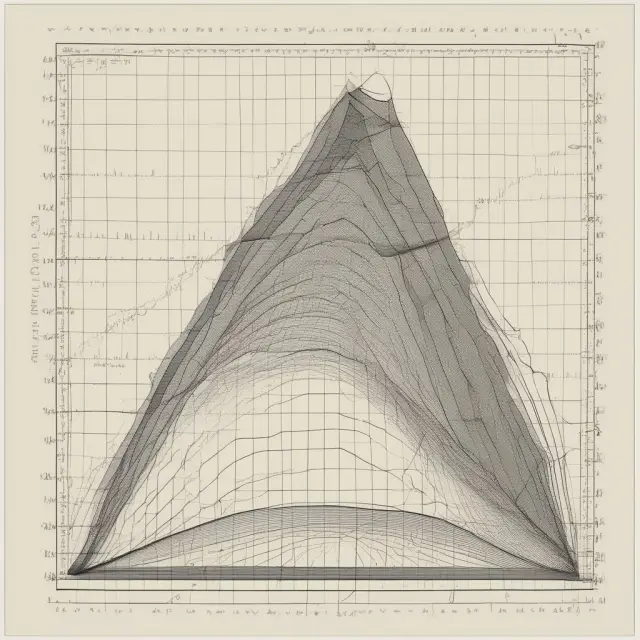
Max Lorenz’s graphical representation of income or wealth distribution, the Lorenz curve, is one of several ways to measure inequality levels. In this section, we delve into comparing the Lorenz curve with other measures such as the Gini coefficient and Theil index.
First, let us examine the Gini coefficient. It’s a widely used statistic for measuring income or wealth distribution inequalities. This summary measure is derived from the Lorenz curve by calculating the area between the line of perfect equality and the Lorenz curve. Like the Lorenz curve, the Gini coefficient ranges from 0 to 1, with higher values indicating greater inequality.
Theil index is another popular method for measuring inequality levels. This measure focuses on relative entropy and deviations from a logarithmic scale. It calculates the difference in entropy between two groups: one group represents the total population and the other represents each percentile within that population. Theil index can handle multivariate data, making it more suitable for analyzing complex income or wealth distributions.
When comparing Lorenz curves to these other methods, it is essential to consider their advantages and disadvantages. Let us start with the Gini coefficient:
Advantages:
- Simple calculation
- Easy visualization (as a line chart)
- Provides one value for comparison
- Useful in international comparisons
- Can be calculated from income or expenditure data
Disadvantages:
- Limited information provided (only relative, not absolute)
- Sensitive to extreme values
- Lacks nuanced understanding of the distribution shape
Now let us discuss the Theil index:
Advantages:
- More informative than Gini coefficient
- Suitable for multivariate data
- Handles non-normal distributions
- Can provide a more accurate representation of inequality levels
- Capable of distinguishing between various types and degrees of inequality
Disadvantages:
- Computationally complex
- Not easily visualized in a single chart
- Requires specific data (entropy, logarithm)
While each method has its unique strengths and weaknesses, no single approach can fully capture all aspects of income or wealth inequality. A combination of methods may lead to a more comprehensive understanding of the issue. Lorenz curves, Gini coefficients, and Theil indices provide valuable insights when analyzing income and wealth distribution within populations.
FAQs about the Lorenz Curve
A Lorenz curve is a graphical representation of the distribution of income or wealth within a population. This tool, developed by American economist Max Lorenz in 1905, plots percentiles against cumulative income or wealth and demonstrates inequality levels. In this FAQ section, we address common questions about Lorenz curves, their significance, and interpretation.
What is the definition of a Lorenz curve?
A Lorenz curve graphs the distribution of income or wealth across a population’s percentiles and displays cumulative amounts. The farther from the line of equality (represented by a straight diagonal line), the higher the inequality levels.
How does the Lorenz Curve differ from the Gini coefficient?
The Lorenz curve is a graphical representation of income or wealth distribution, while the Gini coefficient is a single number used to quantify inequality. The Gini coefficient is derived from the Lorenz curve and measures the area between the line of perfect equality and the Lorenz curve.
What percentiles represent on the x-axis of a Lorenz Curve?
The x-axis typically represents the percentile of income or wealth within a population, with 0% being the lowest decile and 100% being the highest.
What does the y-axis in a Lorenz curve illustrate?
The y-axis in a Lorenz curve shows the cumulative percentage of total income or wealth held by individuals at or below that percentile.
How is the Gini coefficient calculated from the Lorenz Curve?
To find the Gini coefficient, you must determine the area between the line of perfect equality and the Lorenz curve, then divide it by the total area under the line of perfect equality.
What can a Lorenz Curve tell us about income distribution in a country?
A Lorenz curve illustrates how wealth or income is distributed within a population and allows for comparison across countries or time periods to assess changes in inequality.
Why is the shape of a Lorenz Curve important?
The slope and concavity of a Lorenz curve can reveal the extent of inequality within a population, with a flatter curve indicating more equality and a steeper curve representing greater inequality.
 Next entry · No. 3,006Understanding Loss Adjustment Expenses (LAE) in Insurance: Definition, Calculation, and Implications
See also
-
 No. 4,797
17 Jul 2025
12 min
Subsidies: What They Are, Types, Advantages, Disadvantages and How Government Subsidies Work
Economics
No. 4,797
17 Jul 2025
12 min
Subsidies: What They Are, Types, Advantages, Disadvantages and How Government Subsidies Work
Economics -
 No. 3,979
12 May 2025
22 min
Understanding Pigovian Taxes: Correcting Negative Externalities in Finance and Investment
Economics
No. 3,979
12 May 2025
22 min
Understanding Pigovian Taxes: Correcting Negative Externalities in Finance and Investment
Economics -
 No. 3,074
26 Feb 2025
16 min
Marginal Propensity to Consume (MPC): Understanding the Connection Between Income, Consumption, and Saving
Economics
No. 3,074
26 Feb 2025
16 min
Marginal Propensity to Consume (MPC): Understanding the Connection Between Income, Consumption, and Saving
Economics -
 No. 2,334
28 Dec 2024
20 min
Understanding Income Inequality: A Comprehensive Analysis
Economics
No. 2,334
28 Dec 2024
20 min
Understanding Income Inequality: A Comprehensive Analysis
Economics -
 No. 2,278
24 Dec 2024
33 min
Understanding Hysteresis in Economics: Persistent Economic Effects and Unemployment Rates
Economics
No. 2,278
24 Dec 2024
33 min
Understanding Hysteresis in Economics: Persistent Economic Effects and Unemployment Rates
Economics -
 No. 2,163
15 Dec 2024
25 min
Understanding Hollowing Out: The Deterioration of Middle-Class Manufacturing Jobs and Its Socioeconomic Consequences
Economics
No. 2,163
15 Dec 2024
25 min
Understanding Hollowing Out: The Deterioration of Middle-Class Manufacturing Jobs and Its Socioeconomic Consequences
Economics