Understanding the Gini Index: Measuring Economic Inequality

Explore the concept of the Gini Index as a measure for income inequality, understanding its interpretation and limitations.
Introduction to the Gini Index
The Gini index, also known as the Gini coefficient or Gini ratio, is an important statistical measure used to evaluate income distribution and economic inequality within a population. Developed by Italian statistician Corrado Gini in 1912, it provides valuable insights into how wealth or income is distributed among various demographics. The index ranges between 0 (perfect equality) and 1 (perfect inequality).
History and Significance
Gini first introduced the index as a tool for measuring income distribution in his study of Italian income distribution data from 1901-1911. Today, it is widely used by economists, policymakers, and researchers to compare income distribution within countries and regions. The Gini index provides essential context for understanding poverty, wealth distribution, and social stratification.
Defining the Coefficient
A value of 0 indicates perfect equality where every individual has exactly the same income or wealth. On the other hand, a value of 1 represents perfect inequality, meaning that one person holds all the income or wealth while everyone else has nothing. The Gini index is calculated based on population percentiles and their corresponding cumulative income percentages.
Visualizing the Lorenz Curve
The Gini index is often presented graphically using a Lorenz curve. This curve plots the cumulative percentage of the population against the cumulative percentage of total income earned, demonstrating the distribution of income among various income groups. The line of perfect equality corresponds to an equal distribution of income (45-degree angle). Comparing this idealized line with the actual Lorenz curve can help determine the extent of inequality within a given population.
Measuring Income Inequality
Gini indices for different countries reveal significant disparities in wealth and income distribution. Countries with high Gini coefficients, such as South Africa (63), indicate substantial inequality, while those with low coefficients like Denmark (25) represent more equitable distributions. The relationship between income inequality and a country’s Gross Domestic Product (GDP) per capita is complex and has evolved over time.
The COVID-19 Pandemic and Income Inequality
Global economic crises such as the COVID-19 pandemic have been shown to exacerbate existing income inequality. According to research by The World Bank, major epidemics historically lead to an average increase of 1.5 points in the global Gini coefficient for five years following the outbreak. This trend is attributed to the loss of jobs and income for vulnerable populations while wealthier demographics are better positioned to weather economic shocks.
Limitations and Criticisms
Despite its importance, the Gini index has certain limitations. Its accuracy relies on reliable data sources, including comprehensive income statistics and population counts. Additionally, informal economic activity and shadow economies can significantly affect measured inequality. Moreover, while providing valuable insights into overall trends, the Gini index does not offer a comprehensive understanding of demographic differences within populations.
In conclusion, the Gini index serves as an essential tool for measuring income inequality and understanding the distribution of wealth among various populations. By providing insightful comparisons between countries and historical contexts, the Gini index helps inform policies aimed at reducing poverty and creating more equitable societies. However, its limitations should be acknowledged when interpreting results.
Interpreting the Gini Co-efficient
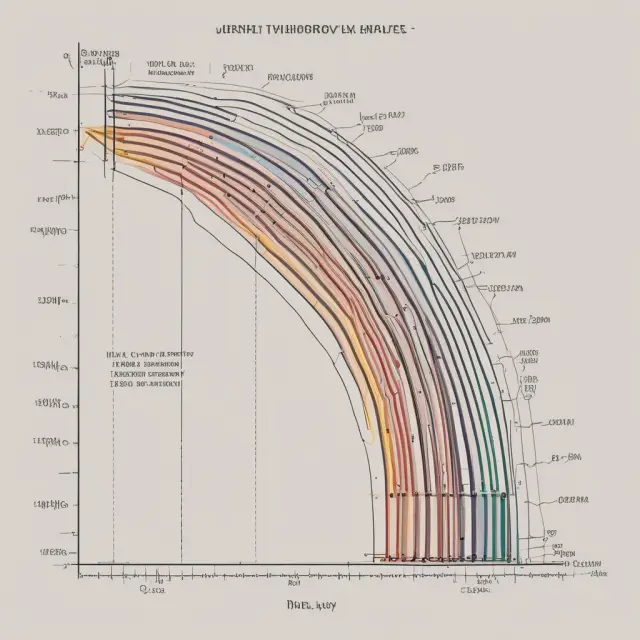
The Gini index serves as an essential tool for analyzing income distribution across a population, with values ranging from 0 to 1 indicating increasing levels of inequality. The Gini co-efficient can help identify disparities between income groups and evaluate the extent of economic inequality within societies. Understanding how to interpret this measure is crucial for gaining insights into the overall wellbeing of populations and informing policy decisions.
In its simplest form, a Gini index of 0 represents perfect equality where every individual earns precisely the same income (or wealth). Conversely, an index of 1 suggests that one person holds all the income while everyone else earns nothing. By comparing a society’s Gini co-efficient against this scale, it becomes possible to assess its level of economic disparity.
When interpreting Gini coefficients, it’s essential to remember that higher values indicate greater inequality and larger income gaps between different income groups. Countries with high Gini indices may have significant discrepancies in wealth distribution, which can have implications for overall social stability and long-term economic development.
Moreover, it is important to note that a high Gini index does not necessarily signify an absolute measurement of inequality; instead, it reflects the income distribution within a specific society when compared to others. For instance, two countries could have identical Gini coefficients, but their respective populations and income distributions might vary significantly.
The Gini co-efficient is often represented graphically using the Lorenz curve, which plots population percentiles against their cumulative income percentages. Analyzing these curves can provide valuable insights into the shape of income distribution within a country or region.
When comparing Gini coefficients between countries and regions, it’s essential to consider their respective levels of development and economic conditions. For example, lower-income countries tend to have higher Gini indices due to various factors like limited resources, weak institutions, and inefficient markets. However, the relationship between income inequality and a country’s Gross Domestic Product (GDP) per capita is not linear, as shown through historical trends.
Additionally, it’s vital to recognize the limitations of the Gini index when interpreting its results. For instance, accurate data on income distribution and economic activity is crucial for calculating Gini coefficients. Furthermore, this measure may overlook essential information about the underlying structure of income distributions and demographic factors within societies. Thus, it is important to supplement the Gini coefficient with additional data sources and analysis methods for a more comprehensive understanding of income distribution and its implications.

Components of the Lorenz Curve and Gini Index
The Gini index measures income distribution across a population and is often considered an indicator of economic inequality. The Gini index was developed by Corrado Gini, an Italian statistician, in 1912. This co-efficient ranges from 0 (or 0%) to 1 (or 100%), with lower values indicating greater equality and higher values representing greater income disparities (Giulietti & Zanetto, 2020).
To visualize the distribution of income, economists use the Lorenz curve. The Lorenz curve plots the cumulative percentage of population against the cumulative percentage of total income they receive. A line of perfect equality lies diagonally from the origin to (100%, 100%). The closer a country’s Lorenz curve is to this line, the lower its degree of inequality and corresponding Gini index (Chen et al., 2020).
The area between the line of perfect equality and the Lorenz curve represents income inequality. The Gini index is calculated by finding the ratio of the area representing inequality to the total area under the line of perfect equality (Mosley, 2016). This area, expressed as a percentage of the entire area, represents the degree of income disparity within a population.
Understanding the relationship between the Lorenz curve and Gini index is crucial for analyzing income distribution in different countries and assessing changes over time. A higher Gini index indicates greater inequality, meaning high-income individuals receive larger percentages of the overall income or wealth (Giulietti & Zanetto, 2020). For instance, a country where one resident earns all the income would have a Gini co-efficient of 1.
However, the Gini index is not an absolute measure; it only indicates income distribution within a country or region and should be considered in context with other factors such as poverty levels and minimum wage legislation (Giulietti & Zanetto, 2020). In addition, since the Gini index measures net income rather than net worth, it may not fully capture the concentration of wealth among a small percentage of the population.
In conclusion, the Lorenz curve and Gini index are essential tools for assessing income distribution within countries and regions. These measures provide valuable insights into economic inequality and can help inform discussions on potential policies and solutions to address disparities in income or wealth.

Evolution of Global Income Inequality
The Gini index, initially conceived by Italian statistician Corrado Gini in 1912, has served as a widely-used measure to assess income distribution and economic inequality across populations throughout history. As a yardstick for measuring the disparity between the rich and the poor, the Gini co-efficient’s evolution provides valuable insights into historical trends, particularly concerning income distribution within countries and globally.
Before the Industrial Revolution, global income inequality was relatively stable, with an average Gini index around 0.5 (or 50%). During this period, wealth and income were distributed more evenly due to a predominantly agrarian economy where most individuals earned their living through farming. However, as economies began to transition towards industrialization from the mid-18th century onwards, the Gini co-efficient started to increase steadily.
The global Gini index grew from 0.5 in 1820 to 0.657 by 1980 and further to around 0.68 in 1992. The primary drivers of this trend can be attributed to the changing economic landscape, including the growth of urban industries, expanding international trade, and the emergence of a global capitalist economy.
The post-World War II era saw an expansion of social welfare programs and improved income distribution mechanisms in Europe, which contributed to a decline in income inequality within countries. However, income disparities persisted between developed and developing nations. Over the last few decades, economic globalization has intensified, fueling concerns over rising income inequality both within and among countries.
With the onset of the COVID-19 pandemic, preliminary evidence suggests a further increase in income inequality. Economists forecast that the pandemic could lead to an additional 1.2-to-1.9 percentage point increase in the global Gini co-efficient for 2020 and 2021.
It is essential to understand that while the Gini index can be a valuable tool for analyzing income distribution, it also has its limitations. Inaccuracies may arise from data sources, with informal economic activities and shadow economies being significant challenges to measuring true income equality. Additionally, two distinctly different income distributions could result in identical Gini co-efficients, which underscores the importance of evaluating other aspects, such as demographic characteristics or income levels across various subgroups within a population, for a more comprehensive understanding of income inequality.

COVID-19’s Impact on Inequality
The Gini index, introduced by Corrado Gini in 1912 as a measure of income distribution among populations, has been a subject of interest due to its potential role as an indicator of economic inequality. The index, which ranges from 0 (perfect equality) to 1 (perfect inequality), has been used extensively for analyzing income or wealth distribution within countries and regions. However, recent events have shed new light on the importance and relevance of this metric.
The global economy has experienced increased income inequality over the centuries, with a rise from 0.50 in 1820 to 0.657 by the late 20th century (The World Bank). The COVID-19 pandemic is likely to exacerbate this trend, according to experts. The World Bank estimates that it triggered an annual increase of 1.2% to 1.9% in the Gini co-efficient for both 2020 and 2021 (The World Bank).
COVID-19’s Impact on Income Distribution
The pandemic has caused significant disruption to global economies, with many countries experiencing mass layoffs and wage cuts, particularly in the service sector. Simultaneously, industries such as technology, pharmaceuticals, and e-commerce have thrived during this period (Baldwin & Weder Di Mauro, 2020). These contrasting outcomes are expected to widen the income gap further.
The World Bank’s estimates suggest that in the five years following major epidemics like Ebola and Zika, the global income inequality increased by about 1.5 points (The World Bank). The current situation is likely to result in a similar, if not more pronounced, increase in income inequality.
Inequality within Countries
Not only has income distribution been affected on a global scale, but there are also concerns regarding the potential rise in income inequality at the country level. With many countries struggling to recover from the economic impact of the pandemic, the gap between the rich and poor may widen further.
For example, some researchers argue that the U.S., which already had a high Gini co-efficient (41.1) before the crisis, is likely to see increased income inequality as a result of the pandemic (Baldwin & Weder Di Mauro, 2020). The unequal distribution of economic benefits and burdens during this period could have long-term consequences on social cohesion and overall economic growth.
Understanding the Shape of Inequality: Limitations and Criticisms
While the Gini index is a valuable tool for analyzing income inequality, it does come with limitations. For instance, the metric’s accuracy depends on reliable data, which can be challenging to obtain given informal economic activities and shadow economies that are more common in developing countries (Michail Moatsos & Joery Baten).
Additionally, two different income distributions can result in identical Gini co-efficients. As a result, it is essential to consider other factors like the shape of inequality (i.e., understanding if the gap between the rich and poor continues to widen or narrow) when interpreting this metric.
Conclusion
The COVID-19 pandemic has highlighted the importance of understanding income distribution and its potential impact on economic growth and social cohesion. The Gini index, while imperfect, offers a starting point for analyzing income inequality trends at both the global and country levels. However, it’s crucial to acknowledge its limitations and consider additional factors when interpreting this metric in the context of ongoing economic crises.

Limitations and Criticisms of the Gini Index
The Gini index offers valuable insights into income distribution within countries; however, it isn’t a perfect measure of economic inequality. This section addresses limitations, criticisms, and concerns regarding data accuracy.
Data Dependency: The Gini index’s reliability hinges on accurate income and wealth data. However, shadow economies, informal activities, and tax havens pose challenges in obtaining reliable information for income distribution calculations. Informal economic activity is prevalent in developing countries, with these sectors often accounting for a considerable portion of the true economic production and potentially inflating reported income inequality levels. Accurate wealth data is even more challenging to obtain due to the widespread use of tax havens by wealthy individuals and corporations, obscuring true wealth distribution.
Flawed Representation: A limitation of the Gini index is that it can’t capture the full scope of income or wealth distribution, as it distills a two-dimensional area (the gap between the Lorenz curve and the line of perfect equality) into a single number. This obscures information about demographic variations within income distributions, such as age, race, gender, and social groups.
Different Inequality Patterns: The Gini index does not account for different inequality patterns. For example, a constant-returns-to-scale economy would have the same Lorenz curve shape for various levels of inequality, leading to identical Gini coefficients despite significantly varying income distributions. In such cases, the Gini index may not accurately reflect the underlying inequality patterns and provide a complete picture.
Inadequate for Social Welfare Analysis: The Gini index alone cannot capture all aspects of social welfare. For instance, it does not consider the distribution of public goods or services (such as education, healthcare, or infrastructure) among populations. This means that two countries could have identical income distributions but vastly different social welfare levels due to differing levels of public goods and services provision.
Despite these limitations, the Gini index remains a crucial tool for understanding income distribution within and between countries. However, it’s essential to recognize these shortcomings to avoid overreliance on this metric alone when evaluating economic inequality.
Country Comparison: Global Income Inequality
Comparing income inequality among countries offers essential insights into global socio-economic disparities. The Gini index, a widely used measure of income distribution, is often employed to assess income equality levels across nations. This section explores the Gini coefficients of selected countries and discusses their implications.
The Gini co-efficient ranges from 0 (perfect equality) to 1 (perfect inequality), providing a valuable lens for evaluating income disparities worldwide. The World Bank reported that, in 1820, the global income Gini co-efficient stood at 0.50—a figure indicating equal distribution of income among all individuals. In contrast, by 1980 and 1992, this value had risen to 0.657, reflecting a significant increase in income inequality (The World Bank).
Country Comparison
Some countries exhibit substantial income disparities despite varying levels of Gross Domestic Product (GDP) per capita. For instance, the United States and Turkey both have income Gini co-efficients around 0.39–0.40, as indicated by the Organisation for Economic Co-operation and Development (OECD). However, their GDP per capita differs substantially. Income distribution is an essential determinant of a country’s overall economic well-being, emphasizing the significance of understanding income inequality across nations.
A closer look at countries with high or low income inequality reveals some interesting trends:
1. South Africa (Gini co-efficient: 63.0) – The country with the highest income inequality in the world, according to the World Population Review, is attributed to racial, gender, and geographic discrimination against its historically disadvantaged communities.
2. Switzerland (Gini co-efficient: 31.9) – With one of the lowest income inequality levels, this European nation boasts a robust economy and social welfare system that distributes resources efficiently among its population.
3. Czech Republic (Gini co-efficient: 24.6) – This Eastern European country has made significant strides in reducing income inequality since its transition from communism to a market economy. Its commitment to fiscal responsibility, efficient taxation systems, and social safety nets have contributed to this achievement.
Comparing regional income inequality within countries also provides valuable insights into economic disparities. In the next section, we will explore income distribution trends across different regions and discuss their implications for overall economic development.
In conclusion, comparing income inequality among countries offers essential insights into global socio-economic disparities. By examining Gini co-efficients of selected nations, we can gain a deeper understanding of income distribution patterns and their impact on overall economic well-being. In the following section, we will delve further into regional income inequality and its implications for economic development.
Country Comparison: Regional Income Inequality
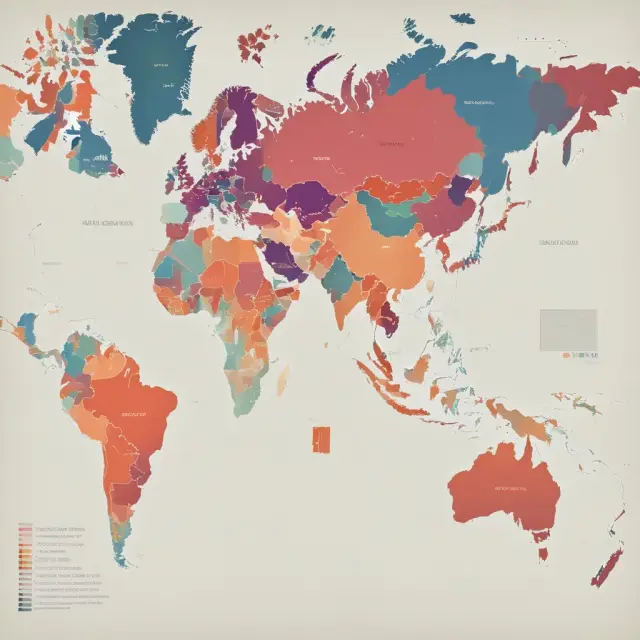
Gini index comparisons can reveal significant insights when analyzing income inequality within regions rather than between countries. This section explores how regional income distribution impacts economic development and illustrates various regional trends, using examples from different parts of the world.
Europe, for instance, generally exhibits lower income inequality compared to many other regions due to its extensive social welfare systems. The European Union (EU) member states’ average income Gini co-efficient is around 0.3, significantly lower than some countries in Latin America and Asia. This lower regional income inequality correlates with more stable economies and improved living conditions, allowing for a higher standard of living overall.
In contrast, the Middle East and North Africa (MENA) region has one of the highest income inequalities globally. Income disparity in this region is primarily driven by oil production and wealth accumulation among ruling elites and their allies. A World Bank report states that between 1990 and 2015, the average income Gini co-efficient for the MENA region rose from approximately 38% to over 46%. This significant increase in inequality has hindered economic development and social progress, creating challenges that persist even decades later.
The Americas, both North and South, display a wide income gap within their respective regions. The United States, despite its economic powerhouse status, has a relatively high income Gini co-efficient of 41.1. In Latin America, countries like Brazil and Colombia have income inequalities above 50, indicating substantial gaps between the rich and poor. These disparities can lead to social unrest, as evidenced by protests and mass demonstrations in recent years demanding greater economic opportunities for marginalized communities.
Asia, the world’s most populous continent, is home to both high-income and low-income countries. Japan and South Korea have relatively low income inequality due to their strong social welfare systems, while India and China exhibit substantial disparities between their wealthy urban centers and impoverished rural areas. A significant contributor to this issue is the lack of access to quality education in many rural regions, restricting opportunities for upward mobility and perpetuating cycles of poverty.
Understanding regional income inequality trends is crucial for policymakers, international organizations, and researchers seeking to develop targeted interventions for reducing inequality and promoting sustainable economic growth. Addressing these challenges requires a multifaceted approach that includes investing in education, improving access to healthcare and social welfare programs, and implementing policies aimed at redistributing wealth and resources more equitably.

Factors Contributing to Income Inequality
Income inequality has been a global issue for centuries and its measurement is crucial for understanding the distribution of wealth and resources within countries or regions. One prominent tool used in this analysis is the Gini index, which ranges from 0 (perfect equality) to 1 (perfect inequality). However, it’s essential to recognize that the factors influencing income inequality are multifaceted and complex.
One significant contributor to income inequality is technological change. As technology advances, automation of certain jobs can lead to job loss, particularly for those in lower-wage positions. This displacement often results in a widening income gap between skilled workers and the rest of the labor force. Additionally, technological innovation can increase productivity and create new industries with high demand for skilled labor, exacerbating the inequality divide.
Another driving factor is globalization. The increased connectivity and integration of economies around the world have led to a shift in income distribution from traditional manufacturing jobs in developed countries toward emerging markets where labor is cheaper. This trend can lead to an increase in income inequality within societies, as well as between nations. Furthermore, multinational corporations can exploit lower wages and lax labor regulations in developing countries, contributing to further disparities.
Demographic shifts also play a role in income inequality. Aging populations can put pressure on public resources and social services, which disproportionately affects low-income individuals. Additionally, migration flows from less developed to more developed countries can result in the concentration of certain demographics in specific regions or industries, potentially exacerbating income disparities.
Additionally, policy decisions can significantly impact income inequality. For instance, fiscal policies that favor the wealthy, such as tax cuts for high-income earners and austerity measures that disproportionately affect the most vulnerable populations, can widen the income gap. Conversely, social safety nets, progressive taxation, and labor protections can help mitigate inequality’s negative effects.
It is also essential to acknowledge the limitations of the Gini index when analyzing income inequality. While it offers valuable insights into income distribution trends, the metric has its drawbacks. For instance, it does not account for differences in demographic groups or changes within a population over time. Therefore, it’s crucial to supplement this measure with other data sources and contextual information.
The COVID-19 pandemic has only highlighted the urgency of addressing income inequality. The crisis has exacerbated existing disparities by disproportionately affecting vulnerable populations, such as low-wage workers, women, and racial minorities. As the world recovers from this crisis, it’s essential to consider both short-term relief efforts and long-term policy changes that aim to address income inequality and create a more equitable society for all.
FAQ: Understanding the Gini Index Further
The Gini index, also known as the Gini coefficient or Gini ratio, is an essential tool for assessing income distribution within a population. Developed by Italian statistician Corrado Gini in 1912, this co-efficient ranges from 0 to 1 and is widely used as a measure of economic inequality (both income and wealth) around the world. This section aims to provide answers to some frequently asked questions about the Gini index.
What is the meaning of a higher Gini index?
A higher Gini index indicates that a larger share of total income or wealth is held by a smaller proportion of the population, signifying greater income inequality. Conversely, a lower Gini index represents more equal distribution of income or wealth among a population.
What does it mean for a country to have a Gini co-efficient of 0?
A country with a Gini co-efficient of 0 implies perfect income equality, where every resident has the same income. However, this scenario is unrealistic since real-world economies feature varying levels of income distribution.
What is the relationship between GDP per capita and income inequality?
The connection between economic development and income inequality is complex. Income inequality can rise or fall as a country’s GDP per capita increases, depending on factors like technological change, globalization, and demographic shifts.
How does the Gini index represent income distribution graphically?
The Lorenz curve is used to illustrate income distribution using the Gini index. The curve plots population percentiles against cumulative income percentages. A perfectly equal society would have a 45-degree diagonal line, and a higher Lorenz curve represents greater inequality.
What are some limitations of the Gini index?
The Gini index has several limitations, including: inaccuracies due to missing or unreliable data on income distribution, potential overstatement of income inequality due to informal economic activity or shadow economies, and lack of consideration for demographic subgroups within a population.
 Next entry · No. 1,811Understanding the Role and Impact of Government National Mortgage Association (Ginnie Mae)
See also
-
 No. 3,944
09 May 2025
20 min
Gauging Global Prosperity: Understanding GDP Per Capita
Economics
No. 3,944
09 May 2025
20 min
Gauging Global Prosperity: Understanding GDP Per Capita
Economics -
 No. 3,005
21 Feb 2025
19 min
Understanding the Lorenz Curve: A Visual Representation of Income and Wealth Inequality
Economics
No. 3,005
21 Feb 2025
19 min
Understanding the Lorenz Curve: A Visual Representation of Income and Wealth Inequality
Economics -
 No. 2,334
28 Dec 2024
20 min
Understanding Income Inequality: A Comprehensive Analysis
Economics
No. 2,334
28 Dec 2024
20 min
Understanding Income Inequality: A Comprehensive Analysis
Economics -
 No. 2,163
15 Dec 2024
25 min
Understanding Hollowing Out: The Deterioration of Middle-Class Manufacturing Jobs and Its Socioeconomic Consequences
Economics
No. 2,163
15 Dec 2024
25 min
Understanding Hollowing Out: The Deterioration of Middle-Class Manufacturing Jobs and Its Socioeconomic Consequences
Economics -
 No. 1,211
12 Aug 2024
22 min
Economic Justice: Principles, Goals, and Achievability
Economics
No. 1,211
12 Aug 2024
22 min
Economic Justice: Principles, Goals, and Achievability
Economics -
 No. 1,028
17 Jul 2024
19 min
Understanding Dual Income, No Kids (DINK): A Demographic with Substantial Disposable Income
Business Finance
No. 1,028
17 Jul 2024
19 min
Understanding Dual Income, No Kids (DINK): A Demographic with Substantial Disposable Income
Business Finance