Understanding Income Inequality: A Comprehensive Analysis

Explore the causes, measurements, and implications of income inequality with a comprehensive analysis of gender, ethnicity, location, and occupation. Get…
Introduction to Income Inequality
Income inequality refers to the degree to which income is unevenly distributed across a population. It reflects the disparity in earnings and disposable income among different individuals or demographic groups within an economy. A higher level of income inequality indicates that some people have a significantly larger share of income than others, while those with lower incomes lag behind. Income inequality often goes hand in hand with wealth inequality, which is the uneven distribution of assets and net worth.
To better understand this complex issue, it’s important to recognize that income disparities can be analyzed using various demographic segmentations such as gender, ethnicity, geographic location, and occupation. Income inequality research helps shed light on the disparity among different population segments. Let’s dive deeper into some of these key areas:
Understanding the Measurement of Income Inequality
The most commonly used measure to quantify income inequality is the Gini Index, which ranges from 0 to 100, with a lower score indicating less inequality and a higher score more significant disparities. The World Bank reported that South Africa had one of the highest income inequality dispersions with a Gini Index level of 63.0, while Slovenia showed the lowest at 24.6. The United States reports an income inequality level of 41.4 according to World Bank data.
Income Inequality Segmentations: Gender
Gender is a crucial demographic segmentation when analyzing income disparities. Women are typically paid less than men, leading to the gender pay gap. According to a report from the Institute for Women’s Policy Research, women earn an average of 82.3% of what men make. In the U.S., this gender wage gap has been narrowing yearly since 1980 when women made about 64% as much as men.
Income Inequality Segmentations: Ethnicity
Ethnicity is another significant factor in income inequality, and racial disparities persist despite progress towards equality. According to the Pew Research Center, women of all races and ethnicities were paid 84% of what men made on average in 2020. However, there are considerable disparities between different groups: White women earned 79 cents for every dollar earned by White men, while Black women earned 63 cents, and Hispanic women earned just 55 cents.
Income Inequality Segmentations: Geographic Location
Geographic location also plays a role in income inequality. For instance, urban areas typically have higher levels of income inequality than rural areas due to factors like cost of living, employment opportunities, and economic development.
Income Inequality Segmentations: Occupation
Occupational segregation is another important factor contributing to income disparities. Jobs in specific industries or sectors often pay less than others, perpetuating income inequality. For example, the service sector tends to have lower wages than manufacturing or technology jobs.
Case Studies on Income Inequality
Several studies and reports provide valuable insights into income inequality patterns and trends. The Urban Institute, the Federal Reserve, and the Economic Policy Institute are some of the key sources for data and analysis. These organizations offer a wealth of information on income disparities among different demographics and geographic locations.
For instance, the Urban Institute’s research shows that between 1963 and 2016, the poorest 10% of Americans had zero assets and went into debt, while families in the top 10% and 1% had significantly higher wealth growth. The Federal Reserve’s Distributional Financial Accounts report offers a detailed analysis of wealth distribution across U.S. households. Meanwhile, the Economic Policy Institute’s research highlights how income inequality has grown since the 2008 recession, with top earners experiencing faster income growth than other income segments in most states.
In conclusion, understanding income inequality is crucial for individuals and policymakers alike. By analyzing income disparities using various demographic segmentations like gender, ethnicity, geographic location, and occupation, we can gain valuable insights into the root causes of these inequities. Furthermore, ongoing research from institutions such as the Urban Institute, Federal Reserve, and Economic Policy Institute helps shed light on income inequality trends and patterns.

Understanding the Measurement of Income Inequality
Income inequality can be defined as the disparity in income among different population segments within a given economy (World Bank, 2019). To measure and analyze income inequality, economists and researchers often employ a statistical tool known as the Gini Index. Developed by Italian statistician Corrado Gini in the early 1900s, this index ranges from 0 to 100, with lower values indicating less income inequality and higher values suggesting more unequal income distributions (World Bank, 2019).
The Gini Index has proven to be a valuable tool for comparing income inequality levels across countries worldwide. As of the latest data available, South Africa reports one of the highest income inequality dispersions with a Gini Index level of 63.0. The United States and China, on the other hand, report lower Gini Index readings of 41.4 and 32.9, respectively (World Bank, 2019).
The World Bank’s Global Findex Database notes that approximately 1.7 billion adults worldwide still lack an account at a financial institution or through a mobile money provider. This gap highlights the importance of improving financial inclusion for low-income earners to help reduce income inequality and promote sustainable economic growth (World Bank, 2019).
To understand income inequality in more depth, it can be segmented and analyzed based on various demographic factors such as gender, ethnicity, geographic location, and occupation. In the U.S., for instance, data from the Economic Policy Institute indicates that the top 1% of earners saw their incomes grow faster than those of the other 99% between 2009 and 2015 (Economic Policy Institute, 2018). Meanwhile, the Federal Reserve’s Distributional Financial Accounts Report reveals significant wealth disparities among U.S. households, with families in the top 1% holding over seven times more wealth than those in the bottom 90% (Federal Reserve, 2021).
These income disparities can have far-reaching consequences, influencing economic mobility, social stability, and overall quality of life. As such, it is crucial for governments, policymakers, and researchers to continue monitoring and addressing income inequality to help create more equitable economic opportunities for all population segments.

Income Inequality Segmentations: Gender
Income inequality doesn’t affect all demographic segments equally. A significant disparity exists between genders when it comes to income distribution. Women, historically and currently, have faced wage gaps that have persisted for decades. Income inequality by gender is an essential measure of economic health and societal progress, as it highlights the gap between what men and women earn, revealing gender pay disparities.
The Gender Pay Gap: An enduring issue
To illustrate the magnitude of the income gap between genders, let’s discuss the gender pay gap. The term “gender pay gap” refers to the difference in average hourly wages for female and male workers. This discrepancy has been a long-standing issue, with women historically earning less than men.
The Institute for Women’s Policy Research (IWPR) reports that women earned 82.3% of what men did in 2020. Although this figure represents an improvement from the gender pay gap’s historical low of 64% back in 1980, there is still a significant disparity. Furthermore, some racial and ethnic groups face more substantial gaps than others. For instance, Black women made only 63.4% of what white men earned that same year, while Hispanic or Latina women earned 57.5%.
Understanding the income gap between genders requires a nuanced analysis of various factors contributing to disparities in pay, such as occupational segregation and gender stereotypes. Research from organizations like the World Bank and Pew Research Center also reveals that women are less likely to be represented in high-paying industries or roles.
Occupational Segregation: Women in low-paying jobs
A significant factor contributing to income inequality between genders is occupational segregation. The economic sectors women predominantly work in tend to offer lower wages compared to those dominated by men. The Pew Research Center reports that women are more likely to be concentrated in the following occupations, which tend to have lower median wages:
- Education, Health Services, and Social Work
- Food Preparation and Serving Related Occupations
- Office and Administrative Support Occupations
- Personal Care and Service Occupations
- Sales and Related Occupations
- Community and Social Services Occupations
- Legal and Protective Service Occupations
- Arts, Design, Entertainment, Sports, and Media Occupations
- Healthcare Practitioners and Technical Occupations
- Management, Business, Science, and Arts Occupations
This occupational segregation is a persistent issue that contributes to income disparities between genders. To address this challenge, it’s crucial to promote policies aimed at improving wage equity and encouraging more women to enter fields traditionally dominated by men. These policies could include providing equal pay for equal work, implementing affirmative action programs, and addressing gender stereotypes and biases within organizations.
In conclusion, income inequality between genders continues to be a significant challenge that needs addressing. By understanding the factors contributing to this issue, such as occupational segregation, we can take steps towards reducing the income gap and creating a more equitable society. It’s essential to continue promoting policies and practices that support wage equity and equal opportunities for women across all industries and sectors.

Income Inequality Segmentations: Ethnicity
One crucial demographic aspect to consider when analyzing income inequality and disparity is ethnicity. Income inequality and income disparity between different racial and ethnic groups can be a significant factor in determining socioeconomic status, overall wealth, and the economic mobility of populations. This section will explore how income inequality manifests among various ethnicities and examine some key studies that highlight disparities across the U.S. and around the world.
The Institute for Women’s Policy Research (IWPR) provides insights into income differences between women and men, while also analyzing gaps along racial and ethnic lines. In their 2021 analysis of income numbers, IWPR showed that the gender pay gap remained persistent across racial and ethnic groups, with significant disparities persisting for Black, Native Hawaiian/Pacific Islander (NHPI), and Hispanic women compared to White, Non-Hispanic women. These disparities have widened over time.
In 2020, IWPR reported that White women made an average of 84% of what White men earned, while Black women made only 63% and Native Hawaiian/Pacific Islander women made 61%. Hispanic women’s wages came closest to parity at 86.5%. These disparities contribute significantly to the income inequality gap for both genders within these ethnic groups.
Income inequalities among racial and ethnic groups can be observed across generations. According to a 2019 study by Pew Research Center, intergenerational economic mobility remains low for racial and ethnic minority populations in the United States. The study found that while Asian Americans have the highest rates of upward income mobility (61%), only about 40% of Black, Hispanic, and Native American families experienced upward mobility.
The Federal Reserve’s Distributional Financial Accounts report sheds light on the unequal distribution of wealth along racial lines. The report revealed that in 2019, median household net worth for Black households was $24,880 compared to $68,828 for White households and $35,248 for Hispanic households. This substantial disparity illustrates the wide income gap between racial groups.
The Urban Institute’s research on wealth inequality further emphasizes this issue. In a 2019 report, the institute showed that the median net worth of White families was over six times higher than that of Black families and more than three times higher than Hispanic families in 2016. The trend for income inequality between racial groups appears to be worsening; from 1983 to 2017, the wealth gap between Whites and Blacks increased by a factor of eight.
Global income inequality is also a significant issue, particularly in countries with substantial racial and ethnic disparities. For example, South Africa has one of the world’s highest levels of income inequality, as indicated by a Gini Index level of 63.0. This income inequality exists largely between its White population (with a relatively lower poverty rate) and its Black population (which experiences widespread poverty).
International organizations like the International Monetary Fund (IMF) and World Bank are actively working to improve the economic conditions of the world’s poorest populations, including addressing racial and ethnic income inequality. The UN’s Sustainable Development Goal 10 aims to reduce income inequality within and among countries by implementing redistributive policies, ensuring access to financial services, and promoting equal opportunities for all.
In conclusion, analyzing income inequality along ethnic lines is crucial for understanding the economic disparities that exist between different racial and ethnic groups. As shown through various studies and reports from esteemed organizations such as IWPR, Federal Reserve, and Urban Institute, income inequality between races remains a pressing issue both in the U.S. and globally. Redressing these discrepancies requires ongoing research and concerted efforts from governments, institutions, and communities alike to promote equal opportunities and address underlying structural issues.
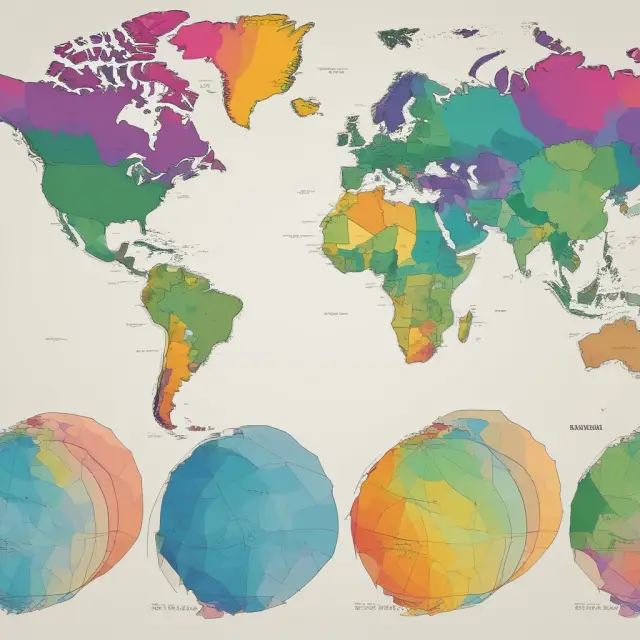
Income Inequality Segmentations: Geographic Location
Income disparities can be observed across various geographic locations, which significantly impacts income inequality. The study of income distribution by different regions provides valuable insights into the level and patterns of income inequality. This section discusses how geographical location influences income disparity and sheds light on the implications of these differences.
The Gini Index is a popular tool used to measure income inequality across countries. It measures the extent of income inequality within a population by comparing the distribution of total pretax national income among individuals, ranking from 0 (complete equality) to 100 (complete inequality). Geographic disparities in income distribution can be observed in both developed and developing nations, with some regions experiencing higher levels of inequality than others.
One prominent example is South Africa, which ranks among countries with the highest income inequality, boasting a Gini Index of 63.0. In contrast, Slovenia reports the lowest global Gini Index at 24.6. This significant discrepancy can be attributed to numerous factors, including economic structures, public policies, and historical trends.
Within a country, income distribution disparities can also be observed at the regional level. For instance, in the United States, income inequality is more pronounced in certain areas compared to others. According to data from the Economic Policy Institute (EPI), income growth between 2009 and 2015 was faster for the top earners in 43 states and Washington D.C., widening the gap between the rich and poor.
Income inequality can also manifest as a result of urbanization, with metropolitan areas experiencing higher levels of income disparity compared to rural regions. In the context of the U.S., urban centers like New York City, San Francisco, and Los Angeles typically report greater income inequality than their respective rural counterparts.
The reasons for these discrepancies are multifaceted. Some factors contributing to geographic variations in income inequality include differences in economic opportunities, labor markets, housing costs, and access to public services like education and healthcare. These disparities can further exacerbate social and political tensions within communities and even impact overall economic stability.
Understanding the causes and implications of income inequality by geography is crucial for developing targeted policies that aim to reduce these disparities and promote more equitable income distribution. By analyzing regional trends and patterns, policymakers and researchers can identify areas where interventions are most needed and develop strategies tailored to specific local contexts. This, in turn, can lead to improved economic opportunities, reduced poverty rates, and overall social cohesion.
The World Bank and International Monetary Fund (IMF) play significant roles in monitoring income inequality across the globe and implementing initiatives aimed at improving the living standards of the poorest 10% of earners. With a growing emphasis on financial inclusion as a means to reduce poverty, new innovations in financial technologies are being harnessed to expand access to banking services for low-income communities, thereby contributing to more equitable income distribution.

Income Inequality Segmentations: Occupation
When analyzing income inequality, it’s important to delve deeper and understand income disparities within different occupational sectors. Income disparity among various professions can greatly impact overall income inequality levels. Income distributions for specific occupations are vital in understanding the root causes of income inequality and the disparate economic circumstances faced by certain population segments.
One prominent area of income inequality analysis is gender wage gaps. In 2021, women earned only an average of 82 cents to every dollar earned by men according to Pew Research Center data. This wage gap is even more pronounced in specific industries such as technology and finance where women are underrepresented in higher-paying roles.
Another significant factor contributing to income inequality is ethnicity. Income disparities exist between different racial and ethnic groups, with Black and Hispanic workers often earning less than their White counterparts. According to data from the Institute for Women’s Policy Research, Black and Hispanic women earn even less compared to White men and women in 2021.
The Economic Policy Institute has also reported on income inequality trends following the 2008 recession, highlighting substantial income growth for top earners versus stagnant wages for other income groups. Between 2009 and 2015, incomes for the bottom 60% of Americans did not increase while the top 1% saw income gains of over 30%.
The Institute for Women’s Policy Research also identified income gaps by occupation, showing significant wage disparities between jobs. For instance, the average weekly wages for teachers and nurses were considerably lower than those in industries such as finance or technology.
Occupational income inequality is influenced by a range of factors, including educational attainment, unionization rates, automation, and minimum wage laws. Understanding these trends can help inform public policy initiatives aimed at reducing income inequality and promoting more equitable opportunities for all workers.
By examining the income disparities between different professions and sectors, we can gain a clearer understanding of income inequality in its various forms. Income inequality studies based on occupation provide insight into wage gaps that disproportionately affect certain demographic groups. This knowledge is crucial for creating policies aimed at reducing income inequality and addressing the root causes of disparities.
A case in point is the Gender Pay Gap, which has garnered significant attention in recent years. The World Economic Forum reports that it would take 97 years to close the global gender pay gap, highlighting a pressing need for actionable solutions aimed at achieving wage equality. Income inequality segmentations based on occupation are essential tools for understanding and addressing the disparate economic circumstances faced by various population segments.
In conclusion, income inequality is a complex issue that requires thorough examination through multiple angles. By analyzing income disparities within different occupational sectors and demographic groups, we can develop targeted solutions aimed at reducing income inequality and fostering more equitable opportunities for all.

Case Studies: Urban Institute Analysis of Income Inequality in the U.S.
The Urban Institute’s research sheds valuable light on income inequality trends and patterns in the United States, providing an in-depth analysis that goes beyond statistics. Between 1963 and 2016, their study revealed a significant disparity between the poorest and richest segments of American society. The poorest 10% saw zero net gains, while the top 1% enjoyed an astounding increase in wealth. These findings are particularly concerning as they highlight the widening income gap over half a century.
The Urban Institute also conducts research on racial and ethnic income disparities, illustrating a significant divide between White families and families of color. In 1963, White families held median wealth that was $45,000 more than families of color. By 2019, this gap had grown substantially, with White families possessing approximately $153,000 more in median wealth than Latinx families and $165,000 more than Black families.
These disparities not only affect wealth but also impact income inequality. The Economic Policy Institute reports that following the 2008 recession, income gains were concentrated among top earners in 43 states and Washington D.C., exacerbating income inequality. This trend can be attributed to factors such as salary stagnation for wage-earning Americans, tax cuts benefiting the wealthy, a loss of manufacturing jobs, and soaring stock market growth that primarily favored corporate executives and hedge fund managers.
The impact on different demographic segments is also evident. For instance, between 2009 and 2015, incomes for the top 1% grew faster than those for the remaining 99%. This widening income gap was a significant factor contributing to the growing wealth divide. Furthermore, companies have focused on hiring and retaining employees with specialized skills, leading to reductions or automation of less competitive jobs, and wage stagnation for many workers.
These findings underscore the importance of understanding income inequality and its consequences for various demographic segments within society. The Urban Institute’s research contributes to a more nuanced perspective on this complex issue and provides valuable insights that can inform policy decisions aimed at addressing income disparities.

Case Studies: The Federal Reserve’s Distributional Financial Accounts Report
The Federal Reserve’s Distributional Financial Accounts (DFA) report offers valuable insights into the wealth distribution in the U.S. The DFA provides an extensive analysis of income and net worth by income class, household size, and demographic groups. These comprehensive reports help to illustrate the economic well-being of various population segments in the U.S.
The Federal Reserve’s DFA reveals some intriguing trends regarding income and wealth disparities in America. As of Q1 2021, the report indicates that the top quintile (top 20%) of households holds about 87.9% of net worth while the bottom quintile (bottom 20%) holds only 0.3%. This staggering disparity highlights an alarming level of economic inequality in the United States.
Moreover, the Federal Reserve’s report also shows that wealth is more concentrated among older households compared to younger ones. Households aged 55 and above accounted for over 67% of all net worth in Q1 2021. In contrast, those under age 35 held a mere 1.2%. This trend underscores the importance of addressing wealth disparities among different age groups to promote financial stability and equity throughout society.
A further analysis of the Federal Reserve’s DFA reveals that racial disparities in wealth persist in America. In Q1 2021, White households held approximately 84% of total net worth while Black and Hispanic households held 3.6% and 4.9%, respectively. This disparity is especially significant when considering the fact that White households had a median net worth of $374,500 compared to only $20,100 for Black households and $28,200 for Hispanic households.
To bridge these racial wealth gaps, it’s crucial to understand their underlying causes. Research by the Federal Reserve Bank of St. Louis suggests that factors such as homeownership rates, inheritance, educational attainment levels, and occupational segregation play a significant role in perpetuating wealth disparities between different races. Addressing these root causes requires targeted policies and initiatives aimed at reducing barriers to education, increasing access to affordable housing, and creating more equitable employment opportunities for racial minorities.
In conclusion, the Federal Reserve’s Distributional Financial Accounts report sheds light on the stark wealth disparities in America, particularly between age groups and racial demographics. By understanding these trends and underlying factors, we can take informed steps towards promoting greater financial equity and reducing income inequality in our society.

Case Studies: Economic Policy Institute Analysis
The Economic Policy Institute (EPI) is an American think tank that focuses on analyzing economic data in order to study income inequality, wage stagnation, and other economic issues. Their research has provided significant insights into the distribution of income in the U.S. since the 2008 recession.
After the recession, there was a noticeable trend towards increasing incomes for the top earners, while the rest of the population saw little to no growth. According to EPI’s analysis, between 2009 and 2015, income growth for the top 1% far outpaced that of other Americans in 43 states and Washington D.C. This trend can be attributed to various factors, such as wage stagnation for non-specialized workers, tax cuts for wealthy individuals, a loss of manufacturing jobs, and an inflationary stock market benefiting corporate executives and hedge fund managers.
Moreover, companies have been investing heavily in automation and hiring specialized labor in fields like engineering and healthcare, leading to wage reductions or job losses in other sectors. EPI’s research also shows that the income gap between different demographic groups remains significant. As of 2020, they reported that women made only 82.3% of men’s salaries on average. Historically, this figure has been improving since 1980 when women earned just 64% of what men did. Additionally, the Pew Research Center reported that gender income inequality is narrowing, with women making 84% of men’s wages in 2019. However, there are significant differences depending on age groups. The income gap was smaller among workers between ages 25 and 34, where women made approximately 93% of men’s salaries in 2020.
In conclusion, the Economic Policy Institute’s research provides valuable insights into the distribution of income in the U.S., particularly since the 2008 recession. Their findings indicate a widening income gap between the top earners and the rest of the population, as well as significant disparities between different demographic groups. Understanding these trends is crucial for policymakers and researchers alike to develop strategies aimed at addressing income inequality and improving the economic circumstances for all Americans.

FAQs on Income Inequality
What exactly is income inequality?
Income inequality refers to the uneven distribution of income within a population, with some individuals or groups earning significantly more than others.
How is income inequality measured?
The most commonly used measure for assessing income inequality is the Gini Index. The index ranges from 0 to 100, with 0 representing perfect equality (everyone earns exactly the same income) and 100 representing perfect inequality (one person earns all the income).
What is the current state of income inequality in the U.S.?
The United States has a Gini Index level of 41.4, which indicates a moderate level of income inequality compared to other countries. However, it’s important to note that income inequality varies significantly between different demographic groups within the US.
Is there a significant gender gap in income inequality?
Yes, women in the U.S. earn less than men on average. According to data from the Institute for Women’s Policy Research, women earned 82.3% of men’s salaries in 2020, which represents the smallest gender pay gap in history but is still a significant disparity.
How does income inequality impact ethnic and racial groups?
Income inequality is particularly pronounced among ethnic and racial minorities. For instance, according to data from the Federal Reserve, White families had more than five times the wealth of Latinx families and more than seven times the wealth of Black families in 2019.
Why does income inequality matter?
Income inequality can have significant social and economic implications, including increased poverty and social unrest. It can also impede upward mobility, making it harder for people to move up the socioeconomic ladder, ultimately perpetuating income disparities across generations.
What can be done to address income inequality?
Addressing income inequality requires a multifaceted approach, including policies aimed at increasing access to education and job opportunities, implementing progressive taxation systems, and promoting greater economic inclusion through programs designed to help narrow the wealth gap between different demographic groups. Ultimately, reducing income inequality can lead to improved overall well-being for individuals and communities while also contributing to stronger, more stable economies.
 Next entry · No. 2,335Understanding Per Capita Income: Definition, Uses, Limitations, and More
See also
-
 No. 3,005
21 Feb 2025
19 min
Understanding the Lorenz Curve: A Visual Representation of Income and Wealth Inequality
Economics
No. 3,005
21 Feb 2025
19 min
Understanding the Lorenz Curve: A Visual Representation of Income and Wealth Inequality
Economics -
 No. 2,163
15 Dec 2024
25 min
Understanding Hollowing Out: The Deterioration of Middle-Class Manufacturing Jobs and Its Socioeconomic Consequences
Economics
No. 2,163
15 Dec 2024
25 min
Understanding Hollowing Out: The Deterioration of Middle-Class Manufacturing Jobs and Its Socioeconomic Consequences
Economics -
 No. 1,810
09 Nov 2024
18 min
Understanding the Gini Index: Measuring Economic Inequality
Economics
No. 1,810
09 Nov 2024
18 min
Understanding the Gini Index: Measuring Economic Inequality
Economics -
 No. 1,211
12 Aug 2024
22 min
Economic Justice: Principles, Goals, and Achievability
Economics
No. 1,211
12 Aug 2024
22 min
Economic Justice: Principles, Goals, and Achievability
Economics -
 No. 5,847
12 Oct 2025
19 min
The Yearly Probability of Living: A Crucial Statistical Measure for Insurance Underwriting and Planning
Insurance
No. 5,847
12 Oct 2025
19 min
The Yearly Probability of Living: A Crucial Statistical Measure for Insurance Underwriting and Planning
Insurance -
 No. 4,856
22 Jul 2025
19 min
Defining Your Target Market: Strategies for Identifying and Attracting Your Ideal Customers
Business Strategy
No. 4,856
22 Jul 2025
19 min
Defining Your Target Market: Strategies for Identifying and Attracting Your Ideal Customers
Business Strategy