Understanding the Role and Impact of the Group of Eight (G-8) or G-7 on Global Economy
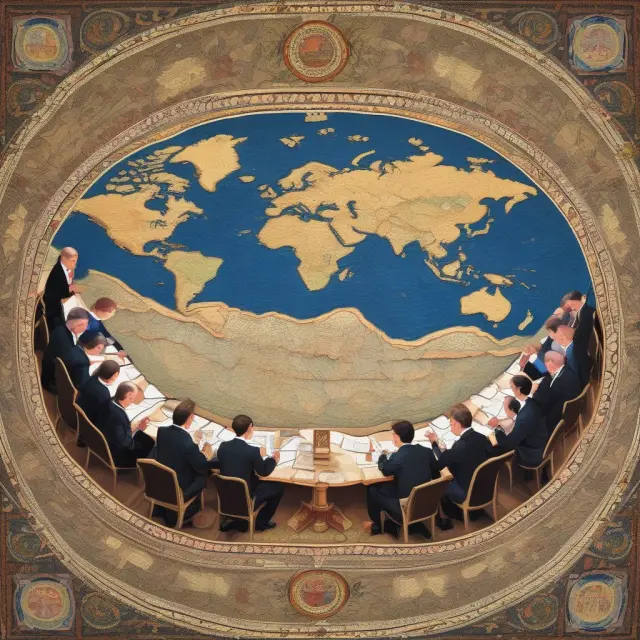
The Group of Seven (G7) is an informal forum of advanced economies: Canada, France, Germany, Italy, Japan, the UK and the US, with the EU also taking part. It was known as the G8 while Russia attended, until the other members suspended their G8 participation in March 2014 over Crimea.
Introduction to the Group of Eight (G-8)
The Group of Eight (G-8), also known as the ‘Group of Seven’ since Russia was expelled in 2014, was an influential assembly of the world’s major economies. Founded in the late 1970s, this elite organization consisted of seven countries: Canada, France, Germany, Italy, Japan, the United Kingdom, and the United States. Originally formed to address pressing economic issues and crises, the G-8 eventually expanded its scope to include international challenges such as monetary systems and global conflicts like terrorism and climate change.
Historically, leaders from these countries gathered annually under the auspices of fostering cooperation, sharing ideas, and solving problems through diplomatic dialogue. The group’s significance lay in the collective power of its members, which represented approximately half of the world economy. In 2014, Russia was suspended from the G-8 following geopolitical tensions stemming from the annexation of Crimea, causing it to be renamed as the ‘Group of Seven’ (G-7).
The G-8/G-7 did not possess any legislative or binding authority to enforce its recommendations. However, the importance of this forum rested in its ability to set influential policies and plans for global issues that could be implemented by member nations voluntarily. Over the years, topics discussed in these meetings ranged from financial crises and monetary systems to more pressing international concerns such as oil shortages, terrorism, climate change, and geopolitical instability.
The G-8/G7 summits were held every year at a member country that volunteered for the rotating presidency, with the current holder assuming this role for 12 months. This provided each country with an opportunity to set the agenda for discussions and lead negotiations among peers. Although the group lacked formal authority, its influence extended far beyond its borders through its ability to shape global economic policies and promote international cooperation.
In conclusion, the Group of Eight (G-8) was a pivotal platform for global policymaking, bringing together world leaders from powerful economies to address pressing issues and foster diplomatic dialogue. Despite being disbanded due to geopolitical tensions in 2014, its legacy continues as an exemplar of international cooperation and a model for future collaborative efforts between nations.
The Origins of the G-8: From Paris Summit to Global Policy Making
The origins of the Group of Eight (G-8) can be traced back to the early 1970s when leaders from six countries, namely the United States, the United Kingdom (U.K.), France, West Germany, Italy, and Japan, met in Paris informally to discuss the then prevailing recession and oil crisis. This marked the first step towards establishing a platform for international cooperation on economic and monetary issues. The group’s primary objective was to share ideas, brainstorm solutions, and create innovative strategies to address challenges faced by each participating nation, as well as the global community at large.
Over the years, the G-8 grew in membership with Canada joining in 1976, making it a Group of Seven (G-7). In 1997, Russia became the newest member, expanding the group to eight countries. The lineup of eight countries remained active until 2014 when Russia was suspended from the organization following its annexation of Crimea, an autonomous republic of Ukraine. Subsequently, the group is now referred to as G-7.
The meetings of the G-8 were scheduled annually with the current G-7 nations taking turns in hosting the summit. Although the G-7 held considerable influence and sway, it did not possess any legislative or authoritative power. Instead, its role was to find solutions to pressing issues and foster international cooperation while compiling recommended policies and plans for member states to implement independently.
The history of the G-8 is marked by numerous accomplishments that have positively influenced global economic policy. The group addressed significant challenges throughout the years, such as financial crises, monetary systems, and major world crises like oil shortages, terrorism, and climate change. While there were no legally binding agreements in place, the collaborative efforts among members proved crucial in shaping international economic cooperation.
However, the group was not without criticisms. One of the primary concerns was its exclusivity and perceived disregard for emerging economies. The lack of representation from developing nations, despite their growing importance in the global marketplace, stirred controversy. In response to these criticisms, efforts were made in 2005 to include five emerging economies—Brazil, China, India, Mexico, and South Africa—in the G-8 summits. This led to the meetings being referred to as G-8+5 or G13. However, this attempt at inclusivity was short-lived due to the challenges it presented in managing such a large group.
In 1999, an alternative intergovernmental organization, the Group of Twenty (G-20), was founded. This new group included the G-7 members, along with Argentina, Australia, Brazil, China, India, Indonesia, Mexico, Russia, Saudi Arabia, South Africa, and South Korea. The G-20’s mandate centered on promoting global economic growth, international trade, and regulation of financial markets to cater to a more representative cross-section of the world economy.
Despite the emergence of the G-20, the significance of the G-7 (formerly G-8) in shaping international economic policy remains undeniable. The group’s legacy continues to influence global discussions and collaboration on pressing issues, making it an essential platform for global cooperation in the realm of finance and investment.
FAQs:
Who were the original members of the Group of Eight (G-8)?
The original members of the G-8 were France, West Germany, Italy, Japan, the United States, the United Kingdom, and Canada.
What is the current status of the Group of Eight (G-8)?
Currently, the group is referred to as the Group of Seven (G-7), as Russia was suspended indefinitely from the organization following its annexation of Crimea.
How frequently does the G-7 meet?
The G-7 meets annually, with each member taking turns hosting the summit.
What is the goal of the Group of Seven (G-7)?
The primary goal of the G-7 is to find solutions to pressing international economic and monetary issues and foster cooperation among its members through collaborative efforts and compiling recommended policies and plans for implementation.
Has the G-8 ever included more than eight members?
Yes, in 2005, an attempt was made to include five emerging economies in the meetings, leading to a G-8+5 or G13 setup. However, this initiative was short-lived.
Who founded the Group of Twenty (G-20)?
The Group of Twenty (G-20) was founded in 1999 by Argentina, Australia, Brazil, China, India, Indonesia, Mexico, Russia, Saudi Arabia, South Africa, and South Korea to promote global economic growth, international trade, and regulation of financial markets.
G-8 Members and Their Significance
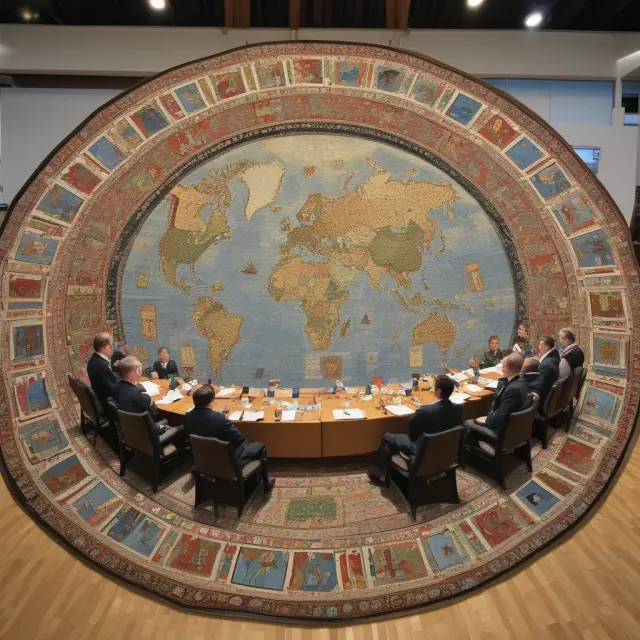
The Group of Eight (G-8) was an influential platform for international cooperation that brought together leaders from eight major economies, namely the United States, the United Kingdom, Canada, Germany, Japan, Italy, France, and Russia. Each member nation held significant sway as their combined wealth and resources accounted for roughly half of the entire global economy.
The United States
The U.S., being the largest and most powerful economy in the world, has been a leading force within the G-8. Its involvement extended beyond economic matters to geopolitical issues and international crises. American presidents have historically played pivotal roles in shaping global policies through their influence on the group.
United Kingdom (U.K.)
The U.K., a prominent member, has brought a unique perspective as a developed economy with a large financial sector and strong historical ties to the U.S. The country has also been known for its emphasis on free trade, which was reflected in G-8 discussions.
Canada
Canada’s addition to the group in 1976 represented a strategic move to broaden the organization’s scope beyond Europe and North America. This change allowed the group to address the interests of diverse regions and economies. Canada’s inclusion also strengthened diplomatic ties between the U.S. and its northern neighbor.
Germany
As Europe’s largest economy, Germany has been a significant player in the G-8. The country’s industrial prowess and economic stability have often shaped the group’s discussions on monetary systems, trade agreements, and fiscal policies.
Japan
Japan joined the group in 1976 as Asia’s third largest economy and the world’s second largest after the U.S. Its membership brought a unique perspective to the G-8 as it was an industrialized country with a strong focus on exports and technology. Japan’s influence extended beyond economic matters to international issues like climate change and security in East Asia.
Italy
Italy, the third largest economy in Europe, has been a consistent member of the group since its formation in the 1970s. Its inclusion provided a voice for Mediterranean Europe and a perspective on labor issues, social policies, and the importance of economic growth to support employment opportunities.
France
A founding member along with the U.K., France has been an influential player in the G-8 due to its strong economy, large population, and historical role as a global power. Its membership brought a European perspective and facilitated diplomatic ties between European countries and their North American counterparts.
Russia
The inclusion of Russia in 1997 represented a shift towards embracing emerging economies and expanding the G-8’s influence beyond developed nations. Russia’s large economy, abundant natural resources, and geopolitical significance made it an essential addition to the group. However, its suspension from the G-8 following the annexation of Crimea in 2014 marked a significant turning point for the organization.
As a whole, the collective power wielded by these members allowed them to address global problems and find solutions that benefited their individual nations as well as the world at large. The G-8 meetings provided opportunities for leaders to engage in high-level diplomacy and collaboration, shaping international economic policies that have impacted the world we live in today.
With the exclusion of Russia from the organization, the group has become the G-7. However, there remains speculation about the possibility of Russia rejoining the organization, providing an interesting perspective on how the international landscape may evolve in the future.
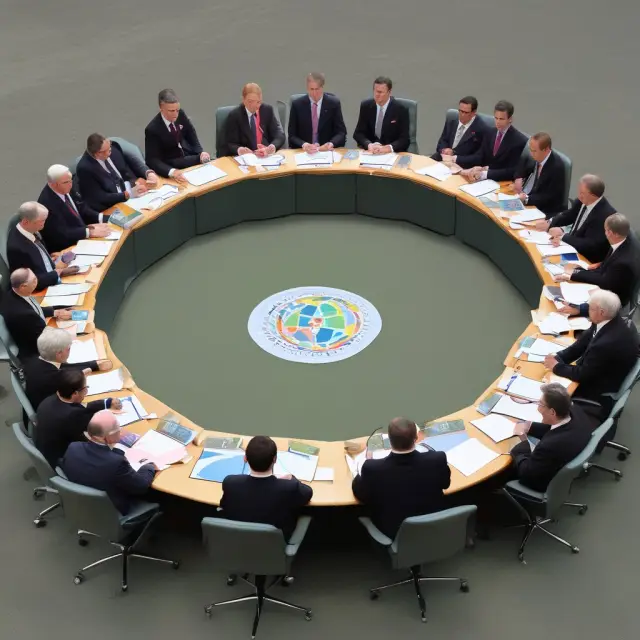
The Agenda: Global Issues Addressed by the G-8/G7
The Group of Eight (G-8), now known as the G-7, was an influential platform for international cooperation on economic and monetary issues. With its members representing approximately half of the global economy, G-8 summits provided a space for leaders to discuss pressing matters concerning the world. The agenda varied from economic crises and monetary systems to significant global challenges like terrorism and climate change.
The Origins: Rooted in History
The roots of the G-8 can be traced back to the early 1970s when leaders of the U.S., U.K., France, West Germany, Italy, and Japan met informally during the Paris Economic Summit in response to the then recession and oil crisis. The group’s focus was on discussing and resolving financial difficulties within their own economies, as well as on a global scale.
The Expansion: New Members Join the Ranks
Over time, new members joined the organization: Canada in 1976 and Russia in 1997. The lineup of eight countries remained stable until 2014 when tensions between Russia and Ukraine led to its suspension from the group. Since then, the G-8 has operated as the G-7.
The Topics: A Broad Agenda Covering Global Crises and Challenges
G-8 summits covered a wide range of topics, with a primary focus on addressing economic crises and monetary systems. These meetings were crucial in fostering dialogue between leaders from the world’s most influential economies, allowing them to share ideas and brainstorm innovative solutions.
One major issue that frequently appeared on the agenda was climate change. The G-8 recognized its role in reducing greenhouse gas emissions and promoting clean energy. For instance, in 2005, the leaders of the G-7 committed themselves to increasing their use of renewable energy sources by 18% between 2005 and 2010.
Another significant topic that received attention was international security threats, such as terrorism. In 2001, following the September 11 terrorist attacks in the U.S., G-8 leaders agreed to enhance cooperation on counter-terrorism efforts by sharing intelligence and coordinating their responses.
The Decision Making Process: Collaboration for a Common Goal
Unlike formal entities like the United Nations (UN), the G-8 did not possess any legislative or authoritative power to enforce its recommendations or plans. Instead, the group functioned as a collaborative platform where leaders could discuss and find common ground on pressing global issues. This approach allowed members to share their perspectives, exchange ideas, and work together to address challenges that affected them all.
While decisions made at G-8 summits were not legally binding, the group’s influence extended far beyond its meetings. The recommendations put forth by these leaders often set the stage for further negotiations, shaping international policy on a broader scale. In this way, the G-8 served as a catalyst for global cooperation and dialogue.
The Criticisms: Addressing Controversies and Challenges
Despite its impact on international cooperation, the G-8 faced criticisms due to its exclusivity and lack of representation for emerging economies. Protests against the group’s meetings were common, with concerns raised over its perceived focus on the interests of wealthy nations, while ignoring the needs of developing countries.
In response to these criticisms, efforts were made to include emerging economies in the discussions. From 2005 onwards, five emerging and developing nations—Brazil, China, India, Mexico, and South Africa—were invited to join G-8 summits, leading the gatherings to be referred to as G-8+5 or G13. However, this initiative was short-lived, as a separate organization, the G-20, emerged in 1999 to address global economic growth and regulation of financial markets.
In conclusion, the Group of Eight (G-8) played a vital role in shaping international cooperation on economic and monetary issues. Though its agenda covered a broad range of topics, from economic crises to climate change, the group faced criticisms regarding its exclusivity and lack of representation for emerging economies. As the global landscape continued to evolve, the G-8 transitioned into the G-7 and ultimately paved the way for the formation of the more inclusive G-20.
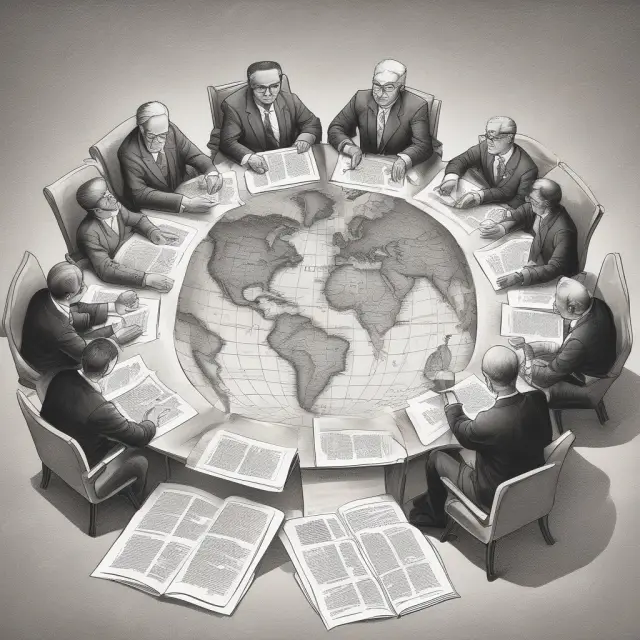
How Decisions Were Made in the G-8/G7
The Group of Eight (G-8) was an elite forum for world leaders from influential countries to discuss pressing global issues. The collective power of its members accounted for approximately half of the entire global economy, making their meetings highly anticipated events. But how exactly did decisions get made within this prestigious group? Let us take a closer look at the process and key players involved in G-8/G7 decision-making.
Decision-Making Process
Before each summit, leaders would prepare intensively with their advisors to ensure a productive meeting. They would discuss potential issues to be addressed, such as financial crises, monetary systems, or climate change. During the summit itself, leaders and advisors would engage in roundtable discussions, brainstorming solutions and collaborating on strategies for implementation post-summit.
However, it is important to note that decisions made at these gatherings were not legally binding. Instead, each nation was responsible for implementing their own policies based on the recommendations agreed upon by the collective group. This non-binding nature allowed for flexibility and the potential for various interpretations of the proposed strategies.
Role of Leaders and Advisors
The leaders and their trusted advisors played a crucial role in the decision-making process within the G-8/G7. They were responsible for shaping the agenda, initiating discussions on critical issues, and ultimately leading negotiations towards a consensus. The influence and power of individual nations could also significantly impact the outcome of decisions, as they would have more sway if their positions were well-aligned with other members.
Lack of Binding Agreements
One significant aspect to remember is that no binding agreements resulted from G-8/G7 meetings. The group did not possess any legislative or authoritative power. Instead, its primary goal was to provide a platform for collaboration and cooperation among world leaders in addressing global challenges. Although non-binding decisions could make implementation inconsistent across member nations, the collective efforts fostered an international dialogue that often laid the groundwork for further actions and future agreements.
In summary, the G-8/G7 decision-making process involved intense preparation, roundtable discussions among leaders and advisors, and a non-binding agreement to implement agreed-upon recommendations. This structure allowed for flexibility in implementation while fostering international cooperation on pressing global issues.
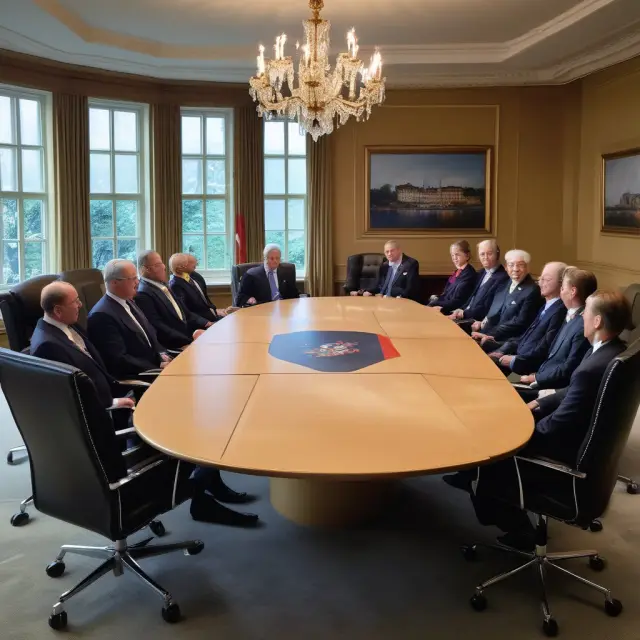
From G-8 to G-7: The Exclusion of Russia
In 2014, one significant change occurred in the Group of Eight (G-8), now known as the G-7. Russia, a longstanding member since its inclusion in 1997, was suspended from the group following the annexation of Crimea, an autonomous republic of Ukraine. This momentous decision marked the first time in the organization’s history that a member country was expelled.
The reasons for excluding Russia were both diplomatic and economic. Diplomatically, many G-8 members disagreed with Putin’s actions concerning Crimea, annexing it against international law. The international community viewed this move as a violation of Ukrainian sovereignty. Economically, the European Union (EU) and United States imposed sanctions on Russia in response to its aggressive behavior.
The suspension came with notable consequences for the G-8. With one major member out, the organization lost significant influence, as Russia was a key player in global economic matters. Additionally, the loss of representation from such a crucial nation brought into question the group’s relevancy and effectiveness.
Despite Russia’s absence, there are ongoing discussions about its potential readmission to the G-8/G7. Former U.S. President Donald Trump attempted to invite Putin back to the group during his presidency but failed due to ongoing geopolitical issues. However, the prospect of including Russia in future summits remains an open possibility as diplomatic relations evolve.
The expulsion of Russia from the G-8/G7 marked a significant turning point for both the organization and international politics. It highlighted the importance of collective diplomacy and economic sanctions to address global issues, while also emphasizing the need for more inclusive platforms like the G-20 that can better represent emerging economies.
While the G-8/G7 has faced criticisms regarding its exclusivity in the past, this exclusion further underscored the limitations of a small group of countries working together to tackle pressing issues on the global stage. This event paved the way for the continued expansion and evolution of international organizations that aim to address economic, political, and diplomatic challenges more effectively and inclusively.
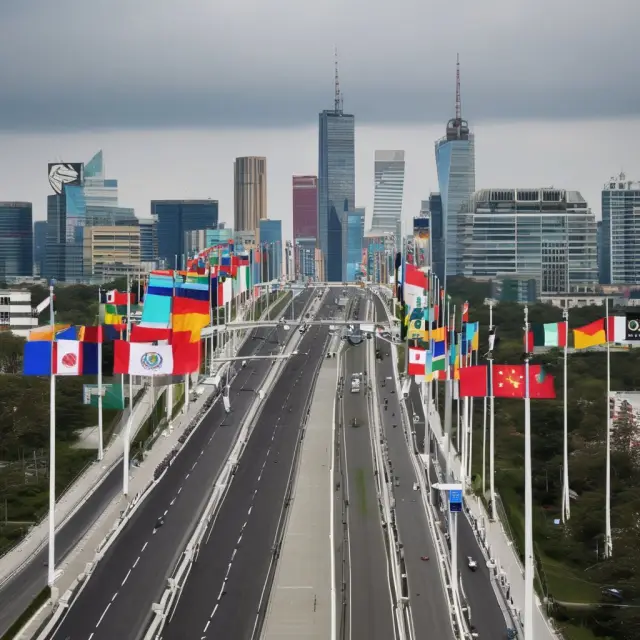
G-8 Criticisms and Controversies
The Group of Eight (G-8) or G-7, as it is currently known, was a highly influential intergovernmental organization comprising eight major industrialized nations. Its members – the United States, United Kingdom, Canada, Germany, Japan, Italy, France, and Russia (until 2014) – held significant sway in global economics and wielded considerable power collectively. Despite its achievements and influence, the G-8 faced criticisms and controversies over the years for its exclusivity, lack of representation for emerging economies, and protests.
Exclusivity: The G-8 was often criticized as a rich countries’ club that disregarded poorer nations in favor of their own interests. This perception persisted despite efforts to increase dialogue with developing countries through initiatives like the G8+5 or G13 meetings, which included Brazil, China, India, Mexico, and South Africa.
Lack of Representation: One of the most significant criticisms aimed at the G-8/G7 was its lack of representation for emerging economies that play an increasingly important role in the global marketplace. The organization’s exclusivity left many feeling excluded from international economic discussions, which had implications far beyond their borders.
Protests: Anti-capitalism and anti-globalization protests became common fixtures at G-8/G7 summits. Protesters argued that the group prioritized the interests of its members over addressing global issues like poverty, inequality, and environmental sustainability. While some protests remained peaceful, others turned violent, leading to clashes with law enforcement agencies and damage to property.
In response to these criticisms, the G20 was founded in 1999 as an intergovernmental organization consisting of the G7 members, the European Union, and 12 other emerging economies. The G20’s mandate was to promote global economic growth, international trade, and regulation of financial markets. This broader representation reflected a growing recognition that emerging economies were vital contributors to the global economy, necessitating their inclusion in key decision-making processes.
In conclusion, while the G-8/G7 had significant achievements during its existence, it faced criticisms for being an exclusive club that lacked proper representation and was often met with protests. The emergence of the G20 helped address these concerns by including a broader range of countries in international economic discussions, reflecting the changing global economic landscape and shifting power dynamics.
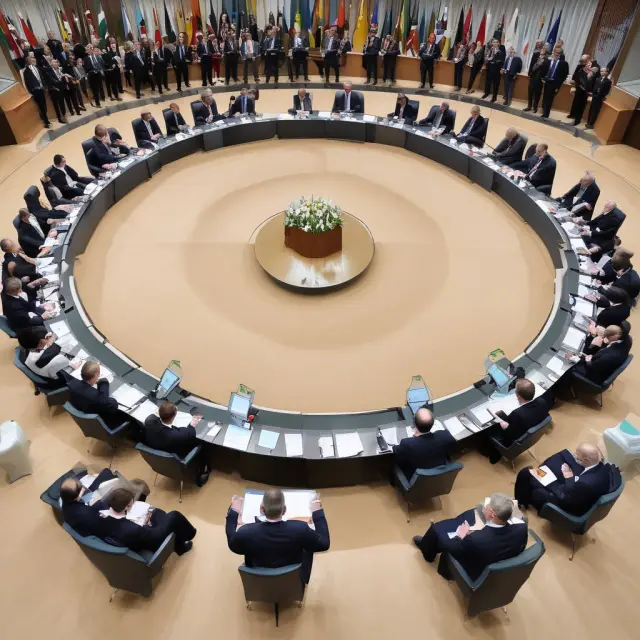
The Emergence of G-20: A Response to Criticisms and Changing Economic Landscape
As the G-8 faced criticisms over its exclusivity and lack of representation for emerging economies, there was a growing need for a more inclusive platform to address global economic issues. The increasing influence of emerging economies on the world stage necessitated a reconfiguration. Enter the G-20—the Group of Twenty—an international forum established in 1999.
The origins of the G-20 can be traced back to the 1975 Riyadh summit, where leaders from the seven major industrialized economies (G-7) and several developing countries came together for the first time. However, it wasn’t until 1999 that the organization officially took shape with its first ministerial meeting held in Berlin, Germany.
The G-20 was created in response to the Asian financial crisis of 1997 and the ongoing global economic changes. The group’s members consist of the original G-7 countries—the U.S., the U.K., Canada, Germany, Japan, Italy, and France—along with the European Union (EU) and fifteen other nations: Argentina, Australia, Brazil, China, India, Indonesia, Mexico, Russia, Saudi Arabia, South Africa, South Korea, Turkey, and the United Arab Emirates.
The G-20 was designed to address the shortcomings of the G-8/G7, with a focus on promoting economic cooperation and stability among its members. It serves as a platform for dialogue between advanced and emerging economies, allowing all participants to engage in discussions regarding international economic policy coordination.
One significant outcome of the G-20’s collaborative efforts is the establishment of the Financial Stability Forum (FSF), later known as the Financial Stability Board (FSB). The FSB was created in response to the 1997 Asian financial crisis and the subsequent 2008 global financial crisis. The organization aims to monitor and address potential risks to the international financial system, fostering a more stable economic environment for all members.
The G-20 meetings are typically held twice per year, with one summit attended by heads of state and government and another finance ministers’ meeting. The locations rotate among member countries. In contrast to the informal nature of the G-8/G7 summits, the G-20 features a more formal agenda and structured discussions that emphasize practical outcomes.
The emergence of the G-20 not only helped address criticisms about the lack of representation in the G-8/G7 but also acknowledged the changing economic landscape. The organization has proven to be an essential component of global governance, providing a stage for dialogue and cooperation between major economies and fostering international economic stability.
Legacy and Significance of the G-8/G7
Despite the controversies and criticisms surrounding the Group of Eight (G-8) or now G-7, it has left an indelible mark on global relations, economic policies, and international cooperation. Since its inception in the 1970s, the G-8/G7 has been a platform for world leaders to discuss pressing issues, share ideas, and find solutions to global challenges.
Throughout history, this influential body of nations tackled critical topics like economic crises, monetary systems, and major world events such as terrorism and climate change. While the G-8/G7 doesn’t have legislative or authoritative power, its collective influence is significant: its members represent approximately half of the global economy.
The group was formed during a time when developed nations faced economic recession and an oil crisis in the 1970s. Over the years, it evolved to address an increasingly complex global landscape. New members joined, including Russia in 1997; however, its suspension from the group after annexing Crimea led to a reduction in active members to seven.
The G-8/G7’s legacy is evident when considering its impact on international relations and policy making. Many of the decisions made during these meetings have influenced economic strategies and policies around the world. For example, the 2009 Pittsburgh Summit saw leaders agreeing on a coordinated fiscal stimulus to combat the global financial crisis.
However, not all agreements reached at the G-8/G7 were successful or long-lasting. Critics argue that the group lacks representation for emerging and developing nations, leading to potential exclusion of perspectives that could contribute significantly to global discussions. Moreover, since there are no legally binding agreements in place, member countries have the flexibility to choose whether or not to implement the proposed policies.
Despite these criticisms, the G-8/G7 remains a valuable forum for international cooperation and policy exchange. It has inspired the formation of other influential organizations like the G-20, which includes both developed and emerging economies, broadening the scope of global discussions. This progression from the G-8 to the G-20 reflects the changing economic landscape, with developing countries taking on more significant roles in the world’s economy.
In conclusion, the Group of Eight (G-8) or now the G-7 has played a vital role in shaping international relations and policy making. Its influence is apparent when considering its impact on global issues like financial crises and climate change. Although criticized for its exclusivity and lack of binding agreements, it remains a crucial platform for leaders to exchange ideas, discuss solutions, and cooperate to address the challenges facing the world today.
FAQs About the Group of Eight (G-8) or G-7
What was the Group of Eight (G-8)?
The Group of Eight (G-8) was a forum for leaders from eight prominent industrialized nations – the United States, the United Kingdom, Canada, Germany, Japan, Italy, France, and Russia – to discuss international economic and monetary issues. The group, which started in the 1970s, is now referred to as the G-7 since Russia was suspended indefinitely in 2014 due to its annexation of Crimea, an autonomous republic of Ukraine.
What is the current composition of the G-7?
The current members of the G-7 are the United States, the United Kingdom, Canada, Germany, Japan, Italy, and France.
How does the G-7 operate?
The G-7 functions as an informal forum for member nations to exchange ideas, brainstorm solutions, and discuss innovative strategies on pressing issues. However, it does not have legislative or authoritative power to enforce recommended policies and plans.
What were some major topics discussed at G-8 meetings?
Topics regularly addressed in the G-8 included economic crises, monetary systems, international issues such as climate change, and global problems like oil shortages, terrorism, and conflicts.
How are decisions made within the G-8 or G-7?
Decisions in the G-8 or G-7 were not legally binding, and leaders would rely on their expertise and political will to implement agreed policies. Leaders and advisors were responsible for driving discussions and leading negotiations.
Why was Russia suspended from the G-8?
Russia was suspended from the G-8 after it annexed Crimea in 2014, which other member nations opposed. This led to a reduction of active members from eight to seven, resulting in the G-7.
What is the G-20 and its significance compared to the G-7 or G-8?
The G-20, founded in 1999, is an intergovernmental organization consisting of the G-7 members, the European Union (EU), and 12 other nations. It was created with the mandate to promote global economic growth, international trade, and regulation of financial markets. In contrast to the G-7 or G-8, the G-20 has more representation and a broader scope of influence due to its larger membership.
How have criticisms influenced the evolution of the G-8 or G-7?
Criticisms surrounding the exclusivity and lack of representation for emerging economies led to the formation of the G-20, which offers more balanced global representation. The G-8’s legacy, however, continues as a significant forum for international cooperation on pressing issues.
 Next entry · No. 1,723Understanding Generally Accepted Principles And Practices (GAPP) for Institutional Investors: A Comprehensive Guide
See also
-
 No. 3,387
24 Mar 2025
22 min
Negative Interest Rates: What Are They and How Do They Impact Economies?
Business Finance
No. 3,387
24 Mar 2025
22 min
Negative Interest Rates: What Are They and How Do They Impact Economies?
Business Finance -
 No. 5,172
17 Aug 2025
27 min
Understanding Uncovered Interest Rate Parity (UIP): A Comprehensive Guide
Finance Policy
No. 5,172
17 Aug 2025
27 min
Understanding Uncovered Interest Rate Parity (UIP): A Comprehensive Guide
Finance Policy -
 No. 4,992
03 Aug 2025
21 min
A Comprehensive Guide to Understanding the Tobin Tax: Its History, Mechanics, and Controversies
Finance Policy
No. 4,992
03 Aug 2025
21 min
A Comprehensive Guide to Understanding the Tobin Tax: Its History, Mechanics, and Controversies
Finance Policy -
 No. 4,704
10 Jul 2025
19 min
Understanding Sovereign Wealth Funds: A Comprehensive Guide for Institutional Investors
Finance Policy
No. 4,704
10 Jul 2025
19 min
Understanding Sovereign Wealth Funds: A Comprehensive Guide for Institutional Investors
Finance Policy -
 No. 4,403
16 Jun 2025
22 min
The Reserve Currency: A Global Economy Pillar and Its Impact on the U.S. Dollar
Finance Policy
No. 4,403
16 Jun 2025
22 min
The Reserve Currency: A Global Economy Pillar and Its Impact on the U.S. Dollar
Finance Policy -
 No. 3,656
16 Apr 2025
18 min
A Comprehensive Guide to Investing in Oil ETFs: Advantages, Challenges, and Top Performers
Finance Policy
No. 3,656
16 Apr 2025
18 min
A Comprehensive Guide to Investing in Oil ETFs: Advantages, Challenges, and Top Performers
Finance Policy