The Group of 20 (G-20): An Overview of Its History, Membership, Agenda, and Criticisms

Exploring the history, purpose, and member countries of the Group of 20 (G-20), as well as its agenda, criticisms, and impact on global economics.
Introduction to the Group of 20 (G-20)
The Group of 20, commonly known as the G-20, is a prominent international forum comprising finance ministers and central bank governors from the world’s most influential economies. Formed in 1999 with 19 members and the European Union (EU), this influential organization represents approximately 80% of the global economy, 75% of global trade, and over half of the world population. The G-20’s primary objectives include promoting economic growth, fostering international trade, and regulating financial markets to ensure global stability. Although not a legislative body, its discussions significantly impact member countries’ policies and global cooperation.
Established in response to the Asian financial crisis in 1997, the G-20’s creation marked an essential step toward a more inclusive and representative international economic council that involved both developed and developing economies. Over time, the organization has expanded its agenda to address issues like cryptocurrencies, food security, and trade wars.
While it may not possess legal authority, the G-20’s influence stems from its membership roster, which includes: Argentina, Australia, Brazil, Canada, China, France, Germany, India, Indonesia, Italy, Japan, Mexico, Russia, Saudi Arabia, South Africa, South Korea, Turkey, the United Kingdom, the United States, and the European Union. Invited countries, such as Spain (as a permanent guest), African nations, and international organizations also attend G-20 events to ensure continuity and representation.
The G-20 has been compared to the older Group of Seven (G-7), consisting of seven developed economies—France, Germany, Italy, Japan, the United Kingdom, the United States, and Canada. While the G-20’s formation predates the G-7 by only a few years, it was intended to provide a platform for dialogue between developed and emerging economies. The G-7’s influence extends beyond economic matters due to its longstanding inclusion of political leaders in summits, but the G-20 has increasingly adopted this practice as well.
In 1998, Russia became a member of the G-7, which subsequently changed its name to G-8. However, following Russia’s military intervention in Ukraine and Crimea annexation, tensions arose between Russia and the West. As a result, the G-7 suspended Russia’s membership, and it formally left the group in 2017. Despite this, Russia remains part of the larger G-20 due to strong support from other BRIC (Brazil, Russia, India, China) nations, namely Brazil, India, and China.
In conclusion, the Group of 20 serves as a crucial forum for global financial issues with significant impact on international economic cooperation. Its diverse membership and evolving agenda reflect its importance in addressing key challenges in the global economy, such as digital transformation, sustainable energy transition, cryptocurrencies, food security, trade wars, and more. Despite criticisms surrounding transparency and representation, it continues to be a valuable platform for shaping global financial policy.
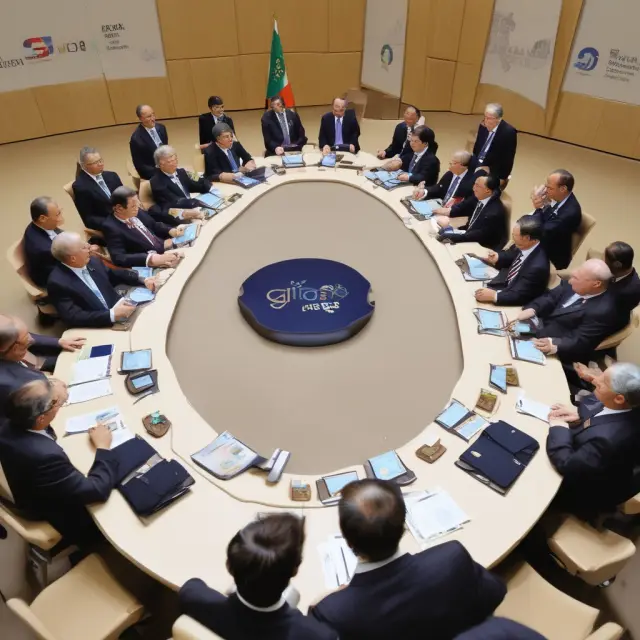
Focus and Agenda of the Group of 20 (G-20)
The Group of 20 (G-20), a prominent forum for global financial issues, is comprised of finance ministers and central bank governors from 19 leading economies, along with the European Union. Established in 1999, this international organization aims to promote economic growth, boost international trade, and regulate financial markets. With its members representing over 80% of the global Gross Domestic Product (GDP), 75% of worldwide trade, and approximately 60% of the world population, the G-20 significantly influences international monetary and financial matters.
The G-20 is not a legislative body; however, its discussions shape the fiscal policies within each member country and impact global cooperation. The organization’s agenda encompasses various pressing topics, such as cryptocurrencies, food security, and trade wars.
Initially focusing on ensuring the sustainability of sovereign debt and promoting financial stability, recent G-20 summits have addressed issues related to economic growth, international trade, and financial market regulation in more depth. The current Indonesian Presidency has identified three key areas for action: global health architecture, digital transformation, and sustainable energy transition.
In addition to its primary focus on economic matters, the G-20 agenda has occasionally included discussions on geopolitical issues, such as the role of major powers in international affairs and their foreign policies.
The G-20’s role and impact extend beyond its formal agreements due to its influence over global economic trends and the cooperation between member countries. The group’s leaders’ summits have become an essential platform for addressing critical issues, shaping the global economic discourse, and fostering international collaboration.
The G-20’s role in global financial governance has been compared to that of the older Group of Seven (G-7), which includes seven leading industrialized democracies. Although sharing some similarities, such as being forums for discussing economic issues among leading nations, the G-20 and the G-7 differ significantly in membership, focus, and influence.
In conclusion, the Group of 20 (G-20) has emerged as a vital player in shaping the global economy by focusing on international trade, financial market regulation, and economic growth. Its diverse membership and influential discussions make it an essential platform for fostering international cooperation and addressing pressing issues in the modern world.
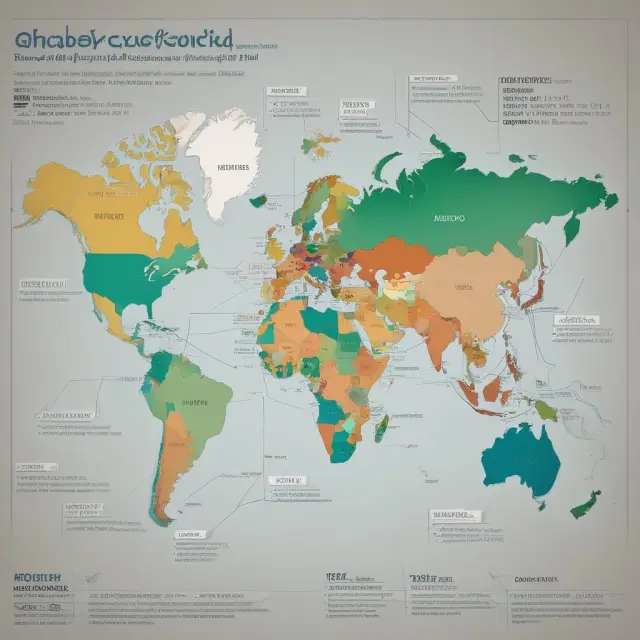
History and Evolution of the Group of 20 (G-20)
The Group of Twenty (G-20) is a prominent forum for global financial issues, formed in 1999. Comprised of finance ministers and central bank governors from 19 major economies and the European Union, its members represent over 80% of the world’s economic output and 75% of international trade. The G-20 was created as a response to the Asian financial crisis in 1997-1998 and has since evolved into an essential platform for international cooperation on key global issues, such as economic growth, international trade, and financial market regulation.
The group’s origins can be traced back to meetings between finance ministers from the G-7 countries (Canada, France, Germany, Italy, Japan, the United Kingdom, and the United States), along with Argentina, Brazil, China, India, Mexico, Russia, Saudi Arabia, South Africa, South Korea, Turkey, and Indonesia. The first formal G-20 summit took place in Washington D.C., in 1999.
The focus of the group’s early discussions centered around ensuring the sustainability of sovereign debt and global financial stability. These themes have remained central topics at subsequent G-20 summits, with recent agendas expanding to address various challenges impacting the global economy, such as cryptocurrencies, food security, and trade wars.
In 2014, there were debates regarding Russia’s membership in the G-20 following its annexation of Crimea from Ukraine, resulting in Russia’s expulsion from the Group of Seven (G-7). Despite this, Russia has remained a member of the larger G-20 due to strong support from other BRIC nations and invitees.
Over the years, the G-20 has faced criticisms for its lack of transparency and policy prescriptions that disproportionately favor large corporations. Additionally, concerns have been raised regarding the group’s slow response to climate change, social inequality, and threats to democracy. In response to these issues, the current Indonesian presidency is focusing on global health architecture, digital transformation, and sustainable energy transition at the upcoming 2021 G-20 summit in Rome.
Comparatively, the Group of Seven (G-7) was formed back in 1975 and consists of the seven countries with the largest developed economies: France, Germany, Italy, Japan, the United States, the United Kingdom, and Canada. Although the G-20’s agenda now extends beyond finance to include political leaders, it is still seen as a more political body due to its history of involving heads of state and government alongside finance ministers and bank governors.
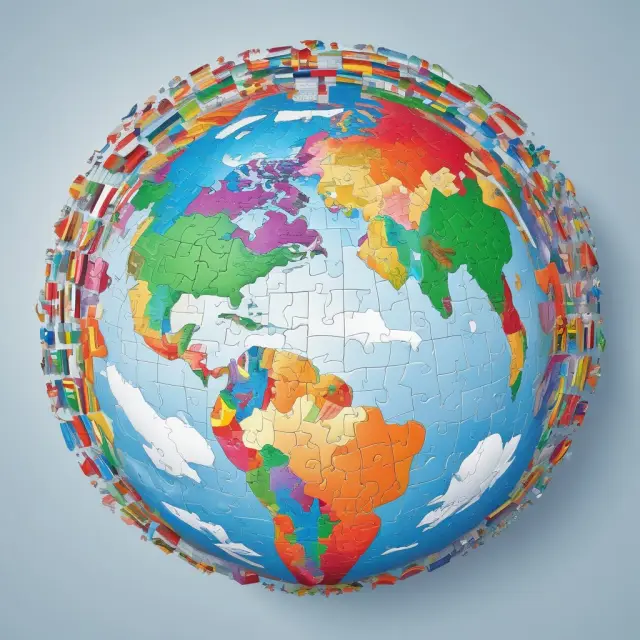
The G-20 vs. the Group of Seven (G-7)
The Group of 20 (G-20) shares a significant overlap with its older counterpart, the Group of Seven (G-7), as the former includes all members of the latter and more, forming a diverse group of countries from both developed and developing economies. Although the G-7 was established first in 1975, the G-20’s formation marked a shift towards a more inclusive global economic forum, with its initial focus on financial stability and sovereign debt sustainability evolving to cover issues such as international trade, employment, women’s empowerment, development, and wellness.
The G-7, also known as the ‘Group of Seven Major Industrialized Economies,’ is a political association comprising France, Germany, Italy, Japan, the United States, the United Kingdom, and Canada. While it primarily focuses on international issues—including economic and monetary matters—the G-20’s agenda extends beyond that of its predecessor in terms of both membership scope and topics discussed. The main difference between the two lies in their composition: the G-7 is exclusively composed of developed nations, whereas the G-20 includes a more diverse mix of countries with varying levels of economic development.
The G-7 summits have traditionally been attended by heads of state or government, while the G-20 meetings invite finance ministers and central bank governors. However, since the global financial crisis in 2008, leaders have increasingly started attending G-20 meetings, blurring the lines between the political and economic spheres in both forums.
Historically, Russia’s membership in the G-20 has been a subject of debate. After its military intervention in Ukraine and annexation of Crimea, the G-7 suspended Russia’s participation in their group, leading to the country’s eventual departure in 2017. However, Russia remains a member of the larger G-20, with support from major emerging economies such as Brazil, India, China (BRIC nations). The ongoing discussions regarding Russia’s presence within the organization resurfaced when President Biden called for its expulsion following its invasion of Ukraine in 2022.
In summary, while the G-7 and G-20 share some similarities, they differ significantly in terms of their membership composition and focus areas. The former is a political body exclusively made up of developed nations, while the latter is an economic forum that brings together leading economies from both developed and developing countries. This more inclusive approach to international cooperation has enabled the G-20 to address pressing global issues and shape financial policies in a broader context.
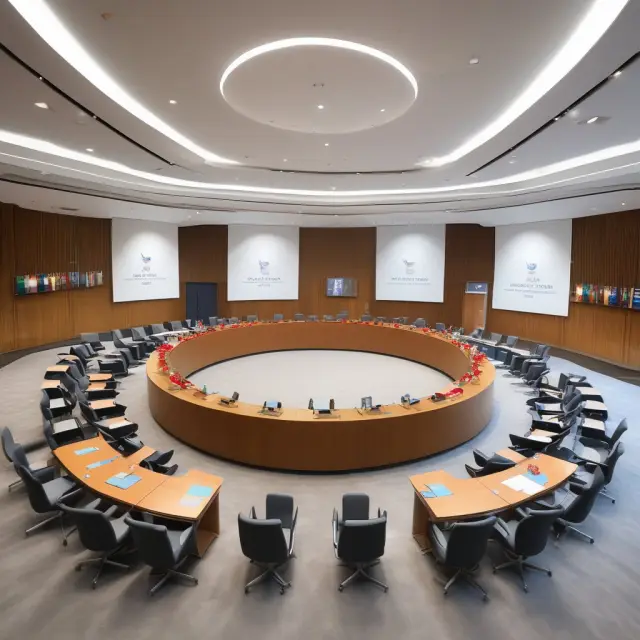
G-20 Membership: Current Members and Invitees
The Group of 20 (G-20) is a forum for discussions between finance ministers and central bank governors from 19 of the world’s largest economies, along with the European Union. With its members representing over 80% of global Gross Domestic Product (GDP), approximately 75% of global trade, and 60% of the world population, the G-20 wields significant influence in shaping financial policy and international cooperation on economic issues.
Current Members
The current members consist of both developed and emerging economies, including Argentina, Australia, Brazil, China, India, Indonesia, Mexico, Russia, Saudi Arabia, South Africa, South Korea, Turkey, the United Kingdom, the United States, the European Union (EU), France, Germany, Italy, and Japan.
Invitees:
Beyond these members, the G-20 invites select countries to participate in its events. Spain is a permanent invitee due to its role as the chair of the Association of Southeast Asian Nations (ASEAN). The African Union Chair and a representative from the New Partnership for Africa’s Development (NEPAD) are also regular invitees. At least one country from each region is usually invited by the presidency. International organizations, including the International Monetary Fund (IMF), World Bank, United Nations, Financial Stability Board, and World Trade Organization, are also in attendance.
The G-20’s membership policy has been a source of criticism for its perceived lack of inclusivity. Some argue that the group should expand to better reflect global economic diversity, while others applaud the current composition for allowing developing economies a voice in international financial discussions.
Criticisms of the Group of 20 (G-20):
Despite its significant influence, the G-20 has faced numerous criticisms throughout its history. Transparency and accountability have been major concerns, with critics pointing to the absence of a formal charter for the group and the lack of public disclosure surrounding certain meetings and decision-making processes. Some policy prescriptions have also sparked controversy, especially among liberal groups who argue that the G-20 encourages trade agreements favoring large corporations and neglects crucial issues such as climate change, social inequality, and threats to democracy.
The Role of the Group of 20 (G-20) in Global Economics
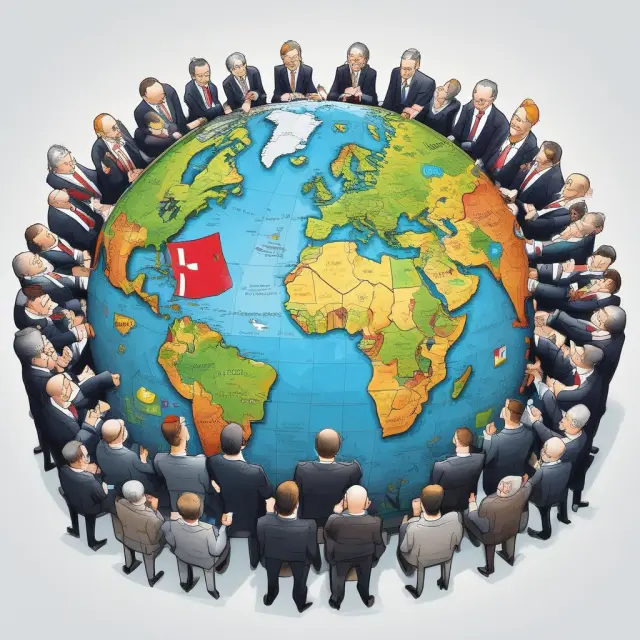
As a leading forum for discussions on global financial issues, the influence and importance of the G-20 cannot be overlooked. The group is composed of the finance ministers and central bank governors from 19 major economies, alongside the European Union. Established in 1999, the primary focus of the G-20 lies in promoting global economic growth, international trade, and regulating financial markets.
Though not a legislative body, the agreements and decisions made at G-20 meetings have significant implications for the economies of its members. The combined economies of these countries account for over 80% of the gross world product (GWP), 75% of global trade, and approximately 60% of the world population.
The agenda and activities of the G-20 are established by its rotating presidencies in cooperation with the membership. Initially, the discussions centered around the sustainability of sovereign debt and global financial stability. These themes have remained relevant topics at summits, alongside discussions on global economic growth, international trade, and the regulation of financial markets.
Under the current Indonesian Presidency, the G-20 is focusing on three interconnected pillars: global health architecture, digital transformation, and sustainable energy transition. In 2021, the summit was held in Rome on October 30th and 31st. The agenda included topics such as supporting small and medium-sized enterprises (SMEs) and women-owned businesses, the role of the private sector in combating climate change, and sustainable development.
Historically, the G-20 has proven to be more inclusive than the Group of Seven (G-7), which was formed in 1975 and comprises the seven countries with the world’s largest developed economies. While the G-20 initially included all members of the G-7, many developing nations have joined, bringing the total number to 19. This expansion is crucial because it allows for open dialogue between developed and emerging economies.
In 2014, the G-20 experienced controversy when Russia was expelled from the G7 following military incursions into Ukraine, but remained a member of the larger group due to support from Brazil, India, and China. This debate over membership has been renewed in 2022 as tensions between Russia and Western nations escalate.
Despite its significance, the G-20 has faced criticism regarding lack of transparency, slow response to climate change, and insufficient attention towards addressing social inequality and threats to global democracy. As the world continues to grapple with these pressing issues, it will be essential for the G-20 to adapt and evolve to effectively address these challenges and maintain its relevance as a leading forum for discussions on global financial matters.

Criticisms of the Group of 20 (G-20)
Since its formation, the G-20 has faced various criticisms regarding transparency, policy prescriptions, and representation. Critics argue that the lack of a formal charter for the group and closed-door meetings hinder accountability and transparency. The group’s policy recommendations have also been met with disapproval, particularly from liberal organizations, who accuse it of promoting trade agreements favoring large corporations and being slow to address climate change. Moreover, its membership policies are under scrutiny, as some argue that the G-20 is an exclusive club, with only a limited number of countries invited to participate.
One area where the G-20 has faced significant criticism is in addressing climate change. Critics argue that despite being home to over 80% of global greenhouse gas emissions, the group has not taken enough action to mitigate the effects of climate change or reduce emissions. Some countries, like the United States under President Donald Trump’s administration, have even withdrawn from important international climate agreements, such as the Paris Agreement.
Another area of concern is social inequality and global threats to democracy. Critics argue that the G-20, with its focus on economic issues, overlooks social issues and democratic challenges in various countries. For instance, while the group discusses economic growth, it does not devote enough attention to addressing income inequality, poverty, and political instability.
Finally, some critics argue that the G-20’s membership policies are too restrictive, as only a select few countries are invited to participate in its events. This lack of inclusivity has led to calls for more democratic representation and expanded membership. The African Union and other organizations have criticized the G-20 for not adequately addressing their concerns or including their representatives in important discussions.
Despite these criticisms, it is essential to acknowledge that the G-20 serves as a significant forum for global economic cooperation and policy coordination among its members. Its ability to influence decisions within its member countries can help shape the global economy, but it should also strive to address concerns related to transparency, accountability, climate change, social inequality, and democratic representation in order to maintain credibility and effectiveness.

The G-20’s Approach to Global Issues: Cryptocurrencies, Food Security, Trade Wars
One of the essential topics discussed in recent G-20 meetings is the approach that this group takes on various global issues. These discussions revolve around crucial areas such as cryptocurrencies, food security, and trade wars. In the following sections, we will delve deeper into each topic and examine how the G-20 has addressed them.
Cryptocurrencies:
The value of digital currencies, particularly Bitcoin, has gained significant traction in recent years. This emergence has led to the need for international cooperation and regulation to minimize potential risks associated with cryptocurrency transactions. In 2018, during the Argentine presidency, the G-20 leaders agreed to a statement urging governments to work together on establishing clear regulatory frameworks for digital assets. The European Union has taken steps towards creating such regulations under Markets in Crypto Assets (MiCA) and Digital Operational Resilience Act (DORA). However, there is still ongoing debate over the implementation of consistent and effective global cryptocurrency regulations due to differing viewpoints among member countries.
Food Security
Another pressing issue that requires cooperation from the G-20 is food security, particularly in the context of an ever-growing population. In 2018, during the Argentine presidency, a focus on a sustainable food future was proposed. This approach aims to address various aspects of food production and distribution, including agriculture, logistics, and innovation, while ensuring environmental sustainability. In the aftermath of the COVID-19 pandemic, food security has taken on even more significance due to disruptions in supply chains and increased demand for essential commodities. The G-20’s response to this issue includes promoting sustainable agricultural practices, reducing trade barriers, and improving coordination between countries.
Trade Wars
The impact of trade wars between major economies has been felt across the globe. The U.S.-China trade conflict is a prime example of this trend. During the 2018 Buenos Aires summit, the G-20 leaders acknowledged the importance of open markets and global trade. They also emphasized the need for dialogue and cooperation to resolve trade disputes, including those between major powers. In 2019, during the Osaka summit, G-20 countries agreed to work towards a free, fair, non-discriminatory, transparent, predictable, and stable international trade environment. Despite these statements, the trade tensions have persisted, with some countries imposing tariffs on each other’s goods. The situation highlights the challenges faced by the G-20 in ensuring global economic cooperation while addressing the interests of its members.
In conclusion, the issues surrounding cryptocurrencies, food security, and trade wars are significant topics that require international cooperation to ensure a stable and sustainable future for all. The G-20’s approach towards these matters showcases both progress and challenges. While some agreements have been reached, the implementation of these decisions remains a complex process due to differing viewpoints among member countries. The discussions surrounding these issues illustrate the importance of open dialogue and collaboration in addressing global challenges that transcend national borders.

Future of the Group of 20 (G-20): Challenges and Opportunities
As the Group of 20 (G-20) has navigated its way through significant global issues such as cryptocurrencies, food security, and trade wars, it faces new challenges and opportunities in the future. Here are some potential areas where the G-20 could make a substantial impact:
Climate Change
One of the most pressing concerns for the world today is climate change. The G-20’s role in addressing this issue is crucial due to its members’ significant contributions to greenhouse gas emissions and global economic influence. Although the group has acknowledged the need for action, critics argue that more needs to be done to reduce carbon emissions and promote sustainable energy transition.
Digital Transformation
With advancements in technology rapidly transforming industries and economies, the G-20 must adapt to ensure its members remain competitive. This includes addressing data privacy concerns, establishing international norms for digital assets such as cryptocurrencies, and promoting inclusive growth in the digital economy.
Sustainable Energy Transition
The shift towards renewable energy sources is an essential step towards reducing greenhouse gas emissions and mitigating climate change. The G-20 can play a vital role by providing financial incentives, setting global standards for clean technology, and supporting research and development in this area.
Infrastructure Development
Investing in infrastructure development can contribute to economic growth and improve the quality of life for millions of people around the world. However, there is a significant financing gap that needs to be addressed. The G-20 can help bridge this gap by mobilizing public and private resources and promoting best practices in infrastructure projects.
Democracy and Human Rights
As the global community strives for more inclusive economic growth and sustainable development, it’s crucial that these advancements are achieved democratically and respect human rights. The G-20 can help create an environment conducive to democratic governance by addressing political instability, promoting good governance, and encouraging dialogue between member nations.
Preparing for the Future
The G-20’s future success depends on its ability to address these challenges while also remaining responsive to emerging issues. This requires strong leadership, open communication, and collaboration between members. As the world’s leading economies continue to shape global economic policies, it is essential that the G-20 remains an inclusive and effective forum for dialogue and cooperation.
FAQs About the Group of 20 (G-20)
What exactly is the G-20? The Group of 20, also known as the G-20 or G20, is a forum for finance ministers and central bank governors from 19 of the world’s largest economies, along with the European Union. Formed in 1999, its primary focus is on promoting global economic growth, international trade, and financial market regulation.
When was the G-20 established? The G-20 was founded in 1999 to address the sustainability of sovereign debt and global financial stability.
Who are the members of the G-20? Its membership consists of finance ministers and central bank governors from 19 countries, as well as the European Union. The current members are Argentina, Australia, Brazil, Canada, China, France, Germany, India, Indonesia, Italy, Japan, Mexico, Russia, Saudi Arabia, South Africa, South Korea, Turkey, the United States, the United Kingdom, and the European Union.
What is the role of the G-20 in global economic governance? Although not a legislative body, the G-20’s discussions help shape financial policy within each member country. Its agenda topics include economic growth, international trade, and financial market regulation. The group’s decisions do not have legal impact, but they can significantly influence global cooperation on these issues.
How does the G-20 compare to the Group of Seven (G-7)? While both groups focus on economic matters, the G-20 has a broader membership base and represents developing economies. The G-7, established in 1975, is a forum for seven developed countries: France, Germany, Italy, Japan, the United States, the United Kingdom, and Canada.
What topics are discussed at G-20 meetings? Recent agenda items have included cryptocurrencies, food security, and trade wars. The G-20’s priorities shift depending on the country that holds the presidency. For example, under the Indonesian Presidency, the focus is on global health architecture, digital transformation, and sustainable energy transition.
Why was Russia suspended from the G-7? After Russia made military incursions into Ukraine and annexed Crimea, the G-7 suspended its membership with Russia in 2014. However, Russia remains a member of the larger G-20 due to strong support from countries like Brazil, India, and China.
What are the criticisms of the Group of 20 (G-20)? Criticisms include lack of transparency, encouraging trade agreements that favor large corporations, failing to address climate change adequately, and neglecting social inequality and threats to global democracy. Some also argue the group’s membership policies are too restrictive and lack economic diversity.
 Next entry · No. 1,720Understanding the Group of 30: Its Mission, History, and Impact on International Finance
See also
-
 No. 1,951
27 Nov 2024
21 min
Understanding the Role and Significance of Group of 11 (G-11) in Global Finance and Investment
Global Finance
No. 1,951
27 Nov 2024
21 min
Understanding the Role and Significance of Group of 11 (G-11) in Global Finance and Investment
Global Finance -
 No. 4,715
11 Jul 2025
19 min
Understanding the Spillover Effect: How Global Events Impact Investment Opportunities
Global Finance
No. 4,715
11 Jul 2025
19 min
Understanding the Spillover Effect: How Global Events Impact Investment Opportunities
Global Finance -
 No. 2,463
08 Jan 2025
20 min
Understanding International Finance: Key Concepts, Institutions, and Challenges
Global Finance
No. 2,463
08 Jan 2025
20 min
Understanding International Finance: Key Concepts, Institutions, and Challenges
Global Finance -
 No. 2,303
26 Dec 2024
21 min
Understanding the International Monetary Fund (IMF): Mission, History, and Activities
Global Finance
No. 2,303
26 Dec 2024
21 min
Understanding the International Monetary Fund (IMF): Mission, History, and Activities
Global Finance -
 No. 1,768
04 Nov 2024
16 min
Understanding General Orders (GO): Merchandise Left Behind at U.S. Customs
Global Finance
No. 1,768
04 Nov 2024
16 min
Understanding General Orders (GO): Merchandise Left Behind at U.S. Customs
Global Finance -
 No. 1,721
27 Oct 2024
20 min
Understanding the Group of Seven (G-7): Its Role, History, Functions, and Significance in Global Economy
Global Finance
No. 1,721
27 Oct 2024
20 min
Understanding the Group of Seven (G-7): Its Role, History, Functions, and Significance in Global Economy
Global Finance