Understanding the Group of 30: Its Mission, History, and Impact on International Finance

Understand the Group of 30's role in shaping international finance through its history, mission, membership, and key findings.
Introduction to the Group of 30 (G-30)
The Group of Thirty (G-30), established in 1978, is a distinguished and esteemed nonprofit organization composed of influential economists, bankers, and policymakers from both public and private sectors. Its primary objective is to foster discussions on global economic and financial issues, thereby deepening the understanding of international repercussions of decisions made within these spheres.
This esteemed body, with its rich history and profound influence, has played a critical role in shaping the international finance landscape. Comprising some of the world’s most brilliant minds, G-30 members meet twice annually to explore topics ranging from foreign exchange and capital markets to macroeconomic issues like global production and labor concerns.
The G-30’s Mission and Significance
The mission of the Group of Thirty (G-30) is to “deepen understanding of international economic and financial issues and explore the international repercussions of decisions taken in the public and private sectors.” Their meetings, held twice a year in Washington D.C., are invitation-only events that generate invaluable insights into the intricacies of global finance and economics.
The group’s influence extends beyond its meetings through the publication of research and reports on topics of mutual interest to its membership, available for free on their website. These reports often cover areas such as financial reform, lessons from past crises, credit markets, and stability and growth. The findings from these studies can significantly impact global policy decisions in both public and private sectors.
Historical Background of the Group of Thirty
Tracing its roots back to 1978, the G-30 was founded by Geoffrey Bell under the auspices of the Rockefeller Foundation. Its origins can be traced to the Bellagio Group, which aimed to address international currency issues and the balance of payments crisis that faced the United States during the early 1960s. The first chair of the G-30 was Johannes Witteveen, the former managing director of the International Monetary Fund (IMF). In 2021, Jacob Frenkel, a former governor of the Bank of Israel and former chairman of Chase International, holds the position of G-30 chair.
Membership and Structure
G-30 members come from diverse backgrounds, with academics, economists, company chiefs, and representatives from national, regional, and central banks forming its esteemed ranks. These influential individuals bring a wealth of experience and expertise to the table, making for insightful and productive discussions on global economic issues.
Conclusion:
In conclusion, the Group of Thirty (G-30) has long been a driving force in shaping international finance through its role as a forum for understanding global economic and financial matters. With an impressive roster of members, enlightening meetings, and influential research, the G-30 continues to provide essential insights into the intricacies of the international financial landscape.

The Role and Mission of the Group of 30
The Group of Thirty (G-30), a prestigious assemblage of esteemed economists, bankers, and influential figures from public and private sectors, has been instrumental in shaping the global financial landscape since its inception. Founded in 1978, this international organization’s primary mission is to deepen understanding of international economic and financial issues, exploring the far-reaching consequences of decisions made within the realms of both the public and private sectors (Group of Thirty, n.d.).
Serving as a forum for open dialogue on crucial financial matters, the G-30 gathers twice yearly to delve into various topics including foreign exchange, capital markets, central banking, macroeconomic issues, and global production and labor concerns. Their meetings, held in Washington D.C., are invitation-only events where members engage in thoughtful discussions regarding the complexities of the international economy.
The group’s impact is far-reaching, with its research findings often influencing policymakers and shaping financial regulations. One particularly significant example is their 1993 paper on derivatives which addressed growing skepticism towards these financial instruments due to a lack of understanding. The report not only highlighted the potential benefits of derivatives but also provided recommendations for improved risk management techniques, ultimately contributing to the development of the over-the-counter (OTC) derivatives market as we know it today (Group of Thirty, 1993).
The G-30’s work is open to the public, with all research and publications available for download from their website free of charge. The organization also hosts study groups and seminars on topics of mutual interest. Recent areas of focus include financial reform, lessons from the 2008 global financial crisis, the credit market, and stability and growth (Group of Thirty, n.d.).
The G-30’s membership includes an impressive roster of influential figures such as Nobel Prize laureate Paul Krugman, former President of the European Central Bank Jean-Claude Trichet, current Bank of England Governor Mark Carney, and senior research scholar at Princeton University William Dudley (formerly president of the Federal Reserve Bank of New York) (Group of Thirty, n.d.).
By providing a platform for open dialogue, fostering in-depth research, and promoting best practices, the G-30 continues to play a vital role in shaping the global financial landscape and addressing the complexities of an ever-evolving economic environment.
The Structure and Membership of the Group of 30
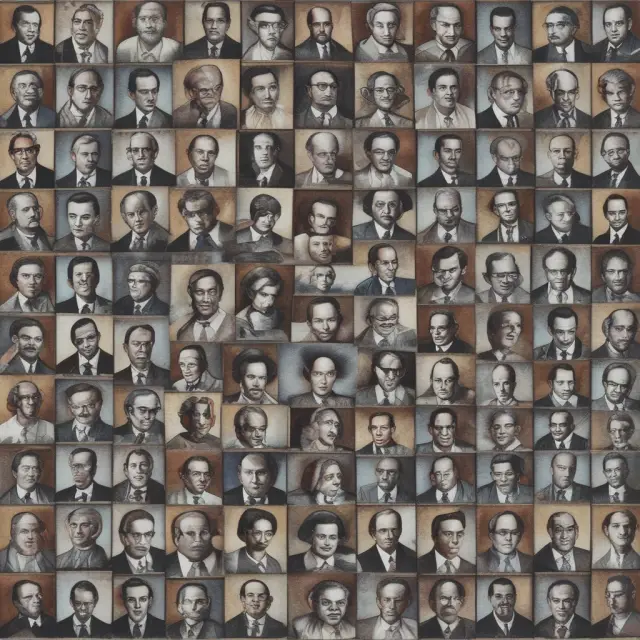
The Group of Thirty (G-30) is a unique organization in international finance, with an exclusive membership of academics, economists, company chiefs, and representatives from public institutions worldwide. Founded in 1978, its primary objective is to deepen understanding of international economic and financial issues and explore the international repercussions of decisions made within both private and public sectors.
Membership Criteria:
To join the G-30, individuals must hold a distinguished background with substantial achievements in their respective fields. The organization values diversity, seeking members from various regions and professional spheres. This approach ensures that the group’s discussions are well-rounded and reflect a multitude of perspectives.
Composition:
The G-30 comprises prominent individuals who have made significant contributions to economics, business, finance, academia, and public institutions. Some current notable members include Paul Krugman, economist and opinion writer for the New York Times; Jean-Claude Trichet, a former president of the European Central Bank (ECB); Mark Carney, governor of the Bank of England (BoE), and William Dudley, a senior research scholar for economic policy studies at Princeton University.
Meetings:
Members engage in regular meetings twice yearly in Washington, D.C., providing opportunities to discuss pressing global financial issues. The events are invitation-only and offer an exclusive platform where members can exchange ideas, insights, and concerns.
Publications:
The G-30 is also renowned for its research publications available on its website free of charge. These reports cover topics ranging from foreign exchange to capital markets, central banks, and macroeconomic issues, such as global production and labor. By providing access to these resources, the organization aims to contribute to a better understanding of economic and financial matters worldwide.
In conclusion, the Group of Thirty is an integral part of international finance, fostering a platform for influential leaders from diverse backgrounds to collaborate on pressing issues facing the global economy. Its unique structure and selective membership criteria ensure that discussions are both productive and insightful. As the group continues to evolve, it remains committed to deepening understanding of international economic and financial matters and exploring their implications for public and private institutions worldwide.

Historical Background of the Group of 30
The origin of the Group of 30 (G-30) can be traced back to the late 1960s, with its roots in the Bellagio Group. The Bellagio Group was formed by Austrian economist Fritz Machlup to discuss international currency issues and address the balance of payments (BOP) crisis that was gripping the United States at the time.
The G-30’s formal establishment occurred in 1978 under the direction and initial funding from the Rockefeller Foundation. The Bellagio Group laid the foundation for the new organization with its mission to deepen understanding of international economic and financial issues and explore the far-reaching consequences of decisions made within both public and private sectors.
The G-30’s inaugural chairman was Johannes Witteveen, a respected figure who had previously served as managing director of the International Monetary Fund (IMF). The first meetings of the G-30 took place in Washington, D.C., with attendees including prominent economists, bankers, and policymakers from across the globe.
As the organization grew, its focus expanded beyond discussions on international payments to cover a wide array of topics that affected the financial landscape, such as capital markets, central banking, and macroeconomic issues like global production and labor concerns.
Since then, the G-30 has continued to meet regularly—twice a year—to exchange knowledge and insights on pressing economic and financial matters. Notably, the group publishes its research findings freely, allowing anyone interested to access and learn from their in-depth analyses. The organization’s reports have significantly influenced policymakers’ decisions and contributed to shaping the global financial landscape in crucial ways. One such example is a 1993 report on derivatives, which helped increase understanding of these complex financial instruments and mitigate concerns surrounding their potential risks.
The Group of 30’s current chair is Jacob Frenkel, who previously held the position of governor of the Bank of Israel and was the chairman of Chase International. Under his leadership, the organization continues to focus on topics like financial reform, lessons learned from the global financial crisis, credit markets, stability, and growth.

Meetings, Publications, and Research
The Group of 30 (G-30) is a nonprofit organization with a mission to deepen understanding of international economic and financial issues and explore the repercussions of decisions made in both private and public sectors. Established in 1978, the G-30 fosters dialogue among influential leaders from various backgrounds on topics ranging from global production and labor to macroeconomic challenges like foreign exchange and capital markets.
The organization hosts regular meetings twice a year where members discuss ongoing international economic trends and exchange insights. These events are invitation-only, meaning they are not open to the general public. However, G-30 publishes its findings and reports on their website for free access.
One of the most influential reports released by the Group of 30 was a paper on derivatives during a time when skepticism surrounded these financial securities due to their complexity and lack of understanding. The report delved into various types of derivatives, including forwards, futures, options, swaps, and other market contracts tied to an underlying asset.
Beyond the biannual meetings, G-30 organizes study groups and seminars on topics of common interest among its membership. Recent areas of focus include financial reform, insights from the global financial crisis, the credit market, stability, and growth.
The history of the Group of 30 began in 1978 as an initiative by Geoffrey Bell under the support and funding of the Rockefeller Foundation. Prior to its formation, a group called the Bellagio Group focused on addressing international economic crises and currency issues during the balance of payments crisis facing the United States in the early 1960s. The G-30’s first chair was Johannes Witteveen, former managing director of the International Monetary Fund (IMF). Current chairman is Jacob Frenkel, a former governor of the Bank of Israel and ex-chairman of Chase International.
The Group of 30 boasts an impressive roster of members consisting of influential leaders from around the world who have held senior positions in central banking or still do so. Notable names include Paul Krugman, economist and opinion writer for The New York Times; Jean-Claude Trichet, former president of the European Central Bank (ECB); Mark Carney, governor of the Bank of England (BoE), and William Dudley, a senior research scholar at Princeton University and previous president of the Federal Reserve Bank of New York.

Notable Findings and Impacts of the Group of 30
Since its establishment in 1978, the Group of Thirty (G-30) has produced numerous reports addressing significant topics within international finance. A few of these findings have made a remarkable impact on global economics, influencing policymakers and shaping financial regulations. One prominent example is the G-30’s report on derivatives published in 1993.
At the time, many investors, regulators, and the general public held skepticism towards derivatives due to their complexity and potential risks. However, the G-30 recognized their importance as valuable financial instruments that could help manage market risk. In response, they released a report entitled “The Over-the-Counter Derivatives Market: Background, Current Developments, Potential Risks.” This publication served as an essential catalyst in promoting greater awareness of derivatives and their potential benefits within the financial industry.
Following the G-30’s report, several regulatory bodies took notice and began implementing changes to address the perceived risks associated with over-the-counter (OTC) derivatives. For instance, the International Organization of Securities Commissions (IOSCO) published a report in 1995 that echoed many of the G-30’s recommendations, focusing on the need for more transparency and standardization within the OTC markets.
Another notable example is the G-30’s work on foreign exchange and capital flows. In the late 1980s, the organization released a report titled “International Capital Markets: Market Development and Implications for National Policymakers.” This publication highlighted the growing significance of international capital markets and their impact on national economic policies. The recommendations provided in this report influenced various policymakers, leading to significant changes in foreign exchange regulations around the world.
Moreover, the G-30’s 1998 report “Global Imbalances: Surveys, Causes and Consequences” brought attention to the global imbalances between surplus and deficit countries, such as China and the United States. This study played a crucial role in sparking discussions on the need for addressing these imbalances and fostering greater international cooperation towards promoting financial stability and growth.
In summary, the Group of Thirty has proven to be an influential organization that shapes global finance through its insightful research and recommendations. Many of their findings have led to important changes in policymaking and financial regulations. By addressing pressing issues within the realm of foreign exchange, capital markets, and central banking, the G-30 continues to make a significant impact on international economic policies and the broader financial landscape.

Current Chair and Leadership of the Group of 30
At the helm of the esteemed Group of Thirty (G-30) is its current chair, Jacob Frenkel. An accomplished economist and seasoned central banker, Frenkel brings a wealth of experience to the table having served various prominent roles throughout his career. Currently, he holds the position as former governor of the Bank of Israel and former chairman of Chase International.
The G-30, which was established in 1978 by Geoffrey Bell under the initial funding from the Rockefeller Foundation, is a nonprofit organization that gathers influential leaders from academia, business, and government sectors to discuss international economic and financial issues. The group’s current mission, as stated on their website, is “to deepen understanding of international economic and financial issues and explore the international repercussions of decisions taken in the public and private sectors.”
Besides serving as a platform for open discussions, the G-30 holds twice-yearly meetings in Washington D.C., where members engage in debates on topics like foreign exchange, capital markets, central banking, and macroeconomic issues that range from global production and labor concerns to financial reforms, lessons learned from crises, and credit markets stability and growth.
Under Frenkel’s leadership, the organization continues its tradition of exploring pressing matters that significantly impact the global economy and finance. Its previous chair, Jean-Claude Trichet, served as the president of the European Central Bank (ECB) before his tenure with the G-30. Mark Carney, who presently governs the Bank of England (BoE), was a notable member before assuming his current role. William Dudley, senior research scholar for economic policy studies at Princeton University and former president of the Federal Reserve Bank of New York, also boasts an impressive resume within the organization.
Frenkel’s background in central banking adds to the G-30’s rich history and expertise in handling international economic challenges. The group’s previous members have included Nobel laureate economist Paul Krugman and many other distinguished individuals who held leadership positions in central banks, institutions, and governments around the world.
Notable Members of the Group of 30
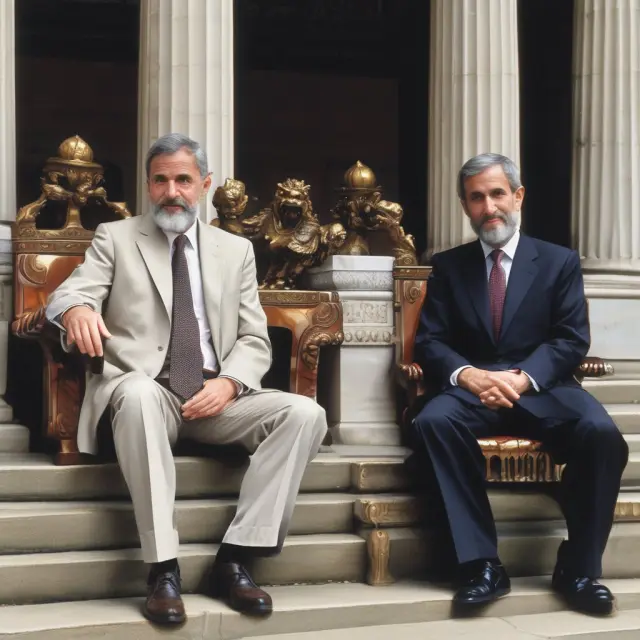
The roster of G-30 members reads like an impressive list of global finance leaders from various sectors—academia, banking, and government institutions. The group’s elite membership is made up of influential personalities who have shaped international finance in significant ways. Among these distinguished figures are Paul Krugman and Mark Carney, whose contributions to economics and central banking merit further examination.
Paul Krugman
Nobel laureate Paul Krugman—an esteemed economist and New York Times op-ed columnist—is one of the most influential members of the G-30. Krugman has made substantial contributions to economics, with groundbreaking work in international trade theory and macroeconomics. His research on trade patterns led him to receive the Nobel Memorial Prize in Economic Sciences in 2008 for his analyses of trade flows between countries.
Krugman’s opinions are widely read, not only by economists but also by the general public due to his New York Times column. He gained further prominence during the global financial crisis when he advocated for aggressive government intervention and fiscal stimulus measures. Krugman’s work continues to be an essential source of insight and analysis on economic issues.
Mark Carney
Former Bank of England (BoE) Governor Mark Carney is another noteworthy member of the G-30. Carney joined the organization in 2019, following his departure from the BoE, where he served as the longest-serving governor since the bank’s independence.
Under Carney’s leadership, the BoE became more open and transparent, engaging with the public and focusing on financial stability alongside monetary policy. This approach led to a rebranding of the central bank, emphasizing its role in promoting the economy’s long-term sustainability. Carney’s tenure was marked by his efforts to prepare the United Kingdom for Brexit and steer it through its aftermath.
Carney has maintained his ties with the G-30 since leaving the BoE. In 2021, he became a distinguished visiting fellow at Cambridge University’s Judge Business School and joined Brookfield Asset Management as a senior adviser. He remains an active participant in discussions surrounding international finance.
The presence of members like Paul Krugman and Mark Carney speaks volumes about the caliber of individuals involved with the Group of 30. Their insights and expertise significantly contribute to the group’s mission to deepen understanding of international economic and financial issues.

Criticisms and Controversies of the Group of 30
Despite its esteemed status as a prominent voice in international finance, the Group of 30 (G-30) is not without controversy. Critics argue that the organization’s elitist nature restricts its influence and potentially undermines its credibility.
First and foremost, the G-30’s membership remains exclusive and invitation-only. Its membership is limited to prominent leaders from the public and private sectors, including academia and financial institutions. This exclusivity raises questions regarding the extent of its accessibility to diverse perspectives and experiences that can contribute to addressing pressing global economic issues.
Additionally, due to its confidential nature, the organization’s discussions and deliberations are not publicly disclosed or accessible for scrutiny. As a result, there is little transparency surrounding the G-30’s decision-making processes and recommendations. The lack of transparency increases skepticism regarding the potential impact of their findings on international financial policy and regulation.
Moreover, some critics argue that the organization’s influence leans towards reinforcing the status quo rather than fostering meaningful change. Given the elite nature of its members, it is suggested that the G-30 may not be equipped to challenge the powerful interests driving global economic trends. Consequently, recommendations from the group can appear to serve the interests of the financial elites more so than those most affected by economic instability and inequality.
However, others argue that these criticisms undermine the value of the G-30 as a forum for high-level dialogue on pressing economic issues. The organization provides an essential platform for fostering collaboration between prominent figures from different sectors to discuss and collaborate on global economic challenges. The G-30’s influence is significant due to the expertise and knowledge its members bring to the table, which can ultimately contribute to shaping policy decisions and industry practices.
Regardless of these criticisms, the G-30 remains a force to be reckoned with in international finance. Its status as a thought leader on economic issues continues to influence financial markets, public policy, and global discourse on the future direction of the economy.

Frequently Asked Questions (FAQ)
What is the Group of 30 (G-30)?
The Group of 30 (G-30) is a nonprofit organization consisting of economists, bankers, and other influential leaders from public and private sectors who meet biannually to discuss global economic issues. Founded in 1978, the G-30 aims to deepen understanding of international economics and explore the repercussions of decisions made by both private and public entities.
What is the mission of the Group of 30 (G-30)?
The primary objective of the G-30 is to improve understanding of global economic matters and examine their implications for policy decisions in both the public and private sectors. Topics covered range from foreign exchange, capital markets, central banking, and macroeconomic issues, such as production and labor.
Where does the Group of 30 (G-30) meet?
The G-30 convenes twice a year for closed-door meetings in Washington, D.C.
Who attends the meetings of the Group of 30 (G-30)?
Members include economists, company chiefs, and representatives from national, regional, and central banks. The events are invitation-only and not open to the public.
What publications does the Group of 30 (G-30) produce?
The G-30 publishes research and reports on various international economic topics available for free download from its website.
What have been some significant findings of the Group of 30 (G-30)?
One notable finding was the group’s report on derivatives during a time when concerns around their complexity and lack of understanding were prevalent. The report helped alleviate skepticism towards these financial securities, such as forwards, futures, options, swaps, and other similar market contracts derived from underlying assets.
When was the Group of 30 (G-30) founded?
The G-30 was established in 1978 by Geoffrey Bell under the funding and direction of the Rockefeller Foundation.
Who is currently leading the Group of 30 (G-30)?
Jacob Frenkel, a former governor of the Bank of Israel and former chairman of Chase International, serves as the current chair of the G-30.
 Next entry · No. 1,721Understanding the Group of Seven (G-7): Its Role, History, Functions, and Significance in Global Economy
See also
-
 No. 1,791
06 Nov 2024
16 min
Understanding the Global Financial Stability Report (GFSR): A Semiannual Assessment of Global Financial Markets and Emerging-Market Financing by the IMF
Global Finance
No. 1,791
06 Nov 2024
16 min
Understanding the Global Financial Stability Report (GFSR): A Semiannual Assessment of Global Financial Markets and Emerging-Market Financing by the IMF
Global Finance -
 No. 5,874
15 Oct 2025
18 min
Understanding the Modern Day Yuppie: Characteristics and Evolution
Business Finance
No. 5,874
15 Oct 2025
18 min
Understanding the Modern Day Yuppie: Characteristics and Evolution
Business Finance -
 No. 5,700
30 Sep 2025
23 min
Understanding the Prestige and Significance of White Shoe Firms in Finance and Investment
Business Finance
No. 5,700
30 Sep 2025
23 min
Understanding the Prestige and Significance of White Shoe Firms in Finance and Investment
Business Finance -
 No. 5,080
10 Aug 2025
20 min
Understanding the Trilemma: Balancing Currency, Capital, and Monetary Policy
Business Finance
No. 5,080
10 Aug 2025
20 min
Understanding the Trilemma: Balancing Currency, Capital, and Monetary Policy
Business Finance -
 No. 3,566
08 Apr 2025
20 min
Understanding Normative Economics: A Guide for Institutional Investors
Economics
No. 3,566
08 Apr 2025
20 min
Understanding Normative Economics: A Guide for Institutional Investors
Economics -
 No. 603
04 May 2024
17 min
Understanding Capital Accounts: A Comprehensive Overview
Economics
No. 603
04 May 2024
17 min
Understanding Capital Accounts: A Comprehensive Overview
Economics