Understanding the Role and Significance of the Federal Reserve Board of Governors

Explore the Federal Reserve Board of Governors' roles, responsibilities, and members, learning how this crucial body shapes U.S. monetary policy.
Introduction to the Federal Reserve Board of Governors
A board of governors, as its name suggests, refers to an assembly of individuals appointed to oversee the administration and management of various organizations. In the realm of finance and economics, the most prominent example of a board of governors is that of the U.S. Federal Reserve System, which plays a crucial role in implementing monetary policy and maintaining the stability of the financial system.
The Federal Reserve Board of Governors, also known as the Board, is the central governing body of the Federal Reserve System. It is composed of seven members, each appointed by the President of the United States and confirmed by the Senate for 14-year renewable terms (Bernanke & Mishkin, 2005). The board’s primary responsibilities include analyzing domestic and international economic developments, overseeing the operations of the Federal Reserve Banks, setting monetary policy through its role on the Federal Open Market Committee (FOMC), and administering consumer credit protection laws.
Understanding the Role of a Board of Governors in the U.S. Federal Reserve System
The concept of a board of governors can be traced back to medieval European universities, where it referred to an advisory body composed of senior scholars (Berman, 2014). In contemporary organizations, a board of governors typically consists of distinguished individuals who bring diverse expertise and perspectives. Their role is to provide strategic guidance, oversight, and accountability.
The Federal Reserve Board of Governors’ significance lies in its responsibility for overseeing the operations of the U.S. central bank and ensuring the stability and integrity of the country’s financial system. The board members, often experts in economics and finance, play a vital role in shaping monetary policy, which directly impacts inflation, employment levels, and interest rates across the economy.
In this article, we delve deeper into the structure, composition, and responsibilities of the Federal Reserve Board of Governors. We explore its history, the qualifications of its members, their roles and duties, and the ongoing implications for the broader economy and financial markets.

Composition of the Federal Reserve Board of Governors
The Federal Reserve System, as the central banking system of the United States, consists of a complex network of 12 regional banks and one Board of Governors. The Board of Governors plays an essential role in maintaining financial stability, implementing monetary policy, supervising and regulating financial institutions, and ensuring consumer protection. In this section, we will discuss the composition of the Federal Reserve Board of Governors, including the appointment process, term length, and qualifications of its members.
A board of governors is a collective body responsible for overseeing and managing an organization’s activities. Similar to various other organizations, the U.S. Federal Reserve System comprises a board of governors. This group plays a critical role in setting monetary policy, supervising the 12 regional Federal Reserve Banks, and ensuring the efficient operation of the nation’s payment system.
The Board of Governors is composed of seven individuals who are appointed by the President of the United States and confirmed by the Senate for a term of 14 years. The President may appoint one governor from each Federal Reserve District. The current composition of the Board includes Jerome H. Powell, Lael Brainard, Christopher J. Waller, Lisa D. Cook, Philip N. Jefferson, and Michelle W. Bowman, as of May 2023. The board chair serves a four-year term within their 14-year tenure, making them the face of monetary policy decisions for the Federal Reserve System.
The appointment process involves rigorous background checks, interviews, and evaluations to ensure that appointees possess a deep understanding of economics, financial markets, and public policy. The President selects nominees with input from various stakeholders such as congressional committees, the Federal Reserve Board, and industry experts. Senate confirmation is required to secure their position in the Federal Reserve System.
The staggered term lengths ensure continuity within the Federal Reserve Board of Governors. Since not all terms begin or end at the same time, there is a steady influx of new ideas and perspectives, while maintaining experienced expertise on the board. This balance of fresh insights and institutional knowledge allows the Federal Reserve to adapt to changing economic conditions and respond effectively to financial challenges.
In conclusion, the composition of the Federal Reserve Board of Governors plays an integral role in the stability and success of the U.S. economy. The process for appointing members, their term lengths, and staggered start dates all contribute to a well-functioning board capable of overseeing monetary policy, supervision, regulation, and consumer protection within the Federal Reserve System.

Responsibilities of the Federal Reserve Board of Governors
The United States Federal Reserve System, often referred to simply as “the Fed,” has a unique governing body known as the Federal Reserve Board of Governors (FRB or the Board). The board’s primary role is to ensure the effective execution of the Federal Reserve’s dual mandate: maintaining maximum employment and stable prices for the American public. This critical mission requires a strong and competent governance structure.
Who Is the Federal Reserve Board of Governors?
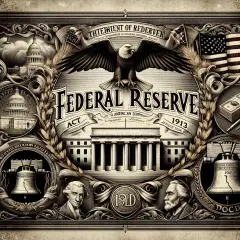
The Federal Reserve Board, established in 1913 under the Federal Reserve Act, is a seven-member body appointed by the President and confirmed by the Senate. Each governor serves a non-renewable term of fourteen years. The board plays an essential role as part of the Federal Open Market Committee (FOMC), which determines U.S. monetary policy.
Key Functions of the Federal Reserve Board of Governors
1. Economic Analysis:
The Board oversees extensive research and analysis of economic developments, both domestically and internationally, to inform monetary policy decisions. The board’s expert economists provide guidance to the FOMC as they assess current economic conditions and future trends.
2. Monetary Policy:
As mentioned earlier, six seats on the FOMC are filled by members of the Federal Reserve Board. The chair of the Board also holds the position of Chair of the FOMC, leading discussions on setting interest rates and adjusting monetary policy tools to meet the dual mandate objectives.
3. Supervision & Regulation:
The board’s responsibilities extend beyond monetary policy, as it supervises and regulates the activities of the 12 Federal Reserve Banks, ensuring their compliance with federal laws and regulations. It also maintains the financial stability of the banking system and manages various risk management programs.
4. Consumer Credit Protection:
The Board administers several consumer credit protection laws like the Truth in Lending Act (TILA) and the Equal Credit Opportunity Act (ECOA), which aim to ensure fair and transparent lending practices across the country. This responsibility helps safeguard consumers against discriminatory or deceptive practices when dealing with financial institutions.
The Importance of a Strong Board of Governors
In conclusion, the Federal Reserve Board of Governors plays an essential role in maintaining a strong and resilient economy. By overseeing monetary policy, supervising the banking system, and regulating consumer credit protection laws, the board enables the Federal Reserve System to carry out its mission effectively while ensuring transparency and stability for the American public.

The Federal Open Market Committee: The Role of the Board Chair
In the world of finance and monetary policy, perhaps one of the most crucial roles within the U.S. Federal Reserve System belongs to the chairperson of the board of governors. This individual heads the Federal Open Market Committee (FOMC), which is responsible for setting the monetary policy for the United States. The FOMC’s primary objective is to manage the country’s monetary policy, which includes implementing interest rate adjustments and open market operations to ensure stable prices and full employment.
The Federal Reserve Act of 1913 established the seven-member board of governors, tasked with overseeing various aspects of the Federal Reserve System. The chairperson of this board is appointed by the President of the United States and confirmed by the Senate for a nonrenewable term of four years. Once their tenure on the board concludes, they automatically become a member of the FOMC. However, it’s worth noting that the board chair serves an additional term as a voting member of the FOMC.
As the leader of the Federal Reserve System, the board chair holds significant sway over economic decisions that impact millions of Americans and the global economy. They preside over FOMC meetings, which take place eight times per year. During these meetings, the committee discusses and evaluates the current state of the U.S. economy and decides on monetary policy actions. The chairperson plays a critical role in shaping this discussion, providing their perspectives and influencing the voting members’ decisions.
Historically, some of the most influential chairs have included Alan Greenspan, Ben Bernanke, and Janet Yellen. These individuals oversaw the Federal Reserve during periods of significant economic change and financial instability. Their leadership was pivotal in guiding the country through recessions, crises, and prosperous times alike.
In summary, the chairperson of the Federal Reserve Board plays a vital role as the leader of the Federal Open Market Committee, responsible for implementing monetary policies that help maintain economic stability while navigating changing economic conditions. Their expertise, vision, and influence can have far-reaching impacts on both the American economy and the global financial landscape.

Chairs of the Federal Reserve Board
The Federal Reserve Chair holds an influential position in shaping economic policy in the United States. As the head of the Federal Open Market Committee (FOMC), which sets monetary policy, the chair’s influence extends beyond the Fed and impacts markets worldwide. The history of the Federal Reserve is marked by several prominent figures who have served as chairs, each leaving their unique imprint on U.S. monetary policy.
Janet Yellen, the first female chair to be appointed, led the Fed from 2014 to 2018. Her tenure included addressing the economic recovery from the financial crisis of 2007-2008 and the Great Recession that followed. Ben Bernanke served as chair from 2006 to 2014, overseeing a range of unconventional monetary policy actions designed to stimulate the economy during an unprecedented period of crisis. Alan Greenspan’s term spanned nearly 20 years and four presidential administrations, making him one of the longest-serving chairs in history.
The significance of the Federal Reserve chair is underscored by their role in shaping interest rates, guiding economic policy, and maintaining financial stability. Their decisions have far-reaching consequences for businesses, consumers, investors, and the global economy. With a wealth of expertise and experience, these chairs have navigated complex challenges, leaving lasting legacies that continue to shape monetary policy today.
The current Federal Reserve Chair is Jerome H. Powell, who was sworn in on February 5, 2018, following his confirmation by the U.S. Senate. He previously served as a member of the Board of Governors from 2012 to 2016 and undertook various roles in the Federal Reserve System before that. His leadership has been marked by navigating the post-pandemic economic recovery, managing inflationary pressures, and addressing global economic challenges.
In conclusion, understanding the role of the Federal Reserve Chair is crucial for anyone interested in monetary policy, economics, or investing. The chair’s influence on interest rates and the overall direction of the economy can significantly impact financial markets. With a legacy spanning more than a century, the Federal Reserve continues to evolve under the leadership of its chairs, shaping economic policy and maintaining financial stability for generations to come.

Board of Governors vs. Board of Directors
In the realm of organizational structures, two distinct entities often come to mind when discussing decision-making processes within institutions: boards of governors and boards of directors. While both terms are used interchangeably at times, they represent different functions in various organizations. Understanding the differences between these entities is essential for comprehending their roles within financial institutions such as the U.S. Federal Reserve.
A board of governors, generally speaking, refers to a body responsible for overseeing and governing an institution. In some contexts, a board of governors acts as the ultimate decision-making authority, while in others it serves more as an advisory role. The most common examples of organizations with boards of governors include non-profit organizations, government divisions, universities, professional associations, and regulatory bodies.
Conversely, a board of directors is an elected group responsible for overseeing the business operations of a corporation or other for-profit entities. Unlike a board of governors, its primary role revolves around setting strategic direction and making crucial decisions that impact the organization’s financial performance.
Now, let us dive deeper into how these structures apply to the U.S. Federal Reserve System. In this context, the Federal Reserve Board of Governors is a part of the central bank structure and comprises seven individuals appointed by the president and confirmed by the Senate. Members of the board serve 14-year terms, with staggered appointments ensuring continuity and stability in policy-making decisions. The board of governors’ responsibilities include overseeing the Federal Reserve System, analyzing economic developments, setting monetary policy, supervising and regulating banks, and administering consumer credit protection laws.
Despite their shared role as governing bodies for the Federal Reserve System, it is essential to recognize the clear distinction between these two entities: board of governors and board of directors. While both contribute significantly to the overall functioning of the organization, their roles remain separate and crucial in maintaining the effectiveness and success of the U.S. central bank.

Current Members and Leadership of the Federal Reserve Board of Governors
Meeting the Current Members of the Federal Reserve’s Prestigious Board of Governors
The Federal Reserve, America’s central bank, is renowned for its commitment to maintaining monetary stability and regulating the country’s financial system. At the helm of this crucial institution lies a distinguished board of governors, seven individuals appointed by the President and confirmed by the Senate. Their responsibilities range from economic analysis and setting monetary policy to supervising the Federal Reserve Banks and administering consumer credit protection laws. In this section, we will introduce you to the current members of the Federal Reserve Board of Governors and discuss their roles and responsibilities.
Jerome H. Powell – Chairman
Since taking office in February 2018, Jerome H. Powell has led the Federal Reserve as its chair. He was reconfirmed for a second term on May 23, 2022. With a background in finance and law, he brings extensive experience from both the private sector and government to the table. During his tenure, he has navigated the Fed through various economic challenges, including the pandemic-induced recession, making him an influential figure in today’s financial landscape.
Michael S. Barr – Vice Chair for Supervision
Before joining the Federal Reserve, Michael S. Barr served as Dean of the University of Michigan Law School and held a variety of positions within the U.S. Treasury Department. Since becoming a member of the Board of Governors in January 2021, he has been appointed as Vice Chair for Supervision. In this role, he oversees the Federal Reserve’s supervision and regulation of banks and other financial institutions.
Lael Brainard – Member
Before joining the Federal Reserve in December 2014, Lael Brainard served in various roles within the U.S. government, including undersecretary for international affairs at the U.S. Department of the Treasury. Her current position on the Board of Governors reflects her expertise in international economic matters, making her a valuable asset to the Federal Reserve’s decision-making processes.
Michelle W. Bowman – Member
Michelle W. Bowman is a Kansas native who joined the Federal Reserve in May 2018. Previously, she served as the State Bank Commissioner of Kansas and represented the region as a Class C director on the Federal Reserve Board. Her appointment to the board showcases her commitment to community banking and rural economic development.
Lisa D. Cook – Member
In January 2019, Lisa D. Cook became the first Black woman appointed to the Federal Reserve Board of Governors. She is also an accomplished economist with a background in both academia and public policy. Her research focuses on international trade, economic development, and financial markets.
Philip N. Jefferson – Member
Philip N. Jefferson, who joined the Federal Reserve in January 2018, holds expertise in macroeconomics, labor economics, and urban economics. He previously taught at Williams College and the University of Michigan and served as an economist for the Federal Reserve Bank of Cleveland. His appointment reflects the board’s dedication to diversity and a wide range of perspectives.
Christopher J. Waller – Member
A St. Louis native, Christopher J. Waller joined the Federal Reserve in January 2018. He previously served as Vice President and Chief Economist for the Federal Reserve Bank of St. Louis, where he had been employed since 1997. His expertise in monetary policy, economic forecasting, and macroeconomics is a valuable addition to the Federal Reserve’s decision-making processes.
In conclusion, the current members of the Federal Reserve Board of Governors bring diverse backgrounds and skill sets to their roles. Their combined experience in academia, government, and finance enables them to tackle complex economic challenges and maintain the stability of the financial system. As they work together, their collaborative efforts help shape monetary policy and contribute to a strong economy for all Americans.

The Nomination, Confirmation, and Term Lengths of Federal Reserve Governors
Understanding the process behind appointing the esteemed individuals who serve on the Federal Reserve Board of Governors is crucial to fully appreciating their role in our economic infrastructure. The Federal Reserve Board of Governors, composed of seven members, plays a pivotal role in shaping monetary policy and supervising financial institutions. In this section, we discuss how these key figures are selected, confirmed, and the lengths of their respective tenures.
The Presidential Appointment: A Collaborative Process
The nomination process for Federal Reserve Governors is a collaborative effort between the president of the United States and the Senate. The president puts forth his or her nominees to fill vacancies on the board, while the Senate is responsible for confirming these appointments through a vote. This checks-and-balances mechanism ensures that individuals with diverse backgrounds and expertise are chosen for the position.
A Look into the Requirements: Fit and Fair Representation
The Federal Reserve Act mandates that appointees to the board consist of “a fair representation of the financial, agricultural, industrial, and commercial interests and geographical divisions of the country.” In practice, nominees have predominantly been academics or former banking professionals. One governor is required to represent each Federal Reserve District.
The Length of Service: 14-Year Terms and Staggered Tenures
A staggered term system has been implemented for Federal Reserve Governors to ensure continuity in the Federal Reserve System. Members serve 14-year terms, with terms starting on different dates so that only one or two seats become vacant each year. This approach allows for a balance of experience and new perspectives within the board.
The Role of the President: Renominating Governors
The president can choose to renominate Federal Reserve Governors when their initial terms expire, allowing them to continue serving the country in this critical role. During the first term, nominees demonstrate their understanding of complex financial issues and their ability to work effectively within the organization. In their second term, governors have the opportunity to deepen their expertise and contribute even more significantly to the Federal Reserve’s mission.
Conclusion: Governors Shaping Our Economic Future
The Federal Reserve Board of Governors plays a vital role in our nation’s economic landscape by analyzing economic developments and overseeing the operations of the Federal Reserve Banks. Their expertise, experience, and commitment to sound decision-making are essential in ensuring America’s financial system remains strong, stable, and responsive to the needs of its citizens.
By following a thorough nomination process that ensures fair representation and continuity through staggered terms, the Federal Reserve Board of Governors maintains an impressive level of stability and expertise that serves our country well.

Staggered Terms: Ensuring Stability and Continuity in the Federal Reserve System
The staggered terms of membership on the Federal Reserve Board of Governors are a crucial aspect of maintaining stability within the Federal Reserve System. The composition of this esteemed body is designed to ensure that its members serve for extended periods, thereby providing continuity in monetary policy decisions and oversight of the financial system. The staggered term lengths also help prevent excessive political interference while ensuring representation from various sectors and regions across the country.
The U.S. Federal Reserve Act mandates that governors be selected to represent a “fair representation” of the financial, agricultural, industrial, and commercial interests and geographical divisions of the United States (12 U.S.C § 223). This requirement is met through staggered terms, which allow appointments to occur in a systematic manner, ensuring that no more than one governor from a particular Federal Reserve District can serve at any given time.
The significance of a stable and uninterrupted Federal Reserve governorship extends beyond the organization itself. The Fed’s decisions directly impact the U.S. economy and financial markets, making it essential to maintain continuity in its leadership. The staggered terms ensure that changes in the board membership are orderly and do not disrupt policy initiatives or oversight responsibilities.
The staggered terms also help prevent the Federal Reserve from being influenced by short-term political considerations. Political pressures can lead to policies driven by partisan interests, which may not always be in the best interests of the economy as a whole. By insulating the Federal Reserve from these pressures through long-term appointments and staggered terms, policymakers can focus on making decisions that support long-term economic stability and growth.
Moreover, the staggered terms provide a degree of bipartisanship to the board. While all governors are nominated by the president and confirmed by the Senate, their service extends beyond any given administration or political climate. This ensures that the Federal Reserve remains an apolitical institution, dedicated to serving the long-term interests of the economy rather than short-term political agendas.
Understanding the importance of staggered terms in the context of the Federal Reserve Board of Governors highlights the significance of a stable and experienced leadership to maintain continuity and ensure the effective execution of its critical roles and responsibilities, including setting monetary policy, supervising financial institutions, and administering consumer credit protection laws.

FAQ: Answers to Common Questions about the Federal Reserve Board of Governors
A board of governors is an integral component of a variety of organizations, including universities, regulatory bodies, and central banks like the Federal Reserve. In this article, we’ll delve into the role and significance of the Federal Reserve Board of Governors. Here are answers to some frequently asked questions about the board’s responsibilities, members, and appointments.
What is a board of governors in the context of organizations?
A board of governors is an appointed group that oversees the management of an institution. The U.S. Federal Reserve, the central bank of the United States, is one of the most well-known examples of this type of organization.
Who are the members of the Federal Reserve Board of Governors and how are they chosen?
The board consists of seven individuals nominated by the president and confirmed by the Senate. Members serve 14-year terms on a staggered basis to ensure continuity within the Federal Reserve System.
What is the role of the Federal Reserve Board of Governors?
The responsibilities of the Federal Reserve Board include analyzing domestic and international economic developments, setting monetary policy through the Federal Open Market Committee (FOMC), supervising the operations of the Federal Reserve Banks, administering consumer credit protection laws, and approving changes in reserve requirements or discount rates. The chair of the Fed’s board of governors leads the FOMC in setting U.S. monetary policy.
What is the difference between a board of governors and a board of directors?
A board of governors is responsible for overseeing an organization’s operations, while a board of directors focuses on financial decisions and business operations within corporations. When both boards exist in an entity, the board of governors typically holds the decision-making authority.
Who are the current members and leadership of the Federal Reserve Board of Governors?
Currently, the Federal Reserve Board includes Jerome H. Powell, Michael S. Barr, Lael Brainard, Michelle W. Bowman, Lisa D. Cook, Philip N. Jefferson, and Christopher J. Waller. Jerome H. Powell is the current chair.
How does one become a member of the Federal Reserve Board of Governors?
Members are nominated by the president and confirmed by the Senate for 14-year terms. The staggered terms ensure continuity within the Federal Reserve System.
In conclusion, understanding the role, responsibilities, and significance of the Federal Reserve Board of Governors is crucial to grasping how our central bank operates and makes decisions that impact our economy. By answering common questions about this essential component of the Federal Reserve, we hope to shed light on its importance and provide valuable insights for readers.
 Next entry · No. 454Understanding the Role and Composition of a Board of Directors
See also
-
 No. 1,478
21 Sep 2024
20 min
Understanding the Federal Reserve System: Monetary Policy, Banks, and Functions
Finance Policy
No. 1,478
21 Sep 2024
20 min
Understanding the Federal Reserve System: Monetary Policy, Banks, and Functions
Finance Policy -
 No. 1
24 Feb 2024
23 min
Navigating the Core of America’s Financial Stability: The Federal Reserve Act of 1913
Finance History
No. 1
24 Feb 2024
23 min
Navigating the Core of America’s Financial Stability: The Federal Reserve Act of 1913
Finance History -
 No. 3,498
02 Apr 2025
20 min
Understanding the Role and Importance of Non-Executive Directors in Finance and Investment
Business Finance
No. 3,498
02 Apr 2025
20 min
Understanding the Role and Importance of Non-Executive Directors in Finance and Investment
Business Finance -
 No. 3,276
15 Mar 2025
19 min
Understanding Mortgage Bankers: Their Role in Home Loans
Mortgage
No. 3,276
15 Mar 2025
19 min
Understanding Mortgage Bankers: Their Role in Home Loans
Mortgage -
 No. 2,740
31 Jan 2025
18 min
Understanding the Valuable Kuwaiti Dinar (KWD) – A Currency Overview for Institutional Investors
Finance Policy
No. 2,740
31 Jan 2025
18 min
Understanding the Valuable Kuwaiti Dinar (KWD) – A Currency Overview for Institutional Investors
Finance Policy -
 No. 2,573
17 Jan 2025
18 min
Understanding the Impact and Importance of the Jackson Hole Economic Symposium
Business Finance
No. 2,573
17 Jan 2025
18 min
Understanding the Impact and Importance of the Jackson Hole Economic Symposium
Business Finance