Understanding the Supply Curve: Key Concepts and Factors Affecting This Economic Indicator

Understand the significance of the economic indicator, learn how it functions, factors affecting its shifts and elasticity, real-world examples, and FAQs.
Overview of the Supply Curve
The supply curve is a critical concept in economics, representing the relationship between the cost and the quantity supplied for a product or service over a specific period. In economic diagrams, price is plotted on the left vertical axis while the quantity supplied appears on the horizontal axis. The fundamental principle underlying a typical supply curve is that as the price of a commodity increases, the volume of goods and services provided also increases, assuming all other factors remain constant.
Supply curves can offer valuable insights into potential changes in prices based on demand fluctuations and vice versa. They are typically steeper for products with less elastic supply – meaning that larger percentage-wise price changes result in smaller quantity adjustments – and shallower for commodities with more elastic supply, where more significant price swings lead to proportionally larger quantity changes. The supply curve serves a crucial role alongside the demand curve in establishing market equilibrium, as described by the law of supply and demand.
Next, we will discuss the workings of the supply curve in greater detail and explore various factors influencing its shifts.
How a Supply Curve Works:
The law of supply states that there is an inverse relationship between the price level and the quantity supplied for a given product or service. As depicted in the diagram, when the price of a commodity increases, the corresponding quantity supplied also increases. The upward slope illustrates this connection – an essential aspect of the supply curve.
It’s important to note that the independent variable is generally considered to be the price, while the dependent variable is the quantity supplied. Although this goes against common practice in most disciplines, economics breaks the mold by placing the independent variable on the horizontal axis and the dependent variable on the vertical one. The law of supply is depicted as a curve instead of a straight line due to the non-linear relationship between price and quantity supplied.
In the context of soybean farming as an example, if the price for soybeans rises, farmers might be incentivized to divert resources from cultivating other crops (such as corn) towards soybeans, resulting in a higher total supply of soybeans available on the market. This relationship is referred to as supply elasticity or price elasticity of supply, and it describes how responsive the quantity supplied is to changes in the price level. If a 50% rise in soybean prices results in a 50% increase in the quantity supplied, then the supply elasticity would be 1. However, if only a 10% increase in the quantity supplied follows a 50% increase in soybean prices, the supply elasticity is 0.2. The steeper or more vertical the curve, the less responsive the supply is to price fluctuations, and vice versa.
Upcoming sections will explore factors that shift the supply curve and examine the role of demand in market equilibrium.
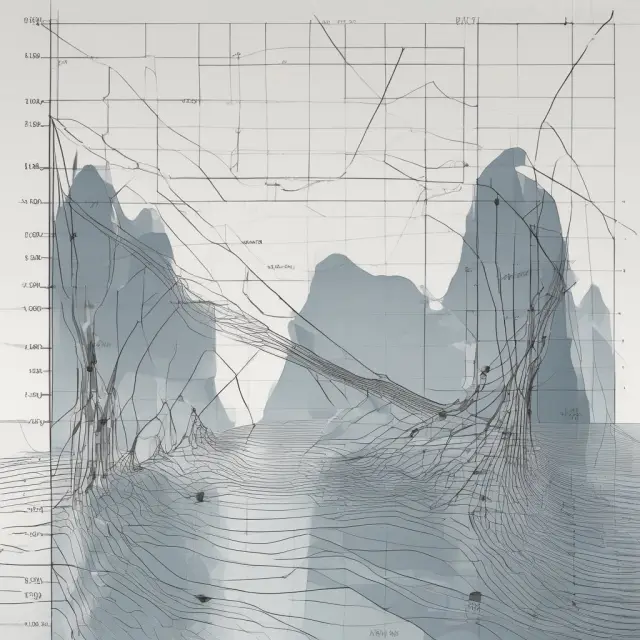
How a Supply Curve Works
The supply curve is an essential element of economic analysis, representing the correlation between price and quantity supplied for a product or service in various markets. In this section, we delve deeper into understanding how the supply curve operates, with a focus on the law of supply and its relationship to price and quantity.
Definition and Key Concepts: The supply curve displays the relationship between the cost of a specific good or service and the amount offered for sale by producers within a given timeframe. With prices listed vertically on the left axis and quantities supplied horizontally, the law of supply posits that as the price increases, the quantity supplied also rises (all other factors held constant).
The Law of Supply: The supply curve, in most cases, exhibits an upward slope. This is a reflection of the law of supply stating that as the price for a particular commodity escalates, the quantity offered by suppliers subsequently increases. Conversely, if a factor apart from price or quantity changes, a new supply curve must be drawn to represent the updated situation.
For instance, consider an increase in the number of soybean farmers entering the market and expanding their cultivation areas, with the price remaining constant. This change would result in more soybeans being supplied overall (quantity increasing). Technology acts as a significant catalyst for supply curve shifts. However, other factors can also cause a shift, such as altered production prices.
Example: Let’s explore an example using soybean production to illustrate the influence of price on the quantity supplied. In this scenario, when the price of soybeans rises, farmers are incentivized to plant fewer acres dedicated to corn and more acres for soybeans, subsequently increasing the total quantity of soybeans available on the market. The degree of responsiveness in supply to changing prices is called elasticity, with supply elasticity (price elasticity of supply) calculated by dividing the percentage change in quantity supplied by the corresponding percentage change in price. A 50% increase in the price of soybeans that results in a 50% rise in the amount produced would result in an elasticity value of 1. On the other hand, if only a 10% increase in soybean prices yields a 20% increase in quantity supplied, then the supply elasticity is 0.2.
Factors influencing the supply curve: Although price and quantity are the fundamental variables associated with the supply curve, it can also be influenced by additional factors such as technology, competition, input costs, externalities, expectations about future prices, and taxes.
Technology advances that boost production efficiency, for example, cause a shift to the right in the supply curve. Similarly, market expectations, competition from other producers, and the number of sellers can impact the curve significantly.
By understanding the workings of a supply curve and its relationship with price and quantity supplied, we gain valuable insights into the dynamics of markets and their ability to reach equilibrium through the interplay between supply and demand forces.

Factors Affecting the Shifts in a Supply Curve
A supply curve represents the relationship between the price and quantity supplied for a product over a specific time frame. In a typical graph, the price appears on the vertical axis while the quantity supplied appears on the horizontal axis. The supply curve illustrates that as the cost of a good or service rises, the amount offered for sale also increases (all other factors held constant). This relationship is known as the law of supply.
Several factors can shift the supply curve. Understanding these factors is crucial to comprehending how the supply curve functions and how it interacts with the demand curve in establishing market equilibrium. The primary elements affecting the shifts in a supply curve include technology, competition, prices, and externalities.
1. Technology:
Technological advancements can significantly influence the supply curve by altering production methods, increasing efficiency, reducing costs, or enabling access to new resources. For example, if farmers discover a more productive method for growing soybeans, the supply curve shifts to the right as the quantity supplied increases at each price level. Conversely, a decrease in technology can lead to a leftward shift of the supply curve due to lower productivity and increased costs.
2. Competition:
Competition plays a significant role in shaping the supply curve by influencing the behavior of market participants. In highly competitive markets, suppliers respond aggressively to changes in prices and market conditions. As a result, the supply curve may be more responsive or elastic due to the quick adjustments made by producers to meet consumer demands. Conversely, monopolistic markets with fewer competitors can exhibit less responsive supply curves because of limited competition.
3. Prices:
Prices have an immediate effect on the quantity supplied at each price level. A change in prices can shift the supply curve as producers adjust their production levels accordingly. For instance, a rise in the price of oil causes an upward shift of the supply curve for oil and gas products due to increased incentives for suppliers to produce more.
4. Externalities:
Externalities are indirect effects that extend beyond the immediate transaction between buyers and sellers. They can significantly impact the supply curve through factors like subsidies, taxes, or regulations. For example, a government subsidy for farmers may lead to an upward shift of the supply curve due to increased production levels at each price level. In contrast, a new tax on a particular product may result in a leftward shift of the supply curve as producers attempt to offset the additional costs by reducing their output.
In conclusion, understanding how factors like technology, competition, prices, and externalities affect the supply curve is essential for analyzing market dynamics, making informed investment decisions, and predicting future trends. By gaining a deep comprehension of these influences, investors can navigate the complex world of finance and investment with confidence.

Elasticity of Supply
The elasticity of supply, also known as price elasticity of supply, is a measure used to describe the responsiveness of quantity supplied to changes in market price. It is an essential concept for understanding how quickly suppliers can respond to changing prices and assessing potential impacts on markets and industries.
When the price of a commodity increases or decreases, suppliers must decide whether to produce more or less. The degree to which they adjust their output depends on the elasticity of supply. For example, if a 10% increase in the price of soybeans leads to a 5% increase in the quantity supplied, we can describe this situation as an inelastic response (supply is not very responsive), whereas a 20% increase in soybean prices leading to a 15% increase in supply would be considered elastic (supply responds significantly).
Calculating Supply Elasticity
To determine the degree of supply elasticity, we compute the percentage change in quantity supplied divided by the percentage change in price. For instance, if a 20% increase in wheat prices results in a 15% increase in wheat production and subsequently an 8% decrease in wheat prices leads to a 13% drop in wheat supply, then the supply elasticity can be calculated as follows:
[(Qs2 – Qs1)/Qs1] * [(Ps1 – Ps2)/Ps1] = [-0.0258]
In this case, we have a negative value indicating that the decrease in price led to a decrease in quantity supplied (supply is inelastic). In contrast, if an increase in the price of oil leads to a proportionate increase in supply, the supply elasticity would be 1, showing a unitary responsiveness.
Factors Affecting Elasticity
The elasticity of supply varies depending on the nature of the product or industry. Some factors impacting elasticity include:
- Production Costs: Industries with low production costs (e.g., labor-intensive farming) can respond more quickly to price changes, making their supply more elastic.
- Time: Elasticity tends to be lower for long-term adjustments as it takes time and resources to adapt to price changes in industries like construction or mining.
- Availability of Substitutes: If substitutes are readily available for a product, the supply will likely be more responsive to price fluctuations because suppliers can easily shift to alternative outputs.
- Market Structure: Competitive markets tend to have relatively elastic supplies as producers respond quickly to price changes in order to maintain market share.
Understanding elasticity of supply is crucial for assessing how various industries and commodities will react to price shocks, enabling investors and policymakers to make informed decisions. By examining historical data on price and quantity responses and considering the specific factors influencing a particular industry or commodity, we can estimate its elasticity and anticipate potential adjustments to the supply curve.
In summary, understanding the elasticity of supply is vital for evaluating the responsiveness of a market to price changes, providing valuable insights into market dynamics, pricing trends, and the potential impact of external factors on industries and commodities.

Example: Supply Curve for Soybeans
A supply curve, as depicted in the graph below, illustrates the relationship between the price and quantity supplied for a given commodity—in this case, soybeans. As the price of soybeans increases, the quantity supplied also typically rises (all other factors held constant). The supply curve is essential to understanding the law of supply: as the price for a specific commodity ascends, the quantity supplied follows suit.
Let’s explore how this concept plays out using the example of soybean production. Should the price of soybeans rise, farmers may be incentivized to grow fewer acres of corn and more acres of soybeans. This shift in agricultural focus translates into a total increase in the quantity of soybeans supplied on the market.
However, not all commodities exhibit identical responsiveness to changes in price. The degree to which rising prices lead to increased quantities supplied is referred to as supply elasticity or price elasticity of supply. If an increase in soybean prices by 50% leads to a proportional rise of 50% in the quantity supplied, the supply elasticity of soybeans would be 1 (perfectly elastic). Conversely, if an identical price hike only induces a 10% increase in the quantity supplied, the supply elasticity is 0.2 (inelastic).
The shape of a supply curve depends on how responsive a commodity’s supply is to price changes. Products with more elastic supply have shallower curves, while goods with less elastic supply feature steeper curves. Soybeans’ elasticity can vary based on external factors such as technological advancements, market expectations, and competition.
Let’s consider a few scenarios that could influence the supply curve for soybeans:
1. New technology: A technological breakthrough that increases production efficiency may shift the supply curve to the right (S2), enabling producers to offer more soybeans at each price level. This outcome benefits consumers by expanding the quantity available while keeping prices stable.
2. Natural disasters: An environmental disaster, like a drought or hurricane, could raise the cost of production for soybean farmers, shifting the supply curve left (S3). In this instance, farmers may cut back on their production and sell fewer soybeans at the prevailing market price. This scenario can lead to price hikes and potential food shortages.
3. Government intervention: Agricultural subsidies or regulations can also influence the shape of a supply curve by impacting producers’ costs and incentives. For example, if the government institutes a program that lowers farmers’ input costs, it could shift the supply curve right (S2), increasing the total quantity of soybeans supplied. Conversely, if the government imposes a tax or fee on soybean production, the supply curve may shift left (S3), discouraging farmers from producing as many soybeans.
By understanding the factors that can influence the shape and positioning of the supply curve for soybeans, we can make more informed decisions about investing in this crucial agricultural commodity.

The Role of the Demand Curve and the Law of Supply and Demand
In economics, the supply and demand curves are crucial concepts used to understand how the market sets prices for goods and services (Baldwin & Toman, 2013). The demand curve and its counterpart, the supply curve, work together in the law of supply and demand to determine pricing equilibrium. This section will introduce the demand curve concept, discuss the law of demand, and explain their relationship with the supply curve.
The Demand Curve: A Graphical Representation
The demand curve is a graphical representation of the inverse relationship between price and quantity demanded (Baldwin & Toman, 2013). This relationship is also known as the law of demand. In a typical illustration, the quantity demanded appears on the horizontal axis, while the price appears on the vertical axis. The curve slopes downward, indicating that when the price of a good or service increases, the quantity demanded decreases (all else being equal). This inverse relationship implies that consumers are willing to buy less of a good as its price rises.
Understanding the Law of Demand: The Relationship Between Price and Quantity Demanded
The law of demand can be summarized as follows: when the price of a given commodity increases, consumers will demand a lower quantity (Baldwin & Toman, 2013). This relationship is based on several underlying principles. First, higher prices decrease the purchasing power of consumers and may make certain goods or services less affordable. Second, substitution effects can occur as consumers look for cheaper alternatives when the price of their preferred good rises (Baldwin & Toman, 2013). For instance, if the cost of milk increases significantly, some consumers might switch to drinking water instead.
The Demand Curve and Supply Curve: Pricing Equilibrium
In a competitive market, the intersection of the supply curve and demand curve represents pricing equilibrium (Baldwin & Toman, 2013). At this point, the price and quantity transacted are determined by the forces of supply and demand. The price is at the level where the quantity supplied equals the quantity demanded. Any deviation from this equilibrium can lead to market disequilibrium and further adjustments until pricing equilibrium is re-established.
Factors Affecting the Demand Curve: Income, Preferences, and Substitutes
The demand curve is influenced by several factors, including consumer income levels, preferences, and available substitutes (Baldwin & Toman, 2013). An increase in income can lead to an upward shift in the demand curve as consumers have more resources to spend on goods and services. On the other hand, changes in consumer preferences or a new substitute entering the market can lead to a leftward shift of the demand curve.
In summary, understanding both supply and demand curves is crucial for analyzing economic situations and making informed decisions regarding investments. By recognizing how price and quantity are determined through these curves and their relationship, investors can gain valuable insights into markets, industries, and consumer behavior. In the following sections, we will delve deeper into specific factors that impact the supply curve.
References: Baldwin, R. E., & Toman, M. P. (2013). Microeconomics: Markets in Action (11th ed.). McGraw-Hill Education.

Factors Influencing the Demand Curve
The supply curve illustrates how an increase in price leads to an increase in the quantity supplied. However, the demand side of the equation is equally essential for understanding the relationship between price and quantity demanded. The demand curve shows that as prices rise, the quantity demanded decreases (all else being equal). Conversely, when prices fall, the quantity demanded increases.
Consumer preferences and income are the primary factors affecting the demand curve. When consumers have higher incomes, they can afford to purchase more goods or services at a given price—this results in an outward shift of the demand curve. Alternatively, if consumers’ income decreases, their purchasing power is reduced, causing the demand curve to shift inwards.
The presence of substitutes also significantly influences the demand curve. If consumers have access to cheaper alternatives, they will be less likely to purchase a particular good or service at higher prices. For instance, if the price of milk increases significantly, some consumers may switch to soy or almond milk, resulting in a decrease in demand for dairy milk and an inward shift of the demand curve.
The relationship between supply and demand is crucial for understanding market dynamics. As prices change due to shifts in either the demand or supply curve, the equilibrium price and quantity will adjust accordingly until the market reaches a new equilibrium. The law of supply and demand ensures that markets remain efficient by allowing prices to act as signals to consumers and producers to adapt based on changing market conditions. By understanding how factors such as consumer preferences, income, and substitutes impact both the supply and demand curves, we gain valuable insights into the underlying workings of economic systems.
Example: The Demand for Apples
To better illustrate this concept, consider the demand for apples. An increase in consumer income could lead to a higher demand for apples at their current price. Conversely, if the price of pears decreases significantly and becomes a viable substitute for apples, the demand for apples would decrease, resulting in a lower quantity demanded.
In summary, understanding how factors like consumer preferences, income, and substitutes affect the demand curve is crucial for comprehending market dynamics and the relationship between price and quantity demanded. By examining these influences, we can better anticipate changes in consumer behavior and adapt to shifting market conditions.

Comparing Supply and Demand Curves: Key Differences
The supply curve and demand curve are essential components in understanding market dynamics, price determination, and equilibrium. Although both curves depict the relationship between prices and quantities for a product or service, they differ significantly in their shapes, determinants, and influences on pricing equilibrium.
Supply Curve: Overview
A supply curve illustrates how much of a commodity producers are willing to sell at various price levels, assuming all other factors remain constant. Generally, the higher the price, the greater the quantity supplied; however, this relationship may not always be linear or direct due to supply elasticity. In most cases, supply curves slope upward since an increase in the price is a direct incentive for producers to offer more goods or services.
Demand Curve: Overview
A demand curve shows how consumers respond to changes in prices and the quantities of a product they desire to buy within a specified time frame. Conversely, the demand curve slopes downward since the lower the price, the greater the quantity demanded; consumers generally prefer paying less for more goods or services.
Key Differences Between Supply and Demand Curves
1. Slopes: The most apparent distinction between the two curves lies in their slopes. A supply curve is upward-sloping, while a demand curve is downward-sloping.
2. Determinants: While both curves are influenced by external factors like consumer preferences and production costs, they differ in how these factors impact them. The supply curve’s primary determinant is the cost of production, whereas the demand curve’s key determinants are consumer income levels and preferences.
3. Shifts: Supply curve shifts can occur due to changes in production costs, technology, competition, or externalities, while demand curve shifts may result from changes in consumer preferences, income levels, or substitutes.
4. Intersection: The intersection of supply and demand curves determines the market equilibrium, where price and quantity are balanced, representing the point at which the quantity supplied equals the quantity demanded.
5. Price vs. Quantity: In supply curves, price is considered an independent variable, while in demand curves, it’s the dependent one. Consequently, the relationship between price and quantity differs between the two.
Understanding the differences between supply and demand curves allows investors to make informed decisions based on market dynamics and price trends. By analyzing these curves, they can evaluate how various factors impact the pricing equilibrium and adjust their strategies accordingly.

Impact of Government Intervention on Supply and Demand
Government intervention in the economy plays a crucial role in shaping supply and demand curves. Policymakers use various tools such as taxes, subsidies, regulations, and tariffs to influence market dynamics and achieve their objectives. In this section, we will explore some of the ways government intervention can impact the supply and demand curves.
When it comes to taxes, they are levied on either the production or consumption of a commodity. Producers (supply side) may face production taxes, such as a tax on carbon emissions or mining operations. Consumption taxes, like sales tax or import duties, are imposed on buyers at the point of purchase.
Let’s discuss the impact of production taxes on the supply curve: A production tax raises the cost of producing a good. Since costs are an input to the production function, an increase in production costs implies that firms face a steeper upward-sloping supply curve. Consequently, the equilibrium price and quantity will shift upwards as well.
Now let’s consider the effect of consumption taxes on the demand curve: A tax on consumption decreases the purchasing power of consumers. As disposable income falls, the budget constraint shifts inward, making it impossible for buyers to afford as much of a good or service. In response, the demand curve will shift to the left. The resulting new equilibrium will be characterized by a lower price and quantity transacted compared to the initial equilibrium.
Subsidies act as the counterpart to taxes. They can incentivize production or consumption and have opposing effects on supply and demand curves. For instance, a subsidy for soybean farmers leads to a downward shift in their supply curve, causing an increase in the quantity supplied at any given price level. In turn, the equilibrium price falls but the total quantity transacted rises.
Regulations can also influence market dynamics by imposing constraints on production or consumption. For example, regulations may limit the maximum number of hours worked per week, thus reducing the labor supply and shifting the supply curve leftward. Or, a regulation requiring lead-free fuel could increase the cost of production for gasoline firms, pushing their supply curve upward.
Tariffs, which are taxes on imports or exports, can impact both the demand and supply curves. When it comes to imports, tariffs raise prices for consumers by making the good more expensive relative to its alternatives. The demand curve will shift leftward, reducing the quantity demanded at any given price level. Tariffs also create a wedge between domestic and international prices, leading to a higher price for domestic producers. As a result, their supply curve shifts rightward as they can charge more for their product.
In conclusion, government intervention plays a significant role in shaping supply and demand curves. Taxes, subsidies, regulations, and tariffs impact the equilibrium price and quantity in various ways, ultimately affecting market outcomes. Understanding these dynamics is essential to comprehend how policymakers can achieve their objectives while minimizing unintended consequences.

Applications: Real-World Examples of Supply and Demand
Understanding supply and demand curves and their applications is crucial for making informed decisions in various industries and markets. In this section, we delve into real-world examples of supply and demand to explore their effects on different goods and services.
Let’s start with a case study featuring the impact of supply and demand on the price of crude oil. Crude oil is an essential commodity in numerous industries, including transportation, energy, and manufacturing. The global economy relies heavily on this resource.
During the early 2000s, an increase in world economic growth led to a surge in demand for crude oil, pushing up prices from around $25 per barrel in 2001 to over $147 per barrel in July 2008. This steep price rise was due to the high demand for oil by emerging economies like China and India, which fueled a significant increase in global consumption.
On the supply side, political instability and geopolitical tensions affected crude oil production. For instance, the Iraq war disrupted exports from one of the world’s largest producers. Moreover, OPEC’s decision to maintain production levels did not help ease concerns over supply constraints. These factors further intensified the upward pressure on oil prices, leading to an eventual peak in July 2008.
Now, let’s consider the impact of supply and demand on a perishable agricultural commodity – strawberries. A supply curve for strawberries illustrates the relationship between the price and quantity supplied at different times throughout the year.
During the growing season when strawberries are abundant, farmers face a surplus and are willing to sell their produce at lower prices due to high competition among suppliers. However, as the season progresses, the supply decreases since the fruits start getting ripe and rot, making it necessary to pick them more frequently. Consequently, the price for strawberries rises to encourage farmers to bring in their remaining crop before it spoils.
In summary, understanding real-world applications of supply and demand curves is essential in various industries to make informed decisions regarding pricing, production, and market dynamics. In the following sections, we’ll discuss how factors such as technology, competition, prices, externalities, and government intervention affect the supply curve and influence the price and quantity supplied for goods and services.

FAQs about the Supply Curve
Understanding the supply curve and its associated concepts can be a complex process, especially for those new to economics. Below are some frequently asked questions that will help clarify key aspects of the supply curve and related topics.
What is a supply curve?
A: A supply curve graphically illustrates the relationship between price and the quantity supplied of a good or service over a given time period. It shows how much quantity producers are willing to sell at various price points, assuming all other factors remain constant.
How does the law of supply apply to the supply curve?
A: The law of supply states that as the price for a product increases, the quantity supplied also increases; conversely, when the price decreases, the quantity supplied decreases (assuming all other factors remain unchanged). This relationship is depicted on the upward-sloping supply curve.
What determines the shape and slope of the supply curve?
A: Several factors can influence the shape and slope of a supply curve, including technology, competition, prices, and externalities. Generally, products with inelastic supply (price insensitive) have steeper curves, while those with elastic supply (price sensitive) have shallower curves.
How does technology impact the supply curve?
A: New technologies that increase productivity can cause a rightward shift of the supply curve since more units can be produced at the same price or lower prices for the same quantity supplied. Conversely, technological advances leading to higher production costs can lead to a leftward shift in the supply curve.
Can changes in external factors affect the supply curve?
A: Yes, various external factors like taxes, subsidies, and regulations can influence the supply curve by altering the cost of production or availability of resources for producers. These externalities cause shifts in the supply curve rather than a movement along it.
What is supply elasticity or price elasticity of supply?
A: Supply elasticity measures how responsive the quantity supplied is to changes in price. If an increase in price causes only a small change in the quantity supplied, the product has inelastic supply; conversely, if a large percentage change in price results in a proportional or larger percentage change in the quantity supplied, the product has elastic supply.
What is the difference between the demand curve and supply curve?
A: The demand curve represents the relationship between price and the quantity demanded by consumers, while the supply curve illustrates the relationship between price and the quantity supplied by producers. The interaction of both curves leads to the market equilibrium.
How does the government’s role impact the supply and demand curve?
A: Government intervention in the form of taxes, subsidies, regulations, or price controls can significantly influence both the supply and demand curves by changing prices, quantities, and producer incentives.
 Next entry · No. 4,806Understanding Supply: Concepts, Formulas, and Key Terms for Institutional Investors
See also
-
 No. 2,780
03 Feb 2025
22 min
Understanding the Law of Supply: A Comprehensive Overview
Economics
No. 2,780
03 Feb 2025
22 min
Understanding the Law of Supply: A Comprehensive Overview
Economics -
 No. 1,308
27 Aug 2024
19 min
Understanding Equilibrium Quantity: The Intersection of Supply and Demand
Economics
No. 1,308
27 Aug 2024
19 min
Understanding Equilibrium Quantity: The Intersection of Supply and Demand
Economics -
No. 4,806
18 Jul 2025
20 min
Understanding Supply: Concepts, Formulas, and Key Terms for Institutional Investors
Economics
-
 No. 4,732
12 Jul 2025
20 min
Understanding Stagflation: The Economic Puzzle of Slow Growth, High Unemployment, and Inflation
Economics
No. 4,732
12 Jul 2025
20 min
Understanding Stagflation: The Economic Puzzle of Slow Growth, High Unemployment, and Inflation
Economics -
 No. 4,566
29 Jun 2025
21 min
Scarcity: Understanding the Fundamental Economic Concept of Opportunity Cost
Economics
No. 4,566
29 Jun 2025
21 min
Scarcity: Understanding the Fundamental Economic Concept of Opportunity Cost
Economics -
 No. 4,563
29 Jun 2025
19 min
Understanding Say’s Law of Markets: The Classical Economic Theory of Production, Consumption, and Prosperity
Economics
No. 4,563
29 Jun 2025
19 min
Understanding Say’s Law of Markets: The Classical Economic Theory of Production, Consumption, and Prosperity
Economics