Understanding Vertical Equity: The Principle of Ability to Pay in Taxation

Learn about the importance of vertical equity in taxation through this comprehensive guide that covers its concept, advantages & disadvantages, real-life…
Introduction to Vertical Equity
Vertical equity, also known as ability-to-pay principle, is a fundamental concept in income taxation. This method holds that those with higher earnings or income have a greater capacity to contribute more towards taxes than individuals with lower incomes. The vertical equity principle contrasts with the notion of horizontal equity which suggests that individuals with similar income levels should pay equal amounts in taxes. In this section, we will discuss the significance of vertical equity and its underlying principles.
The Ability-to-Pay Concept
The ability to pay principle is a cornerstone of fair taxation systems. It establishes that individuals’ tax liabilities should be determined by their capacity to pay taxes based on their income levels. Vertical equity represents the application of this principle, with higher earners paying more in taxes than those earning lower wages, reflecting their greater ability to contribute.
Vertical Equity vs. Horizontal Equity
The debate between vertical and horizontal equity hinges on how a tax system should distribute its burden fairly among individuals. Vertical equity is about ensuring that the tax burden increases as income rises, while horizontal equity focuses on maintaining equal tax liability for those with similar incomes. Each principle plays an important role in shaping fair taxation systems, and it’s essential to understand their differences and implications.
Progressive Tax Rates and Vertical Equity
One way of implementing vertical equity is through progressive tax rates. This tax system allocates different tax rates for various income brackets. Progressively, the tax rate increases as income rises, enabling those with greater financial capacity to contribute more towards public goods and services. Income tax is a primary example of a progressive tax since it requires higher percentages from individuals in the highest income brackets compared to lower-income earners.
Advantages and Disadvantages of Vertical Equity
Vertical equity has several advantages, such as reducing income inequality, improving public services, and fostering social cohesion by ensuring a sense of shared responsibility among taxpayers. However, it also comes with some disadvantages, like the complexity of tax systems, potential for unequal treatment within income brackets, and the possibility of incentivizing individuals to restructure their earnings to lower tax burdens.
Vertical Equity vs. Flat Taxation
A comparison between vertical equity and flat taxation highlights the trade-offs between tax fairness and simplicity. Vertical equity requires more complex tax systems with varying income brackets and rates, while a flat taxation system applies a uniform tax rate to all income levels. The choice between these two depends on the objectives of the tax system and the resources available for administration.
Vertical Equity in Practice: Case Studies
The implementation of vertical equity principles can be seen through various examples of countries that have successfully integrated this concept into their tax systems. These case studies provide valuable insights into how governments address the challenges associated with fair and effective taxation, as well as the potential impact on income distribution and overall economic growth.
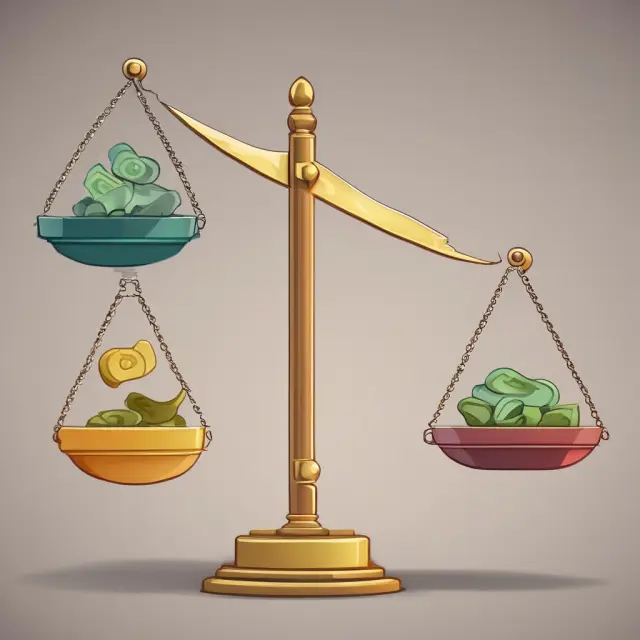
The Concept of Ability to Pay
Vertical equity, as mentioned earlier, is an essential principle in taxation that emphasizes the importance of taxpayers’ ability to pay when distributing tax burdens. This concept lies at the heart of progressive tax systems. The primary idea behind vertical equity is that taxpayers with higher incomes and greater abilities to pay should contribute more towards the public purse than those with lower incomes and lesser abilities to pay.
The ability to pay principle plays a crucial role in determining the fairness and equity of a tax system. It’s essential to understand that vertical equity is distinct from its counterpart, horizontal equity. While horizontal equity states that people with similar income levels should be subjected to equal tax burdens, vertical equity recognizes that people with varying income levels have different abilities to pay.
To illustrate this concept, consider the example of two individuals: one earning $50,000 per annum and another earning $100,000 per annum, assuming a flat tax rate. With the same tax rate applied across all income levels, the higher-income earner would pay twice as much in taxes compared to the lower-income earner, even though both individuals face the same percentage rate. This outcome is an exemplification of vertical equity at work.
In essence, vertical equity suggests that a progressive tax system should be implemented based on the ability to pay, meaning that those who earn higher incomes should contribute a larger share of their income towards taxes than those with lower earnings. Progressive tax rates are a common approach to achieving this goal. In these systems, the effective average tax rate increases as income rises, thereby increasing the overall tax burden for the wealthy and reducing it for lower-income earners.
The United States’ tax system is an excellent example of a progressive tax structure. The Internal Revenue Code imposes graduated rates, with higher marginal rates applied to higher income brackets. This approach ensures that as a taxpayer’s income increases, their effective tax rate also rises accordingly.
However, it’s essential to acknowledge the challenges and limitations of vertical equity in practice. While this principle might seem appealing on paper, its implementation faces complexities when considering issues such as exemptions, deductions, and tax credits, which could potentially distort the intended progressivity of a tax system. Nevertheless, despite these challenges, vertical equity remains a cornerstone of fair taxation and an essential component in designing equitable tax policies.

Vertical Equity vs. Horizontal Equity
Vertical equity and horizontal equity represent two concepts central to determining a fair income tax system. While they both pertain to the distribution of tax burden, they differ significantly in their approach to achieving a fair tax regime. Let’s dive deeper into understanding vertical equity and its contrast with horizontal equity.
Firstly, let us define what vertical equity is all about. Vertical equity is an income taxation concept where individuals’ taxes increase as their income rises based on the principle of ability to pay. This means that those with higher incomes are expected to contribute a larger share of their income to the government via taxes.
Horizontal equity, on the other hand, stipulates that people with similar abilities to pay should contribute the same amount to the tax system. The underlying assumption is that individuals within the same income bracket have equal capacity to contribute to society and should thus bear the same tax burden. However, horizontal equity is often more challenging to attain in practice due to loopholes and deductions.
Now, let’s explore the fundamental difference between these two concepts of fairness. Vertical equity focuses on distributing taxes based on an individual’s ability to pay. This means that tax rates are progressive, allowing higher earners to pay a larger portion of their income as tax compared to lower earners. With this approach, the government aims to ensure that those who have more financial resources contribute more to public goods and services that benefit everyone in society.
Horizontal equity, conversely, emphasizes equal tax treatment for individuals with similar income levels. The rationale behind this principle is rooted in the belief that people with equivalent earning capacities should pay the same taxes. This approach aims to prevent any perceived unfairness or potential social tensions arising from different tax rates for those with similar financial situations.
A clear example can help us understand the distinction between vertical and horizontal equity. Let’s consider two individuals: one earns $100,000 per year and another makes $50,000 annually. Under a progressive tax system based on the ability-to-pay principle, the individual with an income of $100,000 would be required to pay more taxes compared to the person earning $50,000, as their income level grants them a higher ability to pay.
However, under horizontal equity, both individuals should theoretically have the same tax burden, regardless of their differing income levels, as they are considered to be equally capable in contributing to society with their respective incomes. Nevertheless, the presence of loopholes and deductions in most tax systems make it challenging to achieve horizontal equity, leaving vertical equity as a more viable alternative for ensuring a more equitable distribution of taxes based on an individual’s ability to pay.
In summary, understanding the difference between vertical and horizontal equity is essential when discussing fair taxation systems. Vertical equity aims to distribute taxes based on an individual’s ability to pay, while horizontal equity seeks equal tax treatment for individuals with similar income levels. Each concept offers distinct advantages and challenges, shaping the ongoing debates surrounding the ideal taxation system.

Understanding Progressive Taxation
Progressive taxation is an essential element of vertical equity, which seeks to ensure a fair distribution of tax burden based on the ability to pay principle. This tax system introduces tax brackets and assigns different rates for each income level. Income taxes are calculated as a percentage of an individual’s total income, increasing with their overall earnings.
For instance, imagine two individuals – John with an annual income of $60,000 and Mary with an income of $150,000. Under progressive taxation, John might pay a flat tax rate of 20% on his entire income, resulting in a tax liability of $12,000. In contrast, Mary could be subject to a higher tax bracket, causing her effective tax rate to be significantly higher than John’s – perhaps 35%, yielding a tax burden of $52,500.
The underlying rationale behind progressive taxation is the ability-to-pay principle, which holds that those who earn more should pay a larger share of their income towards taxes. This notion fosters a sense of fairness, as individuals with greater financial resources are better positioned to contribute more without experiencing significant economic hardship.
Let’s delve deeper into this concept and explore its historical significance and practical applications.
Historical Context: The Roots of Progressive Taxation
Progressive taxation can be traced back to the late 1800s, with the introduction of the first income tax in the United States during the Civil War. At that time, a flat tax rate of 3% was imposed on all individuals earning more than $800 per annum. However, this policy proved unpopular and was eventually abandoned until its reintroduction in the Revenue Act of 1913. In this new iteration, progressive taxation emerged as an essential component of the federal income tax system.
Early on, progressives championed this tax system due to their belief that wealthier individuals had a greater ability to pay taxes and should contribute more towards funding public services and infrastructure projects. Progressive taxation’s widespread acceptance continued throughout the 20th century, as it became an essential component of many countries’ income tax systems.
Present-Day Applications: Progressive Taxation in Practice
In modern times, progressive taxation remains a cornerstone of many governments’ fiscal policies. The United States, for instance, adheres to a progressive tax system with seven tax brackets ranging from 10% to 37%. In Europe, countries like Denmark, France, and Germany employ a similar structure. These nations believe that progressive taxation is an equitable solution, as it ensures a more even distribution of the tax burden across all income groups.
Real-life Examples: Progressive Taxation in Action
To illustrate the practical application of progressive taxation, consider two countries, Denmark and the United States. In Denmark, taxpayers earning less than 70,000 DKK ($10,623) per year are exempt from paying income taxes. Those whose annual earnings range between 70,000 DKK ($10,623) and 532,000 DKK ($78,784) pay a flat tax rate of 55%. Earners above the 532,000 DKK threshold are subject to progressive tax rates ranging from 58% to 61%, depending on their income level.
In comparison, in the United States, individuals with an annual income below $40,400 pay no federal taxes, while those earning between $40,400 and $71,300 pay 12%. Earners from $71,300 to $153,100 are taxed at a rate of 22%, and those above $153,100 face increasingly higher rates up to 37%.
Both Denmark and the United States employ different methods to implement progressive taxation; however, they share a common goal: ensuring a more equitable distribution of taxes based on the ability to pay.
Conclusion: Progressive Taxation’s Role in Vertical Equity
In conclusion, progressive taxation plays a vital role in achieving vertical equity by implementing the ability-to-pay principle through graduated tax rates. By recognizing that those with greater financial resources can afford to contribute more towards taxes without experiencing significant economic hardship, governments can create a more equitable fiscal system and promote social welfare.
This concept of fairness has historical roots dating back to the late 1800s and remains an integral part of tax systems in various countries today. By examining its implementation in real-life examples, we can observe how progressive taxation is used to create a more equitable society where tax burdens are distributed based on individuals’ ability to pay, rather than their income level alone.

The Role of Income Brackets in Vertical Equity
Income brackets play a pivotal role in implementing vertical equity as a principle in taxation systems. Vertical equity is based on the ability to pay principle, which assumes that individuals who have the capacity to pay more should contribute more taxes than those with limited financial resources. A progressive tax system, which is typically associated with vertical equity, uses income brackets to determine how much of an individual’s income they should contribute in taxes. The idea behind this approach is that as one’s income increases, so does their ability to pay a larger share of the tax burden.
For instance, imagine two individuals – John and Mark. John earns $100,000 annually while Mark makes $50,000. Under a progressive tax system where tax rates increase as income levels rise, John would be subjected to a higher tax rate than Mark. This is because John has a greater ability to pay more taxes due to his higher income level.
Income brackets provide a structured approach for determining the tax rates that apply to various income levels. Each bracket corresponds to a specific tax rate, with higher-income earners falling into brackets that carry higher tax rates. As individuals move up from one bracket to another, their effective tax rate increases accordingly.
For example, in the United States, progressive taxation includes tax brackets where people pay taxes based on their income level. The highest-earning individuals will pay a larger percentage of their income in taxes compared to those within lower-income brackets. For instance, someone earning $100,000 per year has a top marginal tax rate of 24%, whereas an individual with an annual income of $50,000 faces a top marginal tax rate of 22%. Consequently, the wealthier taxpayer pays a significantly larger amount in taxes compared to the lower-income earner.
It’s worth noting that horizontal equity, which states that individuals with similar abilities to pay should contribute the same amount in taxes, can be challenging to achieve due to loopholes and deductions. However, vertical equity remains more achievable since it relies on a taxpayer’s ability to pay based on their income level.
In summary, income brackets play a crucial role in implementing the vertical equity principle of taxation systems by allowing policymakers to levy taxes proportionate to individuals’ income levels and their capacity to pay.

Advantages and Disadvantages of Vertical Equity
Vertical equity is an essential concept in taxation systems, emphasizing a fair distribution of tax burden based on the ability to pay principle. Vertical equity implies that individuals with higher income levels should contribute more taxes than those earning less. Two main methods of implementing vertical equity are progressive taxation and proportional taxation. In this section, we will discuss the advantages and disadvantages associated with these approaches.
Advantages of Vertical Equity
Vertical equity provides several advantages for a tax system. First, it promotes a more equitable distribution of wealth, as individuals who can afford to pay more contribute proportionately more towards public goods and services. Additionally, vertical equity acts as a tool for combating income inequality by redistributing wealth through progressive taxation. Moreover, implementing vertical equity reduces the overall burden on low-income households, allowing them to save and invest in their future.
Progressive Taxation and Vertical Equity
One popular method of applying vertical equity is through progressive taxation. This system features graduated or tiered tax rates, where taxpayers with higher income levels pay a larger percentage of their earnings in taxes than those earning less. For instance, if the lowest income earners are taxed at a rate of 10%, while high-income individuals face a rate of 35%, this system promotes vertical equity.
Advantages of Progressive Taxation
Progressive taxation offers several benefits, including:
– Encouraging greater economic mobility and opportunity by providing a more level playing field for citizens with different income levels
– Redistributing wealth and reducing income inequality by targeting those who have the ability to pay more
– Fostering a stable and sustainable economy by generating revenue from a larger tax base, which can be used to fund essential public services such as education, healthcare, and infrastructure.
Disadvantages of Progressive Taxation
Despite its advantages, progressive taxation also has some drawbacks:
– Complexity: Progressive taxation is complex due to the multitude of income brackets and varying tax rates, which can make it challenging for individuals to understand their tax liability
– Potential disincentives to work or invest: Some argue that high marginal tax rates may deter people from working longer hours, saving more money, or investing in new ventures, since a larger portion of their earnings would go towards taxes.
Proportional Taxation and Vertical Equity
Another way of implementing vertical equity is through proportional taxation, where individuals pay a fixed percentage of their income as taxes. For example, if everyone pays 25% of their income in taxes, the system ensures that the tax burden remains consistent for all income earners. Proportional taxation has its benefits:
– Simplicity: Since every individual pays a constant percentage of their earnings in taxes, it is easier to understand and calculate tax liabilities
– Encourages work and investment incentives: The absence of progressive tax rates makes the tax system predictable and consistent for individuals, allowing them to save and invest without fearing significant changes to their tax liability.
Disadvantages of Proportional Taxation
Despite its advantages, proportional taxation also has certain disadvantages:
– Disproportionate impact on low-income households: While everyone pays the same percentage of their income, those with lower incomes generally pay a larger portion of their earnings towards taxes due to their overall smaller income size. This can lead to a higher effective tax rate for low-income earners and create challenges in terms of affordability and economic mobility.
– Limited revenue potential: Proportional taxation may not generate enough revenue for the government to fund essential public services adequately, as a larger portion of taxes goes towards lower-income individuals who pay less overall.
In conclusion, vertical equity plays a vital role in ensuring fairness and equity within a taxation system by allowing for a more progressive distribution of the tax burden based on an individual’s ability to pay. Both progressive and proportional taxation methods have their advantages and disadvantages, making it essential for governments to evaluate which approach best fits their economic goals and societal needs.

Vertical Equity vs. Flat Taxation
When discussing fairness and equity within tax systems, two concepts often come to mind – horizontal and vertical equity. While vertical equity focuses on the ability of an individual to pay more taxes based on their income level, flat taxation represents a system where everyone pays the same rate regardless of their income or earnings. In this section, we’ll explore how these two principles compare and consider the implications for overall tax revenue and income distribution.
First, let us recall that vertical equity is a progressive form of taxation where taxes increase with income levels due to an individual’s ability to pay more. With proportional or regressive taxation, everyone pays the same proportion of their income in taxes. However, as income rises, those with higher earnings have larger disposable incomes left after paying their taxes. As a result, vertical equity aims to address the issue of wealth disparity by ensuring that those who can afford to pay more contribute a greater portion of their income towards taxation.
On the other hand, flat taxation, as the name implies, is a uniform tax system where everyone pays the same percentage rate regardless of their income level. Flat tax proponents argue this approach results in fairness and simplicity since there are no loopholes or complex calculations to follow. However, critics of flat taxation suggest that it may not be equitable for those with lower incomes, who would pay a larger proportion of their earnings compared to the wealthy.
Comparing the two systems, let us consider some real-world implications:
- Revenue Generation: Vertical equity generates more total revenue compared to flat taxation. The increased progressivity in tax rates under vertical equity means that as income rises, so does the amount of taxes paid. In contrast, a flat tax system will produce less overall revenue since those with lower earnings contribute the same amount as high earners despite having smaller disposable incomes.
- Effects on Wealth Distribution: Vertical equity aims to redistribute wealth by implementing higher tax rates for individuals in higher income brackets. The aim is to decrease the gap between the rich and poor by ensuring that those with more financial resources contribute a greater share of their earnings towards public goods and services. In contrast, flat taxation maintains income distribution as it is, since everyone pays the same rate regardless of their income.
- Economic Efficiency: Vertical equity can lead to economic inefficiencies due to its complexity. Progressive rates require extensive record keeping and intricate calculations for tax assessments. Flat taxation, with its simplicity, may result in better economic outcomes as it removes the need for complex tax codes and encourages investment by minimizing uncertainty surrounding future tax changes.
- Impact on Income Mobility: Vertical equity can potentially create barriers to upward income mobility due to high tax rates for those in higher income brackets. Flat taxation, with its simplicity and uniformity, may be more conducive to fostering economic growth and upward income mobility as it encourages entrepreneurship and innovation by minimizing the burden on individual taxpayers.
- Taxpayer Perception: Vertical equity can lead to perceived unfairness or resentment from those who pay higher taxes compared to their peers, leading to discontent and a negative impact on public trust towards the government. A flat tax system, with its perceived simplicity and fairness, may foster better public trust since everyone pays the same rate.
In conclusion, both vertical equity and flat taxation possess their unique advantages and disadvantages. Vertical equity aims to redistribute wealth by implementing progressive tax rates based on an individual’s ability to pay more taxes. It can generate more revenue but comes with potential economic inefficiencies and perceived unfairness. In contrast, flat taxation provides a simpler and fairer system where everyone pays the same percentage rate regardless of their income level. However, it may lead to less overall revenue generation, potentially create barriers to upward income mobility, and contribute to wealth concentration. The choice between the two principles depends on factors such as societal values, government objectives, and economic conditions.
Case Studies: Vertical Equity in Practice
Vertical equity, as previously explained, is a method for collecting income taxes based on an individual’s ability to pay, which can be achieved through proportional or progressive tax rates. This principle ensures that those with higher incomes contribute more to the government than those earning less. Here, we examine real-life examples of countries that have successfully implemented this concept of vertical equity in their tax systems.
Firstly, let us look at the Nordic countries – Denmark, Finland, Norway, and Sweden. These nations have some of the most progressive tax structures worldwide, with their top marginal tax rates exceeding 60%. This high degree of progressivity ensures that wealthier citizens contribute a larger share of their income to the government in comparison to their lower-income counterparts.
Another example can be found within the United States’ tax system, specifically in California and New York. In these states, high earners are subjected to higher state income taxes due to progressive tax structures. For instance, California’s top marginal individual income tax rate is 13.3%, which significantly exceeds the federal tax rate of 37%. This policy ensures that those with greater financial means contribute more to public services and infrastructure.
In contrast, some countries employ a flat-tax system, meaning all individuals are subjected to the same tax rate regardless of their income levels. One such country is Estonia; it levies a flat tax rate of 20%, which eliminates any differences in tax rates based on an individual’s income. While this approach does not uphold vertical equity, proponents argue that it simplifies the tax system and reduces economic distortions associated with progressive taxation.
In conclusion, various countries have adopted different methods for implementing vertical equity within their respective tax systems to achieve a more equitable distribution of taxes among their populations. This principle has proven effective in ensuring that those with higher incomes contribute more towards public services and infrastructure while maintaining a relatively simple and fair tax structure.

The Future of Vertical Equity
While vertical equity has been a cornerstone of progressive income taxes in many countries for decades, there are ongoing debates and potential developments regarding the future role of this principle in taxation systems.
First, some argue that increasing globalization and the digital economy may challenge the traditional concept of ability to pay as it becomes harder to define an individual’s actual economic power or capacity to contribute to society. This raises questions about the effectiveness of vertical equity as a foundation for fair taxation.
Moreover, technological advancements like automation and artificial intelligence could significantly impact income distribution and potentially widen the income gap, leading to a renewed focus on progressive taxation based on ability to pay or even more radical approaches such as a universal basic income.
Additionally, there have been discussions about introducing a global minimum corporate tax rate as part of an international framework to tackle tax avoidance through base erosion and profit shifting (BEPS), which could potentially impact the implementation of vertical equity in different national contexts.
Despite these debates, vertical equity remains an important principle for many countries striving to achieve a fair and progressive tax system that caters to their specific socio-economic realities. However, it is crucial for governments to continually evaluate and adapt their tax systems to keep up with changing economic conditions and ensure the continued relevance and effectiveness of vertical equity principles.
In conclusion, understanding vertical equity as an essential principle in income taxation that emphasizes the ability to pay can provide valuable insights into fair taxation and its role in addressing income inequality. Vertical equity’s implications for progressive taxation, such as through tax brackets and marginal rates, and its comparison with horizontal equity further highlight the importance of a well-designed tax system that fosters overall social and economic progress.
Understanding vertical equity not only deepens our knowledge of the complexities in tax policy but also underscores the significance of ongoing debates on its potential future directions as societies continue to grapple with globalization, technological advancements, and changing income distribution patterns.

FAQ on Vertical Equity
What is vertical equity in taxation?
Vertical equity refers to a concept in taxation that asserts people with higher income levels should bear a larger tax burden due to their greater ability to pay taxes. The principle of vertical equity forms the basis for progressive tax systems, where individuals’ tax liability increases based on their income level.
How is vertical equity different from horizontal equity?
Vertical equity emphasizes the significance of an individual’s income level and their ability to pay taxes, whereas horizontal equity focuses on equal taxation for taxpayers with similar income levels. Horizontal equity can be difficult to achieve due to various loopholes, deductions, and incentives in a tax system that distort the intended equal treatment among individuals in the same income bracket.
Why is vertical equity important?
Vertical equity is crucial because it promotes fairness by ensuring higher-income individuals contribute more to public expenditures based on their ability to pay. This principle helps mitigate economic inequality and enables governments to fund essential services, such as education, healthcare, and infrastructure development for the benefit of society as a whole.
What is progressive taxation, and how does it relate to vertical equity?
Progressive taxation is a tax system that taxes individuals according to their income levels. Higher-income earners are subjected to higher tax rates than those with lower incomes. Progressive taxation embodies the principle of vertical equity by implementing different tax rates based on an individual’s ability to pay, allowing for a more equitable distribution of tax burdens according to each person’s income level.
What are some advantages and disadvantages of vertical equity?
Advantages of vertical equity include: (1) promoting fairness by ensuring individuals with higher incomes pay more taxes; (2) reducing economic inequality; and (3) generating revenue for essential public services. However, some potential disadvantages could be: (1) the potential for tax complexity; (2) creating incentives for tax evasion, as well as (3) creating a disincentive for high earners to work harder or longer hours due to the higher tax rates.
Can you provide an example of vertical equity in action?
Yes, let’s consider two taxpayers – one with an income of $100,000 and another earning $50,000 per annum. If a country implements a progressive tax system, the higher-income earner will be subjected to a higher tax rate compared to the lower-income earner. This allows for a more equitable distribution of the overall tax burden among the population based on their ability to pay.
 Next entry · No. 5,482Understanding Vested Benefit Obligation (VBO): Measuring and Reporting Pension Liabilities
See also
-
 No. 4,133
24 May 2025
25 min
Understanding Proportional Taxation: The Flat Tax System Explained
Taxation
No. 4,133
24 May 2025
25 min
Understanding Proportional Taxation: The Flat Tax System Explained
Taxation -
 No. 5,676
28 Sep 2025
22 min
Understanding the Welfare Losses of Taxation: A Comprehensive Guide for Institutional Investors
Taxation
No. 5,676
28 Sep 2025
22 min
Understanding the Welfare Losses of Taxation: A Comprehensive Guide for Institutional Investors
Taxation -
 No. 5,407
06 Sep 2025
18 min
Understanding Value-Added Tax (VAT) for Institutional Investors
Taxation
No. 5,407
06 Sep 2025
18 min
Understanding Value-Added Tax (VAT) for Institutional Investors
Taxation -
 No. 5,250
23 Aug 2025
23 min
Understanding the Uniform Transfer Tax: Merging Estate and Gift Taxes
Taxation
No. 5,250
23 Aug 2025
23 min
Understanding the Uniform Transfer Tax: Merging Estate and Gift Taxes
Taxation -
 No. 5,201
19 Aug 2025
20 min
Underwithstanding Taxes: Underwithholding vs Overwithholding
Taxation
No. 5,201
19 Aug 2025
20 min
Underwithstanding Taxes: Underwithholding vs Overwithholding
Taxation -
 No. 5,125
13 Aug 2025
18 min
Understanding Unrelated Business Taxable Income (UBTI) for Institutional Investors
Taxation
No. 5,125
13 Aug 2025
18 min
Understanding Unrelated Business Taxable Income (UBTI) for Institutional Investors
Taxation