Understanding Voodoo Economics: Reaganomics and Its Legacy
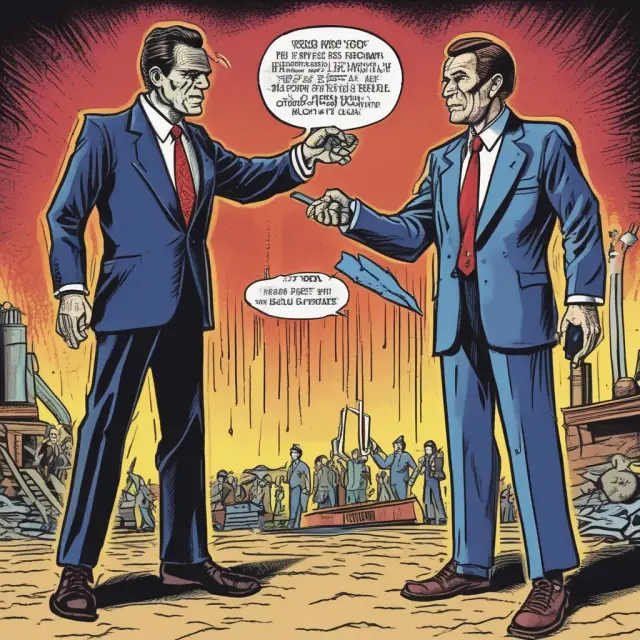
Exploring George H.W. Bush's criticism of Ronald Reagan’s economic policies, coining the term ‘Voodoo Economics’, and its enduring impact.
Background and Origins of the Term ‘Voodoo Economics’
The term ‘voodoo economics’ is synonymous with the economic policies implemented under President Ronald Reagan, commonly referred to as “Reaganomics.” George H.W. Bush, who later became Reagan’s vice president, originally coined this derogatory phrase before joining Reagan’s administration in 1980.
Prior to being appointed as Vice President, Bush Sr. was skeptical of Reagan’s economic reforms that emphasized supply-side economics, characterized by tax cuts, deregulation, lower government spending, and tight money supply. In the midst of a prolonged period of economic stagflation during the late 1970s, Bush Sr. believed that such policies would not effectively revive the economy and significantly increase national debt.
Reagan, who took office in 1981, was committed to reducing income and capital gains tax rates in order to spur economic growth through the ‘trickle-down effect.’ He believed that corporations’ savings from corporate tax cuts would eventually translate into increased government revenue as a thriving economy would encourage companies to pay more taxes. Moreover, he assumed that these businesses would also increase spending on goods and services, generating jobs and lifting wages for workers, thereby leading to an economic recovery.
In the 1980 Republican primaries, Bush Sr. referred to Reagan’s economic policies as ‘voodoo economics.’ He argued that these policies were insufficient in addressing the economic challenges of the time and would result in an exorbitant national debt. However, following his appointment as Vice President, Bush Sr. attempted to distance himself from his earlier criticisms, denying having made such a statement or implying it was mere jest.
Criticism and Validation
Bush Sr.’s description of Reaganomics as voodoo economics drew criticism for being a spiteful attempt to undermine his political rival during the Republican primaries. However, his criticisms were later validated when the economic outcomes did not meet expectations. Although Reagan’s policies led to considerable unemployment reductions and inflation control, they also contributed to a significant increase in national debt, largely due to increased military spending to fight communism and the failure of tax cuts to generate substantial spending by corporations and the wealthy.
Moreover, the relaxed regulatory environment led to the Savings and Loan Crisis in the early 1990s when the economy fell into another recession. The term ‘voodoo economics’ has since become a popular expression used to dismiss ambitious economic pledges made by politicians.
Bush Sr.’s Changed Perspective
Interestingly, despite his initial skepticism towards Reaganomics, Bush Sr.’s own stance on tax cuts evolved significantly during his tenure as Vice President and later as president. In 1990, as the U.S. economy faltered under his leadership and faced a recession, he went against his earlier promises and hiked taxes, making him subject to criticism from within his party.
This turn of events led to a loss in public trust and ultimately contributed to Bush Sr.’s defeat in the 1992 presidential election at the hands of Bill Clinton. Despite this, Reagan’s economic policies continued to shape the political discourse on fiscal responsibility, with both successes and failures shaping the modern economic landscape.
In conclusion, while some may see it as an unfortunate comment made during a heated political campaign, Bush Sr.’s initial characterization of Reaganomics as voodoo economics has since become a widely-used term to describe ambitious economic pledges that fail to materialize in reality. This label remains relevant as politicians continue to make bold promises about the economy and fiscal policy.

Reaganomics: Policies and Philosophy
Ronald Reagan’s economic policies, popularly referred to as “Reaganomics,” significantly shifted the U.S. fiscal landscape during his two terms in office from 1981 to 1989. These supply-side economic theories centered around tax cuts, deregulation, lower government spending, and a tight money supply to stimulate economic growth.
Tax Cuts
Reagan believed that reducing income and capital gains taxes would create an economic surge by freeing up savings for businesses, leading to increased investment and job creation. This trickle-down effect aimed to bring about widespread prosperity throughout the economy.
Deregulation
The Reagan administration championed deregulating domestic markets in various industries, such as airlines, trucking, energy, and telecommunications. Proponents argued that competition would lower prices for consumers, increase innovation, and spur economic growth. However, this relaxation of regulations also set the stage for issues like the Savings and Loan Crisis.
Lower Government Spending
Reagan’s fiscal policy aimed to reduce federal spending, which at the time was growing exponentially due to increased social welfare programs and military expenditures during the Cold War. By limiting government involvement in the economy, proponents believed businesses would thrive, generating more tax revenue for the federal government.
Tight Money Supply
Monetarist economist Milton Friedman’s theories influenced Reagan’s economic strategy, emphasizing a tight money supply to control inflation. Central Bank Chairman Paul Volcker implemented this policy, leading to steep interest rates and subsequent recession during the early years of Reagan’s presidency. Once inflation began declining, however, the economy started to recover.
Background and Origins of the Term ‘Voodoo Economics’
George H.W. Bush, then a Republican primary opponent to Ronald Reagan in 1980, publicly criticized Reaganomics, dismissing it as “voodoo economics.” At that time, Bush believed that Reagan’s policies would not be enough to rejuvenate the economy and would lead to significant increases in national debt. During the primaries, he used this criticism against his rival. However, after losing the nomination and later being appointed as Reagan’s vice president, Bush denied making such comments and claimed he was only “kidding.”
However, the term voodoo economics stuck and has since been used to dismiss ambitious economic promises made by politicians, implying that they rely on magical thinking rather than sound economic principles. While some criticisms of Reaganomics have proven valid, such as its impact on national debt and the Savings and Loan Crisis, other aspects like the reduction in unemployment and the control of inflation were significant achievements under this economic framework.

Bush Sr.’s Early Criticism of Reaganomics
Before George H.W. Bush, also known as Bush Sr., became Ronald Reagan’s vice president, he expressed skepticism towards the supply-side economic policies that would later come to be known as ‘Reaganomics.’ During the 1980 Republican primaries, Bush Sr. argued that these reforms would not effectively address economic stagnation and would lead to a substantial increase in national debt. The term “voodoo economics” was coined by Bush Sr. during this period to criticize Reagan’s approach.
Background of Voodoo Economics
The late 1970s marked a time of prolonged economic stagflation, with high inflation and stagnant growth under President Gerald Ford. In response, Ronald Reagan promised a return to prosperity by implementing widespread tax cuts, deregulation, lower government spending, and a tight money supply to combat inflation. The idea behind these policies was that the savings generated from corporate tax reductions would ultimately trickle down to the economy and spur growth.
Bush Sr.’s Critique of Reaganomics
During this time, Bush Sr. expressed reservations about Reagan’s economic agenda. In a television debate with Reagan in Texas on March 28, 1980, he famously stated that “voodoo economics” could not resolve the nation’s economic woes. He believed that the proposed policies would not be enough to revive the economy and would significantly increase national debt.
Bush Sr.’s Changing Perspective
Following Reagan’s victory in the Republican primaries, Bush Sr. was chosen as his running mate. Initially, he attempted to downplay his criticism of Reaganomics by denying that he had ever used the term ‘voodoo economics.’ However, when footage of him making this comment surfaced, he claimed he was only “kidding” at the time.
Validation and Criticism
Despite Bush Sr.’s initial criticisms, some aspects of Reagan’s economic policies proved successful. Unemployment rates decreased significantly under President Reagan, inflation was brought under control, and disposable income rose. However, these successes were overshadowed by the near doubling of national debt due to increased military spending and a commitment to tax cuts. Furthermore, the deregulation efforts contributed to the Savings and Loan Crisis, which led to the U.S. economy falling back into recession during the early 1990s.
Modern Use of ‘Voodoo Economics’
Since then, the term ‘voodoo economics’ has been widely used to criticize ambitious economic pledges made by politicians. The moniker reflects Bush Sr.’s early skepticism towards Reaganomics and serves as a reminder that not all economic policies yield the desired results.
Validation and Criticisms of Voodoo Economics
When George H.W. Bush, then a Republican presidential candidate, heard about Ronald Reagan’s economic policies in 1980, he expressed skepticism regarding their feasibility to revitalize the U.S. economy amid prolonged stagflation. The term “voodoo economics” emerged from Bush Sr.’s criticism of President Reagan’s supply-side reforms. At the time, many criticized Bush for targeting his political opponent during the Republican primaries.
The core tenets of Reaganomics consisted of tax cuts to stimulate economic growth, deregulation, decreased government spending, and tight money supply management. Reagan believed that companies would increase savings from corporate tax reductions, eventually paying more taxes as a stronger economy took shape. Furthermore, he assumed businesses would invest the freed-up capital in their businesses or employee wages, leading to increased consumer spending.
Bush Sr. expressed his doubts about these policies during an interview, calling them ‘voodoo economics’ and arguing that they would not address economic issues effectively and significantly increase national debt. However, after Reagan appointed him as Vice President, Bush Sr. altered his stance on the matter. He initially denied ever using the phrase “voodoo economics,” but later acknowledged that it was a sarcastic remark he made during a campaign stop to mock Reagan’s promises rather than an accurate assessment of his policies.
Despite Bush Sr.’s initial criticisms, several aspects of Reaganomics proved successful. Unemployment decreased significantly, disposable income rose, and inflation was brought under control during Reagan’s two terms in office. However, the national debt nearly doubled due to military spending commitments and other factors. Moreover, the Savings and Loan Crisis, which emerged from deregulation efforts, highlighted the risks of excessive financial deregulation.
Bush Sr.’s criticisms of voodoo economics eventually proved valid in several ways: Reagan’s tax cuts did not lead to the widespread spending increase among businesses and the wealthy that was expected. Instead, some companies chose to hoard capital, while others invested heavily overseas. Additionally, military spending under Reagan increased substantially, putting additional strain on national debt.
As the U.S economy faltered during the early 1990s, Bush Sr.’s earlier criticism of voodoo economics resurfaced. The phrase became a widely used term to dismiss ambitious economic pledges made by politicians who promised radical changes with little regard for real-world consequences or economic fundamentals.
In 1990, during Bush Sr.’s presidency, he broke his promise from the 1988 campaign and raised taxes in a bid to address a burgeoning budget deficit. This U-turn saw him face criticism from his political allies. Ultimately, Bush Sr. lost the 1992 presidential election to Bill Clinton.
The legacy of voodoo economics is complex: while some elements proved successful, others were met with considerable challenges. The term “voodoo economics” remains a useful reference when evaluating overly ambitious economic promises that appear unrealistic or lack sound foundations.
Bush Sr.’s Changed Perspective on Tax Cuts
Before George H.W. Bush, or Bush Sr., became Ronald Reagan’s vice president, he voiced his concerns about the economic policies that later became known as “Reaganomics.” During a speech in July 1980, Bush Sr. criticized then-presidential candidate Reagan’s supply-side reforms, labeling them as ‘voodoo economics.’ However, following his appointment as vice president, Bush Sr. altered his stance on tax cuts and the broader economic agenda.
Bush Sr.’s Skepticism Towards Reaganomics: Prior to becoming Vice President in 1980, Bush Sr. had doubts about the efficacy of Reaganomics. In a speech at a Republican event in Houston, Texas, he said, “We’re going down the tubes, and we’ve got to quit this voodoo economics and rebuild our economy.”
At the time, President Carter’s administration was dealing with double-digit inflation, high unemployment, and an economic downturn. Reagan’s supply-side policies, which focused on reducing taxes, deregulating industries, and decreasing government spending, were viewed as a bold alternative to the prevailing Keynesian consensus of increased government intervention.
Bush Sr.’s Criticism Met with Criticisms: His skepticism towards voodoo economics drew criticisms from some within his own party, who believed that motivating the wealthy through tax cuts would rejuvenate the economy by stimulating spending and confidence among the public. Others argued that less government spending and reduced oversight would boost the financial industry.
Bush Sr.’s About-Face: After being appointed as Reagan’s vice president, Bush Sr. attempted to distance himself from his earlier criticism of voodoo economics. In a news conference, he denied using the term and claimed that his earlier comments had been taken out of context. However, archival footage emerged showing him using the phrase at the Houston event.
Bush Sr.’s Evolution on Tax Cuts: When Bush Sr. ran for president in 1988, he promised to not raise taxes if elected. However, by 1990, following a deep recession and mounting national debt, he had an about-face on taxes. He agreed to a package that included tax increases, becoming known as the “Read My Lips, I Will Not Raise Your Taxes” president. This U-turn led to criticism from his own party and ultimately contributed to his loss in the 1992 presidential election against Bill Clinton.
The Legacy of Voodoo Economics: Bush Sr.’s use of the term voodoo economics in reference to Reaganomics has since become a popular phrase used by critics to dismiss ambitious economic pledges made by politicians, despite the varying successes and challenges faced during the Reagan administration. The term continues to serve as a reminder of the complexities and nuances behind economic policies and their long-term implications.
The Impact of Voodoo Economics on Modern Politics
The term “voodoo economics” has become a popular phrase used to dismiss ambitious economic pledges made by politicians, particularly those rooted in the idea that tax cuts for the wealthy will magically boost economic growth. The term was first coined during the 1980 Republican primaries when George H.W. Bush criticized Ronald Reagan’s economic policies as voodoo economics. Bush Sr.’s characterization of Reaganomics, which included supply-side tax cuts, deregulation, and reduced government spending, gained traction due to its negative connotation. However, Bush Sr.’s earlier criticism later proved to be partly accurate as some aspects of Reagan’s economic policies did not yield the expected results.
Reaganomics: A Controversial Economic Agenda
Ronald Reagan took office during a period of economic stagflation in 1980 and responded with a radical economic agenda, popularly known as “Reaganomics.” This supply-side economic policy emphasized tax cuts, deregulation, lower government spending, and tight money supply. Reagan believed that decreasing taxes on the wealthy and businesses would lead to increased spending, confidence among the public, and economic growth. However, Bush Sr. disagreed, describing these policies as voodoo economics due to concerns about their ability to address stagflation and escalating national debt.
Bush Sr.’s Early Criticism of Reaganomics
During the 1980 Republican primaries, Bush Sr. ran against his future running mate, Ronald Reagan, and argued that his economic policies would not be enough to rejuvenate the economy while increasing the national debt significantly. Bush’s criticism did not sit well with many in the party, as it was perceived as an attempt to undermine a formidable political opponent. Despite this setback, history would later show that some of Bush Sr.’s criticisms were validated.
Validation and Criticisms of Voodoo Economics
Bush Sr.’s predictions regarding the failures of Reaganomics proved partially accurate. While certain aspects, such as unemployment falling significantly and inflation being brought under control, did materialize, others fell short. For instance, the national debt nearly doubled due to increased military spending and tax cuts for the wealthy failing to result in substantial economic growth or widespread spending increases among the wealthy. Bush Sr.’s criticisms of voodoo economics gained renewed relevance when the economy slipped back into recession during the early 1990s, and the Savings and Loan Crisis unfolded due to deregulation. The term has since been used by critics to dismiss ambitious economic pledges made by politicians that rely on overly simplistic solutions to complex economic challenges.
Bush Sr.’s Changed Perspective on Tax Cuts
Although Bush Sr. initially criticized Reaganomics, he eventually changed his stance as he became the vice president in 1981 and later when he assumed the presidency in 1989. During his presidential term, Bush Sr. agreed to raise taxes, reneging on a campaign promise, leading to criticism from within his party. Despite this U-turn, Reaganomics’ impact remained significant as it paved the way for subsequent conservative economic policies and influenced the political discourse for years to come.
The Lasting Legacy of Voodoo Economics
Today, the term “voodoo economics” is still used in political debates to dismiss ambitious economic pledges that seem unrealistic or overly simplistic in nature. Its origins can be traced back to Bush Sr.’s criticisms of Reaganomics during the 1980 Republican primaries, highlighting the importance of understanding historical context when evaluating modern economic policies and political debates.
Reaganomics and the National Debt
The term ‘voodoo economics’ is synonymous with the economic policies introduced during Ronald Reagan’s presidency in the late 1970s and early 1980s. This term was first used by George H.W. Bush, who later became vice president under Reagan, to criticize the administration’s fiscal strategies. However, the origins of voodoo economics extend back to the period when Bush Sr. challenged Reagan during the Republican primaries in 1980.
Before being appointed as Reagan’s vice president, Bush Sr. expressed skepticism towards the then-candidate’s supply-side reforms. Amidst a prolonged economic downturn, characterized by stagflation – the combination of stagnant economic growth and inflation – Reagan proposed widespread tax cuts, deregulation, lower government spending, and tight money supplies to revive the economy. Bush Sr., however, was not entirely convinced that these policies would yield positive results. He believed that focusing on fiscal responsibility rather than tax cuts was the key to economic recovery.
Bush Sr.’s criticism of voodoo economics gained traction due to his public statements during the 1980 Republican primaries. In one such instance, Bush Sr. denounced Reagan’s economic vision as “voodoo economics,” arguing that it would result in a significant increase in national debt and fail to effectively stimulate economic growth.
The term voodoo economics became an integral part of political discourse when Bush Sr.’s comments were used against him during the general election campaign between himself and Reagan. Critics believed that motivating the wealthy through tax cuts would invigorate spending, increase confidence among other segments of society, and ultimately lead to a stronger economy. Moreover, they argued that less government spending and reduced oversight would provide much-needed support to the financial industry.
However, Bush Sr.’s criticisms eventually proved prescient as Reagan’s policies contributed significantly to the national debt. The U.S. government’s commitment to increasing military spending to fight communism was a major contributing factor. Additionally, the expectation that decreased taxes on the wealthy and businesses would result in increased spending failed to materialize. Instead, the money saved through tax cuts was predominantly hoarded by the rich.
Moreover, the relaxed regulation under Reagan’s administration contributed to the Savings and Loan Crisis. By the early 1990s, the U.S. economy had fallen back into recession. Although some aspects of Reaganomics proved fruitful – such as significant reductions in unemployment, increased disposable income, and controlled inflation – they came at a considerable cost.
Despite these challenges, voodoo economics remains a popular term used to dismiss ambitious economic pledges made by politicians. The legacy of this economic ideology is complex and multifaceted, with both positive and negative outcomes evident during Reagan’s presidency. Understanding the origins and implications of voodoo economics offers valuable insight into the intricacies of fiscal policy and its role in shaping contemporary politics.
Bush Sr.’s later stance on tax cuts underwent a significant transformation after he became vice president. He initially denied using the term ‘voodoo economics’ to criticize Reaganomics, only to be proven otherwise by media footage of his earlier statements. Later, during his own presidential campaign in 1988, Bush Sr. promised not to raise taxes, but he eventually reneged on this commitment in 1990 and faced criticism as a result. This U-turn contributed to his defeat in the 1992 presidential election at the hands of Bill Clinton.
In summary, the term ‘voodoo economics’ came to be used by Bush Sr. during the Republican primaries in 1980 to criticize Reaganomics. While some aspects of these policies were successful – such as reduced unemployment and controlled inflation – others, like the increase in national debt and the Savings and Loan Crisis, proved costly. The term ‘voodoo economics’ has since become a widely-used phrase used to dismiss ambitious economic promises made by politicians.

Regulation and the Savings and Loan Crisis
George H.W. Bush’s criticism of Reaganomics, or supply-side economics, did not cease even after becoming Ronald Reagan’s vice president. One of the most significant issues that came to define Bush Sr.’s stance on deregulation was the Savings and Loan (S&L) Crisis, which emerged during Reagan’s second term in office.
The S&L Crisis originated from the deregulation of financial institutions under Reaganomics. The Financial Institutions Regulatory and Interest Rate Control Act of 1982 had already begun to weaken regulatory oversight, enabling banks to pursue riskier investments with less scrutiny. This paved the way for widespread speculative lending practices within the S&L industry during the late 1970s and throughout the 1980s.
Bush Sr. initially supported deregulation efforts in his role as vice president. However, when the S&L Crisis began to unfold, he recognized the severe consequences that could stem from this lack of oversight. The crisis arose due to a perfect storm of factors: excessive borrowing by S&Ls, mismanagement, and an overabundance of assets in real estate markets. These issues culminated in a wave of insolvencies and collapses within the industry.
Bush Sr.’s change in stance on deregulation became apparent when he ran for president in 1988 against Michael Dukakis. During the campaign, he acknowledged the necessity of government intervention to address the S&L Crisis. Bush Sr.’s opponents seized this opportunity to criticize him for previously supporting Reagan’s deregulation policies. However, it was not an entirely new position for Bush Sr., as his earlier criticism of “voodoo economics” indicated.
In October 1987, the Federal Savings and Loan Insurance Corporation (FSLIC) was established to rescue insolvent S&Ls. The cost for these bailouts totaled around $300 billion over ten years. Bush Sr.’s handling of the S&L Crisis drew criticism from many quarters, particularly when it came to light that his brother Neil Bush had business ties with one of the insolvent institutions.
Despite the controversy surrounding the crisis, it marked an end to the deregulation era in the U.S. and underscored the importance of maintaining proper regulatory oversight within the financial sector. It also served as a reminder that even well-intentioned deregulation policies can have unforeseen consequences.
Today, the term “voodoo economics” still resonates as a phrase used to dismiss ambitious economic pledges made by politicians, particularly with respect to tax cuts and deregulation efforts. The legacy of Bush Sr.’s criticism lives on in the debates surrounding fiscal responsibility and the balance between government intervention and laissez-faire policies.
Successes and Failures of Reaganomics: A Balanced Perspective
The economic policies of Ronald Reagan, popularly known as “Reaganomics,” were a significant departure from traditional Keynesian economics. Reaganomics was rooted in supply-side economics, which focused on reducing taxes to stimulate growth through the so-called ‘trickle down’ effect. Reaganomics yielded considerable successes during his presidency but also faced notable challenges and criticisms.
Background of Reaganomics
President Ronald Reagan assumed office during a period of economic stagflation, characterized by inflation, stagnant growth, and high unemployment, which had persisted since the Ford administration. To combat these issues, he advocated for sweeping tax cuts, deregulation, lower government spending, and tight monetary policy to spur economic recovery. Reagan believed that reducing taxes on companies would lead them to invest in their businesses, generate growth, and create jobs – a ‘supply-side’ approach.
Early Criticism from Bush Sr.
Before becoming Reagan’s vice president, George H.W. Bush, then a rival Republican candidate, criticized these economic policies as “voodoo economics.” He argued that the tax cuts would not revitalize the economy and lead to an increased national debt. These comments drew criticism for targeting his political opponent during the 1980 Republican primaries.
Validating Bush Sr.’s Criticisms
Although some aspects of Reaganomics proved successful, such as a decrease in unemployment and inflation, others did not meet expectations. The Reagan administration saw a significant increase in national debt due to military spending commitments and the failure of the ‘trickle down’ effect to generate substantial economic growth. Moreover, deregulation played a role in the Savings and Loan Crisis during the early 1990s, which led to another recession.
Changing Tides: Bush Sr.’s Perspective Evolution
Bush Sr.’s stance on Reaganomics evolved after becoming Reagan’s vice president. Initially, he denied making such criticisms and then claimed he was joking when footage of his comments surfaced. However, he later expressed regrets over his earlier criticism in the context of his own presidency. Bush Sr., who prioritized fiscal responsibility, raised taxes in 1990 to balance the budget, despite a campaign promise not to do so – an action that drew criticism from fellow Republicans.
The Legacy of Reaganomics: A Mixed Bag
Reaganomics’ successes included significant reductions in unemployment and inflation, while its failures included a substantial increase in national debt and the Savings and Loan Crisis. Despite these mixed outcomes, the term ‘voodoo economics’ has endured as a phrase used to dismiss ambitious economic policies.
Understanding Reaganomics: A Balanced Perspective
Reaganomics represented a significant shift from traditional Keynesian economics by focusing on the supply side of the economy. While some aspects of these policies yielded considerable success, others fell short of expectations. It is essential to acknowledge both the triumphs and tribulations of Reaganomics for a well-rounded understanding of its impact on U.S. economic history.
FAQ – Frequently Asked Questions about Voodoo Economics
What is voodoo economics?
Voodoo economics refers to the economic policies advocated by Ronald Reagan, popularly known as Reaganomics. This term was coined by George H.W. Bush before becoming Reagan’s vice president.
2) Who first used the term ‘voodoo economics?’
George H.W. Bush used the term ‘voodoo economics’ to criticize Ronald Reagan’s economic policies during the 1980 Republican primaries while he was still a rival candidate for the nomination.
What were the main aspects of voodoo economics?
The main components of voodoo economics included tax cuts, deregulation, lower government spending, and tight monetary policy to revitalize the economy through the ‘trickle down’ effect.
Did voodoo economics work?
Some elements of Reaganomics were successful, such as reducing unemployment and inflation, but others fell short, including an increase in national debt and the Savings and Loan Crisis.
Why is the term ‘voodoo economics’ used today?
The term ‘voodoo economics’ has become a popular phrase used to dismiss ambitious economic pledges made by politicians. It originated from George H.W. Bush’s criticism of Ronald Reagan’s policies during the 1980 primaries.
FAQ – Frequently Asked Questions about Voodoo Economics
What is the origin of the term “voodoo economics”?
The term “voodoo economics” was first used by George H.W. Bush, then a Republican presidential candidate, in 1980 to criticize Ronald Reagan’s supply-side economic policies, which came to be known as “Reaganomics.”
What does the phrase “voodoo economics” imply?
The term “voodoo economics” is often used to describe ambitious economic pledges that are seen as unrealistic or lacking solid foundations. It was initially used by Bush Sr. to criticize Reagan’s economic policies, implying they were based on magical thinking rather than sound economic principles.
What were the key components of Reaganomics?
Reaganomics was a set of economic policies advocated during Ronald Reagan’s presidency, which emphasized supply-side economics. The main components included: tax cuts (especially for the wealthy), deregulation, lower government spending, and a tight money supply to combat inflation.
Why did George H.W. Bush initially criticize Reaganomics as “voodoo economics”?
Bush Sr. questioned the viability of Reagan’s economic agenda, believing that tax cuts would not generate sufficient economic growth to pay for themselves. He argued that these policies could increase national debt rather than reduce it.
Did Bush Sr.’s criticisms influence the public’s perception of Reaganomics?
Yes, Bush Sr.’s criticism of Reaganomics added fuel to the debate surrounding the economic policies and contributed to a shift in public opinion towards fiscal responsibility over tax cuts. Ultimately, some aspects of Reaganomics proved successful while others, such as the national debt and deregulation, faced significant challenges.
How did the term “voodoo economics” evolve after Bush Sr.’s use?
Since Bush Sr.’s initial use of the term, it has become a popular phrase used to dismiss ambitious economic pledges made by politicians that are perceived as unrealistic or lacking substance. The term has been applied to various economic proposals over the years, reflecting its enduring significance in political and economic discourse.
 Next entry · No. 5,546Understanding the Vortex Indicator: A Powerful Tool for Identifying Trend Reversals
See also
-
 No. 4,291
07 Jun 2025
20 min
Understanding Reaganomics: Policies, Objectives, Advantages, and Disadvantages
Business Finance
No. 4,291
07 Jun 2025
20 min
Understanding Reaganomics: Policies, Objectives, Advantages, and Disadvantages
Business Finance -
 No. 5,078
10 Aug 2025
21 min
Trickle-Down Economics: Understanding the Theory and Its Controversies
Economics
No. 5,078
10 Aug 2025
21 min
Trickle-Down Economics: Understanding the Theory and Its Controversies
Economics -
 No. 3,607
12 Apr 2025
23 min
Understanding Obamanomics: A Comprehensive Overview of Barack Obama’s Economic Policies
Economics
No. 3,607
12 Apr 2025
23 min
Understanding Obamanomics: A Comprehensive Overview of Barack Obama’s Economic Policies
Economics -
 No. 1,216
13 Aug 2024
25 min
Understanding Economic Stimulus: Monetary and Fiscal Policy Tools for Jumpstarting Private Sector Growth
Economics
No. 1,216
13 Aug 2024
25 min
Understanding Economic Stimulus: Monetary and Fiscal Policy Tools for Jumpstarting Private Sector Growth
Economics -
 No. 274
07 Apr 2024
20 min
Autarky: Understanding the Concept and Implications of Self-Sufficient Economies
Economics
No. 274
07 Apr 2024
20 min
Autarky: Understanding the Concept and Implications of Self-Sufficient Economies
Economics -
 No. 8
28 Mar 2024
20 min
Abenomics: Understanding Japan’s Economic Policies under Prime Minister Shinzo Abe
Economics
No. 8
28 Mar 2024
20 min
Abenomics: Understanding Japan’s Economic Policies under Prime Minister Shinzo Abe
Economics