Understanding Voucher Checks: A Combination of a Check and a Voucher for Enhanced Auditing

Understand the combination of a check and a voucher in 'Understanding Voucher Checks'. Learn benefits, structure, & more.
Introduction to Voucher Checks
A voucher check is an essential financial tool that merges the functionality of a traditional check and a voucher for enhanced auditing purposes. This section aims to elucidate the definition, structure, and significance of voucher checks.
What Exactly Is a Voucher Check?
A voucher check constitutes a formal payment method that maintains an intricate and traceable record about the specifics of a transaction through its three integrated components: the check itself and two detachable vouchers for both the payee and issuer. KEY TAKEAWAYS: A voucher check serves as an auditing instrument, providing invaluable insight into the details surrounding the payment process. Comprised of a check and two vouchers (one each for the payee and issuer), it offers enhanced transparency to the financial operations within organizations.
Before delving deeper into its composition and applications, let us first clarify the function of vouchers. Vouchers are documents essential to companies’ accounts payable departments to maintain a meticulous record of all payment-related supporting evidence. They facilitate tracking payments through approval processes, ensuring that each transaction is authorized and the goods or services have been duly received.
Historically, these three components were issued on perforated paper sheets, and voucher checks were often referred to as payroll checks within organizations’ payroll departments. In more contemporary times, computerized accounting systems now process voucher checks electronically, with all three parts fitting conveniently on standard-sized sheets of paper for easy printing purposes.
Understanding the Components of a Voucher Check
- The check is business-sized and includes the payee’s name, payment amount (gross and net if applicable), dates, required signatures, and any necessary memo notes.
- The issuer voucher provides essential information about the transaction, including the check number, date, payment amount (gross and net, if applicable), invoice number, purchase order number, and account codes for expense or liability categories.
- The payee voucher includes the same information as the issuer’s voucher but is meant for the recipient to retain for their records.
In summary, a voucher check is a valuable tool that creates a comprehensive paper trail, ensuring proper authorization of payments and facilitating internal auditing processes. In the following sections, we will examine how voucher checks are employed by payroll departments and within accounts payable systems. Stay tuned for more detailed insights into these applications!
The Anatomy of a Voucher Check
A voucher check is a unique instrument in the realm of financial transactions, combining elements of both a check and a voucher. Essentially, it’s a payment method that leaves an auditable paper trail for every transaction involving the check’s issuance. This section aims to shed light on the intricacies of a voucher check by delving into its composition and the role each part plays in maintaining an accurate accounting record.
The three primary components of a voucher check are the check itself, the payee voucher, and the issuer voucher. The check is typically business-sized, featuring a larger length while retaining the standard width of a personal or corporate check. It serves as the payment instrument for transferring funds from one entity to another.
The payee voucher, also known as the remittance advice, accompanies the check when it’s issued and is intended for the recipient. This portion contains crucial information about the payment transaction, including the payee’s name, check number, amount, date, invoice details (if applicable), and any relevant notes. The payee voucher enables the recipient to easily reference and track their payments, ensuring a well-organized record-keeping system.
The issuer voucher serves as the accounting documentation for the organization that issues the check. It’s crucial for internal financial management purposes. This section records relevant details about the transaction, such as the payee’s name, check number, date, amount, and a brief description of the purpose of the payment. The issuer voucher allows companies to maintain precise control over their accounts payable and effectively monitor expenditures.
In the past, voucher checks would be issued on perforated paper sheets that could easily be separated into three distinct parts upon issuance. However, with technological advancements in accounting systems, these components now often fit on standard-sized printer paper. While the check remains a physical instrument, the accompanying vouchers can be easily accessed and stored digitally.
Understanding the construction of a voucher check offers valuable insights into its advantages over traditional payment methods, including enhanced control over financial records and streamlined auditing processes. The next section will explore how voucher checks are utilized in payroll departments.

Voucher Checks in Payroll Departments
In today’s digital age, traditional paper checks have gradually been replaced by electronic payments and direct deposit in most industries. However, the payroll department remains a notable exception, where voucher checks—a fusion of a check and a voucher—continue to hold significant importance. Voucher checks serve as an official record of payment details, bridging the gap between manual paperwork and modern financial systems.
The voucher check’s three constituents include the actual check, a payee voucher, and an issuer voucher. In earlier days, these components would be perforated on a standardized paper sheet to ensure effortless separation during the process of payment. With the advent of computerized accounting systems, voucher checks are now typically printed on one long sheet for use in printers with business-sized checks that are longer than conventional checks but maintain the same width.
In the context of payroll processing, voucher checks are indispensable. When a payroll check is issued, it comes accompanied by two vouchers: one for the employee (payee) and the other for the employer (issuer). The payee voucher is detached from the sheet before cashing the check and serves as an essential component of the employee’s record-keeping process. Conversely, the issuer retains the remaining voucher to maintain accurate records of wages paid out.
Although direct deposit has become the preferred method for paying employees in many organizations, the use of payroll checks with accompanying vouchers is still widespread. This is because having a paper trail for the payment process is considered a best practice by many financial departments. By providing physical documentation of each transaction, it becomes much easier to validate and reconcile payroll records on a regular basis, making the manual check and voucher system an invaluable tool for organizations even in today’s digital age.
It should be noted that the concept of voucher checks is not exclusive to payroll departments; vendors also use them when receiving payment for goods or services rendered. In this instance, a voucher check is issued only after the invoice has been matched with the purchase order and supporting documentation that the order was fulfilled. For the accounts payable department, maintaining an organized file of voucher records of payments to vendors is crucial in resolving payment disputes, preparing books for internal month-end closings, and ensuring compliance with internal audit requirements. In conclusion, understanding the role of voucher checks within a company’s payroll department is vital for financial professionals seeking to navigate the complexities of manual record-keeping and payment processing.
The Role of Vouchers in Accounts Payable
In the context of finance and accounting, vouchers play a crucial role within accounts payable processes, acting as an indispensable record-keeping tool that supports various stages of payment transactions. A voucher is essentially a document used to collate and store all the essential documentation required for approving and tracking payments made by a company’s accounts payable department. This section will shed light on the importance and significance of vouchers in managing and maintaining accurate records within an organization’s accounts payable system.
Voucher checks are one type of voucher commonly used in these processes. These checks consist of three components: a check for transferring funds, a voucher for the issuer, and a voucher for the recipient (payee). Before the widespread adoption of computerized accounting systems, vouchers came as perforated sheets containing three separate parts. Today, these records are typically digitized, but their fundamental purpose remains the same: to provide an internal auditing mechanism that ensures all payments are authorized and accurate.
In the realm of accounts payable, a well-organized and up-to-date voucher system enables businesses to efficiently process payments while maintaining strong financial controls and reducing the risk of errors or fraudulent activities. By having a clear paper trail of each payment transaction, accounting personnel can swiftly locate records when needed for reconciliation purposes, dispute resolutions, or compliance with audits.
The importance of vouchers in the accounts payable process can be attributed to their function as an internal control mechanism. Vendor invoices and purchase orders must be accurately matched before making a payment. By attaching these documents to a voucher, approvers can efficiently review the details and verify that goods or services were received before authorizing payment. This additional layer of verification helps ensure compliance with corporate policies and guidelines, while also promoting transparency within the organization’s financial processes.
In summary, vouchers serve as essential documents in managing accounts payable transactions by providing a comprehensive record-keeping system for all supporting documentation throughout each step of the payment process. This information is crucial for accurate financial reporting, internal audits, and maintaining strong control over corporate spending.

Why Use Voucher Checks?
Voucher checks serve a unique purpose in the realm of financial transactions by combining the benefits of both checks and vouchers, offering an enhanced auditing trail compared to traditional checks or other payment methods. By utilizing voucher checks instead of standard checks, organizations gain various advantages that contribute significantly to their accounting processes and internal control mechanisms.
First, voucher checks ensure improved accuracy and efficiency in processing payroll. The inclusion of vouchers as an integral part of the check provides a clear record for each payment made. This record includes essential information such as employee name, date, gross amount, net amount, and any necessary deductions, making it easier to reconcile payroll records. Moreover, by providing a paper trail, voucher checks can help prevent potential errors or discrepancies that could occur with manual processes or electronic transactions.
Second, voucher checks offer an added layer of security when dealing with vendors. By utilizing voucher checks for vendor payments, organizations can maintain better control over their accounts payable process by ensuring proper documentation is present before making a payment. This includes matching purchase orders and invoices, as well as verifying receipt of goods or services rendered. This rigorous approval process helps prevent potential fraudulent activities and ensures that only authorized payments are issued to vendors.
Third, voucher checks can be valuable for internal record-keeping and auditing purposes. The inclusion of both the issuer and payee vouchers in each check offers a complete record of transactions, making it easier for organizations to maintain accurate records and effectively manage their finances. Furthermore, this detailed information available with voucher checks can greatly streamline the audit process by providing an organized, accessible, and comprehensive paper trail that is easily traceable.
Additionally, voucher checks are also beneficial during month-end closings and financial reporting. The clear documentation provided by these checks makes it easier for organizations to prepare accurate financial statements, reports, and budget analysis. By having all the necessary information readily available in one place, the time and resources required for record-keeping and auditing are significantly reduced, allowing finance teams to focus on strategic tasks and value-added activities.
Overall, voucher checks provide organizations with an efficient and secure payment method that offers numerous advantages over traditional checks or other electronic payment methods. By ensuring proper documentation, promoting accuracy, enhancing security, and streamlining internal controls, voucher checks can significantly improve financial processes and contribute to a stronger accounting system.

Benefits of Using Voucher Checks
A voucher check offers several advantages over traditional checks or other forms of payment, making it a popular choice for businesses and individuals alike. The use of voucher checks provides a more robust record-keeping system and can enhance internal controls, ensuring increased security and accuracy when making transactions. Let us delve deeper into the benefits that come with using voucher checks:
1. Robust record keeping and audit trail creation
A voucher check comes as a set of three documents; the check itself and two vouchers—one for the issuer and the other for the payee. This structure creates an auditable paper trail that is crucial for tracking payments, reconciling accounts, and maintaining accurate records. For larger businesses, having these records on hand is essential when dealing with regulatory bodies or during financial audits.
2. Improved internal controls
With voucher checks, the process of authorizing and releasing payments involves an additional layer of approval compared to traditional checks. The presence of a voucher helps ensure that the correct payment amount is being made, and all necessary supporting documents are attached before the check is released. This added measure can help prevent errors in disbursements, such as overpaying or underpaying vendors.
3. Streamlined processing
Voucher checks offer a more efficient way to process payments compared to traditional checks. The perforated paper design allows for easy separation of the check and vouchers, making it simpler for businesses to manage their outgoing transactions and maintain proper records. Moreover, many accounting systems have been designed with voucher checks in mind, simplifying the record-keeping process even further.
4. Increased security
In today’s digital age where cybersecurity threats are a constant concern, voucher checks provide an additional layer of protection against potential fraud or embezzlement. The physical nature of vouchers acts as a tangible proof of authorization and payment, reducing the risk of unauthorized transactions. Additionally, the presence of detailed information on both vouchers helps in identifying any discrepancies or inconsistencies that may indicate fraudulent activity.
5. Simplified reconciliation
The use of voucher checks makes it easier for businesses to reconcile their accounts when dealing with multiple payments or transactions. The comprehensive and detailed information available on the vouchers allows for swift and accurate reconciliation, reducing the time spent on manual account matching and streamlining financial reporting processes.
In conclusion, voucher checks offer numerous benefits that make them an indispensable tool for managing transactions efficiently and securely. Their ability to create a robust paper trail, improve internal controls, streamline processing, increase security, and simplify reconciliation sets them apart from traditional checks or other forms of payment. By utilizing voucher checks, businesses can enhance their financial record-keeping processes and maintain a higher level of transparency in their operations.

How to Process a Voucher Check
A voucher check, as mentioned earlier, is a unique type of check that comes with two accompanying documents—the payee’s and the issuer’s vouchers. To understand how to process a voucher check, let us explore the steps from both perspectives:
Issuing Organization (Employer/Company)
- Prepare the payment information: Before issuing a voucher check, gather all necessary details related to the payment, such as the employee’s name, the amount being paid, and any relevant memo notes.
- Complete the check portion: Fill in the payee’s name, the payment amount, issue date, your signature, and the company’s name or logo on the check.
- Prepare the issuer’s voucher: Detach and complete the issuer’s voucher portion located at the bottom of the check paper. Ensure that it includes the check number, payment amount, employee details, and your signature as a representative of the company. Keep this part for the employer’s records.
- Prepare the payee’s voucher: The top part of the check is where you find the payee’s voucher. Detach it once complete and pass it on to the employee, along with their paycheck. This document serves as proof of payment for the employee and helps maintain an auditable record for the employer.
Payee (Employee or Vendor)
- Verify the paycheck and voucher details: Cross-verify that the amount mentioned in the check matches the one on the voucher and that your name, date, and any memo notes are correct.
- Detach the issuer’s voucher portion: If required, detach the issuer’s voucher from the check paper for record-keeping purposes.
- Cash or deposit the check: Follow standard procedures to cash or deposit the check at your bank.
- Keep the payee voucher: Retain the payee voucher for your records, which acts as proof of payment.
By following these steps, both parties maintain an accurate record of the transaction and preserve a paper trail that can be used for auditing purposes.

Vendor Usage of Voucher Checks
When it comes to making payments to vendors or service providers, many organizations still choose to use voucher checks instead of traditional paper or electronic checks. A voucher check is a hybrid payment method that combines the features of both a check and a voucher, creating an essential document trail for financial audits and internal record keeping.
How Vendors Use Voucher Checks
Vendor voucher checks offer several advantages to both the issuing organization and the receiving vendor. For vendors, receiving a voucher check ensures they have a physical proof of payment and all related documentation in one convenient package. The voucher acts as a remittance advice document, which includes essential details such as the invoice number, payment amount, due date, and the purchase order number.
The vendor’s accounting department can easily reconcile their records by comparing the voucher information with their internal documentation. Additionally, since the check and the voucher are physically linked, vendors can deposit the entire check at their bank without having to separate the components or mail the detached voucher back to the issuer.
The Importance of Vendor Vouchers in Record Keeping
Keeping accurate records is crucial for any organization, and vouchers offer a reliable way for vendors to maintain an auditable record of payments made by their clients. A well-organized file of vouchers serves as essential documentation when preparing financial statements or reconciling accounts with vendors. In addition, having physical proof of payment can significantly reduce the time and resources needed to resolve disputes or process refunds.
Moreover, having a clear understanding of which invoices have been paid and when is crucial in managing cash flow and ensuring that vendors are being paid on time. Vendor vouchers facilitate this task by providing an easily accessible record of payments made.
In conclusion, using voucher checks as a payment method offers several advantages for both organizations issuing the check and their vendors. By providing essential documentation that streamlines accounting processes, facilitates reconciliation efforts, and creates a more efficient workflow, voucher checks continue to be an important tool in maintaining accurate financial records and ensuring smooth vendor relationships.

Security Considerations with Voucher Checks
The security aspects of using and handling voucher checks are essential for organizations that rely on them as a means of making transactions. While the paper trail created by voucher checks provides a level of transparency and auditing capabilities, it also necessitates careful handling to prevent potential security risks. This section will discuss some of the significant security considerations surrounding the use of voucher checks in finance and investment.
Firstly, one of the primary concerns with using voucher checks is the risk associated with misplacement or theft of these sensitive documents. Since voucher checks come as a three-part system (check, payee’s voucher, and issuer’s voucher), each component must be kept securely to prevent unauthorized access to financial information. For example, an employee or a vendor might obtain a voucher that reveals sensitive details about the transaction, leading to potential fraudulent activities.
Secondly, it is essential to consider security measures when transmitting and storing digital versions of vouchers. Although the process of issuing and handling digital voucher checks is more convenient for both parties, it involves electronic transfer of data and increased risk of hacking or cyber attacks. To mitigate this risk, organizations should invest in advanced encryption technologies, firewalls, and secure networks to protect their sensitive information.
Lastly, proper authorization procedures and access controls are crucial when dealing with voucher checks to prevent unauthorized payments. It is vital to establish clear internal policies regarding who can issue, approve, and process these transactions. Access controls, such as multi-factor authentication or role-based access, can further reinforce the security of sensitive data and limit potential threats from unauthorized users.
In conclusion, while voucher checks provide valuable auditing capabilities for organizations in finance and investment, it is essential to understand and address the associated security risks. By implementing robust security measures, such as secure storage and transmission practices, proper authorization procedures, and access controls, companies can maintain the integrity of their financial data and transactions when using voucher checks.
FAQs about Voucher Checks
What is a voucher check?
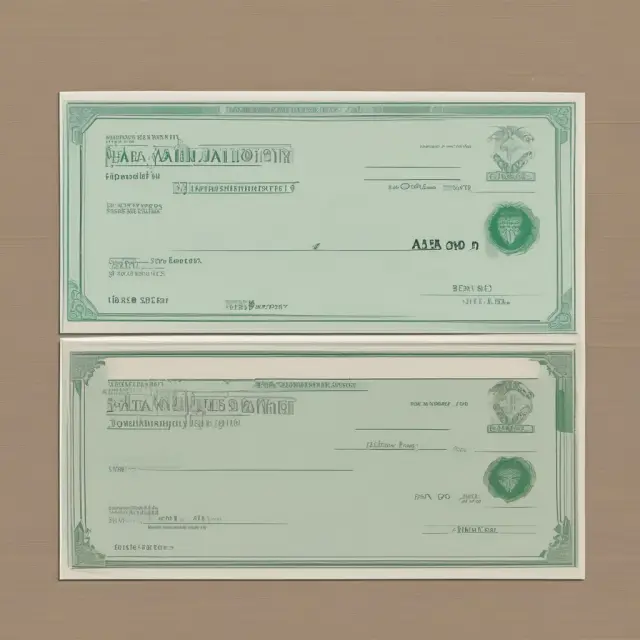
A voucher check is a unique form of official payment that combines both a check and a voucher, creating an auditable paper trail for the payment details. These checks are divided into three main parts: the check itself and two separate vouchers-one for the payee and one for the issuer.
Why are voucher checks important?
Voucher checks hold crucial significance in maintaining a transparent and secure financial system. They offer an organized way to record each payment made, ensuring that all parties involved have a clear understanding of the transaction details. Voucher checks provide a critical paper trail for auditing purposes and help streamline internal processes like payroll and accounts payable.
How does the process of using voucher checks work?
Issuers write a voucher check with an attached voucher detailing the payment’s pertinent information, such as vendor name, invoice number, and payment amount. The payee detaches their respective voucher section from the check for record-keeping before cashing the check. Conversely, the issuer retains their part of the voucher.
Who uses voucher checks?
Both payroll departments and vendors utilize voucher checks. In payroll scenarios, they are commonly referred to as “payroll checks,” with vouchers serving to document employee payments. For vendors, a voucher check is issued when their invoice is matched against a purchase order and supporting documentation, ensuring that both parties have an accurate record of the transaction.
What is the difference between a regular check and a voucher check?
While a traditional check only includes the monetary exchange details, a voucher check comes with an additional voucher component that serves as a backup document, providing valuable information about the payee, payment amount, invoice number, purchase order details, and other relevant information.
What are the benefits of using voucher checks?
Using voucher checks offers several advantages: improved internal control, enhanced auditability, and streamlined record-keeping for both payroll and accounts payable processes. Additionally, they help in minimizing errors and ensuring that only authorized transactions proceed while providing a clear paper trail for future reference.
 Next entry · No. 5,552Understanding Vouchers: Accounts Payable Documentation and Control Mechanisms
See also
-
 No. 5,896
17 Oct 2025
18 min
Understanding Zero-Floor Limits: Protecting Against Fraud and Processing Every Transaction
Business Finance
No. 5,896
17 Oct 2025
18 min
Understanding Zero-Floor Limits: Protecting Against Fraud and Processing Every Transaction
Business Finance -
 No. 5,455
10 Sep 2025
18 min
Understanding Vault Receipts: A Comprehensive Guide for Institutional Investors
Business Finance
No. 5,455
10 Sep 2025
18 min
Understanding Vault Receipts: A Comprehensive Guide for Institutional Investors
Business Finance -
 No. 5,836
11 Oct 2025
18 min
Understanding XRT: Ex-Rights Trading and Its Role in Finance
Business Finance
No. 5,836
11 Oct 2025
18 min
Understanding XRT: Ex-Rights Trading and Its Role in Finance
Business Finance -
 No. 5,826
10 Oct 2025
19 min
Understanding Wrongful Dishonor: What Happens When a Bank Fails to Honor a Valid Instrument?
Business Finance
No. 5,826
10 Oct 2025
19 min
Understanding Wrongful Dishonor: What Happens When a Bank Fails to Honor a Valid Instrument?
Business Finance -
 No. 5,802
08 Oct 2025
16 min
WorldCom: The Largest Telecom Accounting Scandal in US History
Business Finance
No. 5,802
08 Oct 2025
16 min
WorldCom: The Largest Telecom Accounting Scandal in US History
Business Finance -
 No. 5,775
06 Oct 2025
21 min
WordPress for Institutional Investors: A Powerful, Customizable Content Management System for Professional Websites
Business Finance
No. 5,775
06 Oct 2025
21 min
WordPress for Institutional Investors: A Powerful, Customizable Content Management System for Professional Websites
Business Finance