A Comprehensive Overview of the Greek Drachma: History, Value, and Debate over a Possible Grexit
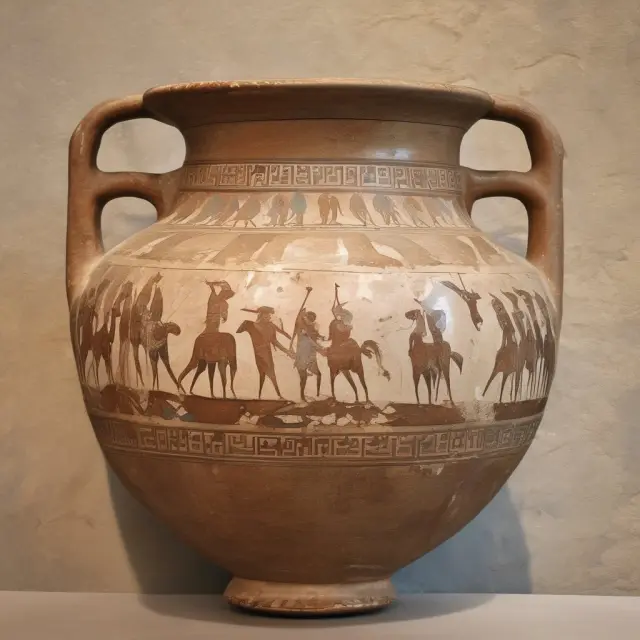
Explore the history, value, and debate around Greece's national currency: the drachma. From ancient origins to modern currency dilemmas.
Origins of the Greek Drachma
The Greek drachma was the currency of Greece before it was replaced by the euro in 2001. This ancient unit of money had a rich history that spans from ancient Greece to modern times.
In its earliest days, the drachma originated as a coin used among various city-states in Ancient Greece around 600 BCE. The term “drachm” is derived from the Greek word ‘drachme,’ meaning ‘a handful.’ It was one of the most popular currencies throughout ancient Greece and its empire due to its small size, portability, and standard weight.
The drachma made a comeback in modern Greece when it was officially reintroduced as the national currency after the country’s independence from the Ottoman Empire in 1832. It replaced the phoenix, which had been used since 1828. The new drachma was initially pegged to silver and remained the currency of Greece until its replacement by the euro in 2001.
Drachma banknotes were issued from 1841 to 2001, with denominations ranging from 1 to 500 drachmae. The earliest banknotes featured King Otto’s portrait on one side and various designs representing Greek culture on the other. Subsequent designs included Greek monuments, historic sites, or mythological figures.
The Greek Drachma in Ancient Times
The value of ancient Greek drachmas can be estimated using contemporary currency conversion rates. Economists approximate that a single ancient Greek drachm was worth approximately $54 in 2021 U.S. dollars. These coins were often made from silver but were frequently debased with the addition of copper or other metals to decrease production costs and maintain parity with gold currencies.
From Ancient Greece to Modern Times: Currency Evolution
The Greek drachma has a fascinating journey through history, having survived as a currency for over 2500 years, from ancient times to modern Greece. Along the way, it went from being a city-state coin to serving as the official currency of the modern country of Greece. Despite its long history, the drachma’s use was not continuous, with various interruptions and changes in its value and composition.
Greece Joins the Eurozone: Leaving the Drachma Behind
In 2001, Greece adopted the euro as its official currency, replacing the drachma. The changeover had significant implications for both Greece and the European Union (EU), as it marked a critical step towards greater economic integration within the EU. By joining the Eurozone, Greece gained access to a stable and strong currency and benefited from increased financial stability, reduced transaction costs, and enhanced market liquidity.
Grexit: A Debate on Greece’s Currency Exit
The debate over whether Greece should leave the European Union (EU) and reintroduce its own currency, the drachma, has been a topic of intense discussion since the country faced a severe debt crisis in 2009. The movement advocating for this controversial move is known as Grexit.
The primary argument in favor of Grexit is that a devalued drachma would make Greece more attractive to foreign investors and tourists, as their euros would go further in the country. This could potentially stimulate economic growth through increased investment and trade. However, opponents argue that leaving the EU and reintroducing the drachma would result in economic instability, uncertain market conditions, and potential social unrest within Greece. The debate continues, with both sides presenting valid arguments.
Benefits and Drawbacks: Switching Back to the Greek Drachma
If Greece were to switch back to the drachma, it could benefit from a devalued currency that would attract foreign investment and boost exports. However, this move could also lead to higher inflation rates, making it essential for Greece to control its monetary policy effectively. Additionally, the country might face challenges in establishing trade agreements with other countries and rebuilding trust with international financial institutions.
Staying in the Eurozone comes with benefits such as market stability, access to European bailout programs, and a unified monetary policy. However, it also requires Greece to adhere to strict fiscal rules set by the EU, which can sometimes hamper its economic development.
In conclusion, the Greek drachma holds a unique place in history, having served as the currency of ancient Greece and later being reintroduced in modern times before ultimately being replaced by the euro. Understanding the origins and evolution of the drachma provides valuable insights into Greece’s economic past and its ongoing debate on whether to return to its historic currency or stay with the euro.
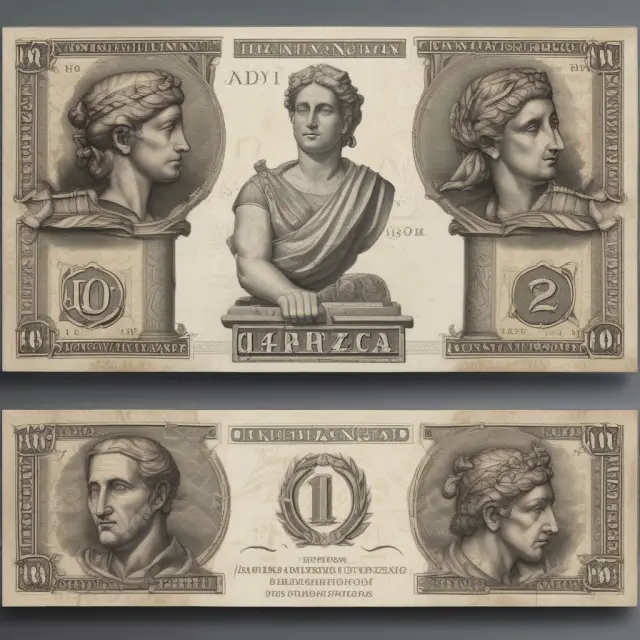
Currency and Denominations
The Greek drachma, a currency unit used in ancient Greece and reintroduced as the official currency of modern Greece in 1832, underwent several changes throughout history. From its ancient origins to its transformation into banknotes and coins, understanding the evolution and denominations of the drachma provides valuable context regarding Greece’s monetary past.
Originating in ancient Greece, the first drachmas were predominantly silver coins featuring images of gods and goddesses like Athena and Apollo or other symbols. These coins ranged from 1 to 17 drachmas. The drachma was also a common denomination used within various Greek city-states.
In the modern era, drachma notes were introduced as paper money in Greece in 1832 when the country gained its independence. Initially, denominations ranged from 5 to 10 lepta (small coins equal to a fraction of a drachma) and 1 to 10 drachmas. During the 20th century, larger denominations, such as 500 drachmas and even 5,000 drachmas, were issued in response to hyperinflation.
The Bank of Greece, the central banking authority, issued drachma banknotes from 1841 until 2001 when Greece adopted the euro as its official currency. Drachma note denominations ranged from 10 to 500 during much of its existence. However, smaller denominations, such as 1 and 2 drachmas, were issued earlier. The three modern Greek drachmae were replaced by the euro at a rate of 340.750 drachmae to one euro on June 19, 2000.
The value of ancient Greek drachmas in contemporary currency is estimated to be around 54 US dollars based on economists’ calculations of the purchasing power parity index. This estimate highlights the historical significance and relative value of the drachma within its context.
The transition from the phoenix, Greece’s first modern currency introduced in 1828, to the drachma marked a significant turning point for Greece as it reclaimed its ancient monetary heritage and laid the foundation for a more stable financial future.
The Greek Drachma in Ancient Times
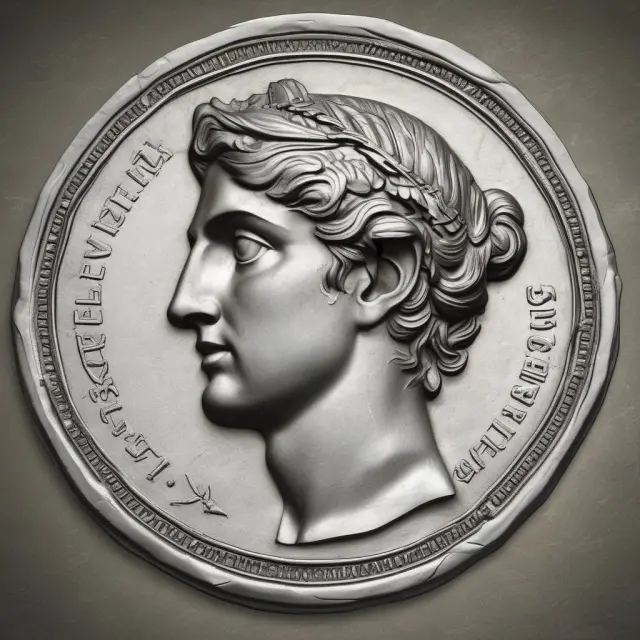
The ancient Greek drachma, a silver coin, was widely used throughout Greece and its colonies from around 600 BCE until the end of antiquity. Economists estimate that in the 5th century BCE, one drachma was worth approximately $54 in contemporary currency. This puts the value of a laborer’s daily wage during this period at around 1.3 drachmas.
The tetradrachm, which featured the profile of Athena on one side and an owl on the reverse, became the most popular and widely circulated form of drachma coinage. The silver content of these coins varied throughout history; initially, they contained approximately 6.4 grams of pure silver, but later coins were debased with the addition of copper to lower production costs and maintain their overall size and weight.
The origins of the drachma are shrouded in antiquity, but it is believed to have originated from a time when Lydia, a region located in modern-day Turkey, began minting coins in the 7th century BCE. These coins, which were made from electrum—a natural alloy of gold and silver—were imitated by Greek city-states, eventually leading to the adoption of the drachma as a standardized unit of currency throughout much of Greece and its colonies.
When Greece won its national independence from the Ottoman Empire in 1828, it initially issued the phoenix as its currency. However, this proved to be short-lived, and by 1832, the drachma was reintroduced, harkening back to its ancient origins. The first drachma notes were impressed with the image of King Otto, who reigned as modern Greece’s first king from 1832 to 1862.
The Greek drachma remained the official currency until it was replaced by the euro in 2001. This transition came as part of an effort by Greece and other European Union (EU) members to adopt a single international unit of exchange, ultimately aiming for more efficient trade and financial markets. Despite the historical significance of the Greek drachma, it is unlikely that Greece will ever return to using this ancient currency again.
From Phoenix to Drachma: Greece’s Currency Evolution
The Greek drachma holds a long and rich history as the ancient currency of many city-states and later becoming the official unit of currency in modern Greece until its replacement by the euro. This section explores the historical background and reasons behind the transition from the phoenix to the drachma as Greece’s national currency.
Ancient Greek city-states like Athens, Corinth, and Syracuse employed their unique versions of the drachma, which became a fundamental unit of exchange in commercial activities throughout the Mediterranean world. The term “drachma” originated from the Greek word ‘drachmate,’ meaning a handful or a bunch – symbolizing that a drachma represented a substantial amount of money at the time.
In Ancient Greece, the most popular drachma coin was the tetradrachm, bearing the profile of goddess Athena on one side and an owl on the other. During this era, the drachma’s intrinsic value came from its silver content. However, as time passed, coins began to be debased by adding copper or other metals, ultimately lowering their worth.
When Greece gained its national independence from the Ottoman Empire in 1828, it issued the phoenix as its currency. Although the phoenix marked a new chapter for modern Greek history, it was short-lived, used only for four years. In 1832, the drachma made its reappearance, this time as the official currency of the newly established modern Greek state.
From that point forward, the National Bank of Greece issued drachma banknotes, with denominations ranging from 1 to 500 units and smaller denominations earlier on. Initially, 5-drachma notes were produced by cutting a 10-drachma note in half. The first drachmae notes bore the image of King Otto, who ruled Greece from 1832 to 1862.
However, with Greece’s entrance into the Bretton Woods system in 1953 to combat inflation, the drachma underwent a significant change – its value was revalued at 1000:1 and pegged to the U.S. dollar, which created stability in the country’s economy.
As the 20th century progressed, Greece continued to use the drachma until it joined the European Union (EU) in the late 1980s. With the goal of creating more efficient trade and financial markets by adopting a single currency, Greece eventually replaced its national currency with the euro on January 1, 2001.
Though the drachma is no longer in use, its legacy remains an essential part of Greek history and economic development. The shift from the drachma to the euro brought both advantages and disadvantages for Greece. This section has provided a comprehensive exploration of the origins, historical context, and implications of Greece’s currency evolution.

Greece Joins the Eurozone
In January 2002, Greece became an official member of the European Monetary Union (EMU), adopting the euro as its national currency, replacing the Greek drachma. This significant monetary shift marked a critical chapter in the country’s economic history following its severe financial crisis throughout the late 1990s and early 2000s.
Greece’s entry into the Eurozone brought about a substantial transformation in Greece’s economic landscape, leading to increased stability, integration with the European Union, and access to an enlarged single market. By joining the eurozone, Greece could now enjoy the advantages of using a strong and stable currency for its trading activities, creating a more favorable business environment.
However, Greece’s entry into the Eurozone came with conditions that demanded stringent fiscal discipline, adherence to the Stability and Growth Pact, and the implementation of various economic reforms. These requirements aimed to ensure Greece met the Maastricht criteria – a set of guidelines to maintain price stability and economic convergence within the European Union.
Greece’s decision to join the eurozone was motivated by several factors, including:
- Economic Advantages: The benefits of joining the Eurozone included greater economic integration, access to larger markets, and a single currency that could help reduce transaction costs and boost international trade.
- Stability: The adoption of the euro provided Greece with a stable currency, which was crucial for promoting price stability, inflation control, and long-term economic growth.
- Access to EU Grants and Funds: By joining the Eurozone, Greece became eligible for various EU grants and funding programs that could be used to support its economic development.
- Monetary Policy Coordination: The European Central Bank (ECB) was tasked with implementing a unified monetary policy for all eurozone members, ensuring consistent interest rates and exchange rate stability.
The following are the key steps Greece took in adopting the euro as its national currency:
- Meeting the Maastricht Criteria: To become a member of the Eurozone, Greece needed to fulfill specific economic conditions (Maastricht criteria) which included maintaining an inflation rate below 2%, a long-term interest rate below the average of EU countries, and a debt-to-GDP ratio under 60%.
- Currency Conversion: In early 2001, Greece began exchanging its drachma for euros at a fixed exchange rate of 340.75 Greek drachmas per euro. This conversion rate was set on June 19, 2000, and the transition process was completed by December 31, 2001.
- Exchange Rate Stability: By adopting the euro, Greece gained a more stable currency, which helped protect its economy from external shocks and volatility that could negatively impact trade and investment.
- Fiscal Discipline: To remain a part of the Eurozone, Greece was required to maintain fiscal discipline by implementing various economic reforms and austerity measures aimed at reducing its budget deficit and debt levels.
- European Integration: The adoption of the euro helped boost Greece’s integration within the EU, paving the way for closer political, economic, and social ties between Greek institutions and those of other EU member states.
In conclusion, Greece’s decision to join the Eurozone and adopt the euro as its national currency was a strategic move aimed at stabilizing its economy, integrating with the European Union, and benefiting from a strong and stable single currency. Despite the challenges that came with meeting the Maastricht criteria and implementing fiscal discipline, the advantages of using the euro have proven to be significant for Greece’s economic growth and development in the long term.
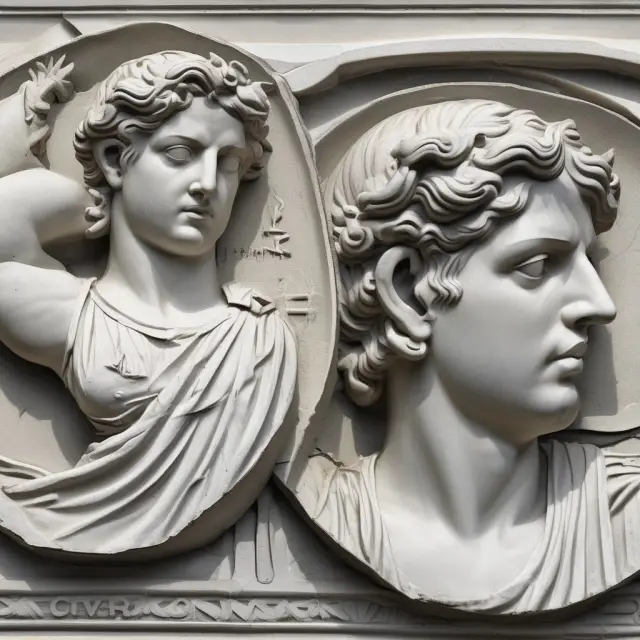
Grexit: The Debate on Greece’s Currency Exit
The financial turmoil in Greece since the mid-2000s has brought about significant debate over whether Greece should leave the European Union (EU) and adopt a new currency, most notably the Greek drachma. This movement, known as Grexit, gained prominence during the Greek debt crisis when many believed that abandoning the euro could provide an economic boost through devaluation and increased investment in Greece. However, others argue against such a move due to potential negative consequences on the economy, living standards, and social order.
Advantages of Grexit: Devaluation and Economic Stimulus
One primary advantage of Grexit is that by introducing a new currency, Greece could experience an economic stimulus through devaluation. A lower-valued Greek drachma would make the country more attractive to foreign investors as their investments would go further. Moreover, tourists traveling to Greece would be able to pay for their vacations at lower rates if the country adopted a cheaper currency. This would lead to an increase in tourism and attractiveness to overseas businesses looking for new markets.
Flexibility in Monetary Policy
Grexit advocates also argue that leaving the EU would grant Greece more control over its monetary policy, allowing it to print more money if needed, which could help stimulate economic growth. However, they acknowledge the potential risks of excessive printing leading to rampant inflation and economic instability.
Disadvantages of Grexit: Negative Economic Consequences and Social Unrest
Opponents of Grexit argue that reintroducing the drachma could lead to negative economic consequences such as a decline in living standards for Greek citizens, who would see their earnings decrease significantly against the euro. The transition from one currency to another would be challenging, and uncertainty could result in capital flight and reduced investor confidence. Moreover, social unrest could potentially ensue due to public dissatisfaction with the economic downturn and potential hardships faced by the population.
Loss of Benefits from EU Membership
Another significant concern raised against Grexit is that Greece would lose various benefits it currently enjoys as an EU member state, such as financial assistance during its debt crisis and access to a stable, strong currency for efficient trade and business transactions. The potential economic instability resulting from switching back to the drachma could further exacerbate Greece’s already precarious financial situation.
Conclusion
The debate on Grexit has been ongoing since Greece faced significant financial challenges in the mid-2000s, with arguments for and against returning to the Greek drachma as the national currency. While some believe that the benefits of devaluation and economic stimulus outweigh the potential negative consequences, others argue that the risks involved, such as social unrest and a decline in living standards, are too great. Ultimately, the decision to adopt or abandon the euro would depend on a multitude of factors, including political will, economic conditions, and the potential long-term implications for Greece and its people.
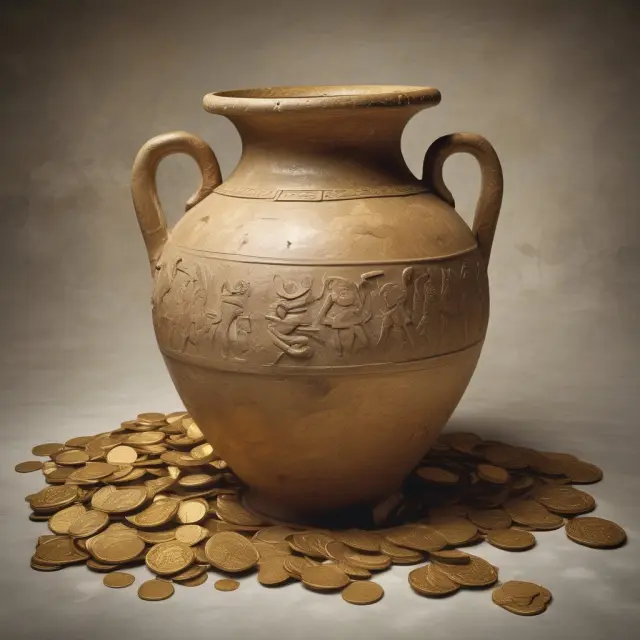
Benefits and Drawbacks of Switching Back to the Drachma
Since the Greek debt crisis began in 2009, the notion of Greece leaving the European Union (EU) and reintroducing its ancient currency, the drachma, as the national currency has gained significant attention. Dubbed “Grexit,” this proposal calls for Greece to abandon the euro and potentially face a return to its past economic instability. Understanding the benefits and drawbacks of switching back to the Greek drachma is crucial for evaluating the potential implications for Greece and Europe at large.
Advantages of Grexit
- Encouraging investment: A devalued drachma would make Greece more attractive for foreign investors, as their euros would go further in Greece. This could potentially lead to an influx of capital that could aid in Greece’s economic recovery.
- Tourism growth: Lower-priced drachmas would also result in increased tourism, as travelers can spend less on accommodations and attractions while visiting Greece.
- Greater monetary control: Having its own currency would give Greece more control over its monetary policy and the ability to devalue or revalue it when needed.
- Sovereignty: A return to the drachma could be seen as a symbol of national pride and independence, allowing Greece to break free from the perceived financial constraints of the EU.
Disadvantages of Grexit
- Negative short-term effects: A switch back to the drachma would likely result in an immediate decrease in purchasing power for Greek citizens, negatively impacting their standard of living.
- Economic instability: Greece may face significant economic volatility and uncertainty during the transition period as it attempts to reintroduce a currency that has been out of circulation for over two decades.
- Increased borrowing costs: A return to the drachma would also likely result in increased borrowing costs due to heightened market risk, making it more difficult for Greece to finance its debt and recover from economic turmoil.
- Isolation from European markets: Leaving the EU could potentially isolate Greece from European markets, reducing trade opportunities and further hindering its economic recovery.
- Lack of credibility: The financial crisis that led to the proposal of Grexit has shaken investors’ confidence in Greece. A return to the drachma could exacerbate this lack of trust, making it difficult for Greece to attract foreign investment or secure loans in the future.
The debate surrounding Grexit and the potential benefits and drawbacks of returning to the Greek drachma is complex and multifaceted. While some believe that a weaker currency would stimulate growth and provide much-needed economic relief, others argue that the long-term consequences could be detrimental. It remains to be seen whether Greece will ultimately choose to stay within the EU or return to its ancient roots by adopting the drachma once more.
In conclusion, this section aims to provide a comprehensive overview of the benefits and drawbacks associated with switching back to the Greek drachma as Greece’s national currency. It is important to consider both the short-term and long-term implications for Greece and its economy when making such a significant decision. This analysis delves into various aspects, including investment attraction, tourism growth, monetary control, sovereignty, and potential negative consequences. By examining these factors, we can better understand the complexities of the Grexit debate and assess the potential economic impacts for Greece and Europe as a whole.
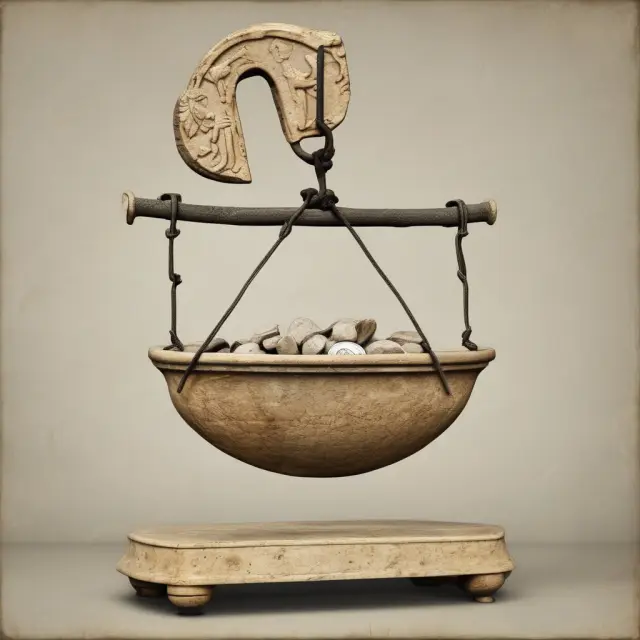
The Drachma and Inflation: Printing Money vs. Stability
One of the most intriguing debates surrounding the Greek economy revolves around the potential benefits and drawbacks of having Greece’s national currency once again, specifically the Greek drachma. As part of the European Union (EU) since 1981, Greece has been using the euro as its official currency since 2001. However, during the country’s tumultuous financial crisis that began in 2009, some advocated for a return to the drachma under the name “Grexit” (Greece’s exit from the EU). This debate centers on the relationship between currency control, inflation, and stability.
Before exploring the arguments for and against returning to the Greek drachma, it is essential first to understand how Greece’s ancient currency came into being and evolved throughout history.
Originating as a silver coin in Ancient Greece around 600 BCE, the drachma was a widely used unit of exchange within city-states like Athens. In the following centuries, it became an essential component of trade and commerce across the Mediterranean region. When Alexander the Great united Greece under his rule around 335 BCE, the drachma gained even more widespread use.
In ancient times, one drachma equated to a day’s wages for a laborer or a skilled worker. However, it is essential to recognize that the value of the drachma varied depending on factors such as location and time. For instance, in the 5th century BCE, economists estimate that one ancient Greek drachma was equivalent to approximately $54 in current US dollars.
Throughout history, there have been several attempts to define a fixed value for the drachma. The most notable example came when Greece joined the Bretton Woods system in 1953, at which point one drachma was pegged to one U.S. dollar at a rate of 30 drachmae. This exchange rate remained in place until Greece adopted the euro in 2001, with three modern Greek drachma being equivalent to one euro.
The relationship between the ancient Greek drachma and inflation is particularly intriguing. Unlike today’s fiat currency that can be printed without limit, the ancient drachma was made primarily from silver. Coins of this metal were minted in various denominations (including the tetradrachm) and circulated widely. Over time, however, debasement occurred as copper and other metals were added to the coinage to make up for dwindling silver supplies, leading to inflation.
Fast forwarding to modern Greece’s adoption of the euro in 2001, a crucial question emerges: What implications would a return to the Greek drachma have on inflation and financial stability? Proponents argue that Greece could devalue its currency to stimulate economic growth through increased exports and tourism. They believe that a weaker currency would make Greece more competitive in terms of prices, ultimately attracting foreign investment and visitors.
However, critics contend that the consequences of returning to the drachma could be detrimental. Devaluation might lead to inflation, negatively impacting the purchasing power of Greek citizens and potentially sparking social unrest. Additionally, exiting the eurozone could result in a loss of financial support from other EU members, leaving Greece without crucial aid during times of economic instability.
Another important consideration is that in today’s globalized economy, it would be difficult for one country to entirely control its currency, especially if that country is part of a larger monetary union like the EU. Inflation could quickly spiral out of control without the support and coordination of other countries within the Union.
In conclusion, the debate regarding the Greek drachma’s potential return hinges on several factors, including inflation, stability, and the role of international cooperation in maintaining financial health. While a weaker currency may offer short-term economic benefits, it is vital to consider the long-term consequences, such as increased inflation and decreased purchasing power for Greek citizens. Ultimately, the decision to reintroduce the drachma as Greece’s national currency would have far-reaching implications on both a domestic and international scale.
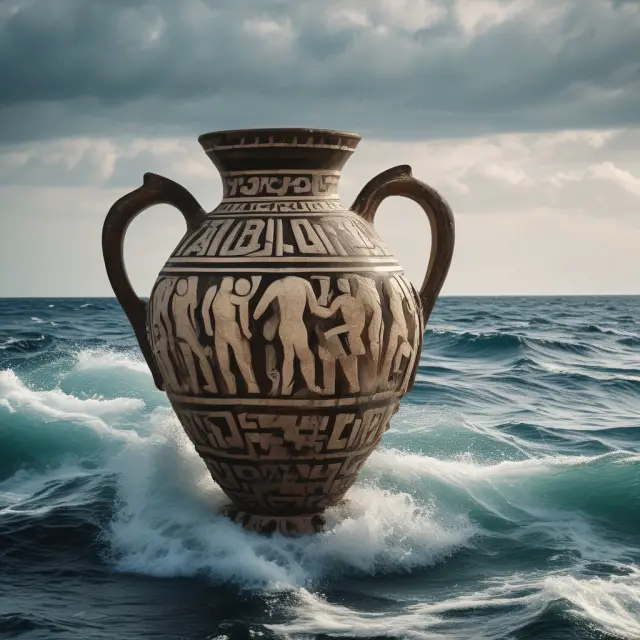
Greece’s Economic Impact in the Eurozone and Beyond
Greece’s decision to abandon its native currency, the drachma, and join the European Union (EU) in 2001 and adopt the euro as its official currency marked a significant turning point for the country. Being part of the Eurozone has had profound implications for Greece and Europe at large, with both advantages and disadvantages worth exploring.
The rationale behind adopting the euro stemmed from several factors. One motivation was to combat inflation and achieve economic stability by pegging the Greek currency to a more powerful one, such as the German mark or later the euro. Furthermore, Greece hoped that joining the Eurozone would lead to increased foreign investment, trade opportunities, and greater access to European markets.
However, the economic benefits of being part of the eurozone have not been evenly distributed among EU members. Greece’s entry into the Eurozone coincided with an economic boom, but it proved short-lived. In the mid-2000s, Greece experienced a debt crisis, which exposed significant structural weaknesses in its economy and led to widespread concerns about the long-term sustainability of the euro as a currency shared by countries with vastly different economic realities.
In response to the Greek debt crisis, the European Union and the International Monetary Fund provided aid packages, imposing strict fiscal measures on Greece to address its unsustainable public debt levels. The harsh conditions of these bailout programs sparked social unrest in Greece, with many Greeks expressing their discontent through protests and calls for a return to the drachma as their national currency – an idea known as “Grexit.”
The Grexit debate centers on the potential benefits and drawbacks of Greece exiting the European Union and reintroducing the drachma as its official currency. Proponents argue that such a move would give Greece greater control over its monetary policy, potentially allowing it to devalue the drachma and make its exports more competitive in international markets. Furthermore, they believe this could lead to increased foreign investment and tourism, as visitors might find Greek goods and services cheaper when paid for in euros.
On the other hand, opponents of Grexit warn that leaving the EU would be a risky move for Greece. They argue that reintroducing the drachma would create inflationary pressures, potentially leading to further economic instability and social unrest. Furthermore, they point out that a devalued currency might initially attract foreign investment but could also lead to an influx of goods from abroad, making it difficult for domestic industries to compete. Additionally, there is uncertainty about how Greece would manage the transition back to its own currency while maintaining essential economic relationships with other EU countries and international organizations like the IMF.
As of now, the Grexit debate remains theoretical, as Greece remains a member of the European Union and uses the euro as its official currency. The euro has provided Greece with stability during times of crisis but comes with strict fiscal conditions that can hinder economic growth in less prosperous countries like Greece. Only time will tell whether the benefits of being part of the Eurozone outweigh the challenges for Greece and other EU countries facing similar economic challenges.
One thing is clear – the fate of the euro and the European Union as a whole may rest on how member states manage their economies, particularly those with significant debt burdens or structural weaknesses. In this context, understanding the origins, value, and implications of the Greek drachma can shed valuable light on the complex relationship between currency, sovereignty, and economic development in Europe.
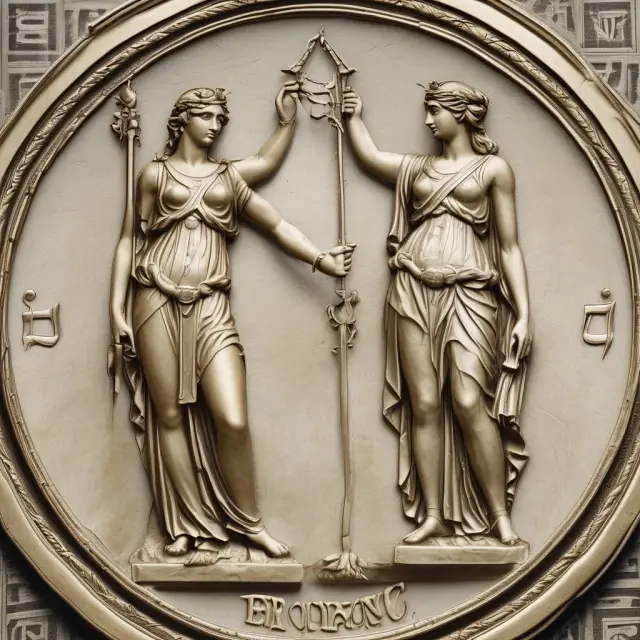
FAQ: Greek Drachma and Euro
The Greek drachma was the currency of Greece before it was replaced by the euro in 2001. It’s an ancient unit of money that has a rich history, from its origins as a currency in the Greek city-states to modern Greece. In this FAQ, we address common questions about the Greek drachma and its relationship with the euro.
**What was the Greek drachma used for before 2001?**
The ancient Greek drachma was first used as a unit of currency in various city-states around Greece. It was later reintroduced following Greece’s independence from the Ottoman Empire in 1832, serving as the country’s national currency until its replacement by the euro.
**How many denominations did drachma notes have?**
Drachma notes ranged from 10 to 500 over much of their existence. Smaller denominations of 1 and 2 drachmae were issued earlier.
**What was an ancient Greek tetradrachm?**
A popular drachma coin from ancient Greece was the tetradrachm, which featured the profile of the goddess Athena on one side and an owl on the other.
**Why did Greece abandon the drachma in favor of the euro?**
Greece joined the European Union (EU) in 1981 and adopted its common currency, the euro, in 2001. The decision to replace the drachma with the euro was part of a broader effort among EU countries to improve trade and financial markets through the use of a single unit of exchange.
**What were the advantages of Greece using the drachma?**
A devalued Greek drachma would have attracted investment, boosted exports, and increased tourism by making euros go further in Greece. However, it could also lead to inflation if too much money was printed.
**Why is there debate about Greece switching back to the drachma (Grexit)?**
The idea of Grexit, or Greece leaving the EU to reintroduce the drachma, gained popularity during Greece’s debt crisis. It was believed that a weak drachma would stimulate investment and growth but could potentially harm Greek citizens in the short term.
**How did the ancient Greek drachma compare to modern currency?**
Estimates suggest that one ancient Greek drachma was worth approximately $54 in contemporary currency.
**What was the drachma made of?**
Originally, drachmas were minted with silver but gradually became debased as copper was introduced into the mixture.
**Did Greece ever consider leaving the euro and returning to the drachma?**
Though there have been debates about Grexit, as of now, Greece will not switch back to the drachma.
This FAQ explores common questions related to the Greek drachma and its modern counterpart, the euro, offering readers a deeper understanding of their history and significance in Greece’s economic landscape.
 Next entry · No. 1,904Green Bonds: A Comprehensive Guide for Institutional Investors
See also
-
 No. 4,250
03 Jun 2025
20 min
The Slang Term ‘Quid’: A Comprehensive Exploration of the British Pound Sterling
Finance History
No. 4,250
03 Jun 2025
20 min
The Slang Term ‘Quid’: A Comprehensive Exploration of the British Pound Sterling
Finance History -
 No. 1,782
05 Nov 2024
22 min
Understanding the Genesis Block: The Foundation of Bitcoin’s History and Security
Finance History
No. 1,782
05 Nov 2024
22 min
Understanding the Genesis Block: The Foundation of Bitcoin’s History and Security
Finance History -
 No. 3,980
12 May 2025
25 min
Understanding PIIGS: The Derogatory Acronym That Defined the European Debt Crisis
Business Finance
No. 3,980
12 May 2025
25 min
Understanding PIIGS: The Derogatory Acronym That Defined the European Debt Crisis
Business Finance -
 No. 3,756
24 Apr 2025
19 min
Understanding Optimum Currency Area (OCA) Theory: Economic Efficiency through a Shared Currency
Economics
No. 3,756
24 Apr 2025
19 min
Understanding Optimum Currency Area (OCA) Theory: Economic Efficiency through a Shared Currency
Economics -
 No. 2,640
23 Jan 2025
23 min
Understanding the Japanese Yen: History, Trading, and Safe Haven Currency Status
Finance Policy
No. 2,640
23 Jan 2025
23 min
Understanding the Japanese Yen: History, Trading, and Safe Haven Currency Status
Finance Policy -
 No. 2,624
22 Jan 2025
21 min
Joint Bonds: Understanding Shared Guarantees and Their Role in Finance
Business Finance
No. 2,624
22 Jan 2025
21 min
Joint Bonds: Understanding Shared Guarantees and Their Role in Finance
Business Finance