Bartering: The Oldest Form of Commerce Revitalized

Explore the fundamentals and benefits of bartering as an alternative commerce system, from individuals to countries during economic downturns.
Introduction and Definition
Bartering is an ancient form of commerce that predates the use of currency, still prevalent today as an alternative means of exchanging goods or services between individuals, companies, and even countries. By definition, bartering refers to the trading of one good or service for another without involving money. This practice can offer numerous advantages and benefits in various scenarios, including economic downturns and inter-business transactions.
Principles of Bartering
The fundamental principle behind bartering is based on supply and demand, where two parties negotiate to determine the relative value of their goods or services and exchange them accordingly. The concept is as simple as exchanging a carpenter’s labor for a farmer’s crops or livestock—an even exchange that results in an optimal allocation of resources.
Benefits of Bartering for Individuals
Bartering allows individuals to maintain their cash reserves for essential expenses and trade items they no longer need for those they require. By establishing deeper personal relationships with trading partners, bartering can also create stronger community bonds and facilitate networking opportunities.
Individuals can benefit from bartering by:
- Maintaining cash for essential expenses: Bartering enables individuals to acquire goods or services without spending cash, ensuring that they have enough money on hand for necessities such as housing, food, and utilities.
- Building deeper relationships with trading partners: By engaging in a barter exchange, individuals can establish trust and rapport with their trading partners, leading to stronger personal relationships that may last beyond the transaction itself.
- Marketing businesses through networking: Small business owners can leverage bartering as an opportunity to expand their customer base by exchanging goods or services for advertising space, promoting their brand, and ultimately growing their business.
Benefits of Bartering for Companies
Companies engage in bartering when they lack the cash or credit necessary to purchase desired goods or services, offering a more cost-effective alternative. Effective communication and understanding of both parties’ needs are crucial to ensure successful transactions.
Companies can benefit from bartering by:
- Exchanging goods and services instead of cash: By using the resources they already have on hand to obtain necessary goods or services, companies can save money while reducing their reliance on cash or credit.
- Eliminating foreign exchange risks: Barter transactions between companies eliminate the need for foreign currencies and related foreign exchange rate risks, making it an attractive option for international trade.
- Building strategic partnerships: Companies can establish long-term relationships through bartering, leading to increased collaboration and potential future business opportunities.
Bartering’s Role in Economies
Historically, bartering has been a common practice during economic downturns when cash reserves are limited. It helps manage trade deficits, enabling countries to obtain necessary goods without relying on hard currency. In some cases, bartering can also result in the optimal allocation of resources, bringing demand and supply into balance.
Bartering Today: A Modern Approach
With the rise of the digital age and online trading platforms, bartering has experienced a resurgence as individuals, companies, and even countries continue to explore its benefits. In 2020, during the COVID-19 pandemic, the practice gained popularity, with more people turning to barter exchanges to acquire essential goods and services while reducing their cash expenditures.
Stay tuned for the following sections on best practices, tax implications, and frequently asked questions regarding bartering.

Principles of Bartering
The intriguing concept of bartering, an ancient form of commerce that predates the use of money, has been gaining popularity once more due to its practicality and potential benefits in various economic situations. This section explores the fundamentals of this unique trading method, including how it works, its historical significance, and the importance of equivalent values in a trade.
Bartering is a straightforward concept: two or more parties exchange goods or services without the need for money as a medium of exchange. A classic example involves a carpenter who constructs a fence for a farmer in exchange for a certain quantity of produce. In essence, bartering represents an exchange of resources based on mutual agreement and perceived value.
Bartering is not just a concept from the past; it is still relevant today, especially during economic downturns or when individuals have unique goods or services that are challenging to sell in traditional markets. With the widespread availability of the internet, potential trading partners are now accessible to anyone worldwide.
One interesting fact about bartering is its historical significance as the oldest form of commerce. People engaged in barter arrangements long before the advent of currency, using a variety of goods and services for transactions. Today, individuals, companies, and even countries continue to participate in this cashless exchange system.
The key principle behind bartering is the importance of equivalent values in a trade. Parties must agree on the relative value of their goods or services before making an exchange. This concept is crucial for ensuring that both parties are satisfied with the transaction, and it fosters trust and mutual understanding between them.
In summary, bartering represents a unique trading method that has stood the test of time. Its principles revolve around the exchange of resources based on perceived value and mutual agreement, making it an effective alternative to traditional monetary transactions in certain situations. Understanding these fundamentals is essential for anyone considering engaging in this intriguing practice.

Benefits of Bartering
Bartering, as the oldest form of commerce, is not just a relic of the past but a viable and thriving practice that can significantly benefit individuals and companies today. In essence, bartering involves the exchange of goods or services between two or more parties without the use of money. Instead, transactions occur based on an equivalent estimation of each party’s offerings. The benefits of this cashless form of trading are manifold and range from maintaining financial reserves to building relationships and marketing businesses.
Maintaining Cash for Essential Expenses
Bartering provides individuals with a way to maintain their cash flow for essential expenses that cannot be paid through trade, such as rent, utilities, or medical bills. By bartering excess goods or services, individuals can acquire the necessities they need without having to deplete their savings or incur debt. This is particularly beneficial during times of economic uncertainty when employment opportunities may be limited, and cash reserves are crucial.
Building Deeper Relationships with Trading Partners
Bartering creates a deeper personal relationship between trading partners compared to traditional monetary transactions. When two individuals engage in a barter exchange, they both gain an understanding of each other’s needs, interests, and skills. This shared experience fosters mutual respect and trust, which can lead to long-lasting partnerships that extend beyond the initial trade. These relationships can also create new opportunities for future collaborations and exchanges, as well as a strong network of like-minded individuals with complementary skill sets.
Marketing Businesses Through Networking
Bartering offers an excellent opportunity for small businesses to expand their reach and market their services or products by networking with other local companies and individuals. By participating in barter exchanges, businesses can expose their offerings to a larger audience and potentially acquire new clients that may not have been accessible through traditional marketing channels. This exposure can lead to increased sales, positive word-of-mouth referrals, and the establishment of valuable business relationships.
In conclusion, bartering presents numerous benefits for individuals and companies looking to maintain financial stability, build deeper relationships with trading partners, and market their businesses in a unique and effective way. By embracing this ancient practice and understanding its principles, one can harness the power of cashless trading to adapt to economic challenges and thrive in today’s ever-changing business landscape.

Individuals and Bartering
Bartering offers numerous advantages for individuals, especially during economic downturns or when they need goods or services that cash may not readily provide. Individuals can benefit from bartering through the exchange of unwanted items, expanding their networks, and saving money on essential expenses. This section will explore a step-by-step process for engaging in successful individual bartering transactions.
Step 1: Identify Your Items for Trade
Begin by evaluating your possessions to identify items that you no longer need or use but may be of value to others. These could include household goods, electronics, furniture, or other personal belongings. Be open-minded about what can be bartered since you never know what someone might want or need.
Step 2: Establish the Value of Your Items
Determine a fair market value for your items based on online research and local pricing data. This will help ensure that both parties feel satisfied with the exchange, as well as allow you to communicate effectively with potential trading partners. Remember that the perceived value may vary depending on the individual’s perspective.
Step 3: Discover the Desired Items or Services
Next, consider what items or services you are looking for in a barter trade. Make a list of your needs and wants, and be as specific as possible to increase the likelihood of finding a suitable trading partner. This may involve conducting online searches for local barter networks or reaching out to friends, family, or colleagues.
Step 4: Contact Potential Trading Partners
Communicate with potential partners through phone, email, or social media platforms. Clearly explain the items you have available for trade and what you are seeking in return. Be sure to provide accurate and realistic valuations of your offerings to facilitate a productive conversation and build trust between both parties.
Step 5: Negotiate the Terms of the Trade
Barter negotiations often involve some give-and-take on pricing or the specific items being exchanged. Keep an open mind during negotiations, as you may discover new possibilities that could benefit both parties. Remember to consider factors such as transportation costs, the condition of the goods or services, and any potential taxes or fees associated with the trade.
Step 6: Complete the Exchange
Once a mutually agreeable trade has been established, arrange for the exchange to take place. This may involve meeting in person to exchange goods or arranging for delivery or pickup of items. Be sure to document the transaction, including a written record of the agreement and any relevant contact information for future reference.
In conclusion, bartering offers numerous benefits for individuals, enabling them to obtain desired goods and services without relying on cash while also potentially expanding their networks and saving money. By following these steps and maintaining open communication with potential trading partners, you can successfully engage in a rewarding and mutually beneficial barter transaction.

Companies and Bartering
Bartering is an age-old practice that has been gaining traction among individuals, but it’s also an effective solution for businesses looking to reduce costs or expand their offerings without incurring cash expenses. In this section, we will delve into how companies can benefit from bartering and discuss best practices for successful transactions.
Bartering for Companies: Exchanging Goods and Services
Companies often seek out bartering opportunities to acquire goods or services that they may not be able to purchase through traditional monetary channels due to budget constraints or unavailability of funds. Bartering allows businesses to maintain a healthy cash flow while obtaining necessary resources, increasing efficiency, and potentially reducing costs.
An excellent example of companies exchanging goods and services is an advertising agency bartering their services with a printing company for promotional materials. This arrangement benefits both parties: the advertising agency receives high-quality printed materials, and the printing company gains exposure and potential clients. In such transactions, it’s essential to establish clear communication channels between trading partners to ensure smooth execution and mutual satisfaction.
Effective Communication is Key in Bartering Transactions
Clear and consistent communication is crucial when engaging in bartering activities to ensure a successful transaction. Both parties must be transparent about their expectations, values, and requirements. Effective communication not only minimizes potential misunderstandings but also fosters stronger business relationships.
In the context of company bartering, the importance of clear communication can be exemplified through a case study involving two manufacturing companies: Company A and Company B. Both firms were in need of specific machinery to improve their production processes. Company A had an excess capacity for producing a component that Company B required; meanwhile, Company B possessed equipment that Company A needed but could not afford to purchase outright.
By engaging in open communication, both companies agreed to exchange the components they had in surplus, allowing each other to upgrade their production capabilities without significant monetary investment. This collaboration led to increased productivity and a stronger working relationship between the two organizations.
Reducing Costs with Company Bartering
Bartering can be an effective cost-saving measure for companies. By exchanging goods or services instead of incurring cash expenses, businesses can maintain a healthier cash flow while still acquiring essential resources. This practice is particularly beneficial during economic downturns when traditional purchasing channels become less accessible.
A real-world example demonstrating the potential cost savings comes from the airline industry. In 2001, American Airlines and United Airlines entered into a strategic barter agreement in which they exchanged advertising inventory on their planes’ exterior. This arrangement saved both companies significant marketing expenses while simultaneously increasing their exposure to potential customers.
In conclusion, company bartering can be a valuable tool for businesses looking to acquire goods or services without incurring cash expenses. Effective communication between trading partners is essential, and successful transactions can lead to reduced costs, increased efficiency, and stronger business relationships.
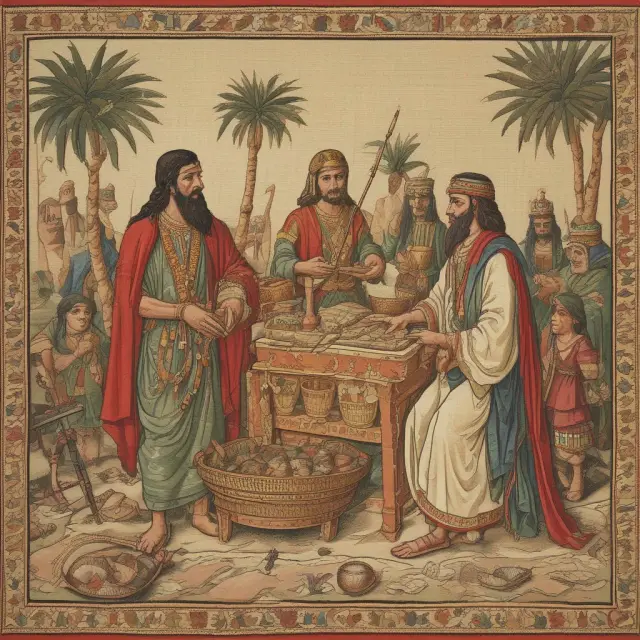
Countries and Bartering
Bartering is not only an effective means of commerce for individuals and businesses; it also plays a significant role in managing international trade between countries. Historical examples of nations engaging in bartering date back thousands of years, with the practice still prevalent today in certain regions. Understanding how countries engage in barter transactions can shed light on its benefits as well as its potential limitations.
Historical Examples of Bartering Countries
The Phoenicians are believed to have been early pioneers in trading through barter, establishing colonies around the Mediterranean Sea and engaging in exchanges with indigenous populations (Davids 1935). The ancient Greeks used barter as a means of commerce during war time, when they would trade goods captured from conquered lands (Pedley & Saller, 2017). In more recent history, during the German occupation of Poland in World War II, the Polish population engaged in extensive bartering activities due to severe food shortages caused by the war.
Role of Bartering in Managing Trade Deficits
Countries often use bartering as a way to manage trade deficits, especially when they are unable to obtain financing or have limited access to foreign currency. By exchanging goods and services directly, countries can reduce their reliance on traditional currency transactions and mitigate balance of payment concerns. For example, during the Soviet era, Eastern European countries bartered with each other to meet their mutual trade needs (Sperling & Smith, 2015).
Economic Benefits of a Barter Economy
A barter economy offers several advantages over traditional currency-based transactions. In such an economy, resources are allocated more efficiently as goods and services are exchanged based on the actual wants and needs of the trading partners, ensuring that both parties derive value from the transaction (Salerno, 2013). Additionally, countries engaging in barter transactions can potentially avoid the negative effects of inflation caused by fluctuations in currency exchange rates.
In conclusion, bartering has played an important role throughout history as a means of commerce between individuals, companies, and even nations. While it is often overlooked today due to the widespread use of cash and electronic payment methods, understanding its principles and benefits can provide valuable insights for navigating economic challenges in both personal and international contexts.
References:
– Davids, G. (1935). The Ancient Phoenicians. Phoenix House UK.
– Pedley, S., & Saller, R. (2017). Greece in the Hellenistic World. University of California Press.
– Salerno, J. J. (2013). Money: Understanding and Creating Alternatives to Legal Tender. New York University Press.
– Sperling, G., & Smith, M. A. (2015). Barter and Countertrade in the Soviet Union and Eastern Europe, 1947–1991. University of Pennsylvania Press.

Bartering During Economic Downturns
The practice of exchanging goods and services without using cash has been gaining popularity during economic downturns. Although it may seem like an archaic system, bartering offers various benefits and creative solutions to help individuals and businesses overcome financial difficulties.
During times of economic instability, people often struggle to make ends meet due to job losses or reduced income. In such situations, bartering can provide a means for accessing essential goods and services without the need for cash. Moreover, it allows individuals to trade items they no longer need or want for something more valuable.
Bartering during economic downturns has seen a resurgence in various forms and platforms. One of the most prominent examples is online barter exchanges, which have enabled small businesses and individuals to generate revenue and access goods and services using underutilized inventory. These platforms offer a virtual marketplace where members can trade items or services with one another.
Bartering during economic crises not only benefits those in need of essentials but also helps create new business opportunities. For example, after the 2008 financial crisis, numerous small businesses turned to barter exchanges to generate revenue, which ultimately helped them weather the storm and thrive in a challenging economic climate.
Moreover, during times of economic downturns, companies may find themselves unable to pay their bills or secure financing, leading them to consider alternative methods for obtaining goods and services. By bartering, they can trade their products or services with other businesses, effectively deferring the payment of cash until a later date when their financial situation improves.
In extreme cases, such as during war time or hyperinflation, countries have even engaged in bartering to manage trade deficits and reduce debt levels. This practice helps maintain essential imports while reducing the reliance on foreign currencies, which can be subject to volatility.
Despite its potential benefits, bartering comes with certain tax implications that must be considered. The IRS views bartering as a form of income and requires individuals and businesses to report it as such. Tax rules for bartering transactions vary depending on the nature of the exchange and the parties involved, so consulting a tax professional is always recommended.
Successful bartering requires effective communication, setting realistic expectations, and understanding both the needs and resources of each party. Building strong relationships through open and honest negotiations can lead to long-term business partnerships and a thriving barter community.

Tax Implications
Bartering can be an effective alternative for those who may lack cash but still need goods and services. However, it is essential to understand the tax implications of engaging in such transactions, as the Internal Revenue Service (IRS) considers bartering to be a form of taxable income. In this section, we will discuss reporting requirements for both individuals and businesses and provide important considerations when documenting these trades.
Reporting Requirements for Individuals
Individuals who participate in barter transactions are required to report the fair market value (FMV) of the goods or services they receive as income on their tax return. The FMV is determined by comparing similar transactions that have occurred with cash payments. For instance, if an individual exchanges a bike worth $500 for a painting valued at $800, their taxable income would be calculated as follows:
Taxable Income = FMV of services or goods received – FMV of services or goods provided
In this case, the taxable income would equal $300 ($800 – $500). It is crucial for individuals to keep detailed records, including descriptions and values, of all barter transactions. These records should be maintained as proof of income when filing their taxes.
Reporting Requirements for Businesses
Businesses engaging in barter transactions are required to follow specific guidelines to ensure proper documentation and reporting. Barter transactions should be recorded on the business’s books at their FMV, just like cash sales. The IRS recommends that businesses follow the Revenue Procedure 2019-48 for accounting methods regarding nonmonetary transactions.
The taxable income of a bartered good or service is calculated based on its FMV. Businesses are required to report this income in their gross receipts and, if applicable, cost of goods sold (COGS) calculations. Proper documentation is critical to ensure that the business records an accurate value for both income and COGS.
Important Considerations When Documenting Transactions
Effective communication between barter partners is essential when documenting transactions. Both parties must agree on the FMV of the goods or services exchanged, and it is recommended that a written agreement be signed by all involved parties as evidence of the exchange. This documentation should include a clear description of the items traded, the date of the transaction, and the values assigned to each item. It is also advisable for businesses and individuals to consider consulting a tax professional when engaging in barter transactions, as they can provide valuable guidance on proper reporting methods and help navigate any potential complexities.
In conclusion, understanding the tax implications of bartering is vital for individuals and businesses involved in these transactions. By following proper documentation procedures, staying informed about the FMV of goods or services, and seeking professional advice when necessary, participants can successfully engage in bartering while ensuring they remain compliant with tax laws.
FAQs:
What are the tax implications for individuals engaging in barter transactions?
Individuals must report the fair market value (FMV) of goods or services received as taxable income on their tax return.
How should businesses document and report barter transactions to the IRS?
Businesses must record barter transactions at their FMV, following the Revenue Procedure 2019-48 for accounting methods. They are also required to report this income in their gross receipts and, if applicable, cost of goods sold (COGS) calculations.
What is the importance of effective communication and documentation when engaging in barter transactions?
Effective communication between parties is essential to agree on the FMV of goods or services exchanged and for proper documentation, ensuring compliance with tax laws. It is advisable to maintain detailed records and consider consulting a tax professional for guidance.

Best Practices for Successful Bartering
Bartering offers an attractive alternative to traditional monetary transactions, but it’s crucial to understand the process and employ best practices to maximize success. Here are some essential steps to follow when engaging in a barter exchange:
1. Identify your resources: Determine which goods or services you can offer for trade based on your inventory, skills, or expertise. Be realistic about what you have to offer and its value compared to the goods or services you desire.
2. Set realistic prices: Accurately evaluate the worth of the items or services you wish to barter. Conduct research using online marketplaces, industry standards, or consulting experts as needed to establish fair market values. Remember, the key to a successful barter transaction is both parties feeling satisfied with the exchange.
3. Understand your needs: Clearly define what you hope to gain through bartering and prioritize your goals. This will help guide your negotiations and ensure that the trade aligns with your objectives.
4. Communicate effectively: Clear, concise, and respectful communication is crucial when engaging in a barter transaction. Build trust by being transparent about your intentions and expectations, while also actively listening to the other party’s needs.
5. Be adaptable: Bartering often involves trading goods or services that are not easily quantifiable, so be open-minded and flexible during negotiations. Consider creative solutions that accommodate both parties’ interests, and remain willing to adjust your approach if needed.
6. Network extensively: Building a diverse network of reliable barter contacts is essential for long-term success in the cashless economy. Engage with potential partners through online platforms, local business associations, or events tailored to your industry.
7. Document transactions accurately: Keep meticulous records of all barter transactions, including descriptions of the items exchanged, dates, values, and any applicable tax information. Proper documentation can help streamline reporting requirements and minimize potential complications.
By following these best practices, you can make the most of your bartering experiences while fostering strong relationships and building a thriving cashless economy community.

Conclusion
In conclusion, bartering is an ancient practice that has survived the test of time and adapted to modern society through innovative digital platforms. As a viable alternative to traditional monetary transactions, it offers unique benefits for individuals, businesses, and even countries in times of economic instability. By understanding its principles, benefits, and tax implications, you can effectively engage in bartering while ensuring a mutually beneficial outcome. Whether exchanging goods or services, the key to successful bartering lies in identifying resources, evaluating needs, communicating effectively with partners, and creating valuable networks. Intrigued? Explore further to harness the power of this age-old commerce system.
FAQs
What is the difference between traditional trading and bartering?
Traditional trading involves exchanging goods or services for money, while bartering involves exchanging goods or services directly with another party.
Is bartering legal?
Yes, bartering is legal as long as both parties agree on the value of the items or services being exchanged and report it as income to the Internal Revenue Service (IRS).
Can I use a credit card for barter transactions?
No, bartering is cashless exchange, meaning it does not involve using credit cards. However, you can exchange your products or services for another party’s products or services, which they might accept as payment if they prefer that method.
What types of businesses commonly use bartering?
Bartering is popular among small and medium-sized enterprises (SMEs), particularly during economic downturns, as it offers an efficient way to exchange goods and services without incurring cash transaction fees or dealing with foreign exchange risks.
How do I find potential trading partners for bartering?
There are various platforms, both online and offline, that facilitate bartering transactions between individuals and businesses. Some popular options include barter exchanges, social media groups, local business associations, and trade fairs. Make sure to research each platform’s reputation and security measures before engaging in a transaction.

FAQs
What is Bartering?
Bartering is an age-old practice of exchanging goods or services between two parties without the use of money. It represents the oldest form of commerce, providing various benefits for individuals and businesses in the modern world.
Is Bartering Legal?
Yes, bartering is considered a legal transaction by most governments around the world. However, it’s important to remember that tax implications may apply when engaging in this practice. Consult your local laws or consult with a tax professional for more information.
What are the Benefits of Bartering?
Bartering offers several advantages:
– Maintaining cash for essential expenses while obtaining desired goods and services.
– Building deeper relationships with trading partners through face-to-face negotiations.
– Marketing businesses by networking with potential clients or partners.
How Does Bartering Work?
In a barter transaction, two parties agree to exchange their goods or services based on an equivalent value. This value is determined through negotiation and can be influenced by the perceived usefulness of each party’s offering.
What are Best Practices for Successful Bartering?
Effective communication and setting realistic prices are crucial for successful barter transactions. Building a strong network of reliable contacts can also lead to more opportunities for trades.
How Can Companies Engage in Bartering?
Companies can exchange goods or services with one another, bypassing the need for cash payments. Effective communication and clear agreements are essential when engaging in business-to-business barter deals.
What is the Role of Taxes in Bartering?
The Internal Revenue Service (IRS) considers bartering to be taxable income, with reporting requirements similar to those for cash transactions. Consult a tax professional for guidance on how to accurately document and report these trades.
Can I Engage in Bartering During Economic Downturns?
Bartering has gained popularity during economic downturns as an alternative way of acquiring essential goods or services without relying on cash. Online barter exchanges have provided a platform for individuals and businesses to connect and trade during times of financial hardship.
How Can I Successfully Engage in Bartering?
To engage in successful barter transactions, follow these steps:
– Identify your resources (goods or services) and their fair market value.
– Determine your needs and the desired goods or services you want to acquire.
– Effectively communicate with potential trading partners and negotiate a fair exchange.
– Document all transactions for tax purposes.
 Next entry · No. 359Understanding and Leveraging the Base Effect in Finance and Investment
See also
-
 No. 813
13 Jun 2024
22 min
Understanding Creative Destruction: The Disruptive Force of Innovation
Business Strategy
No. 813
13 Jun 2024
22 min
Understanding Creative Destruction: The Disruptive Force of Innovation
Business Strategy -
 No. 802
11 Jun 2024
18 min
Countertrade: Understanding Barter, Counterpurchase, and Offset
Business Strategy
No. 802
11 Jun 2024
18 min
Countertrade: Understanding Barter, Counterpurchase, and Offset
Business Strategy -
 No. 480
25 Apr 2024
24 min
The Evolution and Modern Landscape of Bookies and Sports Betting
Business Strategy
No. 480
25 Apr 2024
24 min
The Evolution and Modern Landscape of Bookies and Sports Betting
Business Strategy -
 No. 346
10 Apr 2024
18 min
Understanding Bank Runs: Causes, Impacts, and Prevention
Business Strategy
No. 346
10 Apr 2024
18 min
Understanding Bank Runs: Causes, Impacts, and Prevention
Business Strategy -
 No. 329
09 Apr 2024
18 min
Understanding Ballpark Figures: What They Are and How They’re Used in Finance and Investment
Business Strategy
No. 329
09 Apr 2024
18 min
Understanding Ballpark Figures: What They Are and How They’re Used in Finance and Investment
Business Strategy -
 No. 5,369
03 Sep 2025
19 min
Understanding the U.S. Treasury: Functions, History, and Key Players
Business Finance
No. 5,369
03 Sep 2025
19 min
Understanding the U.S. Treasury: Functions, History, and Key Players
Business Finance