Brexit: Understanding the Complexities of Britain’s Decision to Leave the European Union
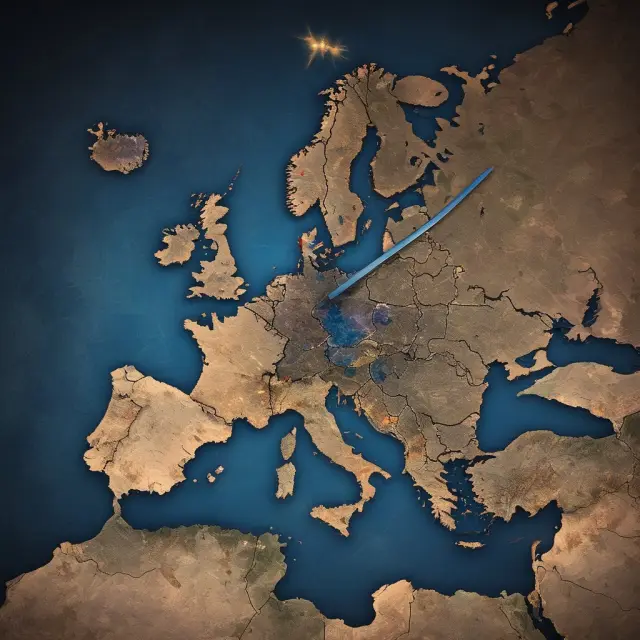
Brexit: Understanding the complexities of Britain's decision to leave the European Union. Covering the referendum, negotiations, political parties, economic…
The Background and Context of Brexit
Brexit, an abbreviation for British exit from the European Union (EU), was a monumental political shift that occurred in the U.K., following a referendum on June 23, 2016. This decision to leave the EU generated significant global market reactions and caused profound implications for both Britain’s domestic politics and its economic landscape.
The Referendum: A Turning Point
Britain held a referendum with two simple questions: Should the United Kingdom leave the European Union? And, if so, what should be the terms of exit? The Leave side secured a narrow victory with 51.9% (or approximately 17.4 million) of votes while Remain received 48.1% (16.1 million), with a voter turnout of 72.2%. The referendum’s results were momentous, leading to former Prime Minister David Cameron’s resignation and the appointment of Theresa May as his successor.
The Decision to Leave: Political and Economic Implications
Brexit was far from a straightforward process. It triggered a formal separation process known as Article 50 of the Lisbon Treaty, which started on March 29, 2017. While some believed Brexit would be simple due to historical precedents like Algeria’s exit from the EU’s predecessor after gaining independence or Greenland’s departure through a special treaty, others recognized the complexities that came with Britain’s unique position as one of the 28 EU member states.
The negotiations between the U.K. and the EU were characterized by political turmoil on both sides. The Conservative Party faced significant divisions over Brexit, while Labour also grappled with internal crises regarding antisemitism allegations and leader Jeremy Corbyn’s handling of the issue. Additionally, Prime Minister Boris Johnson suspended parliament for five weeks in an attempt to prevent opposition parties from blocking a chaotic exit, which was later deemed unlawful by the Supreme Court.
The negotiations themselves proved challenging as the U.K. initially wanted to discuss both withdrawal terms and future relations, while Brussels favored a sequenced approach to the process. However, the U.K.’s lead negotiator, David Davis, eventually accepted this demand in a significant concession.
One of the most contentious issues during the negotiations revolved around the rights of EU citizens living in the U.K. and vice versa. Ultimately, the Withdrawal Agreement allowed for the free movement of EU and U.K. citizens until the end of the transition or implementation period. The agreement also stipulated that citizens would need to upgrade their residence status if they continued to work, had sufficient resources, or were related to someone who did. However, the rights of these citizens could be revocable if Britain crashed out without ratifying a deal.
As a result, EU citizens began leaving the U.K. in large numbers after the referendum, reducing net migration to levels last seen in 2009. British authorities estimated that there were approximately 3.7 million EU citizens living in the U.K. as of mid-2016, and around 1 million British nationals residing in EU countries.
In conclusion, Brexit marked a significant turning point in Britain’s history. The referendum result sparked political and economic uncertainties, leading to complex negotiations with the EU that tested the U.K.’s internal divisions. The eventual outcome has left lasting impacts on both the U.K.’s domestic politics and international relationships.
The UK Referendum: A Turning Point for Britain
On June 23, 2016, an unexpected event unfolded in the United Kingdom (UK). After a hotly contested referendum, the Leave side secured a narrow victory with 51.9% of votes compared to the Remain’s 48.1%. This decisive moment was a game-changer for Britain and had profound implications both politically and economically.
The Referendum: A Narrow Win for Leave
With over 72.2% voter turnout, the results of this historic referendum saw the UK officially deciding to leave the European Union (EU) by a margin of just under 1.3 million votes. The vote defied expectations and sent shockwaves through global markets, resulting in the British pound falling to its lowest level against the dollar in over 30 years. Prime Minister David Cameron, who had called for the referendum and advocated for the UK remaining within the EU, announced his resignation the following day.
The Beginning of Negotiations: Article 50
Following the referendum result, the process of formally leaving the EU began on March 29, 2017, when then-Prime Minister Theresa May triggered Article 50 of the Lisbon Treaty. This act initiated a two-year period during which the UK and EU would negotiate new terms for their relationship.
Regional Differences: Scotland, Wales, and England
Although England accounted for the majority of the UK’s population, there were significant regional differences in the referendum outcome. Fifty-three-point-four percent of English voters supported Brexit compared to just thirty-eight percent of Scottish voters. However, if the vote had been held only in Scotland, Wales, and Northern Ireland, Brexit would have received less than 45% of the total votes. This discrepancy highlights the importance of demographic factors in shaping the outcome.
The Irish Border Issue: A Major Challenge for Negotiators
One of the most pressing issues during the negotiations was addressing the Irish border, as it posed a significant challenge for both the UK and EU. With Brexit, Northern Ireland would no longer be part of the EU’s customs union, creating potential complications for trade and economic ties between Northern Ireland and the Republic of Ireland.
Citizens’ Rights: A Contentious Issue
Another divisive issue was the rights of EU citizens living in the UK and vice versa. Negotiators had to reach an agreement on how these individuals would maintain their residency, employment status, and access to public services in both jurisdictions.
Brexit’s Impact: Trade Agreements and Economic Implications
The economic consequences of Brexit remain a subject of ongoing debate. The UK and EU negotiated a provisional free-trade agreement on December 24, 2020, which ensured tariff- and quota-free trade in goods between the two entities. However, commerce is not as seamless as it once was due to customs checks that have been imposed.
The Role of Key Negotiators: May, Davis, Barnier, and Johnson
Throughout the Brexit negotiations, several key figures played pivotal roles on both sides. Prime Minister Theresa May led the UK’s efforts in the initial stages, with David Davis serving as the lead negotiator. Michel Barnier represented the EU, working tirelessly to ensure a favorable outcome for his constituents. Boris Johnson took over as prime minister in July 2019 and attempted to push through a hard Brexit, leading the UK towards a no-deal exit if necessary.
The Future of UK-EU Relations
As the dust settles on Brexit, both the UK and EU continue to navigate the complexities of their new relationship. The future remains uncertain for issues like trade in services, future cooperation on various matters, and the long-term implications for the people and economies of both entities.
Article 50: The Beginning of Negotiations
Brexit, a term coined from the words ‘British’ and ‘exit,’ marked Britain’s decision to leave the European Union (EU) following a June 23, 2016, referendum. With 51.9% of votes in favor, the Leave side emerged victorious while Remain took 48.1%. This surprising outcome, with wide-ranging political and economic implications, caused shockwaves that were felt globally, particularly the British pound’s descent to its lowest level against the dollar since the early 1980s. The formal process of Brexit began on March 29, 2017, when then-Prime Minister Theresa May initiated Article 50 of the Lisbon Treaty.
Article 50 is a part of EU law that provides the legal framework for a member state to withdraw from the union. The United Kingdom and the EU entered into negotiations over the terms of Britain’s departure, which took place between June 2017 and October 2019. During this period, numerous challenges arose, including citizens’ rights, financial settlements, and the Irish border.
Brexit negotiations were not an easy endeavor for political parties in the UK. Both the Conservatives and Labour parties experienced internal turmoil as they navigated through this complex process. The Conservative Party, led by Theresa May and later Boris Johnson, faced criticism over their handling of Brexit and the associated crises that arose during negotiations.
Meanwhile, the opposition Labour party dealt with allegations of antisemitism and leadership issues under Jeremy Corbyn’s tenure. In September 2019, Prime Minister Boris Johnson requested an unprecedented suspension of Parliament, which was deemed unlawful by the Supreme Court, further complicating the already tumultuous negotiations.
The U.K.’s lead negotiator in these talks with Brussels was David Davis, who later resigned and was replaced by Dominic Raab and Stephen Barclay. The EU’s chief negotiator was Michel Barnier, a French politician. One of the most contentious issues during negotiations concerned the rights of EU citizens living in the U.K. and vice versa.
The Withdrawal Agreement, reached on November 25, 2018, outlined citizens’ rights to reside in their host countries until the end of the transition or implementation period. However, citizens had to apply for permanent residence status and could lose these rights if Britain failed to ratify a deal. The uncertainty surrounding citizens’ rights led to a decrease in EU net migration and an increase in emigration from the U.K.
Throughout this tumultuous negotiation process, both sides made significant concessions. The UK agreed to the EU’s sequenced approach – focusing on divorce terms first before moving on to trade negotiations. On October 17, 2019, Boris Johnson and Michel Barnier reached a new divorce deal. The Irish backstop clause was replaced with a new arrangement. This marked a significant moment as both parties moved towards finalizing the withdrawal agreement.
Brexit’s impact on UK-EU relations remains uncertain. While the provisional free-trade agreement allows tariff- and quota-free trade in goods, there are still challenges related to commerce, such as customs checks and future trade in services, which make up 80% of the U.K.’s economy.

Divisions in Political Parties During Brexit Negotiations
Britain’s decision to leave the European Union (EU) brought significant internal strife within both major political parties – the Conservative Party and Labour Party – as they navigated the complexities of negotiating a new relationship with Europe. The June 2016 referendum, which resulted in a narrow win for the Leave side, marked a turning point for British politics that continued to shape the political landscape well into 2021.
In the aftermath of the referendum result, former Prime Minister David Cameron announced his resignation from both his leadership position and as an active member of Parliament. His replacement, Theresa May, found herself leading a fractured Conservative Party during the formal process of leaving the EU, which began with the triggering of Article 50 on March 29, 2017. The party was further divided when it lost its majority in the snap election of June 8, 2017.
The Labour Party, which had campaigned for the U.K. to remain within the EU, also experienced internal turmoil as members grappled with the implications of Brexit and growing concerns over the party leadership’s handling of the issue, particularly concerning allegations of antisemitism. This led to a significant number of Labour politicians leaving the party in protest.
Theresa May’s government was initially committed to negotiating the terms of its withdrawal alongside the terms of its post-Brexit relationship with Europe. However, the EU insisted that sufficient progress be made on divorce terms by October 2017 before moving on to trade deal negotiations. In a concession, British negotiators accepted the EU’s sequenced approach, leading some commentators to perceive this as a sign of weakness.
A significant issue during Brexit negotiations was that of citizens’ rights, particularly regarding EU citizens living in the U.K. and vice versa. The Withdrawal Agreement allowed for the free movement of EU and UK citizens until the end of the transition period, but their rights were revocable if Britain failed to ratify a deal. EU citizens increasingly left the UK following the referendum result, with net migration levels falling to a level last seen in 2009.
The political divisions within both major parties continued throughout the negotiation process and persisted even after Boris Johnson became prime minister in July 2019. This period also saw a series of significant events, such as the prorogation of Parliament by Johnson in August 2019 and the subsequent general election in December 2019, which further solidified his Conservative Party’s majority in the House of Commons.
The internal struggles within the Conservative and Labour parties during Brexit negotiations demonstrate the far-reaching implications of the U.K.’s decision to leave the EU and underscore the profound impact it had on British politics both domestically and internationally.

Negotiating Citizens’ Rights
One of the most contentious issues during Brexit negotiations was determining the rights of EU citizens living in the UK and vice versa. With the U.K.’s exit from the European Union (EU) imminent, it was essential to address this sensitive matter.
After months of back-and-forth, both parties agreed on a deal that allowed for the free movement of EU and UK citizens until the end of the transition period. However, citizens would need to apply for permanent residence in their host nation if they wished to upgrade their status. The agreement also included provisions revoking these rights if Britain left the EU without ratifying the deal.
Due to the June 2016 referendum’s outcome, there was an increase in uncertainty and fear amongst EU citizens residing in the UK, with some choosing to leave the country altogether. According to reports, net migration from EU countries fell to levels last seen in 2009, with more EU8 citizens (from Central and Eastern European countries) leaving the UK than arriving.
The U.K.’s government faced internal debates over granting EU citizens the right to remain in their adopted home country post-Brexit. Some argued that it was a matter of fairness and maintaining strong relationships with European allies, while others believed in limiting migration and prioritizing British citizens.
Furthermore, EU leaders also had concerns regarding the status of UK nationals living in their respective member states. In response to these issues, an agreement on citizens’ rights was essential for both parties to maintain diplomatic stability and ease the anxiety felt by millions of individuals.
In conclusion, negotiating the rights of EU and UK citizens during the Brexit negotiations was a complex process that required careful consideration from both sides. The agreed-upon terms allowed for some degree of flexibility while also acknowledging the need for legal certainty for those affected. Overall, addressing this matter was crucial to fostering positive relationships between the UK and its European counterparts post-Brexit.

The Irish Border Issue: A Major Challenge for Brexit Negotiators
Brexit, the term used to describe the U.K.’s decision to leave the European Union (EU), brought forth a myriad of challenges for negotiators on both sides. Among these issues, one stood out as particularly contentious – the Irish border. A brief background of this problem is essential for understanding the significance of its impact on Brexit negotiations.
The Irish border is located between Northern Ireland (part of the U.K.) and the Republic of Ireland, which is an EU member state. Before Brexit, this border functioned as a seamless boundary with no checks or customs formalities due to both countries’ membership in the EU’s single market and customs union. This situation allowed for uninterrupted travel and commerce between the two regions.
However, Brexit changed the landscape, and the U.K.’s exit from the EU necessitated finding a solution that would address the border while preserving the peace established under the Good Friday Agreement of 1998. This international treaty ended decades-long violence in Northern Ireland, known as “The Troubles,” which were primarily driven by nationalist and unionist groups seeking to assert their respective political and cultural identities.
As negotiations commenced, it became apparent that reaching an agreement on the Irish border issue would be no easy task. Both sides held opposing views on how to handle this matter. The EU insisted that maintaining a hard border between Northern Ireland and Ireland – complete with customs checks – was imperative for preserving the integrity of its single market. In contrast, the U.K. government sought to avoid such a border, fearing it could lead to renewed tensions and potentially disrupt the fragile peace in Northern Ireland.
The challenge of negotiating this issue intensified when Prime Minister Boris Johnson announced his intention to leave the EU without an agreement if necessary – a move known as a no-deal Brexit. The prospect of a hard border under such circumstances became increasingly alarming to many, as it could potentially lead to renewed violence and political instability in Northern Ireland.
Despite these challenges, negotiators continued their efforts to find a mutually acceptable solution for the Irish border issue. Ultimately, they arrived at an agreement known as the Northern Ireland Protocol, which was included in the Trade and Cooperation Agreement (TCA) between the U.K. and the EU on Dec. 24, 2020. This protocol ensures that Northern Ireland remains aligned with some EU rules and regulations in areas like trade, agri-food safety, and environment standards to maintain an open border with Ireland.
This compromise was a significant step towards avoiding a hard border while also respecting both the U.K.’s sovereignty and the EU’s single market principles. However, it is important to note that the full implications of this protocol remain to be seen in the coming years as it continues to unfold in practice.
In conclusion, the Irish border issue presented a significant challenge for Brexit negotiators due to its potential to disrupt peace and stability in Northern Ireland while preserving the integrity of the EU’s single market. The final agreement, known as the Northern Ireland Protocol, was an important step towards finding a compromise that satisfied both sides’ interests – although the long-term implications are yet to be fully understood.
The Economic Consequences of Brexit
Brexit, the U.K.’s decision to leave the European Union (EU), has far-reaching implications for both the U.K. economy and that of the EU. The referendum on June 23, 2016, led to a narrow win for the Leave side with 51.9% of votes, paving the way for Britain’s separation from its European partners after more than four decades of membership.
The economic consequences of Brexit have been significant, both in terms of trade agreements and future relations between the U.K. and EU. After a transition period that expired on December 31, 2020, the U.K. and EU struck a free-trade agreement on December 24, 2020, which ensures tariff- and quota-free trade in goods but keeps commerce from being as smooth as it was when Britain was part of the EU due to customs checks.
One of the most critical economic concerns related to Brexit is the impact it will have on trade agreements. While negotiations for a comprehensive agreement were ongoing, the U.K.’s future relationship with the EU remained uncertain. The uncertainty surrounding these negotiations influenced financial markets significantly and led to concerns about potential disruptions in supply chains, particularly those linked to industries like automotive manufacturing and agriculture.
As of now, the new free-trade agreement allows tariff-free trade in goods but keeps commerce from being as smooth as it was before Brexit due to customs checks. The U.K. and EU also continue to negotiate on aspects like services, which make up 80% of the U.K.’s economy. A comprehensive deal is yet to be reached regarding these matters, and the lack of a clear resolution introduces additional uncertainty for businesses that operate in both markets.
Moreover, Brexit raises concerns over future relations between the U.K. and EU. The political and economic implications of Britain’s departure from the EU are complex and multifaceted, with potential repercussions extending beyond the U.K. and EU borders. For instance, questions surrounding the status of EU citizens living in the U.K. and vice versa remain unanswered, which could lead to further complications down the line.
The economic consequences of Brexit extend beyond trade agreements and future relations between the U.K. and EU. The uncertainty generated by the negotiations has affected financial markets significantly. Since the referendum in June 2016, the British pound dropped to its lowest level against the dollar since 1985, creating volatility for investors and traders.
In summary, Brexit’s economic consequences are far-reaching and multifaceted. While a free-trade agreement has been reached between the U.K. and EU regarding goods, uncertainties remain about future relations and trade agreements, particularly regarding services and the status of EU citizens in both jurisdictions. These concerns have affected financial markets significantly since the referendum, with the pound dropping to its lowest level against the dollar since 1985.
Understanding these complexities is crucial for businesses, investors, and individuals alike as they navigate the evolving relationship between the U.K. and EU in the post-Brexit era.
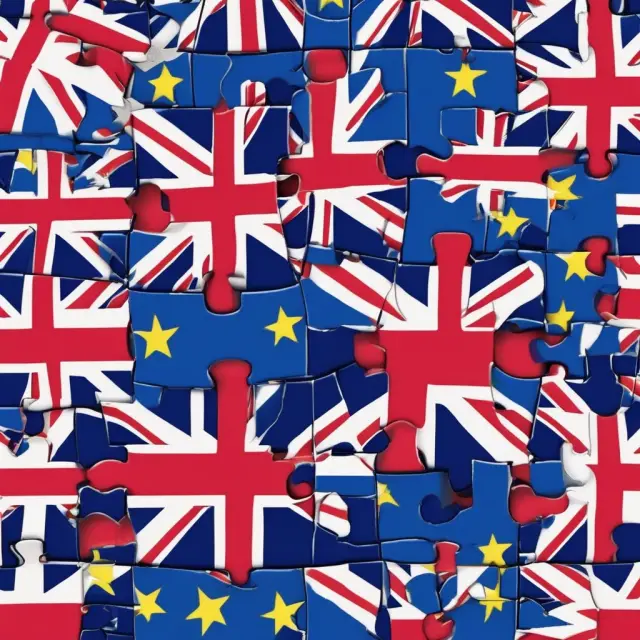
Brexit’s Impact on UK-EU Relations
The aftermath of Brexit has significantly altered the dynamics between the United Kingdom (UK) and the European Union (EU). With the U.K. now outside the EU, several critical aspects of their relationship have undergone substantial change. These shifts are evident in areas such as trade agreements, future collaborations, and overall cooperation.
1. Trade Agreements: A key concern post-Brexit revolves around trade between the UK and EU. The U.K.-EU free trade agreement (FTA) signed on December 24, 2020, ensures tariff-free and quota-free trade in goods, but it does come with additional customs checks at the border. As a result, commerce is no longer as seamless as when the UK was an EU member state. While the deal covers some aspects of the relationship between the two parties, significant challenges remain regarding trade in services which makes up 80% of the UK economy.
2. Future Collaborations: The future collaborative relationship between the UK and EU remains uncertain, particularly concerning areas such as research, innovation, and science. The U.K.’s exit from Horizon Europe—the EU’s flagship research and innovation program—has created significant challenges. In response to these difficulties, the government has pledged £1 billion for research and development. Additionally, the UK-EU New Partnership Agreement provides a framework for potential collaboration in areas like security and defense, climate change, and space exploration.
3. Cooperation on Global Issues: The UK’s departure from the EU also affects its role in international organizations and global issues. One example is the United Nations (UN), where the UK had considerable influence due to being a permanent member of the Security Council. Post-Brexit, the UK must navigate new roles and alliances. A case in point is the World Trade Organization (WTO), where the UK has become an active participant in disputes concerning global trade.
In conclusion, Brexit has significantly impacted the relationship between the UK and EU. The areas of trade agreements, future collaborations, and cooperation on global issues are just a few examples of how this relationship is evolving post-Brexit. While some aspects of the relationship may be clarified over time through negotiations and agreements, others will likely remain uncertain for years to come.
It’s important to note that Brexit not only impacts the UK-EU relationship but also has wider implications for international diplomacy, global trade, and economic relationships worldwide. This is a developing story and will continue to shape the political and economic landscape of Europe and beyond.

The Role of Key Negotiators in the Brexit Process
Brexit negotiations were a complex and intricate affair, involving numerous high-profile figures on both sides of the table. Two prominent personalities who played essential roles in these discussions were Michel Barnier for the European Union (EU) and David Davis, Dominic Raab, and Stephen Barclay for the United Kingdom.
Michel Barnier, a French politician, served as the EU’s Chief Negotiator during Brexit talks. With vast experience in international relations, he previously held positions as a European Commissioner and French Minister of Agriculture. Barnier was instrumental in ensuring that the EU’s interests were well represented throughout the negotiations.
Britain, on the other hand, had a series of negotiators overseeing the process, with David Davis being one of the first key figures. A Yorkshire MP at the time, Davis resigned as Brexit Secretary in July 2018 due to disagreements with then-Prime Minister Theresa May’s proposed deal. He was replaced by Dominic Raab and later Stephen Barclay.
David Davis brought extensive experience in political strategy and public policy to the negotiating table. His resignation came as a significant blow to the British government, given his pivotal role in initiating the Brexit process following the 2016 referendum.
Dominic Raab, who briefly took over from Davis, was an experienced lawyer and politician with a strong stance on Brexit. He resigned in protest over May’s deal, highlighting the deepening divisions within the government and the Conservative Party regarding the negotiations.
Stephen Barclay replaced Raab as the UK’s Brexit Secretary. With a background in international trade and business, he assumed responsibility for steering the UK through the final stages of its departure from the EU. Although his tenure was relatively brief, Barclay played an essential role in hammering out the details of the withdrawal agreement.
These key figures were responsible for driving the Brexit negotiations forward despite significant challenges and internal strife within their respective parties. Their expertise, determination, and political acumen proved crucial in navigating the complexities of leaving the EU and paved the way for a new chapter in UK-EU relations.

FAQ: Commonly Asked Questions About Brexit
Brexit, or Britain’s exit from the European Union (EU), has been a topic of intense debate since the U.K. voted to leave in June 2016. Below are answers to some frequently asked questions about this significant event and its consequences.
What is Brexit?
Brexit refers to Britain’s decision, made through a referendum on June 23, 2016, to leave the European Union. The process officially began on March 29, 2017, when then-Prime Minister Theresa May triggered Article 50 of the Lisbon Treaty.
How did Brexit come about?
A non-binding referendum was held in the U.K. on June 23, 2016, to determine whether the country should leave or remain in the EU. The Leave side received 51.9% of the votes, which led to Britain’s formal withdrawal process beginning in March 2017.
What political and economic implications has Brexit had?
Brexit has brought about a multitude of changes for the U.K., including internal political struggles within both Conservative and Labour parties, economic uncertainty, and alterations to trade agreements with EU member states. It also raised questions regarding citizens’ rights, especially those living in the UK or planning to move there.
What were the key challenges during the negotiations?
One of the most significant challenges was addressing the Irish border issue. Additionally, negotiations touched upon citizens’ rights and financial obligations between the U.K. and the EU, with each side having different priorities and approaches to the process.
Who led the negotiations for both sides?
The UK’s lead negotiator was David Davis, while Michel Barnier served as the EU’s chief negotiator. Both parties faced internal crises during the negotiating period, with lawmakers from various political parties resigning in protest over Brexit-related issues.
What is the current status of Brexit negotiations?
As of April 2021, the U.K. and EU have reached a provisional free trade agreement that ensures tariff-free trade on goods but still requires customs checks for commerce to pass between the two entities. The future relationship between the U.K. and EU remains uncertain, with key details such as trade in services yet to be determined.
 Next entry · No. 518BRIC and BRICS: Understanding the Emerging Economies of Brazil, Russia, India, China, and South Africa
See also
-
 No. 3,980
12 May 2025
25 min
Understanding PIIGS: The Derogatory Acronym That Defined the European Debt Crisis
Business Finance
No. 3,980
12 May 2025
25 min
Understanding PIIGS: The Derogatory Acronym That Defined the European Debt Crisis
Business Finance -
 No. 2,929
15 Feb 2025
26 min
The Lisbon Treaty: Understanding Europe’s Game Changer in Finance and Investment
Business Finance
No. 2,929
15 Feb 2025
26 min
The Lisbon Treaty: Understanding Europe’s Game Changer in Finance and Investment
Business Finance -
 No. 217
07 Apr 2024
25 min
Understanding Article 50 of the Lisbon Treaty: Process, Origins, and Implications for Voluntary EU Exit
Business Strategy
No. 217
07 Apr 2024
25 min
Understanding Article 50 of the Lisbon Treaty: Process, Origins, and Implications for Voluntary EU Exit
Business Strategy -
 No. 4,810
18 Jul 2025
21 min
Understanding Supranational Organizations: Governing the Affairs of Nations Together
International Trade
No. 4,810
18 Jul 2025
21 min
Understanding Supranational Organizations: Governing the Affairs of Nations Together
International Trade -
 No. 3,756
24 Apr 2025
19 min
Understanding Optimum Currency Area (OCA) Theory: Economic Efficiency through a Shared Currency
Economics
No. 3,756
24 Apr 2025
19 min
Understanding Optimum Currency Area (OCA) Theory: Economic Efficiency through a Shared Currency
Economics -
 No. 3,303
17 Mar 2025
23 min
Multilateral Trading Facility (MTF): Understanding Europe’s Alternative Trading Platform
Finance Policy
No. 3,303
17 Mar 2025
23 min
Multilateral Trading Facility (MTF): Understanding Europe’s Alternative Trading Platform
Finance Policy