Understanding Article 50 of the Lisbon Treaty: Process, Origins, and Implications for Voluntary EU Exit

Understand the intricacies of Article 50 in the Lisbon Treaty. Learn about its origins, implications, and how it was implemented during Brexit.
Background on Article 50
Article 50 is a significant clause within the European Union’s (EU) Lisbon Treaty that outlines the formal process for a country to voluntarily leave the union. It sets clear steps for initiating the withdrawal procedure, with provisions detailing the conditions and timelines involved. This section explores the origins of Article 50, its location within the treaty, and the context in which it emerged.
The Lisbon Treaty, signed on December 13, 2007, and ratified by all EU member states, came into effect on December 1, 2009. The treaty, consisting of two main parts – the Treaty on European Union (TEU) and the Treaty on the Functioning of the European Union (TFEU) – includes Article 50 as part of its framework.
Before the Lisbon Treaty’s inception, discussions around a formal exit procedure for EU member states did not gain significant attention until the 2010 European sovereign debt crisis. During this period, there were concerns about potentially removing Greece from the eurozone, but no clear provisions existed to facilitate such an action. Article 50 was drafted as a contingency measure, with its original purpose intended for addressing hypothetical circumstances like coup situations or potential voluntary departures.
The clause states: “Any member state may decide to withdraw from the Union in accordance with its own constitutional requirements.” This provision grants a country the right to leave the EU if it so chooses, setting the stage for the formal exit process detailed in subsequent paragraphs.
The United Kingdom served as the first nation to invoke Article 50 when it announced its intention to leave the European Union following the outcome of the June 23, 2016, Brexit referendum. The invocation took place on March 29, 2017. This section will delve deeper into the UK’s Brexit example and discuss the implications for future EU members in subsequent sections.
In conclusion, Article 50 is a crucial provision within the European Union’s Lisbon Treaty that sets forth the steps for a country to voluntarily leave the union. With its origins rooted in crisis management scenarios and the 2010 sovereign debt crisis, Article 50 has emerged as an essential aspect of EU law. In the following sections, we will explore the specifics of how Article 50 works, its history, and the potential consequences for future member states.

Article 50 Provisions
Article 50 of the Lisbon Treaty is a pivotal clause that outlines the process for a European Union (EU) member state’s voluntary exit from the Union. This provision has gained significant importance since its introduction, as it provides a formal mechanism for countries to leave the EU if they so choose. In this section, we will delve deeper into the specific provisions of Article 50 as outlined by the treaty text.
First and foremost, Article 50 allows any EU member state to withdraw from the Union in accordance with its own constitutional requirements (Article 50.1). Once a country decides to invoke Article 50, it must notify the European Council of its intent to leave (Article 50.2). After receiving this notification, the Union begins negotiations with the departing member state to establish an agreement outlining the terms of their withdrawal, taking into account the framework for their future relationship (Article 50.3).
This agreement is negotiated under Article 218(3) of the Treaty on the Functioning of the European Union and must be approved by both the Council (acting by a qualified majority) and the European Parliament, which grants its consent after negotiations are complete (Article 50.3). The treaties cease to apply to the departing country upon either the entry into force of the withdrawal agreement or, in the absence of such an agreement, two years following their notification of intent to leave (Article 50.4).
The member state representing the departing nation is excluded from European Council and Council discussions during this process, while a qualified majority is defined according to Article 238(3)(b) of the Treaty on the Functioning of the European Union (Article 50.4). If the departed country desires to rejoin the EU at a later time, it must follow the procedure outlined in Article 49.
Understanding these provisions is essential for grasping the intricacies of Article 50 and its implications for both individual member states and the EU as a whole. In the following sections, we will examine the background behind Article 50’s creation and its implementation during the United Kingdom’s exit from the European Union (Brexit).

How Article 50 Came to Be
Article 50 of the Lisbon Treaty is a crucial provision enabling a member state to voluntarily exit the European Union (EU). Although its origins may not be well-known, it holds significant importance in understanding the EU’s structure and the mechanisms in place for a country to leave. This section aims to shed light on Article 50’s history and how it transformed from a potential coup provision to an integral part of the Lisbon Treaty.
Originally drafted as a contingency plan for a member state experiencing a coup, Article 50 was not intended to be a primary concern during discussions surrounding the European Union’s expansion and efficiency. However, its potential uses became increasingly relevant during the European sovereign debt crisis of 2010 to 2014 when Greece’s economic instability raised questions about possible expulsion from the EU.
During this period, EU leaders considered expelling Greece from the eurozone due to financial difficulties and concerns over its ability to repay debts. However, they soon realized that Article 50 provided no clear guidance for removing a member state against its will. Instead, the focus shifted towards persuading Greece to implement reforms and regain economic stability.
As the EU expanded in the following years, Article 50 remained an obscure provision until the United Kingdom’s decision to leave the union through a referendum in 2016. This event marked the first time Article 50 was invoked, triggering an intricate and lengthy process for negotiating an exit agreement.
The Lisbon Treaty, signed in 2007 and ratified by all EU members in 2009, includes the full text of Article 50. This treaty replaced previous agreements, such as the Maastricht Treaty of 1992 and the Rome Treaties of 1957, which established the European Economic Community.
The article outlines a two-year timeline for negotiations once a member state has notified its intention to leave. During this period, the EU and the departing nation work towards an agreement covering the arrangements for their separation. This agreement must be ratified by both parties and may be extended if necessary.
Despite Article 50’s origins as a potential coup provision, it was ultimately formalized as a means for member states to leave the EU voluntarily. Its use sets in motion a complex process with significant implications for all parties involved. As seen during Brexit, the negotiations can be lengthy and contentious, requiring patience, diplomacy, and a strong commitment to finding a mutually beneficial outcome.

Article 50 in Practice: The UK’s Brexit Example
The United Kingdom’s decision to leave the European Union (EU) via Article 50 in 2016 was a landmark event for both the EU and the U.K. This section provides an in-depth analysis of the challenges and negotiations that took place during the country’s departure process, focusing on the trade agreement that followed.
The formal exit procedure commenced when then-Prime Minister Theresa May triggered Article 50 on March 29, 2017, following the majority vote in favor of Brexit by British citizens in a referendum held on June 23, 2016. However, the process was not without its obstacles.
During the negotiations, various issues needed to be resolved between the EU and the U.K., including:
- Pensions: Determining how pensions would be handled for British citizens living in EU countries and vice versa.
- Law enforcement and security cooperation: Agreeing on how both parties would cooperate in matters of law enforcement and security after Brexit.
- Access to shared fisheries: Negotiating fishing rights, which were a significant concern for the U.K. due to its vast coastal territories.
- Customs and border controls between Northern Ireland and the Republic of Ireland: Addressing potential complications at the border due to the Irish Peace Process Agreement.
- Tariffs and other trade barriers: Determining tariffs on goods passing between the EU and the U.K.
- Free movement of people: Deciding how the freedom of movement would be affected for both British citizens moving to the EU and vice versa.
One issue that gained significant attention was the fate of EU nationals residing in the U.K. or those moving between the two regions post-Brexit. With an estimated three million EU nationals living in the UK and one million UK citizens residing in other EU countries, the issue carried substantial weight throughout the negotiations.
Despite numerous challenges and setbacks during the transition period, which began immediately after the U.K.’s departure from the Union on January 31, 2020, both parties were ultimately able to reach an agreement. The EU-UK Trade and Cooperation Agreement, signed on December 24, 2020, replaced the EU’s single market and customs union with respect to the U.K.
The new trade deal entered provisionally on January 1, 2021, but was not fully ratified until April. It took full effect on May 1, 2021.
This comprehensive agreement addressed numerous issues, including tariffs and quotas for goods passing between the EU and U.K., security cooperation, and transport matters. The deal did not, however, include provisions for financial services or the recognition of professional qualifications.
In conclusion, the United Kingdom’s departure from the European Union using Article 50 was a complex process that took several years to come to fruition. Despite numerous complications and roadblocks during negotiations, both parties were eventually able to reach an agreement that addressed major concerns and maintained some degree of cooperation between the two entities.

EU Member Countries’ Stances on Article 50
Since its inclusion in the Lisbon Treaty, Article 50 has been a subject of concern and debate among European Union (EU) member countries. Its presence became particularly noteworthy during the European sovereign debt crisis that shook the EU from 2010 to 2014 when the possibility of Greece leaving the eurozone emerged as a potential solution to its spiraling economic difficulties.
The Lisbon Treaty, signed and ratified by all EU member states in 2007 and coming into effect in 2009, introduced Article 50 as part of the formal procedure for a country’s voluntary exit from the Union. However, the lack of clear guidance within the article for handling a country’s expulsion against its will created apprehension among EU leaders during the debt crisis. Greece, which faced significant economic challenges, was considered for potential removal from the eurozone rather than the EU as a whole.
The origins of Article 50 can be traced back to the Treaty on European Union (TEU) and the Treaty on the Functioning of the European Union (TFEU). The article itself has 358 articles in total, but its significance lies mainly within the context of EU membership and exit procedures.
As the first country to invoke Article 50, the United Kingdom’s decision to leave the EU after a majority of voters elected for Brexit in a June 2016 referendum introduced the world to an unprecedented situation that tested the treaty’s provisions in practice. The formal exit process was fraught with numerous complications and roadblocks, leading many to question whether Article 50 would be effective in handling future departures from the Union.
During this period, various EU member countries expressed their concerns regarding Article 50 and its implications for the future of the European project. Some argued that an exit by one member state could lead to a domino effect, while others emphasized the importance of maintaining unity within the Union.
One such country, Hungary, was particularly vocal in its stance against the possibility of Article 50 being invoked. Hungarian Prime Minister Viktor Orbán publicly expressed his opposition, stating that “Hungary will not be leaving the EU.” He further added that “Article 50 is an extremely complicated process with a two-year deadline for negotiation, and no guarantees for the result.”
Similar sentiments were shared by other EU leaders like Polish Prime Minister Mateusz Morawiecki, who emphasized the need to keep the Union together. In his words, “We want to strengthen the European Union rather than weaken it, and we’d rather see countries that are going through difficulties remain in the Union and work on their problems together with other member states.”
However, the debate surrounding Article 50 did not end there. When discussing potential implications for future EU members, some leaders believed that the provision would encourage hesitation among aspiring countries looking to join the bloc. They argued that the presence of an exit clause could deter prospective members from fully committing themselves to the Union’s values and norms due to the perceived risk of being forced to leave in the future.
Another concern arose over the potential impact Article 50 would have on EU law and member states’ constitutional requirements during the exit process. This issue was highlighted during the United Kingdom’s Brexit negotiations, where numerous complications arose due to conflicting legislation and legal interpretations between the UK and EU.
In conclusion, since its inclusion in the Lisbon Treaty, Article 50 has been a topic of great interest among EU member countries. Its significance was tested during the European sovereign debt crisis when Greece’s potential expulsion from the eurozone raised questions about the treaty’s provisions for handling a country’s exit from the Union. The first instance of its application in practice, through the United Kingdom’s Brexit process, has provided valuable insights into the challenges and complexities involved during these negotiations. As the EU continues to evolve, Article 50 will remain an important factor in shaping the future of European cooperation and integration.

Article 50’s Implications for Future EU Members
Article 50 has significant implications for future potential members of the European Union (EU). While the clause provides a formal mechanism for existing members to leave the organization, it may also impact how countries consider joining the bloc. The possibility of invoking Article 50 can influence decision-making processes regarding membership and can shape the negotiating power of prospective EU members.
A clear example of this is seen during the European sovereign debt crisis in 2010 to 2014, when some leaders considered pushing Greece out of the eurozone as a means of saving the euro and perhaps the Union from collapsing. However, Article 50 did not provide enough guidance for expelling a member state against its will. Instead, negotiations between Greece and EU creditors led to agreements that helped stabilize the country’s economy without requiring an official exit from the bloc.
As more countries began to join the EU following the expansion in 2004, concerns regarding potential withdrawals under Article 50 became increasingly relevant. This trend continued with the U.K.’s decision to leave the Union through a public referendum in 2016. The process involved complex negotiations and a lengthy transition period during which the two parties had to agree on trade terms, immigration rules, and other essential aspects of their future relationship.
Prospective EU members may consider the possibility of Article 50 as they weigh the costs and benefits of joining the bloc. While membership offers numerous advantages, such as access to a larger market, increased political influence, and shared security arrangements, the potential for leaving through Article 50 could impact their decision-making process.
The EU’s future expansion plans may also be influenced by Article 50. Negotiating power shifts when considering new members, and countries that feel uncertain about their commitment to the Union or fear the possibility of being forced out may hesitate to join. This can potentially slow down the expansion process and create challenges for the EU as it seeks to strengthen its economic and political ties with its neighbors.
In conclusion, Article 50 carries significant implications for future EU members. While providing a formal mechanism for existing members to leave the Union, this clause can also influence potential new members’ decision-making processes regarding membership. As the EU continues to expand and evolve, the impact of Article 50 on prospective members will be an essential factor to consider.
FAQs About Article 50:
What is Article 50 in the European Union (EU) Lisbon Treaty?
Answer: Article 50 is a clause in the EU’s Lisbon Treaty that outlines how a member country may leave the Union voluntarily. It became relevant following the Brexit referendum and negotiations between the U.K. and EU leaders to establish a new trade agreement.
What are the main steps outlined in Article 50?
Answer: The article requires a country to notify the European Council of its intention to withdraw, negotiate an exit agreement with the Union, obtain consent from the European Parliament, and have the treaties cease to apply to the departing member state once the agreement is ratified or two years after the notification.
Who invoked Article 50 for the first time?
Answer: The United Kingdom was the first country to invoke Article 50 on March 29, 2017. This began the formal exit process that culminated in the country’s departure from the EU on Jan. 31, 2020.
What is the difference between leaving the European Union and leaving the eurozone?
Answer: Leaving the EU involves departing from all aspects of the organization, including its political, economic, and legal frameworks. Conversely, leaving the eurozone only requires a country to leave the common currency area while remaining part of the EU’s political and legal structures. The U.K. left the entire European Union.
Does Article 50 provide any guidance for expelling a member state against its will?
Answer: No, Article 50 does not offer clear guidance on removing a member state from the EU involuntarily. The clause was initially designed to address potential coups or the departure of unwilling members but has since evolved to focus on voluntary withdrawals.
What are some challenges faced during the Brexit negotiations?
Answer: Some significant challenges included determining the terms for pensions, law enforcement and security cooperation, access to shared fisheries, customs and border controls between Northern Ireland and the Republic of Ireland, tariffs and other trade barriers, and immigration rules. These issues were resolved through negotiations that lasted from 2017 until the signing of the EU-UK Trade and Cooperation Agreement on Dec. 30, 2020.
What is the difference between Article 49 and Article 50?
Answer: Article 49 pertains to the accession of new members into the European Union, while Article 50 deals with the withdrawal of existing members from the organization. Both articles are crucial components of the EU’s framework for managing membership-related changes.
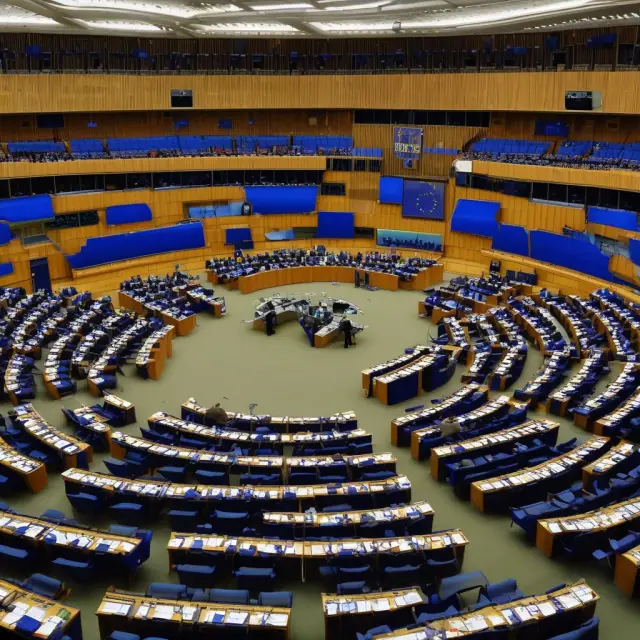
Article 50 and the European Parliament
The role of the European Parliament is a crucial aspect in the withdrawal process as outlined by Article 50 of the Lisbon Treaty. The Parliament plays an essential part in ensuring that the agreement reached between the withdrawing member state and the EU is ratified, giving it legitimacy. Let’s delve deeper into how this works.
Article 50 outlines three primary steps for a country to leave the European Union: (1) Notifying the European Council of its intention to withdraw, (2) negotiating an agreement between the EU and the departing member state, and (3) obtaining the consent of the European Parliament for this withdrawal agreement.
The first step involves the invoking country notifying the European Council of its intention to leave the union. This notification triggers the beginning of the formal exit process. After receiving this notice, the European Union enters negotiations with the departing state to establish arrangements for their separation, including provisions for future relations.
Once negotiations have been completed, both parties must ratify the agreement reached. The EU Council, acting by a qualified majority, is responsible for approving the deal on behalf of the EU. However, the European Parliament’s consent is necessary for this agreement to become legally binding and enforceable within the Union.
In essence, the European Parliament acts as a check and balance in the Article 50 process. It ensures that the agreement reached between the withdrawing country and the EU respects the interests and values of all member states while maintaining the integrity of the Union. By granting its consent to the withdrawal agreement, the European Parliament validates that this deal serves the greater good of the European community.
The importance of the European Parliament’s role in Article 50 was exemplified during the United Kingdom’s Brexit process. Theresa May’s attempts to secure parliamentary approval for her negotiated withdrawal agreement failed repeatedly. This led to an extension of the Brexit deadline and ultimately the resignation of May as prime minister. Boris Johnson, who succeeded May in July 2019, managed to gain the Parliament’s support with a new deal on October 31, 2019.
The European Parliament’s involvement in the Article 50 process emphasizes the democratic nature of European Union membership. It underlines that member states must abide by the EU’s rules and principles, which include respecting fundamental rights, upholding the rule of law, and promoting peace, security, and stability within the European community. The Parliament’s consent provides a formal mechanism to ensure that these principles are upheld throughout the withdrawal process, safeguarding the interests of all members.
In conclusion, Article 50 is a crucial aspect of the Lisbon Treaty, allowing countries to voluntarily leave the European Union. Its implementation involves various stages and stakeholders, with the European Parliament playing a pivotal role in ratifying the withdrawal agreement reached between the EU and the departing member state. The Parliament’s involvement highlights the democratic nature of the European Union, ensuring that the interests and values of all members are upheld throughout the exit process.
EU Law and Member States’ Constitutions in Article 50
Article 50 of the Lisbon Treaty provides a formal framework for member states to leave the European Union (EU) voluntarily. The clause, which outlines the steps for an EU exit process, is founded on the principle that any EU member state can withdraw from the union in accordance with its own constitutional requirements. However, this seemingly straightforward provision presents intricate legal challenges concerning the interplay between EU law and the specific constitutional frameworks of individual member states.
First, it’s essential to understand Article 50’s place within the Lisbon Treaty. The treaty was signed in 2007 by all EU members and came into effect in 2009, updating the Maastricht Treaty from 1992. Article 50 is a part of this agreement and sets out the rules for a country to leave the Union.
When examining Article 50’s intricacies, it becomes evident that its application depends on both EU law and the constitutional prerogatives of the exiting member state. For example, the treaty indicates that once a nation decides to withdraw, they must notify the European Council (EC)—the primary decision-making body representing all EU members. This notification kicks off the formal exit process.
Article 50 also specifies that negotiations for the withdrawal agreement between the EU and the exiting member state will be conducted under Article 218(3) of the Treaty on the Functioning of the European Union (TFEU). In doing so, it highlights the significance of EU law in this process.
However, as mentioned earlier, a country can only exit the EU according to its constitutional requirements. This means that each member state’s unique legal framework comes into play during an Article 50 scenario. For instance, some countries may require specific parliamentary procedures or referendums before initiating a withdrawal process. These national provisions must be considered alongside EU law to ensure a legally binding and comprehensive withdrawal agreement.
Considering the complexity of these interactions between EU law and individual constitutional frameworks, it’s essential to take a closer look at the negotiations that occurred during the United Kingdom’s (UK) Brexit process. The UK was the first country to invoke Article 50 after voters decided to leave the EU in a referendum.
The negotiations between the EU and the UK were extensive, involving various aspects of their relationship, including tariffs, border controls, fisheries, law enforcement and security cooperation, pensions, and access for EU citizens. These discussions required an intricate understanding of both EU law and the specific constitutional requirements of the UK. In particular, there were concerns regarding the status of EU nationals living in the UK and vice versa during and after the transition period.
To navigate these complexities, the EU and the UK engaged in intense negotiations throughout the 11-month transition period that followed Brexit on January 31, 2020. The two sides eventually reached a trade agreement—the EU-UK Trade and Cooperation Agreement—on December 24, 2020. This deal replaced the single market and customs union with respect to the UK.
The negotiations were not without challenges. The UK initially attempted to negotiate a Canada-style free trade agreement but later shifted their approach towards a more comprehensive economic partnership. These changes required considerable adjustments and compromises on both sides, reflecting the intricate interplay between EU law and individual member states’ constitutional frameworks.
In conclusion, Article 50 of the Lisbon Treaty presents fascinating legal complexities that highlight the delicate balance between EU law and the constitutional provisions of individual member states. This unique aspect of the treaty was brought to light during the UK’s Brexit process, as negotiations required a thorough understanding of both frameworks to achieve a legally binding withdrawal agreement. Understanding this relationship is crucial for anyone interested in the future of the European Union and its relationship with individual member states.
FAQs About Article 50
1. What are the key provisions of Article 50? The main provisions of Article 50 include a country’s right to withdraw from the EU, notification of the European Council, negotiations for a withdrawal agreement under Article 218(3) TFEU, and ceasing application of treaties upon exit or the ratification of an agreement.
2. What is the origin of Article 50? The provision was drafted with a potential coup in mind but gained newfound significance during the European sovereign debt crisis as a means for members to leave voluntarily.
3. Which countries have used Article 50 before? No country except the United Kingdom has invoked Article 50 to date. However, there were discussions regarding its potential use during the European sovereign debt crisis for countries facing severe economic difficulties.
4. How long does it take to leave the EU under Article 50? The treaty states that negotiations must be concluded within two years of a country’s notification, but extensions are possible with unanimous agreement from the European Council and the departing member state.
5. What happens when a country leaves the EU under Article 50? The treaties cease to apply to the exiting country on the date of entry into force of the withdrawal agreement or, if no agreement is reached, two years after notification. This means that the country is no longer subject to EU law and loses its voting rights within the EU.
6. What are the potential implications for future EU expansion? The Article 50 process raises questions about the impact on future EU enlargement efforts, particularly concerning the incentives of potential member states to join an organization that allows members to leave if desired.

Article 50 and the European Economic Community Precedent
Article 50’s historical context is deeply rooted in the European Economic Community (EEC), the precursor to the EU. Established in 1957, the EEC aimed to foster economic interdependence among its members in post-World War II Europe. The original member states included Belgium, Germany, France, Italy, Luxembourg, and the Netherlands.
Throughout the EEC’s existence, a few countries have left the union voluntarily. Algeria was the first to depart, leaving after gaining independence from France in 1962, while Greenland followed suit in 1985 through a special treaty. The experiences of these early exiters offer valuable insights into Article 50’s practical applications and implications.
Algeria’s Decision to Leave the EEC: Algerian independence was a turning point for Europe as a whole, ultimately leading to Algeria’s withdrawal from the EEC in 1962. Although the country was an integral part of the EEC when it gained independence, its unique political and cultural identity necessitated leaving the European organization.
The process of Algerian independence was lengthy and complex due to the French military presence in the country. In the end, negotiations between France and Algeria culminated in a formal agreement that resulted in Algeria’s departure from the EEC. The separation did not lead to any significant economic repercussions for either side.
Greenland’s Special Treaty: Greenland’s exit from the EEC came about through a special treaty signed between Denmark and the European Community (EC) on Feb. 28, 1973, just two days before Greenland officially joined the EC. The agreement allowed Greenland to withdraw from the organization while retaining its association with Denmark, which was an EC member at that time.
Greenland’s departure did not lead to any significant economic disruption for either party involved. Instead, it provided a clear precedent for Article 50, demonstrating that a country could leave the European Union without major consequences for its trading relationships and economic stability.
Modern-Day Implications: The experiences of Algeria and Greenland serve as reminders of the potential implications of Article 50’s implementation in today’s political climate. As new challenges emerge within the EU, such as the ongoing migrant crisis or potential economic downturns, the question of a member state leaving the bloc may resurface.
The experiences of Algeria and Greenland provide valuable insights into the practical applications of Article 50 in various scenarios. Understanding these historical precedents can help guide future negotiations and shape the EU’s response to any country seeking to withdraw from the Union. Additionally, considering these past examples can help inform member states about the potential economic and political implications of leaving the European Union.
In conclusion, Article 50 is an important provision that has been a part of the European Union since its inception with the Lisbon Treaty in 2009. Its implementation has been tested through historical precedents, most recently by the United Kingdom in 2020. Understanding these past applications can help inform future negotiations and shape the EU’s response to any member state seeking to withdraw from the Union.
By revisiting Algeria and Greenland’s experiences with Article 50’s predecessor, we gain valuable insights into how countries have navigated similar situations in the past. These lessons can help guide future decision-making processes within the European Union as it continues to evolve and address new challenges.

FAQs About Article 50
Since Article 50’s introduction in the European Union’s Lisbon Treaty, it has become a topic of significant interest and debate among scholars, policymakers, and the public. This section aims to address some frequently asked questions about Article 50 and its implications for EU membership.
Q: What is Article 50?
A: Article 50 is a provision in the European Union’s (EU) Lisbon Treaty that sets out the process for a member state to withdraw from the union voluntarily. Invoking Article 50 signifies the beginning of the formal exit process and allows countries to officially declare their intention to leave the EU. The United Kingdom was the first country to use Article 50 following its decision to leave the bloc in 2016.
Q: How did Article 50 come about?
A: Originally viewed as an unnecessary provision, Article 50’s origins can be traced back to the European Economic Community (EEC) era when a clause was included with the understanding that it might be useful in case of a coup. However, it gained significance during the European sovereign debt crisis when Greece’s economic instability raised concerns about removing countries from the eurozone without clear procedures. The treaty was drafted to enhance the EU’s efficiency and democratic legitimacy and came into effect in 2009.
Q: What happens once a country invokes Article 50?
A: After invoking Article 50, a country has two years to negotiate an exit agreement with the remaining EU members. The agreement must be approved by the European Council and the European Parliament. Once ratified, the Treaties cease to apply to the departing member state unless extended through unanimous agreement in the European Council.
Q: What is the difference between Article 50 and previous EU exits?
A: Algeria left the EEC following its independence from France in 1962, and Greenland departed via a special treaty in 1985. These instances predate the Lisbon Treaty and do not follow the formal exit process outlined in Article 50. The provision was created to provide more structure and clarity when a member state decides to leave the EU voluntarily.
Q: What are some implications of Article 50 for future EU members?
A: The implications of Article 50 for future EU members remain unclear, as no country has yet to invoke it since its inception. Its use could potentially impact a member state’s decision-making processes concerning their participation in the Union and could provide a framework for expelling a country against its will if clearer procedures are not established.
Q: What is the role of the European Parliament during an Article 50 process?
A: The European Parliament plays an essential role during an Article 50 process by providing consent for a withdrawal agreement to be ratified. Its approval is necessary for any agreement reached between the EU and the departing member state to become binding.
Q: What are some challenges of implementing Article 50?
A: Challenges include determining the impact on the EU’s Single Market, Customs Union, and future trade agreements; negotiating an exit agreement; addressing issues related to citizenship, pensions, law enforcement, and security cooperation; and establishing a new relationship between the departing member state and the remaining members of the EU. The United Kingdom faced many of these challenges during its Brexit negotiations, making it an essential case study for understanding Article 50’s implications.
 Next entry · No. 218Understanding Articles of Association: A Comprehensive Guide for Professional and Institutional Investors
See also
-
 No. 517
27 Apr 2024
20 min
Brexit: Understanding the Complexities of Britain’s Decision to Leave the European Union
Global Finance
No. 517
27 Apr 2024
20 min
Brexit: Understanding the Complexities of Britain’s Decision to Leave the European Union
Global Finance -
 No. 4,597
01 Jul 2025
20 min
Understanding Seigniorage: Profiting from Currency Production
Economics
No. 4,597
01 Jul 2025
20 min
Understanding Seigniorage: Profiting from Currency Production
Economics -
 No. 3,980
12 May 2025
25 min
Understanding PIIGS: The Derogatory Acronym That Defined the European Debt Crisis
Business Finance
No. 3,980
12 May 2025
25 min
Understanding PIIGS: The Derogatory Acronym That Defined the European Debt Crisis
Business Finance -
 No. 2,929
15 Feb 2025
26 min
The Lisbon Treaty: Understanding Europe’s Game Changer in Finance and Investment
Business Finance
No. 2,929
15 Feb 2025
26 min
The Lisbon Treaty: Understanding Europe’s Game Changer in Finance and Investment
Business Finance -
 No. 1,362
04 Sep 2024
20 min
Understanding the European Union (EU): History, Current State, and Future Changes
Business Finance
No. 1,362
04 Sep 2024
20 min
Understanding the European Union (EU): History, Current State, and Future Changes
Business Finance -
 No. 1,146
03 Aug 2024
20 min
Dual Listing: Accessing Larger Capital Markets and Increased Share Liquidity for Global Companies
Business Finance
No. 1,146
03 Aug 2024
20 min
Dual Listing: Accessing Larger Capital Markets and Increased Share Liquidity for Global Companies
Business Finance