The Bretton Woods Agreement and System: Understanding Its Significance in Global Finance and Investment

Explore the history, impact, and legacy of the Bretton Woods Agreement - a pivotal event in shaping global finance.
Background of the Bretton Woods Conference
The Bretton Woods Agreement and System are significant milestones in international finance and investment. This historic economic conference took place from July 1-23, 1944, in Bretton Woods, New Hampshire, USA. The primary objectives were to establish a stable international monetary system and prevent competitive currency devaluations that had adversely affected global trade during the Great Depression. The conference brought together 730 delegates representing 44 countries.
The Bretton Woods Conference was held in response to the economic turmoil of the time, with most European economies devastated by World War II and the United States emerging as the world’s dominant financial power. Delegates from various nations arrived at Bretton Woods to discuss solutions for stabilizing international currencies and promoting economic recovery.
John Maynard Keynes, a renowned British economist, and Harry Dexter White, an American Chief International Economist in the U.S. Treasury Department, were the key figures behind the Bretton Woods System’s design. The two proposed contrasting plans: Keynes envisioned a powerful global central bank called the Clearing Union and a new international reserve currency called bancor, while White advocated for a more modest lending fund with a larger role for the U.S. dollar. Ultimately, the final Bretton Woods Agreement incorporated elements of both plans.
The Bretton Woods System was initially implemented in 1958. This economic regime required currencies to be pegged to the U.S. dollar, which itself was pegged to the price of gold at $35 an ounce. The exchange rate system brought stability to international trade relations by minimizing currency volatility. Moreover, it facilitated loans and grants from the World Bank, which played a crucial role in post-World War II reconstruction efforts.
The Bretton Woods System’s collapse occurred in the early 1970s when President Richard M. Nixon announced that the U.S. dollar would no longer be convertible to gold. This decision led to a period of floating exchange rates, and the Bretton Woods Agreement officially ended in 1973. However, its impact on global finance continues to be felt through the establishment of the International Monetary Fund (IMF) and World Bank.
In summary, the Bretton Woods Conference was an important step towards creating a stable international monetary system that fostered economic recovery after World War II. The agreement’s implementation led to the establishment of key institutions like the IMF and World Bank, which continue to influence global finance and trade.

Designing the Bretton Woods System: Keynes vs. White
The historic Bretton Woods Conference of 1944 was a pivotal moment for international finance and economics as delegates from forty-four countries gathered to design a new monetary order in response to the devastating economic turmoil brought about by World War II. Two prominent figures, British economist John Maynard Keynes and American economist Harry Dexter White, emerged as the chief architects of the Bretton Woods System. Though they shared a common goal—stabilizing international currencies and promoting economic cooperation—their plans diverged significantly.
John Maynard Keynes was a renowned champion of government intervention in the economy, particularly known for his theory advocating active fiscal policy to manage economic downturns. He envisioned the Bretton Woods System as an opportunity to create a powerful global central bank called the Clearing Union, which would issue a new international reserve currency called the bancor. This proposal was based on Keynes’ belief that a strong global central banking system would help stabilize exchange rates and promote economic growth among participating countries.
Meanwhile, Harry Dexter White, an American economist working for the U.S. Treasury Department, envisioned a more modest approach. His plan called for a lending fund with greater emphasis on maintaining the dominant role of the U.S. dollar as the primary international currency. While Keynes’ ideas were more radical and ambitious, White’s plans had strong backing from the United States and its allies, who believed a less interventionist approach was more feasible under the political climate of the time.
The adopted plan incorporated elements of both men’s proposals, leaning more towards White’s plan. Keynes’ Clearing Union concept would eventually evolve into the International Monetary Fund (IMF) and the World Bank—two vital Bretton Woods institutions that have significantly influenced global finance ever since. The Bretton Woods Agreement officially came into effect in 1958, requiring participating countries to peg their currencies to the U.S. dollar, with gold backing the U.S. dollar. This arrangement created an exchange rate system where all currencies were indirectly linked to gold and allowed for only minimal fluctuations.
The Bretton Woods Agreement’s design represented a major turning point in international finance as it offered currency stability and predictability—key factors that facilitated global trade, economic cooperation, and development among the participating nations. It provided an essential foundation for the subsequent decades of economic growth and prosperity around the world.
The Bretton Woods System: Fixed Exchange Rates and Currency Pegging
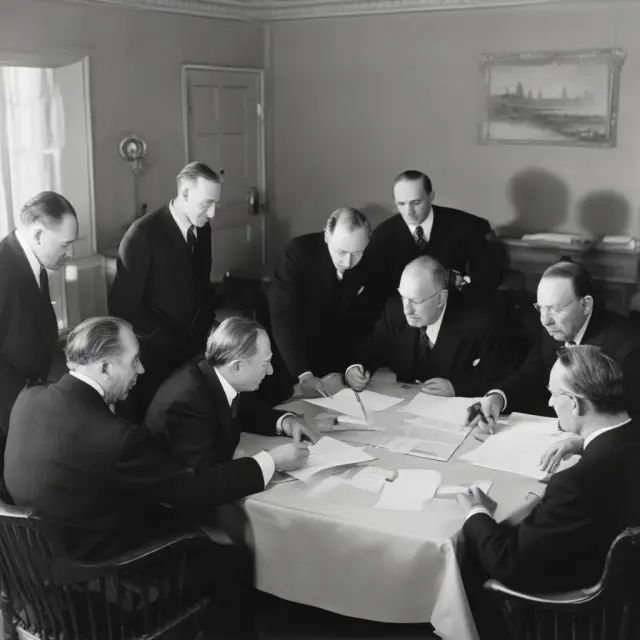
In July 1944, delegates from 44 nations gathered in Bretton Woods, New Hampshire, with the goal of establishing a more efficient foreign exchange system that would prevent competitive devaluations and foster international economic growth. The Bretton Woods Agreement was born out of this conference, featuring a collective international currency exchange regime based on fixed exchange rates and currency pegging.
The cornerstone of the Bretton Woods System involved currencies being pegged to the U.S. dollar, which in turn was tied to gold at a value of $35 an ounce. This system offered several benefits:
- Currency Stabilization: Fixed exchange rates provided stability for international trade by minimizing currency volatility and enabling more predictable pricing for goods and services across borders.
- International Trade Support: The Bretton Woods System facilitated global trade through the promotion of loans and grants, which countries could access by maintaining their pegged currencies.
- Founding of Important Institutions: The conference led to the creation of two influential organizations—the International Monetary Fund (IMF) and the World Bank—which have continued to shape international finance and trade in the modern era.
John Maynard Keynes, a British economist, and Harry Dexter White, an American chief international economist from the U.S. Treasury Department, played significant roles in designing the Bretton Woods System. Though their ideas differed on some aspects (such as the creation of a central bank or a new global currency), elements from both plans were integrated into the final agreement.
The Bretton Woods Agreement was not without its challenges, however. By the 1960s and 1970s, many countries began to face balance-of-payments issues due to their fixed exchange rates. The system’s inflexibility led to increasing pressure on nations to devalue their currencies. This situation culminated in the collapse of the Bretton Woods System in 1971 when President Richard Nixon announced that the U.S. dollar would no longer be convertible into gold, effectively ending the system’s gold standard.
Despite its demise, the legacy of the Bretton Woods Agreement lives on through the IMF and World Bank, which continue to play essential roles in international finance and trade today. The lessons learned from the Bretton Woods System have also influenced the development of current currency exchange systems, such as floating or managed floating exchange rates.
In conclusion, the Bretton Woods Agreement and System played a pivotal role in shaping global finance and trade during the mid-1940s to the early 1970s. Its fixed exchange rate regime, pegged currencies, and creation of key international institutions have left an indelible mark on the international monetary landscape. Understanding this historical context can help provide valuable insights into the evolution of currency exchange systems and their impact on international economic cooperation.

Benefits of Bretton Woods Currency Pegging
The Bretton Woods Agreement, established after the historic conference held at Bretton Woods, New Hampshire, in 1944, introduced a collective international currency exchange system that lasted until the early 1970s. The significance of this system lies in its efforts to minimize exchange rate volatility, which was crucial for fostering stability in international trade relations and promoting loans and grants from the World Bank.
Under the Bretton Woods System, currencies were pegged to the U.S. dollar, with the dollar itself being pegged to gold. This arrangement helped create a relatively stable exchange rate environment, making it easier for countries to engage in cross-border trade and financial transactions. The fixed currency pegs minimized the risk of sharp currency fluctuations that could negatively impact trade flows and economic stability.
Moreover, having a stable currency environment was essential for encouraging international lending and grant activities, such as those facilitated by the World Bank. By maintaining their currency pegs, countries were able to demonstrate their commitment to exchange rate stability and mitigate uncertainty, which instilled confidence in potential lenders and borrowers alike.
Additionally, the Bretton Woods Agreement paved the way for two essential organizations: the International Monetary Fund (IMF) and the World Bank. The IMF’s primary role was to monitor exchange rates and provide financial assistance to countries that faced balance-of-payments issues or other economic challenges. Meanwhile, the World Bank focused on providing loans and grants for international development projects, particularly in post-war Europe. These institutions continue to play crucial roles in promoting global monetary cooperation and supporting international trade and development initiatives.
Although the Bretton Woods System came to an end in the 1970s, its impact on international currency exchange and trade remains significant. The fixed peg system provided a foundation for modern exchange rate arrangements, such as managed floating exchange rates, which allow for greater flexibility while maintaining some level of exchange rate stability. This balance between flexibility and stability is essential for fostering a dynamic global economy that can adapt to changing economic conditions.
The International Monetary Fund (IMF) and the World Bank
When delegates gathered for the Bretton Woods Conference in 1944, they had the intention of creating a stable international monetary order following the turmoil of the Great Depression and World War II. Two crucial institutions were born from this conference: the International Monetary Fund (IMF) and the World Bank. Let us discuss the formation, roles, and importance of these organizations in shaping global finance.
Firstly, let’s explore the International Monetary Fund (IMF). The primary goal of the IMF was to promote international monetary cooperation, international trade, high employment, and sustainable economic growth. To accomplish this, countries would agree on fixed exchange rates with a limited degree of flexibility, ensuring currency stability for global trade. The Bretton Woods Agreement required all currencies to be pegged to the U.S. dollar, which was itself pegged to gold at $35 per ounce. This system, called the Bretton Woods System, would last until the early 1970s when it ultimately collapsed.
John Maynard Keynes, a renowned British economist, had envisioned an ambitious plan for a global central bank issuing a new international reserve currency. However, Harry Dexter White, the U.S. Chief International Economist at the Treasury Department, proposed a more modest lending fund that focused on U.S. dollar dominance. In the end, elements of both plans were combined to create the IMF, which took effect in December 1945. The IMF would monitor exchange rates and identify member countries needing monetary support by providing loans conditioned on economic reforms.
The World Bank, initially known as the International Bank for Reconstruction and Development (IBRD), came into being to provide assistance to countries devastated by World War II. It aimed to facilitate international capital financing for long-term development projects, particularly in Europe, which had been significantly affected by the war. The World Bank would work in tandem with the IMF to promote economic stability and growth.
Today, both the IMF and the World Bank continue to play important roles in global finance. The IMF now has 190 member countries and works to maintain global monetary cooperation and support governments through lending arrangements when needed. Meanwhile, the World Bank focuses on providing long-term loans and grants to help countries build essential infrastructure, invest in education, and improve public health. Both institutions remain valuable pillars for international economic development and stability.
In conclusion, the Bretton Woods Agreement marked a pivotal moment in world financial history as it led to the creation of two influential organizations: the International Monetary Fund (IMF) and the World Bank. These institutions have played significant roles in promoting international monetary cooperation, rebuilding war-torn economies, and fostering global economic growth throughout the years.

Collapse of the Bretton Woods System
The Bretton Woods Agreement’s demise came about due to mounting pressures on the U.S. dollar as the cornerstone currency and the increasing burden of maintaining the gold standard. By 1960, numerous European countries had begun to accumulate larger balances of U.S. dollars than their allocated gold reserves could support. The United States faced a dilemma: either honor its commitment to exchange gold for dollars or abandon the system entirely.
President Lyndon B. Johnson attempted to resolve this issue by encouraging European countries to expand their economies and increase exports, but these efforts were unsuccessful in reducing their dollar holdings. In August 1971, President Richard Nixon announced a series of economic measures, which came to be known as the Nixon Shock. Among them was the suspension of the convertibility of U.S. dollars into gold at $35 an ounce. This move effectively ended the Bretton Woods System.
The collapse of the system had far-reaching implications for the global economy. The value of currencies began to float freely in the market, and exchange rate volatility increased dramatically. Countries adopted various new exchange systems, such as managed floating, fixed pegs with adjustable bands, or a basket of currencies, in an attempt to maintain currency stability while allowing their economies to respond to domestic conditions.
The IMF and the World Bank continued to play crucial roles in the international monetary system despite the demise of the Bretton Woods Agreement. The IMF focused on providing loans and technical assistance to member countries facing balance-of-payments difficulties, while the World Bank concentrated on long-term development projects.
The end of the Bretton Woods System marked a turning point in international monetary arrangements, paving the way for more flexible exchange rate systems and greater independence for national economic policies. However, concerns over currency instability and potential crises persisted, leading to the establishment of several new institutions like the European Monetary Union (EMU) and the Asian Monetary Fund (AMF).
In summary, the Bretton Woods Agreement’s collapse in 1971 signaled the end of a fixed exchange rate system but continued to shape international finance through the development of key organizations such as the IMF and World Bank. This shift allowed countries to adapt their economic policies more freely while maintaining some level of cooperation to mitigate currency instability.

The Legacy of the Bretton Woods Agreement: Impact on International Finance and Trade
Although the Bretton Woods System officially came to an end in 1971, its impact on international finance and trade remains significant to this day. The two key institutions born out of the conference – the International Monetary Fund (IMF) and the World Bank – have played a crucial role in shaping global financial relationships for nearly a century.
The Bretton Woods Agreement laid the foundation for an international monetary system that fostered stability, cooperation, and economic growth among countries. Its provisions required all currencies to be pegged to either gold or the U.S. dollar, which helped prevent currency instability and facilitated cross-border trade. In turn, this contributed to a period of relative economic prosperity in many parts of the world.
The IMF and World Bank, established as part of the Bretton Woods Agreement, played pivotal roles in promoting international financial stability and development. The IMF was created to maintain exchange rate stability by lending resources to countries facing balance-of-payments difficulties – a role it continues to play today. Meanwhile, the World Bank helped provide loans and grants to finance reconstruction projects in war-torn Europe and other economically challenged regions, paving the way for long-term economic recovery and growth.
In 1973, when the Bretton Woods System collapsed due to a series of economic events, countries were free to choose their exchange arrangements, such as floating currencies or currency baskets. This shift led to greater flexibility in managing national economies but also introduced new challenges, such as increased volatility and potential currency crises.
Since the demise of the Bretton Woods System, international monetary cooperation has continued to evolve. For instance, countries have worked together through the G7/G8 summits and the Group of Twenty (G20) to address major economic issues like global imbalances and financial crises. Moreover, regional arrangements, such as the European Monetary Union, have emerged to promote closer economic ties among member states.
In conclusion, the Bretton Woods Agreement and System have left a lasting impact on international finance and trade by fostering stability, cooperation, and development through its two key institutions – the IMF and World Bank. While the global monetary landscape has changed significantly since the agreement’s inception, the lessons learned from the Bretton Woods Conference continue to inform international financial policy and cooperation efforts.

Key Figures and Events Related to the Bretton Woods Agreement
The Bretton Woods Conference of 1944 was an essential milestone in international finance, attended by representatives from 44 countries with the primary goal of creating a stable post-World War II monetary order. The conference took place at the Mount Washington Hotel in Bretton Woods, New Hampshire, between July 1 and July 22, 1944. Two prominent figures played key roles in shaping the Bretton Woods System: British economist John Maynard Keynes and American Chief International Economist of the U.S. Treasury Department Harry Dexter White.
John Maynard Keynes’ proposed plan called for a powerful global central bank named the Clearing Union and a new international reserve currency called bancor. On the other hand, Harry Dexter White advocated for a more modest lending fund and a greater role for the U.S. dollar rather than creating a new currency. The adopted plan combined ideas from both plans, leaning more towards White’s proposal.
The preparations leading to the Bretton Woods Conference started years before the actual event in 1944. However, it wasn’t until 1958 that the Bretton Woods System became fully operational. During this time, countries agreed on fixed exchange rates with the U.S. dollar being pegged to gold at $35 per ounce. All other currencies in the system were then pegged to the U.S. dollar’s value. The Bretton Woods System significantly reduced international currency exchange rate volatility and facilitated successful support for loans and grants internationally from the World Bank.
One of the most crucial outcomes of the conference was the establishment of two essential institutions: the International Monetary Fund (IMF) and the World Bank. Both organizations have continued to serve as vital pillars for international capital financing and trade activities since their inception. The IMF, initially introduced in December 1945, was tasked with monitoring exchange rates and providing global monetary support whenever required. The World Bank, also known as the International Bank for Reconstruction and Development, was established to manage funds available for assisting countries devastated by World War II.
The Bretton Woods Agreement came to an end in 1971 when President Richard M. Nixon announced that the U.S. dollar would no longer be convertible into gold. The Bretton Woods System then collapsed, allowing countries to choose their preferred exchange arrangements for their currencies. However, the influence of the Bretton Woods Agreement is still felt today, as it led to the creation of two crucial institutions that have continued to maintain their founding goals while adapting to the needs of modern-day global governance.

Bretton Woods System vs. Current Currency Exchange Systems
Understanding the Bretton Woods Agreement and System brings us to one of the most significant events in world financial history—a period that set the stage for the evolution of international currency exchange systems. The Bretton Woods Agreement, signed on July 22, 1944, established a collective international currency exchange regime known as the Bretton Woods System. This system lasted from the mid-1940s to the early 1970s and is essential in recognizing its historical significance when comparing it with today’s systems such as floating exchange rates or managed floating exchange rates.
The Bretton Woods System required a currency peg to the U.S. dollar, which, in turn, was pegged to gold at a fixed price of $35 an ounce. All other currencies were then pegged to the U.S. dollar, making it the anchor currency for the entire system. This arrangement aimed to minimize exchange rate volatility and provided a degree of stability that facilitated international trade relations. It also helped support loans and grants internationally from institutions like the International Monetary Fund (IMF) and the World Bank.
Currently, most currencies are either floating or managed floating. In a floating exchange system, exchange rates are determined by market forces without intervention from central banks. Managed floating systems allow central banks to intervene in the foreign exchange markets to influence their currency’s value, but it does not mean a fixed exchange rate as seen under the Bretton Woods System.
Let us compare some critical aspects of the two systems:
1. Flexibility and Control
Under the Bretton Woods Agreement, currencies were pegged to each other via the U.S. dollar’s value, limiting flexibility for individual countries regarding their monetary policy. In contrast, modern-day floating exchange rates provide more autonomy as countries can adjust their interest rates without worrying about affecting other countries within a fixed exchange rate system.
2. Stability and Volatility
The Bretton Woods System aimed to maintain currency stability by pegging currencies to the U.S. dollar, which in turn was pegged to gold. However, this resulted in limited flexibility for countries facing economic instability or experiencing sudden shifts in their economies. On the other hand, floating exchange rates allow currencies to fluctuate based on market forces, potentially exposing nations to heightened volatility.
3. Impact on Trade and Capital Movements
The Bretton Woods System’s fixed exchange rates helped minimize currency exchange rate volatility, which, in turn, supported international trade relations and facilitated loans and grants. Floating exchange rates, however, may lead to increased uncertainty for international businesses due to potential fluctuations in currency values. Managed floating systems provide some mitigation by allowing central banks to intervene and influence their currencies’ values.
4. Monetary Policy Independence
Floating exchange rates grant individual countries more independence in conducting their monetary policy without being constrained by the need to maintain a fixed exchange rate. Conversely, under the Bretton Woods System, a country’s monetary policy was influenced by its obligations to maintain the fixed currency peg.
5. Central Bank Role and Coordination
In a Bretton Woods System scenario, the IMF played a more critical role in ensuring that countries adhered to their exchange rate commitments and provided support to countries facing economic instability. With floating exchange rates, central banks play a more active role in managing currency markets and coordinating with other central banks to ensure financial stability.
In conclusion, while the Bretton Woods System played a crucial part in shaping international finance after World War II, its fixed exchange rate regime is vastly different from today’s floating or managed floating exchange systems. Understanding the historical context and key differences between these two systems can help investors, businesses, and policymakers navigate the complex world of international currency exchange and adapt to changing global economic conditions.
FAQs: Commonly Asked Questions About the Bretton Woods Agreement
What exactly was the Bretton Woods Conference and what were its objectives?
The Bretton Woods Conference was an international economic conference held in Bretton Woods, New Hampshire, USA, during July 1944. The primary goals of this conference included creating an efficient foreign exchange system, preventing competitive devaluations of currencies, and promoting international economic growth. As a result of the conference, the Bretton Woods Agreement was signed, which established a monetary system known as the Bretton Woods System.
Who were the primary designers of the Bretton Woods Agreement?
The two main architects of the Bretton Woods System were British economist John Maynard Keynes and Harry Dexter White from the United States, who held the position of Chief International Economist at the U.S. Treasury Department. Keynes advocated for a powerful global central bank called the Clearing Union with a new international reserve currency called bancor. White proposed a more modest lending fund and greater roles for the U.S. dollar. The eventual adopted plan combined elements from both plans, favoring White’s approach.
When did the Bretton Woods System become fully operational?
The Bretton Woods System became fully operational in 1958, with its provisions requiring the U.S. dollar to be pegged to gold and all other currencies to be pegged to the U.S. dollar’s value. The exchange rate at that time set the price of gold at $35 an ounce.
What were the benefits of currency pegging under the Bretton Woods System?
The Bretton Woods System offered several advantages, such as minimizing international currency exchange volatility and promoting successful support for loans and grants internationally from the World Bank. The fixed pegs between currencies helped stabilize trade relations and reduce uncertainty in international transactions.
What was created following the Bretton Woods Agreement?
The agreement led to the establishment of two important institutions: the International Monetary Fund (IMF) and the World Bank. These organizations have since played a significant role in international finance, with the IMF focusing on exchange rate monitoring and providing monetary support to nations, while the World Bank helps to promote financial cooperation through loans and grants to governments.
When did the Bretton Woods System collapse?
The Bretton Woods System officially ended during 1971 when U.S. President Richard Nixon announced that the country would no longer exchange gold for U.S. dollars, effectively suspending the dollar’s convertibility into gold and leading to a decline in the system. By 1973, most countries had abandoned their currency pegs to the US dollar.
What has been the lasting impact of the Bretton Woods Agreement?
The Bretton Woods Agreement marked a significant turning point in global finance and international trade relations. Its establishment led to the creation of the IMF and World Bank, which have continued to shape global financial cooperation ever since. The principles of fixed exchange rates laid out in the agreement have influenced various currency regimes throughout history.
 Next entry · No. 517Brexit: Understanding the Complexities of Britain’s Decision to Leave the European Union
See also
-
 No. 844
18 Jun 2024
26 min
Currency Peg: Understanding Fixed Exchange Rates, Benefits, and Disadvantages
Finance Policy
No. 844
18 Jun 2024
26 min
Currency Peg: Understanding Fixed Exchange Rates, Benefits, and Disadvantages
Finance Policy -
 No. 2,463
08 Jan 2025
20 min
Understanding International Finance: Key Concepts, Institutions, and Challenges
Global Finance
No. 2,463
08 Jan 2025
20 min
Understanding International Finance: Key Concepts, Institutions, and Challenges
Global Finance -
 No. 4,939
29 Jul 2025
19 min
Understanding Terms of Trade: An Essential Metric for Institutional Investors
Finance Policy
No. 4,939
29 Jul 2025
19 min
Understanding Terms of Trade: An Essential Metric for Institutional Investors
Finance Policy -
 No. 2,374
01 Jan 2025
22 min
Understanding Indirect Quotes in the Foreign Exchange Market: Definition, Implications, and Calculating Indirect Quotes
Forex & Currency Markets
No. 2,374
01 Jan 2025
22 min
Understanding Indirect Quotes in the Foreign Exchange Market: Definition, Implications, and Calculating Indirect Quotes
Forex & Currency Markets -
 No. 4,575
29 Jun 2025
20 min
Understanding Special Drawing Rights (SDRs): An International Reserve Currency Instrument
Global Finance
No. 4,575
29 Jun 2025
20 min
Understanding Special Drawing Rights (SDRs): An International Reserve Currency Instrument
Global Finance -
 No. 1,951
27 Nov 2024
21 min
Understanding the Role and Significance of Group of 11 (G-11) in Global Finance and Investment
Global Finance
No. 1,951
27 Nov 2024
21 min
Understanding the Role and Significance of Group of 11 (G-11) in Global Finance and Investment
Global Finance