Climbing the Wall of Worry: Understanding Investor Behavior Amid Economic Uncertainties

Explore investor behavior during economic uncertainties through the concept of 'wall of worry' in this insightful article.
Introduction and Background of Wall of Worry
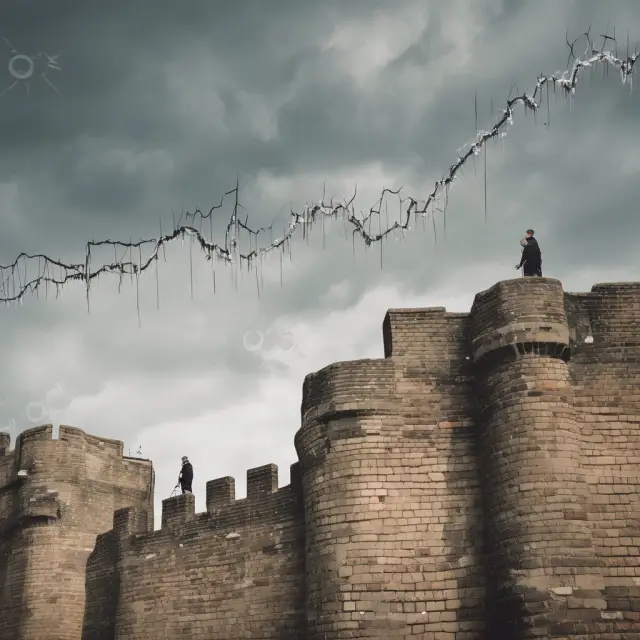
The term ‘wall of worry’ is frequently used in financial markets to describe a series of concerns or challenges that investors must face while climbing the ladder towards long-term investment success. This concept gains prominence during bull markets, when market sentiment remains strong despite economic uncertainty, geopolitical tensions, and other potential risks. The phrase ‘wall of worry’ emphasizes the market’s ability to surmount significant hurdles and maintain an upward trajectory.
Understanding the Wall of Worry
A wall of worry can be defined as a collection of economic, political, or geopolitical issues that negatively impact consumer and investor sentiment but do not halt the bull market’s progression. Typically, these concerns arise due to the natural ebb and flow of economic cycles and are not necessarily related to specific events. While it is common for a wall of worry to consist of a single major issue, it may also encompass numerous challenges that investors must face collectively.
The ability of the markets to climb the wall of worry is indicative of investor confidence that these issues will eventually be resolved, providing opportunities for growth. However, market direction following the surmounting of this ‘wall’ is subject to the economic cycle stage at which it occurs. At the end of major bear markets or periods of significant market gains, the markets may continue to advance after the wall has been cleared, while a continued ascent may be less certain if the wall forms near a major market peak and a subsequent decline is more likely.
Investor Psychology Amidst Wall of Worry
Despite the inherent resilience displayed by financial markets when faced with a wall of worry, investor psychology plays a crucial role in determining how individual investors respond to these challenges. During bull markets, investors often find themselves at an agonizing crossroads – deciding whether to take profits or let their investments ride as market uncertainty persists. Market pundits and economists fuel this indecision by issuing warnings about potential threats to the economy and financial markets. These assessments, while informed by expertise, can be skewed based on individual viewpoints and interpretations.
The investor’s approach towards climbing the wall of worry is largely influenced by their risk tolerance. Those with a high-risk appetite may choose to hold onto their investments, whereas those with a lower risk tolerance might prefer to take profits and reduce exposure. Understanding your personal risk tolerance is essential to making informed decisions when navigating the financial markets’ challenges.
In conclusion, the wall of worry serves as a testament to the inherent volatility and complexity of financial markets. By understanding this concept, investors can better equip themselves with the knowledge required to make informed decisions during periods of economic uncertainty. As market conditions continue to evolve, remaining mindful of the potential challenges ahead will help you maintain a well-diversified portfolio and navigate the ups and downs of the investing landscape.

Understanding the Nature of a Wall of Worry
The term ‘wall of worry’ is synonymous with investor sentiment during bull markets, indicating a period where markets show remarkable resilience despite numerous challenges or economic uncertainties. This phenomenon is significant in understanding market behavior during both major bear periods and general phases of market growth. Comprised of various concerns that might otherwise provoke a selloff, the wall of worry signifies investors’ faith in the eventual resolution of these issues.
A single concern can create a wall of worry, but it is more common for multiple challenges to coalesce into a formidable obstacle. The markets’ ability to surmount such a barrier mirrors investor confidence and the overall optimism pervading the market. However, the direction of the market following the ascent of the wall of worry remains uncertain, depending on the economic cycle stage at which it arises.
When a significant wall of worry emerges near the end of bear trends or major corrections, the markets are more likely to continue advancing after successfully overcoming this obstacle. In contrast, if the wall forms closer to a market peak, the likelihood of a subsequent decline is higher. Investor psychology plays a critical role in navigating the challenges presented by a wall of worry.
Individual investor decision-making regarding whether to sell or hold their investments can be influenced by concerns related to the wall of worry. Market pundits and experts, as well as economic data, can all contribute to building up this metaphorical wall. The interpretation of these factors depends on an investor’s risk tolerance and perspective.
Individuals with a high-risk appetite may choose to remain invested, viewing the challenges as temporary setbacks. Conversely, more conservative investors might opt for taking profits or reducing their exposure in anticipation of potential market downturns. Regardless of an individual’s investment strategy, understanding the nature of a wall of worry is essential for making informed decisions during periods of economic uncertainty and bull markets.
Examples of Wall of Worry in History
Wall of Worry is a term coined to describe the myriad of economic, political, and geopolitical challenges that investors face as they navigate the financial markets during extended bull runs. This section will explore some historical instances where markets surmounted various walls of worry to experience prolonged periods of growth.
The concept of a wall of worry can refer to a single significant concern or multiple issues simultaneously. For example, a single event that generates widespread fear and panic among investors, such as the dot-com bubble burst in 2000 or the global financial crisis in 2008, is an individual instance of a wall of worry. In contrast, a confluence of factors, like high inflation, rising interest rates, geopolitical instability, and corporate scandals, can collectively form a wall of worry.
Historically, the stock market’s resilience in overcoming such challenges has been remarkable. Let us examine some instances where markets surmounted the walls of worry to experience extended bull markets.
One of the most prominent examples is the 1982 bear market. Following the 1981 recession, the S&P 500 fell from its peak in August 1982 to a low point in July 1982. The period was marked by an inflation rate hovering above 13%, soaring interest rates, and a significant increase in unemployment. However, market sentiment started to turn when the Federal Reserve chairman, Paul Volcker, announced his intention to control inflation through monetary policy. With this reassurance, investors began to return to the stock market, leading to an extended bull run that lasted until the late 1980s.
Another instance where markets surmounted a wall of worry occurred during the early 1990s. The period was characterized by numerous challenges such as corporate scandals, recession in Japan, and the Gulf War. Despite these factors, the S&P 500 experienced an impressive run from its low point in March 1991 to its peak in March 2000. This bull market is often referred to as the “Technology Bull Market,” driven by innovations like the internet and the rise of e-commerce.
A more recent example comes from the global financial crisis that started in 2007. After a sharp decline in late 2008, markets rebounded strongly as investors began to believe that governments and central banks would take steps to address the economic turmoil caused by the bursting housing bubble and the ensuing credit crunch.
These examples demonstrate the market’s ability to overcome seemingly insurmountable challenges, underscoring the importance of a long-term perspective for investors. However, it is crucial to recognize that no crystal ball can predict which concerns will turn into walls of worry and when they will be surmounted. Instead, an effective strategy for individual and institutional investors is to focus on diversification strategies, asset allocation techniques, and other measures to minimize risk when confronted with a wall of worry.

Wall of Worry and the Economic Cycle
The term ‘wall of worry’ refers to a collection of economic, political, or geopolitical issues that investors must navigate in order for markets to advance during bull phases. The significance of a wall of worry lies not only in its ability to test investor confidence but also in its position within the broader economic cycle.
Under normal circumstances, a single significant concern might be enough to halt market progress and create a ‘wall.’ However, it is more common for multiple issues to converge, forming a formidable wall that investors must climb. The markets’ ability to surmount these challenges reflects their resilience and the underlying confidence of investors.
The economic cycle plays a crucial role in determining the market’s reaction when confronted with a wall of worry. For instance, if the wall of worry emerges during a bear market, the markets may continue their climb once the obstacle has been surmounted, leading to an extended bull phase. Conversely, if the wall of worry arises near a market peak, a subsequent decline is more likely.
The economic cycle can provide valuable insights into potential market direction after a wall of worry has been overcome. For example, during a major bear trend’s end, a resilient market may continue to advance once the wall has been surmounted. However, the certainty of a continued upward trend diminishes if the wall of worry forms near the peak of an already extended bull phase. In such cases, investors must be prepared for potential corrections or even a bear market.
Market pundits and economists contribute to the creation of a wall of worry by issuing warnings about various concerns, adding fuel to investor uncertainty. Their assessments can influence individual investor sentiment, affecting their decision-making process regarding taking profits or holding onto their positions. Ultimately, an investor’s perspective on the wall of worry depends on their risk tolerance, with some choosing to embrace the potential rewards of continued growth and others opting for a more cautious approach.
Understanding how the economic cycle impacts a market’s response to a wall of worry can help investors make informed decisions about their portfolios. By recognizing that significant challenges are a natural part of any bull phase, investors can prepare themselves for potential roadblocks and adjust their strategies accordingly. This proactive approach allows them to navigate market fluctuations more effectively and potentially capitalize on opportunities presented during times of uncertainty.

Market Pundits and Wall of Worry
The term ‘Wall of Worry’ is commonly used in financial markets to describe a series of concerns or obstacles that the stock market must overcome for continued growth. Understanding the role market pundits, economists, and other experts play in shaping these concerns and investor sentiment can be crucial when navigating the financial landscape.
Market Pundits and Their Influence on Investor Sentiment
Financial experts, economists, and market pundits have a significant impact on investor sentiment by highlighting potential challenges or issues that could impede market growth. These commentators, through their analyses, can influence investors’ decisions to either remain in the market or take profits, adding an element of uncertainty that forms part of the ‘wall of worry.’
Diverse Perspectives and Contradictory Opinions
Economists often provide conflicting predictions about the economy, markets, and leading stocks. Their assessments can vary widely due to their unique perspectives and individual viewpoints, further exacerbating the wall of worry for investors. In a bull market, these differing opinions create additional uncertainty, compelling some investors to question their investments while others remain optimistic.
Investor Psychology and Market Sentiment
An investor’s perception of the ‘wall of worry’ is closely tied to their risk tolerance. More risk-averse investors may find themselves increasingly anxious as new concerns arise, leading them to take profits or adopt a more defensive stance in their portfolios. Conversely, those with a higher risk tolerance might view these challenges as temporary setbacks and maintain a bullish outlook.
Navigating the Wall of Worry: Strategies for Investors
Investors can employ various strategies to navigate the uncertainties presented by the wall of worry. One approach is diversification, spreading investments across different sectors and asset classes to minimize overall risk exposure. Another strategy involves maintaining a long-term perspective, focusing on the underlying fundamentals of their investment holdings rather than short-term market fluctuations.
Understanding the Role of Market Pundits in Shaping the Wall of Worry
Market pundits’ insights and analyses can inform investors about potential challenges facing the economy and financial markets. However, it is essential to recognize that these opinions are shaped by individual perspectives and may not always align with reality. By considering multiple viewpoints and maintaining a well-diversified portfolio, investors can effectively navigate the ever-evolving wall of worry and maintain a long-term focus on their investment objectives.

Investor Psychology and Risk Tolerance in Climbing the Wall of Worry
The term ‘wall of worry’ captures the essence of investors’ mindset during bull markets when they must face a series of economic, political, or geopolitical concerns that might impede their progress. Understanding this psychological aspect is essential for navigating market volatility and making informed investment decisions.
The Wall of Worry: A Confluence of Concerns
Though the wall of worry can be attributed to a single significant concern, it more commonly refers to multiple challenges that investors must address. These concerns may range from economic data releases and company earnings reports to geopolitical tensions or policy changes. Each potential hurdle contributes to an overall sense of anxiety in the market, but overcoming these obstacles is a testament to investor confidence and resilience.
The Role of Risk Tolerance
An investor’s risk tolerance significantly influences how they approach climbing the wall of worry. Those with high-risk tolerances may choose to stay invested in their positions, believing that the long-term potential rewards outweigh the short-term risks. Conversely, more conservative investors might opt to take profits or reduce exposure when faced with significant uncertainty.
Understanding Investor Psychology
The wall of worry highlights how investor psychology plays a crucial role in shaping market behavior. In periods of prolonged growth, investors often grapple with the question of whether to hold onto their investments or lock in profits. Market volatility and external factors like economic data releases, company earnings reports, or geopolitical events can amplify these concerns, making it challenging for investors to make informed decisions.
Navigating the Wall of Worry
Investors with a well-diversified portfolio can better manage their risk tolerance in the face of climbing the wall of worry. By spreading their investments across various asset classes and sectors, they minimize their exposure to any one risk and maintain a balance between potential rewards and acceptable levels of uncertainty. Furthermore, regular monitoring and active management can help investors make informed decisions as new challenges emerge and the market landscape evolves.
Market Pundits and Expert Opinions
When navigating the wall of worry, it’s essential to differentiate between legitimate concerns and misinformation. Market pundits, economists, and financial experts contribute their perspectives, which can create confusion or amplify fear among investors. By evaluating the credibility of these sources and considering various viewpoints, investors can make more informed decisions and maintain a level head during market volatility.
In conclusion, understanding investor psychology and risk tolerance in climbing the wall of worry is vital for making informed investment decisions and navigating market volatility. By recognizing the role of risk tolerance, staying informed about market conditions, and maintaining a well-diversified portfolio, investors can better manage their expectations during periods of uncertainty and capitalize on opportunities as they arise.

Navigating the Wall of Worry: Strategies for Investors
The Wall of Worry is a term used in financial markets that describes the market’s resilience when faced with negative economic, political, or geopolitical issues, enabling it to keep ascending. This concept is significant during bull markets and periods of market gains. However, understanding how to navigate this wall can be crucial for investors looking to maximize returns while minimizing risk.
When the Wall of Worry Comprises Several Concerns
Climbing a wall of worry isn’t always a matter of addressing just one significant concern; it often involves dealing with multiple issues at once. These concerns can range from economic and political instability to geopolitical tensions, among others. Investors who are well-prepared for potential market challenges can capitalize on opportunities as the market climbs each obstacle.
Strategies for Individual Investors
- Diversification: Diversifying your investment portfolio ensures that no single asset or sector dominates your holdings. This approach reduces overall risk, allowing you to weather various economic conditions more effectively.
- Regularly Reviewing Your Portfolio: Keeping an eye on your investments and reviewing them periodically can help ensure that they remain aligned with your financial goals and risk tolerance.
- Maintaining a Long-Term Perspective: Understanding the historical context of market cycles, including bull and bear markets, can help put current market trends into perspective, allowing you to maintain a long-term focus even during uncertain times.
- Limiting Exposure to Volatile Assets: As a general rule, limiting exposure to highly volatile assets can help protect your portfolio from undue price fluctuations that could negatively impact your returns.
- Practicing Patience and Discipline: Staying patient and disciplined in the face of market volatility is crucial for long-term success. This includes resisting the urge to react emotionally to market movements and sticking to a well-thought-out investment strategy.
Strategies for Institutional Investors
- Asset Allocation: Institutions can utilize asset allocation techniques like Modern Portfolio Theory (MPT) to optimize their portfolios based on risk and return expectations, ensuring they maintain a diversified exposure to various asset classes and sectors.
- Risk Management: Effective risk management is essential for institutional investors, especially when navigating market uncertainty. This includes implementing hedging strategies and other tactics designed to limit potential losses while still allowing for growth opportunities.
- Economic Analysis: Institutional investors often employ teams of economists and analysts to help them stay informed about current economic conditions and trends, enabling them to make more informed investment decisions.
- Active Management: Implementing active management strategies like stock picking or market timing can help institutional investors capitalize on opportunities presented by the wall of worry, while also mitigating potential risks.
- Regularly Reviewing Risk Assessment: Staying informed about changing risk factors and adjusting investment strategies accordingly is crucial for maintaining a strong portfolio performance in volatile markets.
By staying informed and adopting a well-thought-out approach to navigating the wall of worry, both individual and institutional investors can maximize their returns while minimizing risks associated with market uncertainty.

Recognizing False Walls of Worry
Understanding the Difference Between Legitimate Concerns and False Alarms in the Financial Markets
Wall of worry is a term used to describe investors’ collective concern regarding economic, political, or geopolitical factors that may impact consumer and investor sentiment. These worries can manifest as single significant events or a confluence of concerns. However, it’s crucial for investors to recognize the difference between genuine concerns and false alarms when navigating financial markets. In this section, we discuss strategies for identifying false walls of worry and separating them from legitimate ones.
A Genuine Concern vs. A False Alarm: What’s the Difference?
Genuine concerns are significant events that pose a real threat to the economy or specific companies within an industry. For example, rising interest rates, recessions, political instability, and economic sanctions can all be considered genuine concerns for investors. On the other hand, false alarms refer to fears that don’t materialize or have only short-term implications on the market.
A prime example of a false alarm was the “Y2K Bug,” which many believed would cause widespread havoc when the calendar year 2000 arrived. Despite extensive preparations, the bug had minimal impact on financial markets and technology systems, making it a classic case of an unnecessary wall of worry.
Market Pundits and False Walls of Worry
Market pundits, economists, and media outlets contribute significantly to creating a wall of worry by amplifying concerns or false alarms. Their assessments are based on individual perspectives and can often be influenced by personal biases, short-term thinking, or the desire for attention. To make informed decisions, investors need to differentiate between genuine concerns that warrant attention and false alarms that should be disregarded.
Separating Legitimate Concerns from False Alarms
To distinguish between genuine concerns and false alarms, investors can employ several strategies:
- Focus on fundamental analysis: By examining financial statements, economic data, and industry trends, investors can gain a better understanding of the underlying strength of companies and the economy as a whole.
- Evaluate historical context: Looking at past market reactions to similar situations can help determine whether a current concern is a genuine threat or an overreaction.
- Diversify investments: A well-diversified portfolio reduces exposure to individual risks and can help insulate investors from false alarms that affect specific industries or sectors.
- Consider the stage of the economic cycle: Different stages of the economic cycle call for varying risk management strategies. For example, during a bull market’s later stages, it may be more prudent to take profits or reduce exposure to certain sectors.
- Stay informed but avoid being swayed by media hype: Maintaining an awareness of current events and trends is essential, but investors should not let fear or panic dictate their investment decisions. Instead, they should assess each situation objectively and base decisions on thorough analysis rather than emotional reactions.
Conclusion
The ability to differentiate between genuine concerns and false alarms when navigating the financial markets is crucial for long-term success. By focusing on fundamental analysis, considering historical context, diversifying investments, evaluating the economic cycle stage, and staying informed without being swayed by media hype, investors can build a solid foundation for making informed decisions that reflect their unique risk tolerance and investment objectives.
As you climb your way through the wall of worry, always remember that not every concern is a genuine threat. Stay calm, maintain a long-term perspective, and trust in your ability to separate false alarms from legitimate concerns. With patience, discipline, and a solid investment strategy, you can successfully navigate the challenges presented by the financial markets and achieve your investment objectives.

Preparing for the Wall of Worry: Building a Portfolio
When it comes to investing, uncertainty is part and parcel of the game. Market volatility can cause anxiety and concern among investors, leading them to question whether they should hold on to their investments or take profits. This fear is often referred to as the ‘wall of worry’ – a term used to describe the multitude of economic, political, or geopolitical issues that may impact investor sentiment and potentially impede market growth. In this section, we delve deeper into the concept of the wall of worry and explore various strategies for investors to navigate it effectively and build a robust portfolio that can weather the storm.
Understanding the Wall of Worry: A Confluence of Factors
While a single significant concern may form part of the wall of worry, it is more commonly a combination of multiple issues that pose challenges for investors. These concerns can stem from various sources such as economic data, political events, or corporate news. The markets’ ability to climb the wall of worry demonstrates investor confidence that these issues will eventually be resolved and the market will continue its upward trajectory. However, it is important to note that the impact of the wall of worry on market direction is contingent upon the economic cycle’s stage.
Navigating the Wall of Worry: Diversification and Asset Allocation
One effective strategy for investors to address the challenges presented by the wall of worry is through diversification and asset allocation. Diversification involves investing in various assets across different sectors, geographical regions, and investment classes. By spreading out investments, an investor can minimize their exposure to any single asset or sector and reduce overall risk. Asset allocation, on the other hand, is the process of deciding how to distribute investments among different asset classes based on an individual’s financial goals, investment horizon, and risk tolerance.
Mitigating Risk: Balancing Caution with Opportunity
Preparing for the wall of worry involves striking a balance between caution and opportunity. This can include implementing stop-loss orders or setting trailing stops to limit potential losses while still allowing investments to grow when markets are favorable. Additionally, investors should consider rebalancing their portfolios periodically to maintain an optimal asset allocation in line with market conditions.
Adapting to the Wall of Worry: Staying Informed and Agile
Investors must stay informed about global events and market trends to anticipate and adapt to the wall of worry as it unfolds. This may involve monitoring economic indicators, staying abreast of geopolitical developments, or keeping an eye on industry-specific news. By remaining knowledgeable and agile, investors can position themselves to capitalize on opportunities and mitigate risks that may arise during uncertain market conditions.
Conclusion: Climbing the Wall of Worry with Confidence
The wall of worry is a natural part of investing, but it doesn’t have to be an insurmountable obstacle. By adopting strategies such as diversification, asset allocation, and staying informed, investors can effectively navigate market uncertainty and build a portfolio that can weather the storm. As history has shown us, the markets have repeatedly proven their ability to surmount walls of worry and continue climbing higher – providing ample opportunity for those who are prepared.

FAQs About Climbing the Wall of Worry
The term ‘Wall of Worry’ is widely used in finance and investing to denote a series of challenges or concerns that markets must surmount in order to keep moving upwards, reflecting investor resilience in bull markets. Here, we address some frequently asked questions about this concept and its implications for investors.
What exactly is a Wall of Worry?
A Wall of Worry is the financial markets’ tendency to overcome a range of negative factors that may dampen consumer and investor sentiment but ultimately fail to halt an ongoing market advance. This term is most commonly used in reference to bull markets, signifying investor confidence that these challenges will eventually be resolved.
What forms a Wall of Worry?
A Wall of Worry can consist of individual economic, political, or geopolitical issues significant enough to influence sentiment. More often, it represents a confluence of various concerns the market must look beyond in order to continue its upward trajectory.
Can a single concern form a Wall of Worry?
Yes, a single concern can trigger a Wall of Worry if it’s substantial enough to impact investor confidence. However, multiple concerns are more common, as markets often face numerous issues at once.
How does market direction change after climbing the Wall of Worry?
The direction following a successfully surmounted Wall of Worry depends on where in the economic cycle it occurs. A bullish outcome is most likely when it occurs near the end of major bear trends, whereas a continued advance is less certain if it forms near a market peak.
What role do investors and market pundits play in creating the Wall of Worry?
Investors continually seek reasons to worry, even during healthy markets, as they struggle to decide whether to take profits or keep their positions. Market pundits contribute by voicing concerns about potential market, economic, and geopolitical challenges. These assessments rely on individual perspectives, which can vary greatly between people.
What is the connection between investor risk tolerance and a Wall of Worry?
An investor’s risk tolerance significantly influences their viewpoint regarding the Wall of Worry. Those with a lower risk tolerance may choose to take profits during periods of uncertainty, while those with higher risk tolerance may prefer to ride out the market fluctuations.
Is it possible for there to be false alarms or misconceptions in the Wall of Worry?
Yes, some concerns may ultimately prove to be false alarms, leading investors to experience unnecessary worry and potentially sell off their holdings unnecessarily. It’s essential for investors to carefully evaluate each concern in the context of the broader economic landscape and their personal investment goals.
 Next entry · No. 5,592Understanding Wallpaper: Stocks, Bonds, and Other Securities That Have Lost All Market Value
See also
-
 No. 5,200
19 Aug 2025
16 min
Understanding Underweight: When Portfolios and Stocks Fall Short of Expectations
Business Finance
No. 5,200
19 Aug 2025
16 min
Understanding Underweight: When Portfolios and Stocks Fall Short of Expectations
Business Finance -
 No. 5,778
07 Oct 2025
19 min
Understanding Workable Indication: A Flexible Pricing Technique in Municipal Bond Markets
Finance Policy
No. 5,778
07 Oct 2025
19 min
Understanding Workable Indication: A Flexible Pricing Technique in Municipal Bond Markets
Finance Policy -
 No. 5,339
31 Aug 2025
21 min
Understanding and Trading the Upside/Downside Gap Three Methods in Finance
Finance Policy
No. 5,339
31 Aug 2025
21 min
Understanding and Trading the Upside/Downside Gap Three Methods in Finance
Finance Policy -
 No. 4,335
10 Jun 2025
19 min
Understanding Reference Rates: Key Benchmarks for Institutional Investors and Financial Markets
Finance Policy
No. 4,335
10 Jun 2025
19 min
Understanding Reference Rates: Key Benchmarks for Institutional Investors and Financial Markets
Finance Policy -
 No. 2,116
11 Dec 2024
18 min
Understanding High-Yield Bond Spreads: Definition, Significance and Implications
Finance Policy
No. 2,116
11 Dec 2024
18 min
Understanding High-Yield Bond Spreads: Definition, Significance and Implications
Finance Policy -
 No. 1,012
15 Jul 2024
21 min
Understanding Derivatives: Types, Uses, and Examples for Institutional Investors
Finance Policy
No. 1,012
15 Jul 2024
21 min
Understanding Derivatives: Types, Uses, and Examples for Institutional Investors
Finance Policy