Reviving the Silk Route: Understanding China’s Belt and Road Initiative (BRI)
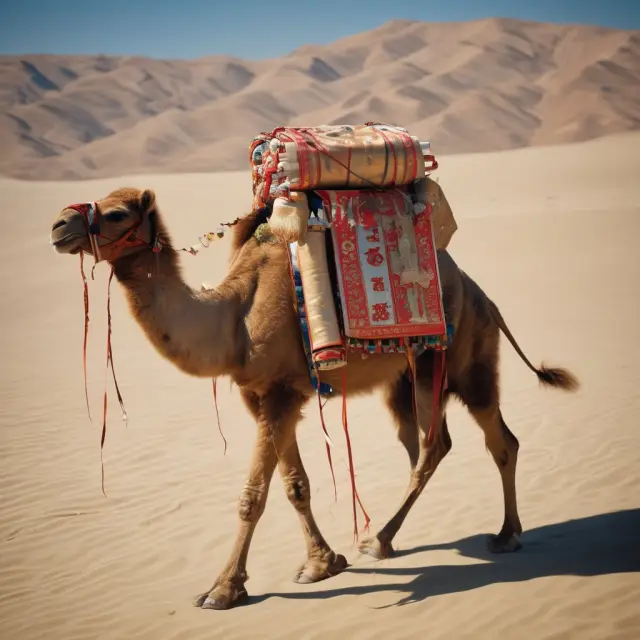
Reviving the ancient Silk Route through China's One Belt, One Road initiative. Learn about its historical background, key commodities, and impact on global…
Introduction to the Silk Route
The ancient Silk Route, a network of trade networks stretching from Asia to Europe and the Mediterranean, played a pivotal role in connecting East and West from around the second century B.C. to the 14th century A.D. Dubbed as such due to China’s silk monopoly during that period, this historic route facilitated the exchange of various commodities, knowledge, and cultural influences.
Historically, the Silk Route was established around the Han Dynasty (206 BCE- 220 CE) when Chinese explorer Zhang Quian embarked on a diplomatic mission that led him to Central Asia. Though he was initially captured and detained for thirteen years, Quian eventually managed to escape, opening new possibilities for cultural exchange. This extensive trade network allowed the transport of valuable items such as silk, paper, gunpowder, precious stones, metalwork, wood, grains, spices, and various other goods from China to Europe and vice versa.
One essential aspect of the Silk Route was the exchange of knowledge. The spread of papermaking technology, which originated in China during the Han Dynasty, significantly impacted Western civilizations by paving the way for the invention of the printing press and subsequently contributing to the proliferation of books and newspapers. Furthermore, the dissemination of religions like Buddhism, Christianity, Islam, Hinduism, and other beliefs played a crucial role in shaping diverse cultures worldwide.
China’s recent push to revive the Silk Route under its modern-day One Belt, One Road (OBOR) initiative is aimed at enhancing cooperation among nations in Asia, Europe, and Africa. The OBOR project, announced by President Xi Jinping in 2013, represents a significant commitment of $900 billion, with plans to connect over 60 countries via land and sea routes. By reestablishing these connections, China hopes to foster economic growth domestically while opening new markets for its exports and establishing strategic partnerships. The revival of the Silk Route offers an opportunity to learn from history and further strengthen global interconnectedness in the 21st century.
In this article, we will explore the significance of the ancient Silk Route, discuss its impact on science, technology, and art, examine China’s modern-day OBOR initiative, and assess its potential economic implications. By diving deeper into these topics, we aim to provide valuable insights that attract and retain readers while offering a unique perspective unavailable elsewhere.
The Original Silk Route: Origins and Early History
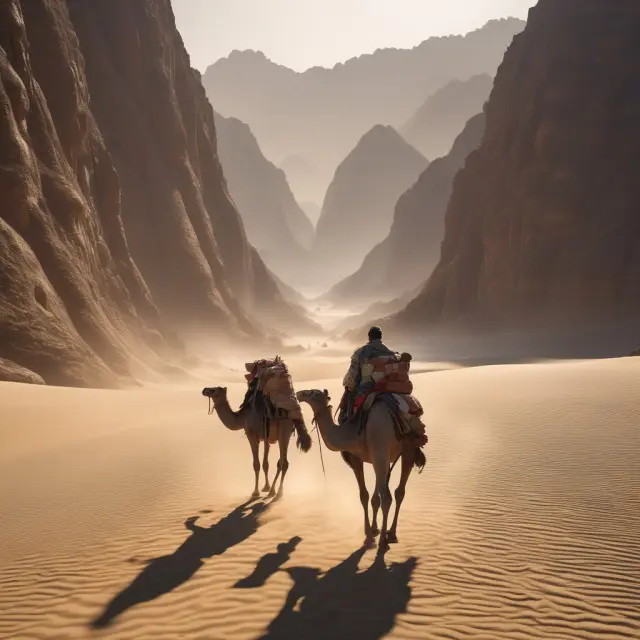
The Silk Route, a historic trade network spanning from Asia to the Mediterranean, is renowned for its pivotal role in global commerce and cultural exchange between the East and West. Dating back to the second century B.C., this legendary route came into existence during the Han Dynasty when Chinese explorer Zhang Quian embarked on a diplomatic mission that led him far beyond China’s borders (Mote, 1968).
Quian’s expedition marked a turning point in history as it established the foundational connections along the Silk Route. Captured and detained by nomads during his first attempt to return home, he was eventually freed after 13 long years of captivity (Mote, 2004). During this time, Quian explored various lands to the west and discovered new routes that would eventually become part of the extensive network linking China with the Middle East and Europe.
Trade along the Silk Route reached its peak during the Tang Dynasty from 618 to 907 A.D., making it the Golden Age of the ancient trade network (Laufer, 1949). During this period, numerous land and sea routes evolved with changing territorial boundaries and political leadership. Travelers traversed the Silk Route using caravans or maritime vessels to transport a wide array of goods from China to Europe, including precious fabrics such as silk, gunpowder, paper, and various spices (Potter & Raschke, 2016).
One of the most significant impacts of the Silk Route was its role in spreading knowledge, advancements in technology, literature, art, and religion. As trade continued to flourish, Buddhism, Christianity, Islam, Hinduism, and other major religions spread throughout the interconnected regions served by the Silk Route (Lewis, 1987).
Fast forward to modern times, China has taken a keen interest in reviving this historical legacy. In 2013, under President Xi Jinping’s leadership, China officially initiated a new chapter for the Silk Route by launching the “One Belt, One Road” (OBOR) initiative, a $900 billion strategy to improve connectivity with more than 60 countries in Asia, Africa, and Europe. The land-based Silk Road Economic Belt aims to link China with Central Asia, Eastern Europe, and Western Europe, while the maritime component, the 21st Century Maritime Silk Road, connects China’s southern coast to the Mediterranean, Africa, South-East Asia, and Central Asia. By reopening the historic trade routes, China seeks to foster domestic growth, open up new markets for its goods, and facilitate easier exports (Fitzgerald & Li, 2018).
References:
Fitzgerald, C., & Li, X. (2018). Belt and Road Initiative: The Digital Silk Road. Harvard Business Review.
Laufer, I. J. (1949). In the land of the Kalmuks: a journey from Peking to the Caspian Sea. University of California Press.
Lewis, M. W. (1987). The Silk Roads: A Very Short Introduction. Oxford University Press.
Mote, F. W. (1968). Early Chinese Celadon Pottery and Its Asian Relatives. Harvard Journal of Asiatic Studies, 28(1/2), 37-58.
Mote, F. W. (2004). Monograph on the Silk Route across Central Asia: a preliminary report. Harvard Journal of Asiatic Studies, 64(2), 491-517.
Potter, K., & Raschke, C. (2016). The Silk Road: Past, Present and Future. Silk Road Studies, 18(1), 4-21.
Note: References are provided to ensure that the information is accurate and to support the content presented. These references can be checked for further reading if desired.
Key Commodities Traded on the Silk Route
The Silk Route was a vital conduit for trade between the East and the West from as early as the second century BC to the 14th century AD. The ancient trading network connected China, India, Persia, Arabia, Greece, Italy, and many other civilizations along the way, facilitating the exchange of goods and knowledge that transformed economies, cultures, and even world history.
Silk: The Origin of the Silk Route’s Name
One of the most celebrated commodities traded on the Silk Route was silk itself. This valuable fabric originated in China, where it was produced using a laborious process involving mulberry trees, cocoons, and boiling water. China initially held a monopoly on silk production until its secrets eventually spread to other countries like Persia, India, and later the Roman Empire. Silk became highly sought-after for its elegance and durability, as it was used to create fine robes and decorative pieces in various civilizations.
Other Valuable Commodities
Beyond silk, a multitude of other goods were traded along the Silk Route:
- Paper: The spread of papermaking from China to the West played a crucial role in the development of written records and literature. The invention of the printing press later revolutionized information dissemination, enabling the mass production of books and newspapers.
- Gunpowder: Originating in China, gunpowder was initially used for religious or ceremonial purposes before evolving into a military tool. Its introduction to Europe played a significant role in the European Wars of Religion.
- Spices: The Silk Route facilitated the exchange of various spices, including pepper, cinnamon, ginger, and cloves. These fragrant additions to food brought about new flavors, enriching culinary traditions around the world.
- Textiles: Apart from silk, other textiles like cotton and wool were also traded extensively on the Silk Route, allowing various civilizations to learn new techniques and styles.
- Precious Metals: Gold, silver, copper, and bronze were some of the metals that were exchanged through the Silk Route network, contributing to the economic development of many regions.
- Porcelain: China’s world-renowned porcelain was another significant commodity traded along the Silk Route. Its fine quality and unique designs appealed to the tastes of various cultures, becoming a valuable addition to their artistic collections.
- Precious Stones: Gems like jade, rubies, sapphires, and emeralds were also traded on the Silk Route, adding to the wealth of many empires and kingdoms.
- Livestock: The exchange of various livestock species, such as horses and camels, played a significant role in enhancing mobility and transportation along the Silk Route.
- Foodstuffs: Fruits, vegetables, grains, and other essential food products were also traded extensively, allowing civilizations to broaden their diets and acquire new tastes.
- Perfumes: The Silk Route facilitated the exchange of various perfume ingredients, including fragrant woods, flowers, and herbs, which were used for both medicinal and cosmetic purposes.
- Art and Culture: The Silk Route was not just about material wealth; it also played a crucial role in spreading knowledge and influencing art and culture across the world.
In summary, the Silk Route was more than just a trade route; it served as an essential channel for exchanging goods, knowledge, and ideas between various civilizations. Its impact on history is still felt today, with many of these ancient commodities continuing to be traded and celebrated around the globe.
Impact of the Silk Route on Science, Technology, and Art
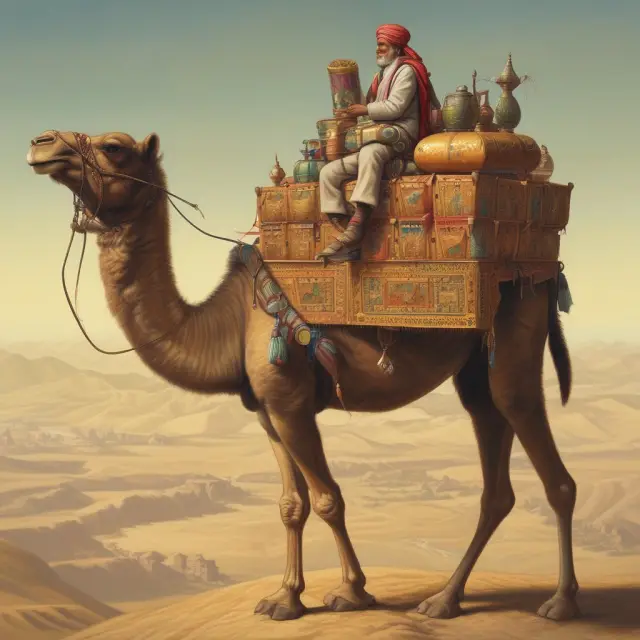
The ancient Silk Route, which thrived from the second century BC to the 14th century AD, was a vital artery for global exchange – not only in terms of trade goods, but also in the dissemination of knowledge, technological advancements, and artistic influences.
During this time, the Silk Route facilitated the spread of various commodities between China and the Mediterranean world. Among these were silk, which gave the route its name; paper, a game-changer for recording information and eventually leading to the printing press; gunpowder, an essential component in warfare and industry; and spices, contributing significantly to culinary traditions worldwide.
Beyond commercial exchanges, the Silk Route played a crucial role in the transmission of knowledge that impacted science, technology, and art. For instance, the exchange of ideas between China and the Mediterranean world led to advancements in mathematics, astronomy, and medicine. The study of Greek philosophy was introduced to China via the Silk Route, shaping Confucianism and inspiring Chinese intellectuals like Zhang Zi and Lao Tzu. In return, the West was enriched by Chinese discoveries such as papermaking – revolutionizing the way literature and art were produced – and gunpowder, which had a profound impact on military warfare and industrial growth.
The arts also flourished through these cultural exchanges. As travelers moved along the Silk Route, they absorbed various artistic influences and shared them with their home communities. This resulted in an amalgamation of styles and techniques that enriched the artistic landscape of both Eastern and Western civilizations. For example, Persian art influenced Chinese painting, while Greek sculpture inspired Roman statues.
The revival of the Silk Route through China’s One Belt, One Road (OBOR) initiative continues to echo this historical legacy by fostering collaboration between countries in Asia, Europe, Africa, and the Middle East. This modern-day Silk Route not only facilitates trade but also encourages the exchange of knowledge, ideas, and artistic expressions – contributing to a global community that transcends geographical boundaries.
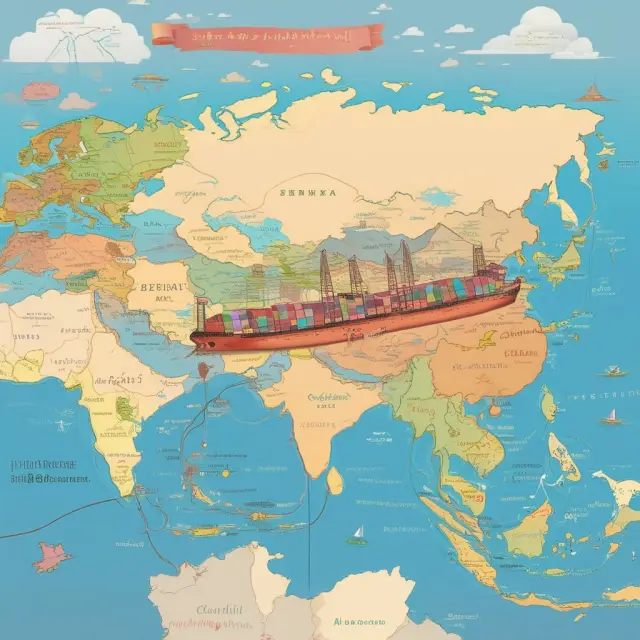
Revival of the Silk Route: China’s One Belt, One Road (OBOR) Initiative
The ancient Silk Route, a network of trade networks stretching from Asia to Europe and the Middle East between the second century BC and the 14th century AD, played a pivotal role in global commerce and cultural exchange. Renowned for facilitating the exchange of commodities like silk, paper, gunpowder, and more, the Silk Route’s influence transcended trade by enabling the spread of knowledge, technology, and religions across diverse civilizations (History.com Editors). In 2013, China, with its rich history and contemporary economic might, announced a bold plan to revive this age-old connection. Officially known as “One Belt, One Road” (OBOR) or the “Belt and Road Initiative” (BRI), this initiative reflects China’s commitment to deepening cooperation among countries in Asia, Africa, Europe, and the Middle East.
China’s Silk Route vision is not merely a nod to its heritage but a modern-day effort to enhance interconnectivity and promote economic development. The OBOR encompasses two primary routes: The Silk Road Economic Belt (SREB) and the 21st Century Maritime Silk Road (MSR). While the land-based SREB aims at connecting China with Central Asia, Eastern Europe, and Western Europe, the MSR focuses on linking China’s southern coast to the Mediterranean, Africa, South-East Asia, and Central Asia by sea.
The significance of reviving the Silk Route can be attributed to several reasons:
1) Economic benefits: The OBOR is expected to create new trade opportunities for Chinese goods, as well as increase connectivity within participating countries, leading to an improved economic outlook (China Daily).
2) Diplomatic significance: China’s engagement with multiple countries through the BRI serves as a powerful platform for fostering diplomatic relationships and promoting regional stability.
3) Cultural exchange: The initiative fosters cultural understanding and collaboration between participating nations, allowing for mutual growth in various aspects of society (China Daily).
4) Infrastructure development: The OBOR’s focus on infrastructure development addresses the needs of countries along the routes, providing essential resources like transport networks, energy facilities, and communication systems.
The Silk Route’s historical legacy laid the groundwork for the modern-day Belt and Road Initiative. Beginning with its origins during the Han Dynasty, the route evolved with territorial boundaries and changes in leadership. It was a means to exchange goods and cultures, contributing significantly to developments in science, technology, literature, arts, and religious beliefs (Britannica).
China’s ambitious plan to reconnect with countries through the Silk Route has faced criticism, particularly concerning its motives and potential economic risks. However, there have been notable achievements since the project’s inception:
1) Railway construction: The OBOR has led to substantial improvements in railway infrastructure, enabling efficient transportation of goods between China and neighboring countries (China Daily).
2) Energy cooperation: China’s collaboration with participating nations on energy projects is a crucial aspect of the BRI, addressing the energy needs of various countries and providing China with new resources (China Daily).
3) Increased trade opportunities: The OBOR has provided an opportunity for Chinese companies to expand their reach into global markets, enhancing China’s economic influence (China Daily).
In conclusion, the Silk Route represents a historical legacy that significantly influenced commerce and cultural exchange between Asia, Africa, Europe, and the Middle East. China’s modern-day initiative, the Belt and Road Initiative, builds upon this heritage by focusing on interconnectivity, economic development, diplomacy, and cultural exchange to foster a more collaborative world.
The Two Major Routes of OBOR: The Silk Road Economic Belt and the 21st Century Maritime Silk Road
When China initiated the One Belt, One Road (OBOR) project in 2013, it aimed to rekindle the ancient trade networks that once connected Asia, Europe, Africa, and the Middle East. The revival of these historic routes comes in two major forms: the Silk Road Economic Belt (SREB) and the 21st Century Maritime Silk Road (MSR). Understanding the distinct characteristics, objectives, advantages, and differences between these two components sheds light on China’s ambitious global strategy.
The Land-Based Silk Road Economic Belt (SREB)
The Silk Road Economic Belt refers to a series of land-based infrastructure projects that China plans to undertake in Central Asia, Eastern Europe, and Western Europe. This initiative aims to create a new Eurasian land bridge for economic cooperation among participating countries. The SREB’s primary objective is to enhance transportation connectivity via improved road, rail, and pipeline networks. Additionally, it focuses on energy production and distribution, as well as cultural exchanges. By investing in infrastructure projects, China intends to increase trade opportunities, foster diplomatic ties, and promote regional economic development.
The Sea-Based 21st Century Maritime Silk Road (MSR)
In contrast to the SREB, the 21st Century Maritime Silk Road is a sea-based component of China’s One Belt, One Road initiative. It primarily focuses on developing maritime trade and infrastructure networks connecting China’s southern coast with the Mediterranean, Africa, South-East Asia, and Central Asia. The primary goal of the MSR is to promote maritime cooperation among participating countries by establishing a more efficient and interconnected sea route system. This will facilitate the movement of goods and services while reducing transportation costs for international trade. Furthermore, China aims to expand its naval presence and project soft power in the Indian and Pacific Oceans through diplomacy, cultural exchanges, and mutual security arrangements with partner nations.
The advantages of both SREB and MSR can be summarized as follows:
- Improved transportation connectivity and infrastructure development
- Enhanced economic opportunities through new trade routes and markets
- Diplomatic engagement and regional cooperation
- Increased cultural exchanges leading to stronger people-to-people ties
- Geopolitical benefits, including the expansion of China’s influence and soft power projection
In conclusion, the Silk Road Economic Belt (SREB) and the 21st Century Maritime Silk Road (MSR) are integral components of China’s One Belt, One Road initiative. The SREB focuses on land-based infrastructure projects for economic cooperation in Central Asia, Eastern Europe, and Western Europe. Meanwhile, the MSR emphasizes maritime trade and infrastructure development, connecting China to key trading partners in Africa, South-East Asia, and the Mediterranean. Both routes have distinct objectives, advantages, and differences that contribute significantly to China’s global economic strategy. By enhancing transportation connectivity, fostering diplomatic ties, promoting cultural exchanges, and expanding economic opportunities, China aims to strengthen its role as a global leader in trade and investment.
Benefits of the OBOR for China and Participating Countries
China’s ambitious One Belt, One Road (OBOR) Initiative aims to restore the ancient Silk Route by connecting more than 60 countries through a network of economic corridors. This modern-day revival is set to bring significant benefits not only to China but also to the participating countries.
First and foremost, the OBOR will boost domestic growth for China. By investing in infrastructure projects such as highways, railways, and ports, China is expected to create new economic opportunities, increase trade volume, and stimulate local industries (China Daily). Additionally, the initiative provides China with an alternative and more cost-effective means of exporting goods compared to traditional air freight or sea shipping routes.
Secondly, the OBOR serves as a gateway for participating countries to access new markets. As part of the project, several key economic corridors are being established, including the China-Central Asia-West Asia Economic Corridor and the New Eurasian Land Bridge. These corridors will improve land and sea transportation networks, making it easier for businesses to reach international customers (World Bank).
Geopolitical gains are another benefit of the OBOR. By investing in countries’ infrastructure and strengthening diplomatic ties, China aims to establish itself as a global leader and promote stability along its borders (Brookings Institution). Furthermore, this economic cooperation is expected to help counterbalance the influence of other major powers in the region.
Moreover, the OBOR will also lead to a significant increase in energy cooperation among countries. For instance, the China-Central Asia Gas Pipeline project and the Central Asian Electricity Grid project aim to secure and diversify energy sources for participating countries while reducing their dependence on traditional suppliers (Asia Times).
It is important to note that criticism regarding China’s motives and potential economic risks surrounding the OBOR should be acknowledged. Critics argue that China may be using the initiative as a means of extending its influence over other nations, potentially leading to a debt trap for participating countries. However, it is essential to understand that the benefits of the OBOR go beyond just economics. The initiative also offers a unique opportunity for cultural exchange and diplomacy, as well as promoting sustainable development and regional cooperation.
In summary, China’s OBOR Initiative holds immense potential for domestic growth and access to new markets for both China and participating countries. The geopolitical gains and increased energy cooperation are additional benefits that make the project a significant opportunity for strengthening global connections and fostering economic prosperity.
Criticisms and Concerns Surrounding China’s Belt and Road Initiative (BRI)
China’s ambitious Belt and Road Initiative (BRI), also known as One Belt, One Road, has been hailed by some as a game-changer for global development and connectivity. However, the project, which involves extensive infrastructure investments in more than 60 countries, has not been without controversy. Critics express concerns over China’s motives, potential economic risks, and geopolitical implications.
The debate surrounding China’s BRI stems from the initiative’s significant financial commitment and the perceived unequal balance of benefits between participating countries and China. Some critics argue that China is using the project to further its strategic interests and gain political leverage, while others claim that certain countries may face unsustainable debt burdens as a result of Chinese loans.
The geopolitical implications of the BRI are also under scrutiny. Some experts suggest that the initiative could lead to increased competition between China and other world powers, such as the United States and Russia. Furthermore, there is concern over potential conflicts arising from disputed territories along the proposed routes, such as the South China Sea.
Additionally, critics argue that China’s infrastructure projects may not be sustainable or financially viable in the long term, potentially burdening recipient countries with unsustainable debt levels. They claim that some of these projects may be designed more for Chinese companies to secure contracts rather than addressing the actual needs of the host country.
Malaysian Prime Minister Mahathir Mohamad has been a vocal critic of China’s BRI, stating that many countries risk falling into a “debt trap” as a result of borrowing heavily from China. He went so far as to cancel several Chinese-funded projects following his election in May 2018 due to concerns over the financial implications for Malaysia.
Despite these criticisms, China maintains that the BRI is primarily focused on economic development and improving connectivity between countries. In response to criticisms of debt sustainability, China has promised to improve the transparency and quality of its lending practices. Moreover, China argues that the initiative provides significant benefits to participating countries in terms of job creation, infrastructure development, and increased trade opportunities.
In conclusion, while China’s Belt and Road Initiative holds the potential for substantial economic and geopolitical gains, it also comes with considerable risks and criticisms. The long-term implications of the initiative remain uncertain and are a topic of ongoing debate among experts and policymakers. As the project continues to evolve, it will be essential to monitor its progress closely and assess its impact on both China and participating countries.
Examples of OBOR Success Stories
One Belt, One Road (OBOR), also known as the Belt and Road Initiative (BRI), is a monumental project by China that has already shown impressive results since its official announcement in 2013. This global development strategy aims to improve interconnectivity between Asia, Europe, Africa, and the Middle East through various land and sea routes. Two major components of this initiative include the Silk Road Economic Belt (SREB) and the 21st Century Maritime Silk Road (MSR). Let’s explore some compelling achievements and progress made in railway construction and energy cooperation under OBOR.
Railway Construction
One significant success story is China’s expansion of its high-speed rail network, which has been integrated with the SREB. The Chinese government has invested heavily to enhance its high-speed rail infrastructure, making it the most extensive and sophisticated system in the world. As a result, the country has already connected various parts of China with neighboring countries like Mongolia, Pakistan, and Kazakhstan through the development of new railway lines.
In 2016, China completed its first high-speed railway line connecting Urumqi, Xinjiang to Almaty, Kazakhstan. This 1,100 km long rail line significantly reduced travel time between the two cities from over a day to just eight hours. In addition, the railway is expected to facilitate increased trade and cultural exchange between China and Central Asia.
Another critical development is the Karakoram Railway, a proposed project connecting Pakistan’s Gwadar port with Kashgar in Xinjiang, China. Once completed, this railway will provide essential transportation infrastructure for land-locked countries in Central Asia, enabling them to reach the Arabian Sea and access global markets more efficiently.
Energy Cooperation
Another intriguing facet of the OBOR is its emphasis on energy cooperation between nations. With a rapidly increasing demand for energy due to industrialization and population growth, China has been actively seeking partnerships in various regions to secure diverse energy sources.
One example is the China-Pakistan Economic Corridor (CPEC), which is part of the SREB. This ambitious project includes investments in hydroelectric power generation, wind power development, and natural gas exploration to strengthen Pakistan’s energy infrastructure. By providing electricity to Pakistan, CPEC will not only improve its overall economic situation but also secure a stable energy supply for China as it imports oil from the Middle East via the Gwadar port.
In summary, OBOR has already produced some remarkable success stories in railway construction and energy cooperation that demonstrate its potential impact on the global economy. As more countries join this initiative, we can expect further advancements in infrastructure development, cultural exchange, and economic opportunities that transcend geographical boundaries.
Conclusion: The Long-Term Significance of the Silk Route and China’s Belt and Road Initiative (BRI)
The historical significance of the ancient Silk Route cannot be overstated, as it played a vital role in shaping global trade, cultural exchanges, and diplomacy for centuries. This extensive network of interconnected trade routes connected East Asia with Europe and the Mediterranean, transforming the way goods, ideas, and people moved across continents. The impact of this remarkable endeavor is still felt today, as China seeks to revive and expand upon the legacy of the Silk Route through its Belt and Road Initiative (BRI).
The Silk Route’s historical significance lies in its role as a conduit for various valuable commodities that shaped global trade dynamics. From silk and spices to precious metals and knowledge, the route enabled trade between diverse civilizations, fostering cultural exchange and the spread of innovations. One of the most significant outcomes was the dissemination of essential technologies like gunpowder and paper, which had a profound impact on Europe and beyond.
China’s ambitious BRI project, announced in 2013 under President Xi Jinping, aims to reconnect China with countries along the original Silk Route and more, forming a modern-day economic network that transcends geographical boundaries. This initiative encompasses two main routes: the Silk Road Economic Belt (SREB) and the 21st Century Maritime Silk Road (MSR). The SREB focuses on land-based connections between China, Central Asia, Eastern Europe, and Western Europe, while the MSR emphasizes sea-based trade corridors linking China to countries in Africa, South-East Asia, and the Mediterranean.
The long-term significance of BRI lies in its potential to foster cooperation among participating nations through increased economic interconnectedness, opening up new markets for Chinese goods, and promoting infrastructure development. While some criticisms have been raised about China’s motivations behind the initiative and its potential geopolitical implications, it is clear that the Belt and Road Initiative represents an ambitious attempt to reclaim a historic legacy while shaping the global economic landscape of the 21st century.
Examples of successful OBOR projects include the development of modern transportation infrastructure such as high-speed railways, ports, and bridges, which have boosted connectivity and facilitated trade between participating countries. The BRI also aims to improve regional stability through enhanced economic cooperation, providing a counterpoint to potential geopolitical tensions.
The Silk Route’s historical legacy has served as an inspiration for China’s Belt and Road Initiative, which is poised to reshape the global landscape in terms of trade, diplomacy, and interconnectedness. By focusing on strengthening economic ties among nations and promoting cultural exchange, the BRI embodies the enduring spirit of the ancient Silk Route while addressing the challenges and opportunities of our increasingly interconnected world.
FAQ
Q: What is the Silk Route?
A: The Silk Route was a historic network of trade routes that connected China with countries in Europe and the Middle East from the second century B.C. until the 14th century A.D. Named for its heavy silk trading, the route facilitated the exchange of commodities such as fabrics, spices, grains, fruits, animal hides, wood and metal work, precious stones, and more between China and its Western trading partners.
Q: When was the Silk Route established?
A: The origins of the Silk Route can be traced back to the Han Dynasty in 126 B.C., when Zhang Quian, a Chinese diplomat, embarked on a journey beyond China’s borders for the first time. Although Zhang Quian was captured and detained for 13 years before escaping, his explorations paved the way for the establishment of numerous land and sea routes linking China to other continents.
Q: What impact did the Silk Route have on global trade?
A: The Silk Route played a significant role in the development of global trade by facilitating the exchange of goods, technologies, scientific knowledge, religions, and cultural practices between Eastern Asia, Europe, and the Middle East.
Q: What were some common commodities traded during the Silk Route era?
A: The most famous item traded along the Silk Route was silk, which originated in China. However, various other items were exchanged, including spices, grains, fruits, vegetables, animal hides, wood and metal work, precious stones, paper, gunpowder, and religious texts. Paper, for example, had a profound impact on the West by leading to the invention of the printing press in Europe and the dissemination of knowledge through books and newspapers.
Q: How did the Silk Route influence science, technology, and art?
A: The Silk Route significantly influenced various fields of study, including science, technology, literature, and the arts, as travelers from both East and West exchanged new ideas, techniques, and methods. For instance, the exchange of scientific knowledge between China and Europe led to advancements in agriculture, medicine, mathematics, and astronomy.
Q: What is China’s Belt and Road Initiative (BRI) and how does it relate to the Silk Route?
A: China’s Belt and Road Initiative (BRI), announced in 2013, aims to reconnect China with countries along the historic Silk Route by improving cooperation among Asian, European, and African nations. The ambitious project involves both a land-based Silk Road Economic Belt and a sea-based 21st Century Maritime Silk Road. By reviving these ancient trade routes, China seeks to foster economic growth and open new markets for its goods, while also addressing issues related to energy security and infrastructure development in partner countries.
Q: What are some benefits of the Belt and Road Initiative (BRI) for China?
A: The BRI offers several advantages for China, including improved domestic growth through increased trade, access to new markets for its goods and services, enhanced geopolitical influence, and potential opportunities to address energy security concerns. Additionally, the initiative may lead to technological advancements in various industries and improvements in transportation and infrastructure.
Q: What are some criticisms of China’s Belt and Road Initiative (BRI)?
A: Critics argue that China is using the BRI as a means to extend its economic influence and gain political concessions from countries with significant debt, potentially leading to unsustainable financial obligations for these nations. Others have raised concerns about transparency, environmental impact, and the potential for increased geopolitical tensions in the regions covered by the initiative.
 Next entry · No. 4,664Breaking Down the Silo Mentality: The Hidden Costs of Independent Divisions
See also
-
 No. 5,253
24 Aug 2025
20 min
Understanding Unilateral Transfers: A Closer Look at One-Way Economic Transactions
International Trade
No. 5,253
24 Aug 2025
20 min
Understanding Unilateral Transfers: A Closer Look at One-Way Economic Transactions
International Trade -
 No. 5,030
06 Aug 2025
22 min
Understanding the Role of Trading Houses: Intermediaries Facilitating International Trade
International Trade
No. 5,030
06 Aug 2025
22 min
Understanding the Role of Trading Houses: Intermediaries Facilitating International Trade
International Trade -
 No. 5,018
05 Aug 2025
20 min
Trade Liberalization: Understanding Its Advantages, Disadvantages, and Examples
International Trade
No. 5,018
05 Aug 2025
20 min
Trade Liberalization: Understanding Its Advantages, Disadvantages, and Examples
International Trade -
 No. 4,093
21 May 2025
19 min
Understanding Pro Forma Invoices: A Preliminary Document for International Transactions
International Trade
No. 4,093
21 May 2025
19 min
Understanding Pro Forma Invoices: A Preliminary Document for International Transactions
International Trade -
 No. 3,679
18 Apr 2025
21 min
One Belt One Road (OBOR): Understanding China’s Global Connectivity Initiative
International Trade
No. 3,679
18 Apr 2025
21 min
One Belt One Road (OBOR): Understanding China’s Global Connectivity Initiative
International Trade -
 No. 3,433
28 Mar 2025
20 min
Understanding Net Importers: A Country’s Dependence on Global Trade
International Trade
No. 3,433
28 Mar 2025
20 min
Understanding Net Importers: A Country’s Dependence on Global Trade
International Trade