The Comprehensive Guide to Understanding and Utilizing Heikin-Ashi Technique in Finance and Investment
Master the Heikin-Ashi technique for financial analysis. Discover origins, calculations, uses, advantages, and limitations.
Introduction to the Heikin-Ashi Technique
The Heikin-Ashi (HA) technique is a Japanese candlestick charting method that averages price data across specific periods, providing traders with an easier way to identify trends and reversals. Developed centuries ago by the legendary trader Munehisa Homma in Japan, this advanced technical analysis tool stands out for its unique approach to creating candles by using two-period moving averages instead of the conventional high, low, open, and close values (HLCV) commonly used in traditional candlestick charts.
Heikin-Ashi’s primary goal is to reduce market noise while maintaining trend directional information, making it more accessible for traders looking to spot trends and make informed investment decisions. In this article, we will explore the origins of Heikin-Ashi, its basic calculations, key concepts in analysis, advantages, limitations, comparison with Renko charts, and best practices for using Heikin-Ashi charts effectively.
First, let’s dive into the fundamentals of HA calculations:
Section to be continued…
Understanding Heikin-Ashi Calculations (Continued)
Once a Heikin-Ashi candle is calculated for the first time using the opening period’s values, subsequent candles can be generated by applying the same formulas. The process involves determining the high, low, open, and close based on two periods: the current period and the previous period.
Heikin-Ashi Close (HA Close) = Open + High + Low + Close
Heikin-Ashi Open (HA Open) = HA Open −1 + HA Close −1
Heikin-Ashi High (HA High) = Max(High, HA Open, HA Close)
Heikin-Ashi Low (HA Low) = Min(Low, HA Open, HA Close)
The Heikin-Ashi technique uses the moving average prices of both periods to create a candle, providing smoother charts that help traders identify trends and reversals with greater ease. By averaging price data from two periods, Heikin-Ashi charts tend to have fewer false signals and smoother transitions between trend changes compared to standard candlestick charts. This can be especially useful for traders working in volatile markets or dealing with frequent market fluctuations.
In the next section, we will discuss the key concepts of Heikin-Ashi analysis and their implications for identifying trends and reversals in financial markets. Stay tuned!

The Basics of Heikin-Ashi Calculations
Heikin-Ashi (HA), developed by Munehisa Homma during the 1700s, is an advanced Japanese candlestick charting technique that offers several advantages over standard candlestick charts. Instead of using open, high, low, and close data to calculate each candle as in traditional candlesticks, Heikin-Ashi employs a two-period average to create more accurate and smoother indications of market trends.
Understanding the formulas used to generate Heikin-Ashi (HA) candles is crucial for effectively using this technique to inform investment decisions. This section will delve into the calculations behind Heikin-Ashi charts, providing a solid foundation for further analysis and interpretation.
To calculate each HA candle, the following formulas are used:
Heikin-Ashi Close (HA Close)
HA Close = Open + High + Low + Close
Here, “Open” refers to the open price of the current period, while “High,” “Low,” and “Close” signify the high, low, and close prices from that same period.
Heikin-Ashi Open (HA Open)
HA Open = HA Open (previous period) – 1 + HA Close (previous period) – 1
This calculation involves taking the HA open from the previous period, subtracting one, and then adding the HA close from the same period minus one.
Heikin-Ashi High (HA High)
HA High = Max(High, HA Open, HA Close)
The maximum value between the high of the current period, or the HA open and HA close from the previous period, determines HA High.
Heikin-Ashi Low (HA Low)
HA Low = Min(Low, HA Open, HA Close)
Similarly, to determine HA Low, find the minimum value between the low of the current period or the HA open and HA close from the previous period.
To initialize a Heikin-Ashi chart, calculate the first candle using the high, low, open, and close values for the given period. After that, follow these formulas recursively to determine subsequent candles. This process produces a chart with fewer false signals and trends that are easier to spot due to the averaging effect.
One key aspect of Heikin-Ashi charts is their smoother appearance compared to standard Japanese candlestick charts, which can make trend analysis more straightforward. However, it’s important to remember that this technique obscures some price data and may require a longer setup time for trades. In the next sections, we will explore how these advantages and limitations manifest in Heikin-Ashi chart interpretation.

Key Concepts in Heikin-Ashi Analysis
Heikin-Ashi charts are an essential tool for technical traders seeking to understand market trends more effectively. By utilizing the averaging technique, Heikin-Ashi charts help to filter out market noise, making it easier to identify trends and reversals compared to traditional candlestick charts. However, it’s crucial to be familiar with key concepts within this method to extract valuable insights from these charts.
Hollow or Filled Candles
One of the essential components of Heikin-Ashi analysis is understanding hollow and filled candles. A hollow candle, often depicted as green or white, represents an uptrend, while a filled candle, typically shown in red, indicates a downtrend. Hollow candles have no lower shadow, meaning the open price is lower than the close but still above the previous close. Conversely, filled candles have no upper shadow and are created when the open price is higher than the closing price but remains below the prior open.
Reversal Candles
Another vital concept in Heikin-Ashi analysis includes recognizing reversal candlesticks. These patterns possess small bodies with large upper and lower shadows, signaling a potential trend change. Traders can use these signals to make informed decisions based on market trends.
Trend Analysis
Interpreting the overall direction of a trend is crucial when using Heikin-Ashi charts for analysis. Hollow or green candles with no lower shadows indicate strong uptrends, while filled or red candles with no upper shadows represent powerful downtrends. Trend direction can help traders manage risk and determine entry and exit points.
Understanding the formulas used to create Heikin-Ashi candles is crucial for utilizing this technique effectively. By comprehending the significance of hollow and filled candles, as well as reversal patterns, traders can gain a better perspective on market movements and make informed investment decisions based on trend analysis.
In conclusion, Heikin-Ashi charts provide valuable insights into market trends and price movements by reducing market noise and making it easier to identify trends and reversals. By understanding the concepts behind hollow and filled candles, reversal patterns, and overall trend analysis, traders can make more informed decisions and enhance their investment strategies using this powerful technique.

The Advantages of Using Heikin-Ashi
Heikin-Ashi charts are a popular choice among traders seeking to minimize market noise and easily discern trends. Developed in the 1700s by Munehisa Homma, this unique candlestick charting method averages price data from two periods instead of using traditional open, high, low, and close values. While it offers several benefits, such as filtering out false signals and smoothing trends, there are also some limitations to consider.
Reducing False Signals and Easier Trend Identification: The Heikin-Ashi technique is designed to help traders better understand price movements and identify trends with more accuracy. One of its primary advantages is the reduction in false signals, particularly in sideways or choppy markets. By averaging prices over two periods, traders are less likely to be swayed by short-term market fluctuations, making it simpler to recognize valid trend reversals or continuations.
Understanding Heikin-Ashi Signals: Hollow white (or green) candles with no lower shadows signify a strong uptrend, while filled black (or red) candles with no upper shadow represent a strong downtrend. These signals can be helpful for traders when deciding whether to add or exit positions based on market conditions.
Comparing Heikin-Ashi and Standard Candlesticks: Traditional candlestick charts frequently present false reversal signals, which can confuse traders and result in premature entries or exits. With the Heikin-Ashi technique, traders benefit from fewer false signals as consecutive colored candles make it easier to follow price movements and identify trends. Additionally, gaps—an important element for some technical analysts—are absent on Heikin-Ashi charts due to the averaging of data points.
Applying Heikin-Ashi Charts in Trading Decisions: The ability to spot trends more clearly through Heikin-Ashi charts can be a valuable asset for traders. When making trading decisions, it is important to consider the overall trend direction and whether it’s best to enter or exit positions based on current market conditions. By using this technique, traders can make informed decisions that take advantage of market trends while minimizing risk.
Limitations of Heikin-Ashi: While the Heikin-Ashi technique provides benefits, such as reducing false signals and improving trend identification, there are also some limitations to consider. Due to the averaging of data points over two periods, trade setups may take longer to develop. This can be a disadvantage for day traders who require quick responses to price movements, making Heikin-Ashi charts less responsive to these market conditions.
Additionally, the averaged data on Heikin-Ashi charts obscures important price information that some technical traders rely on, such as daily closing prices and price gaps. Traders need to be aware of these limitations when using Heikin-Ashi charts for analysis and risk management purposes.
Limitations of the Heikin-Ashi Technique
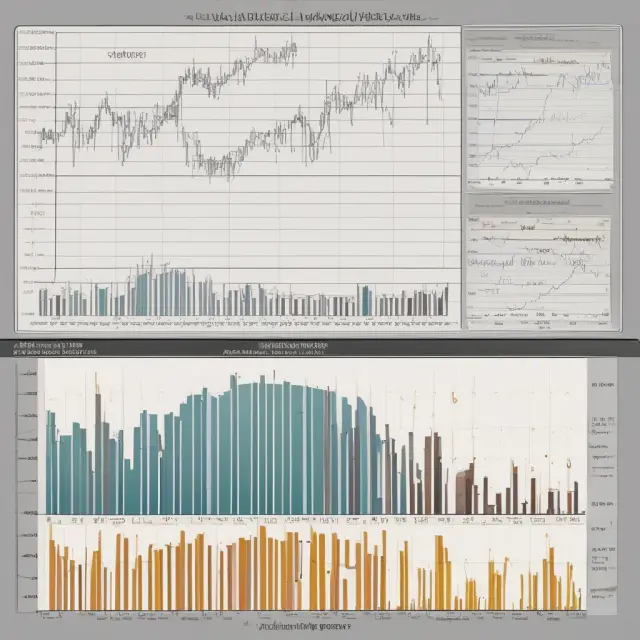
While the Heikin-Ashi technique has numerous advantages such as reducing false signals and making trends easier to spot, it does come with some limitations that traders should consider before relying solely on this analysis tool. The main drawbacks include missing important price data due to averaging prices over two periods and slower trade setups.
Since Heikin-Ashi charts are constructed using averages of the open, high, low, and close prices for each period, some essential information can be lost during the calculation process. For example, daily closing prices, which many traders view as significant, are not explicitly presented on Heikin-Ashi charts since they represent an average of the two most recent periods’ closes instead. This could pose a challenge for risk management and analysis based on the exact price levels.
Another limitation lies in its responsiveness to quick market moves. Day traders who need to make decisions based on small price fluctuations might find Heikin-Ashi charts less suitable because of their slower adaptation to the market changes. The two-period average used in creating Heikin-Ashi candles necessitates a longer time frame for trade setups compared to other charting methods like standard or Renko charts.
Furthermore, Heikin-Ashi charts do not display price gaps, which can be crucial for analyzing momentum and setting stop-loss levels. These gaps are essential indicators for many traders who rely on the difference between the open and close prices to manage risks effectively and time their trades accordingly. Incorporating gap analysis into Heikin-Ashi charts would help mitigate this limitation, but it goes against its core principle of smoothing price data.
To overcome these limitations, traders can consider combining multiple chart types or using additional indicators alongside Heikin-Ashi charts to gain a more comprehensive understanding of market trends and price movements. By complementing the strengths of Heikin-Ashi techniques with other analysis methods, investors can create an effective strategy tailored to their trading style and risk appetite.

Comparison of Heikin-Ashi with Renko Charts
The Heikin-Ashi technique and Renko charts share some similarities in their use for technical analysis but differ significantly in construction and interpretation. Both methods offer valuable insights into market trends, enabling traders to make informed decisions based on price movements. In this section, we’ll explore the differences between these two techniques in terms of construction, use cases, and limitations.
Heikin-Ashi Technique Overview: Heikin-Ashi, developed by Munehisa Homma in Japan during the 1700s, is a candlestick charting method that aims to eliminate market noise, making it easier for traders to identify trends and reversals. Instead of relying on the open, high, low, and close values like traditional candlestick charts, Heikin-Ashi charts use two-period averages to calculate each candle (Heikin-Ashi Open, Heikin-Ashi Close, Heikin-Ashi High, and Heikin-Ashi Low).
Renko Charts Overview: Renko charts, on the other hand, were developed in Japan around the 1930s. Instead of relying on candlesticks or time intervals, Renko charts consist of bricks or boxes representing a predefined price movement. These bricks can be either bullish (green) or bearish (red), depending on whether the market has moved up or down since the last brick was formed. The primary difference between Heikin-Ashi and Renko charts is how they represent price data: Heikin-Ashi uses averages, while Renko charts use only price movements above or below a certain threshold.
Use Cases: While both Heikin-Ashi and Renko charts are popular among traders seeking to understand market trends, their primary applications differ. Traders who prefer the Heikin-Ashi technique often find it more effective in capturing long-term trends and reducing false signals in sideways or choppy markets. In contrast, Renko charts are more suitable for day traders and short-term strategies as they allow traders to focus on price movements without being influenced by time frames.
Limitations: One of the primary limitations of Heikin-Ashi charts is the potential loss of important price data due to averaging. Although the technique can help reduce false signals and make trends easier to spot, it may not be responsive enough for day traders looking for quick price movements. Conversely, Renko charts might not provide a clear picture of daily closing prices or gaps, which can be essential for some technical analysis strategies.
In conclusion, Heikin-Ashi and Renko charts are two valuable tools used in financial analysis to identify market trends and make informed trading decisions. While they share some similarities, their differences in construction, use cases, and limitations make them suitable for different types of traders and investment styles. Understanding these techniques can help investors and traders better navigate the complex world of finance and investment, allowing them to make more informed decisions based on accurate and reliable data.

Applying Heikin-Ashi to Trading Decisions
Understanding trends and market movements is crucial for making informed trading decisions in finance and investment. One technique that has gained popularity among technical traders is the Heikin-Ashi method, which smoothes price data from two periods to create a candlestick chart with minimal noise. By using this method, investors can identify trends and reversals more easily than they would with traditional candlestick charts. In this section, we’ll explore how to use Heikin-Ashi signals for making informed trading decisions based on market trends.
Heikin-Ashi charts consist of hollow (white or green) and filled (black or red) candles. These colors represent the trend direction. Long down candles with little upper shadow indicate strong selling pressure, while long up candles with small or no lower shadows signal strong buying pressure. Reversal signals in Heikin-Ashi charts are identified by candles with small bodies and large upper and lower shadows. These patterns are similar to traditional candlestick reversal patterns but lack gaps due to the averaging process.
The smooth appearance of Heikin-Ashi charts makes it easier to spot trends and price patterns, making them popular among traders. One significant advantage is that they reduce false trading signals in sideways or choppy markets. Instead of experiencing two or more false reversal candles before a trend starts, traders who use the Heikin-Ashi method are likely to receive only the valid signal.
However, it’s important to note that Heikin-Ashi charts do have some limitations. Since they use price information from two periods, trade setups take longer to develop compared to standard candlestick charts. This may not be an issue for swing traders but can be problematic for day traders who need to exploit quick price moves. Additionally, the averaged data in Heikin-Ashi charts obscures important price information, such as daily closing prices and gaps. Traders must be aware of these limitations when using Heikin-Ashi charts and consider other tools to supplement their analysis.
To effectively apply Heikin-Ashi signals for making trading decisions, follow these steps:
- Identify the current trend based on the color and length of the candles.
- Monitor trends by looking for changes in candle size and color.
- Use other technical indicators or fundamental analysis to confirm the trend direction.
- Set stop-loss levels based on support and resistance levels identified from the Heikin-Ashi chart or additional tools.
- Consider entering a trade when the trend reverses or shows signs of weakening, based on the number and size of consecutive candles.
When using Heikin-Ashi charts for analysis, keep in mind that no single tool can provide perfect accuracy. Always consider multiple sources of information to validate trends and make informed trading decisions. Additionally, be aware of the limitations of Heikin-Ashi charts and use them as a supplement to your existing analysis tools rather than relying solely on their signals.
In conclusion, the Heikin-Ashi technique is a powerful tool for identifying trends and making informed trading decisions in finance and investment. By using this method’s smoothed candlestick chart, traders can more easily spot price patterns and reversals while reducing false signals. However, it’s essential to be aware of the limitations and consider other tools to supplement your analysis. By combining Heikin-Ashi charts with other technical indicators and fundamental analysis, you’ll be better equipped to make informed trading decisions based on market trends.
Best Practices and Precautions in Using Heikin-Ashi Charts
The Heikin-Ashi technique is a powerful tool for identifying trends and price patterns, but it comes with its own set of risks and limitations. In this section, we will discuss best practices and precautions to effectively use Heikin-Ashi charts in your investment strategy.
1. Understand the Averaging Effects: Heikin-Ashi charts are constructed using two-period averages, which can filter out some market noise but may also obscure important price data. Keep in mind that daily closing prices are not directly visible on a Heikin-Ashi chart since it displays averaged values instead. This lack of visibility could impact your risk management and potentially lead to missed opportunities.
2. Use Multiple Timeframes: To gain a better understanding of market trends and patterns, consider using multiple timeframes in combination with Heikin-Ashi charts. For instance, analyzing both daily and hourly or 15-minute charts can provide valuable insights into short-term price movements within the context of long-term trends.
3. Set Appropriate Stop Losses: Since Heikin-Ashi charts hide gaps between candles, it’s important to consider setting stop losses based on pivot points or Fibonacci retracement levels rather than relying on price gaps as a reference. This will help you manage risk more effectively and avoid potential pitfalls associated with using averaged data exclusively.
4. Combine Heikin-Ashi with Other Indicators: To enhance the accuracy of your analysis, consider combining Heikin-Ashi charts with other technical indicators like moving averages, MACD (Moving Average Convergence Divergence), and RSI (Relative Strength Index). This multi-pronged approach can help confirm trends or provide additional confirmation signals.
5. Practice Patience: The Heikin-Ashi technique may not be suitable for high-frequency trading strategies due to the delayed nature of the charting method. Instead, focus on long-term investments and allow trends to develop fully before making decisions. Remember that Heikin-Ashi charts provide a smoother view of market conditions, but they can also produce false signals if used impulsively.
6. Understand Heikin-Ashi Limitations: It’s crucial to understand the limitations of Heikin-Ashi charts and use them with caution. While averaging price data helps reduce noise, it may result in missed opportunities or incorrect interpretations of market conditions. Keep this in mind while developing your investment strategy and be prepared for potential drawbacks that come with relying on averaged data.
In conclusion, Heikin-Ashi charts are a powerful tool for identifying trends and price patterns in financial markets. However, they come with their own set of risks and limitations. By following best practices and precautions outlined above, you can effectively use Heikin-Ashi charts to enhance your investment strategy while minimizing potential pitfalls.

Visualizing Heikin-Ashi Charts with Real-Life Examples
The Heikin-Ashi technique has gained popularity in financial markets for its ability to reduce market noise and highlight trends more effectively than traditional candlestick charts. By averaging price data from two periods, the technique produces a smoother chart, making it easier to identify trends and reversals. In this section, we will explore real-life examples of Heikin-Ashi charts in various markets and timeframes.
First, let’s visualize how Heikin-Ashi charts can be applied to the cryptocurrency market with Bitcoin as an example. Figure 1 shows the daily Heikin-Ashi chart for Bitcoin from May 2020 to November 2021. Note that the chart displays several consecutive green (hollow) candles, indicating a strong uptrend in price.

Figure 1: Bitcoin Daily Heikin-Ashi Chart from May 2020 to November 2021
The chart’s consistency in color is a clear indicator of an uptrend, which can be an attractive sign for long-term investors and traders looking to enter positions. Conversely, filled (red) candles with no upper shadow indicate a strong downtrend in price, as shown in Figure 2 below:

Figure 2: Bitcoin Daily Heikin-Ashi Chart during a Downtrend
Another example can be seen in the weekly Heikin-Ashi chart of gold from June 2019 to January 2022, shown in Figure 3 below. This chart displays several large green candles with long upper shadows and small or no lower shadows during an uptrend, while filled red candles with long lower shadows indicate a downtrend:

Figure 3: Gold Weekly Heikin-Ashi Chart from June 2019 to January 2022
In the context of forex markets, the Heikin-Ashi technique is also widely used due to its ability to filter out noise and highlight significant price movements. An example of a daily EUR/USD Heikin-Ashi chart from December 2020 to July 2021 is shown in Figure 4 below:

Figure 4: EUR/USD Daily Heikin-Ashi Chart from December 2020 to July 2021
The chart above displays clear uptrend and downtrend periods, making it easier for traders to identify potential entry and exit points based on the trend direction. Moreover, this example illustrates how the Heikin-Ashi technique can help in managing risk by providing a better understanding of the prevailing market conditions.
In conclusion, real-life examples demonstrate that the Heikin-Ashi technique is a valuable tool for financial markets analysis, offering insights into trend direction and potential trading opportunities. By smoothing price data from two periods, the technique makes trends clearer while minimizing false signals. As seen in various market examples, Heikin-Ashi charts can be applied to different timeframes and assets, making it a versatile and essential tool for traders and investors alike.

Frequently Asked Questions about the Heikin-Ashi Technique
Q1: What Is the Heikin-Ashi Technique?
A: The Heikin-Ashi technique is a Japanese candlestick charting method that smoothes price data to create charts that are easier to read and understand trends. It averages prices over two periods, creating a chart that filters out market noise and highlights trend direction more effectively than traditional candlestick charts.
Q2: What Are the Key Differences Between Heikin-Ashi and Standard Candlestick Charts?
A: The main differences between Heikin-Ashi and standard candlestick charts are in the formulas used to calculate each candle. While a standard chart uses the open, high, low, and close of the period, Heikin-Ashi calculates each candle based on two-period averages. This results in fewer gaps and clearer trends but may also obscure some price data.
Q3: What Does a Long Up Candle with No Lower Shadow Signify?
A: A long up candle with no lower shadow signals strong buying pressure, as there was little selling pressure during that period. These candles are often used to identify an uptrend or bullish market conditions.
Q4: What Does a Long Down Candle with No Upper Shadow Represent?
A: Conversely, a long down candle with no upper shadow represents strong selling pressure and can be indicative of a downtrend or bearish market conditions.
Q5: How Are Heikin-Ashi Charts Constructed?
A: Heikin-Ashi charts are constructed using a unique formula that averages the high, low, open, and close of each period over two periods to create a smoother chart. This technique filters out market noise and makes trends easier to identify while reducing false signals in sideways and choppy markets.
Q6: What Are Some Limitations of the Heikin-Ashi Technique?
A: One limitation of the Heikin-Ashi technique is that it takes longer for trade setups to develop because it uses price information from two periods. Additionally, the averaged data obscures some important price data, such as daily closing prices and gaps, which can be vital for controlling risk and making informed trading decisions.
 Next entry · No. 2,082Understanding Heirs: A Comprehensive Guide for Professional and Institutional Investors
See also
-
 No. 4,716
11 Jul 2025
27 min
Understanding the Significance and Limitations of the Spinning Top Candlestick Pattern in Finance and Investment
Business Finance
No. 4,716
11 Jul 2025
27 min
Understanding the Significance and Limitations of the Spinning Top Candlestick Pattern in Finance and Investment
Business Finance -
 No. 4,589
01 Jul 2025
21 min
Understanding Secular Trends in Finance and Investing: Long-Term Market Movements and their Implications
Business Finance
No. 4,589
01 Jul 2025
21 min
Understanding Secular Trends in Finance and Investing: Long-Term Market Movements and their Implications
Business Finance -
 No. 4,441
19 Jun 2025
19 min
Understanding Return on Revenue (ROR) – A Comprehensive Guide for Institutional Investors
Business Finance
No. 4,441
19 Jun 2025
19 min
Understanding Return on Revenue (ROR) – A Comprehensive Guide for Institutional Investors
Business Finance -
 No. 1,850
15 Nov 2024
18 min
Understanding the Power and Significance of the Golden Cross in Finance and Investment
Business Finance
No. 1,850
15 Nov 2024
18 min
Understanding the Power and Significance of the Golden Cross in Finance and Investment
Business Finance -
 No. 1,735
29 Oct 2024
19 min
Understanding Gann Angles: Predicting Price Movements in Finance and Investment
Business Finance
No. 1,735
29 Oct 2024
19 min
Understanding Gann Angles: Predicting Price Movements in Finance and Investment
Business Finance -
 No. 5,554
18 Sep 2025
18 min
Mastering the Volume Price Trend Indicator (VPT): Unveiling the Hidden Power of Cumulative Volume in Trading
Financial Education
No. 5,554
18 Sep 2025
18 min
Mastering the Volume Price Trend Indicator (VPT): Unveiling the Hidden Power of Cumulative Volume in Trading
Financial Education