A Comprehensive Guide to Understanding and Utilizing Renko Charts for Institutional Investors

A Renko chart is a price chart, originally from Japan, that ignores time and plots only price moves of at least a set size, drawn as equal bricks. A new up brick appears when price rises by the brick size and a down brick when it falls by it, so smaller moves are filtered out.
Introduction to Renko Charts
A Renko chart is an innovative financial visualization tool used primarily by institutional investors for price trend analysis and trade decision making. Developed in Japan, this type of chart represents price movements using a series of ‘bricks’ instead of the traditional candlesticks or bars found in most charts. The name Renko is derived from the Japanese term for bricks due to the rectangular shapes formed by consecutive bricks. This article aims to provide a comprehensive understanding of Renko charts, focusing on their construction, benefits, and how they differ from Heikin Ashi charts.
The foundation of a Renko chart lies in its unique brick formation. Each brick is generated when a price movement exceeds a predefined ‘box size’ or price difference. When the closing price surpasses the upper edge of an existing brick by the box size, a new white/green brick is added, representing an uptrend. Conversely, if the closing price falls below the lower edge of a brick by the box size, a new black/red brick is formed, illustrating a downtrend.
The origin of Renko charts can be traced back to Japan in the early 1990s, initially designed for rice traders to visualize and analyze their long-term price trends more effectively. Since then, they have gained popularity among institutional investors seeking an uncluttered chart that reveals underlying trends while minimizing noise caused by intraday fluctuations.
The key benefits of Renko charts include:
- Noise filtration: Renko charts eliminate short-term price movements smaller than the box size, allowing traders to focus on significant trends and potentially avoid false signals.
- Adaptive time frame: A variable time axis enables the chart to adapt to different price movements, highlighting long-term trends with fewer swings or shorter-term trends with more frequent price changes.
- Flexible box size: The selection of a custom box size can cater to various investment strategies and market conditions, making Renko charts versatile tools for various asset classes.
In the subsequent sections, we will dive deeper into Renko chart construction, its role in filtering noise, time considerations, comparisons with Heikin Ashi charts, and potential limitations. Stay tuned!

Creating Renko Charts: Box Size Determination
A key aspect of crafting a Renko chart lies in selecting the appropriate box size, which influences the ‘smoothness’ and interpretation of the chart. Renko charts are unique, as they don’t use time intervals like traditional charts but instead focus on price movements. Bricks within the chart are built when there is a predefined price change, forming 45-degree angles with each other.
The box size represents the minimum price swing required for a new brick to be formed and can vary depending on the financial instrument and market conditions. For instance, a stock or currency might have different optimal box sizes. A common approach is to select a box size based on Average True Range (ATR), which measures volatility. Renko charts employing ATR will adapt their box size according to market fluctuations.
When choosing a fixed box size, it’s essential to understand that smaller box sizes result in more swings, but they may generate false signals and require closer attention. Conversely, larger box sizes filter out noise and offer fewer price swings but can be slower to react to turning points.
Example: If a stock is trading at $10 with a $0.25 box size, once the price surpasses $10.25, a new brick will appear in the chart. This brick is only drawn when the closing price exceeds or equals $10.25. Subsequent bricks are drawn following the same rule, which adds to the overall ‘smoothness’ of the chart while filtering out smaller price movements.
Another aspect of Renko charts is that bricks don’t appear beside each other but rather at a 45-degree angle. This unique feature makes it easier for traders to spot trends and identify support or resistance levels, as there is less noise on the chart compared to traditional candlestick charts.
When employing Renko charts, keep in mind that their main purpose is to highlight underlying price movements and trends while eliminating insignificant price data, such as highs and lows. As a result, it’s essential to use stop loss orders alongside Renko signals for effective risk management.

Renko Chart Construction: Understanding Bricks and Columns
The construction of a Renko chart begins with the concept of bricks, which are created at 45-degree angles based on price movements rather than time intervals like traditional charts. The term ‘brick’ comes from the Japanese word for bricks, ‘renga,’ as each brick resembles a stacked brick due to its angular orientation (either up or down).
Bricks are formed when the price reaches a specified box size above or below the most recent brick. A new brick is only drawn once the closing price for that time frame exceeds the previous brick’s high (for an upward brick) or low (for a downward brick) by the predefined box size. For example, if a stock’s current price is $25 with a $0.50 box size, a new brick will be drawn when the closing price reaches or surpasses $25.50 for an upward brick.
Each brick represents a particular change in the asset’s price and plays an essential role in highlighting trends by filtering out noise and minor price movements. Bricks are not deleted as new ones form, making it easier to observe long-term patterns. The box size can be set at any desired level, such as $0.10, $0.50, $5, or even based on Average True Range (ATR).
When the price moves against the current trend and a brick of the opposite color is formed, it typically signifies a reversal or change in market sentiment. Renko charts provide valuable information for institutional investors by filtering out price noise to help identify trends more clearly, as well as support and resistance levels.
It’s important to note that each brick may take varying amounts of time to form, depending on the volatility and speed of the underlying asset’s price movement. Renko charts have a time axis, but it is not fixed since bricks are drawn based on price movements rather than specific time intervals. This unique feature allows Renko charts to adapt to changing market conditions and provide valuable insights for institutional investors looking for long-term trends and patterns.
The Role of Renko Charts in Filtering Price Noise
One of the primary advantages of utilizing Renko charts for institutional investors is their ability to filter out price noise, allowing traders to focus on significant trends and long-term market movements. This section will delve deeper into understanding this function and the benefits it provides.
Renko charts are unique in their construction, as they do not display standard time intervals or traditional candlesticks. Instead, each new brick is generated when a predetermined price point difference – referred to as the box size – is achieved, regardless of how long that takes. As a result, Renko charts can create a clearer picture of price movements, particularly in volatile markets where short-term price fluctuations may obscure underlying trends.
The filtering effect of Renko charts stems from their focus on price movement rather than time intervals. Each brick represents the difference between consecutive prices, meaning that any price movements smaller than the box size are not displayed. This makes it easier for traders to spot significant trends and avoid false signals generated by minor fluctuations.
For example, consider a Renko chart with a $0.50 box size applied to a highly volatile stock. When the price moves by $0.50 or more, a new brick is drawn in that direction, while smaller movements are ignored. This can help eliminate the clutter of frequent, insignificant price changes and provide a clearer view of the trend’s direction.
Another advantage of Renko charts lies in their adaptability to varying market conditions. Since the box size can be adjusted based on volatility or average true range (ATR), traders can customize their charts to suit specific market environments. In more volatile markets, a smaller box size may be preferred to capture short-term price movements while still filtering out noise, whereas in less volatile markets a larger box size could be employed to reduce the number of bricks and minimize false signals.
However, it’s essential to recognize that Renko charts come with some limitations. The lack of time intervals and high-frequency price data can make it more challenging for traders to assess the speed and momentum of price movements or to react promptly to sudden changes in market conditions. Furthermore, there is a risk of false signals when the trend changes direction before a new brick forms, which could lead to missed opportunities or premature exits. To mitigate these risks, some traders may choose to combine Renko charts with other technical analysis tools and strategies to enhance their overall approach.
In conclusion, Renko charts offer institutional investors a powerful tool for filtering price noise and identifying trends in volatile markets. By focusing on price movements instead of time intervals, Renko charts provide a unique perspective that can help traders make more informed decisions and improve their risk management strategies. As with any financial instrument or technical analysis approach, it’s crucial to understand the benefits and limitations of Renko charts before incorporating them into your investment strategy.

Time Considerations with Renko Charts
A Renko chart presents an intriguing departure from the standard financial charts that we are used to, as it does not follow a fixed time axis but instead focuses on the price movement itself. To better understand this unique feature of Renko charts, let us explore how time is considered within their context.
The Variable Time Axis
A critical aspect of Renko charts lies in their variable time axis. As a result, bricks can take different lengths of time to form depending on the price’s movement and volatility. This is unlike traditional candlestick or bar charts where time intervals are fixed. The length of each brick can range from minutes to months.
Implications for Traders
This flexibility in time representation has significant implications for traders. A larger box size can result in fewer bricks being drawn, making it easier for traders to spot major trends and filter out noise caused by short-term price fluctuations. Conversely, smaller box sizes can provide more detailed information about the market but increase the chances of experiencing false signals.
Example:
For instance, imagine an investor is considering a long-term investment in a volatile stock that exhibits significant price swings within a given timeframe. They might choose a larger Renko chart with a box size of several months to better understand the overall trend and minimize noise caused by short-term fluctuations. On the other hand, day traders focusing on intraday price movements may opt for smaller box sizes to capture more frequent price changes.
Box Size Considerations
The choice of box size is crucial when constructing a Renko chart. The optimal box size depends on the trader’s objectives and the asset being analyzed. Some traders prefer using fixed box sizes, while others choose dynamic box sizes based on volatility. The Average True Range (ATR) indicator can be used to determine box size, as it calculates the average range of price movement over a specific period.
In conclusion, Renko charts’ variable time axis is a significant factor that sets them apart from traditional financial charts. Their ability to adapt to different market conditions and volatility levels allows traders to customize their analysis based on their investment objectives, making this charting tool an essential addition to any investor’s arsenal.
In the next section, we will discuss the comparison between Renko charts and Heikin Ashi charts, another popular Japanese charting technique.

Renko Chart vs. Heikin Ashi: Comparing Two Japanese Techniques
Renko and Heikin Ashi are two powerful tools used by traders for price analysis, both originating from Japan. They share some similarities in their approach towards capturing trends but also exhibit significant differences in their construction. This comparison will shed light on the unique features of each technique and help you understand when to use them effectively.
Renko Charts
A Renko chart displays price movement through bricks, which are drawn based on a predefined price difference or box size. The angle of the brick is fixed at 45 degrees, making it simple for traders to assess trends at a glance. Bricks come in various colors, with white or green representing upward moves and black or red denoting downward ones. Renko charts are particularly popular among institutional investors due to their ability to filter out noise and emphasize significant price movements.
Heikin Ashi Charts
Heikin Ashi charts, on the other hand, employ a different technique by calculating the average of the open, high, low, and closing prices for each time period. Each candle on Heikin Ashi charts is colored based on whether the closing price was higher or lower than the previous period’s opening price. The result is an average price chart that is smoother in appearance, providing a clearer perspective of long-term trends while suppressing short-term fluctuations.
Comparative Analysis
While both techniques aim to highlight price trends, their construction methods lead to distinct advantages and applications. Renko charts are best suited for filtering noise, revealing significant movements, and identifying support and resistance levels, making them an excellent choice for traders looking for clear, long-term trends. In contrast, Heikin Ashi charts offer a more comprehensive representation of price action by displaying the average prices during each time period. This makes them better suited for day trading or short-term strategies as they provide insights into the overall direction of the market while filtering out some of the noise from intraday fluctuations.
When deciding which technique to use, consider your investment horizon and the specific information you are looking for in a chart. Renko charts can help you identify major trends and support/resistance levels with ease, whereas Heikin Ashi charts provide more granular insights into the average price action over a given time period. Ultimately, both techniques can be complementary and serve different purposes within a trader’s toolkit.
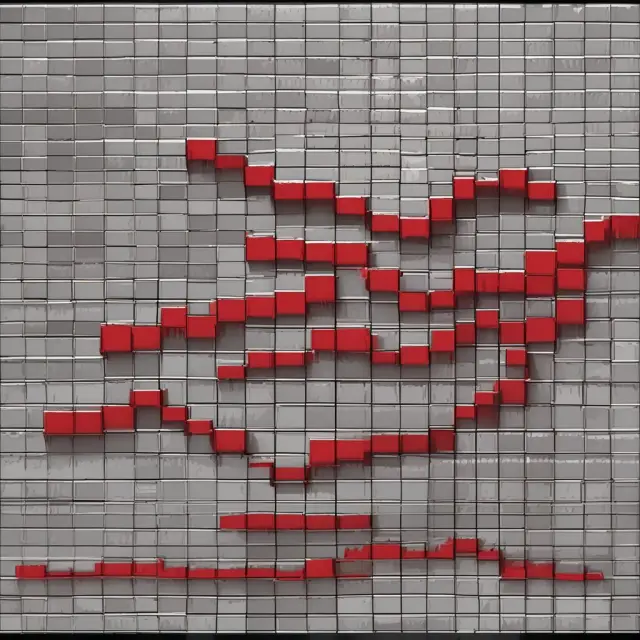
Understanding Support and Resistance Levels in Renko Charts
Renko charts are particularly effective at identifying support and resistance levels due to their noise-filtering nature. Since only price movements that exceed the box size are considered, significant trends can be easily discerned while insignificant fluctuations are ignored. By focusing on substantial price changes, Renko charts enable traders to identify key support and resistance areas more effectively than traditional chart types.
Support levels in a Renko chart represent prices at which the bullish trend is strong enough to push the price above the previous level despite multiple attempts by the bearish trend to push it lower. When an asset’s price repeatedly tests a support level without breaking down, it indicates that buyers are willing to absorb the selling pressure and hold their positions. This behavior can create a psychological floor for the asset, making it less likely to drop significantly further.
Conversely, resistance levels in a Renko chart represent prices at which the bearish trend is strong enough to push the price below the previous level despite attempts by buyers to push it higher. When an asset’s price repeatedly tests a resistance level without breaking above it, sellers are able to capitalize on the buying pressure and profit from selling the asset. This behavior can create a psychological ceiling for the asset, making it less likely to rise significantly further.
In the context of Renko charts, support levels appear as consecutive white or green bricks, while resistance levels are marked by consecutive red or black bricks. As the trend progresses and price movement continues to surpass the box size, these support and resistance levels can become increasingly reliable indicators for future price action.
For instance, a strong uptrend in an asset might be indicated by a series of white or green bricks, which could serve as potential entry points for long positions based on the assumption that price is likely to continue rising above these levels. Conversely, a downtrend might be signaled by a series of red or black bricks, which may indicate selling opportunities if the trend reverses and prices start to move back up towards the previous resistance levels.
It’s important to remember that Renko charts do not provide definitive predictions of future price movement but rather offer valuable insights into potential support and resistance levels based on historical trends. As such, it’s essential for traders to use these indicators in conjunction with other technical analysis tools and fundamental research to make informed decisions about their trades.
One caveat when using Renko charts for support and resistance analysis is the possibility of false signals caused by the chart’s filtering mechanism. Since only price movements that exceed the box size are shown, temporary trends or trend reversals that don’t sustain enough momentum to exceed the specified box size may not be captured in the chart. In such cases, it’s advisable for traders to supplement Renko charts with other indicators and analysis methods to help confirm potential support and resistance levels.
In conclusion, understanding support and resistance levels is crucial for any trader looking to make informed decisions about their investments. Renko charts provide a unique perspective on price movement by filtering out noise and emphasizing significant trends. This can make them an invaluable tool for identifying key support and resistance areas that can help inform trading strategies based on the prevailing trend direction.
Utilizing Renko Charts: Entering and Exiting Trades
A Renko chart offers unique advantages when it comes to entering and exiting trades. Since the chart only displays price movements larger than its box size, it effectively filters out the noise, providing a clearer view of trends. In this section, we will discuss how to use Renko charts for entering and exiting trades based on color changes.
First, let’s examine how a Renko chart generates signals for entry and exit points. When a new brick is formed in the opposite direction as the current trend, it indicates a potential shift in trend direction, providing a possible entry or exit opportunity. For instance, if an uptrend is currently in place, and a red (down) box appears after a series of white (up) boxes, traders might consider selling the asset. Conversely, if the overall trend is downwards with many red boxes, a green (up) brick could signal an opportunity to enter a long position as a pullback occurs.
Now, let’s discuss how traders may choose which signals to act upon based on confirmation and risk management principles. Some traders might prefer seeing two or more bricks in the opposite direction before deciding to take action. For example, they may wait for a trend-reversal pattern like three consecutive red (down) boxes before selling. Conversely, if a trader wants to enter a long position, they could wait for a green (up) brick after two or more red (down) boxes. This approach can help provide confirmation of the trend reversal before taking action and minimize the potential for whipsaw effects.
Another strategy is to use stop loss orders at fixed prices in conjunction with Renko charts. While the chart primarily follows the general price trend of an asset, there can be instances where false signals occur, causing a whipsaw effect. In such cases, stop loss orders will help limit potential losses. For instance, if a trader enters a short position after seeing a green brick signal but later witnesses another up brick, they might consider placing a stop loss order above the high of that green brick to minimize potential losses if the price reverses back up.
In conclusion, Renko charts offer unique advantages when it comes to entering and exiting trades by providing a clearer view of trends and filtering out noise. However, as with any charting tool or strategy, they should be used in conjunction with other forms of technical analysis and risk management principles for optimal results.
Limitations of Renko Charts: False Signals and Price Data Losses
While Renko charts provide significant benefits for identifying trends, they do come with some limitations, mainly related to false signals and the loss of price data. Renko charts construct bricks based solely on price movement, disregarding time intervals and highs/lows. This filtered approach helps to smooth out noise but also means that critical price information is overlooked. Let’s delve into these concerns and discuss strategies for mitigating them.
False Signals: Whipsaw Effect
One of the most significant limitations of Renko charts is their susceptibility to false signals, commonly referred to as the whipsaw effect. This phenomenon arises from the chart’s construction rules that rely solely on price movement, potentially producing incorrect interpretations of trend reversals. When a new brick appears, it may not always be an accurate reflection of the actual market situation. In fast-moving markets or during volatile periods, false signals can lead to missed opportunities or unnecessary trades.
Price Data Losses: Ignoring Highs and Lows
Another limitation is the loss of valuable price data when constructing Renko charts. Unlike traditional candlestick charts, Renko charts solely focus on closing prices, discarding highs and lows. While this may help to eliminate noise, it also eliminates crucial price information that can provide essential insights for traders. Highs and lows often hold significant meaning in the markets and should not be overlooked when analyzing a security’s price behavior.
Strategies for Mitigating Limitations
To address these concerns, some traders employ a combination of Renko charts alongside other technical analysis tools to minimize the impact of false signals and the loss of price data. Incorporating multiple indicators or chart types can provide a more comprehensive understanding of market trends and help validate Renko chart signals. Traders may also use stop loss orders at fixed prices, as opposed to relying solely on Renko chart signals for risk management.
Additionally, adopting various box sizes or using a moving average crossover strategy can improve the effectiveness of Renko charts in identifying trends and reducing false signals. By experimenting with different techniques, traders can customize their analysis approach according to specific market conditions and personal preferences.
In conclusion, while Renko charts provide significant value for trend identification and noise filtration, they do come with limitations related to false signals and the loss of price data. Utilizing a multi-dimensional approach by combining multiple chart types, indicators, and analysis tools can help mitigate these concerns and create a more robust trading strategy.

FAQs About Renko Charts: Answering Common Questions
What is a Renko chart, and how does it differ from traditional candlestick or bar charts?
A Renko chart is a type of Japanese technical analysis tool that visualizes price movement through bricks instead of standardized time intervals like most charts do. It is constructed by plotting ‘bricks’ at 45-degree angles to one another, based on the price movement rather than time. The primary difference from traditional candlestick or bar charts lies in their unique brick formation and filtering of minor price movements.
How can I choose an appropriate box size for my Renko chart?
Selecting a box size for your Renko chart depends on the volatility and nature of the asset you’re trading. For instance, you might use a $0.25 box size for stocks or a 50 pip box size for currencies. Alternatively, using an Average True Range (ATR) based box size can be effective, as it takes market volatility into account.
Why are Renko charts called ‘brick’ charts?
The name “Renko” is derived from the Japanese word for bricks since the chart appears like a series of price-based bricks stacked at 45-degree angles to each other.
How do I construct Renko bricks, and what determines their color?
To create a Renko brick, wait for the price to move beyond the top or bottom of the preceding brick by the box size amount. Once it does, place the new brick at a 45-degree angle (up or down) to the prior one. Bricks are typically colored white or green for upward movements and black or red for downward ones.
How do Renko charts help traders filter price noise?
Renko charts offer a clearer understanding of trends by filtering out smaller price movements below the box size, allowing traders to focus on major price swings. This can be particularly beneficial when analyzing volatile markets or long-term investment strategies.
How does the time axis work in Renko charts?
The time axis in Renko charts is not fixed; instead, it adapts to the rate at which bricks are formed based on the price movement and box size selected. This flexibility allows traders to view trends over different time frames with ease.
How do Renko charts compare to Heikin Ashi charts?
Both Renko and Heikin Ashi charts serve to highlight trends, but they differ in construction methods: Renko charts rely on price movement to create bricks at 45-degree angles, while Heikin Ashi charts calculate averages of open, high, low, and close prices for each time interval.
What support and resistance levels can be identified using Renko charts?
Renko charts are effective in revealing key support and resistance levels due to their ability to filter out smaller price movements, providing a cleaner view of the underlying trend.
How do traders use Renko charts for entering and exiting trades?
Traders typically enter or exit positions based on signals generated when the direction of the trend changes, causing the brick color to alternate. For example, a trader may sell when a red brick appears after a series of rising white ones, while buying when a white brick forms following a few red ones.
What are the potential limitations of using Renko charts?
Renko charts’ major disadvantage lies in their lack of detail and potential for false signals due to their box-based structure. This may not be suitable for all traders, as it could result in missed opportunities or late entry/exit points when significant price movements occur. Additionally, the use of only closing prices can lead to a delayed response to price reversals. Therefore, many traders employ stop loss orders at fixed prices while also monitoring other technical indicators alongside Renko charts to mitigate potential drawbacks.
 Next entry · No. 4,379Rent Control: Understanding This Contentious Housing Policy
See also
-
 No. 4,531
26 Jun 2025
20 min
Understanding the Relative Strength Index (RSI): An Essential Momentum Indicator for Technical Analysis
Financial Tools
No. 4,531
26 Jun 2025
20 min
Understanding the Relative Strength Index (RSI): An Essential Momentum Indicator for Technical Analysis
Financial Tools -
 No. 5,719
02 Oct 2025
20 min
Understanding Wide-Ranging Days in Finance: Predicting Trend Reversals with Technical Indicators
Finance Policy
No. 5,719
02 Oct 2025
20 min
Understanding Wide-Ranging Days in Finance: Predicting Trend Reversals with Technical Indicators
Finance Policy -
 No. 5,690
29 Sep 2025
21 min
Whisper Stocks: Understanding Rumors of Takeovers and Their Impact on Share Prices
Finance Policy
No. 5,690
29 Sep 2025
21 min
Whisper Stocks: Understanding Rumors of Takeovers and Their Impact on Share Prices
Finance Policy -
 No. 5,662
27 Sep 2025
20 min
The Weekend Effect in Finance: Understanding This Persistent Market Phenomenon
Finance Policy
No. 5,662
27 Sep 2025
20 min
The Weekend Effect in Finance: Understanding This Persistent Market Phenomenon
Finance Policy -
 No. 5,646
26 Sep 2025
21 min
Understanding Weak Shorts in Finance: Risks, Benefits, Strategies, and Trading Tactics
Finance Policy
No. 5,646
26 Sep 2025
21 min
Understanding Weak Shorts in Finance: Risks, Benefits, Strategies, and Trading Tactics
Finance Policy -
 No. 5,522
16 Sep 2025
20 min
Understanding Volatility Swaps: A Pure Play on Asset Volatility
Finance Policy
No. 5,522
16 Sep 2025
20 min
Understanding Volatility Swaps: A Pure Play on Asset Volatility
Finance Policy