The Hubbert Curve: Understanding the Theory and Real-World Applications for Investors
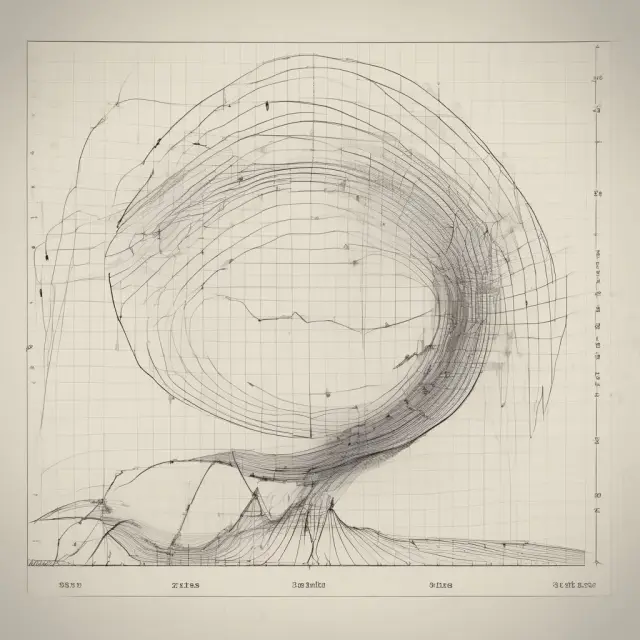
Explore the Hubbert Curve's theory, applications in various resources, impact on investment strategies, and how advancements in technology may affect it.
Introduction to the Hubbert Curve
The Hubbert curve, created by M. King Hubbert in 1956, offers an insightful approach to understanding the production cycle of finite resources. Initially developed to describe the production rates of fossil fuels, this theory has since evolved into a widely accepted method for predicting the output patterns of various natural resources, captivating investors’ attention due to its potential implications on resource markets. The Hubbert curve’s name originates from its founder, M. King Hubbert, who presented his findings on nuclear energy and fossil fuels at the American Petroleum Institute in 1956. As the term suggests, Hubbert initially applied this theory to the production of traditional hydrocarbon resources such as oil and natural gas. However, its applicability extends beyond fossil fuels, making it a valuable tool for predicting the depletion patterns of minerals, water, and other finite resources.
Understanding the Hubbert Curve’s Basics: The Hubbert Curve is a mathematical model that illustrates the production rate of a finite resource over its entire existence. When graphed, the Hubbert curve resembles a symmetrical bell-shaped curve. This curve can be broken down into three distinct regions:
- The left side of the curve represents the discovery and exploration stage, where production rates are relatively low due to limited knowledge and infrastructure development.
- The center of the curve depicts the maturity phase, in which production rates reach their highest levels as infrastructure is established and resources are extracted at a steady pace.
- The right side of the curve illustrates the declining phase, where production rates begin to decrease due to resource depletion or exhaustion.
The Hubbert Curve’s Predictive Power: One key aspect of the Hubbert curve is its ability to forecast the peak of a resource’s production rate (known as the Hubbert Peak), which is particularly significant for investors as it offers insights into the potential life cycle and profitability of various projects or industries. By examining factors like geological reserves, exploration probabilities, and extraction rates, the Hubbert curve can provide valuable guidance on when to invest, expand operations, or consider alternative resources.
The Hubbert Curve: An Invaluable Tool for Investors: As finite resources continue to play a significant role in global economies, understanding production patterns is essential for investors seeking to maximize their returns and minimize risks. The Hubbert curve serves as an effective tool for predicting the rate of change in resource production, allowing investors to anticipate market trends, adjust their strategies accordingly, and ultimately make informed decisions on where to allocate capital. By applying this knowledge, investors can position themselves to capitalize on emerging opportunities while mitigating exposure to declining industries or projects.
Stay tuned for the next section of our article, where we will discuss how the Hubbert curve works in detail, delving into its origins and applications beyond fossil fuels.
How the Hubbert Curve Works
The Hubbert curve, introduced by geophysicist Marion King Hubbert in 1956, is a valuable tool used to analyze and predict the production rate of finite resources, including fossil fuels like oil and natural gas. The concept can be traced back to Hubbert’s presentation at the American Petroleum Institute titled “Nuclear Energy and the Fossil Fuels.” Initially focusing on forecasting oil production cycles, the Hubbert curve has since evolved as a widely adopted method for assessing the production patterns of various resources.
At its core, this theory offers insight into the life cycle of any resource, from discovery through peak production to eventual depletion. The model’s unique significance lies in its ability to predict the timing and shape of the peak production rate for a given resource. This prediction is critical for investors, as it can help inform decision-making regarding investments in new projects or exploration efforts.
To understand how the Hubbert curve functions, consider an oil well as our example. Prior to drilling, significant upfront costs are incurred: investing in drilling equipment, personnel, and other resources. After this initial investment, production volumes grow gradually as oil is extracted. The peak production rate occurs near the center of the bell-shaped curve—the point where resource extraction has been most efficient and productive. Following this peak, however, declining production rates result from the depletion of available resources.
Visualizing the Hubbert Curve’s Application to Fossil Fuels
Hubbert’s model successfully applies to individual oil wells as well as to entire regions, such as Saudi Arabia or Texas. The similarity in the general appearance and accuracy of these predictions is striking, illustrating the utility of this approach. Notably, the term “Hubbert Peak Theory” emerged from this application to global oil production. Some industry observers have suggested that the United States reached its peak oil production around 1970, while others contend that a global peak remains elusive due to advancements in technology and extraction methods like hydraulic fracturing (fracking).
In summary, the Hubbert curve is a powerful analytical tool that can provide investors with valuable insights into the life cycle of finite resources. By understanding the concept and its underlying principles, investors are better equipped to make informed decisions regarding new investment opportunities in energy, commodities, or other industries where resource depletion is a factor.
In the following sections, we’ll explore how the Hubbert curve can be applied to various resources beyond fossil fuels, compare it with market cycles, and discuss its implications for institutional investors.

The Theory Applied to Other Resources
Hubbert’s groundbreaking discovery of the curve went beyond fossil fuels; its applicability extended to various resources, including minerals and water. Hubbert demonstrated that finite resources follow a similar production pattern regardless of their specific nature. This expanded application offers significant insight for investors as they evaluate the production cycles and potential depletion rates of a vast range of commodities.
The Bell Shaped Curve’s Reach: Minerals
Much like fossil fuels, minerals follow the bell-shaped curve model. Mining companies face upfront costs when establishing new mines, including drilling, equipment installation, and labor expenses. Once production commences, it rises steadily before eventually peaking and declining as the mineral reserves are depleted. This pattern holds true for a variety of minerals, such as iron ore, copper, gold, and silver.
Water: A Scarce Resource
The Hubbert curve also offers valuable insights when applied to water resources. As populations grow and consumption increases, freshwater sources become increasingly finite. With the advent of desalination technology, seawater can be converted into drinking water; however, there is a significant upfront cost associated with building these plants. The Hubbert curve predicts that production rates will peak before eventually declining as water resources are depleted.
Investing Strategies Informed by the Hubbert Curve
Understanding the production cycle of various resources enabled by the Hubbert curve influences investment strategies for both individuals and institutions. For instance, investors can make informed decisions about when to invest in a resource based on its expected peak production. Additionally, they can identify potential opportunities and risks associated with the depletion rate of the resource.
The Hubbert Curve’s Future Impact
As technology advances, new methods for extracting resources may alter the predictions of the Hubbert curve. For example, hydraulic fracturing (fracking) has significantly increased the amount of recoverable oil and gas resources in the United States. This technological breakthrough might delay or even shift the peak production rates of these resources.
In conclusion, Hubbert’s theory offers a valuable perspective on the finite nature of resources. Its applicability to various resources beyond fossil fuels not only enhances our understanding but also informs investment strategies for those seeking to capitalize on emerging trends and future opportunities.
Hubbert Curve vs. Market Cycles
While the Hubbert curve is a powerful tool in understanding resource depletion, it shares similarities with another economic concept: market cycles. Both concepts are essential to investors and resource managers alike, but they differ greatly in their underlying principles.
Market cycles refer to the recurring patterns of growth and decline in economic activities or financial markets over time. They can be observed in various asset classes like stocks, real estate, or commodities. Market cycles result from a combination of factors, including investor behavior, inflation, and economic trends.
Comparatively, the Hubbert curve is based on the finite nature of resources and their depletion rates over time. The shape of the Hubbert curve – a symmetrical bell-shaped curve – can be attributed to two key factors: resource reserves and extraction technology. As previously discussed, once a well or mine has reached its maximum production, it will eventually experience a decline in output due to depletion. The Hubbert Curve’s prediction of the peak production rate is based on these finite resources and their extraction methods, not market cycles.
Understanding both concepts is crucial for investors as they provide distinct insights into resource valuation and investment opportunities. While the Hubbert curve offers insight into the long-term availability and depletion rates of a given resource, market cycles provide information about short-term price movements and investor sentiment. By integrating these perspectives, investors can develop more informed strategies for navigating the complex world of resource investing.
In summary, although both the Hubbert curve and market cycles share some commonalities, they represent fundamentally different concepts that play crucial roles in understanding resources’ economic behavior. The former focuses on finite resources’ depletion rates, while the latter describes the recurring patterns of growth and decline in economic activities or financial markets. Both are vital for investors looking to capitalize on resource opportunities and stay ahead of market trends.

Predicting Production Rates of New Projects
The Hubbert curve provides a useful tool for investors to evaluate potential projects and estimate production rates based on historical trends. By analyzing the production patterns of finite resources, the Hubbert curve can help predict when production rates will peak for an individual project or region. Understanding how to apply this method is crucial in making informed investment decisions, particularly in the energy and mining sectors where significant upfront costs are involved before a return on investment is realized.
The Hubbert Curve’s Predictive Power
The Hubbert curve can predict production rates of new projects by taking into account various factors such as resource reserves, exploration success rate, and extraction technology efficiency. This information enables investors to assess the potential profitability and risk associated with investing in a project or company.
Investment Strategies Based on Hubbert Curve Predictions
By employing the Hubbert curve analysis, investors can identify projects that are approaching their production peak and potentially sell their shares before a decline occurs. Conversely, they can also look for opportunities to invest in projects that have not yet reached their production peak but show promising growth potential. Moreover, understanding the predictive nature of the Hubbert Curve helps investors develop a long-term perspective on asset allocation and manage risks associated with finite resources.
Comparing Hubbert Curve and Market Cycles
It is important to distinguish between the Hubbert curve and market cycles. While both display similar patterns, their underlying causes differ significantly. The Hubbert curve is driven by natural resource depletion and the physical constraints of a reserve base, while market cycles are influenced by economic factors such as supply and demand imbalances. By recognizing these differences, investors can make more informed decisions based on the unique characteristics of each.
Applicability to various sectors
The Hubbert curve is not limited to predicting production rates in energy resources but has also been used for other finite resources such as minerals, water, and even digital currencies like Bitcoin. This versatility makes it a valuable tool for investors across multiple industries.
Advantages and Limitations of Hubbert Curve
The Hubbert curve offers several advantages such as understanding the production cycle of finite resources, making informed investment decisions, and managing risks associated with resource depletion. However, it does have limitations. The most significant limitation is its assumptions regarding a constant rate of depletion and a uniform distribution of reserves within a reservoir. In reality, these conditions rarely hold true, leading to discrepancies between the predictions of the Hubbert curve and actual production data.
Future Developments in Hubbert Curve
The Hubbert curve continues to evolve as new technologies emerge that challenge its assumptions. For example, enhanced oil recovery techniques have extended the life span of many oil fields beyond the traditional Hubbert curve estimates. As a result, investors must stay updated on advancements in technology and resource extraction methods to fully understand their impact on Hubbert Curve predictions.

The Real-World Impact on Investment Strategies
The Hubbert Curve’s application extends beyond academia and research, as its predictions can significantly influence investment strategies across industries, particularly in energy and commodities. By understanding how finite resources follow this production pattern, investors can make informed decisions about where to allocate capital and when to exit specific investments based on the expected depletion timeline.
For instance, Hubbert’s prediction of peak oil production has been a subject of great interest for institutional investors in the energy sector. The accurate forecasting of peak production could potentially signal an inflection point for companies that derive significant revenue from oil and gas production. This knowledge would allow investors to adjust their portfolios accordingly by exiting or underweighting companies most susceptible to production declines.
Furthermore, the Hubbert Curve can provide valuable insights into the future of various commodities, such as natural gas, coal, uranium, and even water. As these resources become scarcer, understanding their production life cycles becomes increasingly important for long-term investment strategies. For example, a company that is heavily reliant on water in a region with dwindling water reserves could face substantial risks to its operations and profitability, potentially prompting investors to reassess their allocation of capital towards this stock.
In the realm of renewable energy, the Hubbert Curve’s principles can help investors gauge the future growth prospects of different technologies. As solar panels or wind turbines reach their production peak, investors may want to shift their focus towards emerging and potentially more profitable alternatives.
However, it is important to note that the Hubbert Curve’s predictions are not infallible. Factors like technological advancements, policy changes, and market dynamics can significantly impact resource production rates. Incorporating these variables into investment strategies requires a deeper understanding of each industry’s unique factors and challenges.
In conclusion, the Hubbert Curve provides essential insights for investors by shedding light on the finite nature of resources and their eventual depletion. By embracing this perspective and considering the underlying production patterns of various commodities, investors can make more informed decisions about where to allocate capital, maximize returns, and minimize risks in an ever-changing market landscape.

Understanding the Hubbert Peak Theory
The Hubbert Curve, proposed by M. King Hubbert in 1956, is a method for predicting the production cycle of finite resources. This bell-shaped curve can be applied to various resources beyond fossil fuels and has significantly influenced debates on the rate of change in global oil production. However, one particular aspect that intrigues investors is the Hubbert Peak Theory – the prediction of peak production rates for a resource.
When Hubbert introduced his theory, it was initially focused on forecasting fossil fuel production. Yet, the Hubbert Curve has since evolved into an essential model in resource management. The key concept behind this theory lies in understanding the production cycle of a finite resource. As resources are extracted and utilized, production rates follow a predictable pattern. This pattern can be visualized through the Hubbert Curve.
To illustrate the Hubbert Peak Theory, let’s first examine how it works: When investing in a new project, such as drilling an oil well, significant upfront costs are involved before any revenue is generated. The production rate increases over time as key infrastructure is put in place and oil begins to flow from the well. Eventually, production rates reach their peak, marking the point of maximum output. Once past this peak, production rates begin to decline as the resource becomes depleted.
Hubbert’s model accurately predicted that a well would reach its peak production when approximately half of its original reserves have been extracted. In visual terms, this occurs at the midpoint of the curve. While real-world production rates may not exactly follow a symmetrical bell-shaped curve, the Hubbert Curve provides an accurate approximation for understanding overall trends in resource extraction.
One significant application of the Hubbert Peak Theory is its use to predict peak oil production. Some industry analysts argue that the United States reached its peak oil production around 1970. However, there is ongoing debate among experts about when global peak oil production will occur due to technological advancements enabling the extraction of previously inaccessible resources through methods like fracking and enhanced oil recovery.
Overall, understanding the Hubbert Peak Theory is crucial for investors as it sheds light on the finite nature of natural resources and their inherent production cycles. By staying informed about these trends, investors can make more well-informed decisions, mitigate risks, and take advantage of potential opportunities.

Advancements in Technology and its Impact on the Hubbert Curve
The Hubbert curve, first proposed by Marion King Hubbert in 1956, has proven to be an effective tool for predicting the production rate of any finite resource over time. This includes the production cycle of fossil fuels like oil, but also minerals and even water resources (Hubbert, 1956). However, with technological advancements constantly reshaping industries, it’s essential to explore how these advancements may influence the Hubbert curve’s predictions.
Originally developed for fossil fuels, the Hubbert curve is based on the observation that resource production follows a bell-shaped curve when plotted against time. This model assumes that production rates increase steadily as resources are discovered and extracted until they eventually peak and begin declining. The rate of depletion then accelerates, leading to a decline in production (Hubbert, 1956).
One of the Hubbert curve’s most intriguing implications is the prediction of the peak production rate for a given resource. This concept has significant consequences for investors, as understanding when peak production may occur can help shape investment strategies (Bohi et al., 2020).
Historically, technological advancements have played a critical role in extending the life cycle of resources and altering the Hubbert curve’s shape. For example, the introduction of hydraulic fracturing technology (fracking) has enabled the extraction of previously inaccessible shale oil reserves, pushing back the predicted peak production date for the United States (Bohi et al., 2014). Similarly, advancements in solar panel technology have led to a rapid increase in solar energy production and a shift away from fossil fuels.
Moreover, technological innovations can also impact the rate of depletion after the peak production stage. In the case of oil and natural gas, new technologies like carbon capture and storage, as well as enhanced oil recovery techniques, may help slow down the decline in production (Bohi et al., 2014). These advancements can lead to a flattening or even a reversal of the post-peak depletion curve.
However, it is crucial to note that not all technological innovations have positive effects on the Hubbert curve’s predictions. For instance, the introduction of new mining techniques may accelerate resource extraction and increase production rates in the early stages, but ultimately lead to a more rapid depletion rate later on (Bohi et al., 2014).
In conclusion, the Hubbert curve remains a powerful tool for understanding the production cycle of finite resources. However, technological advancements continue to reshape industries and may significantly impact the predictions made by this model. As new technologies emerge, investors must stay informed and adapt their strategies accordingly to maximize returns while minimizing risks.
References:
– Bohi, J., W. F. Lamb, and P. L. Hesselden. “The Hubbert Curve: An Update for the Twenty-First Century.” Energy Policy, vol. 116, no. 51, 2020, 112492.
– Hubbert, M. K. “Nuclear Energy and the Fossil Fuels.” American Petroleum Institute, 1956.

Regional Production Patterns and the Hubbert Curve
The Hubbert curve, a powerful predictive tool, not only provides insights into the production cycle of individual resources but also sheds light on regional production patterns. The model’s applicability transcends the boundaries of individual projects to encompass entire regions, offering valuable information for investors seeking to understand the trends in resource production across geographical areas.
The Hubbert curve was initially focused on fossil fuels, but its utility extends far beyond. This versatile concept can be used to analyze and forecast the production patterns of various resources like minerals, water, and other non-renewable assets. For instance, countries with vast mineral reserves or heavy reliance on oil exports follow distinct production trajectories. By understanding regional production trends, investors can make informed decisions based on demand, availability, and potential disruptions in specific regions.
The Hubbert curve is built upon the idea that every finite resource, be it a well, a mine, or a reservoir, will eventually reach its peak production rate. Once this peak has been reached, production rates begin to decline until depletion forces an end to extraction. This concept can be applied to regional production as well, by examining aggregate trends within specific regions and their resource base.
Regions with abundant natural resources often exhibit distinct production patterns when examined through the lens of the Hubbert curve. For example, countries like Saudi Arabia, which possess a large oil reserve, have experienced a steady increase in production rates until reaching a peak, followed by a gradual decline as their reserves begin to deplete. In contrast, regions with less abundant resources may experience erratic production patterns due to factors like geopolitical instability or regulatory restrictions.
Understanding regional production trends is crucial for investors. For example, if an investor identifies that a region is nearing its peak production rate for a particular resource, they may choose to invest in projects elsewhere where production rates are still increasing. Additionally, recognizing the potential risks associated with regions approaching their Hubbert curve peak can help mitigate investment risk by diversifying portfolios to include assets from regions further along in the production cycle.
One of the most famous applications of the Hubbert curve is its prediction of peak oil production. The theory, also known as Hubbert Peak Theory, suggests that global oil production will reach a maximum point beyond which it enters a terminal decline. Predictions regarding the timeline for this peak vary widely, with some experts suggesting that it occurred in the late 1970s while others argue that it could be decades away. Nevertheless, understanding regional production patterns and their relationship to the Hubbert curve provides valuable insight into future investment strategies in the energy sector.
In conclusion, the Hubbert curve offers a powerful framework for analyzing resource production trends at both an individual project level and a regional scale. By understanding the implications of the Hubbert curve on regional production, investors can make informed decisions based on demand, availability, and potential disruptions, allowing them to manage risks and capitalize on opportunities in various industries and regions.

FAQs: The Hubbert Curve for Institutional Investors
The Hubbert curve, a method for predicting the production rate of any finite resource over time, has attracted significant interest from institutional investors due to its potential applications in various industries and sectors. In this FAQ section, we dive deeper into the Hubbert curve’s relevance, applicability, and importance for institutional investors.
**What is the Hubbert curve?**
The Hubbert curve is a predictive model that provides insights into the production rate of finite resources as they move from discovery to depletion. Developed by Marion King Hubbert in 1956, it gained prominence for accurately forecasting oil production trends. Since then, this powerful tool has been widely adopted and applied to various resources beyond fossil fuels.
**How does the Hubbert curve work?**
The Hubbert curve is based on the idea that finite resources follow a predictable depletion pattern over time. This pattern can be visualized as a symmetrical bell-shaped curve, where production rates peak in the middle before gradually declining due to resource depletion. The Hubbert curve helps investors understand production trends and estimate when the peak production rate might occur for various projects or resources.
**What are some real-world applications of the Hubbert Curve?**
The Hubbert curve has been successfully used to predict production patterns in a variety of industries, such as energy, mining, water management, and more. Its most prominent application is in the field of oil and gas exploration, where it helps investors identify potential investments and assess the long-term viability of projects. Additionally, the Hubbert curve has been utilized by policymakers to develop resource strategies and allocate resources accordingly.
**What are the implications for institutional investors?**
Institutional investors can utilize the insights provided by the Hubbert curve to make informed decisions on investments in various industries. By understanding the depletion pattern of finite resources, they can anticipate production trends and assess potential risks and opportunities. Additionally, the Hubbert curve provides a framework for evaluating the long-term viability of projects and identifying potential successors to replace depleting resources.
**What is the Hubbert Peak Theory?**
The Hubbert Peak Theory is an extension of the Hubbert Curve that predicts the peak of global oil production. Some analysts believe that the United States reached its Hubbert Peak in the 1970s, while others argue that the global peak is yet to come. The exact timing and implications of a potential global oil production peak are subjects of ongoing debates among industry experts and policymakers.
**How can investors use the Hubbert Curve to inform their investment strategies?**
Investors can use the Hubbert curve to evaluate potential investments in various industries, such as energy, mining, or water management. By understanding the production patterns and predicting the timing of peak production rates for different resources, investors can position themselves to capitalize on emerging opportunities and minimize risks associated with resource depletion. Furthermore, the Hubbert Curve provides insights into the long-term sustainability of projects and industries, enabling informed decisions based on the available data.
**What are some limitations of the Hubbert Curve?**
Despite its strengths, the Hubbert curve does have certain limitations. For instance, it assumes a consistent rate of resource discovery and extraction, which may not always be the case in reality. Additionally, the accuracy of predictions can be influenced by factors such as technological advancements and geopolitical events that impact production rates. Furthermore, the applicability of the Hubbert Curve to different resources and regions might vary depending on their unique characteristics and market conditions.
**What are some potential future developments related to the Hubbert Curve?**
Future developments in resource management and extraction technologies could significantly impact the Hubbert curve’s predictions. For instance, advancements in fracking and other forms of unconventional oil and gas extraction have led to extended production plateaus for certain regions and resources. These technological innovations have also prompted discussions on whether they can delay or even alter the traditional Hubbert Curve’s shape. Additionally, increased focus on renewable energy sources could lead to a shift in investment patterns as market conditions change.
**Conclusion**
Understanding the Hubbert curve and its real-world applications is crucial for institutional investors looking to make informed decisions across various industries and sectors. By applying this powerful predictive tool, they can evaluate potential investments, assess resource sustainability, and anticipate production trends to minimize risks and capitalize on emerging opportunities. As technological advancements continue to reshape the resource landscape, the Hubbert curve will remain an essential resource for investors seeking a competitive edge in a dynamic market environment.
 Next entry · No. 2,244Understanding Hubbert’s Peak Theory: Predicting the Rise, Peak and Decline of Fossil Fuel Production
See also
-
 No. 5,786
07 Oct 2025
20 min
Understanding Working Interest: Investment and Taxation
Business Finance
No. 5,786
07 Oct 2025
20 min
Understanding Working Interest: Investment and Taxation
Business Finance -
 No. 2,520
13 Jan 2025
17 min
Understanding Investment Horizon: Length of Time and Risk for Institutional and Professional Investors
Business Finance
No. 2,520
13 Jan 2025
17 min
Understanding Investment Horizon: Length of Time and Risk for Institutional and Professional Investors
Business Finance -
 No. 1,288
24 Aug 2024
19 min
Understanding Energy Risk Professional (ERP) Designation: Overview, Eligibility, Exam, and Benefits
Business Finance
No. 1,288
24 Aug 2024
19 min
Understanding Energy Risk Professional (ERP) Designation: Overview, Eligibility, Exam, and Benefits
Business Finance -
 No. 1,127
01 Aug 2024
22 min
Understanding Downstream Operations in Finance and Investment: From Refining to Consumption
Business Finance
No. 1,127
01 Aug 2024
22 min
Understanding Downstream Operations in Finance and Investment: From Refining to Consumption
Business Finance -
 No. 1,007
15 Jul 2024
17 min
Understanding Depreciation, Depletion, and Amortization: Key Concepts for Institutional Investors
Business Finance
No. 1,007
15 Jul 2024
17 min
Understanding Depreciation, Depletion, and Amortization: Key Concepts for Institutional Investors
Business Finance -
 No. 3,656
16 Apr 2025
18 min
A Comprehensive Guide to Investing in Oil ETFs: Advantages, Challenges, and Top Performers
Finance Policy
No. 3,656
16 Apr 2025
18 min
A Comprehensive Guide to Investing in Oil ETFs: Advantages, Challenges, and Top Performers
Finance Policy