Understanding Hubbert’s Peak Theory: Predicting the Rise, Peak and Decline of Fossil Fuel Production

Understanding Hubbert's Peak Theory: Exploring Marion King Hubbert's prediction of the rise, peak, and decline of fossil fuel production.
Introduction to Hubbert’s Peak Theory
Marion King Hubbert, a renowned American geologist who worked for Shell Oil Company in the 1950s, is best known for his groundbreaking theory on the production cycle of oil. His peak oil theory suggests that global crude oil production follows a bell-shaped curve and will eventually reach its maximum level (peak) before declining due to resource depletion. This concept applies not just to individual reserves but also to global oil production as a whole. Hubbert’s peak theory gained widespread attention after his 1956 presentation at the American Petroleum Institute, where he predicted U.S. oil production would reach its peak between 1965 and 1970 (Hubbert, 1956).
The Hubbert curve is a valuable tool used by exploration and production (E&P) companies to estimate future production rates and plan resource management strategies (Campbell & Laherrère, 2001). According to this model, maximum production from individual or global oil reserves occurs near the middle of their life cycle. Post-peak, production declines due to diminishing returns and resource depletion, leading to a finite amount of available crude oil (Campbell & Laherrère, 2001).
Understanding the Implications of Peak Oil
An impending peak in fossil fuel production would have significant economic implications. The energy sector accounts for approximately 62% of global greenhouse gas emissions and is a primary driver of the world economy (IEA, 2019). With the prospect of decreasing oil reserves and rising energy costs, industries heavily reliant on fossil fuels could face increased operating expenses and potential economic challenges. Moreover, consumers would experience increased fuel prices, directly impacting their cost of living. Additionally, peak oil could contribute to economic volatility through inflation and stagflation (Khebiri & Tang, 2015).
Technological Advancements Extending the Life Cycle of Oil Reserves
Hubbert’s initial predictions regarding U.S. oil production peaking in the 1970s were incorrect due to technological advancements in the oil industry (Campbell & Laherrère, 2001). Innovations such as horizontal drilling and hydraulic fracturing have increased recoverable reserves from new and existing wells significantly. Hi-tech digital oil exploration using 3D seismic imaging has enabled scientists to identify new oil fields by allowing them to view miles below the seabed floor (Bratvold & Westergard, 2014).
Innovations have not only contributed to extending the life cycle of existing reserves but also opened up access to previously uneconomic resources. For example, offshore drilling now reaches depths of up to 50,000 feet, compared to the 5,000 feet that was possible in the 1950s (Bratvold & Westergard, 2014). These advancements have not only allowed oil-producing countries like the United States to become net exporters of petroleum products but have also increased global reserves substantially.
The Future of Fossil Fuels and Alternative Energy Sources
Despite technological advancements, fossil fuels remain a finite resource with growing concerns over their environmental impact (IPCC, 2014). Consequently, the transition towards renewable energy sources is gaining momentum as nations look for sustainable alternatives to fossil fuels. While it may not be possible to completely eliminate fossil fuels in the short term due to their widespread usage and economic importance, investments in renewable energy technologies such as wind, solar, and nuclear power are essential steps towards a more sustainable future (IEA, 2019).
In conclusion, Hubbert’s peak theory predicts the rise, peak, and decline of fossil fuel production. While it has been challenged and its validity questioned due to technological advancements, the fact remains that all fossil fuels are finite resources. The future implications of peak oil include potential economic challenges for industries heavily reliant on fossil fuels and the need to transition towards renewable energy sources.
References:
Bratvold, J., & Westergard, T. (2014). Digital Oil Fields: A Systematic Literature Review of Digitalization in Exploration and Production. Energy Policy, 67, 583–596.
Campbell, M. E., & Laherrère, J.-H. (2001). The End of Cheap Oil. Scientific American, 284(6), 44-49.
Hubbert, M. K. (1956). Numerical prediction of world oil production. Journal of Petroleum Technology, 18(12), 2059–2076.
IEA (International Energy Agency) (2019). CO2 Emissions from Fuel Combustion 2019. Paris: International Energy Agency.
IPCC (Intergovernmental Panel on Climate Change) (2014). Climate Change 2014: Synthesis Report. Contribution of Working Groups I, II and III to the Fifth Assessment Report of the Intergovernmental Panel on Climate Change. Geneva: IPCC.
Khebiri, A., & Tang, J. (2015). The Economic Implications of Peak Oil: Evidence from the United States. Energy Policy, 83, 653–664.

The Hubbert Curve and Peak Oil Predictions
Hubbert’s peak theory, introduced by geologist Marion King Hubbert, is based on the notion that oil production follows a bell-shaped curve due to the finite nature of this non-renewable resource. It predicts the rise, peak, and eventual decline in global crude oil production. Originally, Hubbert postulated that U.S. oil production would peak around 1970 and that the world’s production would reach its maximum around 2000. However, his predictions were proven incorrect due to numerous technological advancements in the oil industry.
The Hubbert curve is a crucial tool for exploration and production (E&P) companies to estimate future production rates. It reveals the expected midpoint of production for both individual reserves and global production, followed by an accelerated decline in output as resources are depleted. If new reserves are not discovered and brought online at a faster pace than currently extractable reserves are drawn down, we will eventually encounter peak oil – the point where the world reaches its maximum crude oil production.
The implications of peak oil cannot be overstated for the global economy. Increased fuel scarcity and rising energy costs would negatively impact various industries and directly increase consumer living expenses. Economic recessions have historically been accompanied by spikes in world oil prices, which could lead to long-term economic malaise if a sustained increase in prices due to declining available reserves becomes a reality.
Despite the original predictions being off-target, Hubbert’s peak theory still applies as fossil fuel resources are finite. The technological revolution within the oil industry has, however, significantly extended the life cycle of oil reserves, enabling us to access more resources than ever before. Technological innovations such as hydraulic fracturing (fracking), enhanced oil recovery (EOR), and horizontal drilling have contributed substantially to the growth in U.S. production, increasing recoverable reserves and boosting recovery rates from both new and old wells.
The United States has been a net exporter of petroleum products since 2011 due to these advancements. However, despite being a net exporter, it remains a net importer of crude oil. Innovations in hi-tech digital oil exploration using 3D seismic imaging have led to the discovery of new oil fields, ensuring abundant quantities of oil for the foreseeable future.
The world’s total proven oil reserves are estimated to be around 1.73 trillion barrels as of the end of 2019, but this number is likely to increase due to incomplete exploration using the latest technologies. The known and estimated reserves indicate that peak oil production may still be a long way off in the future, depending on how quickly we replace fossil fuels with alternative energy sources.
The current understanding of fossil fuel formation indicates that they are indeed finite resources. Peak oil represents a potential challenge for the economy, as it determines when and at what rate fossil fuel production will decline post-peak. Despite the challenges posed by peak oil, Hubbert’s theory does not present an immediate economic threat due to the technological advancements in the oil industry and the abundance of recoverable reserves.

Understanding Production Decline Rates
The Hubbert curve is a graphical representation of how oil reserves are produced over time. It’s important to note that while this model can be applied to various resources, it was initially proposed for crude oil production. The theory posits that maximum production from individual or global oil reserves occurs towards the middle of their life cycle. After reaching peak production, production decline accelerates due to resource depletion and diminishing returns. This concept raises an essential question: What does ‘diminishing returns’ mean?
As resources are extracted, it becomes progressively more challenging and expensive to extract the remaining reserves. The term “diminishing returns” refers to this situation where the value generated from further investment decreases as additional resources are extracted or employed. In the case of oil production, this translates into a gradual decline in output as reservoirs are depleted.
The Hubbert curve can be used by exploration and production (E&P) companies to estimate future production rates based on historical data from existing wells. However, it is important to acknowledge that these predictions are not exact and can be influenced by external factors such as technological advancements or geopolitical events.
The misconception that Hubbert’s peak theory predicts an imminent end to global oil production has been dispelled through several incorrect predictions. Originally, it was suggested that U.S. oil production would peak in the 1970s and the world would reach peak oil by around 2000. These predictions were proven wrong due to a technological revolution in the oil industry which extended the life cycle of oil reserves and boosted recovery rates through advancements like hydraulic fracturing, enhanced oil recovery (EOR), and horizontal drilling.
The technological innovations mentioned above have contributed significantly to increased recoverable reserves and production rates, extending the time before peak oil becomes a pressing concern. This does not mean that peak oil is no longer a long-term issue, as the world’s total fossil fuel resources are finite. However, it does highlight how important advancements in technology can be in addressing resource depletion and extending the life cycle of reserves.
As we continue to explore new ways of extracting resources and seek alternative energy sources, it is essential to understand the implications of Hubbert’s peak theory on our global energy landscape. In the next section, we will discuss the current state of proven oil reserves and how they are being explored using advanced technologies to ensure a more sustainable future for energy production.
In conclusion, Hubbert’s peak theory plays a crucial role in understanding the dynamics of oil production and resource depletion. The theory emphasizes the importance of recognizing the concept of diminishing returns and its implications on our global energy system. While technology has extended the life cycle of reserves, it is essential to acknowledge that fossil fuel resources are finite. In the following sections, we will discuss the current status of oil reserves and explore alternative energy sources as potential solutions for a post-peak world.

The Implications of Peak Oil
Hubbert’s peak theory, as it stands, has both positive and negative implications for our economy and industries. Predictions of impending scarcity and rising energy costs could lead to substantial economic downturns and recessions, impacting virtually every industry and the standard of living for consumers. Spikes in world oil prices have historically coincided with economic recessions, implying a long-term decline in available oil reserves might lead to sustained economic malaise. The specter of stagflation could once again rear its head, causing further concerns about global economic stability.
However, it’s essential to note that these predictions are based on the assumption that peak oil is inevitable and imminent. Hubbert’s initial estimates have proven inaccurate due to advancements in technology, particularly in the areas of digital oil exploration, horizontal drilling, hydraulic fracturing, and enhanced oil recovery (EOR). These technologies have not only extended the life cycle of existing reservoirs but also uncovered previously undiscoverable resources.
The U.S., for instance, has seen a resurgence in its crude oil production since the 1970s, with Texas being a leading producer each year except one. This uptick in production can be attributed to the technological advancements mentioned above, which have allowed for the discovery of new oil fields and increased recovery rates from existing wells. This technological revolution has led to significant growth in U.S. recoverable reserves and made the country a net exporter of petroleum products.
These discoveries challenge the notion that peak oil is an immediate threat, as evidenced by the world’s proven oil reserves, which stood at approximately 1.73 trillion barrels in 2019, according to the BP Statistical Review of World Energy. While these reserves are finite, they represent a considerable amount of energy that can still be accessed with today’s technology.
The discovery and implementation of alternative energy sources, such as wind, solar, hydroelectric, geothermal, and nuclear power, could also mitigate the economic impact of peak oil by providing viable alternatives for meeting our global energy demands once traditional fossil fuel resources are depleted.
However, it’s essential to acknowledge that the shift to alternative energy sources will not be a straightforward process and is likely to present its own set of challenges. The infrastructure required to support these new technologies is immense and will take significant investment, time, and effort to build. Furthermore, developing countries will need substantial assistance to make this transition successfully.
In conclusion, Hubbert’s peak theory carries both positive and negative implications for the economy and industries, depending on how long it takes us to reach the theoretical peak, how rapidly production declines post-peak, and whether and how quickly we can replace fossil fuels with alternative energy sources. While the current understanding of peak oil challenges the notion that fossil fuel reserves are a finite resource, it is essential to remember that they still represent a significant amount of energy that can be accessed in the present and near future. It’s crucial for governments, industries, and consumers to prepare themselves for this transition by investing in research, development, and implementation of alternative energy sources while continuing to optimize the use of fossil fuels.

The Technological Revolution in Oil Production
Marion King Hubbert’s peak oil theory posits that global crude oil production will eventually peak and then go into terminal decline, following a bell-shaped curve. While this prediction was initially based on conventional light, sweet crude reserves, the rapid advancement of technology has significantly extended the life cycle of oil reserves, enabling us to access more resources than ever before.
Hubbert’s Curve: A Revised Perspective
The Hubbert curve is a crucial tool used by exploration and production (E&P) companies to estimate future production rates. This model suggests that maximum production from individual or global oil reserves will occur towards the middle of their life cycle. After this peak, production decline accelerates due to resource depletion and diminishing returns.
However, incorrect predictions regarding the peak in U.S. oil production during the 1970s and global peak oil around the year 2000 have been challenged by a technological revolution in the oil industry. The emergence of innovative technologies has led to increased recoverable reserves and boosted recovery rates from new and old wells.
A New Era in Oil Production: Technological Advancements
Hi-tech digital oil exploration using 3D seismic imaging is a game-changer for the industry, allowing scientists to see miles below the seabed floor. This technology has enabled the discovery of new oil fields and proven reserves around the world. Offshore drilling capabilities have grown exponentially since the 1950s; today’s most advanced offshore oil rigs can drill up to 50,000 feet deep.
Innovative Techniques: Hydraulic Fracturing, Enhanced Oil Recovery (EOR), and Horizontal Drilling
The United States has been the world’s leading crude oil producer every year but one since 1970. In 1972, Texas produced slightly more than 1.26 billion barrels of crude oil. However, technological advancements such as hydraulic fracturing (fracking), enhanced oil recovery (EOR), and horizontal drilling have led to a significant increase in recoverable reserves and production rates.
Hydraulic fracturing is the process of extracting natural gas or shale oil by injecting a high-pressure fluid into rock formations, creating cracks through which resources can flow. Enhanced oil recovery (EOR) is a method used to increase the amount of crude oil that can be recovered from existing oil reservoirs by applying various physical or chemical processes. Horizontal drilling involves drilling wells at an angle, allowing producers to extract more oil and gas from previously untapped areas.
The Impact on Fossil Fuels: A Long-Term Perspective
With these technological advancements, the oil industry no longer talks about running out of oil in the near term. The U.S., for example, has become a net exporter of petroleum products due to increased production and improved recovery methods. However, it is essential to understand that fossil fuels are finite resources, and peak oil will eventually occur. The challenge lies in understanding the timeline, the rate of decline post-peak, and the ability to replace fossil fuels with alternative energy sources.
For now, the technological revolution in oil production has extended the life cycle of reserves, making it a significant economic non-issue in the short term. But as we move towards a future where peak oil is inevitable, continued innovation and investment in renewable energy sources will play a crucial role in mitigating the potential negative impact on the global economy.
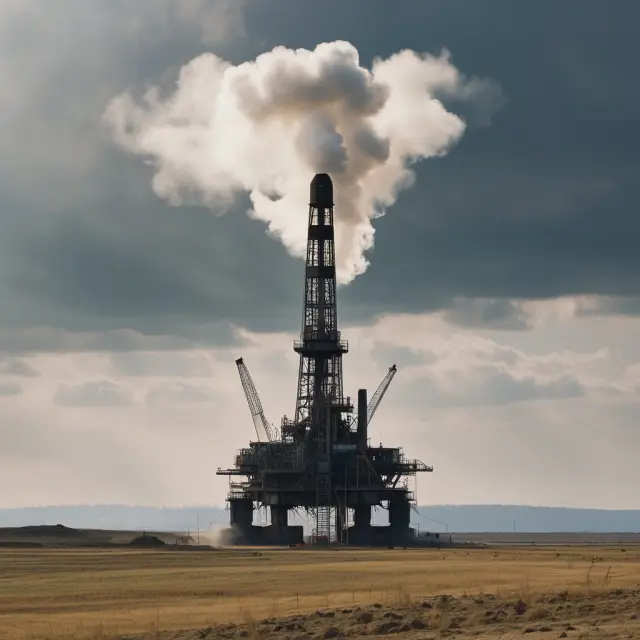
Increased Recoverable Reserves and Production Rates
The Hubbert curve has long been used as a tool for estimating future production rates, but Marion King Hubbert’s predictions regarding the depletion of oil reserves have faced significant challenges in recent years. The emergence of groundbreaking technologies such as hydraulic fracturing (fracking), enhanced oil recovery (EOR), and horizontal drilling has significantly expanded our ability to extract resources from existing and new reservoirs. These innovations have not only allowed us to recover more oil but also extend the life cycle of producing fields, delaying the onset of peak oil and its potential economic implications.
Hydraulic fracturing, a drilling technique used to extract oil and natural gas from shale formations, has played a significant role in the surge in U.S. oil production. According to the U.S. Energy Information Administration (EIA), hydraulic fracturing accounted for around 25% of total U.S. crude oil production and 48% of total U.S. natural gas production as of 2019. This technology has enabled companies to tap into vast unconventional resources, which were once considered uneconomic or technically inaccessible.
Enhanced oil recovery (EOR) is another game-changing technology that has dramatically increased recoverable reserves from mature fields. EOR involves using a variety of methods such as thermal and chemical processes to extract additional oil from reservoirs that have already been drilled. This technique can potentially double or even triple the amount of oil recovered from an existing field, effectively extending its economic life.
The development of horizontal drilling has also significantly increased recovery rates and improved access to oil reserves previously thought inaccessible. Horizontal drilling involves drilling a wellbore at an angle and then drilling horizontally through a reservoir instead of vertically. This technique allows drillers to access larger portions of reservoirs, resulting in higher production rates and increased reserves.
These technological advancements have enabled the U.S. to significantly increase its oil production while maintaining its position as a net exporter of petroleum products. According to the EIA, annual U.S. crude oil production reached more than 13 million barrels per day in 2020, surpassing pre-pandemic levels and making the country one of the world’s largest oil producers. The U.S. is expected to continue increasing its oil production, with the EIA forecasting an average daily production rate of 15.3 million barrels per day by 2027.
Moreover, these innovations have led to substantial increases in recoverable reserves worldwide. For instance, as of 2020, global proven crude oil reserves stood at approximately 1.69 trillion barrels, according to BP’s Statistical Review of World Energy. This figure is expected to continue growing as new discoveries are made and existing reservoirs are exploited using advanced technologies.
However, it is important to note that even with these technological advancements, oil remains a finite resource. While peak oil may not be an immediate threat, the eventual depletion of fossil fuels will have significant implications for the global economy and energy landscape. As such, ongoing efforts to develop alternative energy sources and reduce dependence on fossil fuels are crucial for ensuring long-term sustainability.

Current Status of Oil Reserves
The concept of Hubbert’s Peak Theory has been debated for decades due to its potential implications on our finite fossil fuel resources. While it is generally accepted that all conventional oil reserves will eventually run out, the theory suggests that production rates will reach a peak before ultimately declining. However, recent technological advancements have significantly altered the landscape of oil exploration and production, extending the life cycle of many reserves and boosting overall production rates.
Marion King Hubbert, a geologist who worked for Shell in the 1950s, is credited with developing the Hubbert curve to estimate future oil production based on the depletion of reservoirs. He predicted that global crude oil production would peak around the year 2000 and enter a terminal decline phase. However, this prediction was proven incorrect due to the technological revolution in oil production.
The availability and advancements in technologies such as hydraulic fracturing (fracking), enhanced oil recovery (EOR), and horizontal drilling have resulted in increased recoverable reserves and higher production rates from both new and old wells. These methods enable oil companies to access more reservoirs, reach deeper levels, and extract previously unattainable resources.
As of the end of 2019, the world’s total proven oil reserves were estimated to be around 1.73 trillion barrels according to the BP Statistical Review of World Energy 2020. However, it is believed that many regions have yet to be fully explored using the latest technologies, suggesting that the actual recoverable reserves could be significantly higher.
The United States, for instance, has seen a surge in crude oil production since the 1970s, largely due to these technological advancements. In 1972, Texas led the U.S. in annual production with slightly over 1.26 billion barrels. Fast-forward to 2019, and the Lone Star State produced over 1.8 billion barrels.
While the U.S. remains a net importer of crude oil, it has become a net exporter of petroleum products. The technological revolution has enabled the discovery of new oil fields around the world, keeping fossil fuel production from reaching a peak in the near term.
However, it is crucial to remember that these resources are finite, and peak oil remains a long-term concern. The rate at which we deplete our reserves and replace them with alternative energy sources will ultimately determine whether or not Hubbert’s Peak Theory poses a significant economic challenge in the future. For now, however, the theory does not appear to present a significant threat to the economy in the near term.

Future Implications of Hubbert’s Peak Theory
Hubbert’s peak theory, named after Marion King Hubbert, offers insights into the future of fossil fuel production. It suggests that oil production follows a bell-shaped curve with a rise, peak, and decline. This theory has significant implications for the global economy, energy sources, and industries. Understanding these implications begins with a closer look at how Hubbert’s peak theory is applied to oil production.
Hubbert’s Peak Theory Predictions and the Economy
Hubbert’s prediction that U.S. oil production would peak in the 1970s and the world would hit peak oil around the year 2000 were proven incorrect by technological advancements in the oil industry. The revolutions in technology have extended the life cycle of oil reserves, providing more time to explore alternative energy sources and develop sustainable solutions for a future beyond fossil fuels.
In the long run, however, fossil fuel resources remain finite. This means that Hubbert’s peak theory has implications for the global economy, as resource depletion could lead to increased fuel scarcity and rising energy costs. These economic consequences may impact virtually every industry and directly affect consumers by increasing their cost of living.
Spikes in world oil prices have historically been accompanied by economic recessions. A sustained increase in prices due to long-term decline in available oil reserves might lead to corresponding economic malaise, potentially even raising the specter of stagflation and declining standards of living worldwide.
Technological Advancements and Fossil Fuels
A technological revolution in the oil industry has increased recoverable reserves and boosted recovery rates from new and old wells. Techniques like hydraulic fracturing, enhanced oil recovery (EOR), and horizontal drilling have enabled oil companies to discover new oil fields and tap into previously unreachable resources.
This technological progression not only extends the life cycle of fossil fuel production but also allows us to explore alternative energy sources more effectively. As recoverable reserves continue to grow, it becomes increasingly important for industries and consumers to adapt to a changing energy landscape.
Innovations in digital oil exploration using 3D seismic imaging enable scientists to see miles below the seabed floor, uncovering new oil fields and extending the life of existing ones. The use of hi-tech drilling techniques has also led to substantial increases in recoverable reserves, such as those found offshore.
A Technologically Advanced Future
While proven oil reserves are currently estimated at around 1.73 trillion barrels (BP Statistical Review of World Energy 2020), most of the world remains unexplored using the latest technologies. Fossil fuels still provide over 80% of global energy consumption, but alternative sources like renewable energy and nuclear power are growing in prominence (IEA 2019).
As the energy landscape evolves, it is crucial for industries and governments to adapt by investing in research and development, incentivizing innovation, and implementing policies that encourage a sustainable transition beyond fossil fuels. A future where fossil fuel resources are no longer the primary energy source may be closer than many anticipate.
In conclusion, Hubbert’s peak theory serves as a reminder of the finite nature of fossil fuel resources and the need for proactive planning to mitigate potential economic challenges. With ongoing technological advancements in the oil industry and increasing investments in alternative energy sources, the future beyond fossil fuels is becoming clearer every day.
References:
BP Statistical Review of World Energy (2020).
International Energy Agency (IEA) (2019).
U.S. Geological Survey and U.S. Geophysical Service.

The Future of Fossil Fuels and Alternative Energy Sources
Hubbert’s peak theory, as posited by Marion King Hubbert, indicates that oil production follows a bell-shaped curve, with maximum production occurring towards the middle of a reserve’s life cycle. However, technological advancements in recent decades have extended the life cycle of fossil fuel reserves significantly. With new technologies such as hi-tech digital oil exploration using 3D seismic imaging, proven oil reserves continue to grow, and recoverable reserves have increased substantially. As a result, it seems that peak oil is no longer an imminent threat, at least not in the near term.
Although fossil fuels are finite resources, they are still abundant, with an estimated 1.73 trillion barrels of proven oil reserves worldwide (according to the BP Statistical Review of World Energy 2020). These reserves may even grow as more of the world is explored using advanced technologies. Likewise, coal and natural gas reserves are substantial, with more than 1 trillion tons of proven coal reserves and over 201.34 trillion cubic meters of proven natural gas reserves (BP Statistical Review of World Energy 2020). Furthermore, there may be 3.0 trillion tons of methane hydrates—enough natural gas to fuel the world for a thousand years (USGS).
Despite these vast reserves, peak oil remains a long-term concern because fossil fuels are finite resources. The challenge lies in the timing and speed of their replacement with renewable energy sources. As new technologies emerge, the rate at which we transition to alternative energy sources will become increasingly important. The International Energy Agency (IEA) projects that solar photovoltaics (PV) could account for more than half of global electricity generation by 2050, while wind power could generate approximately one-third. In addition, advancements in battery technology, such as lithium-ion batteries and flow batteries, are making renewable energy storage more efficient and cost-effective, further increasing their attractiveness as viable alternatives to fossil fuels.
Some countries have already made significant strides in transitioning from fossil fuels to alternative energy sources. For instance, Iceland generates nearly 100% of its electricity from renewable sources, primarily geothermal and hydropower. Germany is another leader in renewable energy production—in 2020, it generated more than half of its electricity from solar, wind, and other renewable sources. As these countries demonstrate, transitioning to alternative energy sources is not only possible but also economically viable.
In conclusion, although peak oil remains a long-term concern due to the finite nature of fossil fuels, it does not appear to present an immediate threat in the near term. Technological advancements have extended the life cycle of fossil fuel reserves, and alternative energy sources are becoming increasingly competitive with traditional energy sources. As the world continues to explore new technologies and invest in renewable energy, peak oil will become less of a concern, and the transition towards a post-fossil fuel economy may be smoother than initially anticipated.

FAQs about Hubbert’s Peak Theory
What is Hubbert’s peak theory?
Hubbert’s peak theory is a concept introduced by Marion King Hubbert that predicts global crude oil production will eventually peak and then decline following a roughly bell-shaped curve. It was based on the observation that the production of natural resources, such as oil, follows a finite pattern and cannot continue to grow indefinitely.
What does Hubbert’s peak theory predict?
Hubbert’s peak theory predicts that maximum production from individual or global oil reserves will occur towards the middle of their life cycle. After this peak, production declines due to resource depletion and diminishing returns, making it essential for new reserves to be brought online faster than extractable reserves are drawn down to prevent reaching peak oil.
Why is Hubbert’s peak theory important?
Hubbert’s peak theory holds significance because it highlights the finite nature of fossil fuel resources and their eventual decline, which may have far-reaching implications for industries and economies that rely on these resources, particularly the energy sector. Understanding this concept can help guide decision-making regarding resource exploration, consumption, and alternative energy sources.
What happens when we hit peak oil?
Reaching peak oil would mean that global crude oil production has peaked and is in terminal decline, leading to increased fuel scarcity, higher energy costs, and potential economic recessions. It may also necessitate a shift towards alternative energy sources and more efficient use of existing resources.
Is Hubbert’s peak theory accurate?
Hubbert’s original predictions for the U.S. and global oil production have not been entirely accurate due to advancements in technology, discoveries of new reserves, and improved recovery rates. However, the finite nature of fossil fuel resources ensures that Hubbert’s peak theory applies in the long term, although the specific timeline may change depending on technological advancements and resource discoveries.
How can we prepare for peak oil?
To prepare for peak oil, investors, policymakers, and consumers can focus on reducing energy consumption, transitioning to alternative energy sources such as wind, solar, and nuclear power, and improving the efficiency of existing infrastructure. It is also crucial to continue researching and investing in new technologies that can extend the life cycle of fossil fuel resources while minimizing their environmental impact.
What are some alternatives to Hubbert’s peak theory?
Alternatives to Hubbert’s peak theory include the concept of resource nationalism, which emphasizes geopolitical factors influencing oil production, and the theory that unconventional oil reserves such as shale oil and tight oil will postpone or even eliminate peak oil. However, these alternatives do not negate the finite nature of fossil fuel resources, but rather offer different perspectives on how their depletion may unfold.
 Next entry · No. 2,245Hubris: A Double-Edged Sword in Finance and Investment
See also
-
 No. 3,700
19 Apr 2025
19 min
Understanding the Role and Impact of the Organization of the Petroleum Exporting Countries (OPEC)
Energy Finance
No. 3,700
19 Apr 2025
19 min
Understanding the Role and Impact of the Organization of the Petroleum Exporting Countries (OPEC)
Energy Finance -
 No. 3,657
16 Apr 2025
20 min
Understanding Oil Fields: Discovering and Maximizing the Value of Fossil Fuels
Energy Finance
No. 3,657
16 Apr 2025
20 min
Understanding Oil Fields: Discovering and Maximizing the Value of Fossil Fuels
Energy Finance -
 No. 5,279
26 Aug 2025
23 min
Universal Healthcare Coverage: Understanding the Different Types and Implications for Institutional Investors
Healthcare Finance
No. 5,279
26 Aug 2025
23 min
Universal Healthcare Coverage: Understanding the Different Types and Implications for Institutional Investors
Healthcare Finance -
 No. 5,162
16 Aug 2025
19 min
Understanding Uncle Sam: The Personification of the United States Government in Finance and Investment
Business Finance
No. 5,162
16 Aug 2025
19 min
Understanding Uncle Sam: The Personification of the United States Government in Finance and Investment
Business Finance -
 No. 5,018
05 Aug 2025
20 min
Trade Liberalization: Understanding Its Advantages, Disadvantages, and Examples
International Trade
No. 5,018
05 Aug 2025
20 min
Trade Liberalization: Understanding Its Advantages, Disadvantages, and Examples
International Trade -
 No. 4,659
06 Jul 2025
20 min
Understanding the Shutdown Point in Finance and Investment
Business Strategy
No. 4,659
06 Jul 2025
20 min
Understanding the Shutdown Point in Finance and Investment
Business Strategy