Understanding Black Monday: Causes, Consequences and Lessons

Understanding the causes, consequences, and lessons of the historic Black Monday stock market crash on October 19, 1987.
Background of Black Monday
Black Monday is synonymous with Oct. 19, 1987, when the Dow Jones Industrial Average (DJIA) experienced a significant decline, losing nearly 22% of its value in a single day. This stock market crash had profound implications, initiating a global sell-off that affected numerous markets around the world. Understanding the background leading up to this event provides valuable context, shedding light on the significance and causes of Black Monday.
In the years preceding the crash, a powerful bull market emerged as stocks saw substantial gains. This bullish trend had persisted since 1982, with stock prices tripling in value over the course of five years. As the market approached an inevitable correction, several factors came together to create a perfect storm that would shake the financial world.
One such factor was the increasing use and impact of program trading in the financial sector. Program trading, also referred to as automated or systematic trading, involves the execution of large orders based on predetermined models and algorithms, without human intervention. The stock market crash of 1987 demonstrated how this new technological innovation could contribute to increased market volatility and accelerate price movements.
As the bull market peaked and a correction loomed, program trading systems, which were not yet as dominant as they are today, began to play a significant role. These automated trading systems tended to generate buy orders when prices rose and sell orders when prices fell, creating strong positive feedback loops that exacerbated price movements.
Adding to the mix was another factor known as portfolio insurance. Portfolio insurance is a program trading strategy designed to hedge a portfolio against market risk by short-selling stock index futures. This approach aimed to limit potential losses if stocks declined in value without having to sell off actual stocks. The use of portfolio insurance strategies contributed significantly to the liquidation process that unfolded on Black Monday.
The role of portfolio insurance and program trading is interconnected, as each factor influenced the other. Computer programs began liquidating stocks once certain loss targets were triggered, setting off a chain reaction that pushed prices lower and caused more stop-loss orders to be executed. The resulting domino effect continued until markets reached their lows on Black Tuesday.
Additional factors, such as geopolitical tensions and the simultaneous expiration of options, futures, and stocks contracts (known as triple witching), also played a role in the market downturn. However, mass panic and media amplification further exacerbated the situation, accelerating the sell-off and intensifying its impact.
Following Black Monday, regulatory measures were introduced to prevent future flash crashes caused by program trading. These protective mechanisms included circuit breakers that temporarily halt trading when specific index levels are breached, providing a buffer against rapid price movements and mitigating the potential for widespread panic-selling. Understanding the background of Black Monday and its causes is crucial in grasping the significance of this historical event and its lasting impact on the financial industry.

The Bull Market Before Black Monday
A strong bull market had been underway since 1982, with stocks more than tripling in value. This period of significant growth led to a sense of complacency among investors, who assumed that stock prices would continue their upward trajectory indefinitely. The optimistic outlook was further fueled by the belief that the Federal Reserve’s tight monetary policy would ultimately lead to lower inflation rates.
This bullish sentiment created an atmosphere ripe for a potential correction. The market was long overdue for a significant pullback, as it had not experienced a substantial decline since 1982. This fact alone may have contributed to the panic and mass selling that occurred during Black Monday. Investors’ lack of experience with down markets led them to be unprepared, resulting in widespread fear and uncertainty when the inevitable correction finally arrived.
The bull market was characterized by a period of low volatility, with stocks exhibiting only moderate price swings. This lulled many investors into a false sense of security, as they grew accustomed to the steady growth in their portfolios. However, this stability masked the underlying risks that existed within the market.
Moreover, the prevailing economic conditions during this time contributed to the bull market’s strength. The U.S. economy was experiencing a period of robust growth, with low unemployment and rising wages. These factors fueled consumer spending, driving corporate profits higher and contributing to the steady increase in stock prices. However, these same conditions also created inflationary pressures, which the Federal Reserve sought to combat through its restrictive monetary policy. This tightening of monetary policy, coupled with the overheating economy, set the stage for the eventual market correction that culminated in Black Monday.
Despite these risks and warning signs, many investors remained bullish and continued to pile into the market, fueling its growth further. This behavior only served to increase the potential magnitude of the correction when it eventually arrived. As we will see in the following sections, the combination of program trading and portfolio insurance strategies played a significant role in exacerbating the selloff during Black Monday. But the underlying foundation for this event was the complacency and overconfidence that had developed among investors during the long-lasting bull market.
Upcoming Sections
- Role of Program Trading in Black Monday
- The Role of Portfolio Insurance in the Crash
- Triple Witching’s Contribution to Black Monday
- Impact of Mass Panic on the Market Crash
- Aftermath of Black Monday: Regulatory Measures
Can Black Mondays Happen Again?
- Lessons From Black Monday and Other Market Crashes
- FAQ: Common Questions About Black Monday
- Conclusion: Understanding the Importance and Impact of Black Monday.
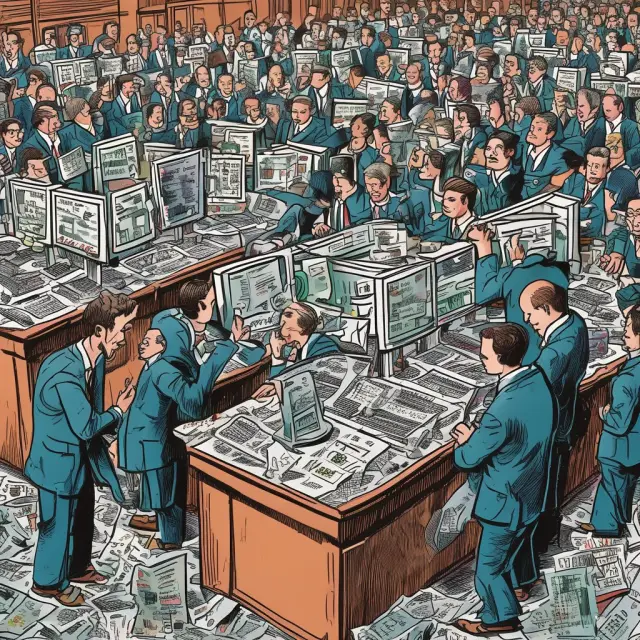
Role of Program Trading in Black Monday
The advent of computerized trading, specifically program trading, played a significant role in the stock market crash on Oct. 19, 1987, commonly known as Black Monday. Automated trading systems were becoming increasingly popular among Wall Street firms, but their impact on the market’s stability was not fully understood at the time.
In automatic trading, also called program trading, human decision-making is replaced by buy or sell orders generated automatically based on benchmark indexes or specific stocks. Programs use mathematical models to determine when to execute trades, which can create strong positive feedback. When prices are rising, these programs generate more buy orders, and when they begin to fall, more sell orders are triggered.
As the market continued its upward trend in 1987, many portfolio insurance strategies based on program trading were implemented to hedge against potential losses if stocks declined. These strategies relied on shorting stock index futures to limit losses while not having to sell off held stocks. However, when stock prices began to fall, the computer programs initiated liquidation of stocks according to their pre-set loss targets. As one market participant sold, it triggered stop-loss orders in others, leading to a domino effect and an accelerated selloff.
Further exacerbating the situation was the simultaneous expiration of stock options, index futures, and index options contracts on Oct. 16, 1987, known as triple witching. This resulted in high volatility during Friday trading and large sell-offs in the after-hours markets, adding fuel to the panic.
The interplay of these factors led to a vicious circle that amplified the stock market crash on Black Monday. As panic selling accelerated, it forced other investors to abandon their positions in order to limit potential losses. The rapid decline in stock prices overwhelmed traditional trading curbs and circuit breakers put in place by regulatory bodies, leading to an unprecedented drop in the DJIA.
In conclusion, the role of program trading during Black Monday cannot be underestimated. While these systems were designed to reduce risk for investors, they ultimately played a significant part in accelerating the selloff and amplifying market volatility. Since then, regulatory measures have been introduced to prevent flash crashes due to automated trading. Circuit breakers halt trading when an index experiences unusual price movements, preventing panicked selling and preserving market stability.

The Role of Portfolio Insurance in the Crash
Portfolio insurance was a popular investment strategy used by institutional investors during the late 1980s. The strategy aimed to protect against stock market declines by using options contracts to offset potential losses. However, its implementation during Black Monday contributed significantly to the intensity and magnitude of the market crash.
Program trading, which relied heavily on portfolio insurance strategies, played a significant role in the sell-off. Portfolio insurers used options contracts to short sell index futures when stock prices fell below a certain level. The strategy was designed to limit losses and maintain exposure to the market while reducing risk. However, when the stock market began falling during Black Monday, the automatic selling triggered by these insurance strategies accelerated the downturn.
The rapid selling caused a domino effect. Each sell order put additional downward pressure on stock prices, prompting more stop-loss orders to be executed and more portfolio insurers to sell their stocks. As prices continued to drop, more and more institutions were forced to liquidate their portfolios, exacerbating the selloff. By the end of the day, major markets had lost 20% or more of their value.
Since Black Monday, regulators have introduced measures aimed at preventing a similar situation from unfolding again. Circuit breakers and trading curbs have been implemented to halt or limit trading when stock prices experience sudden declines. Additionally, market volatility measures such as the VIX index have become essential tools in monitoring market conditions and identifying potential risks.
Despite these efforts, some experts warn that portfolio insurance strategies could still pose a risk in today’s markets. With increased use of high-frequency trading and algorithmic systems, the potential for rapid selling due to automatic processes remains a concern. Additionally, concerns about the stability of certain financial instruments, such as exchange-traded funds (ETFs), have raised questions about their role during periods of market stress or volatility.
In summary, portfolio insurance strategies played a significant role in the intensity and magnitude of Black Monday’s stock market crash by triggering automatic selling as stock prices fell below certain levels. Regulatory measures have been implemented to mitigate the risks posed by these strategies, but concerns remain about their potential impact on today’s markets. Understanding the role of portfolio insurance during the Black Monday event is essential for investors seeking to learn from this historic market downturn and prepare for future crises.

Triple Witching’s Contribution to Black Monday
Understanding the impact of Triple Witching on Black Monday requires delving into the significance of options expiration dates on Wall Street. Triple Witching, a term used in finance, signifies the concurrent expiration of three different types of financial derivatives: stock index futures, individual stock options, and stock index options. This event takes place four times per annum for major exchanges like the Chicago Mercantile Exchange (CME) and the American Stock Exchange (AMEX).
During triple witching days, a flurry of buying and selling activities occurs due to the need to close out positions held in these derivatives before their expiration. The massive transactions can lead to increased volatility and heightened market sensitivity to news events, which may impact these underlying assets.
On Oct. 16, 1987, just one day prior to Black Monday, Triple Witching unfolded, contributing significantly to the already tense stock market landscape. The simultaneous expiration of options, futures, and stocks contracts on that particular Friday saw increased trading volumes in the after-hours markets.
The last hour of trading before the weekend witnessed large sell-offs in various securities as investors and traders attempted to close out their positions amidst heightened market uncertainty. These transactions were magnified by automated portfolio insurance strategies, which triggered selling programs when specific loss targets were hit, adding fuel to the selling pressure.
Investigations into the root causes of Black Monday have pointed to several factors that amplified the market crash. While many consider a combination of a long-running bull market and increasing automation in trading as major contributors, some research suggests the role of Triple Witching during this period was substantial. The confluence of these events culminated in an unchecked downward spiral, accelerating panic selling that ultimately led to the stock market crash on Oct. 19, 1987.
Following Black Monday, regulatory bodies and exchanges introduced measures such as circuit breakers to help mitigate the potential impact of triple witching events and other market stressors on the overall financial system. These protective mechanisms are designed to halt trading when significant price movements occur, preventing a domino effect and potential panic selling.
Despite these safeguards, the memory of Black Monday remains etched in history as a stark reminder of the unpredictability and volatility inherent in financial markets. As markets continue to evolve with advancements in technology and trading strategies, it is crucial for investors and traders alike to remain informed about market events that can impact their investment portfolios. Understanding the role of Triple Witching in Black Monday’s aftermath offers valuable insights into how the financial industry has adapted to mitigate future crises and protect investor interests.

Impact of Mass Panic on the Market Crash
Mass panic was one significant factor that accelerated the stock market crash on October 19, 1987, known as Black Monday. As mentioned earlier, various economic factors contributed to this event; however, the role of investor emotions cannot be underestimated.
On the day of the crash, mass panic was fueled by an intensified media coverage that amplified the situation. The media’s portrayal of the events, combined with investors’ fear and anxiety, created a self-reinforcing cycle that escalated the market downturn. This resulted in a sudden rush to sell securities, leading to a steep decline in prices.
The stock market crash on Black Monday also highlighted the impact of investor herd behavior. As more investors sold their stocks due to fear of further losses, others followed suit, regardless of the actual value or fundamentals of the securities they held. The herd mentality resulted in a massive sell-off that pushed stock prices down even further, exacerbating the market crash.
The role of mass panic in Black Monday also had lasting implications for financial markets and regulations. Following the crash, regulatory measures were introduced to help prevent similar panics from occurring again. For instance, trading curbs and circuit breakers were put in place to halt trading if certain predefined conditions were met. These protective mechanisms aimed to give investors time to reconsider their decisions and prevent irrational selling based on emotions rather than objective analysis.
Despite the introduction of these measures, mass panic continues to influence financial markets, particularly during times of uncertainty. For instance, in 2008, during the global financial crisis, significant market volatility was driven by fear and panic among investors. As a result, it’s essential for investors to be aware of their emotional reactions and make informed decisions based on fundamental analysis rather than being swayed by mass panic.
In conclusion, Black Monday serves as a reminder that stock markets can experience sudden and severe declines due to various factors, including economic conditions, technological advancements, and investor emotions. Understanding the role of mass panic in this event is crucial for investors to make informed decisions during times of market volatility and uncertainty. By recognizing the potential impact of herd behavior and being prepared with a well-thought-out investment strategy, investors can help mitigate the risks associated with sudden market downturns.

Aftermath of Black Monday: Regulatory Measures
Following the chaos of Black Monday, several regulatory measures were put in place to help prevent another catastrophic event from occurring. The Securities and Exchange Commission (SEC) took action to introduce new protective mechanisms intended to regulate trading activity and mitigate panic selling.
Circuit Breakers
A significant change in the market structure came with the introduction of circuit breakers. This mechanism halts trading on a specific stock or index if it experiences an unusual drop. The rationale behind this was to give traders time to reassess their positions, preventing further panicked selling and potentially stemming a market downturn before it spirals out of control.
Trading Curbs
Another measure introduced by the SEC after Black Monday was trading curbs. These limitations on trading activity restrict the buying and selling of securities during volatile market conditions. This tool is intended to help stabilize markets when prices become excessively volatile or begin to decline significantly, limiting the potential for panic selling and the resulting market chaos.
Regulatory Oversight
The regulatory changes did not stop there. The Financial Industry Regulatory Authority (FINRA) was established as a self-regulatory organization in 2007 to regulate member brokerage firms and exchange markets. FINRA’s mission is to protect investors by maintaining fair market operations, writing and enforcing rules, and focusing on risk management for the securities industry.
Market Participant Education
As a part of the post-Black Monday regulatory overhaul, there has been increased emphasis on educating market participants about responsible investment strategies and risk management techniques. This includes initiatives like the Investor Protection Fund (IPF) and the Securities Investor Protection Corporation (SIPC), both of which provide insurance coverage for securities customers in case of brokerage firm failure.
Market Surveillance
Regulatory bodies, such as the New York Stock Exchange (NYSE) and the Nasdaq Stock Market, have enhanced their market surveillance capabilities to monitor trading activity more closely. These organizations employ advanced analytics and machine learning techniques to detect anomalous trading patterns and potential insider trading activities, helping to maintain fair markets and protect investors from manipulative practices.
In summary, the regulatory measures introduced after Black Monday aimed to provide increased stability, transparency, and protection for investors in an ever-evolving financial landscape. These changes have helped foster a more resilient stock market and better equip investors to manage risk while navigating volatile conditions.

Can Black Mondays Happen Again?
The catastrophic stock market crash on October 19, 1987, marked as Black Monday, remains etched in the memory of investors worldwide, with its 508-point loss and a staggering 22.6% decline in the Dow Jones Industrial Average (DJIA) in a single day. This event serves as a crucial reminder of market volatility, making many wonder, can Black Mondays happen again?
While no two stock markets are identical, understanding the underlying factors that led to the 1987 crash and how they may manifest differently today can shed light on potential risks. Let’s take a closer look at some critical aspects:
Market Conditions before a Potential Black Monday
Before discussing whether another Black Monday could happen, it is essential to examine the market conditions leading up to the 1987 crash. The preceding bull market saw an impressive rise in stock prices since 1982. Prices had tripled in value by October 1987, making many investors overconfident and complacent.
The Role of Quantitative Trading in Potential Black Mondays
Automated trading systems or quantitative trading played a significant role in the stock market crash of 1987. With the increasing use of sophisticated algorithms and high-frequency trading (HFT), investors might be susceptible to sudden, substantial price movements that can accelerate selloffs, potentially leading to another Black Monday-like event.
Program Trading: A Double-Edged Sword
Similar to portfolio insurance, program trading is a systematic investment strategy used in today’s markets. It involves the automated execution of large orders based on specific rules or market conditions. While this strategy can contribute to increased market efficiency and liquidity, it can also amplify market volatility, potentially leading to dramatic price movements.
Portfolio Insurance: Lessons Learned and Adapted
Another factor contributing to the 1987 crash was portfolio insurance strategies that triggered massive sell-offs in response to predefined loss thresholds. Although these strategies have evolved, it remains important for investors to understand the potential risks associated with automated trading systems.
Triple Witching and Other External Factors
October 1987 also marked a triple witching day, meaning simultaneous expiration of options, futures, and stock index contracts. Such events can result in increased market volatility and may contribute to sudden price movements, potentially triggering panic selling or buying among investors. While these occurrences are less frequent nowadays, they continue to be monitored closely for potential implications.
Implications for Investors: Stay Informed and Adaptive
The possibility of another Black Monday cannot be ignored entirely. However, investors can take preemptive measures to mitigate risks and prepare for potentially volatile market conditions:
- Understanding the underlying factors driving stock prices and their potential impact on your portfolio.
- Regularly reviewing your investment strategy in light of changing market trends and volatility.
- Diversifying your investments across different asset classes, industries, and geographies.
- Employing risk management techniques, such as stop-loss orders and hedging strategies.
- Staying informed about global events that can influence investor sentiment and market conditions.
Conclusion
While another Black Monday cannot be ruled out entirely due to the inherent complexity of financial markets, investors can learn valuable lessons from past events to minimize potential risks and adapt to evolving market conditions. By staying informed, vigilant, and proactive in managing their portfolios, they may find peace of mind amidst volatile markets.

Lessons From Black Monday and Other Market Crashes
The stock market crash on October 19, 1987, known as “Black Monday,” marked a significant turning point in global financial history. Since then, several other crashes have occurred, each teaching valuable lessons for investors. In this section, we discuss the importance of understanding these events and how they can inform investment strategies today.
Lesson 1: Market Crashes are Temporary
Market crashes, such as Black Monday, are temporary setbacks in the larger context of the economy and stock markets. Many of the steepest market rallies have followed a sudden crash, demonstrating the resilience and adaptability of financial markets. For instance, after experiencing a 10% drop in August 2015 and January 2016, the market recovered and reached new or near-new highs in following months.
Lesson 2: Stick to Your Investment Strategy
A well-conceived investment strategy based on your personal objectives should provide the confidence needed to weather market crashes and remain steadfast when everyone else is panicking. A lack of a strategy often leads investors to let their emotions guide their decisions, which can result in poor choices and missed opportunities.
Lesson 3: Buying Opportunities in Times of Crisis
Market crashes present opportunities for savvy investors to buy stocks or funds at lower prices than usual. The knowledge that market crashes are temporary helps investors stay calm during these trying times, enabling them to focus on long-term objectives and purchase undervalued assets.
Lesson 4: Stay Informed and Diversified
Investors can prepare for market crashes by staying informed about economic conditions, market trends, and regulatory changes that may impact their portfolios. Additionally, maintaining a well-diversified portfolio can help minimize risk and provide stability during volatile markets.
Lesson 5: Understanding the Role of Market Mechanics
Market crashes are often influenced by various factors, including automated trading systems, portfolio insurance strategies, and the interaction between human emotions and media coverage. By understanding these underlying drivers, investors can make more informed decisions and adapt their strategies accordingly.
Lesson 6: Historical Perspective
Analyzing past market crashes provides valuable insights into the causes, consequences, and lessons learned. Some of the most significant events include the stock market crash of 1929, Black Tuesday (October 29, 1929), and the Flash Crash of 2010. Understanding these historical events can help investors develop a more robust investment strategy and better navigate future market volatility.
By applying these lessons to their investment strategies, individuals can be better prepared for potential market downturns and capitalize on opportunities during times of crisis.

FAQ: Common Questions About Black Monday
Black Monday, an infamous day in financial history, marks the stock market crash on October 19, 1987, when the Dow Jones Industrial Average (DJIA) lost almost 22% of its value in a single day. The term “Black Monday” has been applied to other significant market crashes as well. In this section, we’ll address some common questions about Black Monday and its implications for investors.
Q: What caused the massive stock market drop on October 19, 1987?
A: Several factors contributed to the crash. A strong bull market overdue for a correction, the increasing use of computerized trading systems, the role of portfolio insurance strategies, and the simultaneous expiration of various financial contracts, known as triple witching, are believed to have played significant roles in the stock market’s decline on Black Monday.
Q: What is program trading, and how did it contribute to Black Monday?
Program trading, also called automatic or algorithmic trading, refers to the use of computer programs to generate buy and sell orders based on predetermined rules. The algorithms in use during the late 1980s tended to produce strong positive feedback when stock prices were rising but could cause massive sales when prices started falling. As a result, these automated systems exacerbated the sell-off during Black Monday.
Q: What is portfolio insurance, and how did it factor into the crash?
Portfolio insurance is a risk management strategy that uses futures contracts to protect against potential losses in stocks if their value declines. In the context of the 1987 stock market crash, this strategy led to massive sales as computer programs hit certain loss targets, triggering more stop-loss orders and accelerating the downturn.
Q: What role did triple witching play on Black Monday?
Triple witching refers to the simultaneous expiration of options, futures, and stocks contracts on the third Friday of every month. The October 16, 1987, saw unusually high volatility during the last hour of trading due to triple witching, with large sell-offs in the after-hours markets.
Q: What protective mechanisms were put in place following Black Monday?
Regulators responded to the crash by implementing several protective measures to prevent panic selling and market instability. These include trading curbs that halt trading when certain thresholds are breached, as well as circuit breakers that pause trading if a benchmark index falls below predefined levels. Circuit breakers have since been adopted in various stock markets around the world.
Q: Can another Black Monday-like event occur?
Although protective mechanisms have been put in place to prevent flash crashes, there is still a risk of market instability due to high-frequency trading algorithms and other factors. For example, the 2010 Flash Crash saw significant volatility and losses due to automated trading systems. The possibility of another Black Monday-like event cannot be entirely ruled out, but regulators continue to work on improving market resilience and investor education.
Q: What lessons can investors learn from Black Monday?
Investors can take several lessons from the Black Monday crash. These include understanding the importance of having a well-diversified portfolio, remaining calm during market volatility, and avoiding knee-jerk reactions to short-term market fluctuations. Additionally, having a solid investment strategy in place beforehand can help investors navigate turbulent markets and protect their long-term financial goals.
 Next entry · No. 437Black Swans in Finance: Understanding Extreme Rarity and Severe Impact
See also
-
 No. 536
29 Apr 2024
24 min
Understanding Bull Markets: Definition, Characteristics, Strategies, and FAQs
Markets
No. 536
29 Apr 2024
24 min
Understanding Bull Markets: Definition, Characteristics, Strategies, and FAQs
Markets -
 No. 5,088
11 Aug 2025
21 min
Understanding Triple Witching: The Quarterly Event That Shakes Up Financial Markets
Finance Policy
No. 5,088
11 Aug 2025
21 min
Understanding Triple Witching: The Quarterly Event That Shakes Up Financial Markets
Finance Policy -
 No. 4,757
14 Jul 2025
19 min
Stock Market Crashes: Understanding the Causes, Effects, and Preventive Measures
Business Finance
No. 4,757
14 Jul 2025
19 min
Stock Market Crashes: Understanding the Causes, Effects, and Preventive Measures
Business Finance -
 No. 4,313
08 Jun 2025
18 min
Rebalancing in Investment: A Comprehensive Guide
Investments
No. 4,313
08 Jun 2025
18 min
Rebalancing in Investment: A Comprehensive Guide
Investments -
 No. 3,483
01 Apr 2025
22 min
Separating Signal from Noise: Understanding and Mitigating Market Volatility in Finance
Business Finance
No. 3,483
01 Apr 2025
22 min
Separating Signal from Noise: Understanding and Mitigating Market Volatility in Finance
Business Finance -
 No. 2,591
19 Jan 2025
21 min
Jesse L. Livermore: The Man Who Sold America Short and Predicted Market Bubbles
Business Finance
No. 2,591
19 Jan 2025
21 min
Jesse L. Livermore: The Man Who Sold America Short and Predicted Market Bubbles
Business Finance