Understanding Graphics Processing Units (GPUs): From Gaming to AI and Cryptocurrency
Explore the importance, functionality, history, and applications of Graphics Processing Units (GPUs) in modern technology. From gaming to AI…
What Is a Graphics Processing Unit (GPU)?
A Graphics Processing Unit, or GPU, is an electronic circuit designed to render visual data for a computer’s display device, such as a monitor or projector. Introduced in 1999 by Nvidia, this specialized chip has since revolutionized the world of digital graphics by enabling more sophisticated and interactive experiences in gaming, virtual reality, artificial intelligence, machine learning, and cryptocurrency mining.
Key Takeaways
– A GPU is a dedicated chip designed to process complex visual data, enabling faster rendering and better performance for applications that require high-quality graphics.
– The introduction of GPUs led to a shift from traditional CPUs in handling graphical tasks due to their superior parallel processing capabilities.
– Modern GPUs are increasingly important for industries beyond gaming, including machine learning, artificial intelligence, cryptocurrency mining, and virtual reality.
Understanding the GPU’s Role
The GPU is essential in converting polygonal coordinates into bitmap signals, which can be displayed on an electronic device. This process, known as rendering, requires significant computational power. GPUs are uniquely suited to handle these complex calculations thanks to their architecture that focuses on parallel processing. They have thousands of cores optimized for executing the same instruction simultaneously, making them ideal for tasks with large data sets and complex algorithms.
History of the GPU
Nvidia’s Geforce 256 was the first widely available GPU in 1999. It defined a GPU as a “single-chip processor with integrated transform, lighting, triangle setup/clipping, and rendering engines that are capable of processing a minimum of 10 million polygons per second.” This paved the way for rapid improvements in graphics processing technology, enabling advanced gaming experiences and setting new standards for display quality. In recent years, GPUs have become crucial components in artificial intelligence, machine learning, and cryptocurrency mining applications.
Differences between GPUs and CPUs
Though often used interchangeably, GPUs and CPUs serve different purposes. While CPUs are designed to handle a wide range of tasks, GPUs focus specifically on processing graphical data and rendering visuals. In contrast, CPUs employ a sequential processing model with fewer cores that can execute more complex instructions, making them better suited for single-threaded tasks.
In conclusion, the Graphics Processing Unit (GPU) is an essential component of modern technology, providing significant improvements in performance and versatility across various industries. Its role in delivering high-quality graphics has evolved beyond gaming to include applications in machine learning, artificial intelligence, virtual reality, and cryptocurrency mining. Understanding this powerful technology’s history, working principles, and differences from CPUs is crucial for appreciating its impact on modern digital experiences.

How Does a Graphics Processing Unit (GPU) Work?
A Graphics Processing Unit (GPU), at its core, is a highly specialized electronic circuit designed to efficiently manipulate and render graphical data for output on a screen or other visual devices. It operates by converting complex geometric information into images that are processed in parallel—a crucial factor behind the GPU’s superior performance compared to CPUs.
To understand how GPUs work, it is essential to grasp some fundamental concepts: polygonal coordinates and rendering. Polygons form the basis for modeling 3D objects, while rendering refers to the conversion of these geometric data into bitmap images suitable for display on an electronic device. The process begins with a graphics pipeline, which includes several stages that transform and render the data:
- Vertex Shader: This stage handles vertex transformation, converting 3D polygonal coordinates into 2D screen-space coordinates.
- Tessellation: Tessellation refines the shape of complex geometries by adding more triangles or other simple shapes to the mesh data.
- Geometry Shader: This stage modifies, filters, or deletes geometry in real time, allowing developers to customize the final visual output.
- Rasterization: In this step, each triangle of the polygon mesh is transformed into a 2D pixel pattern, which forms the base for the final image on the screen.
- Shading: The shader stage applies various lighting effects and color transformations to the rasterized pixels based on their positions and vertex colors.
- Composition: This stage combines multiple layers of images and textures together into a single output frame.
- Anti-aliasing: To ensure smooth visuals, anti-aliasing eliminates jagged edges in the rendered graphics by applying subtle color modifications to neighboring pixels.
- Z-buffering: The depth buffer determines which pixels are closest to the viewer and assigns them a higher priority, ensuring that objects with a closer distance appear in front of those further away in the final image.
GPUs employ thousands of processing cores to handle these steps simultaneously for each pixel in an image—a factor contributing significantly to their superior performance compared to CPUs. This parallel structure has led to GPUs being used in various fields, such as artificial intelligence and machine learning, where complex computations are required.
Additionally, the development of more advanced GPUs and graphics cards has allowed for higher quality visuals in modern video games and virtual reality experiences. The market demand for powerful GPUs has grown significantly with the rise of cryptocurrencies, as mining these digital currencies requires substantial processing power to complete complex mathematical problems.
This section explains the inner workings of Graphics Processing Units (GPUs), from rendering polygonal coordinates into bitmap images to their widespread applications in gaming, artificial intelligence, and the cryptocurrency market. Understanding the GPU’s role as a powerful parallel processing system is essential for anyone seeking a deeper understanding of modern technology.
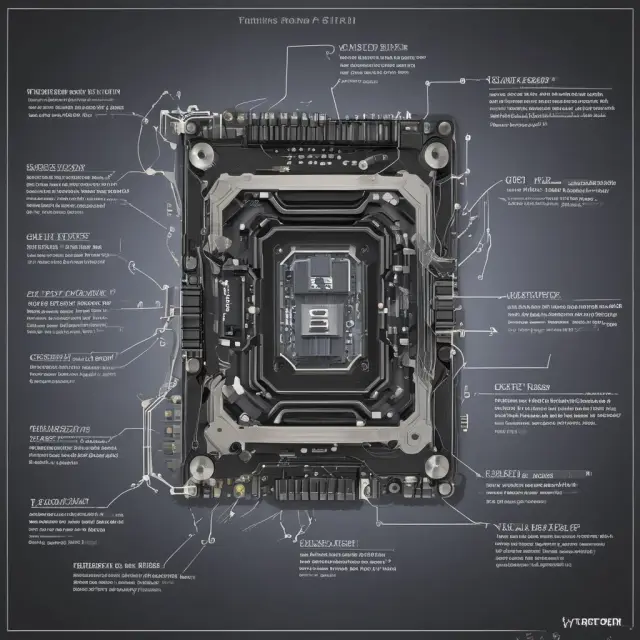
History of the Graphics Processing Unit (GPU)
Introduced to the market in 1999, a Graphics Processing Unit (GPU) is an electronic circuit or chip designed specifically for rendering images and graphics on electronic devices. The term “GPU” is often used interchangeably with “graphics card,” although they differ as GPUs are part of graphics cards, but not all graphics cards contain GPUs. Initially popularized in the late 1990s due to their ability to handle complex computations involved in rendering images and providing smooth graphics for modern videos and video games, GPUs have since found applications in various industries such as virtual reality, machine learning, artificial intelligence, and cryptocurrency mining.
The first GPU, the Nvidia GeForce 256, was released in 1999 by Nvidia Corporation, marking a significant shift from the previous reliance on Central Processing Units (CPUs) for graphic rendering. While GPUs have been around for over two decades, their use and importance have grown exponentially due to advancements in technology.
As computer graphics became increasingly complex, the need for more powerful hardware led to the development of specialized processors like GPUs, which are designed to handle large numbers of calculations simultaneously through parallel processing. This makes them ideal for handling graphics rendering and computationally intensive tasks, such as machine learning algorithms or cryptocurrency mining.
As GPUs continued to evolve, they became essential components in various industries:
- Gaming and virtual reality: GPUs have transformed the way we experience video games and virtual reality by providing smooth visuals, improved frame rates, and advanced graphics features.
- Machine learning and artificial intelligence: The massive parallel processing power of GPUs makes them an ideal choice for complex computations in machine learning and AI applications such as deep learning neural networks.
- Cryptocurrency mining: With the rise of cryptocurrencies like Bitcoin and Ethereum, GPUs have gained immense popularity due to their ability to perform the complex mathematical calculations required for blockchain verification.
The impact of GPUs on these industries has been substantial; they have led to improvements in video game graphics, increased accessibility to virtual reality experiences, advancements in machine learning and AI research, and the democratization of cryptocurrency mining.
In conclusion, the history of GPUs is a fascinating tale of technological innovation, industry disruption, and market adaptation that continues to shape our digital world today. From their origins in video gaming and computer graphics to their current applications in advanced technologies like machine learning, artificial intelligence, and virtual reality, GPUs remain an essential component for creating engaging experiences and driving technological progress.

GPUs vs CPUs: Which One Is Better?
Understanding Graphics Processing Units (GPUs) and Central Processing Units (CPUs) is essential to comprehend how they function in modern technology, as both components play crucial roles in providing advanced performance for computers. While CPUs are designed to handle general processing tasks, GPUs excel at performing complex, parallel computations, making them indispensable for graphics rendering and a myriad of other applications.
Processing Cores
The main difference between GPUs and CPUs lies in their architecture and the way they handle data. CPUs are designed with single-core or multi-core processors that execute instructions sequentially, meaning each instruction is completed before moving on to the next one. In contrast, modern GPUs have thousands of processing cores that can work on multiple tasks simultaneously (in parallel), making them ideal for performing large batches of data-intensive computations in a shorter time frame.
Performance:
When it comes to performance, GPUs outshine CPUs when dealing with graphically intensive tasks such as rendering graphics, video encoding/decoding, and machine learning. The parallel nature of GPU architecture allows for faster processing times in these areas, significantly improving overall system performance and user experience.
Market Share
Both Nvidia (NVDA) and Advanced Micro Devices (AMD) are leading manufacturers in the graphics processing unit market, with Nvidia holding a slight edge with approximately 13% market share compared to AMD’s 17%. However, market dominance can shift depending on technological advancements and consumer preferences.
In summary, CPUs focus on general computing tasks, while GPUs are optimized for parallel processing, particularly for rendering graphics and handling data-intensive computations. When selecting a computer or upgrading its components, understanding the roles and differences between CPUs and GPUs can help you make informed decisions based on your needs and preferences.
In the modern tech landscape, GPU technology has grown beyond gaming to become integral in various industries such as machine learning, artificial intelligence, and virtual reality. As these applications continue to evolve and advance, the importance of GPUs will only increase.

Special Considerations for Graphics Processing Units (GPUs)
The term “Graphics Processing Unit” or GPU is often used interchangeably with graphics cards, but they are not exactly the same thing. While a GPU is an electronic chip that processes graphical data to render images and video on computer displays, a graphics card refers to the entire system, including the GPU itself, other necessary components like fans, memory, and ports, and the motherboard or daughterboard it sits on.
Historically, high-performance computers only featured dedicated GPUs in their designs for increased rendering capabilities. Today, most desktop computers typically incorporate a separate graphics card with a GPU for improved performance over integrated solutions found on motherboards. The advent of GPUs led to the development of more complex software and hardware requirements in gaming, virtual reality, and other resource-intensive applications.
However, the recent surge of interest in cryptocurrency mining has created an unprecedented demand for GPUs. Cryptocurrencies rely on GPUs to perform extensive calculations necessary to add transactions to a blockchain, making them attractive targets for miners seeking high returns on investment. As a result, GPU manufacturers like Nvidia and AMD have experienced significant growth in sales and revenue due to this new market.
Unfortunately, the increased demand has led to a shortage of GPUs available for non-mining customers. Prices have risen steeply, and availability remains scarce. For instance, eBay listings show GPUs selling at two to three times their suggested retail prices. The situation has left many consumers frustrated and forced some retailers to implement purchasing restrictions on graphics cards.
To alleviate the shortage, cryptocurrency miners have started transitioning from GPUs to more specialized and cost-effective chipsets called Application-Specific Integrated Circuits (ASICs). While this shift has eased the pressure on GPU availability slightly, demand remains strong due to their versatility in various applications beyond mining.
As of today, the GPU market is dominated by two major players: Advanced Micro Devices (AMD) and Nvidia (NVDA), each with its unique strengths and customer base. AMD’s focus on PC gaming makes them a favorite among enthusiasts worldwide. Meanwhile, Nvidia has expanded its reach in advanced GPU applications, powering eight of the world’s top 10 supercomputers and maintaining a sizable presence in industrial computing and automotive industries.
Before wrapping up, it’s important to note that GPUs can be overclocked to boost their performance. Overclocking involves increasing the operating frequency beyond manufacturer specifications. However, it poses potential risks like increased power consumption, decreased lifespan, and stability issues. To mitigate these concerns, make sure your system is well-ventilated, stable, and up to date before attempting an overclock.
In conclusion, GPUs have become indispensable components in modern technology, enabling the rendering of stunning graphics for video games, machine learning, artificial intelligence, cryptocurrency mining, and virtual reality applications. As the demand for GPU-accelerated computing continues to grow, it’s vital to stay informed about the latest developments and trends shaping this exciting field.

Major Players in the GPU Market
Advanced Micro Devices (AMD) and Nvidia (NVDA) are two of the leading companies dominating the Graphics Processing Unit (GPU) market. Their innovations have significantly impacted industries such as gaming, virtual reality, machine learning, artificial intelligence, and cryptocurrency mining.
Advanced Micro Devices (AMD)
AMD, a trusted name in computing since 1969, entered the GPU market after acquiring ATI in 2006. With a current market cap of $97.3 billion, AMD holds 17% of the GPU market share and is favored by gamers worldwide. Its focus on the GPU sector includes developing high-performance computing and visualization products.
Nvidia (NVDA)
In 1999, Nvidia introduced the first GPU, the Geforce 256, which also marked the company’s IPO at $12 per share. Today, with a market cap of $404.8 billion and a 13% share in the GPU market, Nvidia has made its mark as a global leader in advanced GPUs. Its extensive reach includes powering eight of the world’s top 10 supercomputers and offering the fifth fastest industrial supercomputer named Selene.
The Role of GPUs in Cryptocurrency Mining
The rise of cryptocurrencies created a new market for GPUs, especially since they require thousands of calculations to add transactions to a blockchain. Cryptocurrency miners have used GPUs to mine lesser-known currencies due to their affordability and accessibility compared to ASICs (Application-Specific Integrated Circuits).
The popularity of cryptocurrencies led to a significant shortage of GPUs, with prices tripling on eBay. This was due to the increased demand from miners and the limited supply. Although ASICs have taken over for mining major cryptocurrencies like Bitcoin, GPUs remain essential for mining lesser-known altcoins.
In Conclusion, GPU Market’s Future Prospects
The impact of GPUs on various industries continues to grow. With advancements in technology and the increasing importance of data processing, GPUs are poised to become even more indispensable. As AI applications expand and virtual reality becomes more accessible, the demand for high-performance GPUs is expected to increase significantly. This presents a promising future for both AMD and Nvidia as they continue to innovate in this rapidly evolving technological landscape.

GPU Applications beyond Gaming
Beyond gaming, GPUs are increasingly becoming essential components for machine learning and artificial intelligence applications. The parallel nature of GPU processing enables them to tackle complex computations efficiently, making them a preferred choice for data scientists and researchers. For instance, neural networks in deep learning models require numerous matrix multiplications to be performed simultaneously, which is the GPU’s specialty. Consequently, GPUs have driven advancements in natural language processing, image recognition, speech recognition, and more.
In addition to machine learning and AI, GPUs play a vital role in scientific simulations, video editing, virtual reality (VR), and augmented reality (AR) applications. These sectors require high computational power for handling large data sets and real-time visualizations. In particular, VR and AR industries can benefit significantly from the parallel architecture of GPUs as they involve rendering complex 3D environments in real-time.
Furthermore, GPUs have proven to be a valuable asset in scientific research, particularly in simulations, climate modeling, and molecular dynamics studies. They enable researchers to model large systems more accurately and efficiently than ever before, leading to new discoveries and breakthroughs. In fact, some of the world’s most powerful supercomputers rely on GPUs to crunch through complex data sets.
Moreover, the rapid growth in GPU adoption for scientific applications is leading to collaborations between researchers and tech companies. For instance, Nvidia has partnered with various research institutions like MIT and Stanford University to accelerate research using their GPUs. These partnerships aim to foster innovation and improve the understanding of cutting-edge technologies and their potential applications.
In conclusion, the impact of GPUs extends far beyond gaming. Their unique capabilities have made them an integral part of machine learning, artificial intelligence, scientific simulations, video editing, virtual reality, augmented reality, and various other industries where high computational power is essential for handling large data sets and real-time visualizations. As technology continues to advance, GPUs will undoubtedly play a critical role in driving innovation and solving complex problems across diverse fields.
The Impact of GPUs on the Cryptocurrency Market
In recent years, the use of Graphics Processing Units (GPUs) has expanded beyond their traditional role in gaming and video rendering to include a new application: cryptocurrency mining. With the increasing popularity of digital currencies like Bitcoin and Ethereum, GPUs have become an essential tool for miners seeking to validate transactions on these decentralized networks.
Cryptocurrency mining is an energy-intensive process that requires significant computational power to solve complex mathematical problems. GPUs’ ability to handle parallel processing makes them well-suited for this task, as they can perform many calculations simultaneously. This has led to a surge in demand for GPUs among cryptocurrency miners, which has driven up prices and caused shortages of these components.
Two major companies, Nvidia (NVDA) and Advanced Micro Devices (AMD), have benefited from this trend. In Q1 2018, both companies reported a substantial increase in revenue due to demand from cryptocurrency miners. However, this surge also led to frustration for non-mining customers, who faced price increases and limited availability of GPUs.
As a result, some retailers implemented measures to restrict the number of graphics cards that could be purchased by individual customers, causing controversy among gamers and other users who rely on these components for their work or hobbies.
However, the rise of application-specific integrated circuits (ASICs), which are more efficient at mining specific cryptocurrencies, has led to a decrease in GPU demand for mining purposes. ASICs have taken over the majority of Bitcoin mining, while GPUs remain popular for mining lesser-known digital currencies or when users lack access to an ASIC.
In summary, GPUs have had a significant impact on the cryptocurrency market by providing computational power necessary for mining various digital currencies. However, the surge in demand has caused price increases and availability issues, leading to controversy and frustration among non-mining customers. As technology advances, it remains to be seen how GPUs will continue to fit into the cryptocurrency landscape.
Frequently Asked Questions about GPUs
Given the growing popularity and importance of Graphics Processing Units (GPUs), it’s no surprise that many people have questions about this powerful technology. Below, we answer some common queries regarding GPUs, GPU overclocking, and GPU scaling.
What Is a Graphics Processing Unit (GPU)?
Answer: A Graphics Processing Unit (GPU) is a chip or electronic circuit capable of rendering graphics for display on an electronic device. The term “GPU” is often used interchangeably with “graphics card,” although they are not the same thing. GPUs have gained significant popularity in recent years due to their applications beyond gaming, such as cryptocurrency mining and artificial intelligence.
How does a GPU work?
Answer: A GPU processes graphical data using thousands of processing cores, which perform calculations much faster than CPUs. This parallel structure enables GPUs to process graphics in real-time, enhancing visual experiences on electronic devices.
What is the difference between GPU and VGA (Video Graphics Array)?
Answer: While a GPU refers to an electronic circuit used for rendering graphics, VGA represents a physical device that transfers video signals from a computer to a display monitor.
How do I overclock my GPU?
Answer: Before attempting to overclock your GPU, ensure your system is clean and updated with the latest software. Use specialized software like Afterburner and follow these steps for a safe and successful overclocking process.
- Install the software.
- Monitor CPU and GPU temperatures during the process.
- Gradually increase GPU clock speed and test performance using benchmarking tools.
- Check for any instability, and if all is well, save your settings.
- Restart your system to ensure the overclocked settings take effect.
What is GPU scaling?
Answer: GPU scaling adjusts a game’s aspect ratio based on the monitor’s resolution to enhance image quality. This technique can be beneficial for users with high-resolution monitors, as it improves text clarity and overall visual experience. However, note that not all games support GPU scaling, so results may vary depending on the software or hardware being used.
Conclusion: The Future of Graphics Processing Units (GPUs)
As the world moves toward an increasingly digital future, the role of Graphics Processing Units (GPUs) continues to evolve and expand. From their origins in gaming and computer graphics, GPUs have become essential components for a wide range of applications that demand high performance computing power. With advancements in machine learning, artificial intelligence, virtual reality, and cryptocurrency mining, the need for powerful GPUs is only growing stronger.
One industry that has seen significant growth in GPU utilization is cryptocurrency mining. As cryptocurrencies like Bitcoin, Ethereum, and others have gained popularity, GPUs have become critical tools for processing the complex calculations required to validate transactions and add new blocks to these decentralized digital ledgers. This has led to a surge in demand for high-performance GPUs, creating an ongoing shortage that can impact both gamers and data centers alike.
Another promising application of GPUs lies in deep learning and artificial intelligence (AI). Deep learning algorithms rely on the ability to process vast amounts of data in parallel, making GPUs ideal candidates for these tasks. With AI systems becoming increasingly sophisticated, there is a growing need for powerful GPUs that can handle complex neural network models.
Virtual reality (VR) is another industry that has seen significant advancements thanks to GPUs. VR applications demand high-resolution graphics and real-time rendering, making GPUs an essential component for delivering immersive experiences. As the VR market continues to grow, so too will the demand for powerful GPUs that can handle these demanding workloads.
In the future, we can expect GPUs to play an even more significant role in our digital lives. From powering advanced gaming systems and virtual reality platforms to driving innovation in machine learning, artificial intelligence, and cryptocurrency mining, GPUs are poised to deliver extraordinary experiences and breakthroughs.
As we move into this exciting new era of GPU technology, it’s important to remember the history and evolution of these remarkable devices that have changed the way we interact with digital information. From their beginnings as simple graphics accelerators to becoming powerful compute engines capable of revolutionizing entire industries, GPUs continue to defy expectations and push the boundaries of what’s possible in the world of technology.
FAQ:
What is GPU scaling?
GPU scaling refers to a feature that enables users to adjust the aspect ratio of a game or application based on their monitor’s resolution. This adjustment can enhance the image quality of the display.
How do I overclock my GPU?
To overclock your GPU, ensure that you have cleaned your device and installed any available updates or bug fixes to your software. Install an overclocking tool such as Afterburner, then run a gaming benchmark to test the new settings. Remember that overclocking carries risks and can potentially damage your hardware.
What is the difference between GPU and VGA?
A GPU (Graphics Processing Unit) is a chip or electronic circuit used for rendering graphics for display on an electronic device, while a VGA (Video Graphics Array) connector is a physical device used to transfer video signals and computer video output.
How can I choose the right GPU for my needs?
Consider the applications you will be using the GPU for, such as gaming, virtual reality, or machine learning. Evaluate your budget, available power supply, and the size of the graphics card that fits in your case or expansion slot. Research the performance and efficiency of various GPUs to find one that matches your requirements.
 Next entry · No. 1,891Understanding Grantor Retained Annuity Trusts (GRAT): A Comprehensive Guide for Professional and Institutional Investors
See also
-
 No. 919
01 Jul 2024
18 min
Decision Support Systems (DSS): Unlocking Informed Decisions in Finance and Investment
Business Strategy
No. 919
01 Jul 2024
18 min
Decision Support Systems (DSS): Unlocking Informed Decisions in Finance and Investment
Business Strategy -
 No. 5,883
15 Oct 2025
17 min
Understanding ZCash (ZEC): A Decentralized Cryptocurrency with Enhanced Security and Anonymity
Crypto
No. 5,883
15 Oct 2025
17 min
Understanding ZCash (ZEC): A Decentralized Cryptocurrency with Enhanced Security and Anonymity
Crypto -
 No. 5,803
08 Oct 2025
19 min
Understanding the World Gold Council: Its Role in Gold Mining, Investment, and Consumption
Business Finance
No. 5,803
08 Oct 2025
19 min
Understanding the World Gold Council: Its Role in Gold Mining, Investment, and Consumption
Business Finance -
 No. 5,641
26 Sep 2025
18 min
Understanding Weak Artificial Intelligence (Weak AI) – Benefits, Applications and Limitations
Financial Data Analysis
No. 5,641
26 Sep 2025
18 min
Understanding Weak Artificial Intelligence (Weak AI) – Benefits, Applications and Limitations
Financial Data Analysis -
 No. 5,343
01 Sep 2025
19 min
Understanding the Upstream Capital Costs Index (UCCI): A Comprehensive Guide for Institutional Investors
Business Finance
No. 5,343
01 Sep 2025
19 min
Understanding the Upstream Capital Costs Index (UCCI): A Comprehensive Guide for Institutional Investors
Business Finance -
 No. 4,919
27 Jul 2025
18 min
Understanding and Investing in the Technology Sector: A Comprehensive Overview of Tech Companies, Growth, and Subsectors
Business Finance
No. 4,919
27 Jul 2025
18 min
Understanding and Investing in the Technology Sector: A Comprehensive Overview of Tech Companies, Growth, and Subsectors
Business Finance