Understanding Gresham’s Law: The Principle of ‘Bad Money Driving Out Good’

Gresham's law is the principle that bad money drives out good: when two monies must legally trade at the same face value but differ in metal or market worth, people hoard, melt or export the better one and spend the worse. Economist Henry Macleod named it after Thomas Gresham in 1858.
Correction: This entry says Sir Thomas Gresham coined Gresham's law. He did not: economist Henry D. Macleod named the principle after Gresham in 1858, and earlier writers such as Oresme and Copernicus had described it.
Introduction to Gresham’s Law
Gresham’s law is a significant principle in finance and economics that observes the interaction between good money and bad money in currency markets. This law, coined by Sir Thomas Gresham in the 16th century, has historical roots in the value and minting of coins during England’s Henry VIII reign. It highlights the tendency for legally overvalued currencies to drive out or displace undervalued ones from circulation.
Understanding the Essence of Gresham’s Law
Sir Thomas Gresham, a financier and later founder of the Royal Exchange in London, was an influential figure during Henry VIII’s reign in England. As people hoarded silver coins due to their greater worth than base metal ones, Gresham observed that bad money drove out good money from circulation. This principle came into being as “Gresham’s Law” and has remained relevant throughout history, particularly regarding the value and stability of currencies.
The Historical Significance of Gresham’s Law
In England during Henry VIII’s reign, coinage was frequently debased by reducing the precious metal content in coins without altering their nominal face value. This practice resulted in good money (coins with higher precious metal content) being worth more than their legal tender value and bad money (coins made of lower precious metal content) having a lower value. The coexistence of both types of currency led to the operation of Gresham’s Law, which ultimately impacted the economy by creating an imbalance between good and bad money in circulation.
Good Money vs Bad Money: A Closer Look
Historically, coins were made primarily from precious metals like gold or silver. Debasement involved minting new coins with less metal content while maintaining their nominal value. The resulting coins had lower intrinsic value and were considered bad money compared to good money. People held onto the good money and used the bad money as quickly as possible, ultimately driving out the good money from circulation.
Legal Tender Laws and Their Role in Gresham’s Law
Legal tender laws mandate that specific currencies are accepted for payment of debts and financial obligations. When all currency units have the same face value, Gresham’s law is evident. In its absence, good money drives out bad money when people can refuse to accept less valuable money. As countries adopted paper money as legal tender and began issuing it in large quantities, ongoing currency debasement led to a persistent trend of inflation, further highlighting the relevance of Gresham’s Law.
Stay tuned for the next section where we dive deeper into the significance of good money and bad money and explore real-life examples of how Gresham’s Law has impacted economies throughout history!
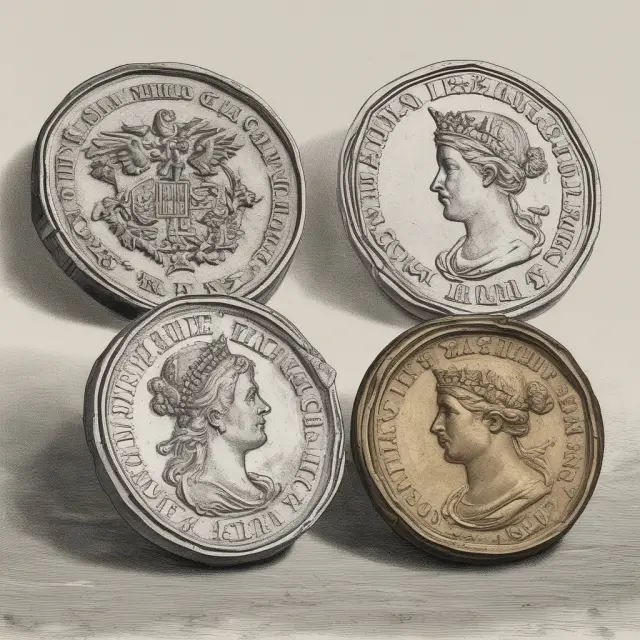
Who was Sir Thomas Gresham?
Sir Thomas Gresham (1519-1579) was an English financier, economist, and founder of the Royal Exchange in London, whose work on coinage has significantly contributed to our understanding of finance and economics. During his career as a financier for Queen Elizabeth I, he penned several treatises on the value of money and the minting process. It is this background that laid the groundwork for Gresham’s Law, which continues to influence monetary theory today.
Gresham’s Law in Historical Context
In 16th-century England, the value of currency was closely tied to its metallic content, with coins being struck from precious metals like gold and silver. However, when Henry VIII changed the composition of the English shilling, replacing substantial amounts of silver with base metals, a noticeable problem emerged: the new coins had equal or lesser value than the old ones. This circumstance led to Gresham’s observation that bad money, legally overvalued, was driving good money out of circulation.
The Law in Action: Good Money vs. Bad Money
Understanding Gresham’s Law requires grasping the difference between good and bad money. Good money refers to currency with a greater value than its face value due to its precious metal content. On the other hand, bad money is currency that has equal or less value than its nominal value. When both types of currencies are in circulation at the same time, people naturally prefer using bad money since it is legally overvalued, pushing good money to the sidelines.
The Role of Legal Tender Laws
This phenomenon, often referred to as Gresham’s Law, operates under legal tender laws that mandate all currencies to be recognized at equal face values. The law also plays a role in explaining the effects of currency debasement and how governments issue new coins with less precious metal content, leading to an imbalance between good money and bad money.
The Significance of Gresham’s Law Today
Although today’s modern economies no longer base their currencies on precious metals, the relevance of Gresham’s Law persists. The theory helps explain the stability and movement of different currencies in global markets and their relative value to each other based on market forces and economic conditions.

The Historical Context of Gresham’s Law
Gresham’s Law is a fundamental principle in economics that states “bad money drives out good.” This law was observed during the historical use of precious metals to mint coins and their subsequent value. Sir Thomas Gresham, a 16th-century financier and economist, is credited for this observation when he noticed that an attempt by Henry VIII in England to change the composition of English shillings led to the hoarding of good money and the circulation of bad money.
Born in 1519, Sir Thomas Gresham was a prominent figure during the reign of King Henry VIII. He served as the Queen’s receiver-general for the court of augmentations from 1542 until his death in 1579. It was during this time that he wrote extensively on the value and minting of coins, making significant contributions to the field of economics.
Henry VIII, seeking revenue to fund military campaigns, ordered the English mint to reduce the amount of silver content in shillings from 12 pence of silver down to just 6 pence around 1542. This action led to a situation where both old and new coins were in circulation, with good money (coins containing more silver) worth more than their face value and bad money (coins with less silver content) being worth only its stated face value. The legal tender laws of the time mandated that the two types of coins be treated as equal monetary units, forcing people to accept the new coins for their face value when making transactions.
As a result, people hoarded good money and spent bad money first to get rid of it as quickly as possible. This phenomenon led to Gresham’s Law – the principle that “bad money drives out good.” Over time, the bad money debased the currency, leading to a decrease in the purchasing power of the coins in circulation.
Gresham observed that during this period, bad money drove good money out of circulation due to its perceived lack of value and legal tender laws requiring its acceptance as equal to good money. Sir Thomas Gresham’s observation has continued to shape our understanding of currency markets and their behavior throughout history, making it an essential concept for investors and economists alike.
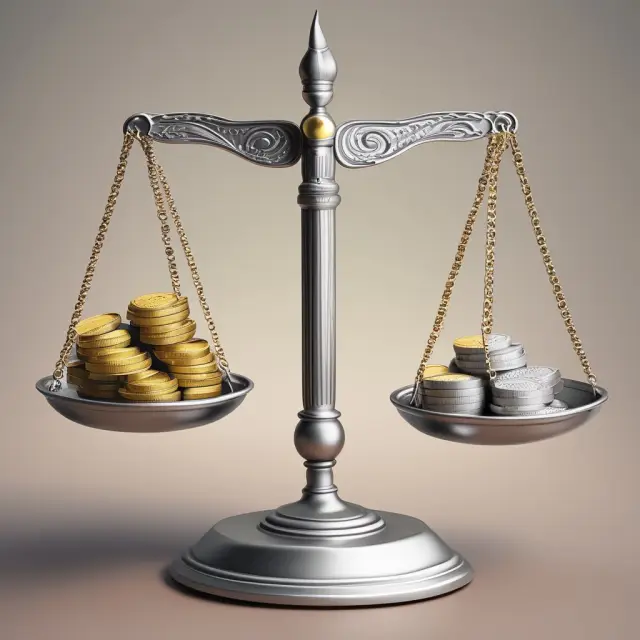
Good Money vs. Bad Money
The concept of good money and bad money lies at the core of understanding Gresham’s Law, which is a principle that dictates how different currencies circulate and interact within an economy. This historical phenomenon stems from the days when precious metals were used to manufacture coins. Sir Thomas Gresham (1519-1579) was an English financier and economist whose work on coinage contributed significantly to our understanding of this principle.
In the context of Gresham’s Law, good money is defined as currency with a higher intrinsic value or greater purchasing power compared to its face value. Conversely, bad money refers to currency with an equal or lower value than its stated face value. When both good money and bad money coexist in circulation, the natural inclination of market forces leads to the driving out of good money by bad money.
Historically, mints produced coins using precious metals such as gold and silver, which imparted inherent worth to the currency. However, governments often attempted to extend their revenue or repay debts by devaluing the currency. By reducing the amount of precious metal in new coins, these governments issued legally overvalued coins with less worth compared to older coins made from more precious metals.
As legal tender laws required these two types of coins to be treated as equal monetary units, people were forced to transact using both currencies despite their varying values. In the face of an imbalance between good and bad money, the law of Gresham’s Law dictated that people would use the legally overvalued but less valuable currency (bad money) for transactions while hoarding or hiding the more valuable old coins (good money).
This practice led to a decrease in purchasing power of the currency units, as the older, higher-value coins gradually left circulation. The process was akin to debasement, as the new coins issued by governments reduced the overall value of their currencies. In an attempt to prevent Gresham’s Law from operating, governments implemented various measures such as imposing fines or imprisonment for removing coins from circulation and even confiscating privately owned precious metal supplies.
Understanding the implications of good money vs. bad money can provide valuable insights into the behavior of different currencies in various economic conditions. As legal tender laws continue to play a role in defining the value and acceptance of currencies, Gresham’s Law offers a unique perspective on the interplay between legal frameworks and market forces.
In the modern era of fiat currency, the occurrence of Gresham’s Law is rare due to the nature of paper money or digital currencies that are not backed by any tangible assets. However, understanding this historical principle can provide a deeper appreciation for the dynamics of monetary systems and the importance of maintaining confidence in the value of currency.

Legal Tender Laws and Their Effect on Gresham’s Law
Gresham’s Law, as a principle in economics, describes how bad money drives out good money when two different currencies with varying intrinsic values coexist under the same legal tender. This law was famously attributed to Sir Thomas Gresham, who observed its operation during Henry VIII’s reign in England. Understanding the historical context and impact of legal tender laws on Gresham’s Law is crucial for grasping its significance in modern economies.
In a historical sense, Gresham’s Law can be seen as an outcome of specific monetary conditions involving precious metals used to mint coins and their subsequent value. When issuers introduced coins with less precious metal content but the same face value, they were legally overvalued while older coins containing more precious metals were legally undervalued. As a result, people hoarded the good money and spent the bad money, ultimately leading to currency depreciation as observed in Gresham’s Law.
Legal tender laws played a significant role in the operation of Gresham’s Law. These laws mandated that all currencies, including those with lower intrinsic value, were equal and had to be accepted as full payment for debts. This forced market participants to treat both good and bad money interchangeably. When people were compelled to accept coins with a lower metal content in exchange for goods or services, they preferred spending the bad money first and holding onto the good money due to its intrinsic value.
The impact of legal tender laws on Gresham’s Law can still be seen today, particularly in situations where governments implement a currency devaluation by reducing the amount of precious metal content in their coins or introducing paper money with no inherent value but recognized as legal tender. The introduction of fiat currencies and their ongoing debasement through inflation has led to the persistent trend of good money driving out bad money, although the process is less obvious due to the intangibility of most modern currencies.
In the case where all currency units are legally mandated to be recognized at the same face value, the traditional version of Gresham’s law operates. Conversely, in the absence of effectively enforced legal tender laws, good money drives bad money out of circulation as people may refuse to accept less valuable money.
An example of Gresham’s Law can be seen with paper money that was in use during the Revolutionary War in the United States. During this period, bad paper money accepted as a form of payment drove all valuable gold and silver coins from circulation. Although it is essential to note that the widespread adoption of fiat currencies has made instances of Gresham’s Law rare compared to historical times.
In conclusion, understanding the impact of legal tender laws on Gresham’s Law is crucial for grasping how governments have historically manipulated currencies and their effects on economies. While Gresham’s law may not be as relevant in today’s modern economy given the dominance of fiat currencies, its historical significance and implications remain valuable insights for professional investors and economists.
Gresham’s Law in Modern Economics
In today’s modern economy, the principle of ‘bad money driving out good’ still holds relevance, although it may not be as explicitly observed with physical currency as in the past. The term Gresham’s law has expanded to include its application to various aspects of the financial markets and economic systems. This section discusses how Gresham’s Law manifests in modern economics, providing real-life implications and examples.
In the current fiat currency regime, governments can create new money electronically without any tangible backing, making it easier for bad money to enter circulation and potentially impacting the overall value of a currency. One of the most apparent manifestations of Gresham’s Law in modern economies is inflation. When a government prints more money than necessary, the purchasing power of each unit decreases as prices rise. The consequence is that consumers tend to prefer holding good money (money with higher purchasing power) and spend their bad money (money losing value rapidly) first. This behavior can lead to a further increase in inflation rates as the supply of ‘bad’ currency continues to circulate, effectively driving out ‘good’ money.
In some cases, Gresham’s Law can also be observed in foreign exchange markets when two currencies are involved, and one is perceived to be weaker than the other. In these situations, good (stronger) money tends to drive out bad (weaker) money as traders and investors seek to minimize their losses. For instance, during a period of hyperinflation or economic instability in a given country, its currency may become less desirable, and people might prefer holding stable foreign currencies instead. In turn, the less stable currency is driven out of circulation, effectively replacing the stronger one as a means of exchange within that economy.
Additionally, the concept of Gresham’s Law has also been applied to debt markets when discussing the phenomenon of moral hazard. Moral hazard occurs when one party engages in riskier behavior because they believe they will be protected from the consequences by another party. In finance, moral hazard arises when creditors are indirectly encouraged to lend money to riskier borrowers or invest in less desirable assets, knowing that the government or a regulatory body will ultimately bail them out if things go awry. This behavior can lead to an increase in bad debt and, by extension, further debase the overall value of the financial system.
Another modern application of Gresham’s Law is seen in digital currencies, specifically stablecoins, which attempt to maintain a fixed or pegged value relative to fiat currencies like the US dollar. Although these cryptocurrencies are not legal tender themselves, they can still be used as an alternative form of exchange and store of value. In such a scenario, stablecoins with a strong reputation for maintaining their value consistently can potentially drive out unstable or volatile digital currencies from circulation due to investors’ preference for the former.
In conclusion, Gresham’s Law remains an essential principle in finance and economics despite the evolution of monetary systems over time. While its most classic manifestation as a physical currency phenomenon may be less common today, it still offers valuable insights into the behavior of currencies and financial markets under various conditions. By understanding Gresham’s Law, investors and economists can better anticipate and respond to economic trends that might impact their investments or overall financial well-being.
FAQ: Frequently Asked Questions about Gresham’s Law
What is the origin of Gresham’s Law?
Gresham’s Law was first observed by Sir Thomas Gresham during Henry VIII’s reign in England when silver coins were debased with base metals. However, it wasn’t officially named until Scottish economist Henry Dunning Macleod attributed the law to him in the 19th century.
What is the difference between good and bad money?
Good money refers to currency units with a higher value than their face value, while bad money has an equal or lesser value compared to its nominal value.
Why does Gresham’s Law occur?
Gresham’s Law occurs when governments overvalue new, debasement currencies and undervalue old ones, making the older, more valuable currency units disappear from circulation.
How can Gresham’s Law be mitigated or prevented?
Measures like implementing currency controls, prohibiting the removal of coins from circulation, or confiscating privately owned precious metal supplies have been taken throughout history to prevent Gresham’s Law from operating. In modern economies, floating exchange rates and inflation targeting can help maintain the stability of currencies, thereby mitigating the occurrence of Gresham’s Law.
What are the implications of Gresham’s Law for investors and economists?
Understanding Gresham’s Law allows investors to anticipate currency trends, assess economic risks, and make informed decisions about their investments in various financial markets. Economists can use this principle to analyze economic phenomena related to inflation, exchange rates, and monetary policy.
Can Gresham’s Law be observed outside of the currency markets?
Yes, the principle of ‘bad money driving out good’ has been applied to various aspects of the financial markets, including debt markets (moral hazard) and digital currencies. The concept can also be observed in other industries, such as real estate or commodities, where quality products or assets might be replaced by inferior alternatives due to economic factors.

The Economic Consequences of Gresham’s Law
Gresham’s Law, a fundamental principle in finance and economics, indicates that ‘bad money drives out good.’ This principle has significant economic implications and can lead to various consequences for currencies, inflation rates, exchange rates, and overall currency stability.
Understanding Gresham’s Law and its Economic Consequences
Gresham’s Law emerged from the historical context of economies where currencies were made up of precious metals like gold or silver. When the intrinsic value of coins was altered by debasing them with less valuable metal, governments issued coins that traded below their face value – “bad money” – and forced people to accept it as legal tender. Simultaneously, older coins containing higher concentrations of precious metals – “good money” – held greater market value and were often hoarded or exported.
The economic consequences of Gresham’s Law were profound. As the issuance and circulation of bad money reduced the purchasing power of currency units, inflation became a persistent problem in many economies. Inflation not only eroded people’s wealth but also led to uncertainty, instability, and distrust among traders and investors, causing currency devaluation and potential social unrest.
The Impact on Exchange Rates
Gresham’s Law also had an impact on exchange rates between currencies when economies experienced different degrees of debasement. The country with the less stable or more rapidly depreciating currency would see its bad money circulate more widely, while good money from more stable economies tended to remain within their borders. This phenomenon could lead to an imbalance in international trade flows and worsen economic disparities between countries.
Inflation: An Enduring Consequence of Gresham’s Law
Gresham’s Law contributed significantly to the historical trend of persistent inflation, which became a near-constant feature of many economies. By continuously debasing their currencies, governments risked further eroding their citizens’ trust and confidence in the value of their money. Inflation became an enduring consequence of Gresham’s Law, forcing people to adopt various coping mechanisms like hoarding precious metals, saving, or investing in foreign currencies.
Countermeasures Against Gresham’s Law
Throughout history, governments attempted to prevent the negative economic consequences of Gresham’s Law by implementing countermeasures such as:
- Currency controls – limiting citizens’ ability to exchange or transfer their wealth outside the country
- Legal penalties for hoarding coins or precious metals
- Implementing strict monetary policies and stabilizing currencies through gold standards
- Adopting a single currency, like the euro, within a monetary union
Gresham’s Law in Today’s Economy: An Uncommon Occurrence
In today’s global economy, Gresham’s Law is an increasingly rare phenomenon due to the widespread use of fiat currencies. Central banks have replaced precious metals as the basis for currency value and control inflation through interest rates and other monetary tools. As a result, examples of Gresham’s Law are limited, and its economic consequences are less prevalent than in historical periods when currencies were backed by precious metals.
In Conclusion
Gresham’s Law is an essential principle in finance and economics that has shaped our understanding of currencies, their value, and the consequences of debasement. While its direct impact on modern economies may be limited due to the global adoption of fiat currencies, it remains an instructive example of the potential pitfalls governments face when manipulating currency values for political or financial gain. By examining Gresham’s Law, we can better understand the importance of maintaining currency stability, respecting market forces, and preserving the confidence and trust of citizens in their currencies.
Countermeasures to Prevent Gresham’s Law from Operating
Throughout history, various measures have been taken to mitigate the effects of Gresham’s Law on currencies and economies. These countermeasures range from legal regulations to technological advancements.
One common approach has been implementing laws that prohibit or restrict the hoarding, melting, or exportation of coins. For instance, during the period when the U.S. changed the composition of the penny in 1982, the government passed legislation making it illegal to melt pennies and imposed hefty fines for those caught doing so. However, such measures can be difficult to enforce effectively, and people might still find ways around them.
Another way to prevent or minimize Gresham’s Law is by maintaining a strong economy and ensuring the stability of its currency. A strong economy attracts foreign investments and encourages confidence in the local currency, reducing the likelihood that people will seek out other stable currencies as an alternative. In addition, a stable currency helps maintain price stability and purchasing power, preventing the need for frequent changes to legal tender laws or debasement of the currency.
One successful example of a countermeasure to Gresham’s Law is the European Monetary Union (EMU), which was established in 1994. The EMU introduced the Euro as its common currency, which is used by all participating countries, eliminating the need for each country to have its own currency and legal tender laws. This not only reduces the complexity and costs associated with multiple currencies but also enhances the stability of the monetary union as a whole.
However, it’s essential to recognize that while these countermeasures can help mitigate the effects of Gresham’s Law, they cannot completely eliminate its possibility. The law is inherent in any currency system with multiple currencies or coins of varying values, and it will continue to be a factor that economists, investors, and policymakers need to consider when managing monetary systems.

Gresham’s Law: A Rare Phenomenon in Today’s Economy
Since Sir Thomas Gresham’s observation during the late 16th century, “bad money drives out good” has become a fundamental concept in economics known as Gresham’s Law. Although this principle was first observed when coins made from precious metals with different levels of purity were used as legal tender, its implications extend to today’s modern economy where most currencies are fiat and not backed by any tangible asset.
Gresham’s Law is rooted in the historical context of England during Henry VIII’s reign when the English shilling underwent a significant change. The old coins contained substantial amounts of silver, while the new ones were made with more base metals, such as copper. Although both currencies were legally interchangeable and circulated simultaneously, Gresham noticed that merchants and people preferred using the inferior coins since they could receive more of the debased currency for a given amount of good money. This phenomenon is commonly referred to as “Gresham’s Law.”
The principle of Gresham’s Law can be attributed to two types of currencies: “good money” and “bad money.” Good money refers to a currency with a higher intrinsic value, while bad money represents a currency with an equal or lesser value compared to its face value. When the market recognizes that one type of currency is undervalued and another is overvalued, the market forces will naturally drive out the overvalued currency and favor the undervalued one. In Gresham’s day, good silver coins were replaced by base metal ones due to their intrinsic value.
Gresham’s Law became a more prevalent issue when governments implemented legal tender laws mandating that all currencies be treated as equal despite their varying values. As the market forces no longer differentiated between good and bad money, the undervalued coins tended to remain in circulation, while overvalued ones were hoarded or exported, further reducing their presence and utility.
The effects of Gresham’s Law on a currency can be significant, including the fall in purchasing power and potential hyperinflation. The loss of confidence in the currency as the market adjusts to its intrinsic value may lead to economic instability and uncertainty. This phenomenon was evident during the chaos of Zimbabwe’s hyperinflation period when people abandoned the local currency in favor of more stable foreign currencies, despite legal penalties for not using their own national money.
In today’s economy, where fiat currencies dominate and are no longer backed by precious metals, Gresham’s Law is less common as governments control the issuance of currency and have the power to adjust its value through various monetary policies. However, there are still examples of this phenomenon when people recognize that certain currencies are overvalued or undervalued compared to others.
One example can be found in 1982 when the U.S. government changed the composition of pennies from copper-coated zinc to solid zinc, reducing their intrinsic value. While both types of pennies held equal face values, their market prices were different due to the loss of copper content. As a result, people began extracting and harvesting copper from the pre-1982 pennies, leading to increased production and availability of good money. The U.S. government responded with harsh penalties to discourage this practice; however, it highlighted the continued relevance of Gresham’s Law in modern economies.
Gresham’s Law is an essential concept for investors, policymakers, and anyone interested in understanding the dynamics of currency markets and their implications on economic stability. Understanding the forces driving the market, such as legal tender laws, market demand, and intrinsic value, can help investors make informed decisions regarding their investments and wealth preservation strategies. By staying informed about global economic trends and adjusting accordingly, one can navigate the complexities of modern finance and capitalize on opportunities in the ever-evolving financial landscape.

Conclusion: The Persistence of Gresham’s Law
Gresham’s Law, a principle that “bad money drives out good,” originated from Sir Thomas Gresham’s observation of currency markets during the 16th century. This law was a crucial concept in understanding how legal tender laws and monetary debasement influence currency values. As we explore the historical context, it becomes clear why this theory still resonates with professional investors and economists.
The root cause of Gresham’s Law lies in the intrinsic value of money. When coins were made primarily from precious metals such as gold or silver, the face value and market value could differ significantly. Governments issued new coins containing less metal content but demanded equal face value. This situation led to bad money driving out good money as people hoarded better quality coins while using the less valuable ones for transactions. The law’s principle applies when considering the relative purchasing power of currencies in circulation, regardless of whether they are physical coins or paper notes.
With the advent of legal tender laws, governments established a monopoly on the issuance and circulation of their currencies. These laws mandated that all currencies must be accepted for settling debts and financial obligations within a country. Under such circumstances, the traditional version of Gresham’s law comes into play: legally overvalued currency drives out legally undervalued currency from circulation.
The impact of Gresham’s Law extends beyond the historical context. In today’s fiat currency economy, where money is not backed by precious metals or any intrinsic value but rather a government’s promise to pay, this principle may seem obsolete. However, its relevance can be observed in various aspects like inflation, exchange rates, and currency stability.
In conclusion, Gresham’s Law remains a crucial concept for understanding the dynamics of monetary systems and how they influence people’s perceptions regarding currency values and market behavior. By analyzing the historical context, we gain insights into the persistence of this principle in shaping our modern economy.

FAQ: Frequently Asked Questions about Gresham’s Law
Gresham’s Law, named after Sir Thomas Gresham, is an economic principle stating that “bad money drives out good” when two forms of currency are in circulation. This concept originated during the period of metallic currencies but can be applied to modern economies. Here, we answer some common questions about Gresham’s Law and its historical significance.
What is Sir Thomas Gresham, and how did he contribute to economics?
Sir Thomas Gresham (1519–1579) was an English financier who wrote extensively on the value and minting of coins. He founded the Royal Exchange in London. His observations regarding money and its circulation led to the principle now known as Gresham’s Law.
When did Gresham’s Law originate, and what were its historical roots?
Gresham’s Law emerged during Henry VIII’s reign when the English shilling was debased by replacing substantial amounts of silver with base metals. People hoarded the old coins containing more silver since they held greater value than the new coins. Gresham noticed that bad money (new, debased coins) drove good money (old, undebased coins) out of circulation as a result.
What defines ‘good’ and ‘bad’ money?
Good money refers to currency with intrinsic value and can be exchanged for more valuable assets or commodities. Bad money has equal or less value than its face value and may not offer the same benefits as good money, making it less desirable.
How do legal tender laws impact Gresham’s Law?
Legal tender laws require that all currencies be recognized at the same face value. When this occurs, bad money drives out good money from circulation. However, in the absence of effective enforcement, good money can drive bad money out instead.
What is a modern application of Gresham’s Law?
Gresham’s Law remains relevant in economies with legal tender laws and devalued currencies, as people often prefer to transact with more stable foreign currencies or hold onto assets like gold and silver.
In summary, understanding Gresham’s Law provides valuable insights into currency markets, monetary systems, and economic history. This principle continues to influence professional investors, economists, and the global financial landscape as a whole.
 Next entry · No. 1,920Grexit: A Possible Solution to Greece’s Debt Crisis or a Dangerous Path Forward?
See also
-
 No. 2,606
20 Jan 2025
20 min
Jobs Growth: Understanding the Importance of Nonfarm Payrolls as an Economic Indicator for Investors
Business Strategy
No. 2,606
20 Jan 2025
20 min
Jobs Growth: Understanding the Importance of Nonfarm Payrolls as an Economic Indicator for Investors
Business Strategy -
 No. 2,112
10 Dec 2024
21 min
Understanding the High-Low Index: A Powerful Tool for Confirming Market Trends
Business Finance
No. 2,112
10 Dec 2024
21 min
Understanding the High-Low Index: A Powerful Tool for Confirming Market Trends
Business Finance -
 No. 2,032
04 Dec 2024
17 min
Understanding Harmless Warrants: A Safety Net for Bond Issuers
Finance Policy
No. 2,032
04 Dec 2024
17 min
Understanding Harmless Warrants: A Safety Net for Bond Issuers
Finance Policy -
 No. 2,010
02 Dec 2024
19 min
Hands-Off Investing: A Guide for Passive Investors
Personal Finance
No. 2,010
02 Dec 2024
19 min
Hands-Off Investing: A Guide for Passive Investors
Personal Finance -
 No. 2,006
02 Dec 2024
20 min
Understanding Hammer Candlesticks: A Bullish Reversal Pattern in Finance
Business Finance
No. 2,006
02 Dec 2024
20 min
Understanding Hammer Candlesticks: A Bullish Reversal Pattern in Finance
Business Finance -
 No. 1,978
29 Nov 2024
19 min
Understanding Guaranteed Bonds: Risks, Advantages, and How They Work
Business Finance
No. 1,978
29 Nov 2024
19 min
Understanding Guaranteed Bonds: Risks, Advantages, and How They Work
Business Finance