Understanding Market Baskets: From Consumer Price Index (CPI) to Financial Securities

Understand market baskets' role in economics and finance, from Consumer Price Index (CPI) to securities markets. Explore real-world applications.
Introduction to Market Basket: What It Is and Its Significance
A market basket is a collection of goods or assets that reflects the overall composition and performance of a specific market segment, economic measure, or financial security. The term “market basket” is derived from economics where it is used to calculate the Consumer Price Index (CPI), which measures inflation based on changes in the prices of a selected group of goods and services over time. In finance, market baskets refer to groups of securities such as stocks, bonds, or ETFs that mimic a specific index or asset class.
The Significance of Market Baskets in Economics: The Consumer Price Index (CPI) as an Example
One of the most popular and widely used market baskets is the CPI. It consists of over 200 categories of consumer goods and services, including food, transportation, housing, education, and healthcare. By tracking the price changes in this basket of goods and services, economists can estimate inflation levels and predict consumer purchase trends.
Understanding Market Baskets in Finance: Index Funds, Securities Markets, and More
Market baskets play an essential role in finance through index funds, ETFs, and securities markets. These investment vehicles enable investors to gain exposure to various asset classes or sectors without having to manually select individual investments. Market basket analysis is also used by financial analysts to monitor market trends and predict future performance.
Retail Market Basket Analysis: Predicting Customer Behavior and Optimizing Sales
Market baskets are not just limited to economics and finance but are extensively utilized in retail industries for customer segmentation, location planning, and inventory management. By analyzing the purchasing patterns of customers, retailers can optimize their marketing strategies, pricing tactics, and store layouts to maximize sales and revenue.
Market Basket Analysis: Monitoring Price Changes and Inflation
The methodology behind market basket analysis involves tracking price changes in a selected group of goods or services over time. By comparing the historical data, analysts can determine inflation trends, identify market shifts, and anticipate future price movements. This information is crucial for businesses, policymakers, and investors to make informed decisions.
Beyond Retail: Market Basket Analysis in Insurance, Credit Card Industry, and Phone Call Data Analysis
Market basket analysis finds applications in various industries beyond retail such as insurance fraud detection, credit card purchase prediction, and phone call data analysis. By analyzing large datasets, analysts can uncover hidden patterns, trends, and correlations to optimize business processes, minimize risk, and improve customer engagement.
The Role of Market Baskets in Predicting Consumer Behavior: Understanding the Methodology and Applications
Market basket analysis is based on the idea that most purchases are a combination of planned and impulse buys. The analysis attempts to predict what a consumer might have purchased if they were presented with the opportunity. Market basket analysts look at a group of items purchased by a customer and then try to determine what other items that customer might buy given similar circumstances.
Understanding Different Types of Market Baskets: CPI vs. Other Economic Measures
The Consumer Price Index (CPI) is the most widely used market basket for measuring inflation but there are other economic measures such as Gross Domestic Product (GDP), Personal Consumption Expenditures (PCE), and Producer Price Index (PPI). Each economic measure has its unique purpose, scope, and methodology. Understanding the differences between these market baskets is crucial for businesses, investors, and policymakers to make informed decisions based on the available data.
Conclusion: Market Baskets in Economics and Finance: From Consumer Behavior to Inflation Prediction
Market baskets are an essential tool for understanding consumer behavior, measuring inflation, and making informed financial investment decisions. By analyzing the price changes of a specific group of goods or services over time, market basket analysis provides valuable insights into economic trends, purchasing patterns, and future price movements. Whether it’s used in retail, finance, insurance, or credit card industries, market basket analysis is an indispensable resource for businesses, investors, and policymakers to make data-driven decisions.
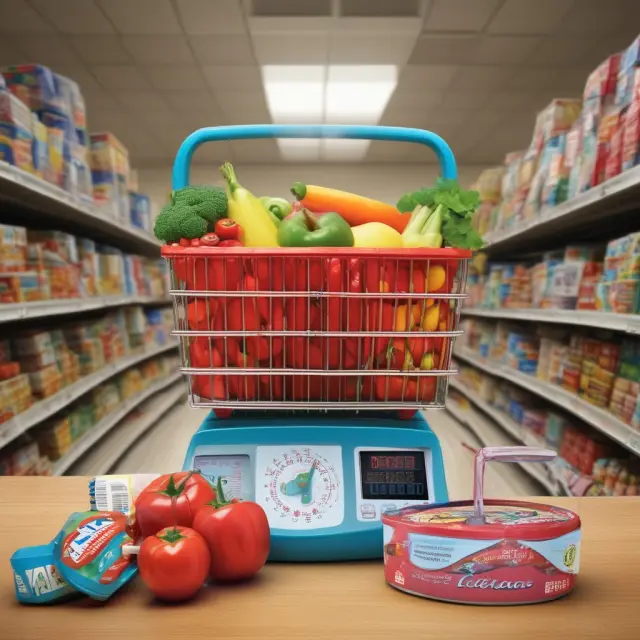
Market Basket Economics: Consumer Price Index (CPI) as a Market Basket
The Consumer Price Index (CPI), also known as the cost of living index, is a widely used market basket in economics that measures inflation by tracking the changes in the prices of a representative sample of goods and services over time. As a market basket, CPI reflects consumers’ spending habits and provides valuable insights into the economy’s overall health.
The CPI consists of more than 200 categories covering various sectors such as housing, transportation, healthcare, education, food, and energy. The US Bureau of Labor Statistics (BLS) gathers price data for these items from over 80 metropolitan areas throughout the country to create a comprehensive representation of consumer spending patterns.
The CPI plays a crucial role in both macroeconomic measurement and prediction. For instance, it serves as a primary tool for determining inflation rates and adjusting monetary values over time. A rising CPI indicates that prices are increasing, meaning consumers must pay more for the same basket of goods and services than they did previously. In contrast, a declining CPI suggests deflation, where the cost of goods is decreasing.
Moreover, the CPI provides essential information to governments and central banks in setting monetary policies. For example, the US Federal Reserve (Fed) uses the CPI as one of its primary indicators to target an inflation rate of around 2%. In addition, the Fed also considers other economic measures like the Producer Price Index (PPI), which tracks price changes at the producer level, and the Personal Consumption Expenditures (PCE) price index, which focuses on personal consumption rather than an average consumer.
The significance of CPI extends beyond just measuring inflation. Economists also use it to identify trends in spending patterns and understand how economic changes influence consumer behavior. For instance, a consistent increase in housing prices within the CPI might suggest a housing market bubble or indicate that home ownership is becoming less affordable for many households.
Additionally, the CPI can be used as a deflating tool to adjust monetary values over time. This allows economists and policymakers to compare economic data across different periods and assess changes in real terms. For example, a company’s revenue growth rate might appear impressive at first glance, but when adjusted for inflation using the CPI, it may reveal a different story.
In summary, the Consumer Price Index (CPI) is an essential market basket in economics that reflects consumers’ spending patterns and provides valuable insights into overall economic health. By tracking price changes for various goods and services, the CPI enables economists to measure inflation rates, predict trends, adjust monetary values, and inform policy decisions.

The Significance of Market Baskets in Finance: Index Funds and Securities Markets
Market baskets hold a crucial role not only for economists but also for the finance industry, specifically through index funds and securities markets. In finance, market baskets refer to a grouping of financial assets or securities that mirror a particular market or market segment’s performance. The idea is similar to the Consumer Price Index (CPI), where market basket economics monitors price changes and inflation levels; however, in finance, the focus shifts from goods and services to stocks, bonds, or other securities.
Index Funds: A Market Basket for Investors
Index funds are investment vehicles that aim to replicate the performance of a specific market index by holding all the securities within it. This concept is based on the belief that it’s challenging for individual investors to outperform a well-diversified, broadly representative benchmark like the S&P 500 or Dow Jones Industrial Average (DJIA).
The rationale behind index funds as a market basket lies in their ability to offer investors instant diversification, lower costs through passive investing, and access to an entire market. By holding all of the securities within a specific index, an investor gains exposure to the overall market trends while minimizing risk from individual stock performance volatility.
Securities Markets: Market Basket in High-Frequency Trading
Market baskets are also essential in securities markets, where they are used in high-frequency trading strategies, such as basket trading and market making. Program traders use market baskets to enter into a series of positions in several stocks or currencies at the same time. Basket trading involves buying or selling a predefined combination of securities based on their relationship to one another rather than individual security performance. This approach aims to reduce transaction costs, capture small market inefficiencies, and increase profitability by utilizing market basket data more efficiently.
Additionally, market makers use market baskets as a tool to provide liquidity in securities markets by setting bid-ask prices for multiple related securities simultaneously. This strategy allows them to minimize their risk exposure while facilitating trading between buyers and sellers. In summary, market baskets play an integral role in the finance industry through index funds and securities markets. By offering investors diversification, lower costs, and access to broader market trends, index funds provide a passive investment solution. Meanwhile, basket trading and market making strategies in securities markets utilize market basket data for increased efficiency, reduced transaction costs, and risk management.
Market Basket Analysis: Understanding Retail Consumer Behavior
A market basket is a selected group of items purchased together for analysis by retailers and economists alike. This information is used to uncover buying trends, predict consumer behavior, and optimize store layouts. In the realm of retail, market basket analysis (MBA) offers valuable insights into consumers’ spending patterns and preferences.
Market Basket Analysis in Retail: Predicting and Increasing Impulse Buys
Retailers employ MBA to understand and improve their sales strategies by predicting what items customers are likely to purchase together. This information can lead to effective cross-selling, bundling, and locating complementary products in a store. For instance, if data shows that customers frequently buy bread and milk together, supermarkets may place these two items strategically close to each other on the shelves to encourage impulse purchases.
Location: Optimal Placement of Products
Market basket analysis helps retailers determine where to position certain products within a store to attract more sales. For example, placing a high-margin product next to a loss leader (an item sold below its cost price) can generate additional revenue.
Demographics: Targeting Specific Customer Segments
Retailers can leverage MBA to identify demographic trends and adjust their offerings accordingly. For instance, if data reveals that a particular age group or income level consistently purchases a specific product, the retailer may cater to this segment by offering promotions, discounts, or extended hours to attract more customers.
Purchasing Trends: Anticipating Future Demands
MBA enables retailers to anticipate future purchasing trends based on historical data. For instance, if sales of summer clothing items spike in the early spring, retailers can stock up earlier and offer promotions to capitalize on this trend.
Market basket analysis goes beyond retail: it’s used across industries to predict credit card purchases, phone call patterns, insurance fraud, and more by analyzing groups of related transactions. The importance of market basket analysis lies in its ability to reveal hidden trends and valuable insights that can help organizations make informed decisions and improve their bottom line.
How Market Baskets Work: Monitoring Price Changes and Inflation
A market basket is an essential tool for understanding economic fluctuations, particularly price changes and inflation. By analyzing the prices of a representative selection of goods and services, economists can identify trends and make predictions about future changes in the overall economy.
The Consumer Price Index (CPI) is a well-known example of a market basket used to measure inflation. The CPI consists of over 200 categories, including education, housing, transportation, and recreation, which are combined to create a representative sample of consumer spending in an economy. The prices for each category within the basket are tracked over time and compared to assess changes in the cost of living.
For instance, if the price of gasoline increases significantly, the CPI will reflect this rise in the transportation category, enabling economists to monitor the impact on inflation rates. By examining the overall trend of these categories, policymakers can make informed decisions about monetary and fiscal policies to address potential issues.
In finance, market baskets are crucial for tracking the performance of various investment assets. The S&P 500 index, a common market basket for stock investments, represents a broad sample of publicly traded companies in the United States. By comparing the performance of an individual investor’s portfolio against this benchmark, they can assess their investment strategy and make informed decisions to optimize their returns.
Market baskets are also crucial for businesses in retail industries seeking to optimize operations and increase sales. Retailers use market basket analysis to understand consumer purchasing patterns, which allows them to tailor promotions, product placement, and pricing strategies based on the items most frequently purchased together by customers.
Moreover, market basket analysis has applications beyond retail. For example, it can be used to analyze credit card transactions, predict phone call trends, and detect insurance fraud, among other potential uses. By understanding the significance of market baskets in monitoring price changes and inflation, investors, businesses, and economists alike can make informed decisions that positively impact their operations and investment strategies.

Market Basket Analysis: Beyond Retail: Predicting Credit Card Purchases and Phone Calls
In addition to retail applications, market basket analysis holds significant implications in industries like credit card companies, call centers, and insurance fraud detection. By analyzing consumer transactions or communication patterns within the context of a market basket, organizations can identify trends, prevent fraud, and tailor services to meet individual customer needs.
Credit Card Companies
Market basket analysis comes into play when credit card issuers aim to understand their customers’ spending patterns. They use historical transaction data to segment customers based on their purchasing behavior and predict future purchases. For instance, if a customer frequently buys electronics, the company might assume that they will likely make similar purchases in the future, offering them targeted promotions or discounts.
Call Centers
Call centers employ market basket analysis for understanding customers’ communication patterns to improve service offerings and identify potential issues proactively. By analyzing phone call records within a specific time frame, call center agents can determine which topics are commonly discussed and the reasons behind such conversations. This knowledge helps them anticipate customer queries and concerns, ensuring effective resolution and enhancing overall customer satisfaction.
Insurance Fraud Detection
Market basket analysis is an essential tool in insurance fraud detection as it enables organizations to identify suspicious patterns of claims within their database. By analyzing policyholders’ claim history, insurance companies can determine if the frequency or severity of claims falls outside of expected norms for a particular demographic or region. This approach helps insurers uncover potential fraud and take appropriate action against those attempting to exploit their services.
In summary, market basket analysis extends beyond retail applications and offers significant benefits to various industries by enabling better understanding of consumer behavior, communication patterns, and fraud detection. As technology continues to evolve, market basket analysis will continue to play a crucial role in unlocking insights that can help organizations make informed decisions and tailor services to meet individual customer needs.

Types of Market Baskets: CPI vs. Other Economic Measures
Market baskets serve as a powerful tool for understanding various economic measures, most notably the Consumer Price Index (CPI). This section delves into the differences between the CPI and other crucial economic measures like Gross Domestic Product (GDP), Personal Consumption Expenditures (PCE), and Producer Price Index (PPI).
The Consumer Price Index (CPI) is a popular market basket that economists, policymakers, and investors use to gauge price changes and determine inflation. It represents the weighted average of prices for over 200 consumer goods and services. The CPI covers various sectors, including housing, transportation, recreation, education, and more, making it an all-encompassing economic indicator that provides valuable insights into consumer spending patterns and overall price levels.
Gross Domestic Product (GDP) is another essential macroeconomic measure, representing the total value of goods and services produced within a country’s borders over a specified period. Unlike CPI, GDP does not provide insight into price changes but rather the actual production and consumption levels in an economy. It serves as the primary indicator for measuring economic growth and well-being.
Personal Consumption Expenditures (PCE) is another market basket closely related to CPI, which measures the total spending of households on goods and services, including food, transportation, housing, and healthcare. PCE differs from the CPI in that it includes both non-durables and durables, making it a more comprehensive representation of consumers’ overall expenditures.
The Producer Price Index (PPI), also known as the producer price indexes, measures the average change over time in the selling prices received by domestic producers for their output. It focuses on wholesale goods and services and is an essential measure to gauge inflationary pressures at the production level. The PPI differs significantly from the CPI as it provides insights into price changes affecting businesses rather than consumers.
When comparing market basket measures like CPI, GDP, PCE, and PPI, understanding their unique strengths, weaknesses, and applications is essential for gaining a well-rounded view of an economy. These economic indicators offer valuable information to policymakers, investors, and analysts looking to understand various aspects of the economy.

Case Study: Real-World Examples of Market Basket Analysis
Market basket analysis has been a valuable tool for economists and financial analysts in understanding consumer behavior, measuring economic indicators like inflation, and informing policy decisions. In this section, we delve deeper into real-world examples of market basket analysis application.
The Consumer Price Index (CPI), a widely used market basket, is an essential measure for monitoring inflation rates and adjusting monetary values over time. From 2020 to 2021, the CPI in the United States increased from 1.2% to 4.7%, marking the fastest rate of increase since 2017 (US Bureau of Labor Statistics, 2021). This substantial increase was attributed primarily to rising prices of gas, medical care, housing, and rents (CBOE, 2022).
The CPI is a significant indicator that people have confidence in the economy and are willing to spend. By monitoring this index, governments and central banks can set monetary policies accordingly, aiming to keep inflation around their target rate. In June 2022, with the U.S. facing the highest inflation in 40 years, the Federal Reserve raised the interest rate by 75 basis points to combat the strong economy and inflation (Federal Reserve, 2022).
Market basket analysis is also crucial for retailers seeking to understand consumer purchasing trends and optimize their store layouts. Retailers can analyze groups of products that customers often buy together and make assumptions about additional items a customer might consider purchasing based on these patterns. For instance, if a customer frequently buys diapers, retailers may assume they also need wipes or baby clothing (Brown, 2018).
Market basket analysis can be extended to industries beyond retail, such as insurance fraud detection. Analyzing claims data, insurers can identify suspicious patterns in the occurrence and combination of claims, potentially indicating fraudulent activity (Maharajh & Moodley, 2021). Similarly, telecommunications companies can analyze call records using market basket analysis to understand customer behavior and optimize advertising campaigns.
In conclusion, market basket analysis is an essential tool for understanding consumer purchasing trends, monitoring inflation rates, and informing policy decisions in various industries. Real-world examples demonstrate the importance of this approach in retail, insurance fraud detection, and economic measurement. As technology advances, market basket analysis will continue to provide valuable insights for businesses and policymakers alike.

Market Basket Analysis: Limitations and Challenges
One crucial aspect of market basket analysis lies in understanding its limitations and challenges. Market baskets may face several issues when attempting to provide accurate predictions or insights, such as data limitations and the subjectivity in selecting items for a market basket.
Data Limitations: The accuracy and validity of market basket analysis heavily depend on the quality and quantity of available data. Retailers might not have access to all customers’ purchasing history, which may lead to an incomplete view of consumer behavior. Moreover, data from various sources can differ significantly due to varying collection methods or inconsistencies. To mitigate these concerns, retailers often collect data from multiple sources and apply techniques like statistical analysis and machine learning algorithms to refine their market basket models.
Subjectivity: Market basket analysis is susceptible to subjectivity when determining the items to include in a market basket. The choice of items can influence the resulting insights, leading to biased results if not carefully selected. This challenge becomes even more critical for complex systems with numerous interdependent factors. For instance, retailers might face difficulty deciding on which categories to include or exclude, affecting the accuracy of predictions and analysis. To minimize subjectivity, experts recommend selecting items based on their statistical significance and relevance to the overall analysis goals.
Another limitation arises in situations where customer purchasing behavior is irregular, as it may not follow the typical patterns captured by market basket analysis. For instance, some customers might make one-time purchases for special events or unusual circumstances that do not align with their regular buying habits. In such cases, analysts should consider alternative approaches like collaborative filtering and association rule mining to identify underlying patterns and connections among data points.
In conclusion, market basket analysis offers valuable insights into customer behavior and trends in various industries, including retail, finance, insurance, and telecommunications. However, it is essential to recognize the limitations and challenges associated with its implementation, such as data limitations and subjectivity in selecting items for a market basket. By understanding these factors, analysts can develop more accurate models and insights that cater to their specific objectives and use cases.

FAQ: Frequently Asked Questions About Market Baskets
What is a market basket and why is it significant in both economics and finance?
A market basket is a collection of goods or assets designed to track the general performance of a specific market segment. It plays a crucial role in economics by providing an estimate for inflation through indices like the Consumer Price Index (CPI), and in finance, index funds utilize baskets to provide investors with benchmarks against which to compare investment returns.
What is the Consumer Price Index (CPI) and how does it relate to market basket analysis?
The Consumer Price Index (CPI) is an economic measure used to track price changes for a specific basket of goods and services over time. Market basket analysis forms the basis of CPI calculation, where each item in the basket is given a weight based on its proportionate consumption. The CPI is widely used as a macroeconomic indicator and provides essential insights into consumer purchase trends and inflation levels.
Can market basket analysis be applied beyond retail?
Yes, market basket analysis goes beyond retail applications and can be utilized in various industries to predict credit card purchases, phone calling patterns, insurance fraud, and other areas. By analyzing customer behavior and purchasing patterns, businesses can gain valuable insights into consumer demographics, preferences, and trends.
What is the difference between market baskets used for economic measures like CPI and market basket analysis in securities markets?
Market baskets used for economic measures like CPI consist of various consumption categories with assigned weights to represent average purchases. In contrast, securities markets use a basket of stocks, bonds, or other securities as a benchmark against which investors can compare their investment returns. These market baskets serve as index funds like the S&P 500.
What is an example of a real-world application of market basket analysis?
A retail store may use market basket analysis to predict and increase impulse purchases based on groups of items a customer has bought. Market basket analysts look at a group of items purchased by a customer and then try to determine what else that customer might buy, helping the store decide where to locate items, which demographics make certain purchases, and when those purchases are most likely to occur. Additionally, market basket analysis can be used to predict credit card purchases, phone calling patterns, insurance fraud, and more.
How does market basket analysis impact economic indicators like inflation?
Market basket analysis plays a significant role in measuring inflation by providing an estimate of the average change in price levels for a specific basket of goods and services over time. Central banks use this information to set monetary policies and combat inflation when necessary, maintaining a stable economy for their citizens.
 Next entry · No. 3,126Understanding Market Breadth: Indicators and Their Significance for Institutional Investors
See also
-
 No. 4,530
26 Jun 2025
18 min
Understanding Retail Price Index (RPI): An Older Measure of Inflation Still in Use
Economics
No. 4,530
26 Jun 2025
18 min
Understanding Retail Price Index (RPI): An Older Measure of Inflation Still in Use
Economics -
 No. 4,987
02 Aug 2025
19 min
Understanding TINA: The ‘There is No Alternative’ Effect in Finance and Investing
Business Finance
No. 4,987
02 Aug 2025
19 min
Understanding TINA: The ‘There is No Alternative’ Effect in Finance and Investing
Business Finance -
 No. 4,841
21 Jul 2025
23 min
Understanding Tail Risk and its Significance in Finance and Investment
Business Finance
No. 4,841
21 Jul 2025
23 min
Understanding Tail Risk and its Significance in Finance and Investment
Business Finance -
 No. 4,765
15 Jul 2025
18 min
Understanding Stock Quotes: A Comprehensive Guide for Institutional Investors
Business Finance
No. 4,765
15 Jul 2025
18 min
Understanding Stock Quotes: A Comprehensive Guide for Institutional Investors
Business Finance -
 No. 4,757
14 Jul 2025
19 min
Stock Market Crashes: Understanding the Causes, Effects, and Preventive Measures
Business Finance
No. 4,757
14 Jul 2025
19 min
Stock Market Crashes: Understanding the Causes, Effects, and Preventive Measures
Business Finance -
 No. 4,705
10 Jul 2025
19 min
Understanding and Investing in the S&P 500 Dividend Aristocrats Index: History, Examples, and Strategies
Business Finance
No. 4,705
10 Jul 2025
19 min
Understanding and Investing in the S&P 500 Dividend Aristocrats Index: History, Examples, and Strategies
Business Finance