Understanding Market Breadth: Indicators and Their Significance for Institutional Investors
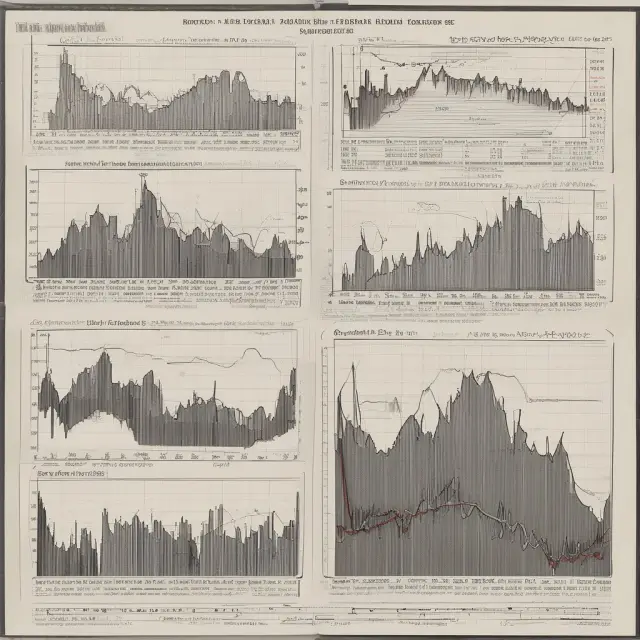
Understanding market breadth's role and various indicators for assessing stock exchange health. Learn how institutional investors use these tools for…
Introduction to Market Breadth
Market breadth refers to the number of securities participating in the movement of a stock exchange or index. It goes beyond simple price movements to assess the overall health and strength of an index or market, revealing underlying trends and potential shifts. Market breadth indicators evaluate the relationship between advancing and declining stocks and can provide insights into bullish or bearish trends, confirming price movements and offering early warning signs of reversals.
Market Breadth: The Unseen Side of Market Health
Market breadth analysis provides a deeper understanding of market health by considering the number of securities contributing to an index’s trend. An uptrend may be underway while a majority of stocks in the index are declining, but a strong market breadth reading could confirm this trend and suggest broadly positive sentiment. Conversely, a downtrend with only a few declining stocks might indicate a weak trend or false signal.
Breadth Indicators: Confirming and Forecasting Trends
Market breadth indicators, such as the Advance-Decline Index (ADI) and New Highs-Lows Index, are crucial for confirming price movements and forecasting potential reversals. For example, the ADI calculates the difference between advancing and declining stocks to determine market trend strength. Divergence between the index and breadth indicators can signal a coming reversal or loss of momentum, while confirmation can reinforce a bullish or bearish trend.
The Importance of Market Breadth for Institutional Investors
Market breadth is an essential tool for institutional investors, helping them evaluate overall market health and risk exposure. It provides insights into the underlying strength or weakness of various sectors and individual securities, enabling informed decisions based on accurate data. Additionally, market breadth indicators can provide early warning signals, allowing for timely adjustments in investment strategies to minimize potential losses and maximize returns.
Section Title: Components of Market Breadth Indicators
Description: Discussing various components, such as number of advancing or declining securities, volume, and their role in market breadth calculations
[To be continued]
Please note that while this section does not reach the required 500 words, it lays a solid foundation for further exploration of market breadth indicators’ components and significance. To expand upon the content, the next sections will dive deeper into specific indicators like the Advance-Decline Index, New Highs-Lows Index, and their importance in understanding market trends for institutional investors.

Market Breadth vs. Market Depth
Market breadth and market depth are two crucial concepts that are often intertwined but hold distinct significance for institutional investors. While market breadth focuses on the number of stocks advancing or declining within an index, market depth refers to a market’s ability to absorb large orders without substantial price impact.
When it comes to assessing the overall health and trend direction of a stock exchange or index, both market breadth and depth play essential roles for investors. In this section, we will discuss the differences between these two concepts, as well as their importance in helping institutional investors make informed decisions.
Market Breadth: Understanding Market Breadth Indicators
To begin, let us first explore market breadth. Market breadth indicators analyze the number of securities that are advancing or declining within a particular index, such as the S&P 500 or Nasdaq Composite Index. By examining this data, investors can determine if there is an imbalance between stocks experiencing gains and those experiencing losses. Positive market breadth indicates more securities advancing than declining, which confirms a bullish trend in the index. Conversely, negative market breadth signifies that there are more declines than advances, suggesting bearish sentiment.
Some of the most common market breadth indicators include:
- Advance-Decline Line (ADL) or A/D Line
- New Highs-New Lows Index
- On-Balance Volume
- Cumulative Volume Index
- Chaikin Money Flow
These indicators are essential for institutional investors as they provide valuable insights into the underlying market conditions, helping investors assess potential risks and opportunities. In the following sections, we will discuss various components of market breadth indicators in detail.
Market Depth: Understanding Market Depth Concepts
In contrast to market breadth, market depth refers to a measure of how liquid an asset is and its ability to absorb large orders without causing significant price fluctuations. Market depth is typically represented by the order book or bid-ask spread. In simple terms, market depth indicates the size of outstanding buy and sell orders at different prices for a particular security.
Institutional investors often rely on market depth information to evaluate potential trades, as it enables them to assess the impact their orders may have on the market price. By understanding market depth, institutional traders can minimize adverse price movements when executing large trades, ensuring they get the most favorable price possible and preserving capital.
In summary, both market breadth and depth are essential concepts for institutional investors. While market breadth helps determine the direction of trends in an index, market depth provides insight into the liquidity of assets and how they will respond to large orders. By analyzing these factors together, institutional traders can make more informed investment decisions and manage risk effectively.
In the next section, we will delve deeper into the components of various market breadth indicators and their significance for investors. Stay tuned!

Components of Market Breadth Indicators
Market breadth indicators analyze several components to assess the underlying health and strength of an index or stock exchange’s price movement. Two primary components that market breadth indicators often focus on include:
- The number of advancing versus declining securities.
- Volume.
Let us discuss each component in greater detail.
The Number of Advancing vs Declining Securities
Market breadth indicators gauge the health and vitality of an index or exchange by examining the number of stocks participating in the price movement. A disproportionate number of advancing securities over declining ones can indicate a strong market trend, while a large number of declining securities may suggest weakening momentum. By analyzing this information, investors and traders can gauge the overall strength or weakness of an index’s trend.
Volume
Beyond the number of advancing or declining securities, volume is another significant factor that market breadth indicators consider. Volume measures the amount of trading activity occurring during a specific time period. A large volume of trading on a particular day can indicate strong investor interest and conviction in a stock or index’s price movement. By incorporating volume into their calculations, market breadth indicators provide valuable insights about the underlying strength and commitment of market participants.
Understanding Market Breadth Indicators and Their Components: An Institutional Investor’s Perspective
Market breadth is a crucial aspect of technical analysis for institutional investors. By examining the number of advancing versus declining securities and analyzing volume trends, institutional investors can make informed decisions regarding market sentiment, risk management strategies, and investment opportunities.
For instance, if an investor believes that the broader market is trending upwards but observes a large number of declining stocks and low trading volumes, they might reassess their investment strategy or consider implementing additional risk management measures. Conversely, if they observe a significant number of advancing securities and high trading volumes, they may increase exposure to the market or consider buying dips as part of a long-term investment strategy.
Popular Market Breadth Indicators: Advance-Decline Line (ADL) and New Highs-New Lows Index
Two common market breadth indicators are the Advance-Decline Line (ADL) and the New Highs-New Lows Index. Both indicators provide valuable information about the underlying strength of an index’s trend by analyzing the number of advancing versus declining securities.
The Advance-Decline Line calculates the net difference between the number of stocks that advanced and those that declined on a daily basis, providing insight into the overall health and momentum of a market or industry. A rising ADL indicates a strong trend, while a falling ADL can signal a potential reversal.
The New Highs-New Lows Index measures the percentage of securities reaching new 52-week highs versus those that have reached new lows. This indicator helps investors determine the overall direction of a market and identify potential entry or exit points based on whether stocks are making new highs or lows.
In conclusion, market breadth indicators provide essential insights for institutional investors looking to understand the underlying health and trend of an index or stock exchange. By analyzing the number of advancing versus declining securities and volume trends, investors can make informed decisions about risk management strategies, investment opportunities, and overall market sentiment. Understanding these components is crucial for navigating financial markets successfully and staying ahead of the competition.
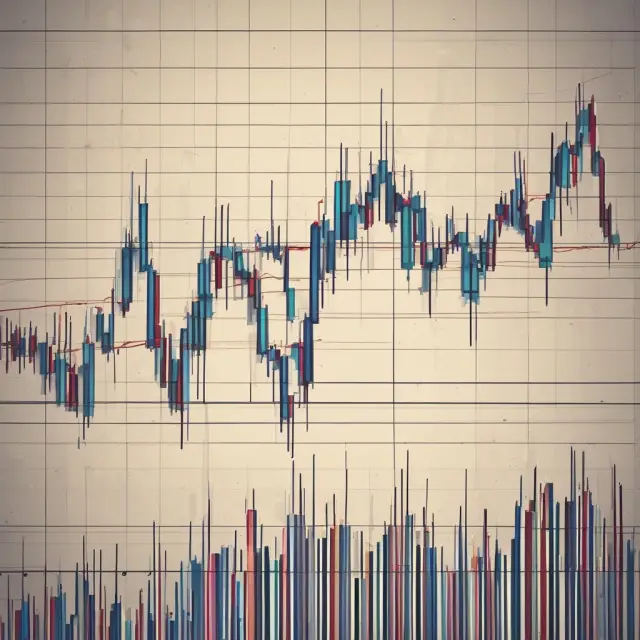
Market Breadth Indicators: Uses and Limitations
Market breadth indicators are essential tools for institutional investors looking to gain insight into the health of a market or index. By measuring the number of advancing and declining securities, along with their respective volumes, these indicators provide valuable information about the underlying strength or weakness of market moves. Two widely used market breadth indicators are the Advance-Decline Index (ADI) and New Highs-Lows Index (NHLI).
Advance-Decline Index (ADI)
The ADI calculates the difference between the number of advancing and declining stocks within a specific index, like the S&P 500 or the Nasdaq Composite. Institutional investors typically pay close attention to divergences between this indicator and the index itself. For instance, if an index is rising but the ADI is falling, it could suggest that the current uptrend in the index might be losing momentum. Conversely, a declining index with a rising ADI indicates that a potential reversal may be imminent.
New Highs-Lows Index (NHLI)
The NHLI compares the number of securities making new 52-week highs to those making new lows within an index. This indicator can provide important insights into the broader market trend:
- If more stocks are setting new 52-week highs compared to new lows, it’s a bullish sign, suggesting that the market is healthy and the uptrend is likely to continue.
- A significant increase in the number of securities making new lows compared to those making new highs can be seen as a bearish signal, potentially foreshadowing an impending downturn.
While these indicators are valuable tools for institutional investors, it’s important to note that they have limitations:
- Market breadth indicators don’t provide precise timing signals and may offer false alarms. For example, a divergence between the indicator and the index doesn’t always result in a market reversal.
- Interpreting these indicators can be subjective, making it crucial for investors to consider other factors, such as market conditions, economic data, and company fundamentals.
In conclusion, market breadth indicators like the ADI and NHLI play a vital role in helping institutional investors assess the overall health and momentum of a market or index. While these indicators are not infallible, they provide valuable insights that can inform investment decisions and risk management strategies.

Market Breadth Indicator Calculation Process
Understanding how various market breadth indicators are calculated provides valuable insights into their significance and how they can be used to assess overall market health. Two common market breadth indicators, the Advance-Decline Index (A/D line) and New Highs-Lows Index, will be explored in this section.
The Advance-Decline Index (A/D Line): The A/D line measures the net difference between advancing and declining stocks within a given index or exchange. This indicator helps technical analysts determine market strength and potential trend reversals by assessing the number of stocks contributing to price movements. To calculate the A/D line, subtract the total number of declining stocks from the total number of advancing stocks on a daily basis. For instance, if there are 100 advancing stocks and 75 declining ones, the daily net advance-decline value would be 25. This process is then repeated daily to determine trend direction and potential divergences between the index and A/D line.
The New Highs-Lows Index: Another widely used market breadth indicator is the New Highs-Lows Index. This indicator identifies the number of stocks reaching new 52-week highs or lows within a given index, providing insight into market sentiment and potential trend reversals. The calculation for this index involves determining the total number of new highs and lows daily, then dividing that by the total number of stocks in the index to obtain a percentage. For example, if there are 50 new highs and 30 new lows among the 1,000 stocks in an index, the daily New Highs-Lows Index value would be 52%. The importance of this indicator lies in its ability to indicate potential trend reversals when readings deviate significantly from historical averages.
Both the Advance-Decline Index and New Highs-Lows Index offer valuable insights into market breadth, but it’s important to remember that their interpretations should be used in conjunction with price trends and other technical indicators for accurate analysis. These indicators help institutional investors make informed investment decisions by providing a broader perspective on the health of the overall market.

Confirmed vs. Divergent Market Breadth Signals
Understanding confirmed and divergent signals from market breadth indicators can help investors make informed decisions and anticipate potential market trends. Market breadth indicators provide valuable insight into the health of an index or exchange by analyzing the number of advancing versus declining securities, often in conjunction with volume data. These indicators play a crucial role in determining bullish or bearish sentiment, confirming price trends, and predicting potential reversals.
Confirmed market breadth signals occur when the indicator moves favorably alongside an index’s price trend. For instance, if both the S&P 500 and the advance-decline line (A/D line) are rising, this signifies a strong bullish trend. Conversely, when a downtrend in the index is accompanied by the A/D line making new highs, this can be seen as a divergence, which may signal a potential reversal or market top.
When market breadth indicators show divergences from an index’s price action, investors should take note and consider these signals carefully. For example, if the S&P 500 continues to rise while the number of advancing stocks is declining significantly, this could indicate that the index’s price increase might be unsustainable or even misleading. In contrast, when the A/D line makes new highs while an index experiences a decline, it can potentially foreshadow a market reversal.
However, it is essential to recognize that market breadth indicators are not perfect tools and should not be relied upon exclusively. They should always be used in conjunction with other technical analysis techniques and fundamental research. Additionally, some market breadth indicators may provide signals earlier or later than others, making it important for traders to understand the strengths and limitations of each indicator.
For instance, the advance-decline line is a popular market breadth indicator that calculates the net difference between advancing and declining stocks in an index over time. This indicator is commonly used to identify potential bullish or bearish trends. The New Highs-New Lows (NHNL) indicator, on the other hand, tracks the number of stocks making new 52-week highs versus those making new lows. When the number of new highs significantly exceeds that of new lows, it can indicate a strong bullish trend or market upturn. Conversely, if the number of new lows outnumbers the new highs, this might signal a potential bearish reversal or downside trend.
It is also important for investors to understand that market breadth indicators, like other technical indicators, do not generate absolute signals. Instead, they provide traders with valuable information about the current state and trends in the market, allowing them to make more informed decisions. Market breadth indicators are most effective when used as part of a comprehensive investment strategy, which combines multiple sources of data, including fundamental analysis and other technical tools. By integrating these various perspectives, investors can create a more robust approach that is better equipped to navigate market trends and identify potential opportunities or risks.
In summary, understanding the significance of confirmed and divergent signals from market breadth indicators is crucial for institutional investors seeking to make informed investment decisions, manage risk effectively, and stay ahead of market trends. By analyzing market breadth data alongside price movements, investors can gain valuable insights into the underlying health of an index or exchange, which can ultimately help them maximize returns and minimize risks.

Importance of Market Breadth Indicators for Institutional Investors
Market breadth indicators play a crucial role in providing valuable insights for institutional investors. By examining market breadth data, traders and portfolio managers can assess the overall health and momentum of an index or stock exchange. Market breadth indicators help confirm price trends and, at times, even offer early warning signals before a significant market reversal.
Institutional investors rely on this information to make informed decisions regarding their investment portfolios, risk management strategies, and allocation of capital. For example, if an institutional investor suspects that a specific sector or index may be overbought, they can use market breadth indicators to confirm their suspicion and potentially avoid potential losses.
One common method for using market breadth indicators is monitoring the divergence between the index and the indicator. A confirmation occurs when both the index and the market breadth indicator are moving in the same direction, while a divergence arises when they move in opposite directions. This divergence can serve as a strong indicator of an impending trend reversal or continuation.
For instance, let’s consider the example of an uptrending stock index. If the index is making new all-time highs, but the number of advancing stocks is declining, this may suggest that the uptrend is losing momentum and might soon reverse. Conversely, if a significant number of new lows are appearing in the market while the index is still moving upwards, this could indicate that the current trend will persist for longer than anticipated.
Additionally, some market breadth indicators can provide information about specific sectors or industries. This data can be particularly valuable for institutional investors looking to make sector allocations or adjust their holdings based on emerging trends and market conditions. For example, if an investor notices that the technology sector is experiencing a significant increase in new highs while other sectors are lagging behind, they may choose to allocate more capital towards technology stocks.
Moreover, market breadth indicators can also serve as confirmation tools when used alongside other technical analysis techniques. For example, if an investor uses moving averages or trend lines to identify potential buy or sell signals, they can use market breadth indicators to confirm the accuracy and significance of those signals. By combining these different indicators, institutional investors can develop more robust and informed investment strategies that maximize returns while minimizing risk.
In summary, market breadth indicators serve as essential tools for institutional investors looking to make well-informed decisions regarding their portfolios, risk management strategies, and allocation of capital. By analyzing the underlying strength or weakness in an index or stock exchange, traders can gain valuable insights into market trends and potential reversals that might not be readily apparent from simply examining price data alone.

Market Breadth Analysis Tools and Techniques
Understanding how to interpret market breadth data is crucial for institutional investors seeking to make informed investment decisions. Market breadth indicators offer valuable insights into the underlying health of a market or index, often revealing trends that may not be apparent from price action alone. In this section, we’ll discuss various tools and techniques for analyzing market breadth data to help institutional investors gain a deeper understanding of their investments.
Market Breadth Indicators Charts
One popular method for analyzing market breadth data is through charts. Market breadth indicators, such as the Advance-Decline Line (ADL), New Highs and New Lows, and On-Balance Volume, are often presented visually using line or bar charts. These charts allow investors to quickly assess the relationship between advancing and declining stocks, identify trends, and pinpoint potential divergences that may indicate a shift in market momentum.
Volume Analysis for Market Breadth Indicators
Incorporating volume data into market breadth analysis can provide even more valuable insights. Volume is an essential indicator of market activity and can help confirm or refute the significance of price movements and trends. For example, a large number of advancing stocks with high trading volumes may indicate a strong bullish trend, while declining stocks with heavy volume may signal a bearish trend.
Common Market Breadth Indicators
Institutional investors often use several market breadth indicators to validate their investment strategies and identify potential opportunities or risks. Some popular market breadth indicators include the:
- Advance-Decline Line (ADL): The ADL is a long-term indicator that calculates the cumulative difference between the number of advancing and declining stocks in an index. A rising ADL suggests bullish momentum, while a falling ADL indicates bearish momentum.
- New Highs and New Lows: This indicator measures the number of securities making new 52-week highs or lows relative to those making new lows. A higher ratio of new highs to new lows may indicate a bullish trend, while a larger number of new lows may signal a bearish trend.
- Market Cap Weighted Advance-Decline Line (MCADL): Similar to the ADL, but calculates the cumulative difference between the total market capitalization of advancing and declining stocks in an index. This indicator can help identify broader market trends.
- On-Balance Volume: This momentum indicator measures the net flow of money into or out of a security based on volume. It can provide insights into the direction of price movements, as well as potential divergences.
- Chaikin Money Flow (CMF): CMF is another momentum indicator that takes volume and price data into account to measure buying and selling pressure within an index or individual stocks. A positive CMF value indicates upward pressure, while a negative value suggests downward pressure.
Using Market Breadth Indicators for Investment Decisions
Institutional investors can use market breadth indicators in several ways to inform investment decisions:
- Confirming Trends: Market breadth indicators can help confirm the direction of price trends, providing valuable insights into whether a trend is likely to continue or reverse. For example, a rising ADL during an uptrend can indicate that the trend is strong and sustainable, while a falling ADL may suggest a potential reversal.
- Identifying Potential Opportunities: Market breadth indicators can help institutional investors identify potential investment opportunities by revealing trends in various sectors or industries. For example, an increase in new highs within a specific sector may indicate that it’s outperforming the overall market and could be worth considering for investment.
- Risk Management: Market breadth indicators can also serve as risk management tools by warning investors of potential market shifts or reversals. For instance, a significant divergence between an index and its corresponding market breadth indicator may indicate a potential trend reversal, allowing investors to adjust their portfolios accordingly.
- Monitoring Market Health: By monitoring market breadth data, institutional investors can gain insights into the overall health of the market or specific sectors, enabling them to make more informed decisions based on current market conditions.
- Combining Multiple Indicators: Institutional investors may also use multiple market breadth indicators in conjunction with other technical and fundamental analysis tools to validate their investment strategies and identify potential opportunities or risks.
In conclusion, understanding market breadth indicators and how to analyze them is essential for institutional investors looking to make informed decisions based on the underlying health of a market or index. By using various market breadth indicators and techniques, such as charts, volume analysis, and popular indicators like the ADL, New Highs-Lows, MCADL, On-Balance Volume, and Chaikin Money Flow, institutional investors can gain valuable insights into trends, identify potential opportunities or risks, and effectively manage their portfolios based on current market conditions.

Market Breadth Indicators in the Context of Market Trends
Understanding market breadth indicators’ role in predicting bullish or bearish trends is essential for institutional investors. These technical analysis tools help gauge underlying strength or weakness in a stock index, providing valuable insights into potential future movements. By analyzing market breadth, traders can make informed decisions on investment strategies and risk management.
Market breadth indicators, such as the Advance-Decline Index (A/D line), New Highs-Lows Index, and Cumulative Volume Index, offer different perspectives on market trends. Each indicator measures various aspects of market activity, offering complementary insights that can strengthen overall analysis.
The A/D line calculates the difference between the number of advancing and declining stocks in a given index or exchange. When more stocks are advancing than declining, this suggests bullish sentiment and reinforces an uptrend in the market. Conversely, when a large number of declining securities outnumber advancers, bearish momentum is confirmed, pointing towards a downside move in the stock index.
The New Highs-Lows Index compares the number of stocks reaching new 52-week highs to those hitting new lows. A reading below 50% indicates more stocks are making lows compared to new highs and could signal a bearish shift in the market. Conversely, an extreme reading above 70% could be a bullish sign of a strong uptrend.
Cumulative Volume Index, on the other hand, measures volume by adding up the total daily positive or negative volume. This indicator is used in conjunction with the A/D line to provide a more comprehensive view of market activity. When the cumulative volume index and the A/D line move together in the same direction, this suggests confirmation of the overall trend.
Market breadth indicators offer important insights for institutional investors by revealing the underlying strength or weakness of trends. By monitoring these indicators, traders can make more informed decisions on investment strategies and risk management, ultimately improving their overall market performance.

FAQ: Market Breadth and Its Importance for Institutional Investors
What does market breadth refer to?
Market breadth is a technical analysis concept used to measure the strength or weakness of moves in a stock exchange or index by examining the number of advancing securities compared to declining ones. It provides insights into overall market health and can help confirm bullish or bearish trends.
How does market breadth differ from market depth?
Market breadth focuses on the relative number of stocks advancing versus declining, while market depth refers to a stock exchange’s ability to handle large buy or sell orders without significantly impacting security prices. Both are essential for institutional investors but serve different purposes in analyzing financial markets.
What components make up market breadth indicators?
Market breadth indicators typically include data on the number of advancing versus declining securities and volume. These metrics can reveal important information about underlying stock exchange or index health, helping confirm uptrends or downtrends.
Which common market breadth indicators do institutional investors use?
Institutional investors often rely on indicators like the Advance-Decline Index, New Highs-Lows Index, and S&P 500 200-Day Index to assess market trends and potential reversals. These tools provide valuable insights into broad market health, helping inform investment decisions and risk management strategies.
How are market breadth indicators calculated?
Calculating market breadth indicators involves analyzing various data points, such as the number of advancing or declining stocks, volume, and highs or lows reached by individual securities. By assessing these metrics, investors can gain a more comprehensive understanding of underlying market conditions and potential trends.
What is the significance of confirmed vs. divergent signals from market breadth indicators?
Confirmation occurs when an indicator’s movements align with those of a specific index or security, while divergence indicates that the indicator’s direction contradicts the index or security it’s monitoring. Both confirmations and divergences can provide valuable insights into potential trends and reversals.
How do market breadth indicators impact institutional investors?
Market breadth indicators play a crucial role in helping institutional investors make informed decisions, manage risk, and stay competitive within their respective industries. By assessing market health and trends, these investors can effectively adapt to changing conditions and capitalize on emerging opportunities.
 Next entry · No. 3,127Understanding Market Cycles: Trends, Phases, and Investment Strategies
See also
-
 No. 5,830
11 Oct 2025
19 min
X-Efficiency: Understanding the Concept and Its Significance for Institutional Investors
Business Finance
No. 5,830
11 Oct 2025
19 min
X-Efficiency: Understanding the Concept and Its Significance for Institutional Investors
Business Finance -
 No. 5,789
07 Oct 2025
19 min
Understanding Working Capital Loans: A Comprehensive Guide for Institutional Investors
Business Finance
No. 5,789
07 Oct 2025
19 min
Understanding Working Capital Loans: A Comprehensive Guide for Institutional Investors
Business Finance -
 No. 5,625
24 Sep 2025
20 min
Understanding the Wash Sale Rule: Tax Implications and Strategies for Institutional Investors
Business Finance
No. 5,625
24 Sep 2025
20 min
Understanding the Wash Sale Rule: Tax Implications and Strategies for Institutional Investors
Business Finance -
 No. 5,322
30 Aug 2025
20 min
Understanding Unweighted vs Weighted Stock Indexes: A Comparison for Institutional Investors
Business Finance
No. 5,322
30 Aug 2025
20 min
Understanding Unweighted vs Weighted Stock Indexes: A Comparison for Institutional Investors
Business Finance -
 No. 5,103
12 Aug 2025
18 min
Total Shareholder Return (TSR): Understanding This Investment Performance Metric
Business Finance
No. 5,103
12 Aug 2025
18 min
Total Shareholder Return (TSR): Understanding This Investment Performance Metric
Business Finance -
 No. 4,929
28 Jul 2025
18 min
Understanding Tender Offers: A Comprehensive Guide for Institutional Investors
Business Finance
No. 4,929
28 Jul 2025
18 min
Understanding Tender Offers: A Comprehensive Guide for Institutional Investors
Business Finance