Understanding Support Levels: A Key Concept in Technical Analysis

Understand the role of support levels in technical analysis. Learn to identify, interpret, and use these critical price points for trading decisions.
What is a Support Level?
Support, also known as a support level, refers to a significant price point that an asset tends not to fall below for an extended period. This concept originates from buyers’ collective actions to prevent the price from dropping further in the market. In technical analysis, support levels can be plotted using various methods, including charting the lowest lows during a specific time frame or employing technical indicators.
A support level is a crucial aspect of technical analysis, as it signifies a floor that provides potential entry opportunities for traders seeking to enter a long position. When an asset’s price nears its support level, it tends to reverse course and rebound, preventing a more significant drop. Conversely, the breach of a support level can be perceived as a bearish signal and may encourage short positions or selling.
To better understand this concept, let us delve deeper into how support levels are identified and their significance in various market scenarios.
Identifying Support Levels:
Technical indicators such as Fibonacci retracement, pivot points, and moving averages provide reliable methods for pinpointing potential support levels. By incorporating these techniques, traders can not only confirm existing support levels but also anticipate potential levels based on historical price behavior.
1. Fibonacci Retracement:
Fibonacci retracement is an essential technical analysis tool that employs ratios derived from the mathematical sequence of 0, 1, 1, 2, 3, 5, and so forth. These ratios help determine potential support and resistance levels based on significant price movements in a trending market. By analyzing the Fibonacci sequence, traders can predict potential bounces and reversals at various levels, including support and resistance.
2. Pivot Points:
Pivot points are crucial reference values used by traders to determine potential support or resistance levels based on an asset’s historical price action. By calculating the pivot point using high, low, and closing prices from a specific time frame, traders can identify potential levels where the market may pause, reverse or continue its trend.
3. Moving Averages:
Moving averages offer insight into the overall trend of an asset by smoothing out short-term price fluctuations. The most commonly used moving averages include the Simple Moving Average (SMA) and Exponential Moving Average (EMA). Support levels can be identified using these indicators by noting areas where they intersect with the primary trendline or when they experience notable price bounces.
Using Support for Trading Decisions:
Support levels play a vital role in making informed trading decisions. By carefully monitoring trends and identifying support levels, traders can effectively plan entry and exit points based on potential price reversals. In an uptrend, a breach of support may be interpreted as an opportunity to initiate a long position or even as a bullish reversal signal. Conversely, in a downtrend, a breached support level might suggest an entrance into a short position.
Support vs Resistance: What’s the Difference?
It is important to distinguish between support and resistance levels. While support represents the price floor or a lower boundary that an asset tends not to fall below, resistance represents the price ceiling or the upper limit where an asset often faces difficulty rising above. The relationship between these two concepts plays a crucial role in shaping market trends and understanding potential price movements.
Limitations of Using Support Levels:
Support levels should be considered as guidelines rather than absolute guarantees. Market conditions are subject to constant change, and support levels may shift over time. Traders must remain adaptable and consider other indicators, such as moving averages or momentum oscillators, to confirm and adjust their entry and exit points effectively.
In conclusion, understanding the concept of support levels is essential for traders and investors seeking to make informed decisions in financial markets. By recognizing these vital price levels and utilizing technical analysis tools, traders can effectively navigate market fluctuations, identify potential entry and exit opportunities, and ultimately increase their chances of success.

Identifying Support Levels
Support levels play a pivotal role within the context of technical analysis, providing valuable insights into potential entry and exit points for traders. A support level is defined as the price point below which an asset’s price tends to find demand from buyers, preventing further decline. These levels are established over time as investors and traders enter the market during periods of declining prices or at key price levels, ultimately creating a floor that can be identified through various technical indicators and charting techniques.
To effectively identify support levels, it’s essential to understand the role they play in the overall price action of an asset. Technical indicators like moving averages, trendlines, and Bollinger Bands serve as popular tools for uncovering underlying trends and identifying potential support levels. In addition, certain chart patterns such as double bottoms and triple bottoms can also indicate the presence of significant support.
Moving Averages: One of the most widely used technical indicators to identify support levels is moving averages, which can be calculated over various time frames. A simple moving average (SMA) represents the average price of an asset over a given period of time, while an exponential moving average (EMA) places greater emphasis on recent price data. By observing the interplay between an asset’s current price and its moving averages, traders can glean insights into emerging support levels and potential trend reversals.
Trendlines: Another effective method to identify support levels is by drawing trendlines based on an asset’s historical price action. The primary role of a trendline is to represent the overall direction of an asset’s trend. When the price action touches or bounces off the trendline multiple times, it signifies a potential area of support, indicating that buyers have entered the market at this level and are willing to absorb any downward pressure.
Bollinger Bands: Lastly, Bollinger Bands serve as a powerful tool for identifying support levels by highlighting the volatility range of an asset’s price. These bands consist of three lines: the middle band representing the moving average, and the upper and lower bands that represent two standard deviations from the moving average. As prices approach the lower band, they can be seen as reaching a level of support, since buyers tend to enter the market and push prices back up to retest the middle band.
In conclusion, understanding and accurately identifying support levels is crucial for making informed trading decisions in today’s volatile markets. By employing popular technical indicators like moving averages, trendlines, and Bollinger Bands, traders can effectively pinpoint areas of demand and anticipate potential price reversals or trends. Stay tuned for the next section as we delve into using support levels to make trading decisions and understanding their implications in various scenarios.

Using Support for Trading Decisions
Once you have identified a support level, you can use it as a valuable tool for making informed trading decisions. Support levels are essential indicators in technical analysis that can help you plan your entry and exit points for trades. This section will discuss the significance of support levels when entering and exiting positions, interpreting breaches of support levels, and the importance of understanding their relationship with resistance levels.
Planning Entry Points
When an asset reaches a support level, it can be an excellent opportunity to buy in as there is evidence that buyers have previously stepped in at this price level to counteract any selling pressure. By setting a buy order just below the support level, you increase your chances of entering at a favorable price when demand reemerges.
Interpreting Breaches of Support Levels
While support levels can provide a strong foundation for making purchasing decisions, they are not infallible. If an asset breaks down through its support level, it may indicate that the underlying trend has shifted or that a significant new fundamental information is driving the price action. In such situations, it’s crucial to reassess your investment thesis and consider closing positions or taking profits if necessary.
Understanding Support and Resistance Levels
Support levels and resistance levels are closely related concepts in technical analysis. While support represents the floor where buyers enter the market to prevent further declines, resistance denotes the ceiling where sellers converge to sell their holdings or take profits, thereby preventing price increases. By analyzing both support and resistance levels together, you can better anticipate potential price movements and make more informed trading decisions.
Limitations of Using Support Levels
It’s important to remember that support levels are not guaranteed price floors and cannot account for all market conditions or unexpected events. Moreover, the support level’s position may shift over time as new information emerges, making it essential to reassess your analysis regularly. To maximize the effectiveness of support levels, use them in conjunction with other technical indicators like moving averages and trendlines to gain a more comprehensive understanding of market conditions.
Examples of Support Levels in Action
Support levels can be found across various markets and timeframes. For instance, a long-term investor may use a yearly chart to identify significant support levels for a stock or ETF based on historical lows, while a short-term trader might focus on daily or minute charts to find immediate entry points using support levels derived from recent price action.
In conclusion, understanding and utilizing support levels is an essential aspect of technical analysis that can help you make informed trading decisions and maximize profits. By identifying support levels, planning entry and exit points, interpreting breaches, and recognizing their relationship with resistance levels, you’ll be well-equipped to navigate the dynamic financial markets.

Support vs Resistance: What’s the Difference?
In the realm of technical analysis, support levels and resistance levels hold significant importance when assessing price movements or making informed trading decisions. While they both relate to the interaction between supply and demand forces in financial markets, they represent distinct concepts with unique characteristics and implications for investors and traders. In this section, we’ll explore their differences, focusing on their roles in establishing trends and guiding market participants.
First, let us clarify the terms:
Support Level: A support level is a price point that serves as a psychological barrier preventing further declines in the asset’s value. When buyers enter the market at these levels or limit orders are placed to buy, they put a floor on the price and prevent it from falling below that level.
Resistance Level: Conversely, resistance levels act as upper barriers where sellers tend to step in, preventing further advances in an asset’s value. These levels can be visualized as psychological or technical thresholds, depending on underlying market conditions.
Support and resistance levels are crucial tools for traders seeking entry and exit points in markets. Identifying these levels can provide valuable insights into the potential direction of price movements and help gauge the strength or weakness of a trend. However, it is essential to understand that support and resistance levels alone do not dictate market trends; rather, they represent important turning points for prices, which can be influenced by various factors such as fundamental analysis and overall market sentiment.
The interplay between support and resistance levels can reveal much about the underlying price dynamics of an asset. For instance, a strong support level that holds during periods of significant market volatility may indicate a potential trend reversal or consolidation phase. Alternatively, persistent resistance levels in an uptrend could signal a prolonged period of sideways trading or a potential correction.
Furthermore, support and resistance levels can also serve as entry and exit points for traders, depending on the prevailing market conditions and other technical indicators. Breaking above resistance levels can be seen as a bullish sign, suggesting an uptrend, while breaching support levels could indicate bearish sentiment and a potential downtrend.
In conclusion, support and resistance levels play a vital role in understanding price movements in financial markets and guiding investment decisions based on technical analysis. While they may not always be precise predictors of future trends or price changes, they offer valuable insights into the underlying dynamics of supply and demand in various asset classes. By identifying these levels and monitoring their behavior, traders can potentially position themselves for more informed and profitable transactions.
However, it’s essential to keep in mind that support and resistance levels are not infallible indicators; market conditions can change rapidly and external factors like news events or fundamental shifts in the underlying asset could lead to unexpected price movements. As such, traders should always exercise caution and consider multiple technical and fundamental analysis tools when making decisions based on these levels.
Upcoming sections of this article will delve deeper into various techniques for identifying support and resistance levels and exploring their implications for different types of assets. Stay tuned!

Limitations of Using Support Levels
Support levels are vital tools for understanding price movements in financial markets, but they have their limitations. While they offer valuable insight into potential buying and selling opportunities, relying on them alone could lead to missed opportunities or incorrect assumptions. Let’s explore some criticisms, limitations, and potential pitfalls of relying solely on support levels.
Firstly, it’s essential to acknowledge that support is more of a market concept than a technical indicator itself. Though we can identify support by examining historical price data, the true power comes from understanding the underlying reasons for its existence. This could include factors like supply and demand dynamics, investor sentiment, or fundamental news events.
Secondly, it’s worth noting that support levels are not infallible. Market conditions change constantly, and the prices can breach these levels, leading to false signals. For instance, a strong downtrend may push the price below a previous support level, which then becomes a resistance level in the opposite direction. This phenomenon is known as a “failed support” or a “broken support,” indicating that a trend reversal might be underway.
Another limitation of relying solely on support levels is their lack of adaptability to rapidly changing market conditions. In volatile markets, price swings can occur frequently and dramatically, making it difficult for static support levels to keep up with the fluctuations. Thus, traders must be attentive to broader trends and incorporate multiple technical indicators to form a more comprehensive view of the market.
Moreover, relying on a single support level may result in missed opportunities. It’s essential to recognize that there can be several support levels present at different price points for an asset. This is why traders often look at clusters or bands of support instead of just one line connecting the lowest lows. A broader perspective allows investors to react to price movements more effectively and potentially enter into trades earlier.
In summary, while understanding support levels is crucial for technical analysis, it’s essential not to rely on them alone. Instead, traders must be aware of their limitations and consider other factors like fundamental analysis, market sentiment, and broader trends to make informed trading decisions.
As you explore the world of finance and investments, it’s important to remember that no single tool or indicator can offer a complete picture. The most successful investors and traders employ a variety of techniques to analyze markets and identify opportunities. In our next section, we will delve deeper into support levels’ role in reversals and their relationship with resistance levels. Stay tuned for more insights and strategies!

Examples of Support in Action
Support levels play a crucial role in understanding price behavior, entry and exit points, and identifying trends within financial markets. Let us explore several examples of support levels at work through various real-life situations.
First, let’s consider the case of Apple Inc. (AAPL) stock during the 2016 market downturn. As the broader market experienced a significant decline due to concerns around global economic conditions, Apple shares dipped below their support level of $93 in late February 2016. However, the price rebounded shortly thereafter as buyers entered the market and pushed the stock back up towards its resistance level at $115. This example highlights how support levels can serve as a reference point for both investors and traders looking to navigate volatile markets.
Another instance where support levels proved pivotal was during the cryptocurrency boom in 2017, specifically with Bitcoin (BTC) price movements. After reaching an all-time high of nearly $20,000 in mid-December that year, BTC went through a sharp correction and fell below its previously established support level at $10,000. Despite the dip, buyers stepped in to prop up the price once it reached this level, which marked the beginning of a significant recovery back towards the previous high. This episode illustrates how support levels can act as a foundation for potential rebounds and help investors capitalize on favorable entry points.
Lastly, let’s examine the role of support levels within the context of commodities trading using gold (XAU/USD) as an example. In this market, a long-term downtrend had been evident since 2011. However, during August 2018, the price of gold saw a significant surge, breaking through its resistance level at $1,365 per ounce and reaching a high of $1,375. This rally was subsequently followed by a brief correction, where the price dipped back down towards the support level at approximately $1,300. Interestingly, gold then experienced a sideways trend for several months before finally breaking through its resistance level once again in late May 2019, marking the start of another sustained uptrend. This example demonstrates how support levels can provide valuable insights into potential trend reversals and serve as crucial reference points for investors following long-term market trends.
In conclusion, understanding support levels is an essential component of technical analysis that can be applied in various contexts to inform trading decisions, identify entry and exit points, and anticipate price movements. By examining real-world examples across diverse financial markets, we have seen the power of this concept in action and gained a deeper appreciation for its importance within the realm of investing.
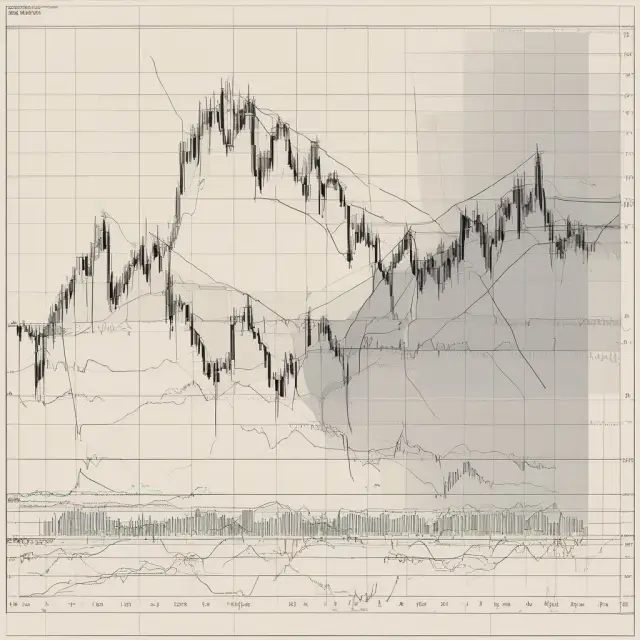
The Role of Support in Trends and Price Movements
Support levels play a crucial role in understanding trends and price movements within the realm of technical analysis. In simple terms, support represents a floor where the asset’s price tends to bounce back up or hold steady during a downturn. As previously mentioned, support levels are formed by buyers entering the market as they find the price attractive at specific levels.
Support is particularly critical when studying trends because it can help identify potential reversal points and provide insights into the underlying strength of a trend. By analyzing support levels and their relationship to price movements, traders and investors can make more informed decisions regarding entry and exit points for trades.
A strong trend is characterized by consistent price action above or below a moving average. When an asset’s price is consistently trading above its moving average, the uptrend can be considered strong. Conversely, when the price is consistently below the moving average, a downtrend is in effect. Support levels are essential indicators of potential reversal points within these trends.
For instance, in a strong uptrend, support levels act as areas where buyers enter the market, creating demand and pushing the price back up. A significant breach of this support level could be a sign that the trend is weakening or potentially reversing. On the other hand, during downtrends, support levels can serve as potential buying opportunities for those anticipating a reversal in price direction.
The power of support levels is not limited to identifying trend reversals but also in confirming and validating trends themselves. For instance, a strong uptrend might be confirmed when an asset repeatedly tests and holds above a particular support level multiple times. This repetition reinforces the idea that buyers are continually entering the market at this price level, further strengthening their belief in the trend’s continuation.
It is essential to note that support levels should not be considered as absolute or inviolable. In volatile markets or during significant news events, asset prices may breach support levels only to reverse course and retest them later. In such cases, it is vital for traders to remain adaptive and consider multiple timeframes to gauge the potential implications of a support level breach.
Furthermore, it’s not uncommon for support levels to shift as market conditions evolve or new information becomes available. This adaptability necessitates the need for ongoing analysis and reassessment of support levels throughout an investment horizon. In some cases, multiple support levels may coexist within a single price range, creating complex trading scenarios that require further investigation and analysis.
Understanding the role of support in trends and price movements is essential knowledge for any trader or investor seeking to make informed decisions based on technical analysis. By studying support levels’ interactions with trends and identifying potential reversal points, traders can position themselves effectively to capitalize on market opportunities and manage risk more efficiently.

Support Levels and Fundamental Analysis
In the world of finance, there’s an ongoing debate between fundamental analysts and technical analysts regarding which approach is more accurate for predicting future price movements in financial assets. While fundamental analysis focuses on a company’s financial reports and market news to determine its intrinsic value, technical analysis looks at trends and patterns in historical asset data to identify potential price shifts. In this section, we delve deeper into the relationship between support levels—a key concept in technical analysis—and fundamental analysis.
Support Levels: A Bridge Between Technical and Fundamental Analysis
At first glance, it might seem that support levels (price points at which an asset doesn’t fall below) and fundamental analysis operate independently of each other. However, they can complement one another when interpreting the financial markets. For instance, a strong support level based on historical price data may coincide with a significant fundamental event or news release. This confluence can strengthen the credibility of both technical and fundamental assessments.
The Role of Support Levels in Fundamental Analysis
Support levels can serve as valuable tools for fundamental analysts when evaluating the potential impact of various market events. For instance, if a company reports strong earnings or positive news that could potentially boost its stock price, a well-established support level might indicate where buyers will enter the market to purchase shares, preventing further price growth. Conversely, weak financial results or negative news can push prices down towards support levels, which might act as a floor for declining share prices.
Apart from providing insights into buying and selling behavior, support levels can also help fundamental analysts gauge potential market reactions to important announcements. For example, if a company’s stock has consistently traded within a defined range over an extended period and is currently sitting near its support level, the release of favorable news might prompt a significant price increase. In contrast, weak fundamentals could result in prices breaking through the support level, signaling potential further declines.
Technical vs Fundamental Analysis: A Comparison
Although both technical and fundamental analysis can provide valuable insights into financial markets, they approach asset evaluation from different perspectives. Technical analysis focuses on price trends and patterns, while fundamental analysis examines a company’s financial data to determine its intrinsic value. Support levels serve as an intersection point between these two methods, helping traders and investors understand how historical price movements can influence their decision-making process based on the underlying fundamentals.
In conclusion, support levels represent a crucial concept for technical analysts that can also play a significant role in fundamental analysis. By considering both approaches, investors and traders can gain a more comprehensive understanding of financial markets and make informed decisions that balance the potential price movements with a company’s underlying value.

Advanced Techniques for Identifying Support Levels
Support levels are significant price thresholds that prevent an asset’s downward trend, often illustrated by drawing a line along the lowest lows. However, there are advanced techniques to identify more robust and reliable support levels using technical indicators such as Fibonacci retracement and pivot points.
Fibonacci Retracement: The Fibonacci sequence is a series of numbers that follows a specific pattern, with each number being the sum of the previous two (0, 1, 1, 2, 3, 5, 8, 13…). When applied to financial markets, it reveals potential support and resistance levels based on price movements. Fibonacci retracement levels are determined by calculating the percentages of the previous price move that the current correction has covered. This level is typically considered a strong support or resistance level since market participants tend to retrace their positions to these levels.
Pivot Points: Pivot points help determine potential support and resistance levels based on historical prices. A pivot point is calculated by taking the average of the high, low, and closing price from the previous period. Three significant levels are derived from this calculation: the pivot line itself, the resistance level (2), and the support level (1). These levels can act as potential support or resistance levels depending on their position relative to the current trend.
Support vs Resistance: Support levels represent a floor where buyers enter or re-enter positions in an asset, while resistance levels function as a ceiling where sellers try to push the price lower. Understanding the relationship between these concepts can help traders anticipate potential entry and exit points based on price movements. However, it is important to remember that neither support nor resistance levels are infallible and should be used in conjunction with other indicators to confirm trends and patterns.
Limitations of Advanced Techniques: While advanced techniques such as Fibonacci retracement and pivot points can provide valuable insights into potential support and resistance levels, they have their limitations. These methods rely on historical data and do not account for sudden shifts in market sentiment or unexpected events that may influence price movements. It’s essential to combine these techniques with other fundamental and technical indicators to create a well-rounded trading strategy.
Examples of Support Levels: Understanding support levels becomes more apparent when looking at real-world examples. In 2013, the price of Bitcoin (BTC) fell from around $75 to $50 but found significant support at this level. This support held for months before a subsequent rally brought the price back up above $100. Another example can be seen in the stock market crash of 1929, where prices failed to fall below their respective support levels, only to collapse weeks later due to fundamental factors.
Support Levels and Trends: Support levels play a crucial role in understanding trends and reversals. In an uptrend, identifying strong support levels can help traders anticipate potential dips that may offer entry opportunities at attractive prices. Conversely, during downtrends, identifying weak support levels can indicate possible exhaustion points where sellers have been draining the market, making it a potential exit point for short positions.
FAQ: Common Questions About Support Levels
What is the difference between a support level and resistance level?
A support level is the price that prevents an asset’s downward trend, while a resistance level is the price that resists growth.
How are support levels calculated?
Support levels are typically calculated by drawing a line along the lowest lows for a given time period or using advanced techniques such as Fibonacci retracement and pivot points.
Are support levels guaranteed to hold?
No, support levels do not guarantee that an asset will not fall below the identified level. They only indicate where buyers may enter or re-enter positions.
How often should you check for support levels?
Support levels should be checked regularly, especially during periods of volatility or when entering or exiting positions.
Is it possible to have multiple support levels?
Yes, an asset can have several support levels at different price points. These levels may function differently depending on their position in the trend and the time frame being considered.

FAQ: Common Questions About Support Levels
Support levels, as crucial concepts in technical analysis, often generate numerous queries from traders and investors. Below, we address some common questions regarding support levels that can help clarify misconceptions and provide valuable insights.
What exactly is a support level?
A support level represents the price point at which an asset does not decline significantly for a considerable period. It’s created by buyers entering the market whenever the asset approaches this level. Support levels can be drawn as horizontal lines on charts, connecting the lowest lows during a specified timeframe.
What’s the difference between support and resistance levels?
Support and resistance levels are inversely related. A support level acts as a floor, preventing an asset from declining further, while a resistance level functions as a ceiling, limiting its growth. In other words, buyers tend to enter when prices dip below support levels, and sellers enter at resistance levels.
How can I identify support levels?
Technical indicators like moving averages or trend lines help pinpoint potential support levels more effectively than just looking for the lowest lows in a given period. For example, Bollinger bands, Fibonacci retracements, and pivot points are popular techniques used to identify support levels.
What role do support levels play in trading?
Support levels assist traders by offering valuable insights into entry and exit points for positions, as well as potential reversal opportunities when they’re breached during uptrends or downtrends. In addition, understanding support levels can help investors make informed decisions based on both technical and fundamental analysis.
What are the limitations of using support levels?
Support levels should not be considered standalone indicators, as they have their limitations. For instance, markets can experience trend changes, leading to the shift in support levels. Additionally, it’s important to consider other factors such as news events and fundamental data when relying on support levels for making investment decisions.
Can a single price level serve as both support and resistance?
Yes, a single price level can act as both support and resistance depending on the market conditions and timeframes under consideration. In an uptrend, a previous resistance level may eventually transform into a support level once it is breached. Conversely, during downtrends, a prior support level might change to become a resistance level after being broken through.
How can I effectively use support levels in my trading strategy?
To successfully implement support levels in your trading strategy, consider the following tips:
– Monitor multiple timeframes for various support levels and adjust positions accordingly.
– Combine support levels with other technical indicators to verify price trends and reversals.
– Regularly reevaluate your support levels as market conditions change.
What are some advanced techniques for identifying support levels?
Advanced techniques like Fibonacci retracement levels, pivot points, and moving averages can offer more nuanced insights when it comes to support levels. For instance, Fibonacci retracements measure potential price corrections based on historical price movements, while pivot points provide key resistance and support levels determined by the average high, low, and closing prices for a specific time frame.
 Next entry · No. 4,810Understanding Supranational Organizations: Governing the Affairs of Nations Together
See also
-
 No. 4,916
27 Jul 2025
22 min
Understanding Technical Indicators: A Comprehensive Guide for Institutional Investors
Business Finance
No. 4,916
27 Jul 2025
22 min
Understanding Technical Indicators: A Comprehensive Guide for Institutional Investors
Business Finance -
 No. 4,754
14 Jul 2025
25 min
Stock Analysis: Understanding Fundamental and Technical Approaches for Institutional Investors
Business Finance
No. 4,754
14 Jul 2025
25 min
Stock Analysis: Understanding Fundamental and Technical Approaches for Institutional Investors
Business Finance -
 No. 4,456
20 Jun 2025
20 min
Understanding Reversals: Spotting and Utilizing Trend Changes in Finance and Investment
Business Finance
No. 4,456
20 Jun 2025
20 min
Understanding Reversals: Spotting and Utilizing Trend Changes in Finance and Investment
Business Finance -
 No. 4,188
29 May 2025
20 min
Understanding the QStick Indicator: A Technical Analysis Tool for Trend Identification
Market Trends
No. 4,188
29 May 2025
20 min
Understanding the QStick Indicator: A Technical Analysis Tool for Trend Identification
Market Trends -
 No. 5,922
18 Oct 2025
18 min
Understanding the Zone of Resistance: Technical Analysis for Institutional Investors
Financial Data Analysis
No. 5,922
18 Oct 2025
18 min
Understanding the Zone of Resistance: Technical Analysis for Institutional Investors
Financial Data Analysis -
 No. 5,772
06 Oct 2025
21 min
Understanding Wolfe Waves: Technical Analysis Chart Patterns for Institutional Investors
Financial Education
No. 5,772
06 Oct 2025
21 min
Understanding Wolfe Waves: Technical Analysis Chart Patterns for Institutional Investors
Financial Education