Understanding the Basics of the IS-LM Model in Economics
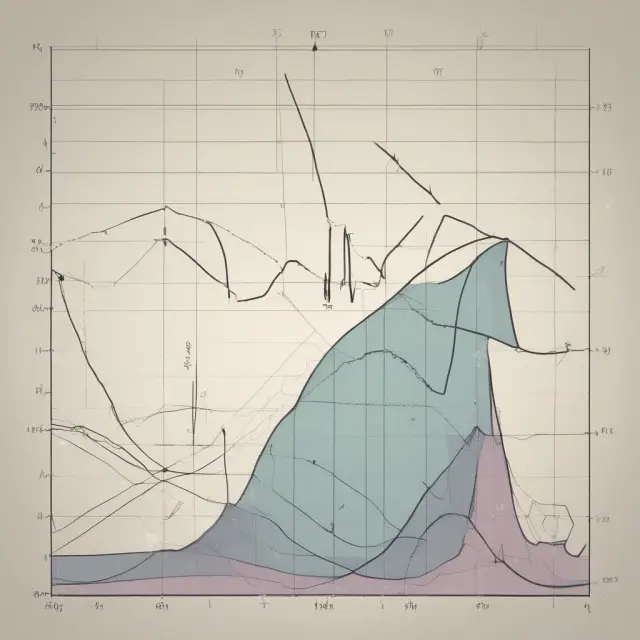
Understanding the fundamentals of the IS-LM Model and its relevance to modern economics. Learn about its components, applications, and interpretation.
Introduction to the IS-LM Model
The IS-LM model, a cornerstone in macroeconomics, was introduced by British economist John Hicks in 1937 following John Maynard Keynes’ influential book “The General Theory of Employment, Interest, and Money” published two years prior. This model provides an explanation of the interaction between the markets for real goods (IS) and financial markets (LM). IS-LM serves as a graphical representation of how aggregate markets balance the interest rate and total output in the economy.
Historically Significant
The IS-LM model became a fundamental tool in macroeconomics, helping economists understand Keynes’ theories on employment, interest rates, and money. Although it was developed as a heuristic device and its simplifications have been criticized, it continues to serve an essential purpose today.
Understanding the Building Blocks of IS-LM: Investment (I) & Saving (S), Liquidity Preference (LP), and Money Supply (MS)
IS-LM is based on three key components: investment (I), saving (S), liquidity preference (LP), and money supply (MS). While the IS curve represents the relationship between interest rates and output or Gross Domestic Product (GDP), the LM curve depicts the equilibrium between income and interest rates.
The IS Curve: Investment Equals Saving
The IS curve describes the combinations of interest rates and output levels where investment equals saving. The downward slope of the IS curve implies that at lower interest rates, investment is higher, leading to a larger GDP. This occurs because businesses are more willing to invest in projects when borrowing costs are low. Conversely, higher interest rates decrease investment as borrowing becomes more expensive.
The LM Curve: Money Supply Equals Money Demand
LM represents the equilibrium between income (GDP) and interest rates where money supply equals money demand. The upward slope of the LM curve signifies that higher levels of GDP increase the need to hold money for transactions, leading to a higher interest rate required to maintain equilibrium in the money market. This relationship arises due to the inverse relationship between real GDP and velocity of money: as income rises, the velocity of money also increases, requiring more money to be held to facilitate increased transactions.
Interpreting IS-LM Intersection: Short-Term Macroeconomic Equilibrium
The equilibrium point where the IS and LM curves intersect indicates the short-term macroeconomic equilibrium. This equilibrium is characterized by interest rates and output levels that clear both markets for real goods (IS) and financial instruments (LM). In essence, the intersection of the two curves reflects a balance between aggregate supply and demand in the economy.
Limitations & Criticisms
The IS-LM model, while widely used, faces several criticisms due to its assumptions regarding rigid wages, prices, and exogenous money supply. It also does not consider inflation, expectations, or international markets as integral components of the analysis. The New Keynesian economics movement has sought to address some of these limitations by incorporating nominal wage stickiness, price rigidity, and endogenous money in new IS-LM models.
Despite its limitations, the IS-LM model remains a vital tool for understanding the relationship between interest rates and output, providing crucial insights into how economies function at an aggregate level.

Components of the IS-LM Model
The IS-LM model, an influential Keynesian macroeconomic tool developed by John Hicks in 1937, illustrates the interplay between the market for goods (IS) and the loanable funds market or money market (LM). This model is represented as a graph where the IS and LM curves meet to establish the short-term equilibrium between interest rates and output.
The IS Curve
The IS curve represents an economy’s various interest rate and output levels at which investment equals saving. It interprets the relationship between interest rates and real Gross Domestic Product (GDP). The curve slopes downward and to the right, as lower interest rates encourage increased investment that translates into more total output.
The LM Curve
The LM curve represents a given economy’s income levels and interest rates where money supply equals money demand. It depicts the relationship between GDP and interest rates. The curve slopes upward since higher income levels induce greater demand for holding money balances, which necessitates a correspondingly higher interest rate to maintain equilibrium.
IS-LM Model Equilibrium
The intersection of IS and LM curves represents the short-run macroeconomic equilibrium where output and the rate of interest are balanced between real economic markets and financial markets. The equilibrium point demonstrates how changes in market preferences impact both income and interest rates.
Assumptions and Limitations
Despite its significance, the IS-LM model faces criticisms for simplistic assumptions, including a lack of consideration for inflation expectations, international markets, capital formation, and unemployment. It is essential to recognize that the model serves mainly as an educational tool or a quick decision-making framework rather than a comprehensive policy tool.
Monetary Policy and Central Banks’ Role
Central banks impact interest rates, inflation, and output through their actions on the LM curve. By adjusting money supply, central banks influence money demand, shifting the LM curve and causing changes in equilibrium points.
IS-LM Model Applications
The IS-LM model can be applied to understanding business cycles, fiscal policy, and monetary policy’s effectiveness. It serves as a useful starting point for analyzing macroeconomic phenomena, despite its limitations.
FAQs about the IS-LM Model
- What does IS stand for? Investment-Saving.
- What does LM stand for? Liquidity Preference-Money Supply.
- Who developed the IS-LM model? British economist John Hicks created it in 1937.
- How is interest rate determined in IS-LM? The intersection of IS and LM curves sets the interest rate at the equilibrium point.
- Why is it called an IS-LM model? It derives from the markets for economic goods (IS) and the loanable funds market or money market (LM).

The IS Curve
The IS-LM model is a prominent tool in macroeconomics used to analyze the relationship between interest rates and output (Gross Domestic Product) in an economy. The acronym IS signifies “investment-saving.” The IS curve, one component of this dynamic duo, illustrates the combination of interest rates and output levels at which total investment equals total saving.
In simpler terms, the IS curve depicts the relationship between interest rates and the resulting level of aggregate demand in the economy. It reveals how changes in interest rates affect investment, savings, and consumption (C) levels within an economy, leading to various corresponding levels of output (GDP). The IS curve is downward-sloping since lower interest rates result in increased investment, which in turn leads to higher output (see Figure 1). Conversely, higher interest rates discourage investment, thus decreasing aggregate demand and output.
Figure 1: IS Curve
The IS curve plays a pivotal role in the IS-LM model by providing insight into how the real economy interacts with financial markets. It is important to note that the IS curve assumes full employment, which means the labor force is fully utilized at all output levels.
The IS curve’s positioning on the graph depends on factors such as consumer preferences and the interest elasticity of investment, which represents how sensitive investors are to changes in interest rates. The shape and location of the IS curve can shift due to changes in these factors. For example, an increase in business confidence or optimism among consumers would lead to a rightward shift in the IS curve since both investment and consumption levels would be higher for each given interest rate. Conversely, pessimistic sentiment or uncertainty could cause a leftward shift as both investment and consumption decrease.
Understanding the IS curve’s importance becomes crucial when analyzing economic policy. For instance, fiscal policies like changes in government spending or taxes can impact the IS curve by altering investment and saving behaviors. In turn, this affects output levels and interest rates, leading to various combinations of equilibrium points along the IS curve.

The LM Curve
In the IS-LM model, another crucial component besides the IS curve is the Liquidity Preference-Money Supply (LM) curve. The LM curve illustrates the relationship between income, or Gross Domestic Product (GDP), and the prevailing interest rate within an economy. This curve has significant implications for the overall economy since it helps determine where the short-run equilibrium lies, alongside the IS curve.
The origin of the LM curve can be traced back to the classical economists’ theory that money only serves as a medium of exchange and not as a store of value or a unit of account. However, John Maynard Keynes revolutionized this notion by arguing that individuals hold money for both transactions and savings purposes, leading to an increased demand for money when income rises.
The LM curve’s shape is determined by the way people make decisions regarding how much money they wish to hold at various income levels. It is typically represented as a rising function, signifying that as GDP increases, individuals may feel more comfortable holding larger amounts of money to facilitate their transactions. Consequently, the interest rate must rise to maintain equilibrium between money supply and demand (liquidity).
The LM curve’s slope can be thought of as an inverse relationship with income since, as income grows, people hold more money for transactions, which results in a higher interest rate being required to keep both markets balanced. However, the shape and position of the LM curve are not fixed; they can shift based on factors like changes in the velocity of money or unexpected shocks to the economy.
The significance of the LM curve’s intersection with the IS curve is crucial in determining the short-run equilibrium within an economy. The point where both curves intersect represents the equilibrium interest rate and the level of output, balancing the goods market and financial markets. It provides valuable insights into how monetary policy can influence economic activity by altering the interest rate.
In conclusion, understanding the IS-LM model requires a grasp of both the IS curve and its counterpart, the LM curve. The LM curve plays a vital role in demonstrating the relationship between income and interest rates, which is essential for determining short-run macroeconomic equilibrium. By recognizing its implications, we can better comprehend how monetary policy decisions impact an economy’s output and financial markets.

IS-LM Model Intersection: Equilibrium
The IS-LM model represents the intersection of two curves in macroeconomics – the IS curve (Investment-Saving) and LM curve (Liquidity Preference-Money Supply). Understanding how these curves intersect is crucial for analyzing the economy’s short-term equilibrium between interest rates and output.
The IS curve demonstrates the relationship between output or real gross domestic product (GDP) and interest rates, specifically when investment equals saving. This curve shows that lower interest rates lead to higher investment levels and consequently greater total output. The IS curve is downward sloping because as output increases, saving also rises, eventually offsetting the increase in investment. Conversely, an upward shift in the IS curve indicates a decrease in the level of savings relative to investment at each interest rate.
The LM curve, on the other hand, illustrates the equilibrium between money supply (liquidity) and money demand or desired cash balances at different income levels. The LM curve is upward sloping because an increase in output leads to a higher demand for money balances for transaction purposes. This increased demand necessitates a higher interest rate to maintain equilibrium between the supply of money and the growing demand for it.
The crucial intersection of these two curves represents the economic equilibrium where savings equals investment, and money supply equals money demand. At this point, all markets are cleared, and no further adjustments are required in either market. This equilibrium is marked by a specific interest rate and level of output.
It’s important to note that the IS-LM model is an essential teaching tool for understanding how changes in exogenous variables (interest rates, investment, saving, money supply) affect the economy’s short-term equilibrium. Despite its limitations—such as oversimplification and difficulty in explaining long-term relationships or inflationary pressures—it remains a cornerstone of macroeconomic theory due to its clear illustration of market interactions between the real economy and financial markets.

Assumptions and Limitations
The IS-LM model provides a valuable framework for understanding the interaction between real goods markets and financial markets in achieving the short-term equilibrium of interest rates and output (GDP). However, it is essential to acknowledge several critical assumptions and limitations that should be considered when interpreting this economic model.
Simplistic Assumptions
The IS-LM model simplifies the macroeconomic environment by assuming:
- A closed economy with no international trade.
- Perfect competition in all markets, including goods and financial markets.
- Flexible prices and wages that adjust instantly to changes in market conditions.
- Consumers are solely concerned with current consumption, not future generations.
- Businesses do not face any constraints on the production side.
- Central banks set interest rates but do not control the money supply.
- There is a stable relationship between the velocity of money and economic activity.
- Investment and saving are independent of each other.
- The economy operates in the short term, focusing on the present situation.
Limitations:
The IS-LM model offers substantial insights into how markets interact, yet it is not without its limitations. Some significant constraints include:
- Inflation: The IS-LM model fails to address the potential for inflation when the economy reaches full employment or operates at a high level of aggregate demand.
- Expectations: The model assumes that consumers and businesses have fixed expectations about future income, interest rates, and prices. However, in reality, expectations are dynamic and can change frequently.
- International Markets: The IS-LM model does not consider the impact of international trade on output, exchange rates, or interest rates. It focuses solely on a domestic economy, making it challenging to apply it to a globalized world.
- Capital Formation: Another limitation is that the IS-LM model neglects the process by which resources are allocated to produce new capital goods, affecting both current and future output levels.
Despite these limitations, the IS-LM model remains an important teaching tool for understanding Keynesian theory and macroeconomic equilibrium concepts. Its simplicity allows students to grasp complex ideas with ease, making it a valuable starting point for further exploration into advanced economic models.

Interpreting the IS-LM Model in Modern Economics
The IS-LM model is a valuable teaching tool in modern economics, illustrating how the market for economic goods interacts with the loanable funds or money market. Introduced by British economist John Hicks in 1937 based on the theories of John Maynard Keynes, this model represents the short-run equilibrium between interest rates and output using a graph that displays the IS and LM curves.
The IS (investment-saving) curve, which depicts the set of all levels of interest rates and output at which investment equals saving, is downward sloping. Lower interest rates encourage higher investment levels, resulting in greater output (GDP). Conversely, higher interest rates result in lower investment levels and decreased output.
The LM (liquidity preference-money supply) curve represents the set of all levels of income (output) and interest rates at which money supply equals money demand. As income increases, so does the demand for holding money to carry out transactions. Thus, higher income requires a correspondingly higher interest rate to maintain equilibrium between the money supply and liquidity demand.
At their intersection, these curves provide the short-term equilibrium point of interest rates and output when the real economy and money markets are in balance. This relationship can be used to analyze how changes in market preferences (i.e., saving and investment behaviors or monetary policy) impact equilibrium levels of income and interest rates.
The IS-LM model, while a valuable teaching tool for understanding macroeconomic principles, has its limitations. Critics argue that it relies on simplistic assumptions about the economy, such as assuming away unemployment and inflation, and cannot fully account for various issues like expectations, international markets, or capital formation. However, it still remains an essential part of economics education for providing a basic understanding of how markets interact to maintain balance in the macroeconomy.
Central banks play a crucial role in modern economies by influencing interest rates as part of monetary policy. By setting interest rates, central banks can indirectly impact both consumption and investment levels, thus shifting the IS curve and potentially moving the short-term equilibrium point. Consequently, understanding how the IS-LM model relates to monetary policy is essential for analyzing the role that central banks play in shaping macroeconomic outcomes.
IS-LM model applications extend beyond teaching and understanding monetary policy. It can be used to analyze business cycles, fiscal policy, and the overall stability of economies. By examining how changes in key economic variables impact IS and LM curves, insights into both short-term and long-term macroeconomic dynamics can be gained.
Despite its limitations, the IS-LM model remains an essential part of economics education due to its ability to illustrate fundamental concepts related to the interaction between markets for real goods and financial markets in a clear and accessible way.

IS-LM and Monetary Policy: Central Bank Role
The IS-LM model not only plays a crucial role in understanding the relationship between output (GDP) and interest rates but also sheds light on central banks’ influence on monetary policy through the manipulation of interest rates and money supply. Let’s dive deeper into how the IS-LM model highlights the pivotal actions of central banks.
Central Banks as Market Players
In the IS-LM framework, central banks are considered market players with a unique role in managing short-term interest rates to achieve their macroeconomic objectives. By adjusting the short-term rate, they impact the position of both IS and LM curves, eventually influencing output and prices. Central banks can manipulate short-term interest rates to target specific economic goals, such as inflation or unemployment.
Interest Rates and the IS Curve
As previously discussed, the IS curve reflects the equilibrium between aggregate investment and saving, with a negative slope that indicates lower interest rates lead to higher output. Central banks’ adjustments in interest rates affect the position of the IS curve because changes in interest rates alter the level of investment. Lower interest rates can stimulate investment demand, pushing the IS curve to the right, while higher interest rates reduce investment demand and shift the IS curve leftwards. Consequently, the equilibrium output (GDP) depends on central banks’ interest rate decisions.
Money Supply and the LM Curve
The LM curve represents the relationship between money supply and interest rates under constant velocity, with an upward slope due to increased demand for money balances as income rises. Central banks control money supply through open market operations, affecting the position of the LM curve. An increase in money supply reduces the equilibrium interest rate by moving the LM curve leftward, while a decrease in money supply raises interest rates and shifts the LM curve rightward.
Intersection of IS and LM Curves: Monetary Policy in Action
The intersection point of the IS and LM curves determines the short-term macroeconomic equilibrium with respect to output (GDP) and interest rates. By altering interest rates, central banks can shift both the IS and LM curves and move the equilibrium along the new paths. Central banks employ different monetary policy strategies based on their objectives:
1. Conventional Monetary Policy: When a central bank increases the interest rate, it shifts both the IS and LM curves leftward. This results in lower output (GDP) and unemployment to reduce inflationary pressures, which is referred to as conventional monetary policy.
2. Expansionary Monetary Policy: Conversely, if the central bank reduces interest rates, the IS and LM curves shift rightward, leading to higher output (GDP), employment, and inflation, known as expansionary monetary policy. This policy tool aims to stimulate economic growth or combat recessionary conditions.
Central Banks’ Role in Modern Economics
Though criticized for its simplifications, the IS-LM model remains a valuable teaching device, providing an essential foundation for understanding the mechanics of central bank operations and monetary policy. In today’s economy, central banks have adopted more sophisticated methods for setting interest rates, such as inflation targeting or forward guidance. However, the principles of the IS-LM framework continue to be relevant when discussing the role of short-term interest rates in shaping economic output and inflation.

IS-LM Model Applications
The IS-LM model acts as a powerful analytical tool for understanding the macroeconomic consequences of shifts in market preferences towards investment, saving, interest rates, or money demand and supply. It provides insights into how the economy responds to changes in both fiscal policy (government spending) and monetary policy (central bank action).
Business Cycles
Understanding business cycles, characterized by periods of economic expansion and recession, is one essential application of the IS-LM model. The IS curve illustrates how changes in interest rates influence aggregate demand, while shifts in the LM curve depict the impact on money supply and liquidity preferences. Business cycle analysis focuses on understanding the factors driving fluctuations in investment demand and the subsequent adjustments in real GDP, which the IS-LM model effectively captures.
Fiscal Policy
In fiscal policy analysis, governments use their spending power to influence economic growth and stabilize business cycles. The IS curve portrays the relationship between output (GDP) and interest rates when investment equals saving. By manipulating government spending (or taxation), policymakers can shift the IS curve, resulting in changes to aggregate demand and output. The IS-LM model helps determine the optimal fiscal policy response depending on the current economic situation.
Monetary Policy
Central banks use monetary policy instruments such as interest rates and open market operations to maintain price stability and influence the economy. By adjusting the LM curve, central banks can change money supply and interest rates, which subsequently affect output and inflation. The IS-LM model explains the impact of monetary policy on real GDP and how it interacts with fiscal policy in achieving macroeconomic goals.
In conclusion, the IS-LM model is not only a theoretical framework for understanding the relationship between investment, saving, interest rates, money supply, and output but also an essential tool for analyzing business cycles, fiscal policy, and monetary policy. Its practical applications help policymakers make informed decisions regarding economic stabilization and growth.
The IS-LM model’s flexibility in explaining various aspects of macroeconomic policy enables it to remain a vital tool within the field of economics. Despite its limitations and criticisms, it continues to provide valuable insights into how economies function and respond to shocks.
FAQs about the IS-LM Model
**What does IS stand for in the context of the IS-LM model?**
The acronym “IS” stands for Investment-Saving, representing the relationship between investment and saving in this economic framework.
**What does LM mean in the IS-LM model?**
The term “LM” stands for Liquidity Preference-Money Supply in the IS-LM model. It refers to the interaction between money supply and demand in the economy.
**Who developed the IS-LM model?**
British economist John Hicks is credited with developing the IS-LM model based on the principles of fellow British economist, John Maynard Keynes.
**How is interest rate determined in the IS-LM model?**
In the IS-LM model, the equilibrium interest rate is determined by the point at which the IS and LM curves intersect.
**Why is it called an IS-LM model?**
The name “IS-LM” derives from the two main components of this macroeconomic model: Investment-Saving (IS) and Liquidity Preference-Money Supply (LM).
John Hicks, a British economist, introduced the IS-LM model in 1937 as a formal representation of John Maynard Keynes’ theories. The model was primarily used as a teaching tool to explain how the real economy and financial markets interact to reach equilibrium levels of interest rates and output (GDP).
The IS-LM model depicts two curves: IS (Investment-Saving) and LM (Liquidity Preference-Money Supply), which intersect to show the equilibrium point in the macroeconomy. The IS curve illustrates the relationship between interest rates and output, while the LM curve shows the relationship between income and interest rates.
The IS curve’s negative slope indicates that lower interest rates lead to higher investment and output levels. Conversely, the LM curve is upward-sloping, meaning a higher GDP level increases demand for money, leading to a higher required interest rate to maintain equilibrium between money supply and liquidity demand.
The intersection of the IS and LM curves represents the short-term macroeconomic equilibrium point between interest rates and output. However, the model faces criticism due to its unrealistic assumptions and limitations, such as the absence of inflation expectations and international markets. Despite its criticisms, the IS-LM model remains a useful teaching tool for understanding the interaction between investment, saving, and liquidity preferences in the macroeconomy.
 Next entry · No. 2,560Understanding the ISM Manufacturing Index: A Comprehensive Guide for Institutional Investors
See also
-
 No. 4,749
14 Jul 2025
21 min
Understanding Sticky Wage Theory: Implications for Employment and Macroeconomics
Economics
No. 4,749
14 Jul 2025
21 min
Understanding Sticky Wage Theory: Implications for Employment and Macroeconomics
Economics -
 No. 4,303
07 Jun 2025
20 min
Understanding Real vs Nominal Gross Domestic Product (GDP): Measuring Economic Output with Accuracy
Economics
No. 4,303
07 Jun 2025
20 min
Understanding Real vs Nominal Gross Domestic Product (GDP): Measuring Economic Output with Accuracy
Economics -
 No. 3,039
24 Feb 2025
19 min
Macroeconomics 101: Understanding the Broad Economy
Economics
No. 3,039
24 Feb 2025
19 min
Macroeconomics 101: Understanding the Broad Economy
Economics -
 No. 2,698
27 Jan 2025
20 min
Understanding Keynesian Economics: Origins and Key Concepts
Economics
No. 2,698
27 Jan 2025
20 min
Understanding Keynesian Economics: Origins and Key Concepts
Economics -
 No. 3,454
30 Mar 2025
23 min
Understanding the Neutrality of Money: A Comprehensive Guide for Institutional Investors
Business Finance
No. 3,454
30 Mar 2025
23 min
Understanding the Neutrality of Money: A Comprehensive Guide for Institutional Investors
Business Finance -
 No. 2,667
25 Jan 2025
19 min
Understanding Milton Friedman’s K-Percent Rule: Stability Through Monetary Growth
Finance Policy
No. 2,667
25 Jan 2025
19 min
Understanding Milton Friedman’s K-Percent Rule: Stability Through Monetary Growth
Finance Policy