Understanding the Comorian Franc (KMF): The Currency of a Small African Island Nation
Discover the background, history, use, and exchange rates of the Comorian Franc (KMF), the currency of the small African island nation.
Introduction to the Comorian Franc
The Comorian franc (KMF) is the official currency of Comoros, a small African island nation located in the Indian Ocean. With a currency code of KMF and symbol representing it on global financial platforms, the Comorian franc functions as the country’s standard medium for monetary transactions. This section aims to shed light on what the Comorian franc is, its historical background, and its significance within the island nation’s economy.
The Comorian Franc: A Closer Look
Established in 1960 following Comoros’ independence from France, the Comorian franc was initially pegged to the French franc at a rate of 50 KMF for every French franc. In 1999, the currency was linked to the euro with an exchange rate of 491.96775 Comorian francs for one euro. Since then, the value of one U.S. dollar has been approximately equivalent to 437 KMF.
The central bank responsible for issuing and managing the circulation of the Comorian franc is la Banque Centrale des Comores. The bank’s headquarters are located in Moroni, the capital city, and its mission includes maintaining the currency’s value and promoting monetary stability within the island nation.
Comorian Franc Denominations
Banknotes of various denominations, including 500, 1000, 2000, 5000, and 10,000 KMF, have been issued. While coins with values of 1, 2, 5, 10, 25, 50, and 100 francs have also been minted, no centimes, the subdivision of one franc, have ever been used or produced in Comoros.
Understanding the Economy of Comoros
Comoros boasts a small yet diverse economy with its primary industries being fishing and tourism. Despite having arable land and fertile soil, the nation imports around 70% of its food due to its limited agricultural capabilities and reliance on external markets for essential commodities. The population demographics in Comoros are young, with approximately 37% of residents under the age of 14. However, despite a relatively low rate of unemployment at 8.4%, over 42% of the population lives below the poverty line.
Furthermore, extreme weather conditions and volcanic activity pose significant challenges to the island’s industries. Although real GDP growth for 2020 was recorded at 3.1% with a deflation rate of -0.9%, the long-term economic outlook remains uncertain due to external factors impacting Comoros’ resource-dependent economy.
Exchange Rates and Currency Transactions in Comoros
The Comorian franc is most frequently exchanged with the U.S. dollar (USD) despite being pegged to the euro. Although some larger establishments, such as hotels, accept credit cards, cash remains the preferred method of payment in most transactions within Comoros. When making purchases or receiving change from merchants, customers will be given KMF.
As you delve deeper into understanding this unique currency and its role within Comorian society, future sections will discuss the historical background and development of the Comorian franc as well as its relationship with other African currencies. Stay tuned for further insight into this fascinating topic!

History of the Comorian Franc
The Comorian franc (KMF) holds a significant role as the official currency in the African island nation of Comoros. Its history traces back to the early days before formal issuance, with its roots taking shape pre-independence. The currency’s emergence can be traced to the period when the island was still under French colonial rule, using the French franc as their monetary standard.
Before the first official Comorian franc notes were issued in the 1960s, emergency measures were taken during the late 1950s to print currency for circulation within the Comoros archipelago on a limited basis. These emergency currency prints took the form of altered postage stamps that were used as makeshift money. The first formal issuance of Comorian franc notes was carried out in the early 1960s, coinciding with the country’s independence movement and eventual separation from France.
Since then, the KMF has evolved, featuring various denominations for both coins and banknotes. Coins dedicated specifically to Comoros were first issued during this time and have carried Arabic printing since 1975. The Comorian franc was pegged to the euro in 1999, with an exchange rate fixed at 491.96775 KMF per euro. This arrangement has remained consistent, although transactions within Comoros are most commonly conducted using the U.S. dollar due to its higher popularity and wider usage in international trade.
The Union of Comoros is made up of three islands: Anjouan, Moheli, and Grande Comore. The fourth island, Mayotte, was initially part of this union but gained independence in 1975 and remains under French administration. Although the KMF has been pegged to the euro since 1999, its usage is largely confined to these three islands as Mayotte continues to use the euro exclusively.
As the Comorian franc is a relatively obscure currency outside of the region, it’s essential to understand its history and evolution to gain context for its relevance in international trade and finance today.

The Central Bank of Comoros
La Banque Centrale des Comores plays a pivotal role in maintaining the value and circulation of the Comorian Franc (KMF) as the nation’s central banking authority. Established on December 12, 1981, la Banque Centrale des Comores is responsible for issuing currency and setting monetary policy for the African island nation of Comoros. The bank is headquartered in Moroni, the capital city.
The central bank’s mandate encompasses a range of functions, including managing the monetary system, regulating credit, maintaining foreign exchange reserves, and implementing monetary policies to ensure price stability in the country. By controlling interest rates, the Central Bank can influence the supply and demand dynamics of the KMF, thereby exerting considerable influence on inflation and economic growth within Comoros.
The Comorian Franc is pegged to the euro at a fixed exchange rate of 491.96775 KMF for one euro. This arrangement has been in place since 1999, when the European Union adopted the euro as its common currency. The euro-peg provides stability to the Comorian Franc and reduces the volatility inherent in floating exchange rates, which could be particularly challenging for a small economy like Comoros with limited resources and high poverty levels.
The central bank also oversees the country’s financial sector and regulates all financial institutions within its jurisdiction. This role encompasses supervision of banks, insurance companies, microfinance institutions, and other financial intermediaries. By ensuring the stability and integrity of the financial system, la Banque Centrale des Comores fosters a favorable business environment that encourages economic growth, investment, and job creation within Comoros.
La Banque Centrale des Comores has played a vital role in promoting financial inclusion by expanding access to affordable credit for small businesses and individuals. The bank’s initiatives include the Microfinance Development Project (Projet de Développement du Microcrédit), which aims to expand microfinance services to underserved populations, especially women, in rural areas. This project is implemented in collaboration with international organizations like the United Nations Development Programme (UNDP) and the European Union (EU).
The central bank issues both banknotes and coins for circulation within Comoros. The banknotes come in denominations of 500, 1000, 2000, 5000, and 10,000 francs. Coins are minted in denominations ranging from 1 to 100 francs. All banknotes and coins bear the image of the country’s coat of arms and the signature of the governor of la Banque Centrale des Comores.
In conclusion, la Banque Centrale des Comores plays a critical role in managing the value, circulation, and stability of the Comorian Franc as the island nation’s central banking authority. The bank’s functions include issuing currency, setting monetary policy, regulating credit, maintaining foreign exchange reserves, and overseeing the country’s financial sector. The euro-peg provides the Comorian Franc with much-needed stability, allowing the central bank to focus on fostering a favorable business environment that encourages economic growth in the poorest African nation.
Comorian Franc Denominations and Coins
The Comorian franc (KMF) is a unique currency with both European ties and Arabic influences. It serves as the official currency of Comoros, an archipelago of volcanic islands located in the Indian Ocean, off the eastern coast of Africa. Understanding the various denominations of banknotes and coins that make up this distinct currency offers insight into its heritage and value within the country’s economy.
La Banque Centrale des Comores (BCC), the central bank of Comoros, is in charge of maintaining and issuing the Comorian franc. The KMF was initially pegged to the French franc, but it has since been linked to the euro at a fixed exchange rate of 491.96775 Comorian francs for every euro as of 1999. This exchange rate remains unchanged to this day, making the Comorian franc one of the most stable currencies in Africa.
The Comorian franc is subdivided into 100 centimes, although no actual centime coins or banknotes have ever been issued. Instead, Comoros uses various denominations of franc notes and coins to facilitate transactions within the country. Let’s explore the different types of Comorian franc denominations in detail.
Banknote Denominations
- 500 KMF: This note bears a portrait of Said Mohamed Jaffar, the first president of independent Comoros, on the front and various images representing agriculture, fishing, and tourism on the reverse side.
- 1000 KMF: Featuring the portrait of Ali Soilih Ahmed, who led the country’s revolution in 1975, this note represents a larger denomination with various scenes depicting cultural symbols and natural attractions.
- 2000 KMF: This banknote has a portrait of Amir Abdallah on its obverse side and diverse scenes from Comorian daily life on the reverse side.
- 5000 KMF: Showcasing various images of the country’s natural wonders, this note is the largest in circulation, featuring the portrait of Ahmed Abderahman Abdallah on its front and beautiful landscapes on the back.
- 10,000 KMF: The highest denomination note in Comorian franc circulation, it bears a portrait of Mohamed Ali Said Souef on the obverse side, with various scenes from Comoros’ history and culture on its reverse side.
Coin Denominations
- 1 KMF: Featuring the emblem of Comoros and the year of mintage, this small coin represents the lowest denomination in circulation.
- 2 KMF: This coin is also used frequently for transactions and features the same design as the 1 KMF but with the value “2” inscribed on it.
- 5 KMF: A slightly larger coin than the smaller denominations, this one displays the Comorian national emblem along with the value “5.”
- 10 KMF: This coin represents a medium-sized denomination and showcases a portrait of Said Mohamed Jaffar, the first president of independent Comoros.
- 25 KMF: A larger coin that is used less frequently for daily transactions, it bears an Arabic inscription on its reverse side.
- 50 KMF: The largest coin in circulation, this one displays an image of a coco de mer nut, which is native to the Seychelles but also found in Comoros. It represents a high value of 50 francs and is used mainly for larger transactions.
- 100 KMF: The second-largest coin, it bears the same design as the 50 KMF but with the value “100” inscribed on it. This denomination is also used less frequently for major transactions within the country.
The Comorian franc’s unique blend of European ties (through its association with the euro) and Arabic influences (as seen in its coins with Arabic script) adds to its intrigue and importance as a currency within the African continent.
In conclusion, understanding the denominations and coins of the Comorian franc provides an insightful look into this fascinating currency’s heritage and role within the country’s economy. Its diverse range of banknotes and coins reflects both its European connections and Arabic influences, making it a valuable subject for anyone interested in finance, economics, or African currencies.
The Economy of Comoros: Industries and Employment
Comoros is a small, developing nation in the Indian Ocean known for its beautiful islands and diverse culture. The country’s economy primarily revolves around three key industries: fishing, tourism, and agriculture. Let us dive deeper into each one of these sectors and their implications on employment within Comoros.
Fishing: Fishing plays a significant role in the Comorian economy as it provides both food for local consumption and income from exports. The islands’ prime location along the Mozambique Channel offers abundant marine resources, making it an attractive industry for the population. However, the sector faces various challenges, including its vulnerability to external factors such as climate change and international regulations. These issues can lead to fluctuations in revenue streams and employment opportunities for local fishermen.
Tourism: Tourism is another important industry for Comoros due to its stunning natural landscapes and unique cultural attractions. The archipelago has gained popularity among travelers seeking relaxation, adventure, and exploration. However, this sector also faces external challenges like geopolitical instability and volatile economic conditions, which can impact tourist arrivals and employment opportunities for locals.
Agriculture: Agriculture is the backbone of Comorian society, as it not only provides essential food sources but also generates income for local farmers. The country has fertile land, making it suitable for various crops such as vanilla, cloves, and ylang-ylang—the latter being a perfume essence that gives the islands their unique aroma. Nevertheless, agriculture in Comoros faces challenges like limited arable land, lack of modern agricultural techniques, and weather conditions. These issues can lead to inconsistent yields and income for farmers, affecting their livelihoods and the overall economy.
In conclusion, while the three industries – fishing, tourism, and agriculture – form the core of the Comorian economy, they are all vulnerable to external factors that impact their revenue streams and employment opportunities. Understanding these industries is crucial as they significantly influence the socio-economic conditions within Comoros.
Population demographics and poverty levels in Comoros: Comoros has a population of approximately 864,335 people with 37% being under the age of 14. Despite having fertile land and abundant natural resources, the country remains one of the poorest in the world. Approximately 42% of its population lives below the poverty line, with high rates of unemployment and low levels of education. In the next section, we will delve deeper into the poverty levels within Comoros and examine ways to address these issues.

Poverty Levels in Comoros: Population Demographics and Living Standards
Comoros, an African island nation, is one of the poorest countries globally with a population of approximately 864,335 as of January 2022. According to the World Bank, around 42% of its citizens lived below the poverty line in 2019. This high poverty rate is influenced by several factors, including demographics and limited economic opportunities.
Demographic Factors
The Comorian population is characterized by a large youth demographic, with approximately 37% of residents being under the age of 14. While having a relatively low unemployment rate of 8.4%, many young people are unable to find decent employment or education opportunities due to limited resources and infrastructure on the islands.
Education:
Around 62% of children in Comoros attend primary school, while only 30% of the population is literate. These statistics significantly impact the economy as an educated workforce can contribute positively towards economic growth and development.
GDP:
The country’s economy is largely reliant on small industries such as fishing and tourism, which are subject to external factors like weather conditions and natural disasters. Comoros had a real Gross Domestic Product (GDP) growth of 3.1% in 2020, with inflation at -0.9%. The country imports around 70% of its food, contributing to the challenges faced by its citizens in terms of accessing basic necessities like education, healthcare, and proper nutrition.
Economic Dependence
The economy of Comoros remains dependent on external factors due to a lack of natural resources and limited arable land, forcing the country to import essentials and rely on foreign aid. In recent years, the discovery of oil reserves has brought potential economic opportunities for the island nation, but their full impact remains to be seen.
These challenges contribute significantly to the high poverty levels in Comoros and the subsequent difficulties faced by its population. Understanding the demographic factors, education levels, and GDP plays a crucial role in assessing the current situation and potential future improvements for this impoverished island nation.
Exchange Rates and Currency Conversion in Comoros
The Comorian Franc (KMF) is pegged to the Euro at a rate of approximately 491.96775 KMF per euro. However, when traveling or making transactions involving other currencies, it’s essential to understand how currency conversions occur in Comoros.
One United States dollar (USD) is approximately equivalent to 437 KMF as of January 2022. Keep in mind that exchange rates fluctuate daily due to various economic factors and market conditions, so it’s always a good idea to check the current conversion rates before making significant transactions.
When converting currencies within Comoros, most businesses accept cash transactions in the local currency (KMF). However, large establishments like hotels may also accept credit cards or other foreign currencies, including the euro and US dollar.
If you’re making a purchase using KMF and need change, it will be given back to you in Comorian francs. In contrast, if you’re paying with a foreign currency (like euros or US dollars), the vendor may ask for an additional fee called a “conversion fee” or “commission fee.” This fee is typically a percentage of the transaction amount and can vary depending on the specific vendor.
Exchange services are available at local banks, airports, and larger hotels, but they might charge a higher commission fee than those found in major cities or countries with more developed financial systems. To avoid high conversion fees, consider using pre-paid currency cards or bringing enough cash from your home country to cover most expenses during your stay.
A few things to keep in mind when making transactions:
- Always be aware of the current exchange rates before making purchases or withdrawing money from ATMs to minimize financial loss due to unfavorable conversion rates.
- Be cautious about using ATMs as they may charge high fees, and there have been instances of skimming scams targeting tourists in some regions.
- If you’re traveling with a large amount of cash, consider securing it in a safe deposit box or leaving it at your hotel for safekeeping when not in use.
- Inform your bank about your travel plans to prevent any potential issues with debit or credit card usage abroad.
- Avoid using public Wi-Fi networks for financial transactions as they may not be secure. Instead, opt for a Virtual Private Network (VPN) to ensure a secure internet connection when conducting sensitive online activities.

Transactions within Comoros: Cash vs. Credit Cards
In Comoros, transactions are primarily conducted using cash rather than credit cards. While larger establishments like hotels may accept both the Comorian franc (KMF), euro, and US dollars, smaller businesses only transact in KMF. Change is always given in KMF, further highlighting the importance of having enough local currency on hand when visiting this African island nation.
The Comorian Franc: Key Facts
The official currency of Comoros is the Comorian franc, represented by the symbol ‘KMF.’ It is pegged to the euro at an effective rate of about 492 KMF to one euro. Banknotes come in various denominations—500, 1000, 2000, 5000, and 10,000 francs. However, no centimes have ever been issued or used; a single franc is divided into 100 centimes.
Exchange Rates and Currency Conversion
When exchanging currencies, it is important to note that the Comorian franc is most often exchanged with the US dollar (USD) instead of the euro. Although the KMF is pegged to the euro, it is typically more convenient for tourists to exchange their USD or other currencies at local bureaus de change than to bring large sums of euros.
Economy and Employment
The economy of Comoros relies heavily on industries such as fishing and tourism. Unfortunately, both sectors are vulnerable to external factors, resulting in high levels of poverty and unemployment. Approximately 42% of the population lives below the poverty line, despite a relatively low rate of unemployment (8.4%) in 2020. Agriculture plays an essential role in the local economy, with vanilla, cloves, and ylang-ylang being its major exports. However, due to limited natural resources, Comoros imports around 70% of its food.
In conclusion, when traveling to Comoros, it is recommended to carry cash in KMF for most transactions. While some establishments accept credit cards, it is important to double-check before assuming this will be the case. Understanding the unique aspects of the Comorian franc and its economy will help travelers navigate their financial needs during their stay on this beautiful island nation.
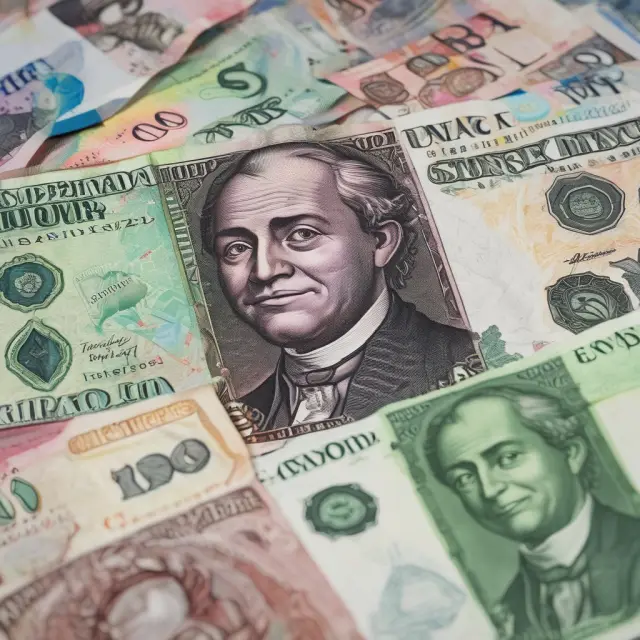
Comorian Franc vs. Other African Currencies
The Comorian franc is a unique currency in the context of Africa. While pegged to the euro since 1999 at an exchange rate of approximately 492 KMF for every euro, it sees more frequent exchange with the United States dollar (USD) on the global market. Understanding this complex relationship between currencies is crucial in the context of the Comorian economy, as well as its historical background.
Exchange Rates and Market Influences:
The primary currency used for exchange transactions within Comoros is the Comorian franc (KMF). As previously mentioned, one KMF equals roughly 437 US dollars and approximately 1 euro. However, the central bank in Moroni pegs the KMF to the euro at a rate of 491.96775 KMF per euro. This exchange rate has been stable since the European Union adopted the euro in 1999.
Despite the official pegging relationship between the KMF and euro, the Comorian franc is mostly exchanged with the US dollar on the global market. The reasons for this preference can be attributed to several factors:
- Historical ties to France and the French franc (CFA) – Prior to adopting its own currency in 1960, the Comoros used the CFA franc. This currency was pegged to the French franc and linked to the French economy. Although the Comorian franc is no longer a part of the CFA franc zone, it remains influenced by France economically.
- Economic realities within Comoros – The Comorian economy relies heavily on imports (approximately 70%), which are priced primarily in U.S dollars. Additionally, the islands’ primary industries—fishing and tourism—can be affected by global economic shifts and trends, making the US dollar a more useful currency to have when dealing with international partners.
- Regional market dynamics – Many African countries, especially those neighboring Comoros, use the U.S. dollar as their primary currency for both importing and exporting goods and services. This regional trend further reinforces the importance of the US dollar in the context of African currencies, including the KMF.
- The Comorian franc’s limited usage outside the country – Unlike other popular African currencies like the South African Rand (ZAR) or the Nigerian Naira (NGN), the Comorian franc has little value beyond its borders. This further diminishes its attractiveness as a primary currency for international transactions, making the US dollar a more practical choice for businesses operating outside of Comoros.
Understanding the interplay between the KMF and other currencies is crucial to investors, travelers, and anyone else involved in financial activities with the Comorian islands. With careful planning and an awareness of market dynamics, it’s possible to navigate this intricate web of currency exchange rates and make informed decisions that will benefit your investments or travels to the region.
FAQs: Answering Common Questions about the Comorian Franc
Question 1: What is the Comorian franc (KMF)?
Answer: The Comorian franc is the official currency of the African island nation of Comoros. It is managed and issued by the country’s central bank, la Banque Centrale des Comores. Its symbol is KMF on global currency exchanges.
Question 2: What is the exchange rate between the Comorian franc and euro (EUR)?
Answer: The Comorian Franc is pegged to the euro at an effective rate of about 492 KMF for every one euro.
Question 3: How many centimes make up a franc?
Answer: One franc is divided into 100 centimes, although no centimes have ever been issued or used.
Question 4: What are the primary industries in Comoros and how do they impact the local economy?
Answer: The primary industries in Comoros include fishing and tourism. These industries are vulnerable to external factors, such as extreme weather conditions and volcanic activity, which can negatively affect employment levels and overall economic growth. Agriculture is also crucial to the island nation’s economy, with its arable land, fertile soil, and large fishing industry providing essential resources for residents and exports.
Question 5: What percentage of the population lives below the poverty line?
Answer: Approximately 42% of Comoros’ residents live below the poverty line.
Question 6: Where can you exchange the Comorian Franc?
Answer: The KMF is most often exchanged with the United States dollar (USD), and it is accepted by many establishments in Comoros, including large hotels. Change is given in the local currency.
Question 7: How is the Comorian franc used within the country?
Answer: Cash is predominantly used in the island nation, although larger establishments like hotels may take credit cards. Transactions are executed in the local currency; however, some merchants accept both the U.S. dollar and euro as well. Change, however, is given in the KMF.
 Next entry · No. 2,721Understanding Knock-In Options: Triggering Barrier Options for Profit
See also
-
 No. 4,443
19 Jun 2025
19 min
Understanding Currency Revaluation: Effects, Causes, and Implications
Finance Policy
No. 4,443
19 Jun 2025
19 min
Understanding Currency Revaluation: Effects, Causes, and Implications
Finance Policy -
 No. 3,581
10 Apr 2025
22 min
Understanding the Nepalese Rupee (NPR): A Comprehensive Guide
Finance Policy
No. 3,581
10 Apr 2025
22 min
Understanding the Nepalese Rupee (NPR): A Comprehensive Guide
Finance Policy -
 No. 3,412
26 Mar 2025
23 min
Net Foreign Assets (NFA): Understanding the Role of a Nation’s Creditor or Debtor Status
Finance Policy
No. 3,412
26 Mar 2025
23 min
Net Foreign Assets (NFA): Understanding the Role of a Nation’s Creditor or Debtor Status
Finance Policy -
 No. 2,741
31 Jan 2025
21 min
Understanding the Cayman Islands Dollar (KYD): Currency of the Offshore Financial Hub
Finance Policy
No. 2,741
31 Jan 2025
21 min
Understanding the Cayman Islands Dollar (KYD): Currency of the Offshore Financial Hub
Finance Policy -
 No. 2,740
31 Jan 2025
18 min
Understanding the Valuable Kuwaiti Dinar (KWD) – A Currency Overview for Institutional Investors
Finance Policy
No. 2,740
31 Jan 2025
18 min
Understanding the Valuable Kuwaiti Dinar (KWD) – A Currency Overview for Institutional Investors
Finance Policy -
 No. 4,264
04 Jun 2025
24 min
Understanding Quote Currency in Forex: Base vs Quote, Direct vs Indirect
Forex & Currency Markets
No. 4,264
04 Jun 2025
24 min
Understanding Quote Currency in Forex: Base vs Quote, Direct vs Indirect
Forex & Currency Markets