Understanding the Concept and Application of Rate of Change in Finance and Investment

Understand the significance of Rate of Change (ROC) in finance and investment. Learn how to calculate ROC, its importance, and effective usage.
Introduction to Rate of Change (ROC)
Rate of Change (ROC), also known as velocity or acceleration, represents the rate at which a variable changes over a specific period. In finance, ROC is utilized extensively for understanding price returns and identifying trends. This section delves into the concept of ROC, its mathematical representation, and its significance in finance and investment.
Understanding Rate of Change (ROC)
Rate of change refers to how quickly something changes over time. In finance, we calculate ROC by determining the percentage difference between the current value of a financial instrument and its value during a previous period. The ROC concept plays an essential role in identifying trends, assessing momentum, and recognizing potential bubbles in various securities.
Mathematical Representation of Rate of Change
The formula for calculating rate of change involves determining the difference between two values (Δ) and dividing it by the time interval (T). The result is expressed as a percentage to provide a clearer interpretation of the rate:
R = (D2 – D1) / T
Where:
– R is the rate of change
– D1 represents the initial value
– D2 denotes the current or final value
– T indicates the time interval between the two values
Relevance and Importance of Measuring ROC
Measuring rate of change offers valuable insights for investors, as it helps in:
- Identifying momentum in trends
- Assessing security performance against broader market benchmarks
- Detecting potential bubbles or reversals
- Enhancing risk management strategies
- Evaluating the effectiveness of investment strategies
- Gauging the impact of external factors on financial instruments
In conclusion, understanding rate of change and its implications in finance is crucial for investors seeking to make informed decisions and stay ahead in the competitive financial markets. By measuring ROC, investors can identify trends, monitor momentum, manage risk, and even anticipate market shifts to optimize their investment strategies.

Formula for Rate of Change
The rate of change (ROC) is a vital financial term representing the rate at which a variable, particularly in finance, changes over a specific period. This concept can be expressed as the ratio between the change in one value and a corresponding change in another, typically represented by the slope of a line on a graph. The ROC can be calculated using the mathematical formula:
R = (D2 – D1) / T
Here, R is the rate of change, D represents the difference between two values, and T stands for the time interval between these values. In finance, the rate of change is frequently employed to understand price returns, identify trends, and detect potential market bubbles.
Investors calculate the ROC as a return over time, measuring the current value (or the price) of an asset relative to its previous value. To obtain the percentage representation, subtract one from the quotient, then multiply it by 100:
ROC = [(Current Value / Previous Value) – 1] x 100%
The rate of change is a crucial concept for investors because it offers insights into market momentum and trends. A security with high momentum often outperforms the market, whereas one that shows a low or negative ROC could potentially decline in value, acting as a sell signal. The ROC indicator can also be used to detect bubbles: a sudden increase in a broad-market index’s ROC may indicate an unsustainable market situation.
The ROC is frequently referred to as the price rate of change (PRoC) when analyzing price movements. In technical analysis, the PRoC indicator is represented by the slope of a line on a chart, demonstrating the percentage change in price between the current and past periods. The indicator’s value can be positive (upward trend), negative (downward trend), or zero (consolidation).
In summary, the rate of change formula is an essential tool for understanding and evaluating the momentum and dynamics of financial markets. By calculating ROC for various securities and indices, investors can make more informed investment decisions and adapt their strategies to changing market conditions.

Importance of Measuring ROC in Finance
Rate of change (ROC), as a crucial financial concept, plays an essential role for investors seeking to understand market momentum and identify trends. By examining the rate at which variables such as stock prices evolve over time, one can effectively spot potential opportunities or warning signs that can significantly impact investment strategies. The importance of measuring ROC in finance is multifaceted, encompassing various aspects like trend analysis, risk management, and identifying market bubbles.
Understanding Market Momentum
Momentum is the overall direction and strength of a trend, which can be determined by evaluating the rate of change in prices or other financial variables. A security with high momentum often outperforms the overall market in the short term due to its accelerating growth. On the contrary, securities exhibiting negative ROC can signal potential declines and serve as sell signals for investors.
Identifying Trends
Trends help investors make informed decisions by providing insight into long-term investment opportunities. By examining trends through the lens of ROC, one can more accurately determine when to enter or exit a position. For instance, an uptrend is indicated when the rate of change is positive and increasing over time, while a downtrend shows negative and decreasing ROC.
Recognizing Market Bubbles
Rate of change can also serve as a valuable tool for recognizing market bubbles. While it’s crucial to recognize momentum in securities, a significant increase in the overall market’s rate of change can be an indicator of an unsustainable bubble. By monitoring the ROC of broad-market indices or other financial instruments, investors can better understand the potential risks associated with market volatility and adjust their strategies accordingly.
The Relationship Between ROC and Volatility
Volatility is a significant factor affecting investment decisions, as it measures the degree of fluctuation in stock prices over time. The rate of change and volatility have an intricate relationship: high volatility can result in larger ROC values, while low volatility can cause smaller ROC values. Understanding this connection can help investors make more informed decisions regarding risk management and investment strategies.
In conclusion, measuring the rate of change is vital for understanding market trends, momentum, and potential bubbles in finance. This powerful concept allows investors to make more informed decisions by providing valuable insights into the speed and direction of various financial variables, ultimately leading to improved performance and enhanced risk management.

Rate of Change Indicator
The Price Rate of Change indicator is a technical tool widely used in finance to measure the momentum and confirm bullish or bearish trends by calculating the percentage change in price between the current period and a specified number of periods ago. It provides insight into an asset’s trend direction, offering traders crucial information for making informed investment decisions.
The rate of change indicator can be calculated using the following formula: Price ROC = (Price(t) – Price(t-n)) / Price(t-n) * 100% where:
- Price(t): The current price at time ‘t’
- Price(t-n): The price ‘n’ periods ago.
The resulting value is expressed as a percentage, offering traders an insight into the magnitude and direction of the price change in relation to its preceding value over a specific period. A positive ROC signifies an upward trend, while a negative ROC indicates a downward trend. When the ROC is zero, it suggests that the price has been relatively stagnant or consolidating.
The Price Rate of Change indicator plays a vital role in momentum trading strategies as it highlights trends and helps traders gauge the strength of those trends. A bullish trend can be confirmed when the price rate of change remains positive over multiple timeframes, while a bearish trend is signaled by a negative ROC across various timeframes. Traders may use this information to enter or exit positions, adjust stop-loss orders, and set take-profit targets accordingly.
Additionally, the Price Rate of Change indicator can serve as an early warning system for potential bubbles in the market. A sudden sharp increase in a broad-market index or security’s ROC could indicate excessive speculation, potentially signaling a bubble that may burst soon. This knowledge is crucial as it allows traders to protect their portfolios from significant losses and adjust their investment strategies accordingly.
In summary, the Price Rate of Change indicator is an essential technical tool for measuring momentum in finance by calculating the percentage change in price between two specific periods. It offers valuable insights into trend direction, helps confirm bullish or bearish trends, and acts as an early warning system for potential market bubbles.

ROC vs Momentum
Rate of change and momentum are two closely related concepts in finance and investment. While they share some similarities, it’s essential to understand their differences and the role each plays in financial analysis. Both rate of change (ROC) and momentum describe how quickly a variable changes over time; however, the primary distinction lies in their applications and interpretations.
The mathematical formula for ROC represents the percentage change between two points on a chart, whereas momentum is a more comprehensive concept that includes the magnitude and direction of price movements. Momentum is the resultant force generated by the mass (price) of an asset’s movement multiplied by its velocity (rate of change). In other words, rate of change is one component of momentum, but it doesn’t capture the entirety of the concept.
Momentum indicators such as Moving Average Convergence Divergence (MACD), Relative Strength Index (RSI), and Price Rate of Change (ROC) are used by traders to identify trends, measure price momentum, and generate buy/sell signals. These technical analysis tools are designed to provide insights into the dynamics of an asset’s price action by assessing both its rate of change and the underlying trend’s direction.
For instance, an ROC indicator measures the percentage change in price between two specific periods, while MACD calculates the difference between two moving averages, the 12-day Exponential Moving Average (EMA) and the 26-day EMA. This difference generates a signal line, which helps traders determine the momentum’s direction by crossing above or below the zero-line.
In summary, rate of change is a crucial component of momentum but only represents the speed at which an asset changes. Momentum encompasses both magnitude and direction and provides investors with more comprehensive insights into market trends and price movements. Both ROC and momentum are valuable tools in quantifying the underlying dynamics of financial markets and assisting traders in making informed investment decisions.

How to Use the ROC Indicator Effectively
Understanding the price rate of change indicator and harnessing its power is essential for traders and investors who wish to profit from market momentum and identify trends. By examining the ROC, you can make informed decisions, manage risk, and potentially generate alpha. In this section, we’ll cover some techniques and strategies for using the ROC effectively.
Setting Thresholds
The first step in using the ROC indicator is to set appropriate threshold values that correspond with your trading strategy. A common approach involves setting a long-term moving average as the baseline and monitoring the short-term ROC relative to it. For instance, if you’re working with daily data, a 20-day moving average could serve as your benchmark, while a shorter period such as five or ten days is used for calculating the ROC. Once you define these threshold values, you can use them to determine bullish and bearish trends based on whether the current ROC is above or below the threshold.
Combining It with Other Indicators
The ROC indicator is not a standalone tool; combining it with other indicators can help validate trends and increase its accuracy. For example, pairing the ROC with a moving average crossover can generate powerful buy/sell signals. When the short-term ROC crosses above the long-term moving average, this could be an indicator of a bullish reversal or continuation. Conversely, if the short-term ROC falls below the long-term moving average, it might signify a bearish trend or potential selling opportunity.
Analyzing Multiple Timeframes
A crucial aspect of using the ROC effectively is examining various timeframes to gain a more comprehensive perspective on market conditions. For instance, looking at daily, weekly, and monthly charts can help you identify long-term trends and short-term momentum. This multifaceted approach allows traders to adjust their strategies accordingly while staying informed about broader market movements.
Monitoring the ROC’s Absolute Value
Another strategy for using the ROC indicator is tracking its absolute value, as this can help you gauge the intensity of trends and momentum. When the ROC’s absolute value is high, it may indicate a strong trend or accelerating price movement. On the other hand, low values might suggest a weak trend or consolidation phase.
In conclusion, rate of change (ROC) plays a vital role in finance and investment as it enables us to understand momentum, identify trends, and recognize potential bubbles. By using the ROC indicator effectively through techniques such as setting thresholds, combining it with other indicators, analyzing multiple timeframes, and monitoring its absolute value, investors can make informed decisions and manage risk in their portfolios.

Limitations of Rate of Change
While the rate of change indicator offers valuable insights into momentum and trends in finance, it comes with some limitations that investors should be aware of to prevent misinterpretations or incorrect decision-making. The most significant drawbacks of the ROC indicator include its susceptibility to noise and false signals.
Firstly, price movements can sometimes yield misleading rate of change values due to volatile markets and random fluctuations in security prices. For instance, a brief surge in stock price might trigger an inflated positive ROC, which may not accurately represent a sustainable trend. Similarly, sudden drops in stock price may generate negative ROCs that could be temporary or false alarms, potentially leading investors to sell too soon.
Secondly, rate of change is most effective when used alongside other technical indicators and fundamental analysis. In isolation, the ROC indicator might provide an incomplete picture of market conditions, potentially causing erroneous decisions based on insufficient information. By incorporating other indicators like moving averages, momentum oscillators, or RSI (Relative Strength Index), investors can confirm ROC signals, filter out noise, and improve overall accuracy.
Lastly, it is important to note that the rate of change indicator does not provide any insight into the direction of future price movements or market trends. While a positive ROC may indicate an ongoing bullish trend, it does not guarantee continued upward momentum. Conversely, a negative ROC can signal a bearish trend but doesn’t necessarily predict further downtrends. Thus, investors should be cautious and consider other factors like fundamental analysis, economic indicators, and market sentiment when making investment decisions.
Despite its limitations, the rate of change indicator remains an essential tool for understanding momentum and identifying trends in financial markets. By acknowledging its shortcomings and employing it alongside other technical and fundamental tools, investors can maximize its value while minimizing potential pitfalls.

ROC vs Volatility
Rate of change (ROC) and volatility are two interrelated concepts frequently used by investors in understanding the behavior of financial instruments. While rate of change is a measure of momentum or the speed at which a variable changes, volatility refers to the degree of variation in that change. In finance, both ROC and volatility play essential roles in assessing risk, determining trends, and making informed investment decisions.
The relationship between ROC and volatility is significant because volatility impacts the rate of change in asset prices. For instance, high volatility can result in dramatic changes in asset prices, which in turn affect the calculation of ROC. A more volatile security will experience larger price swings, leading to greater acceleration or deceleration than a less volatile one.
Understanding how ROC and volatility interact is crucial for investors as it helps in managing risk effectively. For example, if an investor anticipates high volatility in a particular stock or asset class, they may use the ROC indicator to identify trends and capitalize on market momentum. In contrast, low volatility may necessitate a more cautious approach, relying on other indicators or fundamental analysis for investment decisions.
Investors also employ various combinations of ROC and volatility indicators to refine their strategies. One popular method is the Moving Average Convergence Divergence (MACD), which incorporates both ROC and volatility in its calculation. The MACD line plots the difference between a short-term moving average and a long-term moving average, helping investors determine buying and selling signals based on the momentum of price changes.
Another way to use ROC and volatility together is in calculating risk metrics such as the Sharpe ratio or the Sortino ratio. These ratios assess an investment’s risk-adjusted return by comparing its performance against a benchmark, taking into account both ROC and volatility.
In conclusion, rate of change (ROC) and volatility are essential concepts for investors in understanding the dynamics of financial instruments. While ROC is a measure of momentum and the speed of price changes, volatility represents the degree of variation in those price changes. By recognizing their relationship and employing various indicators and strategies that consider both ROC and volatility, investors can make more informed decisions and effectively manage risk within their portfolios.
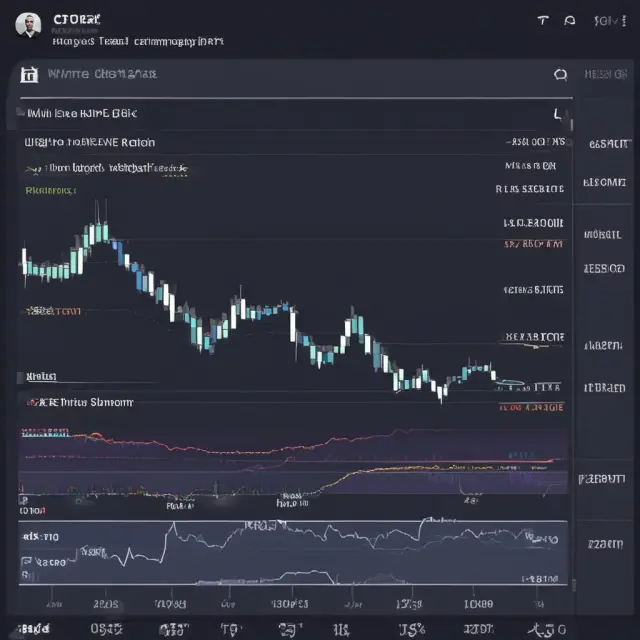
Rate of Change in Practice: Real-World Applications and Examples
The power of rate of change lies in its real-world applications for investors. By understanding the concept of rate of change and its relation to momentum, investors can make informed decisions, generate alpha, and manage risk effectively. Let’s dive into some examples that demonstrate how this works.
Consider the stock chart of Tesla (TSLA) from January 2017 to March 2023. The chart below displays the price rate of change indicator (ROC) in red and the 21-day moving average (MA) in blue.
!(image: tsla_chart.png)
In late 2017, Tesla’s price experienced an exponential rise, pushing the ROC to a significant high. Concurrently, the price broke above its moving average, confirming the strong uptrend (bullish signal). This surge in momentum contributed to the stock’s impressive performance over the following months.
As the price continued to climb throughout 2018, the ROC remained consistently positive. However, around March 2019, a significant drop in Tesla’s share price caused a negative ROC and a crossing below the moving average (bearish signal). This marked the beginning of a downtrend that persisted until the end of the year.
Fast forward to early 2020, and Tesla began to recover from its bear market losses. A positive ROC once again emerged as the price reclaimed its lost ground, pushing above the moving average (bullish signal). The subsequent bull run continued throughout the second half of the year.
Investors can use the ROC indicator to time their entry and exit points based on these signals. For instance, a long position could be entered when both the price and the ROC are positive and the price is trading above its moving average (buy signal). Conversely, a short position could be initiated when both the price and the ROC are negative and the price is trading below its moving average (sell signal).
Additionally, the ROC can serve as a confirmation tool for other technical indicators. For example, a bullish crossover between the moving averages or a bullish divergence with the relative strength index (RSI) might provide an early indication of a potential trend reversal, but it is not a guarantee until the price itself starts to move upwards. The ROC indicator provides a clearer and more definitive confirmation that momentum has shifted.
In summary, the rate of change indicator plays a crucial role in identifying trends and momentum shifts in financial markets. Its practical applications, such as setting entry and exit points, confirming trend reversals, and generating alpha, make it an indispensable tool for active investors.
By understanding how the ROC indicator works and its various applications, investors can gain a competitive edge, adapt to ever-changing market conditions, and ultimately, increase their chances of achieving their investment objectives.

Frequently Asked Questions (FAQ)
What exactly is the rate of change (ROC)?
Answer: The rate of change (ROC) measures the speed at which a variable changes over a specific period, often expressed as a ratio between two values or as the slope of a line representing the momentum of a trend. In finance, ROC is used to describe price returns and identify trends.
How is the formula for rate of change calculated?
Answer: The rate of change can be mathematically represented by the equation R = (D2 – D1)/T or as a return over time, where R = rate of change, D = distance or value measurement, and T = time period.
Why is rate of change essential for investors?
Answer: Understanding rate of change in finance helps investors detect security momentum and identify trends, ultimately providing insights into market conditions and investment opportunities. For example, securities with a positive ROC tend to outperform the market in the short term, while those with negative or low ROC may decline.
How can the Price Rate of Change indicator be used?
Answer: The Price Rate of Change indicator is a technical tool that measures the percentage change in price over time and can confirm bullish or bearish trends based on its positive or negative value. It is commonly used to set thresholds for buy and sell signals when combined with other indicators.
What is the difference between rate of change and momentum?
Answer: Momentum refers to the force behind a trend, while rate of change is a quantitative measure that describes the magnitude and direction of the trend’s velocity over time. Both concepts are closely related and provide valuable information for investment analysis.
How does the ROC indicator compare to volatility?
Answer: Volatility measures the dispersion of returns around an average value, while rate of change describes the speed at which these returns change. Both concepts can impact investment strategies, with high volatility potentially leading to higher rates of change and increased risk for investors.
Are there any limitations to using the ROC indicator?
Answer: Yes, the ROC indicator may generate false signals due to short-term market noise, which could result in incorrect buy or sell decisions. It is essential to use multiple indicators and apply proper risk management techniques when employing ROC for investment analysis.
 Next entry · No. 4,280Understanding Rate of Return (RoR): Calculating Profit and Loss on Investments
See also
-
 No. 4,065
19 May 2025
20 min
Price Rate of Change (ROC) Indicator: Understanding Momentum in Finance
Financial Education
No. 4,065
19 May 2025
20 min
Price Rate of Change (ROC) Indicator: Understanding Momentum in Finance
Financial Education -
 No. 2,718
29 Jan 2025
17 min
Understanding the Klinger Oscillator: A Powerful Technical Indicator for Trend Identification and Reversal Signals
Financial Data Analysis
No. 2,718
29 Jan 2025
17 min
Understanding the Klinger Oscillator: A Powerful Technical Indicator for Trend Identification and Reversal Signals
Financial Data Analysis -
 No. 5,348
01 Sep 2025
19 min
Understanding Uptick Volume: A Technical Analysis Tool for Institutional Investors
Finance Policy
No. 5,348
01 Sep 2025
19 min
Understanding Uptick Volume: A Technical Analysis Tool for Institutional Investors
Finance Policy -
 No. 4,916
27 Jul 2025
22 min
Understanding Technical Indicators: A Comprehensive Guide for Institutional Investors
Business Finance
No. 4,916
27 Jul 2025
22 min
Understanding Technical Indicators: A Comprehensive Guide for Institutional Investors
Business Finance -
 No. 4,809
18 Jul 2025
23 min
Understanding Support Levels: A Key Concept in Technical Analysis
Market Trends
No. 4,809
18 Jul 2025
23 min
Understanding Support Levels: A Key Concept in Technical Analysis
Market Trends -
 No. 4,754
14 Jul 2025
25 min
Stock Analysis: Understanding Fundamental and Technical Approaches for Institutional Investors
Business Finance
No. 4,754
14 Jul 2025
25 min
Stock Analysis: Understanding Fundamental and Technical Approaches for Institutional Investors
Business Finance