Understanding the Greater Fool Theory: A Risky Investment Strategy

Understand the risks and implications of the Greater Fool Theory, a daring investment strategy where buyers hope to sell to a 'greater fool'.
Introduction to Greater Fool Theory
The Greater Fool Theory, also known as ‘Greater Idiot Theory’ or simply ‘Fool Theory,’ is a risky investment approach based on the belief that investors can make profits by buying overvalued securities. According to this theory, you can sell these securities to an even more gullible investor (the ‘greater fool’) for a higher price than what you paid, without considering their fundamental value. This strategy is built upon the assumption that there will always be someone willing to pay a higher price than you did. However, as markets inevitably experience corrections and speculative bubbles burst, this strategy poses significant risks, as discussed below.
Theory’s Basics: Buying Overvalued Securities
At its core, the greater fool theory implies that investors should disregard the fundamentals of securities, such as their intrinsic value or earnings reports, and instead focus solely on selling them to a ‘greater fool.’ The belief is that eventually, someone will be willing to pay an even higher price for these overvalued securities. This strategy can lead to speculative bubbles and price increases far removed from the actual worth of the underlying assets. However, the greater fool theory comes with substantial risks.
Greater Fool Theory and Speculative Bubbles
Speculative bubbles arise when investors buy a security based on its perceived future value, rather than its intrinsic worth, leading to an increase in price. The greater fool theory contributes to these situations by encouraging investors to overlook the fundamental value of securities while focusing solely on finding a ‘greater fool’ to sell them to. Eventually, as more and more ‘fools’ enter the market and prices reach unsustainable levels, bubbles burst, causing significant losses for many investors.
Case Study: 2008 Financial Crisis
The 2008 financial crisis provides a clear example of how the greater fool theory played a role in creating a speculative bubble. During this period, financial institutions purchased mortgage-backed securities (MBS) with the expectation of selling them to another investor for a profit, without any regard to their underlying value. Unfortunately, when the housing market collapsed, many investors were left holding these overvalued securities and faced massive losses as they struggled to find buyers.
Intrinsic Valuation vs. Greater Fool Theory
A more prudent investment strategy is to focus on intrinsic valuation, which involves understanding the fundamental value of a security based on its financial statements, industry positioning, and other qualitative factors. This approach offers a more stable foundation for long-term investments and reduces the risk associated with relying solely on finding ‘greater fools’ to buy overvalued securities.
Example: Bitcoin’s Price Appreciation
Bitcoin is often cited as an example of the greater fool theory in action, as its price has soared despite having no intrinsic value and consuming vast amounts of energy. However, it remains debatable whether or not this is truly an accurate characterization. The involvement of institutional investors in buying Bitcoin suggests that they are not acting as ‘greater fools,’ but rather recognizing potential long-term value based on market trends and future use cases for the cryptocurrency.
Limitation of Greater Fool Theory
The greater fool theory has significant limitations, primarily due to its reliance on finding an endless supply of investors willing to pay increasing prices for overvalued securities. This strategy can lead to unsustainable price increases and eventual market corrections, which can result in substantial losses for those who rely solely on this approach.
Investor Protection: Due Diligence
To protect themselves from becoming ‘greater fools,’ investors are strongly advised to conduct thorough due diligence before making investment decisions. By examining a security’s fundamentals, such as financial statements and market trends, and understanding the underlying risks and opportunities, investors can make informed decisions and minimize their risk of losses.
Greater Fool Theory and Institutional Investors
The involvement of institutional investors in the greater fool theory is an interesting development. While they may not be acting as ‘greater fools’ in the traditional sense, as they are often purchasing securities with a long-term view, their actions can still contribute to speculative bubbles and price increases that could potentially leave smaller investors vulnerable to losses. It remains crucial for all investors, regardless of their size or experience level, to conduct due diligence and assess the underlying value of securities before making investment decisions.
FAQ: Greater Fool Theory
Question 1: Does the greater fool theory guarantee profits?
Answer: No, the greater fool theory does not offer a guaranteed profit, as it relies on finding someone willing to pay a higher price for an overvalued security. It is a risky strategy that could lead to significant losses when markets correct or speculative bubbles burst.
Question 2: Can smaller investors fall victim to the greater fool theory?
Answer: Yes, smaller investors are often more susceptible to the greater fool theory due to their limited resources and lack of experience in conducting thorough due diligence before making investment decisions. It is crucial for them to educate themselves on the fundamentals of securities and assess their underlying value before investing.
Question 3: Is there a way to avoid becoming a ‘greater fool’?
Answer: Yes, investors can protect themselves from falling victim to the greater fool theory by conducting thorough due diligence on the fundamentals of securities, including their financial statements and industry positioning, before making investment decisions. By focusing on intrinsic value rather than finding a ‘greater fool,’ investors can make more informed decisions and minimize their risk of losses.

Theory’s Basics: Buying Overvalued Securities
In the investment world, there exists a controversial strategy known as the Greater Fool Theory, which suggests that buying overvalued securities is an acceptable practice because someone else – the “greater fool” – will always pay a higher price. This theory, while seemingly simple, holds significant implications for investors and markets alike.
According to the greater fool theory, an investor can make money by disregarding traditional valuation metrics such as earnings reports or financial statements. Instead of focusing on fundamental analysis, adherents of this approach believe that they’ll be able to sell their overvalued securities to a buyer who is even more overzealous – the “greater fool.”
However, speculative bubbles are not sustainable and can burst at any moment, leaving investors holding the bag when there are no greater fools left. This is precisely what happened during the 2008 financial crisis when many investors purchased mortgage-backed securities (MBS) in the belief that they could sell them to a larger fool at a higher price.
Understanding the Basics of Greater Fool Theory:
1. The Greater Fool Theory and Speculative Bubbles:
The greater fool theory is closely linked to speculative bubbles, which occur when investors bid up the prices of securities far beyond their intrinsic value based on market sentiment rather than underlying fundamentals. As long as there are buyers willing to pay increasingly higher prices, this cycle can continue. However, it’s important to note that this bubble eventually bursts when the pool of greater fools dries up.
2. The 2008 Financial Crisis and Greater Fool Theory:
The 2008 financial crisis is an excellent example of how the greater fool theory contributed to a speculative bubble. During this time, investors were seduced by the belief that they could sell mortgage-backed securities (MBS) at a profit to another ‘greater fool’ indefinitely. Unfortunately for them, as housing prices started to fall and borrowers began to default on their mortgages, it became difficult to find buyers, causing the MBS market to collapse.
3. Intrinsic Valuation vs. Greater Fool Theory:
Investors can significantly reduce their risk by performing thorough due diligence and using intrinsic valuation models to determine a security’s fundamental worth before making an investment decision. This approach is in direct opposition to the greater fool theory, as it emphasizes the importance of understanding the underlying fundamentals of securities instead of relying on market sentiment alone.
Upcoming sections will discuss real-life examples, limitations, and implications of the Greater Fool Theory in more detail. Stay tuned!

Greater Fool Theory and Speculative Bubbles
The greater fool theory poses a significant risk when it comes to investment markets, particularly during instances of speculative bubbles. This theory assumes that investors can make money by purchasing overvalued securities with the belief that they will find a “greater fool” ready to pay an even higher price. However, the bubble eventually bursts when there are no more greater fools left in the market, leading to a sudden and significant drop in prices.
Understanding Speculative Bubbles
Speculative bubbles occur when investors overestimate the value of an asset and bid up its price beyond rational levels. The tulip mania of the 17th century is one well-known historical example, where some Dutch traders paid astronomical sums for bulbs in the belief that they could sell them to other speculators at a higher price. However, the bubble eventually burst when prices could no longer be sustained, and those who had purchased tulips were left with large losses.
The Role of Greater Fool Theory
Investors relying on the greater fool theory are essentially banking on someone else’s irrational exuberance to make a profit. They ignore fundamental analysis and valuations, instead focusing on finding potential buyers who are willing to pay more than what they paid. However, as the market becomes saturated with overvalued securities, it eventually collapses.
2008 Financial Crisis: A Case Study
A prominent example of the greater fool theory contributing to a speculative bubble was the 2008 financial crisis. Investors, particularly those in the United States, bought mortgage-backed securities (MBS) based on the belief that they would find buyers willing to pay even higher prices. As the housing market started to decline, and default rates began to rise, it became increasingly difficult to sell these assets, leading to significant losses for investors.
Comparison with Intrinsic Valuation
In contrast to the greater fool theory, intrinsic valuation is a more prudent investment strategy. It involves calculating an asset’s fundamental worth by analyzing its financial statements and determining its intrinsic value based on factors like earnings, growth, and dividends. By focusing on the underlying value of an asset rather than finding a buyer willing to pay a higher price, investors can reduce their risk exposure and build long-term wealth.
Example: Bitcoin’s Price Appreciation
The price appreciation of Bitcoin presents an intriguing example of the greater fool theory at work. With no clear intrinsic value, the cryptocurrency relies heavily on market sentiment and speculation. As traders and investors rush to buy Bitcoin in the hope of selling it to someone else at a higher price, the bubble continues to inflate. However, just like any other asset, the bubble is bound to burst at some point, leaving those relying on the greater fool theory with significant losses.
Institutional Investors: A Different Perspective
Although institutional investors may not fit the definition of a “greater fool,” their massive buying power can contribute to the bubble and create a false sense of security among retail investors. As they buy large quantities of an asset, prices rise further, luring more speculative buyers into the market. However, when these institutions eventually sell their positions, prices can plummet, leaving smaller investors holding the bag.
In conclusion, while the greater fool theory may lead to short-term profits for some investors, it poses a significant risk, particularly during instances of speculative bubbles. Instead, focusing on intrinsic valuation and conducting thorough due diligence is a more prudent investment strategy that can help mitigate risk and build long-term wealth.

Case Study: 2008 Financial Crisis
The 2008 financial crisis serves as a prime example of how the greater fool theory can lead to devastating consequences for investors. During this time, investors bought mortgage-backed securities (MBS) with little regard for their true value, assuming they could sell these overvalued assets to someone else at an even higher price. The theory’s logic seemed sound as long as the market continued to grow and more buyers joined in on the speculative trend.
However, when the bubble burst, investors were left holding securities that had become nearly worthless. MBS, which were based on debt of questionable quality, were particularly vulnerable to this phenomenon. By 2004, U.S. homeownership had reached a peak at around 68%. However, as early as late 2005, signs of trouble started to emerge: home prices began declining and the U.S. Home Construction Index suffered a loss of nearly 40% in 2006.
Subprime borrowers, many of whom were unable to afford their mortgages due to high interest rates, soon began defaulting on their loans. Financial firms and hedge funds that had heavily invested in MBS saw their investments quickly lose value. Despite the warning signs, some investors continued to adhere to the greater fool theory, hoping to sell off their overvalued securities before the market corrected itself.
Unfortunately for them, the market did correct—dramatically. The financial crisis resulted in a global economic downturn, with the S&P 500 falling 37% between October 2007 and March 2009. MBS became nearly worthless as the housing bubble burst. Many investors who had purchased these securities based on the greater fool theory lost significant portions of their investments.
The 2008 financial crisis highlighted the importance of conducting thorough due diligence to determine a security’s fundamental value—a strategy that contrasts greatly with the greater fool theory. In today’s volatile markets, it is crucial for investors to understand the intrinsic worth of securities before making investment decisions. Due diligence encompasses various qualitative and quantitative analyses, such as evaluating a company’s capitalization, revenue trends, competitive landscape, industry dynamics, and management effectiveness. Conducting proper due diligence can help investors avoid becoming ‘greater fools.’
In hindsight, the 2008 financial crisis illustrates how blindly adhering to the greater fool theory can lead to significant losses for even the most seasoned investors. This unfortunate episode underlines the importance of a solid investment strategy based on sound fundamental analysis and thorough due diligence.

Intrinsic Valuation vs. Greater Fool Theory
The Greater Fool Theory and Intrinsic Valuation are two contrasting investment approaches. While the former suggests buying overvalued securities with the expectation that a greater fool will pay an even higher price, intrinsic valuation emphasizes understanding the fundamental worth of an investment.
Understanding the Differences
The Greater Fool Theory asserts that investors can make money by disregarding securities’ value and relying on selling them to a ‘greater fool.’ However, this approach comes with inherent risks—the bubble will eventually burst, leaving those holding overvalued stocks or securities vulnerable. In contrast, intrinsic valuation is a more measured approach, focusing on a security’s fundamental worth using methods like discounted cash flow analysis and price-to-earnings (P/E) ratio calculations. This technique is designed to help investors determine if the investment’s current market price is justified by its underlying value.
Comparing the Two Methods
Intrinsic valuation provides a solid foundation for making informed investment decisions, whereas greater fool theory relies on speculative markets and market sentiment. Intrinsic valuation can help protect investors from becoming ‘greater fools’ themselves since it requires a thorough analysis of the company’s financial health, industry trends, and competitors.
Example: Bitcoin’s Price Appreciation
Bitcoin is an often-cited example of the greater fool theory at work. The cryptocurrency has no inherent value, consumes massive energy resources, and exists only as lines of code stored in a computer network. Yet, its price has skyrocketed over time due to the expectation that it would be sold to an even bigger fool. However, recent years have shown institutional investors like Tesla and PayPal entering the market, challenging the notion of Bitcoin being purely speculative.
Intrinsic Valuation and Risk Mitigation
Investing based on intrinsic value can help mitigate risks associated with the greater fool theory. By determining a security’s worth through rigorous analysis, investors can minimize their chances of falling victim to bubbles or overpaying for assets. This approach provides a more solid foundation for building long-term wealth and achieving financial goals.
In conclusion, intrinsic valuation offers a more strategic and calculated investment strategy compared to the greater fool theory. By understanding a security’s fundamental worth and risks involved, investors can make informed decisions that are less dependent on market sentiment and speculation.
Example: Bitcoin’s Price Appreciation
The Greater Fool Theory holds that investors can make money by buying overvalued securities as long as they manage to find another “greater fool” willing to pay a higher price. Bitcoin, an intangible digital currency, is often cited as an extreme example of this investment strategy. Despite having no intrinsic value, questionable security, and high energy consumption requirements, the cryptocurrency experienced an exponential increase in its market capitalization, drawing a large number of investors to jump on the bandwagon.
The concept of Bitcoin’s price appreciation being driven by the Greater Fool Theory gained prominence in late 2017 when its value peaked at around $20,000. At that time, many market observers and traders believed that investors were only buying the cryptocurrency with the expectation of selling it to someone else for a higher price. The massive demand for Bitcoin seemed to outstrip the available supply, leading to a rapidly increasing price.
However, the Greater Fool Theory’s relevance to Bitcoin remains debatable as large institutional investors and corporations like Tesla, Square, and PayPal have recently joined the market. These entities, which typically conduct thorough due diligence before making significant investments, do not fit neatly into the role of a ‘greater fool.’ Their involvement indicates that they may believe in Bitcoin’s long-term potential or view it as a strategic investment rather than a speculative one. This raises questions about whether the price appreciation of Bitcoin can truly be attributed to the Greater Fool Theory.
Nevertheless, even if institutional investors are not greater fools, retail traders and smaller investors may still be operating under this theory. For instance, some individuals might buy Bitcoin with the intention of selling it at a profit to someone else without considering its underlying fundamentals. In such cases, the Greater Fool Theory could still play a role in driving Bitcoin’s price dynamics to some extent.
It is essential for investors to exercise caution and perform thorough due diligence before buying securities that seem overvalued or lack intrinsic value. The Greater Fool Theory may provide short-term gains, but it can also result in significant losses once the market corrects itself. By evaluating the fundamental worth of an investment using valuation models and conducting comprehensive research on a company’s management and ownership, investors can minimize their risks and avoid becoming greater fools themselves.

Limitation of Greater Fool Theory
The greater fool theory may seem like a tempting investment strategy for quick profits, but it comes with significant risks and potential pitfalls. The success of this approach heavily relies on there being a “greater fool” willing to pay an even higher price for the overvalued security. However, the market does not have an infinite number of buyers, and eventually, all the “greater fools” will be gone. This leaves investors with substantial losses when the bubble bursts.
One critical limitation of the greater fool theory is that it ignores fundamental analysis and financial metrics like earnings reports, market conditions, and valuation models. By neglecting these essential factors, an investor may end up buying overvalued or even fraudulent securities. This can lead to long-term damage for their portfolio, especially if they hold onto the investment when the bubble bursts.
Furthermore, the greater fool theory does not account for market corrections or economic downturns, which can drastically impact stock prices. During these periods, it becomes increasingly difficult to find buyers willing to pay higher prices. In 2008, a prime example of this limitation was evident during the financial crisis when investors were left holding mortgage-backed securities that became worthless due to widespread defaults and economic instability.
To mitigate the risk of becoming a “greater fool” yourself, it is crucial to conduct thorough due diligence on an investment before making a decision. This includes analyzing financial statements, understanding industry trends, researching competitors, and evaluating management effectively. By focusing on these factors, investors can make informed decisions that are grounded in fundamentals rather than relying on speculation or the hope of finding a “greater fool.”
Another limitation is that large institutional investors, such as pension funds and insurance companies, cannot be considered greater fools when buying securities. These entities have long-term investment horizons and are less likely to engage in the buy-and-sell behavior associated with the greater fool theory. However, they may still fall victim to bubbles and market downturns if their investments are not based on a solid understanding of fundamentals.
In summary, the greater fool theory offers a potential short-term profit opportunity but carries substantial risks that can lead to significant losses. To protect themselves from these risks, investors should focus on conducting thorough due diligence, valuing securities based on sound financial metrics, and avoiding speculation. By doing so, they can minimize their exposure to the pitfalls of this risky investment strategy and make informed decisions that contribute to long-term portfolio growth.

Investor Protection: Due Diligence
Understanding the importance of due diligence is a critical aspect when engaging in investments to prevent falling victim to the “greater fool” phenomenon. The greater fool theory assumes that one can profit from purchasing overvalued securities by selling them to someone else who is willing to pay an even higher price. However, this strategy comes with inherent risks, particularly during market downturns or speculative bubbles.
Due diligence encompasses various qualitative and quantitative analyses that help investors determine the fundamental worth of a security. This process can include calculating a company’s capitalization, examining revenue, profit, and margin trends, researching competitors and industry trends, and placing investments within a broader market context through multiples such as price-to-earnings (PE), price-to-sales (P/S), and price/earnings-to-growth (PEG) ratios. Investors should also understand management and ownership structures to gain insights into decision-making processes and capitalization tables that outline who holds the majority of shares with strongest voting power.
The 2008 financial crisis serves as a stark reminder of the importance of thorough due diligence when investing. During this period, buyers could not find takers for mortgage-backed securities (MBS), which were built on poor debt quality. In such situations, understanding the underlying fundamentals would have helped investors avoid losses.
One popular example of greater fool theory is Bitcoin, whose value appears to lack intrinsic worth and requires massive energy consumption. Despite these concerns, its price has skyrocketed over the years, with some attributing its appreciation to a simple belief that someone else will pay an even higher price in the future. However, as larger institutional investors and corporations such as Tesla and PayPal enter the market, it becomes increasingly unclear whether they represent ‘greater fools’ or not.
Therefore, due diligence offers a vital layer of protection against the risks inherent in the greater fool theory. By carefully analyzing securities, investors can make more informed decisions and better understand their investments’ underlying value, ultimately helping them avoid becoming the ‘greater fool.’
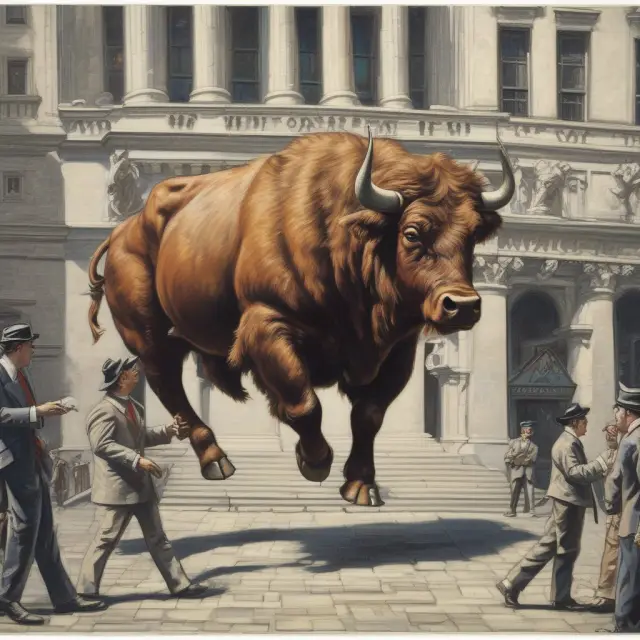
Greater Fool Theory and Institutional Investors
Institutional investors play a significant role in the financial markets, managing vast pools of capital and influencing market trends. However, their involvement in the greater fool theory remains an intriguing question. In the context of this investment strategy, institutional investors can potentially act as both buyers and sellers, introducing uncertainty to the equation.
Buying Stocks: As buyers, institutions may be tempted by the allure of short-term profits from the greater fool theory when buying overvalued securities, hoping to sell them to other investors before the bubble bursts. However, their large trading volumes can contribute to an exacerbation of speculative bubbles, making it increasingly difficult for smaller investors to exit their positions. In turn, this could potentially leave them holding the bag after a correction.
Selling Stocks: On the other hand, institutions may also sell overvalued securities to retail or individual investors, taking profits from the greater fool theory themselves. This behavior can add fuel to the fire in a speculative bubble by creating an illusion of demand and potentially driving prices even higher before eventually collapsing.
Institutional investors’ influence on the market extends beyond their role as buyers and sellers. They often employ research teams, have access to privileged information, and possess significant resources. Their actions can significantly impact stock prices, and their decision-making may be driven by factors that go beyond the greater fool theory. For example, they might make investments based on long-term growth potential, financial performance, or macroeconomic conditions, among others.
Despite the uncertainties surrounding institutional investors’ involvement in the greater fool theory, there are some important considerations for individual investors. Regardless of market conditions and participants, due diligence remains crucial to minimize the risk of becoming a ‘greater fool.’ Thorough research, understanding the fundamentals of an investment, and staying informed about relevant economic indicators can help protect investors from making hasty decisions based on the greater fool theory.
In conclusion, while institutional investors may influence the greater fool theory by buying or selling overvalued securities, their involvement is just one piece of a complex puzzle in the financial markets. The importance of due diligence, as well as a clear understanding of market dynamics and participants, cannot be overstated.

FAQ: Greater Fool Theory
The greater fool theory, also known as “greater idiot theory,” is a controversial investment strategy that argues a security’s price increases based on investors’ belief that they can sell it to someone else at an even higher price in the future. This approach overlooks fundamental analysis and instead relies solely on market sentiment. Here are some frequently asked questions about this speculative investment strategy:
Q: What is the greater fool theory?
A: The greater fool theory suggests that investors can make money by purchasing overvalued securities with the expectation to sell them to a “greater fool,” disregarding intrinsic values and fundamentals.
Q: How does it differ from intrinsic valuation?
A: Intrinsic valuation aims to determine a security’s fair value based on its financial statements and market conditions, while the greater fool theory focuses on exploiting temporary market inefficiencies and finding potential buyers willing to pay more than the actual value.
Q: What role does it play during speculative bubbles?
A: The greater fool theory can contribute to speculative bubbles as investors buy overvalued securities, assuming they will find a ‘greater fool’ for an even higher price. However, this strategy is risky since the market eventually reaches a point where there are no more buyers left.
Q: What happened during the 2008 financial crisis?
A: In the years leading to the 2008 financial crisis, many investors and financial institutions employed the greater fool theory when purchasing mortgage-backed securities (MBS), ultimately leading to an unsustainable bubble. However, when the market burst, these securities became increasingly difficult to sell as their value plummeted.
Q: Can institutional investors be ‘greater fools’?
A: Yes, even large institutional investors can fall prey to this theory, as they may believe that they can sell off their positions to other larger institutions or individuals before the bubble bursts. However, relying solely on this strategy comes with significant risks and potential losses when the market shifts.
Q: Is Bitcoin an example of greater fool theory?
A: The price appreciation of bitcoin has been attributed to the greater fool theory as many investors buy it with the expectation that they can sell it at a higher price in the future, rather than considering its intrinsic value or fundamentals. However, recent interest from institutional investors and corporations may challenge this characterization.
Q: Should I use the greater fool theory for my investments?
A: While the greater fool theory can lead to short-term profits, it is not a reliable long-term investment strategy due to the inherent risks involved in relying on market sentiment rather than fundamental analysis. It is generally recommended that investors conduct thorough due diligence and consider the underlying value of the securities they are interested in before making an investment decision.
 Next entry · No. 1,902The Great Depression: Causes, Impact and Recovery
See also
-
 No. 3,298
17 Mar 2025
21 min
Maximizing Diversification: Understanding Multi-Asset Class Investing for Institutional Investors
Business Finance
No. 3,298
17 Mar 2025
21 min
Maximizing Diversification: Understanding Multi-Asset Class Investing for Institutional Investors
Business Finance -
 No. 3,098
28 Feb 2025
18 min
Market Value Of Equity: Understanding Market Capitalization and Investor Perspective
Business Finance
No. 3,098
28 Feb 2025
18 min
Market Value Of Equity: Understanding Market Capitalization and Investor Perspective
Business Finance -
 No. 2,355
30 Dec 2024
17 min
Understanding Incumbency Certificates: What They Are and Why They Matter for Institutional Investors
Business Finance
No. 2,355
30 Dec 2024
17 min
Understanding Incumbency Certificates: What They Are and Why They Matter for Institutional Investors
Business Finance -
 No. 2,318
27 Dec 2024
20 min
Understanding Implied Rates: A Comprehensive Guide for Institutional Investors
Business Finance
No. 2,318
27 Dec 2024
20 min
Understanding Implied Rates: A Comprehensive Guide for Institutional Investors
Business Finance -
 No. 2,047
05 Dec 2024
22 min
Understanding Hazard Insurance: Protecting Against Natural Disasters for Institutional Investors
Business Finance
No. 2,047
05 Dec 2024
22 min
Understanding Hazard Insurance: Protecting Against Natural Disasters for Institutional Investors
Business Finance -
 No. 1,387
08 Sep 2024
20 min
Understanding Exchange Ratios: A Comprehensive Guide for Institutional Investors
Business Finance
No. 1,387
08 Sep 2024
20 min
Understanding Exchange Ratios: A Comprehensive Guide for Institutional Investors
Business Finance