Understanding the International Monetary Market (IMM) of CME: History, Functioning, and Importance

Explore the history, functioning, and importance of CME's International Monetary Market (IMM) division - a global leader in financial derivatives.
Introduction to IMM in CME
The International Monetary Market (IMM) of Chicago Mercantile Exchange (CME) is a pivotal division dedicated to facilitating the trading of currency and interest rate futures, as well as options. Since its merger with CME in 1972, IMM has become synonymous with financial derivatives trading, boasting an extensive product portfolio consisting of various currencies such as US dollar (USD), British pound (GBP), euro (EUR), and Canadian dollar (CAD). Furthermore, the IMM offers trading in several other important financial instruments like London Interbank Offered Rate (LIBOR), 10-year Japanese bond, the U.S. Consumer Price Index (CPI), and various interest rates.
Brief History of IMM
The roots of CME stretch back to its founding in 1898 under the name “Chicago Butter and Egg Board”. It was later renamed as the Mercantile Exchange in 1919. The exchange’s trajectory shifted dramatically with the introduction of financial futures and currency contracts in 1969, making it a pioneer in this field. In 1972, the CME absorbed the International Monetary Market, officially welcoming the latter into its fold. The CME’s significance continued to grow exponentially through various mergers and acquisitions over the years, including that of the Chicago Board of Trade (CBOT) in 2007, forming the CME Group – now a leading global financial exchange.
The Role of IMM as a Pivotal Division of CME
IMM’s importance to the CME is evident from its extensive product offerings and market participants. Its role is crucial as it caters to various market players, including commercial firms, hedge funds, banks, pension funds, and other institutional investors. Transactions in IMM are executed using two primary methods: open outcry and electronic trading platforms like CME Globex. Although the open outcry method has been a traditional staple, electronic trading now represents approximately 80% of all transactions on the exchange.
Stay tuned for the following sections where we dive deeper into the market participants in IMM, the significance of CME Clearing, and the various risks involved in international derivatives trading.

Establishment and Evolution of IMM
The International Money Market (IMM) at CME Group is a significant division dedicated to the trading of currency and interest rate futures and options. The merger between the Commodity Exchange, Inc., and the Chicago Mercantile Exchange (CME) in May 1972 marked the beginning of the IMM within the CME ecosystem.
The Chicago Mercantile Exchange was established way back in 1898 under its original name, ‘Chicago Butter and Egg Board.’ However, it rebranded to CME in 1919. The exchange initially dealt primarily with agricultural commodities, but shifted its focus towards financial derivatives by launching its first futures market for frozen pork bellies in 1961. By the late 1960s, CME began offering currency and interest rate contracts.
The IMM division is renowned for trading various currencies such as U.S. dollar (USD), British pound (GBP), euro (EUR), and Canadian dollar (CAD). Alongside these currencies, the IMM facilitates transactions involving the London Interbank Offer Rate (LIBOR), 10-year Japanese bond, and the US Consumer Price Index (CPI).
The CME achieved a significant milestone in 2007 when it merged with the Chicago Board of Trade to create the CME Group. With this merger, CME became one of the largest financial exchanges globally. Over the years, CME has expanded its reach through strategic acquisitions. In 2008, it acquired NYMEX Holdings, the parent company of the New York Mercantile Exchange (NYMEX) and Commodity Exchange, Inc. (COMEX).
In 2010, CME Group purchased a 90% interest in Dow Jones stock and financial indexes. The exchange continued its growth trajectory with acquisitions like Kansas City Board of Trade in 2012 – the dominant player in hard red winter wheat. In 2017, CME introduced Bitcoin futures trading to its IMM division.
The IMM’s success is underpinned by CME Clearing, a leading central counter-party clearing provider that plays a crucial role in providing financial services and risk management solutions. Despite the numerous advantages of trading on IMM, it comes with inherent risks associated with economic, political, legislative, geopolitical factors, and market shifts.
In summary, the International Money Market at CME represents an integral division specializing in currency and interest rate futures and options trading. Since its establishment in 1972, IMM has evolved into a significant global financial exchange with strategic mergers, acquisitions, and innovations shaping its growth.

IMM: Market Participants & Trading Platform
The International Monetary Market (IMM) is a vibrant division of the Chicago Mercantile Exchange (CME), specializing in the trading of currency and interest rate futures and options. With its rich history that dates back to May 1972, when CME and IMM merged, the IMM has evolved into a global powerhouse, offering diverse trading opportunities for market participants.
Diverse Market Participants: The IMM welcomes an array of participants – commercial banks, investment firms, hedge funds, and individual traders. These entities engage in various trading strategies to capitalize on currency price movements and interest rate fluctuations. The presence of diverse market participants ensures a healthy competition that ultimately contributes to the overall liquidity and depth of the IMM market.
Trading Platforms: Traders can execute transactions using two primary platforms – Open Outcry and CME Globex (electronic trading). The Open Outcry method is an age-old, face-to-face negotiation process, where traders communicate their buy/sell intentions to a pit broker. They then wait for counterparties to accept the terms and execute the trade verbally.
With rapid technological advancements, open outcry is gradually being replaced by CME Globex, an electronic trading platform that allows participants to trade around the clock. In 2019, approximately 80% of all trading on the IMM occurred electronically via CME Globex. This platform offers several advantages, such as improved execution speed, increased accessibility and convenience for traders across the globe.
CME Clearing: A Critical Component: The IMM market functions smoothly with the assistance of CME Clearing, a central counter-party clearing provider. CME Clearing acts as a guarantor, ensuring that every trade is completed in a secure and efficient manner. It manages the risk exposures for all transactions, providing an additional layer of security to both parties involved. By mitigating risks for market participants, CME Clearing plays a vital role in fostering trust and confidence within the IMM market.
As we delve deeper into the fascinating world of the International Monetary Market, it’s important to understand that trading involves potential risks. In the next section, we will explore various market risks associated with derivatives contracts and discuss strategies for managing these risks. Stay tuned!
The Role of CME Clearing
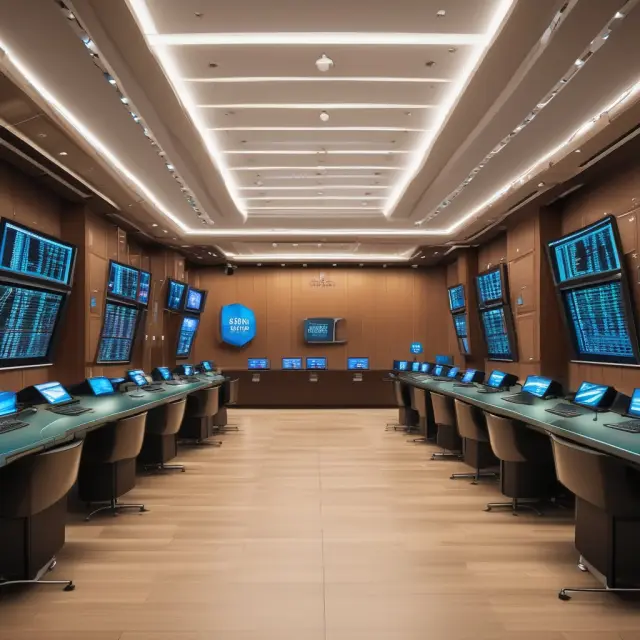
CME Clearing, a division of the Chicago Mercantile Exchange (CME), plays a crucial role as a central counter-party clearing provider for the International Monetary Market (IMM) division. CME Clearing guarantees all contracts entered into between buyers and sellers in the IMM market. This significant service ensures that market participants can trade with confidence, knowing their trades will be settled promptly and efficiently.
As a central counter-party clearing provider, CME Clearing assumes the risk of loss for each contract. In doing so, it collects and maintains initial margin deposits from both buyers (long positions) and sellers (short positions). When a trade is executed, CME Clearing acts as an intermediary by offsetting counter-party trades to ensure that the total notional value of buy and sell orders remains balanced. This risk management role is essential because it minimizes the likelihood of default for either side in a futures contract, thereby enhancing overall market stability.
The financial security provided by CME Clearing helps reduce counter-party risk among participants in the IMM market. Market participants enjoy peace of mind knowing that their trading counterparts are backed by this reputable clearinghouse. The efficiency of the clearing process also offers numerous advantages, such as faster settlements and reduced operational costs for traders.
Additionally, CME Clearing’s robust risk management practices enable it to effectively manage systemic risks associated with the IMM market. These include monitoring position limits, setting margin requirements, and implementing risk-mitigating measures like portfolio margining and daily price limits. The clearinghouse also provides comprehensive reporting on market participants’ positions, helping to promote transparency and market efficiency.
In conclusion, the role of CME Clearing as a central counter-party clearing provider for IMM is vital in facilitating an orderly and efficient international monetary trading environment. With its sophisticated risk management processes and financial security, CME Clearing significantly reduces counter-party risk and systemic risks while offering participants greater confidence and cost savings.

Currencies and Interest Rates Traded on IMM
The International Monetary Market (IMM) at CME is renowned as a global leader in the trading of financial futures, offering a diverse range of currencies and interest rate derivatives. Established in 1972 when the Chicago Mercantile Exchange (CME) and the International Money Market merged, this division has since grown to cater to a wide array of participants from around the world.
The IMM comprises several major international currencies like the U.S. dollar (USD), the British pound (GBP), the euro (EUR), and the Canadian dollar (CAD). These currencies facilitate cross-border transactions, risk management, and hedging against currency price fluctuations.
Beyond currencies, the IMM includes important benchmark interest rates such as the London Interbank Offer Rate (LIBOR) for various tenors and the 10-year Japanese bond futures contract. These financial instruments allow market participants to manage their exposure to interest rate risk, thereby enabling them to maintain a stable borrowing cost.
The U.S. Consumer Price Index (CPI), one of the primary measures of inflation, is another crucial index that IMM traders engage with. This monthly index provides insights into changes in the prices of goods and services within the US economy, helping investors assess inflationary pressures and gauge the future direction of interest rates.
The IMM market’s liquidity and depth are significant advantages to traders and investors alike. It allows participants to enter and exit positions at any given time, thereby reducing potential price impact and ensuring that trades can be executed at fair values. Moreover, the extensive range of contracts catering to various currencies and interest rates provides a diverse risk management solution tailored to different market conditions and strategies.
The importance of IMM in global finance is further underscored by its historical significance. In 2007, the CME merged with the Chicago Board of Trade (CBOT) to create the CME Group, forming one of the largest financial exchanges worldwide. Since then, CME has continued its growth through strategic acquisitions and expansions, including Bitcoin futures trading in 2017 and the purchase of Dow Jones stock and financial indexes in 2010.
In conclusion, the IMM plays a vital role in the global financial ecosystem by providing an essential platform for trading currencies and interest rate derivatives. Its wide-ranging offerings, deep liquidity, and robust risk management tools make it a go-to destination for investors and traders looking to hedge, speculate, or manage their exposure to various market risks.

Market Risks in International Monetary Market
Trading in the International Monetary Market (IMM) of CME Group involves various inherent risks. Understanding these risks is crucial for investors to mitigate potential losses and optimize their portfolios effectively. The following sections outline some market risks related to trading derivatives contracts on IMM:
1. Economic, Political, and Geopolitical Risks
Economic conditions, political instability, or geopolitical events can significantly impact the values of currencies and interest rates traded on IMM. For instance, a change in government policies or global economic shifts could influence investor sentiment and volatility.
2. Legislative and Regulatory Risks
Regulations governing financial markets are subject to change. New laws and regulations could impact the market’s structure, leading to shifts in trading volumes or pricing dynamics. For example, Brexit-related regulatory changes might affect British pound futures contracts on IMM.
3. Industry and Financial Markets Risks
The financial industry is ever-evolving. Rapid advancements can introduce new opportunities while also introducing new risks. Shifts in technology, business models, and market trends could impact the demand for specific financial futures or options contracts.
4. Price Level Changes
Increases or decreases in price levels can lead to losses if not managed properly. For example, a sudden surge or drop in the price of the British pound might lead to significant gains or losses depending on an investor’s positioning.
5. Volume and Volatility Risks
Volume and volatility risks refer to shifts in trading volumes or market volatility. High volatility can result in increased bid-ask spreads, making it more challenging for investors to enter and exit trades at their desired prices.
6. Counterparty Risk
Counterparty risk is the possibility that a trading partner fails to meet their contractual obligations. In an OTC market, counterparty risk can be more significant as there may not be a centralized clearinghouse providing protection for one party’s losses should the other default.
7. Liquidity Risks
Liquidity risks arise when investors are unable to exit their positions at the desired price due to a lack of available counterparties or market depth. This can lead to slippage in prices, potentially resulting in losses.
By understanding these risks and employing effective risk management strategies, investors can mitigate potential losses and maximize returns in the International Monetary Market (IMM).

Benefits and Advantages of Trading on IMM
The Chicago Mercantile Exchange (CME), through its International Money Market division (IMM), provides an excellent platform for traders and investors to manage various financial risks. The benefits of trading on the IMM include:
1. Effective Risk Management: In today’s global economy, currency fluctuations, interest rate shifts, and price volatility can pose significant threats to businesses and investors. By providing a diverse range of currency futures contracts and interest rates, the IMM offers various opportunities for effective risk management. For instance, companies can hedge their foreign exchange risks by entering into offsetting positions in the currency markets.
2. Hedging: Currency volatility poses significant challenges to businesses that deal with international transactions regularly. By trading futures on currencies through IMM, they can protect themselves from potential losses due to future price changes. For instance, a U.S.-based exporter may sell euro futures when the exchange rate is high and then buy them back later when the price falls. This process eliminates the need for frequent currency conversions and reduces transaction costs.
3. Market Liquidity: The IMM offers significant liquidity in its financial derivatives market, ensuring that participants have access to an active pool of buyers and sellers. High liquidity leads to tighter bid-ask spreads and less volatility in prices, making it easier for traders to enter and exit trades at favorable prices.
4. Transparency and Standardization: The IMM offers standardized contracts that undergo regular reviews by the Commodity Futures Trading Commission (CFTC) and National Futures Association (NFA). This ensures that contracts are fair, efficient, and transparent. The availability of comprehensive market data further increases transparency and allows traders to make informed decisions based on real-time information.
5. Convenience: The IMM offers both open outcry and electronic trading platforms, making it convenient for various types of investors and traders with varying risk appetites and preferences. This flexibility caters to a diverse range of market participants.
6. Regulatory Oversight: The CFTC and the National Futures Association oversee all trading activities in the IMM. Regulation ensures fairness, transparency, and investor protection, making it a safer alternative for those entering into financial futures markets.
7. Market Accessibility: Trading on the IMM is accessible to both retail and institutional investors globally. This allows traders from various regions to participate in the market and capitalize on opportunities regardless of their geographical location or size.
8. Price Discovery: The IMM provides a reliable platform for price discovery, allowing participants to set benchmark prices for various currencies, interest rates, and commodities based on supply and demand factors. This information can then be used by market players as a reference when conducting transactions in the underlying cash markets.
Overall, the Chicago Mercantile Exchange’s International Money Market division offers numerous benefits to traders and investors looking for effective risk management tools, liquidity, transparency, and convenience. Whether it’s managing currency risks or hedging against interest rate volatility, the IMM provides a well-regulated platform with standardized contracts, accessible to participants worldwide.

Trading Hours & Volume in IMM
Understanding Trading Hours on IMM
The International Monetary Market (IMM) at the Chicago Mercantile Exchange (CME) is a vital financial hub where currency and interest rate derivatives are traded. IMM deals with futures and options contracts based on various currencies, including the U.S. dollar, British pound, euro, Canadian dollar, as well as other financial instruments like LIBOR, 10-year Japanese bonds, and the US Consumer Price Index (CPI). IMM’s trading hours cater to a global audience, allowing participants from different time zones to engage in seamless transactions.
Trading hours for currency futures contracts on the International Monetary Market are as follows:
- E-mini US Dollar Index Futures: Sunday 18:05 – Friday 19:20 CST
- Euro FX Futures (EUR/USD): Sunday 17:40 – Friday 19:10 CST
- British Pound FX Futures (GBP/USD): Sunday 18:05 – Friday 19:20 CST
- Canadian Dollar FX Futures (CAD/USD): Sunday 18:05 – Friday 19:20 CST
- Australian Dollar FX Futures (AUD/USD): Sunday 17:30 – Friday 20:00 CST
- New Zealand Dollar FX Futures (NZD/USD): Sunday 18:00 – Friday 21:15 CST
- Swiss Franc FX Futures (CHF/USD): Monday through Thursday, 13:00 – 18:50 CST and 15:00 – 19:10 CST on Fridays
Trading hours for other financial instruments, such as LIBOR, the Japanese bond future, and CPI futures, can be found in the IMM Trading Calendar.
Average Daily Volume & Historical Trends on IMM
The Chicago Mercantile Exchange (CME), home to the International Monetary Market (IMM), is renowned for its high trading volumes. In 2019, the exchange handled an average daily volume of approximately 19.2 million contracts. This represents a slight decline compared to 2018. The most actively traded currency futures contracts are the E-mini US Dollar Index and Euro FX Futures.
Historically, there has been a consistent growth trend in the number of daily contracts traded on IMM since its founding in 1972. As financial markets become increasingly interconnected, and as technology advances, trading volumes continue to rise, providing ample opportunities for traders and investors worldwide.

Regulations Governing the International Monetary Market
The International Monetary Market (IMM), as a part of the Chicago Mercantile Exchange (CME), is subject to various regulations to ensure market transparency, fairness, and investor protection. Several regulatory bodies play crucial roles in governing IMM’s trading activities.
1. Commodity Futures Trading Commission (CFTC)
The U.S. Commodity Futures Trading Commission (CFTC) is the primary regulatory body responsible for overseeing the futures market, including currency and interest rate contracts, in the United States. CFTC implements regulations that protect investors and encourage market integrity.
2. National Futures Association (NFA)
The National Futures Association (NFA), an industry-supported organization, also plays a significant role in regulating the IMM market. NFA develops and enforces rules for member firms dealing with futures transactions and is responsible for registering and licensing individuals involved in these activities.
3. Securities and Exchange Commission (SEC)
Although primarily focusing on securities, the U.S. Securities and Exchange Commission (SEC) also takes an interest in certain aspects of futures markets. The SEC’s jurisdiction includes the regulation of the National Futures Association, which oversees IMM activities that relate to securities.
4. European Union Agency for Securities Markets (ESMA)
The European Union Agency for Securities Markets (ESMA), located in Paris, is the primary regulatory body responsible for overseeing trading activities concerning derivatives, including those traded on IMM, within the European Economic Area. ESMA aims to promote investor protection and market integrity in line with the European Market Infrastructure Regulation (EMIR).
5. Bank of England
The Bank of England, located in London, is another crucial regulatory body involved in overseeing international currency trading, including those taking place on IMM. It plays a significant role in maintaining financial stability within the United Kingdom and Europe.
These regulatory bodies play essential roles in ensuring transparency, fairness, and investor protection within the IMM market. They work to prevent market manipulation, protect customer funds, enforce disclosure requirements, and maintain market integrity for all participants involved.

IMM: A Global Leader in Financial Derivatives Trading
Since its establishment in 1898, the Chicago Mercantile Exchange (CME) has evolved from a small butter and egg market to a global leader in financial derivatives trading. With the merger of CME and IMM in 1972, the exchange entered the international monetary market (IMM), expanding its offerings beyond commodities to include currencies and interest rate futures. In this section, we delve into the significance of the IMM division, its growth through acquisitions, and CME’s continued commitment to being a dominant player in derivatives trading.
The IMM is an essential part of the CME Group, which includes other exchanges like CBOT (Chicago Board of Trade) and NYMEX (New York Mercantile Exchange). The division comprises several currencies such as the US dollar, British pound, euro, and Canadian dollar. Additionally, it offers financial instruments like LIBOR, 10-year Japanese bond, and US Consumer Price Index (CPI).
The IMM has witnessed remarkable growth throughout CME’s history:
– In 2002, the Chicago Mercantile Exchange became the first exchange to demutualize and become publicly traded.
– The acquisition of NYMEX Holdings, Inc., which included the New York Mercantile Exchange (NYMEX) and Commodity Exchange, Inc. (COMEX), occurred in 2008.
– CME Clearing was established, providing central counter-party clearing services to clients.
– In 2010, CME acquired a 90% interest in Dow Jones stock and financial indexes.
– The exchange entered the digital currency space with Bitcoin futures in 2017.
CME Clearing’s role as a leading central counter-party clearing provider is crucial to the IMM market. This organization ensures that both parties involved in each contract meet their obligations by acting as an intermediary between them. This not only reduces risks but also provides increased transparency, allowing investors to enter and exit trades more efficiently.
The IMM continues to be a pioneer in financial derivatives trading by staying ahead of the curve and offering innovative products to its clients. The exchange’s global presence and advanced technology enable it to cater to an ever-growing list of participants, ensuring liquidity in its markets. As the world’s economy becomes increasingly interconnected, the need for reliable and efficient financial derivatives trading platforms like IMM grows stronger. By continuing to expand its offerings and cater to diverse client needs, CME Group solidifies its position as a global leader in this vital market segment.

Frequently Asked Questions (FAQ)
What is the International Monetary Market (IMM)?
The International Money Market (IMM) is a division of the Chicago Mercantile Exchange (CME), responsible for dealing with the trading of currency and interest rate futures and options. Established in 1972, when CME merged with IMM, it offers contracts on various currencies like USD, GBP, EUR, CAD, LIBOR, 10-year Japanese bond, and US Consumer Price Index (CPI).
Who can trade in the International Monetary Market?
Traders from all over the world are eligible to participate in the IMM market by opening an account with a brokerage firm registered with CME Group. These brokers provide access to trading platforms such as CME Globex or Open Outcry.
What is the significance of open outcry vs electronic trading platforms?
Open outcry refers to traditional floor-based trading, while electronic trading platforms like CME Globex enable traders to execute trades remotely. The majority of trades now occur electronically (80%), but open outcry remains an option for some participants.
What are the hours of operation for International Monetary Market?
Trading on the IMM occurs 23 hours a day, with minor breaks to accommodate market closures in specific time zones. For example, CME Globex trading hours (Sunday-Friday) run from 16:05 p.m. London Time to 16:10 p.m. Chicago Time.
What is the role of CME Clearing in IMM?
CME Clearing acts as a central counter-party clearing provider for all transactions taking place in the IMM market. This means that when two parties enter into a contract, both the profit and loss are settled through CME Clearing rather than between each other.
How do fees work within the International Monetary Market?
The fee structure consists of various components such as exchange fees, clearing fees, regulatory fees, and transaction fees. These charges can vary depending on the specific contract type, trading platform used, and market conditions. To learn more about IMM fees, consult the CME Group’s Fee Schedule.
 Next entry · No. 2,305Understanding the Scope of Immediate Family: Definitions and Consequences
See also
-
 No. 3,114
02 Mar 2025
25 min
Understanding Market Makers: Role, Functions, and Key Players
Business Finance
No. 3,114
02 Mar 2025
25 min
Understanding Market Makers: Role, Functions, and Key Players
Business Finance -
 No. 692
22 May 2024
19 min
The Chicago Mercantile Exchange (CME): History, Functioning, and Significance in the Global Financial Market
Finance History
No. 692
22 May 2024
19 min
The Chicago Mercantile Exchange (CME): History, Functioning, and Significance in the Global Financial Market
Finance History -
 No. 2,858
09 Feb 2025
18 min
Understanding the LIBOR Curve: A Graphical Representation of Short-Term Interest Rates
Finance Policy
No. 2,858
09 Feb 2025
18 min
Understanding the LIBOR Curve: A Graphical Representation of Short-Term Interest Rates
Finance Policy -
 No. 2,857
09 Feb 2025
19 min
Understanding the London Interbank Bid Rate (LIBID): The Other Side of the Popular LIBOR
Finance Policy
No. 2,857
09 Feb 2025
19 min
Understanding the London Interbank Bid Rate (LIBID): The Other Side of the Popular LIBOR
Finance Policy -
 No. 2,256
22 Dec 2024
21 min
Understanding the Anomaly of a Humped Yield Curve in Finance
Finance Policy
No. 2,256
22 Dec 2024
21 min
Understanding the Anomaly of a Humped Yield Curve in Finance
Finance Policy -
 No. 2,737
31 Jan 2025
20 min
Krugerrands: A Comprehensive Guide for Institutional and Professional Investors
Investments
No. 2,737
31 Jan 2025
20 min
Krugerrands: A Comprehensive Guide for Institutional and Professional Investors
Investments