Understanding the Law of Supply: A Comprehensive Overview

Delve into the basics, components, and real-life applications of the law of supply in economics. Understand how price impacts quantity supplied.
The Basics of the Law of Supply
The law of supply represents a fundamental concept in economics. This microeconomic principle states that, under normal conditions, as the price of a good or service increases, the quantity supplied by producers will also increase, and vice versa. The relationship between the price and the quantity supplied is crucial for understanding how markets function effectively.
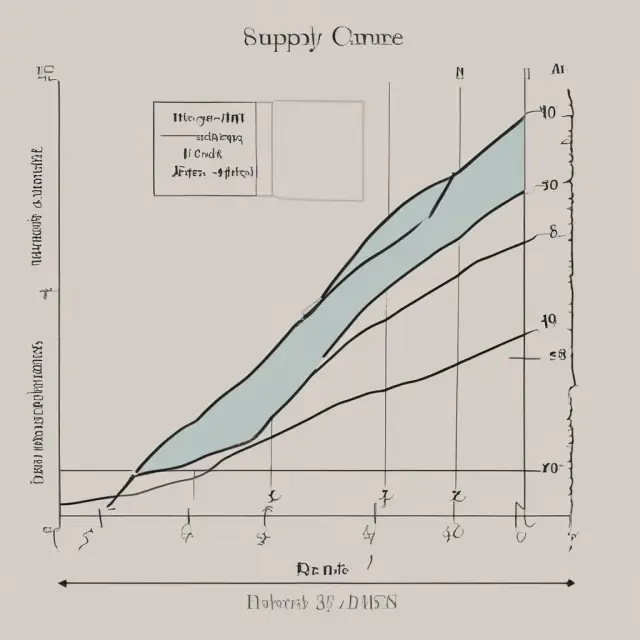
The law of supply illustrates an inverse relationship: When prices rise, suppliers are motivated to offer more goods or services to maximize their profits. In contrast, lower prices lead to a reduced willingness for suppliers to provide as many goods or services. The upward-sloping supply curve, which depicts this correlation between the price and quantity supplied, is an essential graphical representation of the law in action (as shown below).
As illustrated in the chart, points A, B, and C represent various combinations of prices and quantities on the supply curve. This relationship arises because producers have control over how much they produce and offer to the market at any given time, while consumer demand determines the prevailing price level.
Understanding the Law of Supply
Alfred Marshall, a renowned British economist, is credited with significant contributions to supply theory. The law of supply works hand-in-hand with the law of demand to explain how market economies allocate resources and determine pricing for goods and services. Together, these two principles influence consumer behavior and producer decisions.
Examples of the Law of Supply
The law of supply is evident in various scenarios where price changes impact the quantity supplied by producers or firms. For instance, a business will increase its production of video game systems if the price for those systems rises, as higher prices provide a greater incentive to maximize profits. Conversely, if the price decreases, suppliers may decrease their output in order to maintain profitability.
One common example of this concept is the response to changing gasoline prices. As the price of gasoline increases, producers and refiners are incentivized to expand exploration for oil reserves, drill more, invest in additional infrastructure, and ultimately increase the overall supply of gasoline on the market. This increased supply tends to moderate prices as competition intensifies, leading to a reduction in costs and an eventual stabilization of prices.
A college education system serves another great illustration of the law of supply. When computer engineering jobs pay more than English professor positions, there is an increase in the number of students pursuing majors in computer engineering due to the higher potential for earning potential. Conversely, if consumers start paying more for cupcakes compared to donuts, bakeries will adjust their production accordingly by increasing their output of cupcakes and reducing their output of donuts to optimize profits.
Another example comes from individual labor markets: When an employer offers higher wages for overtime, the number of hours employees are willing to supply for work increases as they seek better compensation. This scenario demonstrates how price changes influence the quantity supplied by laborers.
In essence, the law of supply is a crucial economic concept that explains the relationship between prices and the amount of goods or services provided in a market setting. Its impact on producer behavior plays an essential role in determining pricing structures and resource allocation in various markets.
Types of Supply
- Market Supply: The total quantity of goods or services that producers are willing and able to offer for sale at all price levels within a particular market.
- Short-Term Supply: The supply of a good or service over a short time horizon, typically less than one year.
- Long-Term Supply: The supply of a product or resource over an extended period, usually more than one year.
- Joint Supply: The supply of two or more goods produced together from the same resources.
- Composite Supply: An aggregation of individual suppliers within a market.
Understanding the various types of supply is crucial for investors and economists in their analysis of different markets and industries, as they help to explain how price changes will impact production levels and pricing structures in varying situations.

What Is the Law of Supply?
The Law of Supply is a crucial principle in economics that describes the relationship between the price level and the amount of goods or services suppliers are willing to offer for sale. According to this law, an increase in the price of a good results in a larger quantity supplied by sellers, while a decrease in the price leads to a smaller quantity supplied.
Simply put, when suppliers face higher prices, they are encouraged to bring more goods to market to capitalize on the increased revenue opportunities. In contrast, lower prices discourage them from supplying as much, as they stand to earn fewer profits per unit sold. This principle holds true for all types of goods and services – whether it’s a high-tech gadget or an agricultural commodity.
The Law of Supply can be illustrated using the concept of a supply curve. An upward-sloping supply curve represents the relationship between price and quantity supplied at various points in time. The curve demonstrates that, generally speaking, the more a supplier is compensated for their product or service, the more they will offer for sale. Conversely, if prices decrease, fewer goods or services will be forthcoming.
The Law of Supply plays an essential role in determining market equilibrium, as it interacts with the law of demand to establish the price and quantity at which both buyers and sellers are satisfied. Let’s examine this concept further by exploring various aspects of the law.
Understanding the Functioning of the Law of Supply
The Law of Supply operates on the premise that suppliers aim to maximize their profits, so they adjust the amount of goods or services they bring to market based on price movements. If a good’s price rises, sellers are incentivized to supply more because the increased revenue compensates for the additional costs associated with producing and bringing the good to market.
Conversely, if the price of a good falls, it no longer makes economic sense for suppliers to continue offering the same quantity. They might choose to reduce their offerings or exit the market altogether if they cannot cover their expenses at the lower prices. The result is an overall decrease in supply, which can push prices back up.
The relationship between price and the quantity supplied also holds true for individual sellers as well as the market as a whole. Each seller’s individual supply curve represents their unique response to various prices. When these curves are aggregated, they form the market supply curve, which demonstrates the total amount of goods or services that will be offered for sale at different price levels.
Examples and Implications of the Law of Supply
The Law of Supply can be observed in a multitude of industries and markets. For instance, consider how the production of agricultural commodities is influenced by weather conditions and crop yields. In years with favorable growing seasons, increased supply pushes prices lower due to the abundance of goods available for sale. Conversely, poor weather or low crop yields can result in decreased supply, which drives up prices as demand remains constant or grows.
Another example is the relationship between technology and the Law of Supply. Advancements in production methods, labor-saving machinery, and other innovations have led to a significant increase in the quantity of goods that can be produced at any given price level, which lowers costs and increases profitability for producers.
The Law of Supply plays an essential role in understanding the dynamics of various markets and can provide valuable insights for institutional investors seeking to make informed decisions based on market trends and price movements. By analyzing supply and demand data, investors can identify potential buying or selling opportunities and adjust their portfolios accordingly.
In conclusion, the Law of Supply is a fundamental principle in economics that explains how the quantity of goods or services supplied responds to changes in prices. This relationship is essential for understanding market dynamics, determining equilibrium prices, and making informed decisions regarding investment strategies. By examining this concept further, we gain valuable insights into the complex world of finance and investments.

The Relationship Between Price and Quantity Supplied
The Law of Supply postulates that when the price of a good or service increases, suppliers will respond by offering more quantities to the market. Conversely, if the price decreases, they will reduce their supply accordingly. This relationship between price and quantity supplied is an essential concept in microeconomics.
Price plays a crucial role in determining the quantity supplied, as suppliers aim to maximize revenue. They react to market conditions by adjusting their production levels, ensuring that their offerings align with prevailing prices. By producing more when prices rise or decreasing production when prices fall, suppliers can maintain profitability.
In the context of a supply curve, this correlation is represented as an upward-sloping line, indicating that at higher prices, a greater quantity of goods or services will be available to consumers. This relationship between price and quantity supplied helps in understanding how markets allocate resources efficiently and determine the equilibrium price for various goods and services.
Price fluctuations not only affect individual businesses but also impact entire industries. For example, when oil prices rise, companies operating within the energy sector may increase their exploration efforts, invest in new technologies to extract more reserves or even enter new markets. On the other hand, if oil prices fall, producers might reduce drilling activities and focus on cost-cutting measures to remain profitable.
Additionally, the relationship between price and quantity supplied is not static; it can change due to various external factors such as technological advancements, resource availability, and competition. For instance, a breakthrough in technology could significantly increase the supply of a product, leading to lower prices or even disrupt entire industries. Likewise, an influx of new competitors might intensify price competition, compelling suppliers to offer more quantities at lower prices to maintain their market share.
Examples of this relationship can be found across various markets. For instance, consider how the automobile industry responds to changes in fuel prices. When gasoline is expensive, consumers may switch to smaller, more fuel-efficient vehicles. In response, car manufacturers increase production of these cars while reducing their output for larger models. Over time, as gas prices stabilize or decrease, consumer preferences and production levels adjust accordingly.
Understanding the relationship between price and quantity supplied provides crucial insights for investors seeking to navigate different markets. By analyzing historical trends and market dynamics, they can anticipate how suppliers might react to future price movements and adjust their investment strategies accordingly. This knowledge empowers them to make informed decisions, maximizing returns while minimizing risks.
In conclusion, the Law of Supply’s relationship between price and quantity supplied is a fundamental economic concept that shapes market dynamics and resource allocation. By recognizing how suppliers respond to price changes, investors can gain a competitive edge, making well-informed investment decisions based on current market conditions and future trends.
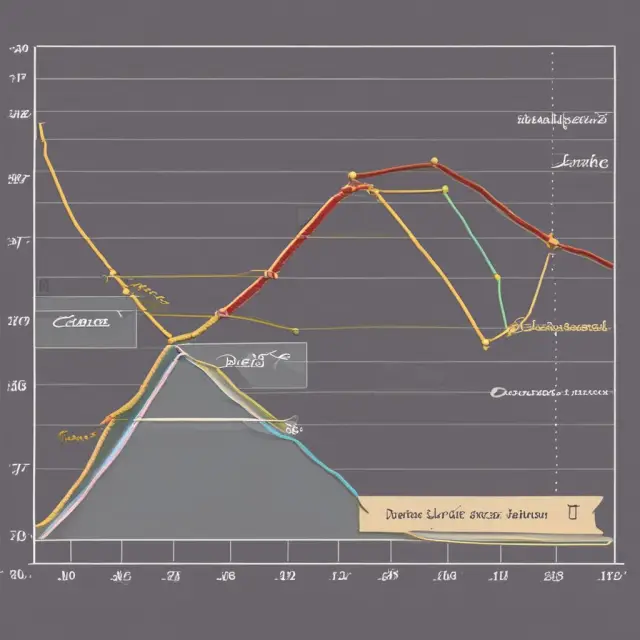
Components of the Supply Curve
The supply curve plays a crucial role in understanding the dynamics between the prices and quantities of goods and services offered by suppliers. The supply curve can be broken down into two essential components: market supply and individual supply curves.
1. Market Supply Curve
Market supply refers to the total amount of a particular good or service that producers are willing to sell at various prices over a given period. It is the aggregated representation of all individual suppliers’ offerings in a specific market. The market supply curve shows how the quantity supplied responds to changing price levels, illustrating the relationship between them (Marshall, 1890).
2. Individual Supply Curve
An individual supply curve is a graphical representation that demonstrates an individual supplier’s behavior in response to changes in price. It reflects their decision to either sell or withhold their goods from the market based on price levels. Given that prices influence the amount of resources devoted to production and the entry or exit of new firms, the shape and positioning of the individual supply curve ultimately impact the market supply curve (Smith, 1776).
Several factors contribute to the shape and position of both the market and individual supply curves. They include:
– Prices: The primary determinant of quantity supplied is the prevailing price level, as it directly influences suppliers’ decision-making regarding production levels and entry/exit from the market.
– Consumer demand: The relationship between consumer demand and supply is inversely proportional; a rise in demand leads to an increase in price and subsequently affects the quantity supplied.
– Competition: Competition within industries shapes the behavior of individual suppliers, who respond to price changes by adjusting their production levels or leaving/entering the market.
– Technology: Advances in technology can impact supply by altering the cost structure, enabling producers to supply more goods at lower prices or increasing the efficiency of production processes.
– Government intervention: Policies and regulations instigated by governments may influence supply, as they can result in price floors or ceilings that change the quantity supplied.
Understanding the relationship between these components is essential for grasping the significance of the supply curve within economics. As prices fluctuate, both individual and market suppliers’ responses to them dictate the overall equilibrium between demand and supply.

Examples of the Law of Supply in Action
The law of supply is one of the most fundamental concepts in economics. Its primary assertion is that, all else being equal, an increase in price results in a higher quantity supplied by producers, while a decrease in price leads to a lower quantity supplied. Let’s delve deeper into real-life examples that illustrate how this principle manifests itself in various industries.
One classic example of the law of supply at work is within the oil industry. As gasoline prices rise, profit-seeking firms tend to respond by exploring for more oil reserves, drilling for additional oil, and investing in new pipelines, refineries, and shipping infrastructure to bring oil to consumers. Conversely, when the price of gasoline falls, these companies might cut back on exploration and production, causing a decline in supply.
Consider another example: when college students learn that computer engineering jobs pay more than English professor jobs, they will respond by increasing their enrollment in computer science programs. As the number of computer science graduates grows, the market’s total supply of labor with this skillset expands. Conversely, when consumers start paying more for cupcakes compared to donuts, bakeries adjust production accordingly. In response to rising cupcake prices, they may produce more cupcakes and reduce the number of donuts they sell to maximize their profits.
Moreover, if your employer offers time-and-a-half pay for overtime hours, employees may respond by working longer hours or even picking up additional jobs to boost their earnings. This increased labor supply directly affects employers’ demand for labor and helps to determine the market equilibrium wage rate.
To further illustrate this concept, imagine that a small town experiences an influx of tourists during summer months. As the demand for lodging increases, hotel owners have an incentive to increase their room offerings by renting out additional spaces or building new accommodations. At the same time, restaurants and tourist attractions might expand their hours or even construct new facilities to cater to the growing visitor population. This increased supply of goods and services eventually leads to a stabilization of prices as demand reaches a saturation point.
In conclusion, understanding the law of supply is crucial for grasping the inner workings of markets and making informed economic decisions. By examining its real-life applications across various industries, we can better appreciate how price changes influence producer behavior and ultimately contribute to market equilibriums.

Types of Supply: Market, Short-Term, Long-Term, Joint and Composite
The concept of the law of supply extends beyond the general relationship between price and the quantity supplied in a market economy. Various types of supply help us understand this fundamental economic principle in different contexts. Let’s delve into five types of supply: market, short-term, long-term, joint, and composite.
1. Market Supply
Market supply refers to the total quantity of a good or service offered for sale at various prices in a competitive market. It illustrates how sellers respond to price changes by adjusting their production levels. Market supply curves represent the relationship between the total amount of goods available in a market and the price at which they are supplied.
2. Short-Term Supply
Short-term supply focuses on the immediate response of suppliers when faced with price fluctuations within a relatively short period, such as hours or days. This type of supply considers factors like input prices, technology, and production costs that can directly impact producers’ capacity to respond quickly to market conditions.
3. Long-Term Supply
Long-term supply addresses the effect of price changes on a producer’s plans for production over an extended period, typically several months or years. This type considers factors like technological innovations, changes in factor prices (e.g., raw materials), and capacity expansion that can influence the long-run behavior of suppliers in response to market conditions.
4. Joint Supply
Joint supply deals with situations where multiple products are produced using a single input. For instance, an orchard yields both apples and peaches, making them joint products. The total quantity supplied depends on the prices received for each product. Joint supply curves represent the various combinations of two or more goods that can be produced from a given amount of resources.
5. Composite Supply
Composite supply is a combination of market supply (the total supply of a good at every price) and the individual supply of all producers in a market. It illustrates how the sum of individual suppliers’ response to price changes results in an aggregate supply curve.
Understanding these various types of supply allows us to gain a deeper appreciation for the intricacies of the law of supply and its applications within different markets and industries.

Factors Affecting Supply
The Law of Supply is a fundamental concept in economics that explains how producers respond to changing market conditions by adjusting the amount of goods or services they offer for sale. While price is the most significant factor influencing supply, there are several other factors that can impact the quantity supplied. In this article, we will delve deeper into these influential elements and their effects on the relationship between suppliers and markets.
1. Prices: The primary force behind the Law of Supply is the interaction between price and quantity supplied. As the price for a product or service increases, producers are incentivized to expand production and increase the quantity supplied accordingly. Conversely, when prices decrease, supply contracts as producers aim to minimize losses and maintain profitability.
2. Consumer Demand: While price plays a crucial role in shaping the supply side of the market, consumer demand has a significant impact on supply through its influence on the overall market equilibrium. As consumer demand for a product increases or decreases, it can lead to changes in prices and, subsequently, adjustments in the quantity supplied by producers.
3. Competition: The level of competition within an industry can significantly affect the supply side of a market. In highly competitive industries, firms are motivated to increase their output in response to higher prices, while they may reduce production when faced with declining prices to maintain their share and avoid losing customers.
4. Technology: Advancements in technology can either increase or decrease the quantity supplied by altering production costs, efficiency, and economies of scale. For example, improvements in technology could lower production costs, leading to an expansion of supply or increased output, while outdated technology could result in a decrease in productivity, thus limiting the amount that can be produced at given prices.
5. Government Intervention: The role of government intervention is another factor influencing the Law of Supply. Policies like taxes, subsidies, tariffs, quotas, and price ceilings or floors can disrupt the equilibrium between supply and demand, creating distortions in the market that may result in changes to the quantity supplied.
Understanding these factors is crucial for investors, as they help in identifying trends in various markets and shaping investment strategies accordingly. As you explore the world of finance and investments, keep the Law of Supply in mind and how it interacts with demand to create a dynamic and ever-changing market landscape.
In the next section, we will discuss the relationship between price and quantity supplied and delve deeper into the concept of supply curves and their role in economics. Stay tuned!

Comparing the Laws of Supply and Demand
The laws of supply and demand are two fundamental concepts in microeconomics that work together to establish the prices of goods and services in a market economy. The law of supply, as we’ve previously explored, explains that an increase in price leads to an increased quantity supplied, while the inverse is true when prices decrease. Conversely, the law of demand asserts that a higher price results in a lower quantity demanded, while a reduced price encourages consumers to demand more.
To better comprehend how these two laws interact, let’s first examine their individual roles in the market economy:
1. The Law of Supply
The upward-sloping supply curve represents how much producers are willing to sell at different prices. As we’ve discussed earlier, an increase in price induces producers to provide a greater quantity to the market, while lower prices lead to reduced quantities supplied.
2. The Law of Demand
The downward-sloping demand curve shows the relationship between consumer preferences and the price they are willing to pay for a good or service. When the price rises, consumers are incentivized to purchase less; conversely, lower prices encourage increased consumption.
The laws of supply and demand function in an interconnected manner to create a market equilibrium – where the quantity demanded matches the quantity supplied. This equilibrium price is illustrated by the point at which the two curves intersect.
Understanding these principles not only allows us to grasp how prices are determined in a competitive market but also sheds light on resource allocation and economic efficiency. The laws of supply and demand ensure that resources flow from areas where they are less productive to more productive uses, leading to a more efficient allocation of resources.
Furthermore, the laws of supply and demand can provide valuable insights for investors looking to make informed decisions in various markets. By analyzing trends and patterns within the supply and demand dynamics of a particular asset class or industry, investors may be able to identify emerging opportunities or potential risks. For instance, an understanding of the law of supply may help investors anticipate how price changes might affect the profitability of a certain company or sector.
In conclusion, grasping the concepts of both the law of demand and the law of supply is essential for anyone looking to develop a strong foundation in microeconomics, economics in general, and investing. These fundamental principles provide insights into the workings of markets and inform our understanding of how prices are determined, resources allocated, and economies function.

Implications for Institutional Investors
The law of supply plays a significant role in influencing various markets and can provide valuable insights for institutional investors. Understanding how this economic concept operates can help investors anticipate price changes, assess market conditions, and inform their investment strategies accordingly.
For example, when the price of a commodity like crude oil rises, the law of supply suggests that suppliers are incentivized to increase production to capitalize on higher prices. Conversely, if the price falls, some producers may cut back production or even shut down operations due to unprofitability. By closely monitoring global supply levels and geopolitical events, investors can make informed decisions about when to buy or sell commodity futures contracts.
Investors in stocks can also benefit from understanding the law of supply. For instance, a surge in demand for a particular stock, as evidenced by an increase in trading volume or price, may induce suppliers (i.e., sellers) to enter the market and sell their shares, leading to a decrease in the stock’s value. Alternatively, if there is a significant drop in the number of buyers for a stock, sellers might find it difficult to offload their holdings, driving up the price.
Another application of the law of supply within finance pertains to labor markets. As wages increase, the quantity of available labor may rise, as more individuals enter the workforce or workers decide to put in longer hours to earn higher wages. This increased supply can lead to a lower equilibrium wage rate. Conversely, if wages decrease, fewer workers might be willing to work, potentially increasing the equilibrium wage. By studying wage trends across industries and labor markets, investors may be able to identify undervalued or overvalued opportunities within the labor market.
Moreover, the law of supply can help institutional investors evaluate the impact of inflation on various sectors. As prices for goods and services rise, suppliers may need to adjust their production processes and pricing strategies accordingly. For example, companies that rely on imported raw materials might face increased costs if those materials become more expensive due to currency fluctuations or higher global prices. By analyzing historical supply data and understanding the relationship between inflation and specific sectors, investors can make informed decisions about which industries are likely to perform well during periods of rising or falling prices.
Furthermore, the law of supply offers a framework for evaluating how changes in government policies or regulations may affect markets. For example, if a new tax on carbon emissions is implemented, it could potentially reduce the supply of goods and services that rely heavily on carbon-intensive production processes. This reduction in supply might lead to higher prices for those goods and services, creating opportunities for investors in industries offering alternative solutions.
In conclusion, understanding the law of supply can provide institutional investors with valuable insights into market trends, price movements, and industry dynamics. By monitoring how this economic concept operates across various sectors, investors can make informed decisions about when to buy or sell securities, adjust their portfolios, and identify potential investment opportunities.
FAQs about the Law of Supply
What does the term “law of supply” mean in economics?
The law of supply is a fundamental economic concept stating that as the price of a good or service increases, the quantity supplied to the market also increases, and vice versa. A higher price motivates producers to maximize profits by increasing production and offering more goods for sale. Conversely, a decrease in price discourages production, leading to a smaller supply.
Can you explain how supply is related to demand?
Yes! The law of supply operates hand-in-hand with the law of demand in an economy. Together, they determine the prices and quantities of goods and services that are bought and sold. While demand sets the price, the quantity supplied is influenced by the price itself, creating a delicate balance known as market equilibrium.
What causes the supply curve to slope upward?
The upward-sloping supply curve in economics can be attributed to the fact that sellers have the flexibility to choose how much of their goods or services they bring to market at any given time. However, once the quantity is sold, it cannot be resold until a later date. So when consumer demand increases over time and causes prices to rise, sellers may allocate more resources to production or even attract new suppliers into the market, increasing the overall supply.
How does the law of supply affect resource allocation?
Understanding the law of supply is essential for grasping how resources are allocated in an economy. By observing price movements and adjusting their output accordingly, firms respond to consumer demand and help maintain a balance between supply and demand. As prices rise, more resources are directed toward producing the goods or services that are in high demand. Conversely, as prices fall, resources shift toward alternative uses.
What role did Alfred Marshall play in the development of the law of supply?
Alfred Marshall was a British economist who significantly contributed to our understanding of supply theory through his pioneering use of the concept of the supply curve. By emphasizing that price and output are determined by both supply and demand, he established the foundation for analyzing markets using these two fundamental laws.
What is the difference between an individual supply curve and a market supply curve?
An individual supply curve represents the relationship between the quantity supplied by a single seller or firm and the price they receive for that product. A market supply curve, on the other hand, combines the individual supply schedules of all the firms in an industry to illustrate the total amount of a good or service offered at various prices.
What factors influence the shape and positioning of the supply curve?
Several economic variables affect the supply curve: prices, consumer demand, competition, technology, government intervention, and external factors like weather or natural resources for agricultural goods. These elements impact the cost structure of producers and their incentives to produce, ultimately influencing the quantity supplied at different prices.
 Next entry · No. 2,781Understanding Layoffs: Definition, Statistics, Consequences, and What to Do When You Get Laid Off
See also
-
 No. 122
07 Apr 2024
20 min
Understanding Aggregate Supply and Its Impact on Economy
Economics
No. 122
07 Apr 2024
20 min
Understanding Aggregate Supply and Its Impact on Economy
Economics -
 No. 4,806
18 Jul 2025
20 min
Understanding Supply: Concepts, Formulas, and Key Terms for Institutional Investors
Economics
No. 4,806
18 Jul 2025
20 min
Understanding Supply: Concepts, Formulas, and Key Terms for Institutional Investors
Economics -
 No. 4,805
18 Jul 2025
22 min
Understanding the Supply Curve: Key Concepts and Factors Affecting This Economic Indicator
Economics
No. 4,805
18 Jul 2025
22 min
Understanding the Supply Curve: Key Concepts and Factors Affecting This Economic Indicator
Economics -
 No. 4,566
29 Jun 2025
21 min
Scarcity: Understanding the Fundamental Economic Concept of Opportunity Cost
Economics
No. 4,566
29 Jun 2025
21 min
Scarcity: Understanding the Fundamental Economic Concept of Opportunity Cost
Economics -
 No. 3,667
17 Apr 2025
19 min
Understanding Oligopolies: The Market Structure That Influences Prices and Innovation
Business Strategy
No. 3,667
17 Apr 2025
19 min
Understanding Oligopolies: The Market Structure That Influences Prices and Innovation
Business Strategy -
 No. 2,314
27 Dec 2024
25 min
Understanding Imperfect Markets: Monopolies, Oligopolies, and Market Inefficiencies
Business Strategy
No. 2,314
27 Dec 2024
25 min
Understanding Imperfect Markets: Monopolies, Oligopolies, and Market Inefficiencies
Business Strategy