Understanding the Life-Cycle Hypothesis (LCH): A Guide to Lifetime Spending and Saving

Understand the Life-Cycle Hypothesis (LCH) - a theory on lifetime spending & saving, assumptions, graph, challenges, & investment strategies.
Introduction to the Life-Cycle Hypothesis
The concept of the life-cycle hypothesis (LCH) is a crucial cornerstone of modern economic thought, providing valuable insights into the spending and saving habits of individuals throughout their lives. Originally proposed by Franco Modigliani and Richard Brumberg in the 1950s, LCH has evolved to become an essential framework for understanding consumer behavior and financial planning (Modigliani & Brumberg, 1954). This section aims to introduce readers to the life-cycle hypothesis, its origins, and fundamental assumptions.
The Life-Cycle Hypothesis: An Overview
At its core, the LCH is a microeconomic theory that posits individuals plan their spending based on their expected lifetime income. To accomplish this goal, people borrow when they are young to smooth consumption during lean financial periods and save throughout middle age to ensure sufficient resources for retirement (Modigliani & Brumberg, 1954).
This idea was a departure from the prevailing economic belief at that time, which held that people would naturally increase their savings as their income grew. However, Modigliani and Brumberg contended that individuals sought to maintain constant consumption levels throughout their lifetimes.
Understanding the Life-Cycle Hypothesis: Assumptions and Graphical Representation
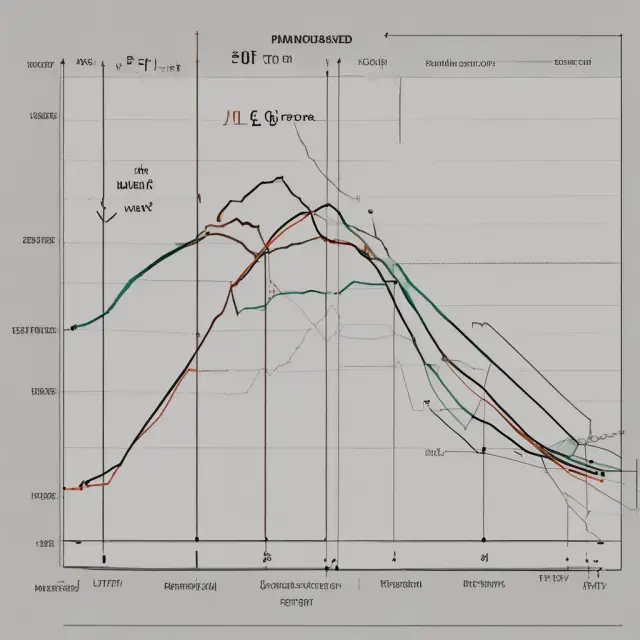
Assumptions underpinning the LCH include individuals’ ability to borrow and save, knowledge of future income, and an understanding of their expected lifetime spending requirements (Modigliani & Brumberg, 1954). As a result, a graph of an individual’s consumption over time exhibits a hump-shaped pattern, with low wealth accumulation during youth and old age and high levels in middle age.
This hump-shaped pattern implies that younger individuals have greater capacity to take investment risks due to their anticipated future income growth. Conversely, older individuals approaching retirement are more risk-averse because they must draw down their savings to maintain their consumption. This is a fundamental principle of personal finance and financial planning, as it informs investors’ choices regarding asset allocation throughout their lives.
Stay tuned for the next section, where we will compare the LCH with Keynesian theory and explore how real-world data challenges certain assumptions of the life-cycle hypothesis.

Assumptions of the Life-Cycle Hypothesis
The life-cycle hypothesis (LCH), proposed by Franco Modigliani and Richard Brumberg, is an economic theory that posits individuals make spending decisions based on their income over their entire lives. The central assumption is that people borrow when their earnings are low to smooth consumption and save during middle age for retirement years when earning potential may decrease.
According to the LCH, a graphical representation of wealth accumulation throughout an individual’s life would exhibit a hump-shaped pattern. Consumption is assumed to be at its highest point in middle age as income peaks while the lowest points occur during youth and old age when earning potential is limited. This hump-shaped pattern implies that younger generations can tolerate greater investment risks due to their future earnings, which may not hold true for older individuals who need to maintain their standard of living from their accumulated savings.
This theory stands in contrast with John Maynard Keynes’ hypothesis, which assumed that savings were another good and that the percentage allocated to savings would increase as income grew. This presented a potential issue as it suggested that increasing savings could lead to a savings glut, stagnating aggregate demand and economic output. Additionally, Keynes did not address consumption patterns over time. The LCH has largely replaced Keynesian economic thinking in understanding spending and saving behaviors.
However, the LCH has its limitations and challenges certain assumptions. For instance, while it assumes that people plan their spending throughout their lives, many lack the discipline to save, opting instead for credit card debt or consumption today rather than planning for future needs. Additionally, wealth may not be depleted during old age as people often pass it down to their children or continue working part-time in retirement.
Moreover, the LCH assumes that individuals earn their most during middle age; however, some choose to work less when young and more in their later years. Younger generations with lower income may have less disposable income for savings or carry credit card debt, making them less able to tolerate investment risks. Conversely, older generations may not be fully reliant on retirement savings if they can rely on inheritance or social security benefits, further influencing their risk tolerance and saving strategies.

Graph of the Life-Cycle Hypothesis
The life-cycle hypothesis (LCH) postulates that individuals plan their spending and savings throughout their lifetime, with borrowing and saving patterns influenced by anticipated future income levels. This theory assumes that people tend to spend more when they are young and earn lower incomes, and save more during their middle age when income is relatively high.
A visualization of the life-cycle hypothesis displays a hump-shaped pattern of wealth accumulation across an individual’s lifetime. The graph exhibits low levels of wealth at both ends – youth and old age – while displaying a peak in wealth during middle age.
The primary implication of this pattern is that younger generations often possess a greater capacity to assume investment risks compared to their elderly counterparts. The rationale behind this assertion lies in the fact that older individuals typically need to draw down their accumulated savings for retirement consumption, as opposed to the youth who are still building their wealth through borrowing and future earnings.
Understanding the Hump-Shaped Pattern
The hump-shaped pattern of the life-cycle hypothesis arises due to several factors. At the onset of an individual’s career, they may require loans for education or other significant purchases such as a home. As their income grows over time, they are able to pay off these debts and start saving for future needs during middle age. Eventually, retirement approaches, leading individuals to liquidate their assets and rely on their savings for income in their golden years.
Investment Implications for Younger Generations
The understanding of the life-cycle hypothesis and its hump-shaped pattern has significant implications for investment strategies aimed at catering to the varying risk tolerances and needs of different age groups. For instance, younger investors, who possess a greater capacity to assume risks due to their wealth accumulation phase, may be more inclined towards aggressive investment approaches such as stocks or high-yield bonds. Conversely, older individuals in their retirement phase would typically lean towards lower-risk investments like fixed income securities and dividend-paying stocks to generate stable income while preserving capital.
In conclusion, the life-cycle hypothesis provides a fundamental framework for understanding the spending and saving patterns across an individual’s lifetime. The hump-shaped pattern of wealth accumulation showcases the unique investment implications for different age groups, making it an essential concept for professional investors to comprehend in order to cater to clients effectively throughout their financial journeys.

Life-Cycle Hypothesis vs. Keynesian Theory
The life-cycle hypothesis (LCH) and the Keynesian theory have long been at the core of debates regarding spending, saving, and income distribution in economics. While both theories attempt to explain individual consumption and savings patterns over time, they differ significantly. Understanding these differences is crucial for investors as their implications can help shape investment strategies.
Keynes’ Theory
The Keynesian theory, proposed by economist John Maynard Keynes in 1937, suggested that savings were just another form of consumption and the percentage allocated to savings would grow with income. However, this notion posed a potential issue as it implied that an increase in national income would result in a savings glut, ultimately leading to stagnant aggregate demand and economic output. Additionally, Keynes’ theory did not address the consumption patterns throughout individuals’ lives, as people consume differently at various stages of their lives.
Life-Cycle Hypothesis
The life-cycle hypothesis (LCH), developed by Franco Modigliani and Richard Brumberg in the 1950s, is a more refined interpretation of consumption patterns over the lifetime. LCH asserts that individuals aim to maintain a constant level of consumption throughout their lives, borrowing when they are young and saving during middle age for retirement. This perspective assumes people plan ahead regarding their future income, which has significant implications for investment strategies.
Comparative Analysis
The primary distinction between the two theories lies in their views on savings. Keynes considered savings as a form of consumption that could impact aggregate demand, while LCH regarded savings as a means to maintain stable consumption throughout an individual’s lifetime. The latter perspective has largely replaced Keynesian economic thinking and is now widely accepted in financial planning circles.
Strengths and Weaknesses
Both theories have their strengths and weaknesses. Keynes’ theory emphasized the importance of aggregate demand, while LCH acknowledged the role of individual consumption patterns over a lifetime. However, assumptions within each theory also present limitations. For instance, Keynes assumed that savings would always increase with income, but research has shown that high-income individuals do not necessarily save more than lower-income ones. On the other hand, LCH assumes that people plan their consumption throughout their lives and have the discipline to save accordingly, which is not always the case for everyone.
Understanding these theories’ differences enables investors to tailor investment strategies based on an individual’s unique financial circumstances, taking into account their stage in life and income level. Incorporating insights from both theories can lead to more informed decisions regarding saving, investing, and long-term financial planning.

Special Considerations for the Life-Cycle Hypothesis
The Life-Cycle Hypothesis (LCH) has several assumptions that warrant closer examination. While this theory suggests individuals plan their spending throughout their lifetimes, real-life factors can significantly impact wealth accumulation and consumption patterns deviating from the LCH’s predictions. In this section, we discuss three essential considerations: inheritance, lack of discipline, and safety nets.
First, inheritance plays a significant role in individuals’ financial situations throughout their lifetimes. While the LCH assumes people deplete their wealth during old age, many older people pass on their wealth to their children. This inheritance can significantly impact younger generations’ consumption patterns and savings capabilities. For instance, an inheritance might enable a young individual to invest for retirement or pay off student loans, making them better prepared for future financial challenges. Alternatively, it could lead to an increased lifestyle, which may result in decreased savings.
Second, the LCH assumes that people have the discipline and foresight to plan their spending and saving throughout their lifetimes. However, research indicates that many individuals procrastinate on planning for retirement or underestimate their future needs. This lack of discipline can lead to a higher reliance on social security benefits, reduced savings, and increased debt as people age. As a result, younger generations may face financial difficulties when they retire due to the previous generation’s financial choices.
Lastly, safety nets or means-tested benefits for aging adults can impact individuals’ retirement planning decisions. While these programs provide some degree of financial security, they may discourage people from saving as they anticipate receiving a higher social security payment when they retire. This reliance on future benefits could lead to underfunding their retirement and facing an insufficient income stream in old age.
These considerations call for a more nuanced understanding of the LCH’s implications, highlighting that people’s financial situations are not always as straightforward as the theory assumes. In turn, these complexities present opportunities for professional investors to create tailored investment strategies based on individuals’ unique circumstances and needs. The next section will discuss investment strategies informed by the life-cycle hypothesis.
Understanding the interplay between inheritance, discipline, and safety nets sheds light on the intricacies of individuals’ financial decisions and planning throughout their lifetimes. It is essential for investors to factor these considerations into their investment strategies to better serve their clients and ensure they are financially prepared for retirement.

Assumptions Challenged by Real-World Data
The Life-Cycle Hypothesis (LCH) has been challenged in various ways since its development. A notable criticism concerns the assumptions about spending and savings patterns that underpin the theory. While empirical evidence generally supports the LCH, several studies have revealed some discrepancies between the idealized lifecycle model and real-world data.
One of the most significant challenges comes from findings on wealth accumulation and distribution. Many studies suggest that the hump-shaped pattern of wealth accumulation is not as pronounced as predicted by the LCH (Modigliani and Cateora, 1983). Instead, wealth tends to follow a more gradual upward trend throughout people’s lives. This challenges the assumption that individuals save extensively during their middle age and maintain low consumption levels in retirement.
Additionally, research on savings behavior reveals that many people do not adhere strictly to the LCH’s assumptions about saving for retirement (Levy and Munnell, 1992). In fact, some studies indicate that a sizable portion of individuals approach retirement with insufficient savings (Bernstein et al., 2005). This contradicts the assumption that people plan their financial futures carefully, as per the LCH.
Furthermore, research on inheritance patterns challenges another important assumption of the LCH: that people deplete their wealth during old age. Instead, a significant portion of elderly households receive financial support from their children (Schulze and Urban, 2018). This can lead to higher consumption levels in older age and lower savings during middle age.
In summary, while the Life-Cycle Hypothesis remains an influential theory, real-world data reveals several discrepancies between its assumptions and actual spending and saving patterns. These findings highlight the importance of acknowledging individual circumstances and variations when assessing financial planning and investment strategies.
References:
Bernstein, P. N., Sass, M. L., & Uccellini, A. (2005). The changing retirement income landscape: A demographic perspective. Journal of the American College on Probate and Public Trust Law, 47(1), 3-22.
Levy, P., & Munnell, A. A. (1992). Who retires impoverished? The importance of homeownership and Social Security in old age. Journal of the American Geriatrics Society, 40(5), 627-634.
Modigliani, F., & Cateora, R. J. (1983). Introductory economics (p. 535). McGraw-Hill.
Schulze, T. A., & Urban, G. M. (2018). Intergenerational Transfers: Who Gives and Receives? Income and Wealth, 64(4), 479-503.

Life-Cycle Hypothesis and Investment Strategies
The Life-Cycle Hypothesis (LCH) can serve as a valuable framework for developing investment strategies tailored to various stages in an individual’s financial journey. Understanding the assumptions of this economic theory can help guide decision making regarding risk tolerance, savings, and asset allocation.
As per the LCH, people plan their spending throughout their lifetimes, factoring in future income. Consequently, borrowing occurs when one’s income is low (e.g., during youth), while saving is emphasized during middle age to ensure adequate consumption during retirement years. This hump-shaped pattern of wealth accumulation highlights a critical implication: younger individuals have a greater capacity for risk-taking than older investors due to their longer time horizon and future income potential.
Investment strategies for youth focus on capital appreciation and building wealth through equities. Younger individuals can afford to take on more risks due to the long investment horizon and the expectation that they will earn higher incomes as they age. Diversification is important, but a greater allocation to stocks with high growth potential is advisable.
As individuals progress into middle age, their focus shifts towards building a stable portfolio that emphasizes preserving wealth and generating income. They start saving for retirement and transition towards more conservative investment choices like bonds, real estate investments trusts (REITs), and dividend-paying stocks. This allocation helps mitigate risks associated with market fluctuations while maintaining the potential for modest returns.
Once individuals reach retirement age, their primary objective is to ensure a steady stream of income that lasts throughout their retirement years. Income generation becomes essential at this stage, making fixed-income securities like bonds and certificates of deposit (CDs) attractive choices. Diversification remains crucial, but the priority shifts from capital appreciation towards generating a stable income for spending needs.
The Life-Cycle Hypothesis’ assumptions have been challenged in various ways. For example, real-world data suggests that many individuals lack discipline and save insufficiently for retirement. Inheritance, government policies, and social safety nets can impact savings patterns. Despite these challenges, the LCH provides a useful foundation for understanding individual financial needs throughout their lifetimes and guides investment strategies to meet those needs effectively.
In conclusion, the Life-Cycle Hypothesis offers valuable insights into spending, saving, and investment behaviors over a lifetime. By tailoring investment strategies based on the assumptions of this theory, individuals can make informed decisions regarding risk tolerance, asset allocation, and savings plans that cater to their unique financial situation and goals.

The Role of Government Policies and Social Safety Nets
Under the Life-Cycle Hypothesis (LCH), individuals factor in their future income and plan their spending throughout their lives, borrowing when young and saving during middle age to ensure consumption in retirement. However, external factors like government policies and social safety nets can significantly affect this pattern. This section explores how these elements shape the LCH’s implications for financial planning and saving strategies.
Government Policies:
The role of government policies in the LCH cannot be ignored, as they can either support or hinder an individual’s ability to save during their working years and maintain a comfortable standard of living in retirement. For instance, social security benefits, progressive tax systems, and pension schemes serve to stabilize consumption for retirees by providing income replacement. However, these policies may encourage older individuals to defer saving and rely too heavily on the government safety net, potentially reducing overall savings levels and increasing dependency on future generations.
Social Safety Nets:
Social safety nets can further complicate the LCH by altering individuals’ consumption patterns, risk tolerance, and savings behavior. For example, if people believe they will receive substantial pensions or social welfare benefits in retirement, they might be less motivated to save for their future needs. However, social safety nets can also act as a crucial backstop for those who face unexpected circumstances, such as illness or job loss. In these cases, the presence of safety nets can help maintain overall consumption levels and minimize debt, potentially allowing people to return to their savings habits once their situation stabilizes.
Implications for Financial Planning:
Understanding how government policies and social safety nets impact the LCH is crucial for individuals’ long-term financial planning. It’s essential to consider the extent of these external factors in your personal circumstances, as they may influence your savings targets or investment strategies. For instance, you might need to adjust your retirement savings goals if you rely on social security benefits as a primary source of income during retirement or have access to generous employer-provided pension schemes.
In conclusion, the Life-Cycle Hypothesis (LCH) is a fundamental framework for understanding spending and saving habits throughout an individual’s lifetime. However, it’s essential to consider how government policies and social safety nets can impact these patterns, as they can significantly influence an individual’s financial planning and savings behavior. By understanding the intricacies of LCH and its interactions with external factors, you’ll be better positioned to make informed decisions about your finances throughout each stage of your life.

Limitations and Criticisms of the Life-Cycle Hypothesis
The Life-Cycle Hypothesis (LCH) is a widely accepted economic theory that describes spending and saving patterns throughout an individual’s lifetime. Despite its significance, this theory does have limitations and criticisms that are essential to understand.
One limitation of the LCH is that it assumes people plan their spending over their entire lives based on anticipated future income. While some individuals may follow this pattern closely, others may not be as disciplined with their finances or may encounter unforeseen circumstances. For instance, a young person might spend excessively in their youth, which could negatively impact their ability to save during middle age and maintain adequate savings for retirement.
Another limitation lies within the assumptions regarding debt and borrowing. The LCH suggests that individuals take on debt when they are young and save during middle age. However, reality often differs from this theory, as some people may carry debt well into their later years due to unexpected expenses or lack of financial discipline. In turn, older adults might not have the same capacity to save as they had anticipated, which could lead to a shortfall in retirement income.
Moreover, the LCH assumes that individuals earn the most when they are working age. However, there are exceptions, such as people who retire early or choose to work part-time in their later years. In these cases, the assumption of high earnings during middle age may not hold true, leading to potential difficulties in saving and planning for retirement.
Additionally, the LCH assumes that older adults spend down all their wealth during retirement. However, this is not always the case. Many retirees have significant assets they pass on to their heirs or use to fund their own long-term care. This discrepancy can impact the accuracy of the theory’s predictions regarding consumption patterns during retirement.
One criticism of the LCH is that it does not consider external factors like economic conditions, inflation, and interest rates when calculating optimal saving strategies. Ignoring these variables could lead individuals to save more or less than what is appropriate for their situation. This in turn can significantly impact their long-term financial wellbeing.
Furthermore, the LCH assumes that people are rational and well-informed about personal finance matters. However, many people lack this knowledge, leading them to make suboptimal decisions regarding spending, borrowing, and saving throughout their lives. This could result in significant financial hardships when they reach retirement age.
Lastly, the LCH does not account for unforeseen events, such as job loss or medical emergencies, that can significantly impact a person’s ability to save for retirement. These unexpected circumstances can force individuals to adjust their savings strategies and retirement plans, which may negatively affect their long-term financial security.
Understanding these limitations and criticisms of the Life-Cycle Hypothesis is crucial when considering personal finance decisions and implementing investment strategies. It is essential to remain aware of individual circumstances and external factors that could impact saving patterns and retirement planning.

Conclusion: Implications for Professional Investors
The life-cycle hypothesis (LCH) posits that individuals plan their spending throughout their lifetime, factoring in future income and consumption patterns. This theory’s implications extend far beyond individual financial planning, offering significant insights for professional investors as well. By understanding the LCH, investment advisors can create more effective strategies tailored to their clients at various stages of life.
First, recognizing the hump-shaped pattern of wealth accumulation implies that younger generations are generally more willing to take investment risks than older generations due to their longer time horizon for savings growth. This insight allows investors to design portfolios that cater to the unique risk tolerance and income needs at each stage in a client’s life cycle, offering optimal return potential without jeopardizing future financial security.
Another implication of the LCH is the idea that individuals save more during middle age to maintain their desired consumption levels before and after retirement. This information enables investment professionals to devise customized saving plans based on clients’ income, expenses, and goals, ensuring they have sufficient funds for various life stages – from starting a family to retirement and beyond.
The LCH also highlights the importance of government policies and social safety nets in shaping consumer behavior. Understanding these factors can help investors create strategies that account for potential changes in their clients’ income streams and consumption patterns, ensuring long-term financial stability.
However, it is essential to note that the LCH is not without its limitations and criticisms. It makes several assumptions that do not apply to every individual. For example, some people may not adhere to the theory’s ideal of smoothing consumption by saving during their peak earning years or may lack discipline in managing their finances. Professionals should be aware of these discrepancies when devising investment strategies for clients, considering each person’s unique circumstances and financial goals.
In conclusion, understanding the life-cycle hypothesis can provide valuable insights into consumers’ spending and saving habits. By recognizing the theory’s implications, professional investors can tailor their services to better serve clients at different stages in their lives. This knowledge helps investment advisors create customized strategies that account for unique income streams, risk tolerance, and goals – ultimately leading to more successful and satisfying outcomes for both parties.
FAQs
1. **What is the Life-Cycle Hypothesis (LCH)?** The Life-Cycle Hypothesis (LCH) is an economic theory suggesting that individuals plan their spending throughout their lifetimes based on future income. This theory posits that people borrow when young, assume higher risk during these years due to the expectation of future earnings, save during middle age, and consume from savings during retirement.
2. **Who developed the Life-Cycle Hypothesis?** Economists Franco Modigliani and his student Richard Brumberg are credited for developing the LCH in the early 1950s.
3. **How does the LCH impact borrowing and saving?** The theory assumes individuals borrow when their income is low to ensure consumption consistency throughout their lifetimes and save during middle age, allowing them to maintain their desired level of consumption during retirement.
4. **What does a graph of an individual’s spending according to the LCH look like?** It shows a hump-shaped pattern where wealth accumulation is low during youth and old age and high in middle age due to the saving phase.
5. **How does the LCH differ from Keynesian Theory?** The LCH replaced the earlier theory by economist John Maynard Keynes, which suggested that savings were just another commodity with an inverse relationship between income and savings allocation. However, it did not adequately explain consumption patterns over time.
6. **What are some limitations of the LCH?** Critics argue that the theory assumes individuals deplete their wealth during old age when often it is passed on to children or older people remain unwilling to spend their wealth. Additionally, there may be a lack of discipline to save and some individuals may choose to work less in their youth and more in retirement. Lastly, safety nets can discourage saving as retirees anticipate receiving a certain amount from the government.
7. **What are some implications for investment strategies based on the LCH?** Understanding the LCH can inform investment strategies tailored to various stages of the life cycle, with younger individuals having greater capacity for risk-taking and older individuals preferring less volatile investments.
 Next entry · No. 2,868Understanding Life Estates: A Comprehensive Guide for Professional and Institutional Investors
See also
-
 No. 5,038
06 Aug 2025
19 min
Traditional IRA: Understanding the Basics of Pre-Tax Retirement Savings
Personal Finance
No. 5,038
06 Aug 2025
19 min
Traditional IRA: Understanding the Basics of Pre-Tax Retirement Savings
Personal Finance -
 No. 3,202
09 Mar 2025
23 min
Millennials’ Financial Picture: Navigating the Most Uncertain Economic Future
Personal Finance
No. 3,202
09 Mar 2025
23 min
Millennials’ Financial Picture: Navigating the Most Uncertain Economic Future
Personal Finance -
 No. 2,874
10 Feb 2025
22 min
Lifestyle Creep: The Hidden Threat to Your Retirement Savings
Personal Finance
No. 2,874
10 Feb 2025
22 min
Lifestyle Creep: The Hidden Threat to Your Retirement Savings
Personal Finance -
 No. 2,474
09 Jan 2025
19 min
Intertemporal Choice: Understanding How Current Decisions Affect Future Financial Opportunities
Personal Finance
No. 2,474
09 Jan 2025
19 min
Intertemporal Choice: Understanding How Current Decisions Affect Future Financial Opportunities
Personal Finance -
 No. 4,980
02 Aug 2025
20 min
Understanding Investment Time Horizons: Short-Term vs Medium-Term vs Long-Term
Investments
No. 4,980
02 Aug 2025
20 min
Understanding Investment Time Horizons: Short-Term vs Medium-Term vs Long-Term
Investments -
 No. 4,607
02 Jul 2025
19 min
Substantially Equal Periodic Payments (SEPP): Understanding This Penalty-Free Method of Early Retirement Withdrawals
Retirement
No. 4,607
02 Jul 2025
19 min
Substantially Equal Periodic Payments (SEPP): Understanding This Penalty-Free Method of Early Retirement Withdrawals
Retirement